Showing an Insurer a Pit Bull’s Training Record
It’s a truly frustrating experience when you pour your heart into training and loving your Pit Bull, only to have insurance companies paint them with a broad, negative brush. Many owners face steep hurdles, or outright denials, for homeowners or renters insurance solely based on their dog's breed. This guide aims to empower you by showing exactly how your Pit Bull's detailed training record can be a powerful tool to advocate for them and potentially secure the coverage you need.
The Uphill Battle of Insuring a Pit Bull
Let's be honest, it feels incredibly unfair. You know your Pit Bull is a well-behaved, loving member of your family, yet the minute you mention their breed to an insurance provider, you can feel the air shift. Many insurance companies operate under a deeply entrenched, and often outdated, perception of certain breeds, and Pit Bulls frequently top that list. This isn't just an inconvenience; it can be a significant roadblock, impacting your ability to rent a home, buy property, or even find adequate liability protection. It leaves you feeling penalized for simply owning a dog you adore, a dog that has never caused an issue.
The frustration is compounded by the fact that these blanket policies often ignore the individual temperament and training of a specific dog. Your neighbor's untrained poodle might be a menace, but because it's not a "restricted breed," they sail through insurance applications while you're left scrambling. This isn't about your dog's actual behavior; it's about statistics and stereotypes that don't always reflect reality. The challenge lies in breaking through that initial barrier and proving that your Pit Bull is an exception to their rule, not a poster child for it.
Understanding Breed-Specific Legislation and Insurance Policies
The roots of this insurance dilemma often intertwine with breed-specific legislation (BSL) that has been implemented in various cities and states over the years. While many areas, like the state of Maryland, have moved away from outright bans or restrictions, the legacy of BSL continues to influence how insurance companies assess risk. They create "dangerous dog" lists, and unfortunately, "Pit Bull" or "Pit Bull-type dog" often appears prominently. These lists aren't always based on actual bite statistics from the specific breed but on public perception, historical data that often lumps many breeds together, or even the visual identification by untrained personnel.
Even in states where local governments can no longer enact BSL, private insurance companies often retain the right to set their own underwriting criteria. This means that a homeowner's policy might explicitly exclude coverage for bites or other incidents involving certain breeds, including Pit Bulls, regardless of local laws. This can leave owners in a precarious position, as a denied claim could mean significant financial fallout in the event of an incident. It’s crucial to understand that even if your city doesn't have a breed ban, your insurance company might. Many owners find themselves reading through endless clauses, trying to decipher if their beloved companion falls under the dreaded "restricted breed" umbrella.
Why a Training Record Matters for Risk Assessment
So, why does any of this matter to an insurer? For them, it’s all about risk management. A dog that is perceived as unpredictable or difficult to control represents a higher financial risk. This is where a comprehensive training record becomes your Pit Bull's resume. It provides tangible, documented proof that your dog is not just a genetic stereotype but an individual who has been actively taught good manners, impulse control, and responsiveness to commands. It shows diligence and responsible ownership on your part, which can significantly reduce their perceived risk.
Think about it: an insurance company is looking for reasons to trust that your dog isn't a liability. A dog with a strong training background demonstrates a lower likelihood of jumping on guests, bolting out a door, or reacting poorly to novel situations. It shows they are integrated into a structured home environment and that you, as the owner, have invested time and resources into ensuring their good behavior. This tangible evidence can shift the narrative from "problematic breed" to "well-managed individual," potentially opening doors to policies that were previously unavailable. It moves the conversation from generic fears to concrete facts about your dog's temperament and your commitment to responsible ownership.
Building a Solid Training Record for Your Pit Bull
Building an impressive training record for your Pit Bull isn't just about appeasing insurance companies; it's about fostering a well-adjusted, confident dog and strengthening your bond. It's an ongoing process that benefits both of you, regardless of external pressures. However, knowing what kind of training carries weight with insurers can help you prioritize and document your efforts effectively. This isn't about teaching obscure tricks; it's about foundational skills that demonstrate control and good citizenship.
The key is consistency and professional guidance. Starting early with a puppy class and continuing into adulthood ensures that good habits are ingrained. Many owners find that working with a certified professional dog trainer offers invaluable insights and structure. You can also find high-quality training treats and durable gear that stands up to a strong Pit Bull on platforms like Chewy, which can make your training sessions more successful and enjoyable for both of you.
Essential Certifications and Classes to Pursue
When it comes to formal training, some certifications stand out more than others in the eyes of an insurer. The most widely recognized and respected is the Canine Good Citizen (CGC) certification offered by the American Kennel Club (AKC). This program tests dogs on ten practical, real-world behaviors such as sitting politely for petting, walking on a loose leash, coming when called, and reacting calmly to distractions. A CGC title explicitly demonstrates that your Pit Bull has reliable manners in public and is a stable, well-behaved companion. Insurers often look favorably upon this as it speaks directly to reduced liability.
Beyond CGC, consider advanced obedience classes or even trick titles. While trick titles might seem less "serious," they showcase your dog's intelligence, willingness to learn, and your continued engagement in their training. Therapy dog certifications, if applicable, are also incredibly powerful, as they require an even higher standard of temperament and behavior in public settings. Even basic puppy kindergarten or beginner obedience classes, documented with completion certificates, show a commitment to early socialization and education. When choosing classes, look for those taught by certified professional dog trainers (CPDT-KA) or similar credentials, as their expertise adds credibility to your Pit Bull's record. This also goes hand-in-hand with the concept of Training a Pit Bull to a Higher Standard Than Other Dogs, which is often necessary due to public perception.
Documenting Your Pit Bull's Progress and Good Behavior
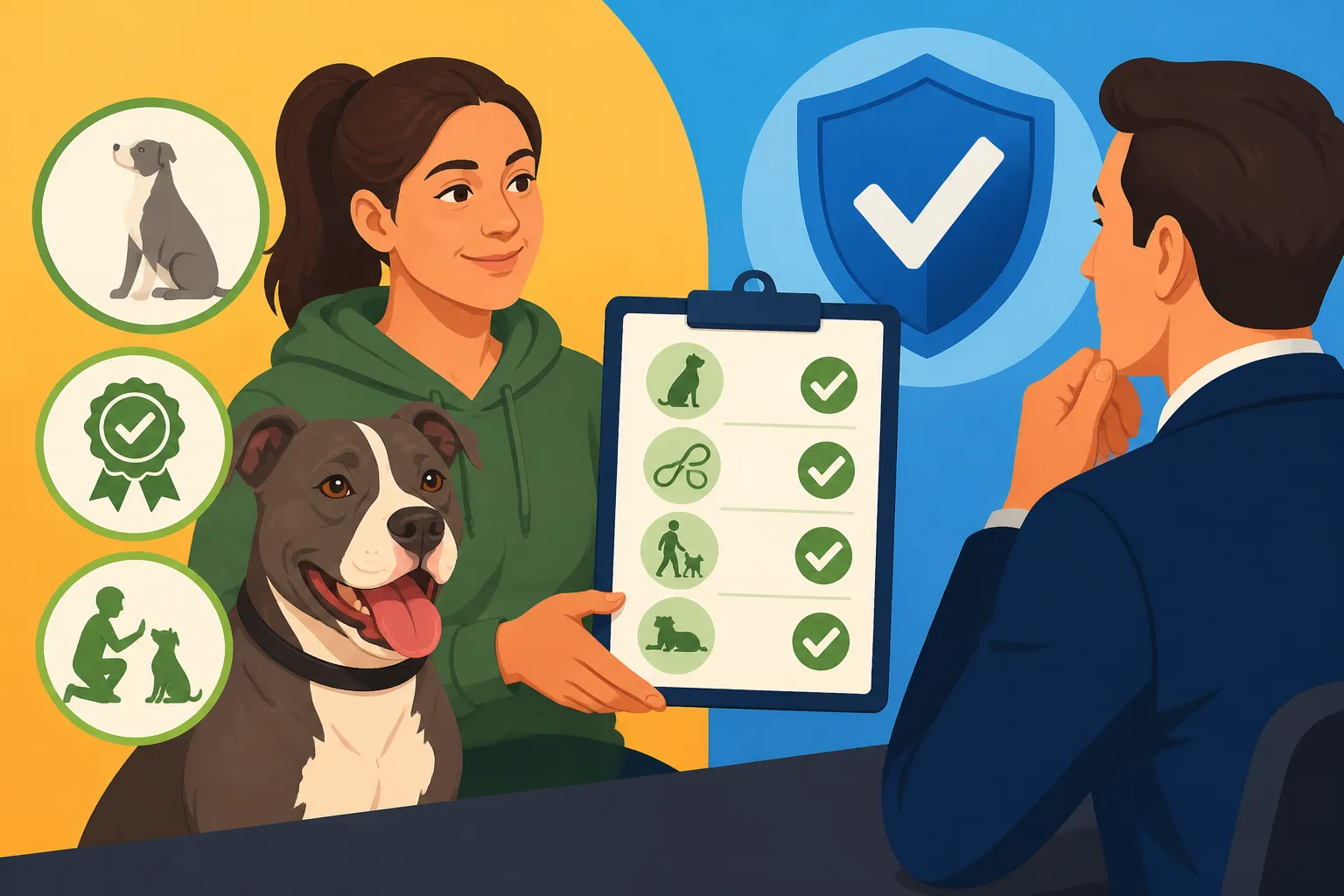
Collecting all those certificates is just the first step; presenting them effectively is equally important. Create a "doggy resume" or a portfolio specifically for your Pit Bull. This isn't just a folder of papers; it's a curated collection of evidence that tells a compelling story about your dog's character. Include all graduation certificates from obedience classes, CGC titles, and any other accolades your dog has earned. If your dog has participated in any dog sports like agility or rally, include those ribbons or certifications too.
But don't stop there. Gather letters of recommendation from your dog trainers, veterinarians, or even trusted neighbors who can vouch for your Pit Bull's excellent temperament and consistent good behavior. Take photos or short videos of your dog demonstrating good manners, like greeting a stranger calmly, walking perfectly on a leash, or playing nicely with other dogs (if applicable and appropriate for your dog's individual temperament). You could even include a daily log of training sessions or positive interactions. The goal is to build a robust, undeniable case. Consider the advice in Documenting a Pit Bull's Training Record for a comprehensive approach. For high-value treats that keep your Pit Bull engaged during these sessions, exploring options from brands like Ollie can be beneficial, as quality nutrition often translates to better focus and learning.
Presenting Your Pit Bull's Training Record to Insurers
Once you've meticulously built your Pit Bull's impressive training portfolio, the next crucial step is to present it effectively to insurance companies. This isn't just about handing over a pile of papers; it's about strategically communicating the value of that record and advocating confidently for your dog. Be prepared for some initial skepticism, but also be ready to educate and inform. Remember, you're looking for an insurer who understands that responsible ownership and training mitigate risk far more than arbitrary breed labels.
Key Information to Highlight When Engaging with Agents
When you first speak with an insurance agent, lead with your Pit Bull's training record. Don't wait for them to ask about breed restrictions; proactively offer this information. Clearly state that your dog has earned a Canine Good Citizen (CGC) title, or other significant certifications, and explain what those entail. For example, mention that a CGC means your dog can calmly handle strangers, stay when told, and walk politely on a leash. Many agents might not fully grasp the implications of these titles, so be ready to explain the rigorous testing involved.
Emphasize the specific behaviors your dog exhibits that directly address common insurance concerns. For instance, if you've done extensive Muzzle Training Every Pit Bull Should Have, highlight that your dog is comfortable with a muzzle, which demonstrates an extra layer of responsible preparedness. If your dog has excellent recall, mention that. Provide anecdotes that showcase their calm demeanor, especially around children or other animals, if those interactions are part of their well-managed life. Have your portfolio ready, whether it's a digital file or a physical binder, and offer to send it immediately. Some insurers might not initially accept these records, but persist and ask if there's an appeals process or a specific department that handles exceptions. This proactively addressing concerns is what distinguishes a responsible owner. For additional insights, exploring the article on Whether a CGC Title Helps a Pit Bull Policy can provide more detail on how these certifications positively influence insurer perception.
Navigating Different Insurer Responses and Alternatives
Unfortunately, even with a stellar training record, some insurers will still refuse coverage or impose breed restrictions. Don't get discouraged, but also don't take it personally; it's often an institutional policy rather than a judgment on your dog. If your primary insurer denies coverage or excludes your Pit Bull, it's time to shop around. Some carriers are more progressive than others regarding breed-specific policies. Companies like State Farm, Chubb, and USAA (for military families) are often cited as being more lenient, frequently evaluating dogs on a case-by-case basis rather than blanket bans.
Consider exploring options for a standalone canine liability policy if you cannot secure a homeowners policy that covers your Pit Bull. These specialized policies are designed specifically for "high-risk" breeds and can provide crucial peace of mind, even if they are an additional expense. They demonstrate an extreme level of responsibility, which can even sway a landlord. You might also find that policies provided by companies like Healthy Paws for medical pet insurance don't carry the same breed restrictions as liability insurance, but remember, the focus for this conversation is your liability. Make sure to clearly state that you are looking for liability coverage, not necessarily pet health insurance. If you encounter complete roadblocks, remember that some states, like Pennsylvania, have laws prohibiting insurers from denying coverage based solely on breed. It's worth researching "States That Bar Insurers From Refusing a Pit Bull" to see if your location offers additional protection.
Additionally, if you’re renting, a landlord might be more inclined to approve your Pit Bull if you can show them a strong training record and proof of a separate liability policy. This combined approach significantly reduces their risk, often making the difference between acceptance and rejection.
| Certification/Class | What It Demonstrates | Relevance to Insurance Risk |
|---|---|---|
| Canine Good Citizen (CGC) | Basic manners, obedience, calm demeanor in public | High: Direct proof of control and good behavior in varied settings. |
| Advanced Obedience | Higher level of control, focus, responsiveness to complex commands | High: Shows continued training and reinforced reliability. |
| Therapy Dog Certification | Exceptional temperament, patience, gentle nature, public manners | Very High: Requires stringent testing for public interaction. |
| Trick Dog Titles | Intelligence, willingness to learn, positive engagement | Medium: Indirectly shows a biddable, engaged dog and owner commitment. |
| Rally Obedience | Teamwork, focus, ability to follow a course of commands | High: Demonstrates mental engagement and handler control. |
| Puppy Kindergarten | Early socialization, basic cues, foundation for future training | Medium: Proof of early intervention and responsible puppy raising. |
| Individual Trainer Letters | Personal testimony to dog's temperament and owner's commitment | High: Specific endorsement from a professional. |
Disclaimer
The information provided in this article is for general informational purposes only and does not constitute legal, financial, or veterinary advice. Always consult with a qualified insurance professional, legal expert, or veterinarian for advice tailored to your specific situation. Insurance policies, breed restrictions, and related laws can vary significantly by location and change over time.