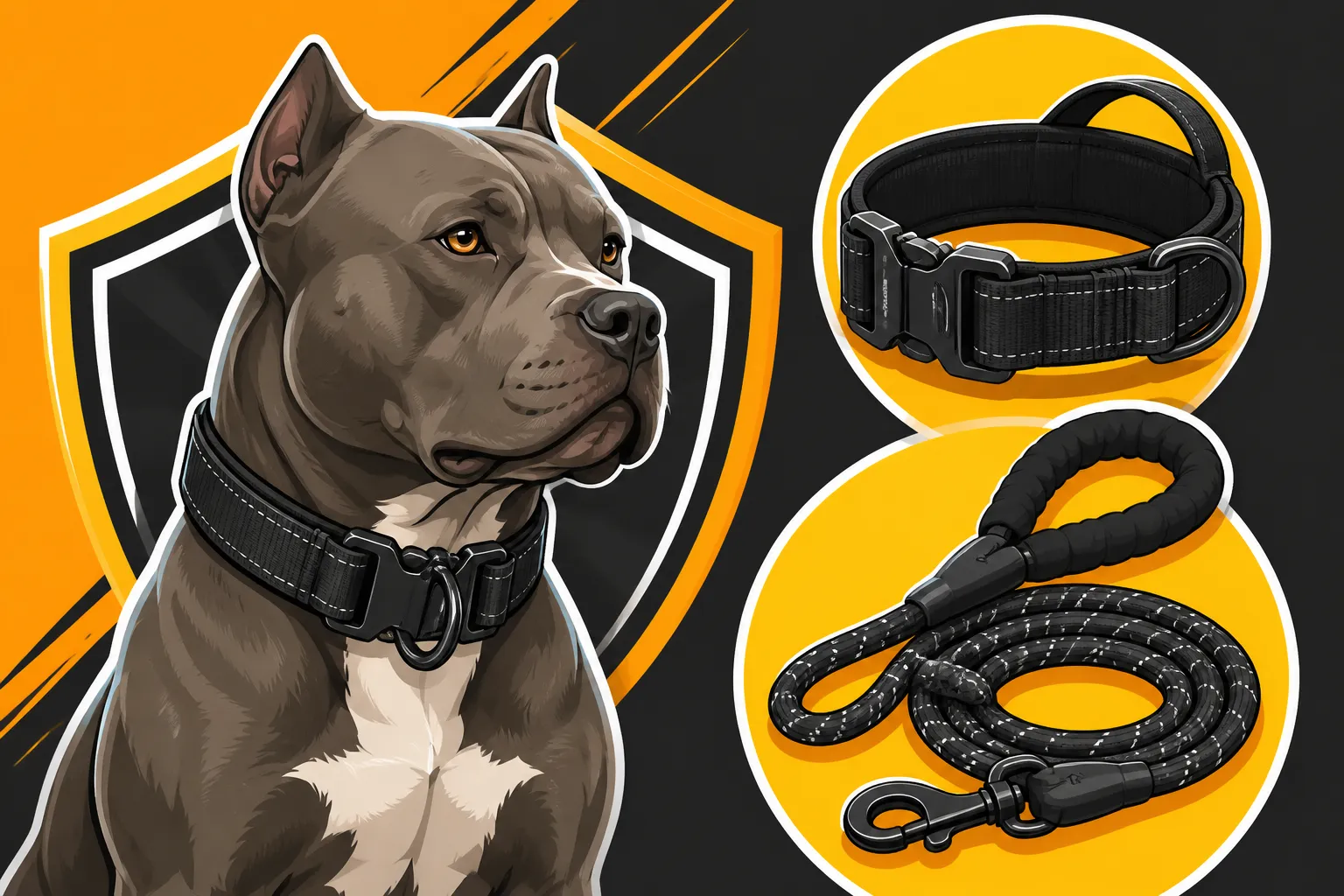
Leads and Collars That Will Not Fail on a Pit Bull
It's a familiar panic: that split second when your powerful Pit Bull lunges unexpectedly, and you feel the lead slip, or worse, hear a sickening snap. We've all been there, holding our breath as our strong, determined dogs test the limits of their gear, leaving us scrambling to prevent a mishap. Finding leads and collars that genuinely stand up to the unique strength and spirit of a Pit Bull isn't just about convenience; it's about safety for everyone, and this guide will walk you through choosing equipment that won't let you down.
The Unique Challenges of Leash Equipment for Pit Bulls
Pit Bulls are magnificent, powerful dogs, and their physical attributes—their incredible strength, often broad necks, and determined nature—present distinct challenges when it comes to choosing appropriate walking gear. Generic collars and leashes designed for less robust breeds simply don't cut it, and relying on inadequate equipment can quickly lead to dangerous situations for your dog, yourself, and others.
Understanding Pit Bull Anatomy and Strength
The physical build of a Pit Bull is what makes many standard leashes and collars unsuitable. They often have thick, muscular necks that can be wider than their heads, making it easy for traditional buckle collars to slip off under pressure if not fitted perfectly. Their broad chests and powerful front assemblies mean they can put an incredible amount of force into a pull, easily snapping flimsy clasps, stretching weak materials, or twisting out of ill-fitting harnesses. This isn't a knock on their temperament; it's simply a testament to their athletic build.
Beyond raw strength, many Pit Bulls possess a high prey drive and an intense focus when something catches their eye. This means that a sudden lunge isn't just about strength; it's about acceleration and commitment. A collar or lead needs to withstand not just a constant pull, but also sudden, sharp jerks that can test even the most robust materials. Imagine your dog spotting a squirrel or another dog across a busy street – you need absolute confidence that your equipment will hold, every single time. Pit Bull Leash Pulling at Fifty Pounds is a real struggle for many owners, and having the right gear is the first step in managing it.
The Importance of Durability and Security
For a Pit Bull owner, durability isn't a luxury; it's a necessity. A broken lead or a slipped collar in a public park, near a road, or around other dogs can escalate quickly. We're often held to a higher standard of control, and even a minor incident can carry disproportionate consequences for our dogs. This means every component of your walking gear—from the stitching on the collar to the carabiner on the leash—must be engineered for strength and reliability.
Security also extends to the fit of the equipment. A collar that's too loose can be backed out of in seconds, while one that's too tight can cause discomfort or even injury. The goal is a secure, comfortable fit that allows for control without causing harm. For a dog that might weigh 50-70 pounds of solid muscle, a piece of equipment that works for a smaller or less driven breed simply doesn't offer the same margin of safety. This is why many experienced Pit Bull owners gravitate towards specific types of gear that are known for their resilience.
Choosing a Collar That Holds Up and Stays On
Selecting the right collar for your Pit Bull is foundational to safe and enjoyable walks. It's not just about style; it's about the materials, the design, and critically, how it fits your individual dog's unique build.
Flat Buckle and Martingale Collars
Flat buckle collars are the most common type, and they can work well for Pit Bulls if chosen carefully. The key is in the material and the hardware. Look for collars made from thick, heavy-duty nylon, biothane, or good quality leather. Avoid thin, flimsy fabric collars, especially those with plastic buckles. Instead, opt for collars with robust metal buckles and D-rings. A good flat buckle collar should be wide enough (1.5 to 2 inches) to distribute pressure comfortably across your dog's neck, rather than digging in. When fitting, you should be able to comfortably slide two fingers under the collar.
However, many Pit Bull owners find that flat buckle collars can be slipped out of, particularly by dogs with necks wider than their heads. This is where a martingale collar often shines. A martingale collar has two loops: a larger one that goes around the dog's neck and a smaller loop with a D-ring where the leash attaches. When the dog pulls, the smaller loop tightens the larger loop just enough to prevent the dog from backing out, without choking them. This design offers a humane and secure alternative, and many trainers recommend them for dogs prone to slipping collars. It's a fantastic option for that added peace of mind, especially if your Pit Bull has a tendency to wriggle out of gear when excited or startled.
Head Halters and Front-Clip Harnesses
For Pit Bulls with significant pulling power, or those still learning Pit Bull Leash Manners and Physical Strength, head halters and front-clip harnesses can be game-changers. A head halter, sometimes called a head collar, works by giving you control over the dog's head, and where the head goes, the body follows. It consists of a strap around the muzzle and another behind the ears, with the leash attaching under the chin. This redirecting pressure is gentle but highly effective at discouraging pulling. It prevents your dog from being able to put their full body weight into a lunge and makes it much easier to guide their attention.
Front-clip harnesses, on the other hand, attach the leash to a D-ring on the dog's chest. When your Pit Bull pulls, the leash pulls them to the side, gently redirecting their momentum back towards you. This makes it difficult for them to pull forward with full force and discourages lunging. Crucially, it doesn't put pressure on their throat or neck, which is a major benefit for strong pullers. When considering a front-clip harness, pay close attention to the fit, especially across their broad chest and shoulders, to prevent rubbing or restricting movement. A well-fitting harness should allow for full range of motion while staying secure. You might find a great selection of various types of harnesses, including those designed for strong pullers, on platforms like Amazon, allowing you to compare features and read reviews before committing.
Materials and Hardware for Maximum Security
When it comes to the actual construction of your chosen collar, don't skimp on quality. For fabric collars, look for high-denier nylon webbing that feels thick and substantial. Biothane collars are also an excellent choice; they're durable, waterproof, easy to clean, and incredibly strong, often outlasting traditional nylon. Leather collars should be full-grain and well-stitched, avoiding thin, decorative leathers that can crack or tear.
The hardware is just as important, if not more so. Plastic buckles, even robust-looking ones, can degrade over time and may not withstand the sudden force of a Pit Bull's lunge. Opt for metal buckles (preferably quick-release for emergencies, but ensure it's a heavy-duty model) and welded D-rings. Riveted construction, where metal rivets reinforce stress points, is also a sign of quality. The clasp that attaches the leash to the collar should also be heavy-duty, often a brass or steel snap hook, designed to bear significant load without bending or breaking. If you're investing in training support, BAXTER & Bella often emphasizes the importance of reliable gear as part of their comprehensive approach, understanding that effective training relies on equipment that functions flawlessly.
Selecting a Lead for Control and Durability
The lead, or leash, is your direct connection to your Pit Bull, and its reliability is paramount. Just like collars, not all leads are created equal, especially when handling a powerful, enthusiastic dog.
Material Choices for Strength and Comfort
Heavy-duty nylon is a popular and generally reliable choice for Pit Bull leads. Look for webbing that is at least 1 inch wide and feels thick to the hand. The stitching should be reinforced at all stress points, particularly where the clasp attaches and at the handle. Nylon is weather-resistant and relatively easy to clean, making it a practical everyday option.
Biothane leashes are another fantastic, increasingly popular option. As mentioned with collars, Biothane is incredibly strong, waterproof, odor-proof, and easy to wipe clean. This makes it ideal for walks in all weather conditions, through muddy trails, or if your dog loves to swim. It offers a secure grip even when wet and is resistant to rot and mildew, ensuring longevity. Leather leashes, when made from thick, full-grain leather, offer exceptional strength and a comfortable feel in the hand. They soften beautifully with age but require more care to prevent drying out or becoming stiff. Avoid retractable leashes entirely for Pit Bulls; they offer no real control and can be extremely dangerous if the mechanism fails or the cord snaps under pressure.
Hardware and Length for Optimal Control
The clasp on your leash is a critical failure point if not chosen wisely. Opt for solid, heavy-duty metal clasps—brass, steel, or even certain aviation-grade aluminum alloys are excellent. Spring-loaded snap hooks are common, but ensure the spring mechanism feels robust and the clasp itself is thick. Some handlers prefer a locking carabiner-style clasp for extra security, though these can be a bit more cumbersome to attach. Always check that the D-ring on your dog's collar or harness is compatible and equally strong.
The length of your lead plays a huge role in control. For everyday walks and public areas, a standard 4-foot or 6-foot lead is usually sufficient. A 4-foot lead keeps your Pit Bull closer, offering more immediate control in crowded or high-distraction environments. A 6-foot lead provides a bit more slack for sniffing and exploring while still allowing you to quickly reel them in if needed. For training in open, secure areas or for teaching recall, a long line (15-30 feet) made of durable material can be invaluable, but should never be used in crowded public spaces or without careful attention to safety. When training with a longer lead, ensure the material is robust enough to handle sudden stops or changes in direction without fraying or snapping.
Integrating the Right Equipment into Your Training Routine
Having the right gear isn't just about preventing accidents; it's a fundamental part of an effective training program for your Pit Bull. When you feel confident in your equipment, you can focus more on communicating with your dog and reinforcing desired behaviors.
Confidence in Your Gear Enhances Training
Imagine trying to teach your Pit Bull to walk politely on a loose leash when you're constantly worried the buckle might pop or the lead might fray. That underlying anxiety translates into your handling, making your cues less clear and your timing less precise. When you know your collar and lead are reliable, you can relax, focus on positive reinforcement, and build a stronger bond with your dog. This confidence allows you to give consistent feedback, reward good behavior immediately, and manage distractions more effectively.
Using appropriate equipment also empowers you to explore more training scenarios. For instance, with a secure martingale collar and a robust leash, you might feel more comfortable practicing "heel" in a slightly busier area, knowing you have the tools to maintain control. This expansion of training environments helps your Pit Bull generalize their good manners, making them a more reliable companion in a wider variety of settings. The emphasis on good, reliable equipment from trainers like BAXTER & Bella is rooted in this principle: the gear supports the learning.
Equipment as a Management and Safety Tool
The best leads and collars are not just training aids; they are essential management and safety tools. For dogs that are still learning to manage their excitement around other dogs, or those with a strong prey drive, a head halter or front-clip harness can be crucial for safely navigating walks. They provide mechanical advantage that allows even a smaller handler to control a powerful Pit Bull, reducing the risk of accidental escapes or undesirable interactions.
Consider emergency situations: a sudden car horn, a loose dog, or a dropped item. In these moments, your equipment is the last line of defense. A lead with a strong, ergonomic handle allows you to maintain your grip, and a collar that won't slip ensures your dog stays connected to you. Emergency Signs That Cannot Wait in a Pit Bull can sometimes be related to accidental injuries from poor equipment, highlighting the importance of investing in quality.
Training Practices with Robust Gear
Even with the best gear, consistent training is key. Here are some practices to integrate with your new, robust equipment:
- Loose Leash Walking: Practice frequently in quiet environments before moving to more distracting ones. Use high-value treats to reward your Pit Bull for walking calmly by your side. High-Value Treats That Hold a Pit Bull's Focus are essential here.
- Check-Ins: Teach your dog to periodically check in with you on walks. This can be as simple as looking at you or touching your hand. Rewarding these check-ins helps maintain their focus on you.
- "Watch Me" Command: A reliable "watch me" or "look" command can be invaluable for redirecting your Pit Bull's attention away from distractions, whether you're using a martingale, head halter, or harness.
- Desensitization to Equipment: Introduce new collars or harnesses slowly and positively. Let your dog wear it for short periods, pairing it with treats and praise, before attaching a leash and going for a walk. This helps them associate the gear with positive experiences.
- Regular Inspections: Make it a habit to check your Pit Bull's collar and lead regularly for signs of wear and tear—frayed stitching, cracked leather, rusty clasps, or bent D-rings. Replacing worn-out gear before it fails is crucial. This vigilance ensures that your equipment remains a reliable safety net.
Ultimately, choosing leads and collars that won't fail is an investment in your Pit Bull's safety, your peace of mind, and the success of your training efforts. Don't compromise on quality; your powerful companion deserves equipment that can match their strength and spirit.
| Collar Type | Pros for Pit Bulls | Cons for Pit Bulls | Ideal Use Case |
|---|---|---|---|
| Flat Buckle Collar | Comfortable for everyday wear; wide options distribute pressure well if robust. | Can be slipped out of easily if not fitted perfectly or under high excitement. | Well-trained dogs; ID tag holder; low-distraction environments. |
| Martingale Collar | Prevents slipping and backing out without choking; humane self-tightening action. | Requires careful fitting to ensure it tightens correctly without being too harsh. | Dogs prone to slipping collars; general walks; moderate distraction levels. |
| Head Halter | Excellent control over pulling and lunging; redirects focus effectively. | Some dogs resist at first; requires positive introduction; can draw attention. | Strong pullers; reactive dogs; focused training sessions; public places. |
| Front-Clip Harness | Reduces pulling by redirecting momentum; no pressure on the neck; comfortable. | Can shift or rub if not fitted correctly; may restrict shoulder movement in some designs. | Pulling issues; dogs with neck/throat sensitivities; long walks. |
Disclaimer
This article is for general informational purposes only and does not constitute professional advice. Laws, prices and regulations vary by location and change over time. Consult a qualified professional for guidance on your specific situation.