Whether a Head Halter Works on a Pit Bull
It's incredibly frustrating when your powerful Pit Bull decides to become a sled dog on every walk, dragging you down the street with a relentless pull that leaves your arm aching and your patience thin. Many of us have been there, feeling helpless as our beloved companion transforms into an unstoppable force, making walks less of a joy and more of a daily struggle. This guide is here to walk you through whether a head halter can be a game-changer for regaining control and enjoying peaceful strolls with your strong, enthusiastic Pit Bull.
Understanding the Challenge of Leash Pulling with a Pit Bull
Let's be real, Pit Bulls are incredible dogs – strong, athletic, and full of gusto. But these very qualities, while admirable, can make leash training a true test of strength and will for even the most experienced handler. The challenge of a pulling Pit Bull isn't just about a lack of manners; it's deeply rooted in their physical build and natural exuberance.
The Mechanics of a Pit Bull's Strength
Anyone who has shared their life with a Pit Bull knows they are built like little tanks. Their broad chests, powerful shoulders, and muscular necks are designed for strength and leverage. When they decide to pull on a leash, they engage their entire physique, making them surprisingly effective at dragging their human counterparts along for the ride. A standard flat collar, while fine for identification, simply sits high on the neck and offers very little in terms of real control when a determined Pit Bull sets its mind to going in a certain direction. It can even put undue pressure on their throat, causing discomfort or even damage, and certainly not teaching them anything useful about walking politely.
Many owners find that even after consistent training, their Pit Bull still exhibits that brute strength. You can work on impulse control and focus all you want, but when a squirrel darts across the path, or another dog appears, that instinct kicks in, and suddenly, you're just holding onto a very large, fast-moving projectile. This is where the physics of a traditional collar really work against you, giving your dog all the mechanical advantage. We've talked extensively about this common issue in Pit Bull Leash Pulling at Fifty Pounds, which delves into the specific challenges of their impressive build.
The Frustration for Handlers
The constant battle on the leash isn't just physically taxing; it's emotionally draining. Every walk becomes a chore, filled with anxiety about encountering triggers or simply being strong enough to hold on. You might start avoiding certain paths or times of day, or even dread walks altogether, which is a terrible shame because walks should be a bonding experience, not a wrestling match. There's also the added layer of public perception. When your Pit Bull is pulling wildly, people often jump to conclusions, which can be unfair but is a reality we face. You know your dog is a loving, sweet companion, but their outward appearance of being "out of control" can unfortunately reinforce negative stereotypes.
It can feel incredibly isolating when you're struggling to manage your strong dog, especially if you're a smaller person trying to handle a powerfully built Pit Bull. You might even worry about your dog slipping free, or accidentally pulling you over. This isn't just about convenience; it's about safety for both you and your dog, and establishing a clear, calm relationship even when outside the home. The desire for a tool that can help bridge the gap between their natural strength and polite leash manners is completely understandable.
How a Head Halter Works and Why It's Different
When you're dealing with a strong puller like a Pit Bull, you need a tool that changes the mechanics of the walk. This is where a head halter, sometimes called a head collar, comes into its own. It operates on a completely different principle than a traditional neck collar or even a chest-clip harness.
The Principle of Head Control
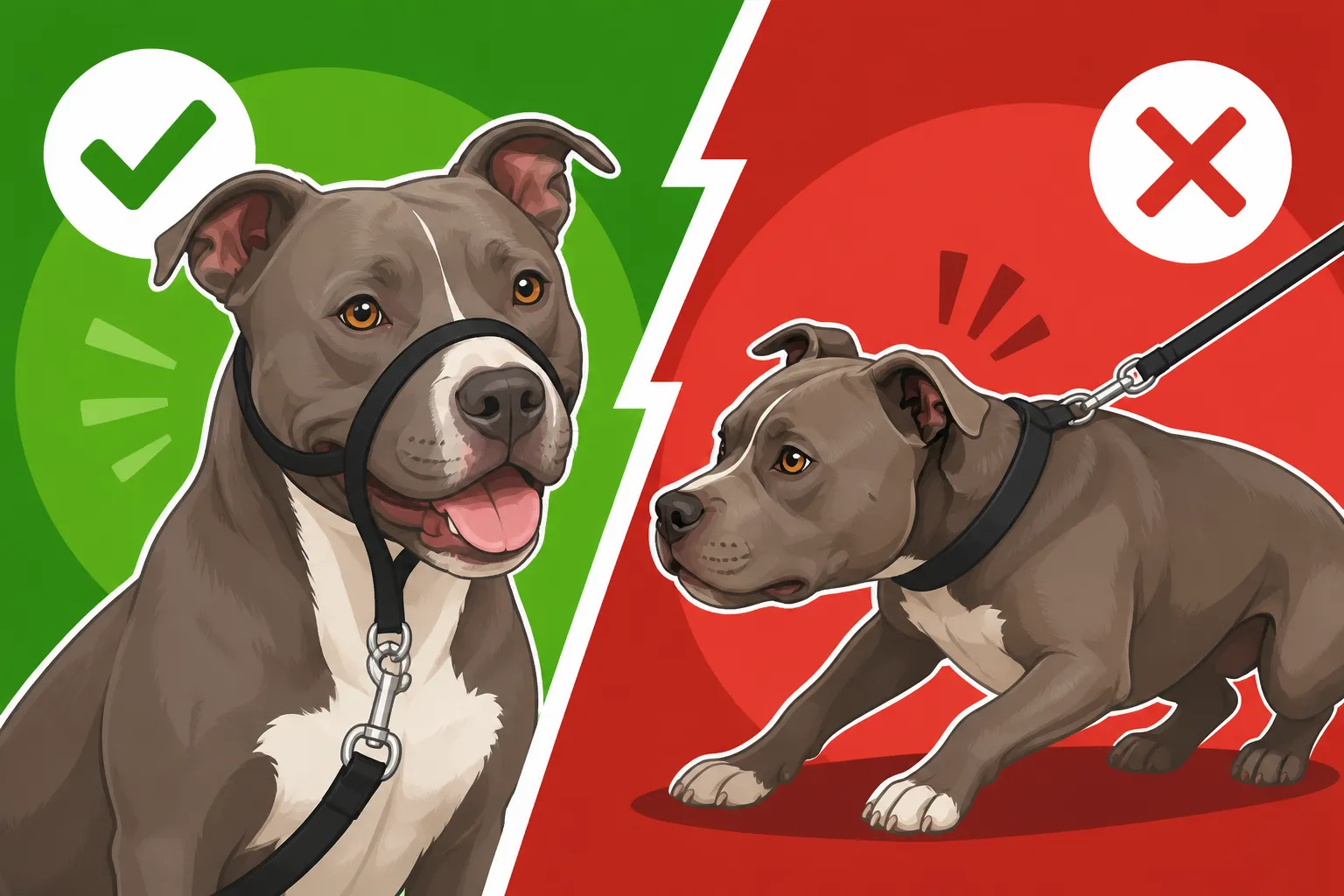
Think of a head halter as similar to the bridle used on a horse. You don't control a horse by yanking on its neck; you guide its head, and where the head goes, the body naturally follows. A head halter applies this exact principle to dogs. It consists of two main parts: a strap that goes over your dog's muzzle (the nose loop) and another strap that goes behind their head (the neck strap), securing it in place. The leash then clips underneath your dog's chin to the nose loop. When your Pit Bull pulls forward, the pressure from the leash gently turns their head to the side or downwards, making it physically difficult for them to continue pulling directly ahead. This isn't about pain or force; it's about redirection and leverage.
Because the control point is the dog's head, you gain a surprising amount of influence with minimal physical effort. Instead of battling against their powerful shoulders and chest, you are guiding their most sensitive and easily directed part. This means that a much smaller person can effectively manage a large, strong Pit Bull without having to brace themselves or feel like they're being taken for a ride. It completely changes the dynamic of the walk from a tug-of-war to a calm guided stroll.
The Physical and Behavioral Impact
The immediate physical impact of a head halter is the reduction of pulling power. When your Pit Bull tries to lunge or pull, their head is gently turned, disrupting their forward momentum and making the act of pulling uncomfortable and ineffective. This isn't punitive; it simply makes the desired behavior (walking calmly beside you) easier and the unwanted behavior (pulling) much harder. Over time, many dogs learn that pulling doesn't get them anywhere, and they start to self-correct, walking with a looser leash.
Beyond the immediate physical control, a head halter can have a significant behavioral impact. It allows you to more easily redirect your Pit Bull's attention from distractions. If they start to fixate on something, a gentle tug on the leash can turn their head towards you, allowing you to regain their focus and reinforce desired behaviors. This can be especially helpful for managing Walking a Pit Bull Past Reactive Dogs or keeping their attention in busy environments. It gives you a moment to intervene and work on training in real-world situations, rather than just being dragged through them. This combination of physical control and behavioral influence is what makes head halters such a powerful tool in a Pit Bull owner's training arsenal. For a broader look at various tools, check out our guide on Harnesses and Head Halters for a Pit Bull.
Introducing a Head Halter to Your Pit Bull: A Step-by-Step Approach
Getting your Pit Bull to happily accept a head halter isn't usually an overnight success. Given their intelligence and sometimes stubborn nature, it requires patience, positive reinforcement, and a gradual approach. Rushing the introduction can create a negative association, making your dog resent the tool and resist it even more.
Desensitization and Positive Association
The key to success with a head halter is to make your Pit Bull see it as a source of good things, not something restrictive or unpleasant. Start by simply showing them the head halter and immediately giving them a high-value treat. Don't try to put it on yet! Repeat this a few times over several sessions. Then, progress to touching their nose with the nose loop, instantly followed by a treat. The goal here is to build a strong positive association.
Next, try to slip the nose loop over their muzzle for just a second or two, showering them with praise and treats, then immediately remove it. Slowly increase the time it stays on, always pairing it with delicious rewards like small pieces of cheese, cooked chicken, or training-specific treats you know your Pit Bull loves. Some excellent options for this kind of intense focus can be found in our discussion on High-Value Treats That Hold a Pit Bull's Focus. Don't even attach the leash during these initial stages. The entire process should be calm, positive, and never forced. If your Pit Bull shows signs of discomfort or resistance, go back a step and make the experience even more brief and rewarding.
Gradual Use in Different Environments
Once your Pit Bull is comfortable wearing the head halter for a few minutes at a time in the house, you can start attaching the leash and practicing short training sessions. Begin with simple loose-leash walking exercises indoors, reinforcing every step they take without pulling. Keep these sessions very short and positive. The moment they walk nicely, even for just a few steps, reward them generously. As they get more accustomed, move to a quiet outdoor area, like your backyard, for brief walks.
Gradually introduce them to busier environments, but always start with short stints and high-value rewards. Remember, the head halter is a training tool, not a substitute for training. Continue to use verbal cues, clicker training if you use one, and positive reinforcement for walking politely. If you notice your Pit Bull trying to rub it off or paw at it, redirect their attention with a treat and continue walking. The more consistently you use it in a positive, training-focused way, the more your Pit Bull will accept it as part of the routine. The principles discussed in Positive Reinforcement Training With a Pit Bull apply perfectly here, emphasizing reward for desired behavior. Online training programs, like those offered by BAXTER & Bella, often provide structured guidance and support for integrating new tools into your training regimen, which can be immensely helpful for consistent application.
Common Pitfalls and Troubleshooting
It's completely normal for a Pit Bull, or any dog, to initially resist a head halter. Many will try to rub it off, paw at it, or freeze up. This isn't necessarily because it's hurting them, but because it feels strange and restricts their natural head movements. Patience is your best friend here. Don't get frustrated; simply go back to shorter sessions, higher value treats, and plenty of praise. Ensure the halter fits correctly – it should be snug enough that your dog can't easily slip it off, but not so tight that it pinches or restricts breathing. The nose loop should sit comfortably high on their muzzle, not down near their nostrils.
If you find your Pit Bull still struggling, consider the type of head halter. Some dogs prefer certain materials or designs. Double-check the sizing charts carefully. Sometimes, a very determined dog might still manage to pull, in which case a very gentle, upward and to-the-side redirection of the leash is needed, not a sharp yank. The goal is always to guide, not to correct harshly. Remember, the head halter is meant to make walks more enjoyable for both of you, so always keep the experience as positive as possible.
Advantages and Disadvantages of Using a Head Halter on a Pit Bull
Like any training tool, head halters come with their own set of pros and cons. Understanding these can help you decide if it's the right choice for your Pit Bull and your lifestyle. It's about weighing the benefits against the potential drawbacks and how they fit into your overall training philosophy.
The Benefits for Control and Training
The most immediate and significant advantage of a head halter is the incredible amount of control it offers, especially for a strong dog like a Pit Bull. Suddenly, you're not battling against their entire body weight; you're gently guiding their head. This translates into much safer walks, particularly for handlers who might be smaller or have physical limitations. You can navigate busy streets, pass other dogs, or handle unexpected situations with a greater sense of security. It gives you the mechanical advantage you need to keep your Pit Bull from dragging you, lunging, or potentially getting into trouble.
Beyond just preventing pulling, head halters are fantastic for redirecting attention. If your Pit Bull is fixating on something, a gentle tug on the leash can turn their head back to you, allowing you to re-engage their focus and practice crucial "look at me" commands. This makes it an invaluable tool for working with Walking a Pit Bull Past Reactive Dogs, as you can more easily manage their reactions and provide positive reinforcement for calm behavior. For many Pit Bull owners, it transforms stressful walks into pleasant outings, allowing them to enjoy their dog's company without the constant physical struggle.
Potential Drawbacks and Considerations
While the benefits are considerable, there are a few things to keep in mind. One common concern is the aesthetics. A head halter can sometimes be mistaken for a muzzle by the general public, which can unfortunately reinforce negative stereotypes about Pit Bulls. While many owners are happy to explain what the tool is, it's a social aspect worth considering. If you're concerned about this, you might also want to explore options mentioned in Choosing a Basket Muzzle for a Pit Bull to understand the clear differences.
Another drawback is the initial acceptance by your dog. As discussed, some Pit Bulls might resist it strongly at first, trying to rub it off or paw at their face. This requires significant patience and positive reinforcement from the owner. If not introduced gently, it can become a source of frustration for both dog and handler. There's also a small risk of neck injury if the leash is yanked suddenly or harshly while using a head halter. This tool is designed for gentle guidance, not abrupt corrections. Therefore, proper leash handling technique is paramount – always aim for a gentle redirection rather than a sudden jerk. It's a tool that requires a sensitive hand and an understanding of its mechanics.
Finding the Right Head Halter and Complementary Training
Choosing the right head halter and integrating it into a broader training strategy are crucial for long-term success with your Pit Bull. Remember, the halter itself isn't a magic fix; it's a valuable aid that supports and enhances your consistent training efforts.
Types and Features to Look For
When you're looking for a head halter for your Pit Bull, durability and fit are paramount. Given their strength, you need a halter made from sturdy materials that won't easily fray or break. Look for options with soft padding on the nose loop or behind the ears to prevent chafing, especially if your dog has sensitive skin. Adjustable straps are also key to ensure a snug, secure fit that prevents your Pit Bull from slipping out of it, or from it riding up into their eyes. Many brands offer different designs, some with more minimalistic straps and others with broader webbing. It's worth researching and reading reviews from other Pit Bull owners. You can often find a wide variety of options and compare features and customer experiences on platforms like Amazon. Take your time to measure your dog's muzzle and neck circumference accurately, as proper sizing is critical for both comfort and effectiveness.
Some popular brands include Gentle Leader, Halti, and Comfort Halti. Each has slight variations in design, and what works best for one Pit Bull might be different for another. Paying attention to details like buckle strength and strap material will ensure you're investing in a tool that can stand up to your dog's power and enthusiasm.
Combining with Other Training Methods
A head halter is a fantastic tool, but it's most effective when used as part of a comprehensive training plan. It gives you the control you need to teach your Pit Bull how to walk politely, rather than just managing the pulling. Continue to practice loose-leash walking exercises, reinforcing steps taken calmly by your side. Use verbal cues like "heel" or "let's go" and reward heavily when your dog responds positively. The halter allows you to easily redirect them into the correct position. For in-depth strategies on preventing pulling, delve into Stopping a Pit Bull That Drags You Down the Street.
It's also important to focus on building a strong bond and reliable recall, as the head halter shouldn't be seen as a permanent crutch. Consider enrolling in a positive reinforcement training class or consulting with a professional dog trainer who has experience with strong breeds like Pit Bulls. They can offer personalized guidance, help troubleshoot any challenges, and ensure you're using the head halter correctly and effectively. You can learn more about finding the right expert in Finding a Trainer Experienced With Pit Bulls. Remember, consistency, patience, and positive reinforcement are the cornerstones of successful training, and the head halter is simply a helpful tool to get you there faster and more safely.
Comparing Leash Walking Tools for Pit Bulls
To help you visualize the differences, here's a quick comparison of various popular leash walking tools and how they generally work for a strong Pit Bull.
| Feature | Flat Collar | Front-Clip Harness | Head Halter (Head Collar) |
|---|---|---|---|
| Control Point | Neck/throat | Chest | Muzzle/Head |
| Effect on Pulling | Minimal; can encourage pulling against neck. | Redirects forward motion, reduces power. | Turns head, making forward pulling difficult. |
| Leverage for Handler | Low | Medium | High |
| Comfort for Dog | Generally high, unless pulling hard. | High, pressure distributed over chest. | Can be initially resisted due to novelty. |
| Ease of Escape | Moderate to high for determined pullers. | Low to moderate if fitted correctly. | Low, very secure if fitted correctly. |
| Training Focus | Requires strong existing leash skills. | Aids in teaching loose-leash walking by redirection. | Aids significantly in teaching loose-leash walking and focus. |
| Public Perception | Standard, generally no issues. | Standard, often seen as gentler. | Can be mistaken for a muzzle. |
Disclaimer
This article is for general informational purposes only and does not constitute professional advice. Laws, prices and regulations vary by location and change over time. Consult a qualified professional for guidance on your specific situation.