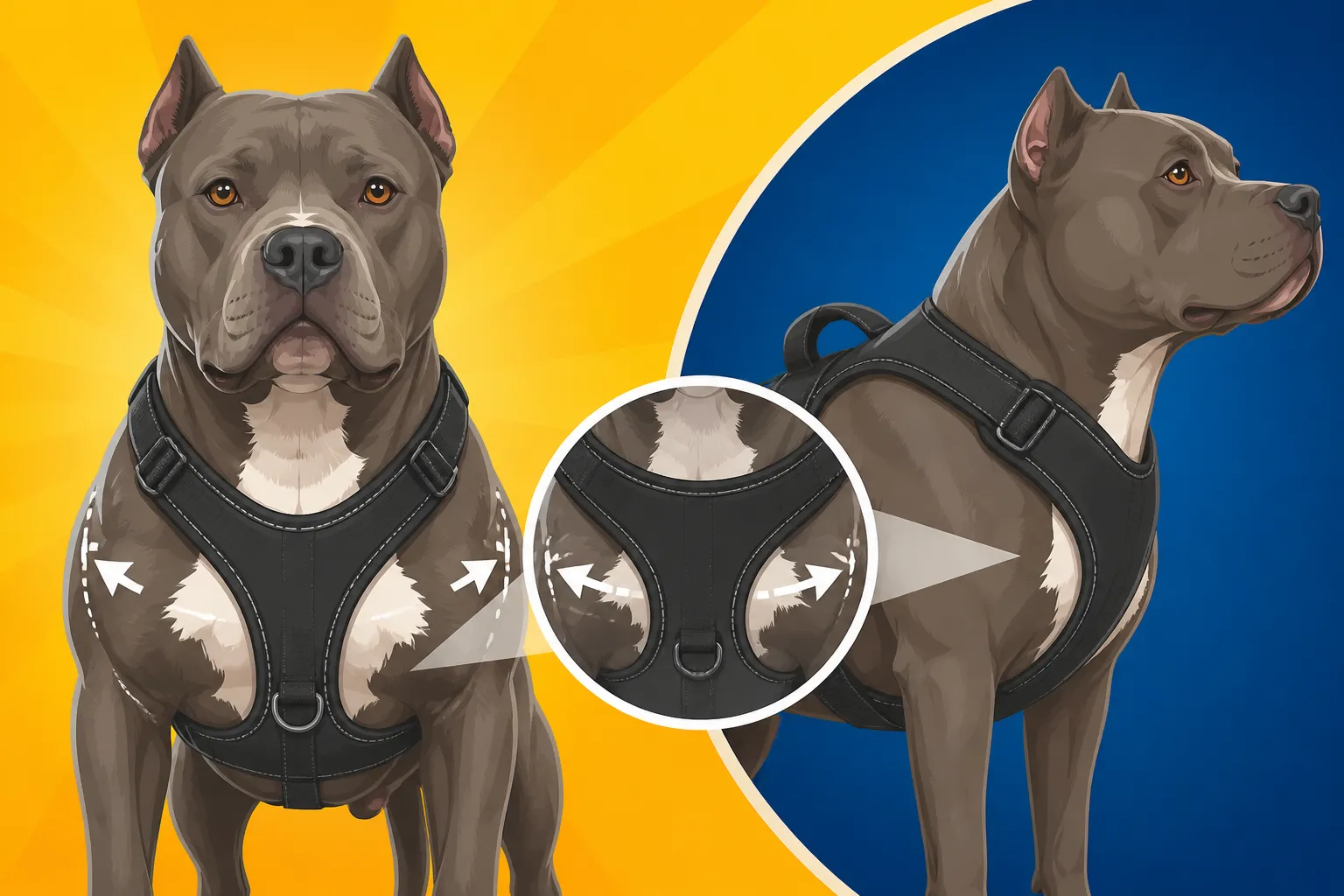
Harness Fit Across a Broad Pit Bull Chest
Finding a harness that truly fits your Pit Bull can feel like an Olympic sport sometimes. Their unique, powerful build, especially that deep, broad chest, often means standard harnesses pinch, rub, or simply don't offer the secure, comfortable fit they need, leading to frustration for both you and your strong companion on walks. This guide is here to walk you through the specifics of selecting and fitting a harness perfectly tailored to your Pit Bull's magnificent physique, ensuring happy, safe strolls.
The Unique Challenge of a Pit Bull's Build
Pit Bulls are incredible dogs, known for their athleticism, strength, and distinctive physical characteristics. However, these very traits can make finding the right gear a real headache. It’s not just about getting "a" harness; it’s about getting "the right" harness that accommodates their specific anatomy without causing discomfort or compromising safety.
Understanding the Pit Bull Physique
When we talk about a Pit Bull's build, we're focusing on a few key areas that differ significantly from many other breeds. First and foremost is their chest. It's often very deep and broad, tapering slightly towards the waist. This gives them immense power and a characteristic silhouette. Their neck is usually thick and muscular, and their shoulders are well-defined, allowing for a wide range of motion. These features are what make them such capable athletes and companions, but also what confound standard harness designs.
Imagine a typical harness designed for a lean Labrador or a slender Greyhound. The straps are positioned for a narrower chest and a more uniform body shape. When you try to put that on a Pit Bull, you quickly run into issues. The chest strap might be too tight or too loose, the neck opening might choke them or gape open, and the overall fit can restrict their powerful shoulder movement. It's like trying to wear shoes that are three sizes too small – technically wearable, but incredibly uncomfortable and potentially damaging in the long run. Understanding these unique characteristics is the first step in finding a harness that actually works with their body, not against it.
Common Harness Fit Issues
Because of their specific build, Pit Bulls frequently encounter a range of fit problems with off-the-rack harnesses. One of the most common issues is chafing and rubbing. A poorly fitting harness, especially one with straps that sit directly behind the armpits or across the sensitive skin of their deep chest, can quickly cause irritation, redness, and even open sores. This is particularly problematic during longer walks or intense play, where friction increases. No one wants to see their dog in pain, and a raw patch under the arm is a miserable thing for a Pit Bull.
Another significant concern is restricted movement. Many harnesses have a horizontal strap that runs across the shoulders. While this might be fine for some dogs, for a Pit Bull with powerful, athletic shoulders, this design can impede their natural gait and limit their range of motion. Think of it like a human trying to run a sprint while wearing a tight vest that pulls at their armpits. It’s not only uncomfortable but can also lead to long-term joint strain or muscle imbalances if consistently used. Lastly, there's the issue of escape artistry. A harness that's too loose, particularly around the neck or belly, allows a determined Pit Bull to back out of it surprisingly easily, turning a leisurely walk into a heart-stopping chase. This is why a snug, secure fit is absolutely paramount for their safety and your peace of mind.
Essential Measurements for a Perfect Fit
To avoid the frustrations of ill-fitting gear, taking accurate measurements is non-negotiable. Don't rely on guesswork or assume a "large" will fit just because your dog is a certain weight. Pit Bulls come in a range of sizes, and what fits one might be completely wrong for another.
The Importance of Chest Girth
The chest girth is, without a doubt, the most critical measurement for a Pit Bull harness. This measurement dictates how snugly and comfortably the main body of the harness will fit around their deepest part. For a Pit Bull, this isn't just a number; it’s the key to preventing chafing, ensuring security, and allowing full freedom of movement. If the chest strap is too tight, it will dig into their flesh and restrict breathing or movement. If it's too loose, the harness can shift, twist, or allow them to slip out.
When measuring, you want to find the widest point of their rib cage, typically just behind their front legs. This is where the main horizontal strap of most harnesses will rest. Getting this right is so important because it determines the anchor point for the entire harness. A well-fitted chest girth ensures the harness stays put during Pit Bull Leash Manners and Physical Strength training or enthusiastic play, distributing pressure evenly and comfortably. Without a precise chest measurement, even the most expensive or highly-rated harness will likely fall short of providing the ideal fit for your powerful companion.
Neck and Torso Considerations
While the chest girth takes center stage, don't overlook the neck and overall torso length. The neck opening of the harness needs to be wide enough to allow comfortable breathing and swallowing, without being so loose that it can slide over their head when they pull back. For a Pit Bull with their typically thick, muscular neck, this often means looking for harnesses with a generous or adjustable neck circumference. A collar that fits well might not translate to a harness neck opening.
Additionally, consider the length of the harness body, especially for designs that extend further along their back. You don't want a harness that ends too abruptly, potentially rubbing on their sensitive flank area, or one that's so long it interferes with their tail or hips. The fit around the torso, where the belly strap sits, also needs to be snug enough to prevent twisting but loose enough for comfort and to avoid digging into their soft underbelly. This often comes down to the adjustability of the harness straps. A good harness will have multiple points of adjustment, allowing you to fine-tune the fit for all these critical areas, accommodating their unique proportions.
How to Measure Accurately
Getting accurate measurements is simpler than you might think, but it requires a bit of patience and a flexible tape measure. Here's how to do it:
- Get Your Tools: You'll need a soft, flexible tape measure (the kind used for sewing is perfect) and maybe a treat-motivated Pit Bull.
- Dog's Stance: Have your Pit Bull stand squarely and naturally on all four paws, as if they're about to go for a walk. If they're wiggling, offer a High-Value Treats That Hold a Pit Bull's Focus to keep them still.
- Chest Girth: Locate the widest part of their chest, usually just behind their front legs. Wrap the tape measure around their rib cage at this point. Ensure the tape is snug but not tight – you should be able to slide two fingers comfortably under the tape. Make a note of this measurement. This is the big one!
- Neck Circumference: Measure around the base of their neck, where a collar would naturally sit. Again, two fingers under the tape for comfort.
- Back Length (Optional, for some harness types): If considering a vest-style or extended harness, measure from the base of their neck (where it meets the shoulders) to just before the start of their tail.
Write down all these measurements. When you're shopping, compare these numbers directly to the manufacturer's sizing charts, rather than just relying on S, M, L designations. This methodical approach drastically increases your chances of finding a truly appropriate fit, whether you're browsing options on Amazon or checking out specialized brands.
Types of Harnesses That Work Well
Not all harnesses are created equal, especially when it comes to accommodating a Pit Bull's distinct body shape. Understanding the different designs and their pros and cons is crucial for making an informed choice that prioritizes both comfort and control.
Front-Clip vs. Back-Clip Harnesses
The placement of the leash attachment point is a major differentiator in harness types.
Back-clip harnesses have the leash ring on the dog's back, typically between the shoulder blades.
- Pros for Pit Bulls: These can be very comfortable as they don't interfere with the dog's front movement. They are generally easy to put on and take off. For a Pit Bull that already walks well on a leash, a back-clip harness can be a great choice for comfort.
- Cons for Pit Bulls: If your Pit Bull is a strong puller, a back-clip harness can actually encourage pulling by allowing them to lean into the harness and use their full body weight. This can make Stopping a Pit Bull That Drags You Down the Street much harder, turning you into a human anchor.
Front-clip harnesses (also known as no-pull harnesses) have the leash ring on the dog's chest, often around the sternum.
- Pros for Pit Bulls: These are fantastic for dogs that pull. When your Pit Bull pulls forward, the leash connection on the chest gently redirects them to the side, turning their body rather than allowing them to surge ahead. This offers much more control for handlers, especially those dealing with powerful dogs. They are an excellent training tool for teaching better leash manners.
- Cons for Pit Bulls: Some dogs might initially find the sensation of the leash on their chest a bit awkward. It's crucial that the chest strap fits well to avoid rubbing, especially if they are frequently redirected.
For many Pit Bull owners, a front-clip harness is the go-to for daily walks, especially during the training phases. Some even use a dual-clip harness, which offers both options, allowing you to switch based on the situation or your dog's progress.
Y-Shaped and H-Shaped Designs
Beyond where the leash clips, the overall harness design plays a huge role in fit and comfort for a broad-chested dog.
Y-shaped harnesses are often recommended for Pit Bulls because of how they sit on the body. These harnesses have a strap that goes over the dog's chest, forming a "Y" shape at the front, and then straps that go around the body behind the front legs.
- Pros: The Y-shape at the front sits away from the delicate throat area, reducing pressure on the trachea and allowing for unrestricted shoulder movement. This is critical for an athletic dog like a Pit Bull. They distribute pressure more evenly across the chest and shoulders, which is much more comfortable than harnesses that have a horizontal strap across the front, potentially digging into the shoulder joints.
- Cons: Not all Y-shaped harnesses are created equal in terms of adjustability. Some might still be too tight or too loose in certain areas if not properly sized.
H-shaped harnesses are another common style, characterized by a strap that runs horizontally across the chest, and another horizontal strap that runs along the back, connected by vertical straps.
- Pros: They are generally simple in design and can be quite adjustable.
- Cons: The horizontal strap across the chest can be problematic for Pit Bulls. It can restrict shoulder movement, especially if it sits too high or is too rigid. This can be uncomfortable and potentially lead to long-term issues. For a pulling dog, this horizontal strap can also place pressure on the throat.
When evaluating Harnesses and Head Halters for a Pit Bull, always consider the shape and how it will interact with your dog's broad chest and powerful shoulders. A harness that allows for maximum freedom of movement around the shoulder joint is generally the superior choice.
Adjustable and Custom Options
Given the specific needs of a Pit Bull's physique, harness adjustability is paramount. A good harness will offer multiple points of adjustment – at least two around the neck/chest area and one around the girth behind the front legs. This allows you to really dial in the fit, cinching where needed and loosening where necessary to prevent rubbing or restriction. Look for buckles that are robust and easy to operate, especially if you have an eager pup.
Some brands specialize in highly adjustable harnesses, or even offer semi-custom options. These might have extra-long straps or more intricate designs that cater to unusual body types. While you might not need a fully custom-made harness, prioritizing brands known for their adjustability and range of sizing can make a world of difference. When shopping on platforms like Amazon, pay close attention to reviews from other Pit Bull owners, as they often highlight which harnesses truly accommodate the broad-chested build. A harness that boasts "extra-wide chest strap" or "deep chest design" is often a good sign you're on the right track. Remember, a well-fitting harness should almost disappear on your dog, allowing them to move freely and comfortably, whether they're just strolling or engaged in vigorous play.
Step-by-Step Fitting and Comfort Check
You've done your research, taken your measurements, and picked out what looks like the perfect harness. Now comes the crucial step: putting it on your Pit Bull and making sure it's truly a good fit. This isn't a "one and done" process; it often requires a bit of fine-tuning.
The Two-Finger Rule and Movement Test
Once you have the harness on your Pit Bull, the "two-finger rule" is your best friend. After all straps are buckled and adjusted, try to slide two fingers comfortably between any strap and your dog's body.
- If you can't: The harness is too tight. It will dig in, restrict movement, and cause chafing. Loosen the strap.
- If you can easily fit more than two fingers: The harness is too loose. It will shift around, potentially rub, or allow your dog to slip out. Tighten the strap.
Pay particular attention to the straps around the neck, behind the armpits, and across the deep part of the chest. These are common problem areas for Pit Bulls. After checking the two-finger rule, it's time for the "movement test." Take your Pit Bull for a short walk, ideally outside where they can move naturally. Observe their gait. Do they seem restricted in their shoulder movement? Are they hunching? Do they seem uncomfortable when you engage the leash, even gently? Ask them to sit, lie down, and stand. The harness should not bunch, pinch, or slide excessively during these movements. If you notice any issues, make small adjustments and re-test. This active assessment is far more telling than just static fitting.
Identifying Rubbing and Pressure Points
Even with the two-finger rule, some harnesses can still create uncomfortable rubbing or pressure points, especially on a muscular, short-coated Pit Bull. Pay close attention to these areas:
- Behind the Armpits: This is a notoriously sensitive area. If the strap sits too close or is too narrow, it can chafe severely. Look for harnesses with wider, softer straps in this region, or designs that keep the strap further back on the rib cage.
- Along the Sternum/Chest Bone: For front-clip harnesses, the chest strap should sit flush but not press uncomfortably on the sternum. If it's too high, it can irritate the throat; too low, and it becomes ineffective for redirection.
- Around the Neck: While you want it snug, ensure it's not pressing into their windpipe. Pit Bulls have powerful necks, so an ill-fitting harness here can be truly miserable for them.
After a walk, especially the first few times you use a new harness, take it off and thoroughly inspect your dog's skin in all these areas. Look for redness, irritation, matted fur, or any signs of discomfort. If you find any, it's a clear signal that the harness isn't fitting correctly, or that the material isn't suitable for your dog's sensitive skin. Sometimes, a thicker, padded harness might be a better choice to distribute pressure more broadly.
Breaking in a New Harness
Just like a new pair of shoes, a harness often benefits from a "break-in" period. Don't expect your Pit Bull to instantly love a new piece of gear, especially if they've had uncomfortable experiences in the past.
- Short Sessions: Start by having them wear the harness for very short periods indoors, perhaps during meal times or while playing their favorite Indoor Trick Work for a Bored Pit Bull game. This helps them associate the harness with positive experiences.
- Gradual Increase: Slowly increase the duration of wear, moving to short walks around the yard, then gradually longer strolls.
- Supervision: Always supervise your Pit Bull during the initial break-in period to ensure they aren't chewing on the harness or showing signs of extreme discomfort. If they seem itchy or agitated, take it off and re-evaluate the fit.
- Material Softening: Some harness materials, especially nylon, can soften with use, becoming more pliable and comfortable over time. However, if a harness causes immediate pain or severe chafing, it's likely not the right design for your dog, and no amount of "breaking in" will fix a fundamental fit issue.
Ultimately, a properly fitted harness should be an extension of your Pit Bull, allowing them to move freely, breathe easily, and enjoy every adventure by your side. A little extra effort in selecting and fitting can lead to years of comfortable, safe walks for both of you.
| Harness Type | Pros for Pit Bulls | Cons for Pit Bulls | Best for |
|---|---|---|---|
| Back-Clip | Comfortable, allows full shoulder movement, easy to put on/off. | Can encourage pulling, offers less control for strong pullers. | Well-trained dogs, those who don't pull, casual walks. |
| Front-Clip | Excellent for leash training and reducing pulling, provides good control, redirects easily. | Can be initially awkward for some dogs, requires precise fit to avoid rubbing. | Strong pullers, dogs in training, handlers needing more control. |
| Y-Shaped Design | Sits away from the throat, allows unrestricted shoulder movement, good pressure distribution. | Fit depends on adjustability; some might still be ill-suited if not multi-adjustable. | Most Pit Bulls, especially athletic ones, prioritizes comfort and mobility. |
| H-Shaped Design | Simple, often highly adjustable around the girth. | Horizontal chest strap can restrict shoulder movement and irritate the throat/chest. | Dogs with less broad chests, those who don't pull hard. |
| Padded/Vest Style | Increased comfort due to cushioning, can distribute pressure more broadly. | Can be warmer in hot weather, potentially bulkier, might limit movement if too thick. | Sensitive-skinned dogs, those needing extra comfort on long outings. |
Disclaimer
This article is for general informational purposes only and does not constitute professional advice. Laws, prices and regulations vary by location and change over time. Consult a qualified professional for guidance on your specific situation.