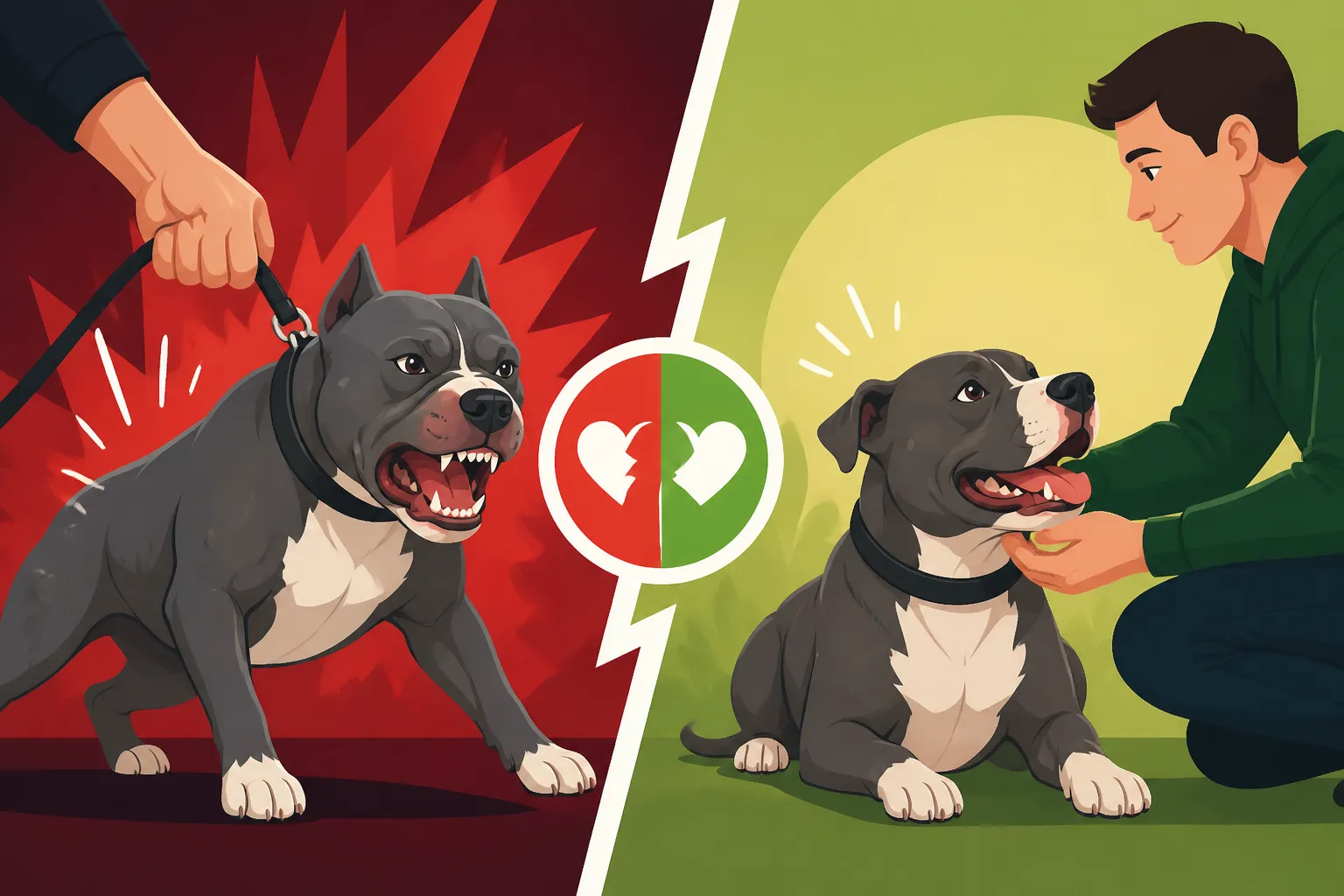
Why Harsh Handling Backfires on a Pit Bull
It’s incredibly frustrating when you’re trying to teach your powerful Pit Bull good manners, and it feels like nothing is working. You might have heard advice, or even seen others, use harsh corrections, heavy-handed techniques, or intimidating tones, believing that such a strong-willed dog needs to be "shown who's boss." However, relying on these methods actually does more harm than good, creating a wedge between you and your loyal companion. This guide will delve into why harsh handling ultimately backfires on a Pit Bull, damaging trust and creating bigger behavioral issues, and instead offer compassionate, effective ways to build a truly cooperative relationship.
The Misunderstood Sensitivity of a Pit Bull
Many people see a Pit Bull and immediately think "tough," "strong," or even "stubborn." While they are undeniably powerful, resilient dogs, beneath that muscular exterior often lies a surprisingly sensitive and deeply bonded companion. The common misconception that these dogs need a heavy hand, or that they only respond to forceful corrections, is not only outdated but actively harmful. Understanding their true nature is the first step to effective, humane training.
More Than Just Muscle: Their Emotional Landscape
It’s easy to focus on a Pit Bull's physical prowess—their strength, their tenacity, their sheer presence. But to truly know a Pit Bull is to understand their emotional depth. These dogs are often incredibly people-oriented, eager to please, and form profound attachments to their families. They thrive on connection and positive interaction. Think of a loyal friend; if that friend constantly felt criticized, scared, or physically corrected, how would your relationship fare? It would erode the trust, wouldn't it? It's no different with our dogs. When a Pit Bull experiences harsh handling, whether it's a hard leash pop, a physical correction, or even a consistently angry tone, it doesn't teach them what to do. Instead, it teaches them to fear, to become anxious, or to simply shut down in an attempt to avoid punishment. This can lead to a dog that seems "stubborn" or "disobedient" but is actually just trying to navigate a world where they feel constantly threatened or misunderstood. This deep emotional response is why methods that work on fear will ultimately backfire, creating a wedge between you and your dog.
The Outdated "Dominance" Trap
For far too long, dog training was plagued by the notion of "dominance theory," suggesting that dogs are constantly trying to be the "alpha" over their human owners. This led to the belief that owners needed to assert themselves with forceful, sometimes punishing, methods to "show the dog who's boss." The idea was that a Pit Bull, being a powerful breed, would especially need this "firm" hand. However, decades of scientific research have overwhelmingly debunked this theory. Dogs aren't trying to dominate us; they're trying to communicate, understand, and get their needs met. When we apply dominance-based training, we're not establishing leadership; we're breaking their spirit and teaching them that we are unpredictable or even dangerous. For a Pit Bull, a breed already battling unfair stereotypes, this approach can be particularly damaging. It can create a dog that is defensively aggressive, anxious, or develops learned helplessness, leading to long-term behavioral issues far more complex than the initial problem. Our goal should be to build a cooperative, trusting relationship, not to "dominate" a creature who wants nothing more than to be a part of our family. You might find our article on Why Harsh Handling Backfires on a Pit Bull further elaborates on this point.
Why Aversive Methods Break Trust, Not Build It
When you're dealing with a strong, energetic Pit Bull, it's natural to feel frustrated when they pull on the leash, jump on guests, or ignore your commands. In these moments, it can be tempting to reach for a quick fix or a method that promises immediate results through aversive means. But these methods, which rely on fear or pain to suppress behavior, rarely address the underlying cause and often introduce a whole host of new, more problematic issues. They might stop a behavior in the short term, but at what cost to your relationship and your dog's overall well-being?
The Psychological Fallout: Fear, Anxiety, and Aggression
Harsh handling, whether it's a sharp leash correction with a choke chain, a jolt from a shock collar, or yelling and intimidation, creates negative associations for your Pit Bull. Imagine you're learning something new, and every time you make a mistake, you're startled or hurt. You wouldn't learn to love that activity, would you? You'd likely become fearful, anxious, or even defensive. It's the same for dogs. When a dog experiences repeated aversive stimuli during training, they start to associate the presence of their owner, specific commands, or even certain environments with discomfort or pain. This can manifest as increased anxiety, reluctance to engage, or even redirected aggression. A dog who is constantly corrected for pulling on the leash might learn to associate other dogs or people on walks with the pain of the correction, leading to Teaching a Pit Bull to Walk Past a Barking Dog becoming a nightmare of reactivity. Instead of learning to walk nicely, they learn to fear the context of the walk itself. This psychological stress can severely impact their quality of life and your shared bond.
Suppressing Symptoms, Not Solving Problems
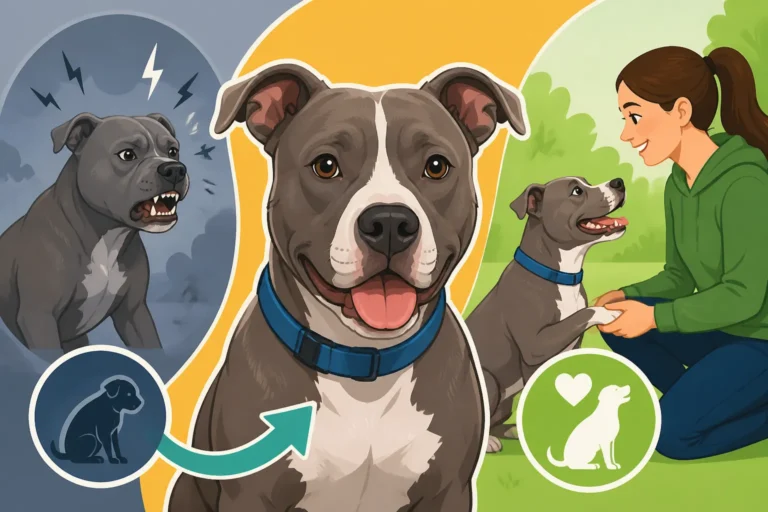
Aversive methods are often praised for their ability to stop unwanted behaviors quickly. For example, a sharp tug on a prong collar might momentarily stop a Pit Bull from lunging. However, what it doesn't do is teach the dog why they were lunging or what to do instead. It simply teaches them that lunging leads to pain or discomfort. The underlying motivation for the behavior—be it fear, excitement, frustration, or something else entirely—remains unaddressed. This is like putting a band-aid on a gaping wound. The problem is still there, festering beneath the surface. Eventually, the suppressed behavior might resurface in an "extinction burst" (a sudden increase in the unwanted behavior as the dog tries harder to get a response), or it might manifest as a completely new, often more severe, problem. For instance, a Pit Bull whose growls are consistently punished might learn that growling leads to pain, so they stop growling—but the fear or discomfort that caused the growl is still present. Now, they might bite without warning, leading to a situation where A Steady Pit Bull That Turns Sharp without apparent reason. We want to empower our dogs to make good choices, not just suppress their natural instincts through fear.
Building a Stronger Bond Through Positive Reinforcement
If harsh methods are off the table, what's the alternative? The answer lies in positive reinforcement, a training philosophy centered around rewarding desired behaviors. This approach not only makes learning fun and engaging for your Pit Bull but also strengthens the incredible bond you share, fostering trust, confidence, and genuine cooperation. It's about showing your Pit Bull what you want them to do, rather than punishing them for what you don't want.
The Power of Motivation: Rewards and Clear Communication
Positive reinforcement works by leveraging what your Pit Bull already loves. When they perform a behavior you like—whether it's sitting politely, walking calmly on a leash, or coming when called—you immediately reward them with something they value. This could be a tasty treat, a favorite toy, enthusiastic praise, or a quick game of tug. The key is to make the reward contingent on the desired behavior, so your dog quickly learns the connection: "When I do X, good things happen!" This motivation is incredibly powerful. Instead of fear-based compliance, you get a dog who wants to work with you, who is actively trying to figure out what earns them those fantastic rewards. For Pit Bulls, who often possess a strong drive and a desire to please, this approach is particularly effective. You'll find yourself reaching for High-Value Treats That Hold a Pit Bull's Focus to keep their attention during distraction-rich environments, or discovering that a game of fetch after a successful training session is just as rewarding as food. Consistency is paramount here; every time your Pit Bull offers the right behavior, even if it's just a moment of calm, acknowledge and reward it.
Setting Your Pit Bull Up for Success
Positive reinforcement isn't just about handing out treats; it's also about strategically creating situations where your Pit Bull can succeed, making it easy for them to offer the correct behaviors. This means managing their environment, gradually introducing new challenges, and breaking down complex behaviors into smaller, achievable steps. For example, if your Pit Bull struggles with loose leash walking, don't start in a busy park. Begin in a quiet backyard, rewarding every step they take without pulling. As they improve, slowly add more distractions. Using the right equipment, like a comfortable front-clip harness or a head halter, can also set them up for success by making it physically harder to pull and giving you more control without discomfort. You can find a wide variety of these effective tools on platforms like Amazon. Additionally, enrolling in a structured online program, such as the ones offered by BAXTER & Bella, can provide a clear roadmap and expert guidance, helping you anticipate challenges and proactively teach good manners from the start. Remember, success breeds confidence, and a confident Pit Bull is a happy and well-behaved Pit Bull. This proactive approach helps them understand expectations and build good habits.
Detrimental Effects of Common Harsh Methods
It’s worth specifically addressing some common harsh methods that, despite their popularity in some circles, actively undermine effective training and can damage your relationship with your Pit Bull. These techniques often come from a place of frustration or misinformation, promising a quick fix, but ultimately lead to deeper behavioral woes.
The Problem with Physical Corrections and Force
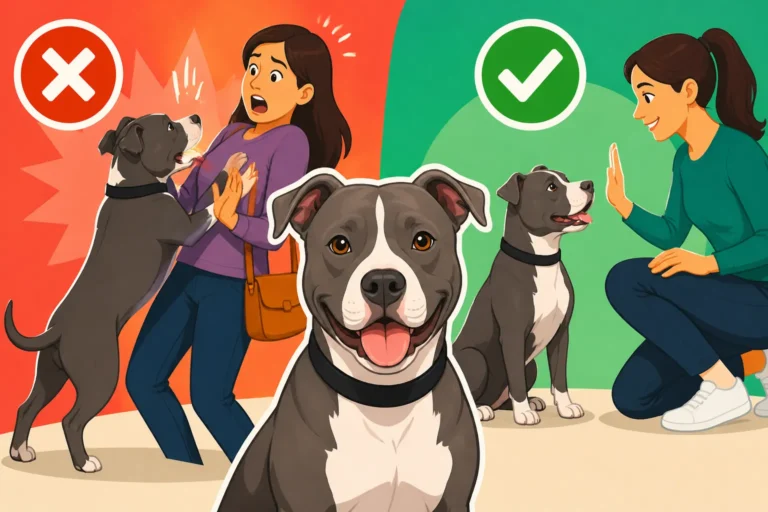
Many traditional training methods advocate for physical corrections—leash jerks, alpha rolls, scruff shakes, or even direct hitting—to "correct" unwanted behavior. For a powerful dog like a Pit Bull, these methods are not only physically dangerous for both dog and handler but also deeply counterproductive. A hard leash pop or an "alpha roll" (forcibly putting a dog on its back) can cause physical injury, especially to a Pit Bull's neck or spine. More importantly, it shatters trust. If your dog perceives you as a source of pain or threat, they won't learn to cooperate; they'll learn to fear. This fear can lead to defensive aggression, where a dog feels they must lash out to protect themselves from perceived threats, including their owner. You might see a Pit Bull snap or bite in a situation where they were previously only growling, because they've learned their initial communication (the growl) was met with punishment. It teaches them that their human is unpredictable and potentially dangerous, making true, willing obedience impossible. Instead of resorting to force, focus on showing your Pit Bull what you want them to do and rewarding them lavishly for it.
Yelling, Intimidation, and the Breakdown of Communication
It's easy to get frustrated and raise your voice when your Pit Bull isn't listening, or to try and "stare them down" to assert dominance. However, yelling, scolding, or using intimidating body language primarily serves to scare or confuse your dog, not to educate them. Dogs don't understand human language in the same way we do. A loud, angry voice sounds like a threat, not a lesson. Consistent yelling can cause your Pit Bull to become anxious and less likely to respond to any verbal cues, even soft ones, because they associate your voice with negative experiences. They might become reluctant to approach you, or they might simply shut down, appearing "stubborn" when they are actually overwhelmed and trying to avoid confrontation. This constant state of stress can significantly impact their well-being and their ability to learn. True communication involves clear, consistent signals and positive reinforcement, helping your Pit Bull understand what you're asking of them without fear or confusion.
Effective Positive Alternatives for Common Pit Bull Challenges
Now that we understand why harsh handling is detrimental, let's explore some compassionate and effective positive reinforcement strategies for typical Pit Bull behaviors. These methods focus on understanding the root cause of the behavior and teaching an alternative, desirable action.
Managing Leash Pulling Positively
One of the most common frustrations for Pit Bull owners is leash pulling. Their strength can make walks a real struggle. Instead of relying on choke chains, prong collars, or relentless leash popping that cause pain and can lead to Pit Bull Leash Pulling at Fifty Pounds becoming a battle of wills, focus on equipment and training that encourages loose leash walking.
- Front-Clip Harnesses: These harnesses clip at the dog's chest, redirecting their forward momentum back towards you when they pull. This reduces pulling power without causing pain or discomfort. Many brands are available on Amazon. For a detailed look at proper fit, check out our article on Harness Fit Across a Broad Pit Bull Chest.
- Head Halters: For stronger pullers or those needing more control, a head halter (like a Gentle Leader) offers excellent steering control from the head, much like a horse's halter. It allows you to guide your dog's nose, and where the nose goes, the body follows. Make sure to properly introduce it with positive association!
- Reward-Based Loose Leash Walking: The core training involves rewarding your Pit Bull for walking with a loose leash. Start in a low-distraction environment. Every time the leash slackens, mark the behavior (with a clicker or a verbal marker like "yes!") and reward with a High-Value Treats That Hold a Pit Bull's Focus. Gradually increase the duration of the loose leash and introduce more distractions. If your dog pulls, stop walking entirely. Movement only resumes when the leash is loose again. This teaches them that pulling gets them nowhere, while a loose leash gets them moving forward and earns rewards. Consistency is key here.
Addressing Reactivity with Understanding
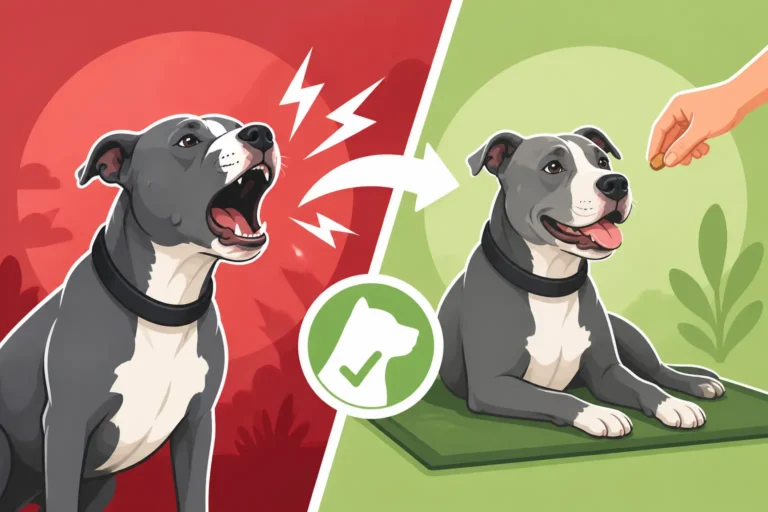
A Pit Bull who barks, lunges, or growls at other dogs or people on walks can be incredibly stressful to manage. Harsh corrections for these behaviors will only increase their underlying fear or frustration, potentially making the reactivity worse. Instead, we use a process called desensitization and counter-conditioning.
- Identify the Trigger: Understand what causes your Pit Bull to react (e.g., specific types of dogs, people, sounds).
- Find the Threshold: Determine the distance at which your Pit Bull can see the trigger without reacting. This is their "threshold."
- Positive Association: Work below their threshold. When your Pit Bull sees the trigger (e.g., another dog) at a distance where they are aware but not reacting, immediately give them a high-value treat. Repeat this. The goal is to change their emotional response from "Oh no, a dog!" to "Oh, a dog! That means treats!"
- Gradual Approach: Over time, as your Pit Bull forms a positive association and remains calm, you can gradually decrease the distance to the trigger. Never push them over their threshold, as this will set back your progress. This method helps your Pit Bull feel safe and even happy in the presence of triggers, rather than anxious or aggressive. Teaching a Pit Bull to Walk Past a Barking Dog becomes a management and reward exercise, not a punishment one.
Dealing with Destructive Chewing
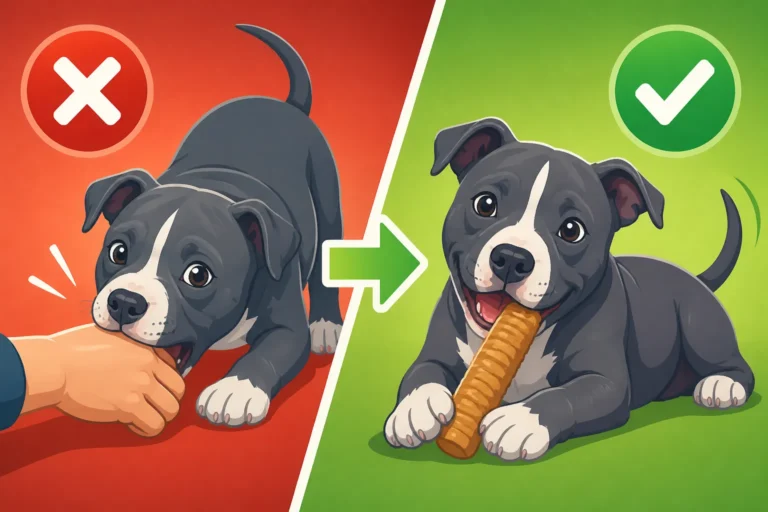
Pit Bulls have powerful jaws and an innate need to chew. If not given appropriate outlets, they can become quite destructive. Punishing a Pit Bull for chewing furniture or shoes is usually ineffective because it doesn't teach them what to chew.
- Provide Appropriate Outlets: Offer a variety of durable, engaging chew toys. Look for Chew Toys That Hold Up to a Pit Bull on sites like Amazon, specifically designed for strong chewers. Rotate toys to keep them interesting.
- Redirection: If you catch your Pit Bull chewing something inappropriate, calmly interrupt them (without scolding) and immediately redirect them to an appropriate chew toy. As soon as they take the toy, praise them and perhaps offer a small treat.
- Management: When you can't actively supervise your Pit Bull, prevent access to tempting, inappropriate chew items. This might mean crating them with an appropriate chew, using baby gates to block off areas, or putting valuable items out of reach. Think of it as preventing mistakes rather than waiting for them to happen and then punishing. This method ensures that their chewing instinct is satisfied in a safe and acceptable way. You can learn more about managing this behavior by reading A Pit Bull That Destroys Furniture When Alone.
By consistently applying these positive and proactive methods, you'll not only resolve challenging behaviors but also cultivate a stronger, more trusting, and joyful relationship with your Pit Bull. Training becomes a partnership, not a power struggle. For further guidance and structured learning, remember resources like BAXTER & Bella offer comprehensive online training programs.
| Harsh Handling Methods | Positive Reinforcement Alternatives | Impact on Pit Bull |
|---|---|---|
| Choke/Prong/Shock Collars | Front-Clip Harness, Head Halter, Flat Collar | Fear, pain, reactivity, trust breakdown |
| Physical Corrections (e.g., alpha rolls) | Redirection, Time-outs, Management | Injury, defensive aggression, shattered trust |
| Yelling, Intimidation | Calm voice, Clear cues, Hand signals | Anxiety, shutdown, communication breakdown |
| Punishment for Growling | Identify trigger, Desensitization, Counter-conditioning | Suppressed warnings, biting without notice |
| Forcing Compliance | Motivation, Reward, Choice | Reluctance, learned helplessness, compliance through fear |
| Focus on "No" | Focus on "Yes" (what to do) | Confusion, frustration |
Disclaimer
This article is for general informational purposes only and does not constitute professional advice. Laws, prices and regulations vary by location and change over time. Consult a qualified professional for guidance on your specific situation.