How Shelters Decide a Dog Is a Pit Bull
It’s a frustrating reality for anyone who loves "bully breed" dogs: you walk into a shelter, hoping to find a companion, and you see countless wonderful dogs labeled simply as "Pit Bull" or "Pit Bull mix." You know in your heart that "Pit Bull" isn't a single breed, yet shelters everywhere grapple with how to categorize these dogs. This guide will dive deep into the complex process shelters use to label dogs as "Pit Bull" and explore the far-reaching implications of that designation.
The Challenge of Defining "Pit Bull" in Shelters
Let's be honest, walking into an animal shelter can be overwhelming. So many wagging tails, so many hopeful eyes, and then you start reading the kennel cards. Time and again, you see that ubiquitous label: "Pit Bull" or "Pit Bull type." It's a term that's become a catch-all, and it brings with it a whole host of challenges and assumptions that can dramatically affect a dog's journey to a forever home. For shelter staff, making that call isn't always straightforward, and it’s often fraught with more than just scientific accuracy.
Why "Pit Bull" Isn't a Single Breed
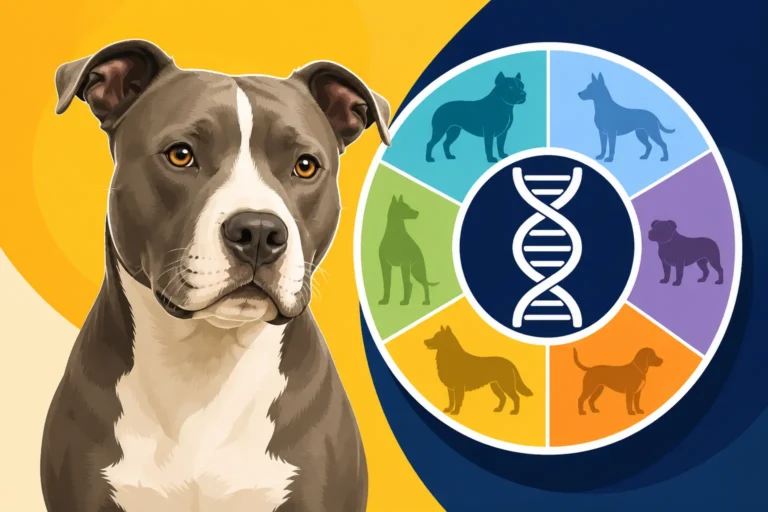
This is perhaps the biggest hurdle to clear: "Pit Bull" is not a recognized breed by major kennel clubs like the American Kennel Club (AKC). Instead, it's a general term used to describe a type of dog, typically encompassing several distinct breeds and their mixes that share similar physical characteristics. The most commonly accepted breeds under this umbrella include the American Pit Bull Terrier (recognized by the United Kennel Club, or UKC), the American Staffordshire Terrier (recognized by the AKC), and sometimes the Staffordshire Bull Terrier. Beyond these, you also have the American Bully, which is a newer type that often gets lumped in.
Imagine trying to define "sporty car" – it could be a sleek convertible, a powerful muscle car, or a nimble hatchback. All are "sporty," but they are fundamentally different models. It's the same with "Pit Bulls." Each of these actual breeds has its own history, breed standard, and often, slightly different temperamental nuances. Yet, in the eyes of the public and, by extension, many shelters, they all fall under one umbrella. This lack of a single, unified definition makes accurate labeling incredibly difficult, turning what should be a precise identification into a subjective guess. It’s no wonder so many of us feel like we’re constantly explaining the nuances. You can delve further into this topic by reading Why Pit Bull Is a Type and Not a Breed.
The Visual Identification Dilemma
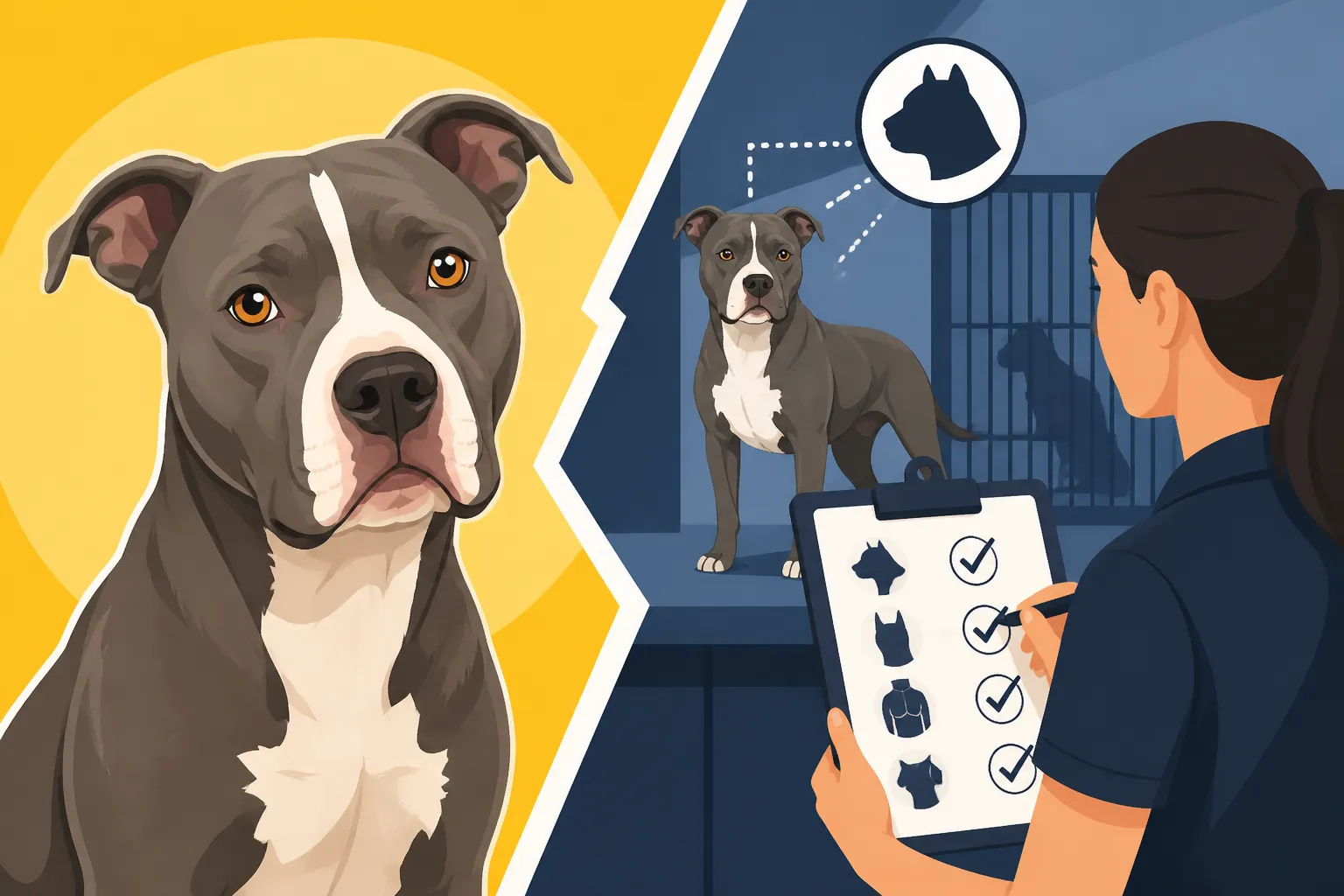
Given that "Pit Bull" isn't one breed, how do shelters come up with that label? Most often, it comes down to visual identification. Staff members, from kennel technicians to adoption counselors, look at a dog and make an assessment based on its physical appearance. They're trained to spot certain traits: a broad, square head; a muscular build; a short, smooth coat; and a powerful jawline. If a dog displays enough of these characteristics, it's often labeled as a "Pit Bull" or "Pit Bull mix."
The problem? This approach is notoriously unreliable. Studies have shown that even experienced veterinary professionals and shelter staff often misidentify breeds based on appearance alone. Many dogs are mixed breeds with a diverse genetic background, and a visual resemblance to a "Pit Bull" type dog doesn't necessarily mean there's a significant percentage of American Pit Bull Terrier or American Staffordshire Terrier in their DNA. Think of it like looking at a person and guessing their heritage based on facial features – it’s a gamble at best and often leads to incorrect conclusions. The subjectivity of it all can be incredibly frustrating for those of us who see the individual dog rather than just a label. For more on the accuracy of visual identification, check out How Accurate a Visual Pit Bull Call Is.
How the Breed Label Impacts Outcomes
The label "Pit Bull" carries significant weight, and its consequences for a dog in a shelter are profound and often heartbreaking. First, dogs labeled as Pit Bulls tend to stay in shelters longer than other breeds. There's a persistent stigma, fueled by sensationalized media and outdated stereotypes, that makes some potential adopters hesitant. Even if a dog is sweet, well-behaved, and affectionate, that label can deter people before they even meet the dog.
Beyond adoption rates, the label impacts a dog's very chance of survival. In some areas, breed-specific legislation (BSL) or policies by landlords and insurance companies place restrictions on these dogs, making it harder for shelters to find them suitable homes. A dog might be perfectly adoptable, but if a family lives in an apartment complex with a "no Pit Bulls" rule, that dog is out of luck. This means shelters, trying to be transparent and comply with local regulations, can inadvertently condemn a dog to a longer stay or, in the worst cases, euthanasia. It’s a harsh reality that the perception of a breed can overshadow the reality of an individual dog. The effects of this label on a dog's future are explored further in Why a Pit Bull Label Changes a Shelter Outcome.
The Role of Visual Assessment in Shelters
When a dog first enters a shelter, one of the initial steps is often to assign a breed label. For many organizations, this is a practical necessity for record-keeping and for providing potential adopters with some basic information. But as we've discussed, for "Pit Bull" types, this process is far from perfect. It's a quick, visual judgment call that relies heavily on a mental checklist of characteristics, rather than scientific precision.
Common Physical Traits Associated with "Pit Bulls"
So, what exactly are shelter staff looking for when they label a dog a "Pit Bull"? It typically comes down to a collection of physical traits that are commonly, though not exclusively, found in the various bully breeds. These include:
- Head Shape: Often described as broad, brick-like, or square. Many Pit Bull type dogs have a pronounced cheek muscle and a strong jaw.
- Body Build: Muscular, stocky, and athletic. They tend to be medium-sized dogs with a powerful appearance.
- Coat Type: Short, smooth, and close-lying. This is a common trait across many terrier and bulldog-type breeds.
- Ear Set: While historically cropped, many Pit Bulls have natural rose or button ears. The shape and set of the ears can contribute to the overall "look."
- Tail: Usually a medium-length tail, thick at the base and tapering to a point.
It's important to remember that these are generalized descriptions. A purebred Labrador might have a broad head, and a Boxer might have a muscular build. These traits aren't exclusive to Pit Bulls. This is where the visual assessment becomes so tricky – a dog could be a mix of several breeds, perhaps including a Boxer and a Hound, and still present with enough "Pit Bull-like" features to earn that label. It really makes you wonder how many times we're guessing incorrectly when a dog's whole future is on the line.
The Subjectivity of Visual Identification
The biggest flaw in visual breed identification is its inherent subjectivity. What one person identifies as a "Pit Bull," another might call a "Boxer mix" or even a "Lab mix." This isn't because one person is necessarily wrong, but because the lines between these physical traits are blurry, especially in mixed-breed dogs. A shelter staff member’s personal experience, cultural background, and even their individual biases can unconsciously influence their assessment. They might have grown up with a particular idea of what a "Pit Bull" looks like, and that image guides their judgment.
Think of it this way: if you ask ten different people to draw a "dog," you'd get ten different drawings, all recognizable as dogs, but with distinct features. Now imagine asking them to draw a "Pit Bull" – you'd likely get similar results, with a general consensus on head shape and musculature, but also a wide range of interpretations. This variability means that a dog surrendered to one shelter might be labeled a "Lab mix," but if it were transferred to another shelter down the road, it could suddenly become a "Pit Bull mix" based purely on a different staff member's visual interpretation. This inconsistency is a major problem, creating an unfair lottery for the dogs involved.
Staff Training and Consistency
To combat this subjectivity, many progressive shelters are now implementing standardized training programs for their staff on breed identification. These programs often emphasize that breed labels should be secondary to the individual dog's temperament and needs. Some even encourage staff to use broader, less specific terms like "terrier mix" or "bulldog type" rather than the blanket "Pit Bull." The goal is to move away from rigid, potentially harmful labels.
However, even with training, perfect consistency is a huge challenge. Staff turnover, varying levels of experience, and the sheer volume of dogs coming through the doors can make it difficult to maintain a uniform approach. Furthermore, some shelters are bound by local ordinances or insurance policies that require them to identify and label "Pit Bull" type dogs, regardless of their own philosophical leanings. This puts staff in a difficult position, forced to apply a label they know might be inaccurate or detrimental, simply to comply with external regulations. It’s a constant battle for many dedicated shelter workers who genuinely want the best for every dog in their care.
Genetics and DNA Testing in Breed Identification
In an ideal world, every dog that enters a shelter would get a full genetic workup, eliminating all doubt about its breed makeup. We'd know precisely what breeds contribute to their unique appearance and temperament. But we don't live in an ideal world, and the reality of DNA testing in shelters is a complex picture of cost, accessibility, and interpretation.
What a DNA Test Can and Cannot Tell You
A canine DNA test works by analyzing a dog's genetic markers and comparing them to a database of known breed signatures. When done correctly, these tests can provide a surprisingly accurate breakdown of a dog's ancestry, often pinpointing percentages of various breeds going back several generations. For many of us who love Pit Bulls, getting a DNA test done for our own furry companions is a fascinating way to understand their heritage. Products like those offered by Embark or Wisdom Panel can reveal a dog’s genetic makeup down to a surprising level of detail.
What these tests can tell you:
- Specific Breeds: Whether your dog has American Pit Bull Terrier, American Staffordshire Terrier, Staffordshire Bull Terrier, Bulldog, Boxer, or other breeds in their lineage.
- Genetic Health Predispositions: Many tests also screen for genetic markers associated with certain health conditions, offering valuable insights for lifelong care.
- Estimated Ancestry: They can often trace back several generations, showing the complexity of a mixed-breed dog.
What a DNA test cannot tell you (or what gets misinterpreted):
- Behavior: A DNA test tells you about breed, not about behavior. Just because a dog has a high percentage of a certain breed doesn't mean it will automatically exhibit all the stereotypical behaviors of that breed. Every dog is an individual.
- Visual Appearance: Sometimes a dog with very little "Pit Bull" DNA can still look like one, and vice versa. Genes express themselves in complex ways, and a small percentage of a breed can still give a dominant physical trait. This is a huge point of confusion.
- Instant Solutions: While a DNA test provides information, it doesn't automatically solve issues like breed restrictions from landlords or insurance companies, who often rely on visual assessment or their own arbitrary lists.
Ultimately, while DNA tests offer objective data, their interpretation in the context of a shelter label requires a nuanced understanding. You can learn more about this by reading Whether a DNA Test Settles the Pit Bull Question.
The Cost and Accessibility of DNA Testing
Here's where the rubber meets the road for shelters: DNA testing isn't cheap. While prices have come down over the years, a comprehensive genetic panel can still represent a significant expense, especially when you consider the hundreds or even thousands of dogs that pass through a shelter's doors annually. Most shelters operate on tight budgets, and allocating funds for routine DNA testing for every dog is simply not feasible.
Instead, DNA testing in shelters is often reserved for specific cases:
- Questionable Identification: If a dog's breed is particularly ambiguous and staff members can't agree on a label.
- Adoption Challenges: For long-term residents where a definitive breed might help overcome adoption barriers, especially if the dog has a unique look.
- Grant Funding: Some shelters secure grants specifically for DNA testing programs, allowing them to test a limited number of dogs.
- Owner Request: Occasionally, a potential adopter might offer to pay for a DNA test themselves, or a rescue group might fund it.
Because of these limitations, the vast majority of dogs in shelters, including those labeled "Pit Bull," do not receive DNA tests. Their label continues to be based on visual assessment, perpetuating the challenges we’ve already discussed.
When DNA Testing Overrides Visual Labels
In the instances where a DNA test is performed on a shelter dog, the results can sometimes be surprising and revelatory. Imagine a dog that has been labeled a "Pit Bull mix" for months, struggling to find a home due only to the stigma. Then, a DNA test comes back, revealing the dog is primarily a Labrador Retriever and German Shepherd mix, with no detectable "Pit Bull" ancestry. What then?
In these cases, shelters often celebrate the new, accurate information. They update the dog's kennel card, marketing materials, and online profiles. This can be a game-changer for the dog, as the new label might bypass breed restrictions, make the dog more appealing to a broader range of adopters, and potentially shorten their stay dramatically. It's a powerful example of how objective data can debunk visual bias. However, it also highlights the inherent flaw in the initial visual labeling process and serves as a stark reminder of how many dogs might be mislabeled without ever getting a second, scientific look. The data on how DNA testing influences outcomes for labeled dogs is further discussed in DNA Testing Against a Shelter Pit Bull Label.
Historical Context and Public Perception's Influence
It's impossible to talk about how shelters label Pit Bulls without addressing the massive elephant in the room: public perception and historical context. The way these dogs are viewed by society, shaped by decades of media narratives and breed-specific legislation, has a profound impact on how they are categorized and treated in the shelter system. This isn't just about what a dog looks like; it's about what that look means to people.
The Evolution of the "Pit Bull" Stereotype
The stereotype of the "Pit Bull" as an inherently dangerous, aggressive dog is a relatively modern phenomenon, largely perpetuated by media sensationalism starting in the 1980s. Before that, Pit Bull type dogs were celebrated as loyal family pets, American icons, and even "nanny dogs," a term often associated with their perceived patience and gentleness with children. Famous figures like Buster Brown and Sergeant Stubby, a decorated WWI hero, were Pit Bull types. They were the "all-American dog."
However, as dog fighting became more publicly scrutinized and certain media outlets sought a convenient villain, the narrative shifted dramatically. Suddenly, the same traits that made them powerful working dogs – their strength, determination, and loyalty – were twisted into characteristics of an uncontrollable menace. This narrative often ignored the critical role of human training, neglect, and abuse in shaping a dog's behavior, instead placing the blame solely on the breed itself. This shift has created an uphill battle for every Pit Bull type dog, regardless of its individual temperament. The roots of this "nanny dog" story and its eventual debunking are covered in Why the Pit Bull Nanny Dog Story Is a Myth.
Breed Specific Legislation and Shelter Policies
The negative stereotype of Pit Bulls led directly to the proliferation of breed-specific legislation (BSL) across the country and even in other parts of the world. BSL are laws that ban or heavily restrict the ownership of certain dog breeds, with "Pit Bull" type dogs almost always at the top of the list. These laws can manifest in various ways: outright bans, mandatory muzzling in public, higher licensing fees, requirements for special insurance, or even forced sterilization.
For shelters, BSL creates an immense challenge. If a shelter is in a municipality with BSL, they must identify dogs that fall under the "Pit Bull" umbrella to comply with the law. This means even if staff believe a dog is a Labrador mix, if it has enough physical traits to be perceived as a Pit Bull by animal control or the public, they may be forced to label it as such. This isn't about preference; it's about legal compliance and the fear of repercussions. It also severely limits the pool of potential adopters, as many homes will be in areas where owning such a dog is illegal or prohibitively difficult. You can find more information about these challenges in Where Pit Bull Legislation Still Applies.
Shifting Public Opinion and Its Impact
Despite the persistent stereotypes and BSL, public opinion on Pit Bulls has slowly but surely begun to shift. There's a growing understanding that breed is not a reliable predictor of individual temperament and that responsible ownership, training, and socialization are far more important factors. Advocacy groups, responsible owners, and even some shelters have worked tirelessly to re-educate the public, highlighting the loving, loyal, and goofy nature of these dogs.
This shift has empowered some shelters to adopt "breed-neutral" policies, where they no longer label dogs by breed at all, or they use very general terms like "mixed breed." They focus instead on describing the dog's individual personality, energy level, and specific needs. This approach aims to circumvent biases and encourage adopters to choose a dog based on its behavior and compatibility, rather than a potentially misleading label. While these changes are slow and uneven across different regions, they represent a hopeful future for countless "Pit Bull" type dogs who have been unfairly judged for far too long. This evolution in perception is discussed more in How Public Opinion on Pit Bulls Has Shifted.
Behavioral Assessments vs. Breed Labels
One of the most profound shifts in animal sheltering philosophy over the last few decades has been the move away from relying solely on breed labels to predict a dog's behavior, towards comprehensive behavioral assessments. This is particularly crucial for "Pit Bull" type dogs, given the deep-seated stereotypes that often accompany their visual identification.
The Limitations of Breed-Based Behavior Predictions
The idea that a dog's breed automatically dictates its behavior is a myth that has caused immense harm. While some breeds may have genetic predispositions for certain traits (e.g., a Border Collie's herding instinct, a Retriever's desire to fetch), individual temperament varies wildly within any breed. Assuming all Pit Bulls are aggressive, or all Golden Retrievers are gentle, is a gross oversimplification and deeply unfair to the dogs themselves.
A dog's behavior is a complex interplay of genetics, early socialization, training, past experiences (positive or negative), and the environment it lives in. A Pit Bull type dog raised with love, proper training, and extensive socialization is far more likely to be a well-adjusted, friendly companion than a dog of any breed that has been neglected or abused. When shelters rely on breed labels, they risk overlooking fantastic dogs purely based on appearance, and conversely, they might mistakenly assume a non-bully breed is safe without assessing its individual behavior. This is why a simple label can betray the true nature of a dog so thoroughly.
Standardized Behavioral Evaluations
To move beyond breed stereotypes, many shelters now conduct standardized behavioral evaluations for every dog that comes through their doors. These assessments are designed to observe a dog's reactions in various controlled situations, providing a more accurate picture of their individual personality and potential needs in a home environment. While there are different protocols, common elements include:
- Human Interaction: How does the dog react to strangers? Do they approach enthusiastically, cautiously, or with fear/aggression? Do they enjoy petting and handling?
- Dog-Dog Interaction: How does the dog behave when introduced to other dogs? Are they playful, avoidant, or do they show signs of reactivity? These tests are crucial for determining if a dog can live in a multi-dog household.
- Resource Guarding: How does the dog react if someone approaches their food bowl or a favorite toy? This helps identify potential issues that need management.
- Leash Manners: How does the dog walk on a leash? Do they pull excessively, or are they easy to walk?
- Startle Response: How does the dog react to sudden noises or movements?
- Handling Sensitivity: How does the dog tolerate having its paws, ears, and mouth examined?
These evaluations provide concrete, observable data about an individual dog. A Pit Bull type dog that scores high on friendliness and low on reactivity is then marketed as such, regardless of its appearance. This shifts the focus from "what breed is it?" to "what kind of companion will this dog be?" When looking for a new family member, this individualized assessment is truly invaluable.
Focusing on the Individual Dog, Not the Label
The ultimate goal of behavioral assessments is to treat each dog as an individual, rather than an embodiment of its perceived breed. This approach not only provides more accurate information for potential adopters but also leads to better outcomes for the dogs. When shelters describe a dog based on its personality – "affectionate couch potato," "high-energy adventurer," "playful companion" – adopters are more likely to find a true match, leading to more successful adoptions and fewer returns.
This requires a cultural shift within the shelter itself, moving away from quick judgments and towards patient observation. It means staff members are trained to see beyond a dog's visual type and focus on its actions, reactions, and needs. For those of us who adore Pit Bulls, this is a vital step in dismantling the unfair prejudice these dogs often face. It encourages everyone to ask, "Who is this dog?" rather than "What is this dog?" It also helps adopters find the right supplies, whether that's a durable chew toy from Chewy for a strong chewer, or a soft, calming bed for an anxious pup – all tailored to the individual dog's personality, not just its breed label.
The Impact of Breed Labels on Adoption and Rescue
The journey of a "Pit Bull" type dog through the shelter system is undeniably tougher than for many other dogs. From the moment they arrive, the label itself acts as a barrier, shaping their experience and dictating their chances of finding a loving home. This isn't a problem caused by the dogs themselves, but by the societal perceptions and logistical hurdles created around their classification.
Longer Wait Times for Labeled "Pit Bulls"
It's a stark reality: dogs labeled as "Pit Bulls" or "Pit Bull mixes" typically spend significantly more time in shelters than other dogs. This isn't due to any inherent flaw in their character; it's a direct consequence of the stigma and the various barriers to adoption that the label creates.
Potential adopters might scroll past their pictures online, or walk past their kennels in person, simply because of the "Pit Bull" tag. They might be worried about insurance companies, landlords, or simply the judgments of friends and family. This means countless deserving dogs languish in shelters, occupying valuable kennel space, and missing out on the comfort of a home. Longer stays lead to increased stress for the animals, higher costs for the shelter, and a reduced capacity to take in more dogs in need. It's a vicious cycle that dedicated shelter staff try desperately to break. You can read more about the challenges these dogs face in How Many Pit Bull Type Dogs Shelters Hold.
Breed Restrictions from Landlords and Insurers
Perhaps one of the most significant and frustrating barriers to adoption for "Pit Bull" type dogs comes from housing and insurance restrictions. Many apartment complexes, rental agencies, and homeowners associations (HOAs) have blanket bans on certain breeds, with Pit Bulls almost universally topping these lists. This means even if a potential adopter lives in a breed-neutral city, their housing situation might prevent them from bringing home a labeled Pit Bull.
Similarly, many homeowners insurance companies either refuse to cover homes with specific breeds, or they charge significantly higher premiums. This leaves prospective owners in a difficult position: choose between a beloved pet and affordable housing or insurance. These policies are often based on outdated statistics and fear-mongering rather than actual bite incident data, which shows that breed is not the primary factor in dog bites. For more on navigating these restrictions, see What a Landlord Looks At Before Refusing a Dog. It's a constant battle, and it highlights why it's so important for advocates to push for breed-neutral housing and insurance policies.
Advocacy and Re-labeling Efforts
Recognizing the immense challenges posed by breed labels, many shelters and rescue organizations have become powerful advocates for "Pit Bull" type dogs. These efforts include:
- Breed-Neutral Marketing: Shifting away from breed labels in adoption listings and focusing instead on individual personality traits, energy levels, and specific needs. This might mean using descriptions like "terrier mix" or simply "mixed breed" rather than "Pit Bull."
- Education and Outreach: Actively working to dispel myths and educate the public about the true nature of Pit Bulls. This includes sharing success stories, highlighting the dogs' trainability and affectionate qualities, and providing resources for responsible ownership.
- Behavior-Based Matching: Investing in robust behavioral assessment programs to ensure dogs are matched with appropriate homes based on their individual temperament, not their appearance.
- Community Support: Providing resources and guidance for adopters facing housing or insurance restrictions, sometimes even offering to write letters of recommendation for well-behaved dogs. Many online retailers, like Chewy, also offer educational content to help new pet parents understand dog behavior better, which can be a great resource for debunking breed myths.
- Policy Advocacy: Actively lobbying against BSL and promoting breed-neutral policies at local and state levels.
These advocacy efforts are slowly making a difference, allowing more "Pit Bull" type dogs to be seen for the wonderful individuals they are, rather than just a stigmatized label. However, the fight for fair treatment and equal opportunity for these dogs is far from over, and it requires continuous effort from shelters, rescue groups, and passionate owners alike. For a deeper understanding of why shelter staff may over-identify these dogs, explore Why Shelters Over-Identify Pit Bull Type Dogs.
The Future of Breed Identification in Shelters
The conversation around how shelters identify and label "Pit Bull" type dogs is constantly evolving. As scientific understanding of canine genetics grows, and as societal attitudes slowly shift, there's a clear trend towards more nuanced, compassionate, and ultimately, more effective approaches. The goal is simple: to give every dog the best possible chance at a loving home, free from unfair prejudice.
Moving Towards Breed-Neutral Policies
One of the most promising developments in animal welfare is the increasing adoption of "breed-neutral" policies by shelters and rescue organizations. This means intentionally moving away from assigning breed labels altogether, or at least using very broad, inclusive terms. Instead of "Pit Bull mix," a dog might simply be listed as "mixed breed" or "terrier type."
The philosophy behind this is powerful: by removing the breed label, shelters aim to eliminate conscious and unconscious biases that prevent dogs from being adopted. Instead of making snap judgments based on appearance, potential adopters are encouraged to focus on the dog's individual personality, its needs, and its compatibility with their lifestyle. It means that whether a dog looks like a powerful bully breed or a fluffy poodle, its chances of adoption are determined by its character, not its genetic heritage or how a human perceives its visual type. This approach respects each dog as an individual and empowers adopters to make informed decisions based on genuine connection.
The Importance of Education for Adopters
Even with breed-neutral policies in place, education remains absolutely vital. Prospective adopters still come to shelters with preconceived notions, some of which are deeply ingrained. It's the shelter's responsibility, along with dedicated advocates, to help debunk myths and provide accurate information. This education can cover:
- Individual Temperament: Emphasizing that every dog is an individual and that behavior is a product of many factors beyond breed.
- Responsible Pet Ownership: Highlighting the importance of training, socialization, and proper management for all dogs, regardless of their appearance.
- Addressing Concerns: Openly discussing common concerns about certain breeds, providing factual counterarguments, and offering solutions or resources. For instance, explaining that a robust chew toy from a reputable provider like Chewy can address strong chewing habits in any dog, not just a "bully breed."
- Legal Landscape: Informing adopters about local ordinances or potential housing/insurance restrictions before they fall in love with a dog, so they can make an informed decision.
By arming adopters with knowledge, shelters can empower them to look beyond appearances and make choices based on compatibility and a realistic understanding of dog behavior. This proactive approach helps to break down the walls of prejudice one adoption at a time.
Supporting Responsible Ownership Beyond Labels
Ultimately, the goal isn't just to get dogs adopted; it's to ensure they thrive in their new homes. This means supporting responsible ownership in every way possible, extending far beyond the initial adoption process. For "Pit Bull" type dogs, who often face extra scrutiny, this support is even more critical.
Shelters and rescue groups are increasingly offering post-adoption resources such as:
- Training Classes: Providing or recommending positive reinforcement training classes to help new owners build a strong bond and address any behavioral needs.
- Behavioral Consultations: Offering follow-up consultations with behaviorists for dogs who might be struggling to adjust.
- Community Resources: Connecting owners with local support networks, breed-specific rescue groups, or online communities where they can find advice and camaraderie.
- Access to Supplies: Partnering with pet supply retailers to ensure new owners have access to necessary items. For example, some shelters give new adopters a starter kit or discount code for sites like Chewy, ensuring they have everything from durable leashes and harnesses to appropriate food and enrichment toys.
By investing in ongoing support for owners, especially those who adopt dogs traditionally labeled as "Pit Bulls," shelters help ensure that these dogs remain in their loving homes. It’s a holistic approach that recognizes that a successful adoption is a partnership between the dog, the owner, and the community, working together to overcome stereotypes and celebrate the individual spirit of every dog.
| Breed Identification Method | Description | Pros | Cons |
|---|---|---|---|
| Visual Assessment | Staff identify breeds based on observable physical traits. | Quick, no cost, common practice. | Highly subjective, prone to error, perpetuates stereotypes. |
| DNA Testing | Genetic analysis compares dog's DNA to breed databases. | Objective, highly accurate for breed composition, can reveal health info. | Expensive, not feasible for all shelter dogs, results don't predict behavior. |
| Behavioral Assessment | Structured tests observe a dog's reactions in various scenarios. | Focuses on individual dog, strong predictor of home compatibility. | Requires trained staff, time-consuming, behavior can vary by context. |
| Owner History | Information provided by previous owner about breed and background. | Can provide valuable context if accurate. | Often unreliable, owners may not know breed, or misrepresent facts. |
| Breed-Neutral Policies | Intentional avoidance of specific breed labels for marketing. | Reduces bias, encourages focus on individual dog, promotes adoptions. | May still face external challenges (BSL, landlord rules), requires staff training. |
Disclaimer
This article is for general informational purposes only and does not constitute professional advice. Laws, prices and regulations vary by location and change over time. Consult a qualified professional for guidance on your specific situation.