How Accurate a Visual Pit Bull Call Is
It's incredibly frustrating when your beloved dog, who you know inside and out, is summarily labeled a "Pit Bull" by someone who barely knows them, based purely on how they look. This snap judgment can lead to a cascade of unfair consequences, from housing denials to insurance woes, all because of a visual guess. This guide will delve deep into the complex reality of visually identifying a "Pit Bull" type dog, exploring just how accurate — or inaccurate — those quick assessments truly are.
The Elusive "Pit Bull" Definition and Its Visual Conundrum
When someone points to a dog and declares, "That's a Pit Bull," they often don't realize they're using a term that's much broader and more ambiguous than they think. The problem starts because "Pit Bull" isn't actually a single recognized breed by major kennel clubs like the American Kennel Club (AKC). Instead, it's a descriptive umbrella term that generally refers to a group of dogs with similar physical characteristics, stemming from their shared heritage as bull-and-terrier crosses. This fundamental misunderstanding is where the visual identification challenge truly begins.
Why "Pit Bull" is a Type, Not a Breed
Imagine trying to visually identify a "sporty car" and expecting everyone to instantly agree on the exact make and model. That's essentially what happens with "Pit Bulls." The term encompasses several distinct breeds and their mixes, most notably the American Pit Bull Terrier (APBT), the American Staffordshire Terrier (AmStaff), and sometimes even the Staffordshire Bull Terrier. Each of these breeds has its own specific breed standard, but to the untrained eye, their appearances often overlap significantly. This is why you can have two dogs, one an APBT and one an AmStaff, that look almost identical to a casual observer, yet are recognized as distinct by their respective breed registries. This inherent vagueness is a huge part of why visual identification is so tricky. You can learn more about this distinction in our article Why Pit Bull Is a Type and Not a Breed.
The confusion is further compounded by the fact that many dogs labeled "Pit Bulls" are actually mixed breeds, often containing DNA from multiple different breeds. They might have a square head or a muscular build that hints at a Pit Bull-type ancestor, but also carry genes from Boxers, Bulldogs, Labs, or even herding breeds. Yet, because of one or two prominent visual traits, they get lumped into the "Pit Bull" category. This leads to countless dogs being misidentified, which can unfairly paint an entire group of dogs with a broad, often negative, brush.
The Breeds Commonly Labeled "Pit Bull"
Let's break down the main contenders that often get thrown under the "Pit Bull" label. The American Pit Bull Terrier (APBT) is recognized by the United Kennel Club (UKC) and the American Dog Breeders Association (ADBA). They are typically athletic, medium-sized dogs with strong, muscular builds. Then there's the American Staffordshire Terrier (AmStaff), recognized by the AKC, which often has a slightly stockier build and a broader head. Historically, these two breeds share a common ancestry, but diverged over time due to different breeding goals and kennel club recognition.
Adding to this, the Staffordshire Bull Terrier, a smaller, compact, and equally muscular dog, is also often visually mistaken for its larger American cousins. And, of course, there are countless mixed-breed dogs that happen to inherit some of the physical characteristics—like a blocky head, strong jaws, or a short, sleek coat—that people associate with "Pit Bulls." The sheer variety within this group means that relying on a quick glance is almost always an oversimplification, missing the true genetic tapestry of the individual dog. Without a pedigree or DNA test, it's truly a guessing game.
The Science (or Lack Thereof) of Visual Identification
It might seem straightforward to look at a dog and assign it a breed. After all, we recognize Golden Retrievers and Poodles easily enough, right? But when it comes to "Pit Bull" types, the human eye is notoriously unreliable. Numerous studies and expert opinions have shown that even seasoned professionals, like veterinarians and shelter staff, frequently misidentify these dogs when relying solely on visual cues. This isn't a reflection of their expertise as much as it is a testament to the complex genetics and phenotypic overlap present in these types of dogs.
Studies on Visual Breed Identification Accuracy
Research into breed identification has consistently highlighted the inaccuracies of visual assessment, especially for Pit Bull-type dogs. One notable study, published in the Journal of the American Veterinary Medical Association, found that visual identification of Pit Bull-type dogs by shelter staff, who regularly interact with hundreds of dogs, was often incorrect when compared to DNA analysis. In many cases, dogs identified as "Pit Bulls" visually had little to no DNA from breeds commonly associated with the "Pit Bull" designation. Conversely, some dogs with significant Pit Bull lineage were not visually identified as such.
This is a critical point for owners to understand, especially those facing breed restrictions. Your dog, who might visually appear to be a Pit Bull, could scientifically be something entirely different, or a complex mix. The implications of these studies are profound, challenging the very basis of breed-specific legislation and restrictive housing policies that rely on such unreliable visual identification. For instance, a dog might be denied housing because a landlord thinks it looks like a Pit Bull, even if a DNA test would prove otherwise. This leads us to question the entire system built on these visual calls.
Expert Disagreement and Subjectivity
It's not just a matter of the average person being mistaken; even experts can't consistently agree. Veterinary professionals, animal control officers, and shelter workers, despite their experience, often have differing opinions on what constitutes a "Pit Bull" based purely on sight. This subjectivity is a major red flag. If people who work with dogs every day cannot agree, how can we expect landlords, insurance adjusters, or even casual passersby to make an accurate assessment? How Shelters Decide a Dog Is a Pit Bull often comes down to these subjective visual assessments, which means a dog's fate can hinge on a single person's interpretation.
The problem lies in the inherent lack of a universally accepted visual standard for the "Pit Bull" type. Since it's not a single breed, there's no official blueprint for what a "Pit Bull" should look like. Instead, people rely on common stereotypes: a broad head, muscular build, short coat. But many breeds, and countless mixed-breed dogs, share these characteristics without being genetically considered "Pit Bulls." This disagreement among experts underscores why legal and housing decisions based on visual identification are inherently flawed and often lead to unjust outcomes for dogs and their families.
Common Visual Cues and Their Flaws
When someone makes a visual "Pit Bull call," they're usually looking for a handful of characteristic traits. These might include a particular head shape, a certain muscularity, or even the dog's coat color. However, relying on these cues in isolation or combination is deeply problematic because these features are not exclusive to Pit Bull-type dogs. Many other breeds, and indeed countless mixed-breed dogs, can exhibit these same physical attributes, making visual identification a minefield of potential errors.
Head Shape and Jaw Structure
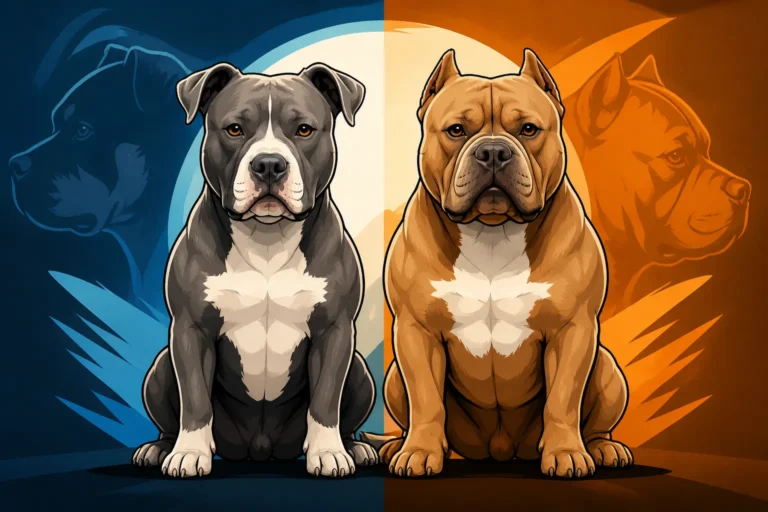
One of the most commonly cited visual cues for a "Pit Bull" is a broad, blocky head, sometimes described as "brick-like," along with strong jaw muscles. It's true that many American Pit Bull Terriers and American Staffordshire Terriers do possess these head characteristics. However, this trait is far from unique. Breeds like Boxers, Bulldogs (American, English, and French), Mastiffs, and even some types of curs or shepherd mixes can also have strong, wide heads and powerful jaws.
Consider an American Bulldog, for instance; they often have an incredibly broad head and muscular build that could easily be mistaken for a "Pit Bull" by someone unfamiliar with the nuances of each breed. Or a Boxer, with its distinctively shaped head, might be misidentified by someone simply looking for a "square-headed dog." Moreover, head shape alone tells you nothing about a dog's genetic makeup beyond a very superficial resemblance. It's a single data point in a complex genetic profile, often given undue weight in quick visual assessments.
Muscularity and Body Type
Another popular visual cue is the powerful, athletic, and heavily muscled physique often seen in Pit Bull-type dogs. These dogs were historically bred for strength and agility, and their build reflects that. Owners often marvel at their dog's impressive musculature, which can be seen in our article Pit Bull Weight and Muscle on a Working Frame. However, many other breeds share this athletic, muscular build. Think of a Doberman Pinscher, a Rottweiler, or even a highly conditioned Labrador Retriever. They all can exhibit significant musculature and a powerful stance.
The problem here is that musculature is a function of genetics and conditioning. A well-exercised, healthy mixed-breed dog with no Pit Bull lineage might develop a very muscular physique simply due to its activity level and good nutrition. Conversely, a purebred APBT that is sedentary or overweight might not display the stereotypical muscularity. Therefore, relying on body type alone as a definitive marker for "Pit Bull" identification is incredibly unreliable. It leads to dogs being labeled based on their physical fitness rather than their actual breed heritage.
Coat Color and Markings
While less reliable than head shape or musculature, some people mistakenly associate certain coat colors or markings with "Pit Bulls." For example, "blue nose" or "red nose" Pit Bulls are terms used to describe dogs with diluted black or red pigments, respectively, often fetching higher prices from disreputable breeders. However, these are merely color variations, not distinct breeds or definitive identifiers of a "Pit Bull." Blue and red coat dilutes can be found in many breeds, from Weimaraners to Great Danes, and certainly in various mixed breeds.
Similarly, patterns like brindle or piebald (large patches of color on a white background) are common in Pit Bull-type dogs, but they are also seen in many other breeds. A brindle Boxer, a black and white mixed-breed hound, or even a cattle dog mix could possess these markings. The idea that a specific color or pattern automatically means a dog is a "Pit Bull" is a misconception that further highlights the flaws in visual identification. These superficial traits offer no real insight into a dog's genetic makeup and contribute to mislabeling based on appearance.
The Impact of a Visual Label
Being visually labeled a "Pit Bull" carries a heavy burden for both the dog and their human family. This label, often assigned incorrectly, can dictate where you can live, how much you pay for insurance, and even impact your dog's future if they ever end up in a shelter. The consequences are far-reaching and highlight why accurate identification is so crucial. It's not just about semantics; it's about a dog's well-being and an owner's fundamental rights.
Housing Restrictions and Landlord Bias
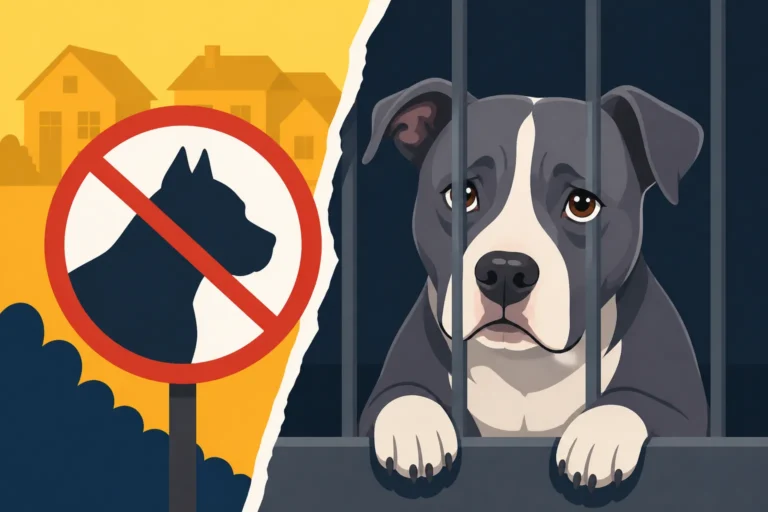
Perhaps one of the most immediate and impactful consequences of a visual "Pit Bull" label is encountering housing restrictions. Many apartment complexes, homeowners' associations (HOAs), and even entire rental markets have breed-specific policies that prohibit "Pit Bull-type" dogs. This often means owners are forced to choose between their beloved companion and finding a place to live. The frustration is immense when your well-behaved, loving dog is denied entry simply because someone thinks they look a certain way. Our article Finding a Rental That Takes a Pit Bull goes into more detail on how challenging this can be.
These policies rarely require actual breed verification, relying instead on subjective visual assessments by landlords or property managers who may have no canine expertise. A dog that is 10% American Staffordshire Terrier and 90% Labrador Retriever might be denied simply because it has a broad head. This forces many responsible owners to either lie about their dog's breed, which carries its own risks, or embark on an incredibly difficult search for Pit Bull-friendly housing, often paying higher pet deposits or rent. It limits choices and creates unnecessary stress, all based on a visual guess.
Insurance Challenges and Premium Hikes
Another significant hurdle for owners of visually identified "Pit Bulls" is pet insurance and homeowners' insurance. Many insurance providers maintain "dangerous dog breed" lists, and Pit Bull-type dogs frequently appear on them. This can lead to higher premiums, outright denial of coverage, or specific exclusions for liability claims related to your dog. The implication is that simply owning a dog that looks like a Pit Bull automatically makes you a higher risk, regardless of your dog's actual temperament or training. Getting Home Insurance With a Pit Bull can be a complex endeavor.
Even if you find an insurer willing to cover your dog, the policy might come with a "Pit Bull rider" or a higher deductible. This often means that should an incident occur, even a minor one, your financial responsibility could be much greater. It's a constant worry for owners, knowing that their dog's appearance could lead to financial penalties, even when their dog is a model citizen. This financial burden, coupled with the emotional toll, highlights the injustice of breed discrimination based on visual cues alone.
Adoption Barriers in Shelters
For dogs in shelters, a "Pit Bull" label can be a death sentence, or at the very least, lead to extended stays and significantly reduced chances of adoption. Shelters often rely on visual identification to assign breed labels, which then impacts how the dog is marketed to potential adopters and whether they can be adopted into homes in areas with breed-specific legislation. A dog labeled a "Pit Bull" is often perceived through a lens of negative stereotypes, deterring adopters who might otherwise fall in love with their personality.
Many shelters are working to combat this by moving towards "breed-neutral" labeling, focusing on individual temperament and behavior rather than speculative breed identification. However, the legacy of visual identification persists. A dog with a fantastic temperament, great with kids, and perfectly house-trained might be overlooked simply because it possesses a blocky head. This dramatically limits their pool of potential adopters and contributes to the overrepresentation of Pit Bull-type dogs in shelters, languishing there because of an arbitrary label. It's a heartbreaking reality for many dogs awaiting their forever homes.
When DNA Testing Steps In
Given the profound inaccuracies and negative consequences of visual "Pit Bull" identification, many owners are turning to DNA testing to get a definitive answer about their dog's genetic makeup. While not a perfect solution, DNA testing offers a much more scientific and objective assessment than a casual glance, providing clarity and sometimes opening doors that were previously closed due to breed stereotypes.
How DNA Testing Works for Breed Identification
Dog DNA testing typically involves a simple swab from your dog's cheek, which collects cells containing their genetic material. This sample is then sent to a lab where scientists analyze specific markers in the DNA, comparing them against a vast database of known breed genetic profiles. The results usually provide a breakdown of your dog's ancestral lineage, often listing percentages of various breeds present in their genetic code. Many companies, including those found through retailers like Chewy, offer these kits, making them accessible to the average pet owner.
It's important to understand that no DNA test can definitively tell you "yes, your dog is a Pit Bull" in the singular sense because, as we've discussed, "Pit Bull" is a type. What it will tell you is the percentage of American Pit Bull Terrier, American Staffordshire Terrier, Staffordshire Bull Terrier, or other breeds like Boxer, Bulldog, etc., that contribute to your dog's genetic makeup. This precise information can be invaluable for owners trying to navigate breed restrictions or simply understand their dog's heritage better. Whether a DNA Test Settles the Pit Bull Question delves into this in more detail.
Limitations and Practicalities of DNA Results
While DNA testing offers a more accurate picture than visual assessment, it's not without its limitations. Firstly, the accuracy of the results can depend on the quality and size of the testing company's breed database. Some companies have more comprehensive databases than others, particularly for less common breeds or very complex mixes. If your dog has a very rare breed in its lineage, it might not show up. Secondly, even with a clear DNA report, convincing landlords or insurance companies to accept the results over their visual policies can still be an uphill battle. Some policies are written so broadly that they encompass any dog with any percentage of a "restricted" breed, regardless of how small.
Another practical consideration is the interpretation of the results. If a dog comes back as 25% American Pit Bull Terrier, 25% Boxer, and 50% Labrador Retriever, visually, it might still look like a "Pit Bull" to some. The DNA test provides the facts, but societal perception and existing rules don't always align with those facts. However, for many owners, having the scientific data provides peace of mind and a powerful tool for advocacy. It allows them to say, "My dog isn't just a guess; here's the science," which can be empowering when facing discrimination.
Beyond the Visual: What Truly Defines a Dog
While appearance can certainly capture our attention, it's a dog's temperament, behavior, and the quality of care they receive that truly define them. Focusing solely on visual cues or a breed label distracts from the individual qualities that make each dog unique and wonderful. For Pit Bull-type dogs especially, moving beyond the visual is crucial for dispelling myths and promoting responsible ownership.
Temperament, Training, and Individual Personality
A dog's breed might give us some general insights into potential predispositions, but it is their individual temperament that truly matters. A well-socialized, responsibly trained, and loved Pit Bull-type dog can be an incredibly gentle, affectionate, and stable companion. Conversely, a dog of any breed, if poorly socialized or mistreated, can develop behavioral issues. The truth is, a dog's behavior is far more influenced by its upbringing, training, and environment than by its breed label. This is why organizations like the American Temperament Test Society (ATTS) conduct temperament tests, revealing that Pit Bull-type dogs often score very well, debunking many of the negative stereotypes. You can look at Pit Bull Temperament and the ATTS Results for more.
Owners of Pit Bull-type dogs often go above and beyond in training and socialization because they understand the scrutiny their dogs face. They invest time and effort in obedience classes, expose their puppies to a wide variety of sights and sounds, and practice good manners consistently. This dedication shapes a dog's personality and behavior, making them excellent ambassadors for their type. When judging a dog, we should always look at their actions, their confidence, their responsiveness to their owner, and their overall demeanor, rather than just their physical appearance.
The Role of Responsible Ownership
The single most significant factor in a dog's behavior and integration into society is responsible ownership. This applies to every dog, regardless of breed or type. Responsible owners provide proper nutrition, consistent training, appropriate exercise, regular veterinary care, and diligent supervision. They understand their dog's individual needs and work to meet them, ensuring their dog is a positive member of the community. This includes ensuring their dog is leashed in public, contained securely at home, and that any potential behavioral issues are addressed promptly and professionally.
For owners of Pit Bull-type dogs, the bar for responsible ownership is often set even higher due to societal prejudice. They understand the importance of being exemplary owners, not just for their own dog but for the reputation of the entire type. This includes proactive socialization, clear communication with others about their dog, and often going to great lengths to provide safe, enriching lives for their companions. What truly defines a great dog is not its head shape or muscularity, but the love and effort invested by a responsible human. Companies like Chewy support responsible pet ownership by providing access to high-quality food, durable chew toys like those mentioned in Chews That Hold Up to a Pit Bull, and training tools that help owners meet their dogs' specific needs.
Advocating for Your Dog
If your dog has been visually labeled a Pit Bull and you're facing restrictions or discrimination, advocating for them is essential. This might involve educating landlords or insurance agents with information about visual identification inaccuracies and, if possible, providing DNA test results. It could also mean seeking out legal resources or advocacy groups that fight against breed-specific legislation. Your voice, combined with factual data, can make a difference.
Remember, your dog is an individual. They are defined by their unique personality, their learned behaviors, and the bond they share with you, not by a superficial glance or a misunderstood label. By focusing on the true characteristics that make a dog a wonderful companion – temperament, training, and responsible care – we can challenge misconceptions and ensure that every dog, regardless of its appearance, is judged fairly.
Comparing Visual Identification to DNA Testing
Let's lay out a quick comparison of how visual identification stacks up against DNA testing when trying to determine a dog's breed or type. This table should make it clear why relying on your eyes alone can be so misleading, especially for dogs often labeled as "Pit Bulls."
| Feature | Visual Identification | DNA Testing |
|---|---|---|
| Accuracy | Highly unreliable, prone to misidentification. | High accuracy (dependent on database size and quality). |
| Basis | Subjective interpretation of physical traits. | Objective analysis of genetic markers. |
| Cost | Free (just looking at the dog). | Varies (kit purchase, lab analysis). |
| Time | Instantaneous. | Weeks for lab processing. |
| Expertise Req. | None (anyone can make a guess). | Scientific labs and geneticists. |
| Information | Broad, stereotypical "type" label (e.g., "Pit Bull"). | Specific breed percentages (e.g., 50% APBT, 25% Boxer). |
| Acceptance | Often accepted by landlords/insurers (despite inaccuracy). | Varies; sometimes disregarded in favor of visual policy. |
| Usefulness | Limited, can lead to discrimination. | Provides factual basis for advocacy and informed choices. |
Disclaimer
This article is for general informational purposes only and does not constitute professional advice. Laws, prices and regulations vary by location and change over time. Consult a qualified professional for guidance on your specific situation.