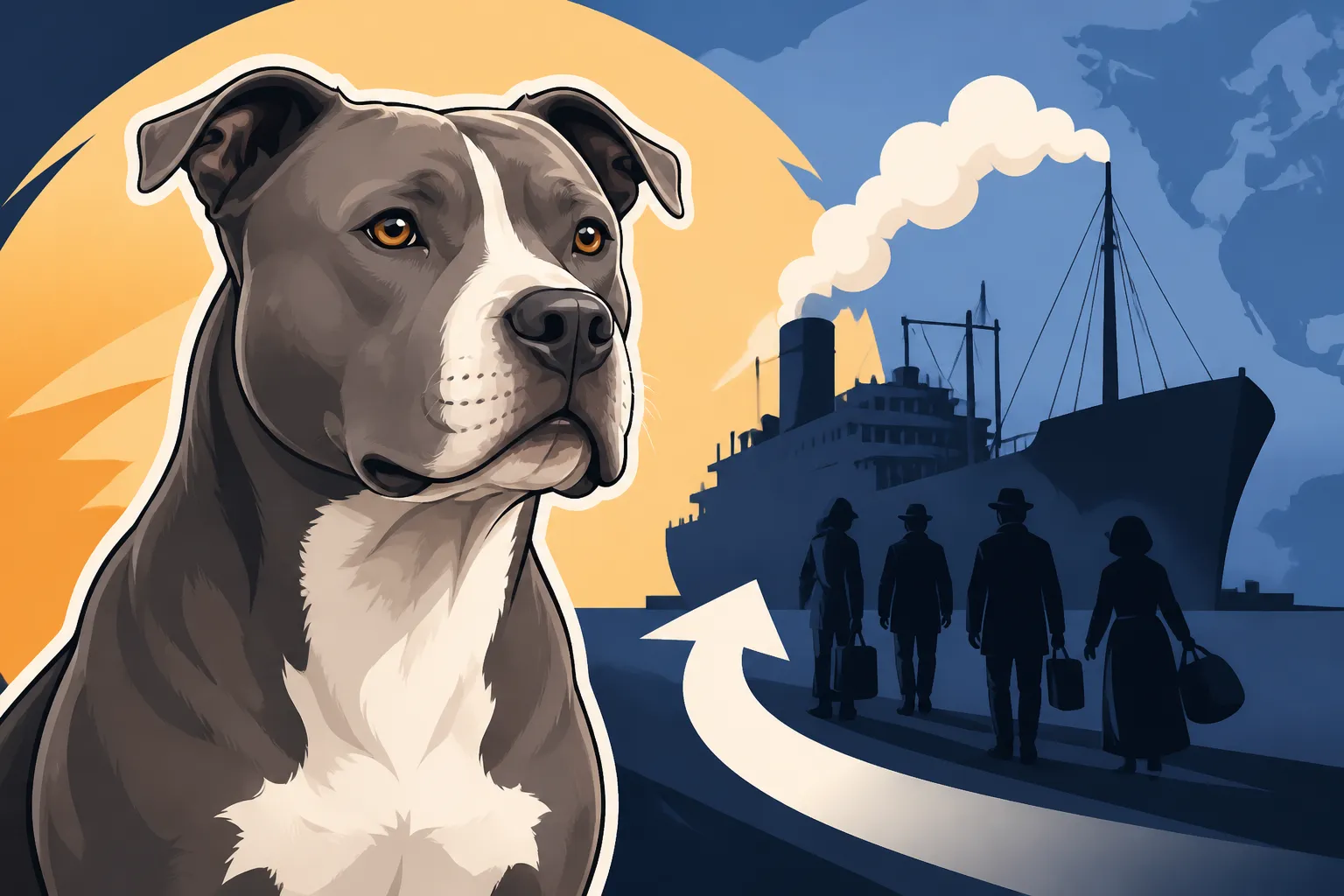
How Pit Bull Type Dogs Reached America
It’s a natural curiosity to wonder about the origins of our beloved Pit Bull type dogs. So many of us look at our loyal, powerful companions and want to understand their journey, especially how they came to be such a defining part of American canine culture. This guide will take you through the fascinating historical path these dogs traveled, from their European roots across the Atlantic to their establishment as iconic figures in the United States.
The Old World Roots of Pit Bull Type Dogs
Before Pit Bull type dogs ever set paw on American soil, their ancestors were already a distinctive and integral part of working life across the pond, particularly in Great Britain. These were dogs bred for specific, often grueling, tasks, and understanding their original purpose is key to appreciating the foundation of the modern Pit Bull types we know and love today.
British Bulldog and Terrier Ancestry
The story truly begins with the English Bulldog. Now, when I say "English Bulldog," I’m not talking about the lovable, squat, snoring couch potato we often picture today. The original Bulldogs were vastly different—taller, more athletic, incredibly strong, and absolutely fearless. Their primary role was in bull-baiting, a barbaric "sport" where dogs would engage with a chained bull. This required immense power, tenacity, and a low center of gravity to avoid injury. They were tough dogs for a tough job, bred for a relentless drive and powerful jaws.
Alongside these Bulldogs, various terrier breeds were being developed for their quickness, agility, and keen hunting instincts, primarily to control vermin. These terriers were often smaller, feisty, and had an incredible prey drive, perfect for going to ground after rats, badgers, and foxes. The idea eventually emerged to combine the raw power and tenacity of the Bulldog with the quickness and gameness of the terrier. This crossbreed, known as the Bull and Terrier, was seen as the ultimate fighting machine, inheriting the strength and endurance from the Bulldog side and the agility and tenacity from the terrier side. It’s this Bull and Terrier lineage that forms the bedrock of our modern Pit Bull types. It's a challenging past, but it's crucial to acknowledge the incredible physical and mental fortitude that was intentionally bred into these animals. The British Crosses Behind the Pit Bull delves deeper into these ancestral lines.
The Influence of Baiting Sports and Their Decline
The creation of the Bull and Terrier was largely driven by the popularity of blood sports in England. While bull-baiting was one form, badger-baiting and rat-baiting were also common, with dogs pitted against these animals in pits. These events, though horrific by today's standards, were widespread entertainment for centuries. The dogs involved needed to be incredibly determined, impervious to pain, and capable of inflicting damage. This constant selection for "gameness"—the willingness to continue fighting despite injury or exhaustion—shaped their physical and psychological traits profoundly.
However, public sentiment slowly began to turn against these cruel spectacles. In 1835, the UK Parliament passed the Cruelty to Animals Act, which outlawed bull-baiting and other forms of animal fighting. This was a significant turning point. While official dog fighting went underground, the existence of these highly specialized Bull and Terrier dogs remained. With their original "job" largely outlawed, some found new roles as guardians, farm hands, and even family companions, valued for their loyalty and courage. Others were unfortunately redirected into illegal dog fighting pits, a practice that continued in secret. This legislative shift marked a subtle but important moment for these dogs, pushing them from public spectacle to more diverse, albeit sometimes still illicit, roles. You can read more about The 1835 Act That Shaped the Pit Bull and its impact.
The Crossing: From Europe to America
The journey of these powerful Bull and Terrier dogs across the Atlantic wasn't part of a grand, organized migration. Instead, it was a gradual process, intimately tied to the waves of immigrants seeking new lives and opportunities in America. These dogs weren't just cargo; they were companions, protectors, and valuable assets.
Immigrant Companions and Working Stock
As European immigrants, particularly those from the British Isles and Ireland, sought new horizons in the sprawling landscapes of America, they often brought their most valued possessions and tools with them. Among these were their working dogs. The Bull and Terrier types, already known for their versatility, strength, and unwavering loyalty, were perfect candidates for the demands of a new country. They weren't just pets; they were integral to survival and success.
Imagine a family arriving in a new world, perhaps with very little money, looking to establish a farm or protect their small homestead. A dog that could guard livestock, deter predators, and even help with hunting was an invaluable member of the family unit. These dogs quickly found roles in rural settings, assisting with chores, keeping watch, and providing much-needed companionship in isolated areas. They were often referred to by various names, reflecting their function or appearance, rather than a single breed designation. This practical utility cemented their place alongside their human families as they carved out new lives in America.
Shipboard Journeys and Adaptation
The voyage across the Atlantic in the 18th and 19th centuries was no pleasure cruise for humans or animals. Conditions were often cramped, unsanitary, and dangerous. Dogs brought by immigrants would have endured long, difficult journeys, usually kept in crates below deck or in makeshift kennels. Only the hardiest dogs would have survived the harsh conditions, disease, and stress of the trip. This natural selection further reinforced the resilience and robustness already present in the Bull and Terrier lines.
Upon arrival, these dogs faced a vast and unfamiliar landscape, far different from the crowded cities or managed farms of their homeland. They quickly adapted to the diverse American terrain, from the rugged mountains to the expansive prairies. Their innate athleticism, intelligence, and adaptability shone through, allowing them to thrive in a variety of environments and take on new challenges. This ability to adapt quickly was a crucial factor in their successful establishment across the developing nation.
Early American Life: Pit Bulls on the Frontier
Once established on American soil, the Bull and Terrier types began to truly come into their own, shaped by the needs and evolving culture of their new home. They were still working dogs, but the specific demands of American life started to influence their development, leading to the distinct Pit Bull type dogs we recognize today.
Farm Dogs and Family Protectors
In early America, the role of a capable working dog on a farm or homestead was multifaceted and absolutely vital. These Bull and Terrier descendants weren't just house pets; they were an essential part of the family's survival and livelihood. They were expected to guard against wild animals, protect livestock, and even assist with rounding up unruly cattle. Their unwavering courage and physical prowess made them excellent deterrents against bears, wolves, and other predators that were still common in the expanding wilderness.
Beyond their protective duties, these dogs were also cherished family members. Their loyalty and affectionate nature, particularly towards children, earned them a reputation as trustworthy guardians of the home. This bond with families was incredibly strong, built on mutual reliance and daily interaction. They lived alongside their human companions, sharing in the daily grind and providing comfort and security. You might be interested in our article on Pit Bull Type Dogs on American Farms for more specific examples of their work. This connection is why many modern Pit Bull owners still speak to their deep devotion and inherent gentleness within a family setting, despite their powerful appearance.
Early American Canine Sports
Unfortunately, the less savory aspects of their European heritage also made the journey across the Atlantic. Dog fighting, though illegal, continued to be a clandestine "sport" in America, particularly in burgeoning urban areas and mining towns. The Bull and Terrier dogs, already bred for gameness and power, were frequently used in these brutal pits. This perpetuated the selective breeding for traits like extreme tenacity and strength, often at the expense of temperament with other dogs.
However, these dogs were also celebrated for their athleticism in more acceptable forms of competition. Weight pulling, for example, showcased their incredible strength and determination, where dogs would pull heavy loads over a set distance. This demonstrated their raw power and muscular build, traits still admired in the breed today. They also participated in "ratting" contests, where dogs would be timed on how quickly they could clear a pit of rats. While still involving the death of animals, these events were often seen as a way to control vermin and test a dog's natural instincts and quickness, distinct from staged dog fights. These dual roles—esteemed family protectors and competitive athletes, both legal and illegal—further cemented their physical and mental characteristics in the American consciousness.
Evolution of the Breed Type in the US
As these Bull and Terrier descendants became firmly rooted in American culture, they began to diverge and specialize, influenced by regional preferences, breeding goals, and emerging kennel club standards. This period saw the informal "Pit Bull type" begin to solidify into recognized, albeit distinct, breeds.
Regional Adaptations and Breeding Goals
The vastness of America meant that these dogs weren't developing in a vacuum. Different regions, with their unique needs and challenges, fostered specific traits. For example, in the rural South, dogs might have been selected for greater size and guarding instincts to protect larger properties or herd livestock. In more urban or industrialized areas, a slightly smaller, more agile dog might have been preferred for companionship or quick ratting competitions. Breeders, often working in isolation or with local communities, began to prioritize different characteristics.
This informal specialization led to a noticeable variation in appearance and temperament, even within the general "Bull and Terrier" type. Some breeders focused on producing dogs with exceptional strength and endurance, while others valued a more compact build or a particular color. These localized breeding practices, without the oversight of formal registries, meant that while the dogs shared common ancestry, their development followed somewhat divergent paths, adapting to the diverse landscapes and human demands across the young nation. How Many Breeds Get Called Pit Bulls sheds light on this variation.
Differentiation of Type: American Pit Bull Terrier
One of the most significant outcomes of their American evolution was the emergence of what we now widely recognize as the American Pit Bull Terrier (APBT). This particular type became a distinct entity through dedicated breeding efforts to preserve specific traits. Breeders focused on enhancing the athleticism, strength, and courageous spirit that had made their ancestors so formidable. They were selected for robust health, muscular builds, and that characteristic "gameness," which was still highly prized, even if it meant being channeled into sports like weight pulling rather than fighting.
These dogs were often celebrated as "all-American" working dogs, embodying strength, resilience, and determination. Farmers, frontiersmen, and even public figures admired their unwavering loyalty and capability. They were seen as symbols of American grit and tenacity. While dog fighting remained an unfortunate part of their history for some, many more of these dogs were valued as versatile companions, capable workers, and devoted family members. Their powerful presence and strong protective instincts made them ideal for guarding property and loved ones, further solidifying their place in American homes.
The Rise of Formal Recognition and Kennel Clubs
As America moved into the 20th century, the growing popularity of purebred dogs led to the establishment of kennel clubs, which aimed to standardize breeds and maintain pedigrees. This new era brought both recognition and division for the Pit Bull type dogs.
The United Kennel Club and the APBT
The United Kennel Club (UKC) was founded in 1898 with a specific mission to recognize working breeds and establish formal pedigrees for them. Unlike some other kennel clubs, the UKC embraced many of the dogs that were still actively engaged in various forms of competition and work. It was the UKC that first recognized the American Pit Bull Terrier (APBT) as a distinct breed in 1898. This was a pivotal moment, providing a formal identity and a means to track bloodlines for these dogs that had, until then, largely been known by informal descriptions.
The UKC standard for the APBT emphasized characteristics essential for a capable, athletic working dog: strength, agility, intelligence, and an indomitable spirit. This recognition allowed breeders to more formally develop and refine the breed, focusing on health, temperament, and conformity to a written standard. For many owners and enthusiasts, the UKC provided a legitimate platform to celebrate their dogs' abilities and heritage. This formal recognition was crucial in distinguishing the APBT from its more generalized Bull and Terrier ancestors and solidifying its place as a distinct American breed. You can learn more about The American Pit Bull Terrier and the UKC.
The American Kennel Club and the American Staffordshire Terrier
The American Kennel Club (AKC), established in 1884, focused more on exhibition and conformation show dogs. Initially, the AKC was reluctant to recognize the American Pit Bull Terrier due to its historical association with dog fighting. However, as the breed's popularity grew and responsible breeders worked to emphasize their excellent temperaments, a path for recognition eventually emerged.
In 1936, the AKC decided to recognize a segment of the American Pit Bull Terrier population under a new name: the Staffordshire Terrier. This was largely to distance the breed from its fighting past and emphasize its qualities as a companion and show dog. Later, in 1972, the name was changed to the American Staffordshire Terrier (AmStaff) to distinguish it from its English cousin, the Staffordshire Bull Terrier. How AmStaffs and APBTs Split in the 1930s offers a detailed look at this divergence. While the AmStaff and APBT share common ancestry and many similar physical traits, the AKC's recognition focused on a slightly different ideal, emphasizing conformation and a more generalized temperament suitable for family life and dog shows. This split created two distinct but closely related breeds, each with its own registry and following, yet both undeniably descended from those early Bull and Terrier immigrants.
Legacy and Modern Perception
The journey of Pit Bull type dogs to America is a tale of resilience, adaptation, and complex identity. From their roles as working dogs and companions to their eventual formal recognition, their story is deeply interwoven with American history. Today, their legacy continues to evolve, constantly challenging public perception.
Shifting Roles and Public Image
Over the decades, the role of Pit Bull type dogs has shifted dramatically. From indispensable farmhands and family guardians, they transitioned into popular companion animals, even becoming symbols of American courage and loyalty during wartime. Images of Pit Bull type dogs graced propaganda posters, and many served as mascots. Their unwavering dedication and friendly disposition, particularly when well-socialized and trained, made them beloved members of countless families. Just like with any other breed, proper nutrition and care, easily found through resources like Chewy, contribute to their overall well-being, helping them thrive in their diverse roles.
However, in more recent times, their public image has taken a turn for the worse, largely due to sensationalized media coverage, irresponsible ownership, and historical misconceptions. This has led to widespread breed-specific legislation and negative stereotypes, creating challenges for many loving Pit Bull owners. Despite these challenges, dedicated advocates and responsible owners continue to highlight the true nature of these dogs: intelligent, affectionate, and loyal companions. Pit Bulls in Culture and Public Perception explores this complex dynamic further. The fight to change public perception and ensure fair treatment for these dogs is an ongoing battle, requiring education and advocacy.
Enduring Spirit and Continued Advocacy
Despite the controversies and misconceptions that often surround them, the enduring spirit of the Pit Bull type dog remains undeniable. Their loyalty, intelligence, and zest for life continue to win over hearts, one family at a time. Many passionate individuals and rescue organizations are dedicated to promoting responsible ownership, dispelling myths, and finding loving homes for these often-misunderstood dogs. Whether through public education campaigns, community outreach, or simply by being exemplary owners, they work tirelessly to showcase the wonderful qualities of Pit Bull type dogs. Finding reliable resources for their care, from durable toys to specialized diets, which can be easily sourced from retailers like Chewy, is a testament to the dedication of their owners.
The story of how Pit Bull type dogs reached America is not just a historical account; it's a living narrative that continues to unfold. It’s a reminder of the profound impact dogs have had on human society and the responsibility we have to understand and protect them. By looking back at their origins, we can gain a clearer perspective on the present and work towards a more positive future for these remarkable animals. Ultimately, the history of the Pit Bull type dog in America is a testament to their adaptability, courage, and the deep bonds they form with their human families, a bond that has persevered through centuries and challenges.
Historical Timeline of Pit Bull Type Dogs in America
| Era | Key Ancestors/Developments | Journey to America | Role in Early America | Formal Recognition |
|---|---|---|---|---|
| 17th-18th Century | British Bulldogs, various Terriers, Bull and Terrier crosses | Arrived with immigrants from UK and Ireland | Farm dogs, guardians, vermin control | Informal, recognized by function not breed |
| 19th Century | Continued Bull and Terrier development, regional adaptations | Continued immigration | Farm work, guardians, competitive sports (ratting, dog fighting) | Still largely informal |
| Late 19th Century | Distinct American Pit Bull Terrier type emerges | Established population across the US | Farm, family companion, competitive sports | 1898: UKC recognizes American Pit Bull Terrier |
| Early 20th Century | Further refinement of APBT, divergence into specific types | Widely distributed | Family dogs, mascots, working animals | 1936: AKC recognizes "Staffordshire Terrier" (later AmStaff) |
Disclaimer
This article is for general informational purposes only and does not constitute professional advice. Laws, prices and regulations vary by location and change over time. Consult a qualified professional for guidance on your specific situation.