How AmStaffs and APBTs Split in the 1930s
The world of "Pit Bull" type dogs can be incredibly confusing, especially when you start diving into the history of specific breeds that fall under that umbrella. Many owners feel a real frustration trying to understand the nuances, particularly when it comes to the American Pit Bull Terrier (APBT) and the American Staffordshire Terrier (AmStaff). These two breeds, often lumped together, actually have a fascinating and intertwined history that saw them split into distinct paths in the 1930s. This guide will walk you through that pivotal period, helping you understand how and why these beloved dogs went their separate ways.
The Common Ancestry: Bull and Terrier Roots
Before we can truly grasp how the American Pit Bull Terrier (APBT) and the American Staffordshire Terrier (AmStaff) began to diverge, we need to understand their shared lineage. Both breeds spring from the very same deep historical well: the bull and terrier crosses developed in the British Isles centuries ago. These dogs weren't initially bred for cuddles on the couch (though they certainly excel at that now!), but for grit, determination, and athleticism in specific, often brutal, "sports."
The Old English Bulldog and Terrier Crosses
Imagine a time before organized dog shows and breed clubs, where dogs were bred purely for function. The ancestors of our modern Pit Bulls were a blend of Old English Bulldogs and various terriers. The Old English Bulldog of that era was a much different animal than the stocky, flat-faced companion we know today. These were agile, powerful dogs, bred for bull-baiting – a gruesome spectacle where dogs would confront a tethered bull. When these "sports" were outlawed in 1835 in the UK, dog fighting, often involving smaller, faster dogs, sadly took its place in the underground. To create a dog with the bulldog's strength and tenacity, combined with the terrier's quickness and gameness, breeders began making strategic crosses. This fusion created the "Bull and Terrier" type dogs, renowned for their incredible drive and powerful jaws. This pivotal moment, where the Bull and Terrier dogs truly began to take shape, is a fundamental part of The Bull and Terrier Origin of the Pit Bull.
These early Bull and Terrier crosses were working dogs, through and through. Their resilience, strength, and unwavering determination were highly prized. They weren't bred for a specific look or color; rather, their utility in the pit was the driving force behind breeding decisions. It was all about what they could do, not necessarily how they appeared on paper or in a show ring. This functional breeding laid the genetic groundwork for both the APBT and the AmStaff, embedding the powerful traits that continue to define these dogs today.
Arrival in America
It wasn't long before these remarkable Bull and Terrier dogs made their way across the Atlantic to America. Immigrants from England, Scotland, and Ireland brought their treasured dogs with them, often seeing them as valuable assets on farms and homesteads. In America, these dogs continued to be used for a variety of tasks, from working with livestock to guarding property, and unfortunately, still for dog fighting. The American frontier demanded a versatile, tough dog, and the Bull and Terrier types fit the bill perfectly. They were adapted to a new continent and began to develop certain characteristics that would distinguish them from their European cousins.
As these dogs established themselves in America, they became known by various regional names – Pit Bull Terrier, Half and Half, Yankee Terrier, and later, American Bull Terrier. There wasn't a single, universally recognized name or a unified breed standard. Each line was often bred locally, with an emphasis on performance and working ability, continuing the tradition of valuing function over form. It's crucial to remember this period of diverse nomenclature and local breeding practices, as it directly set the stage for the formal recognition and eventual split of the breeds we're discussing.
The Rise of Dog Sports and Registries
As the 20th century dawned, a new era began for purebred dogs in America. The concept of formalized dog breeds, established through breed standards and registered pedigrees, was gaining traction. This shift was largely driven by the emergence of organized dog sports, such as conformation showing and weight pulling, which provided a platform for breeders to showcase their dogs' qualities. For the Bull and Terrier types, this presented both an opportunity and a challenge, ultimately leading to the divergence of their paths.
Early Recognition by the UKC
One of the earliest organizations to embrace the Bull and Terrier dogs in America was the United Kennel Club (UKC). Founded in 1898, the UKC had a different philosophy than some of the more established kennel clubs, often focusing on working breeds and performance. They were instrumental in providing a formal registry for many breeds, including the powerful Bull and Terrier types that were proving so popular on American soil. In 1898, the UKC officially recognized the breed under the name American Pit Bull Terrier (APBT).
This recognition by the UKC was a monumental step. It provided a unified name and a standard by which to judge these dogs, even if that standard still heavily emphasized their working heritage and athletic prowess. Breeders could now register their dogs, track pedigrees, and compete in organized events. The UKC's APBT standard typically described a powerful, agile, and courageous dog, with a strong emphasis on gameness and athletic ability. For many owners and breeders, the UKC APBT represented the true working essence of the Pit Bull type, a dog bred for its drive and capabilities. If you're looking for quality food and supplies for your active APBT, Chewy offers a wide selection that caters to their energetic needs.
The Lure of the Show Ring
While the UKC embraced the American Pit Bull Terrier for its working qualities, some breeders and fanciers began to envision a different future for these dogs, one focused more on the conformation show ring. They admired the dogs' impressive physique, their intelligence, and their loyal dispositions, and believed they deserved a place alongside other recognized breeds in more mainstream venues. This desire to elevate the breed's status and move away from its association with fighting led to calls for recognition by other major kennel clubs, particularly the American Kennel Club (AKC).
The conformation show world had different priorities than the performance-oriented UKC. While athleticism was still valued, the emphasis shifted towards a standardized appearance, specific proportions, and a calmer demeanor suitable for public exhibition. This growing interest in the aesthetics and temperament desirable in a show dog laid the groundwork for a critical juncture in the breed's history, as breeders began to select for traits that would align with the expectations of the show ring, rather than solely the "pit."
The AKC's Entry into the Scene: 1936
The year 1936 marks a pivotal moment in the lineage of these dogs, precisely because it was when the American Kennel Club (AKC), a prestigious registry focused on conformation showing, decided to recognize a variant of the Bull and Terrier type. This decision, however, came with specific conditions and a new name, ultimately setting a new course for one branch of the family. The story of The 1936 Studbook Opening That Split the Type is essential to understanding the distinction.
The Staffordshire Terrier Name
When the AKC decided to recognize a portion of the dogs known as Pit Bull Terriers, they did so with a conscious effort to distance the breed from its past associations with dog fighting. To achieve this, they chose a new name: the Staffordshire Terrier. This name was intended to honor the breed's English heritage, specifically the Staffordshire region of England, where many of its Bull and Terrier ancestors originated. It was a clear attempt to rebrand and reshape public perception, moving the dogs away from the "pit" and towards a more respectable image suitable for the show ring.
The decision to register these dogs under a different name was more than just a cosmetic change; it represented a fundamental shift in purpose and direction. Breeders who sought AKC recognition began to focus on developing dogs that fit the specific aesthetic and temperament guidelines set forth by the new standard. This meant emphasizing certain physical traits, such as a sturdy, muscular build without exaggeration, and a stable, confident, yet amiable disposition. While the underlying genetics were the same, the selection criteria for breeding began to diverge significantly from those of the UKC-registered American Pit Bull Terriers.
Establishing a New Standard
With the new name came a new breed standard, meticulously crafted by the AKC. This standard detailed the ideal appearance, size, proportions, and temperament for the Staffordshire Terrier. Unlike the UKC's APBT standard, which often allowed for more variation and emphasized working ability, the AKC standard focused on uniformity and a "type" suitable for showing. This new standard effectively created a distinct population of dogs, even though they shared common ancestors with the APBTs.
Breeders aiming for AKC recognition now had clear guidelines to follow. They selected for dogs that exemplified the physical characteristics outlined in the standard, such as a broad head, well-defined musculature, and a certain height and weight range. Temperament was also a key factor, with a strong emphasis on a calm, confident, and friendly disposition towards humans, which was crucial for success in public show settings. This meticulous attention to a conformation-specific standard meant that while both lines still retained their underlying strength and resilience, the priorities for breeding had now officially split. It's like having two chefs start with the same ingredients but aiming for entirely different dishes, using slightly different techniques to get there.
Diverging Paths: Breed Standards and Purpose
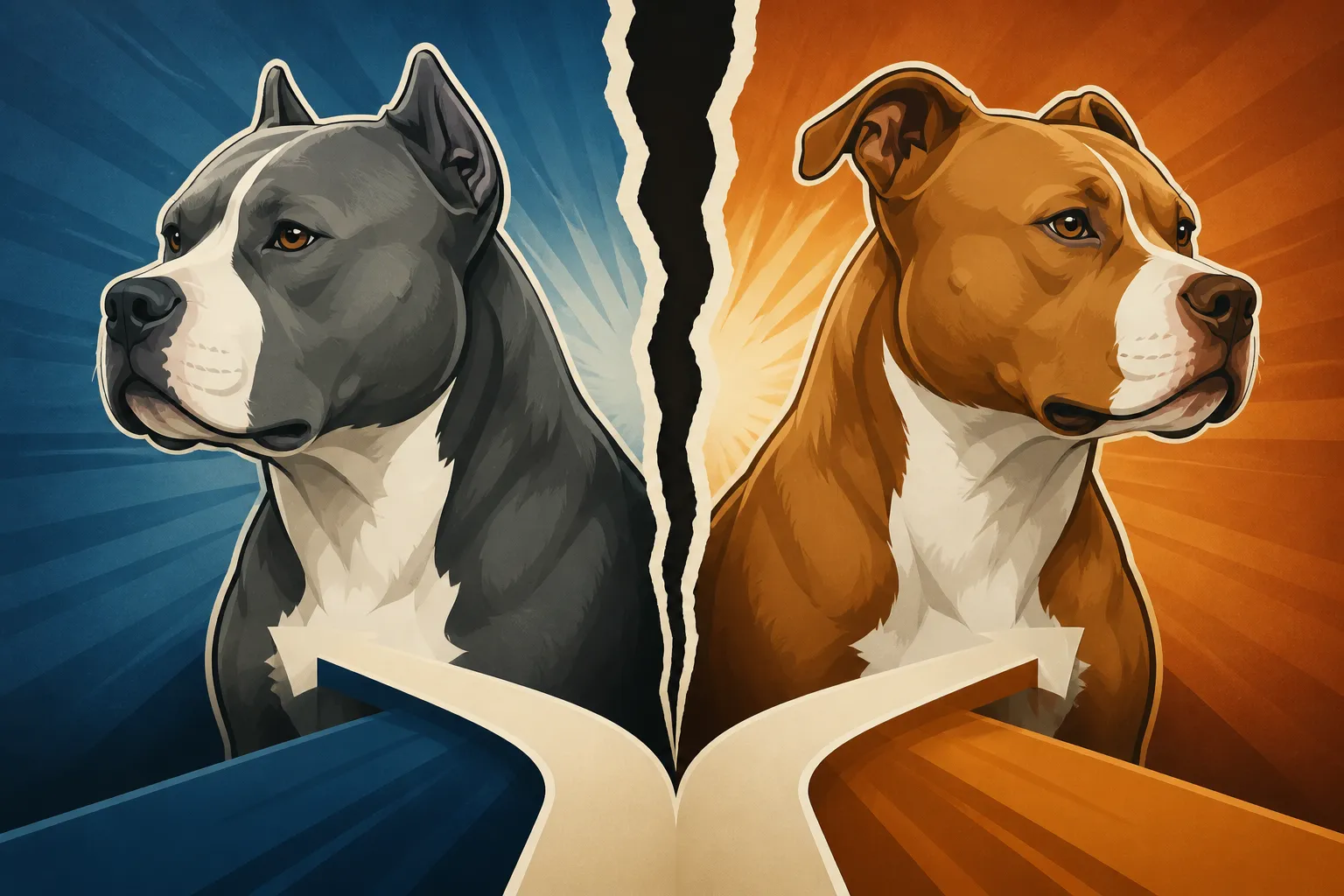
Once the AKC recognized the Staffordshire Terrier in 1936, the futures of the dogs that would become the American Pit Bull Terrier (APBT) and the American Staffordshire Terrier (AmStaff) truly began to diverge. This split wasn't about a sudden genetic mutation, but rather a difference in the goals of the breeders and the standards they chose to uphold.
Focus on Conformation vs. Performance
The most significant difference that emerged from the 1936 split was the fundamental purpose for which each line of dog was primarily bred. For the American Pit Bull Terrier, registered with the UKC, the emphasis remained firmly on performance and working ability. These dogs were still valued for their athleticism, intelligence, and unwavering drive in various dog sports, including weight pull, agility, and protection work, and unfortunately, in some illegal circles, dog fighting. Breeders selecting for UKC APBTs continued to prioritize health, gameness, and capability above all else, often allowing for a wider range of physical appearances as long as the dog could perform its intended function.
Conversely, the Staffordshire Terrier (later the American Staffordshire Terrier), recognized by the AKC, was bred primarily for conformation. This meant selecting for dogs that best fit the detailed physical specifications of the AKC breed standard. While athleticism and a stable temperament were still important, the ultimate goal was to produce dogs that would excel in the show ring, judged on their appearance, structure, and gait. This shift meant that certain physical traits became more desirable, even if they didn't necessarily enhance a dog's working capability in the same way. It created a distinct "look" that the AKC desired to promote.
Physical Traits and Temperament Ideals
Over time, these differing breeding goals naturally led to subtle but noticeable differences in physical traits and temperament ideals between the two breeds. While both APBTs and AmStaffs share a strong, muscular build, there are nuances. AKC-registered AmStaffs tend to have a slightly heavier bone structure and are often described as being more uniformly stocky and blocky in appearance. Their standard usually calls for a moderate size, with a balanced and powerful look, designed to move gracefully in the show ring. The AmStaff breed standard also strongly emphasizes a stable and friendly temperament, as these dogs are expected to be well-mannered and approachable in public settings.
For the UKC's American Pit Bull Terrier, while a general standard exists, there's often more variation in size, coat color, and overall build. Because performance was the priority, a dog's physical traits were often secondary to its drive and health. Many APBTs possess a more athletic, leaner build, designed for endurance and agility. While a good temperament is always desired, the selection for intense drive and gameness in some lines can sometimes lead to a dog that requires a more experienced handler, especially in multi-dog households. Both breeds share incredible loyalty and intelligence, but the paths they took in the 1930s influenced the subtle distinctions we see today. If you're comparing the physical traits and temperaments, think of them as two branches growing from the same tree, nurtured by different gardeners with different visions. It's why understanding what the Pit Bull actually covers involves looking at these specific breed standards.
Beyond the 1930s: Continued Evolution
The 1930s laid the groundwork for the split, but the evolution of the American Pit Bull Terrier and the American Staffordshire Terrier didn't stop there. The decades that followed continued to solidify their distinct identities, further refining their standards and public perceptions.
The 1972 Renaming
Perhaps one of the most significant post-1930s developments for the AKC-recognized line occurred in 1972. The AKC officially changed the name of the "Staffordshire Terrier" to the "American Staffordshire Terrier" (AmStaff). This renaming served several purposes. Firstly, it helped to distinguish the American-bred dogs from their smaller English cousin, the Staffordshire Bull Terrier, which had also gained popularity. Secondly, it emphasized the distinct American development of the breed, acknowledging the efforts of breeders in the United States to shape its modern form. This renaming further cemented the AmStaff's unique identity within the AKC system. For more details on this change, you can read The 1972 Renaming to American Staffordshire Terrier.
This name change wasn't just administrative; it reflected the ongoing commitment of AmStaff breeders to carve out a distinct identity for their dogs. They continued to refine the breed's appearance and temperament, focusing on consistency and elegance within the show ring, while maintaining the powerful and confident demeanor these dogs are known for. This continued dedication has made the AmStaff a popular choice for families looking for a sturdy, loyal companion that also excels in competitive conformation events. Many AmStaff owners find great options for their dogs' nutrition and enrichment on sites like Chewy, which cater to a wide range of breed-specific needs.
Modern Day Differences
Today, the distinctions between the American Pit Bull Terrier (APBT) and the American Staffordshire Terrier (AmStaff) are well-established, though still often misunderstood by the general public. Genetically, they are very closely related, sharing the vast majority of their DNA. However, the selective breeding pressures over the decades have indeed resulted in two breeds with slightly different average appearances and temperaments.
American Pit Bull Terrier (APBT):
- Registry: Primarily United Kennel Club (UKC) and American Dog Breeders Association (ADBA).
- Purpose: Bred for performance, athleticism, and versatility in working sports.
- Appearance: Often leaner, more athletic build, with a wider range of acceptable sizes and colors. Emphasis on functional structure.
- Temperament: Known for high drive, intense focus, and gameness. Can be dog-selective, requiring careful socialization and management in multi-dog households. Extremely loyal to their families.
American Staffordshire Terrier (AmStaff):
- Registry: American Kennel Club (AKC).
- Purpose: Bred for conformation showing, emphasizing a specific aesthetic and stable temperament.
- Appearance: Generally more uniform, stockier, and blockier build. Standardized size and proportion for the show ring.
- Temperament: Known for being stable, confident, and outwardly friendly towards humans. Still possesses strength and loyalty, but often selected for a more generalized family companion demeanor.
It's important to remember that these are generalizations. Individual dogs within both breeds can vary greatly, and responsible breeding always prioritizes health and stable temperament. However, the historical split in the 1930s, driven by different organizational goals and breed standards, irrevocably shaped the two distinct breeds we recognize today. Understanding Why Pit Bull Is a Type and Not a Breed helps put these distinctions into perspective, as both fall under the broader "Pit Bull" umbrella.
Understanding the Breed Registries
The concept of "breed" itself is often tied directly to the organizations that register and maintain pedigrees. Without a registry to define a standard and track lineage, a group of dogs is simply a "type." For the Pit Bull family, the role of different registries has been absolutely critical in shaping the identities of the APBT and the AmStaff. It’s why there’s often confusion, and why understanding these organizations helps clarify Why No Registry Recognizes a Breed Called Pit Bull as a single entity.
The UKC and ADBA: Stewards of the APBT
The United Kennel Club (UKC) has been the primary registry for the American Pit Bull Terrier (APBT) since 1898. From the very beginning, the UKC recognized these dogs for their working abilities, their courage, and their loyalty. Their breed standard emphasizes an agile, powerful, and balanced dog, with a strong focus on characteristics that contribute to performance in various dog sports. The UKC hosts events like weight pulls, agility trials, and conformation shows, all geared towards showcasing the APBT's natural talents. For many APBT enthusiasts, the UKC represents the purest continuation of the breed's historical purpose.
Another significant registry for the APBT is the American Dog Breeders Association (ADBA), founded in 1951. The ADBA was formed by a group of breeders who felt the UKC was moving too far towards conformation and away from the breed's original "working" roots. The ADBA’s standard is often considered even more focused on the traditional, athletic, and game qualities of the APBT. Their primary events revolve around conformation that judges a dog's functional ability, weight pull, and other strength-based challenges. Both the UKC and ADBA have been crucial in preserving the APBT as a performance-oriented breed, providing a platform for owners to celebrate their dogs' incredible drive and athleticism. When sourcing items for these active dogs, remember that many brands on Chewy specifically cater to high-energy breeds.
The AKC and the AmStaff
The American Kennel Club (AKC) operates with a distinct philosophy compared to the UKC or ADBA. The AKC is predominantly focused on purebred dog shows, where dogs are judged against a detailed breed standard of appearance, structure, and movement (conformation). When the AKC recognized the Staffordshire Terrier (later AmStaff) in 1936, it was a deliberate move to bring a type of Bull and Terrier dog into the mainstream show world. Their standard emphasized a sturdy, compact, well-muscled, and agile dog, with a strong focus on a stable and confident temperament suitable for public exhibition and companionship.
The AKC's recognition immediately established a different trajectory for this branch of the Pit Bull family. Breeders who chose the AKC path focused on producing dogs that would excel in conformation rings, leading to the development of a more uniform "look" and a temperament specifically cultivated for general family companionship and public interaction. This emphasis differentiated the AmStaff from its APBT cousins, solidifying its identity as a distinct breed within the AKC's extensive list. It's truly fascinating how two closely related lines of dogs could embark on such different journeys, all stemming from decisions made in the 1930s about how they would be recognized and what their primary purpose would be.
Here's a quick comparison of some key distinctions:
| Feature | American Pit Bull Terrier (APBT) | American Staffordshire Terrier (AmStaff) |
|---|---|---|
| Primary Registry | United Kennel Club (UKC), American Dog Breeders Association (ADBA) | American Kennel Club (AKC) |
| Primary Focus | Performance, working ability, athleticism, gameness | Conformation, consistent appearance, stable temperament, family companion |
| Origin of Split | Retained traditional working focus | Rebranded for conformation showing in 1936 |
| Appearance | Often leaner, athletic, wide size/color variation | Generally more uniform, stockier, powerful, specific size/proportion |
| Temperament Ideal | High drive, intelligent, loyal, can be dog-selective | Confident, stable, outgoing, loyal, amenable to strangers |
| Name History | Pit Bull Terrier (various), later American Pit Bull Terrier | Staffordshire Terrier (1936), later American Staffordshire Terrier (1972) |
The Impact on Public Perception
The historical split between the APBT and AmStaff, driven by different registries and breeding goals, has had a profound and lasting impact on how these dogs are perceived by the public. While the intent behind the AKC's recognition of the Staffordshire Terrier was to legitimize and popularize a specific type of the breed, the reality is that the entire "Pit Bull" label has carried a heavy burden. This historical divergence, though nuanced, plays a role in the ongoing confusion and stereotypes surrounding these dogs.
Misidentification and Blanket Bans
One of the most unfortunate consequences of the shared ancestry and the subsequent split is the widespread misidentification of these dogs. To the untrained eye, an APBT and an AmStaff can look incredibly similar. Both are muscular, powerful, and often have similar head shapes and short coats. This visual likeness, combined with the general public's lack of knowledge about specific breed standards and registries, means that almost any dog with a "Pit Bull-like" appearance is often labeled simply as a "Pit Bull." This blanket labeling ignores the distinct breeding histories and temperament ideals that breeders have worked hard to cultivate within both the APBT and AmStaff lines.
This pervasive misidentification has fueled breed-specific legislation (BSL) and housing restrictions across the country. Landlords, insurance companies, and even entire cities often implement bans or restrictions on "Pit Bulls," without distinguishing between an AKC-registered American Staffordshire Terrier, a UKC-registered American Pit Bull Terrier, or any number of mixed-breed dogs that simply resemble them. This creates immense challenges for responsible owners, regardless of their dog's specific pedigree. It also tragically contributes to the overwhelming number of Pit Bull type dogs in shelters, as owners struggle to find housing or insurance that accommodates them.
Advocacy and Education
In the face of these challenges, both APBT and AmStaff owners, breeders, and rescue organizations have become fervent advocates for their breeds. The historical context of their split is often used as a tool for education, helping people understand that "Pit Bull" is a type, not a single breed, and that specific breeds like the AmStaff have a history rooted in conformation and family companionship. Advocacy efforts aim to highlight the positive attributes of both breeds: their loyalty, intelligence, athleticism, and loving nature towards people.
These groups work tirelessly to combat stereotypes, promote responsible ownership, and educate the public about the nuances of breed identification. They emphasize that while these dogs are powerful, their temperament is shaped by responsible breeding, early socialization, and consistent training. By showcasing dogs excelling in various activities – from therapy work to agility, and of course, being cherished family members – advocates strive to shift public perception away from fear and toward understanding. The journey from their shared Bull and Terrier roots to their distinct modern identities is a complex one, but understanding it is key to fostering a more informed and compassionate view of these incredible dogs.
Disclaimer
This article is for general informational purposes only and does not constitute professional advice. Laws, prices and regulations vary by location and change over time. Consult a qualified professional for guidance on your specific situation.