How Often Shelter Staff Agree on a Pit Bull Label
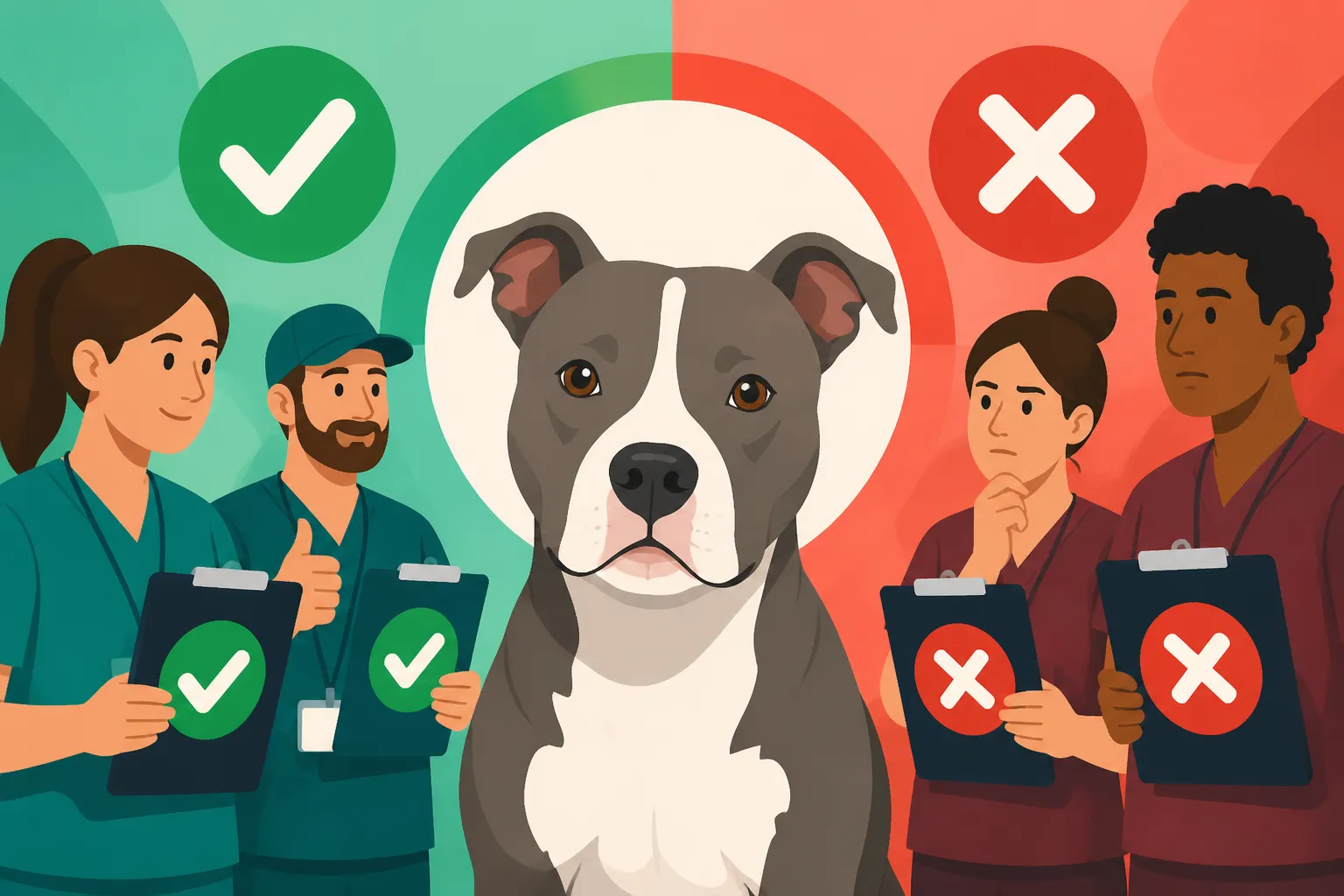
It’s a frustrating reality for many potential adopters: you walk into a shelter, fall in love with a dog, only to see it labeled as a "Pit Bull" – a label that can bring a whole host of public perception issues, housing restrictions, and even insurance challenges. What many don't realize is that this label isn't always accurate, and even within the same shelter, staff members often disagree on which dogs actually fit the "Pit Bull" description. This guide will dive deep into the complexities of breed identification in shelters, exploring why these inconsistencies occur, what impact they have, and how efforts are being made to create a more accurate and equitable system for these wonderful dogs.
The Challenge of Visual Breed Identification in Shelters
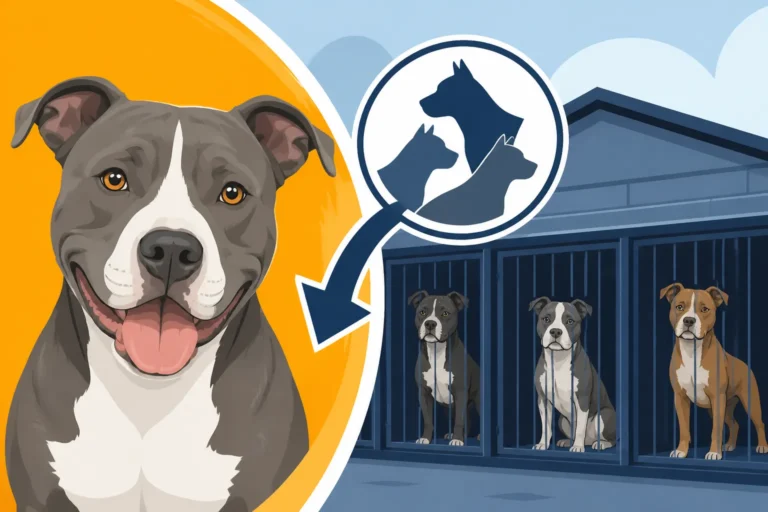
Walk into any animal shelter, and you'll quickly notice that many dogs are labeled with a breed or breed mix. But when it comes to "Pit Bull" types, this labeling becomes incredibly murky. It's not as simple as checking a box, and the inconsistencies stem from a fundamental misunderstanding of what the term "Pit Bull" even means in the first place.
Why "Pit Bull" Isn't a Single Breed
One of the biggest hurdles in consistent identification is that "Pit Bull" isn't a single, recognized breed in the way that a Golden Retriever or a Poodle is. It's a broad term, often used to describe a type of dog with certain physical characteristics – a strong, stocky build, a blocky head, and a short coat. This "type" encompasses several distinct breeds, and the visual differences between them can be subtle, even for experienced eyes.
The primary breeds commonly referred to as "Pit Bulls" include the American Pit Bull Terrier (APBT), the American Staffordshire Terrier (AmStaff), and the Staffordshire Bull Terrier. Each has its own breed standard, history, and characteristics, yet to the untrained eye, or even to a busy shelter worker making a quick assessment, they can look remarkably similar. The APBT, for instance, is recognized by the United Kennel Club, while the AmStaff is recognized by the American Kennel Club. These two breeds, despite their separate recognition, share a common ancestry, having split into distinct lines in the early 20th century. How AmStaffs and APBTs Split in the 1930s is a fascinating read on this historical divergence. When you then throw in mixes of these breeds, or even dogs with no "Pit Bull" ancestry but similar physical traits, the challenge of accurate identification becomes immense. As we often discuss, Why Pit Bull Is a Type and Not a Breed is a crucial piece of understanding the entire conversation around these dogs.
The Subjectivity of Visual Assessment
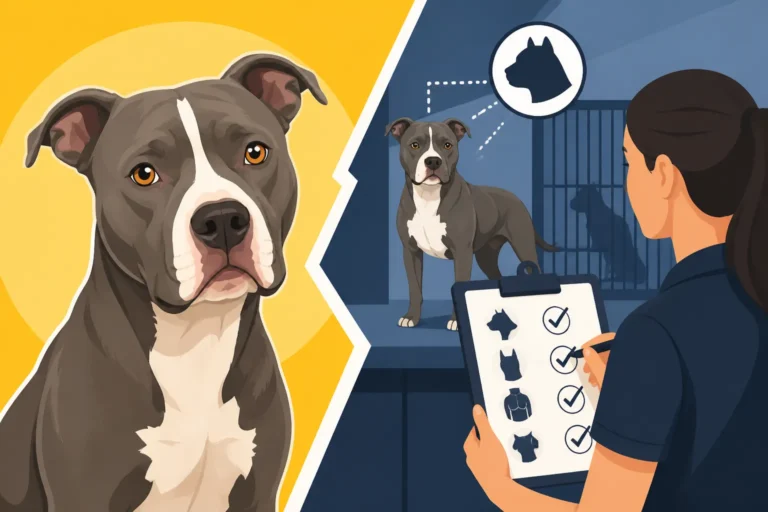
Imagine a bustling shelter on intake day. A new dog arrives, perhaps a stray, and a staff member or volunteer needs to assign a breed label. They look at the dog, note its build, head shape, ear set (if not cropped), and coat. Is it a "Lab mix"? A "Boxer mix"? Or does it fall into that notoriously ambiguous "Pit Bull type" category? This process is inherently subjective. What one person identifies as a "stocky build" or a "blocky head" might be interpreted differently by another.
Even highly experienced shelter staff, with years of working with countless dogs, can find themselves in disagreement. Their judgment can be influenced by personal biases, prior experiences with certain dogs, or even the dog's behavior during intake. A friendly, wiggly dog might be labeled as a "Staffordshire mix," while a more nervous or boisterous one, despite identical physical features, might be more quickly slapped with the "Pit Bull" label. Training can also play a huge role here; some shelters invest in extensive breed identification training for their staff, while others rely more on individual experience. Without clear, standardized protocols, it’s like asking five people to describe a cloud – you’ll get five different, equally valid, but often inconsistent answers. This subjectivity is one of the core reasons why How Often Shelter Staff Agree on a Pit Bull Label (the very topic we're discussing!) can be so low in many facilities.
Studies and Data on Labeling Accuracy
The anecdotal evidence of inconsistent "Pit Bull" labeling is compelling, but what does the research say? Numerous studies have delved into the accuracy of visual breed identification in shelters, and the results are often quite eye-opening, underscoring just how unreliable our eyes can be.
The Discrepancy Between Visual ID and DNA Testing
When visual breed identifications by shelter staff are compared to DNA test results, the findings are consistently surprising. Many studies have shown that visual identification of "Pit Bull" type dogs can be accurate less than 50% of the time, sometimes even as low as 20-30%. This means that a significant number of dogs labeled as "Pit Bull" by shelter staff actually have very little, if any, Pit Bull ancestry according to their genetic makeup. Conversely, dogs that don't get the "Pit Bull" label visually might actually carry a substantial amount of Pit Bull DNA.
Think about it: a dog might have the characteristic head shape of a Pit Bull, leading staff to label it as such, but its DNA could reveal a mix of Boxer, Labrador, and maybe a tiny percentage of American Staffordshire Terrier. Or, a dog that looks distinctly like a Labrador could, in fact, be a significant Pit Bull mix. The reason for this huge discrepancy lies in how genes express themselves visually. Just because a dog inherits certain physical traits doesn't mean it has a high percentage of that specific breed, especially in mixed-breed dogs. Furthermore, many dogs in shelters are truly mixed, often with several breeds contributing to their appearance. Relying on visual cues alone is akin to trying to guess someone's entire family tree just by looking at their nose. If you're wondering about your own rescue, The DNA Panel Worth Running on a Rescue Pit Bull can shed some light on their true heritage. The broader implications of this discrepancy are significant, as Whether a DNA Test Settles the Pit Bull Question delves into.
Factors Influencing Staff Agreement
Beyond the inherent difficulty of visual identification, several factors contribute to how much shelter staff agree (or disagree) on a "Pit Bull" label. Shelter policies, local community perceptions, and even individual biases can all play a role.
Some shelters might have very strict guidelines, attempting to standardize the labeling process by focusing on specific physical markers like ear set (though many Pit Bull types have cropped ears, which can confuse things further), muzzle length, or jaw structure. Others might have more informal guidelines, leaving much to the discretion of the individual staff member. The level of experience among staff can also be a factor; a veteran animal control officer might have a different eye than a newer volunteer.
Community factors are also at play. In areas with strong breed-specific legislation (BSL) or a prevalent negative public perception of "Pit Bulls," there might be a tendency to be more cautious or even over-identify dogs as Pit Bull types. This can be a protective measure by the shelter, or it can be a reflection of the societal pressure they face. Conversely, in regions where BSL has been repealed or public opinion has shifted, shelters might be more inclined to use broader, less specific labels like "Terrier Mix" or "Hound Mix" to improve adoption rates. How Public Opinion on Pit Bulls Has Shifted offers a good overview of this evolving landscape. These varying internal and external pressures mean that even within the same state, two different shelters might approach the labeling of identical-looking dogs very differently, leading to significant inconsistencies for potential adopters.
The Impact of Inconsistent Labeling on Dogs and Adopters
The consequences of inconsistent and often inaccurate "Pit Bull" labeling extend far beyond mere semantics. For the dogs caught in this labeling lottery, and for the well-meaning individuals hoping to adopt them, the impact can be profound and life-altering.
How a "Pit Bull" Label Affects Shelter Outcomes
It's a stark reality that a "Pit Bull" label often carries a heavy burden within the shelter system. Dogs identified as Pit Bull types, regardless of their actual genetic makeup or individual temperament, tend to face longer wait times for adoption. They are frequently overlooked by potential adopters who are either misinformed about the temperament of these dogs or are deterred by external factors like housing restrictions or insurance woes.
Sadly, in some regions and shelters, a "Pit Bull" label can even lead to higher euthanasia rates. This isn't due to inherent aggression or behavioral issues, but rather a tragic combination of factors: longer stays mean more resources are consumed, limited kennel space necessitates difficult decisions, and the persistent stigma makes finding forever homes an uphill battle. The unfortunate truth is that Why a Pit Bull Label Changes a Shelter Outcome is a complex issue, often unfairly penalizing individual dogs for broad, often inaccurate, stereotypes. These dogs, many of whom are loving, gentle, and eager to please, end up paying the ultimate price for a label that might not even be correct.
The Ripple Effect on Adopters
For individuals and families looking to adopt, the "Pit Bull" label creates a significant hurdle, even if they are aware of the breed's true nature. The most immediate and pressing concern for many is housing. Landlords, apartment complexes, and Homeowners Associations (HOAs) frequently have breed-specific restrictions that explicitly ban "Pit Bulls" or "Pit Bull types." This means that an otherwise perfect adopter might be forced to pass on a dog they've bonded with simply because of a label, or face the daunting task of finding new housing that will accept their new family member. We've seen countless stories of families struggling because Why Housing Rules Send Pit Bulls to Shelters.
Insurance is another major headache. Many homeowners and renters insurance companies maintain "dangerous dog breed" lists, and "Pit Bull" types almost always top these lists. This can result in denied coverage, significantly higher premiums, or even the cancellation of policies. Even if an insurer does cover them, the process can be arduous, requiring proof of training or specific endorsements. The financial burden and logistical stress can be immense, contributing to the overall The Cost of a Pit Bull Reputation. It's a cruel irony that a dog, potentially mislabeled, could prevent a family from securing or maintaining vital services simply because of perceived risk, rather than actual behavior or genetic makeup.
Improving Accuracy and Reducing Bias
Recognizing the widespread issues caused by subjective and inconsistent breed labeling, many shelters and animal welfare organizations are actively seeking ways to improve accuracy and reduce bias. This shift benefits not only the dogs but also the communities and potential adopters.
Training and Standardized Protocols
One of the most effective ways to combat inconsistent labeling is through enhanced training for shelter staff and the implementation of standardized identification protocols. Rather than relying on a quick glance, staff can be trained to look for objective physical characteristics and to understand the nuances of canine morphology. This might involve using detailed checklists that break down traits like head shape, ear set, coat type, and body structure, rather than simply making a broad "Pit Bull" judgment.
Many progressive shelters are also moving towards "breed-neutral" descriptions for dogs, especially for mixed breeds where ancestry is unclear. Instead of labeling a dog as a "Pit Bull mix," they might describe it based on its dominant physical traits, such as "stocky build, short coat" or simply as a "mixed breed." Even better, they focus on individual temperament and behavior: "friendly, energetic, loves to cuddle." This approach helps potential adopters see the dog for who it is, rather than through the lens of a potentially stigmatized breed label. Organizations are working to implement What Breed Neutral Law Means for Pit Bulls within their practices. This shift can be profound, making a real difference in What Happens When Shelters Drop the Pit Bull Label.
The Role of DNA Testing in Shelters
While routine DNA testing for every incoming shelter dog might not be feasible due to cost and time, strategic use of DNA testing can play a valuable role in improving accuracy. For dogs that are repeatedly overlooked, or those facing specific challenges like BSL in a potential adopter's community, a DNA test could provide clarity. Knowing a dog's actual genetic makeup can help overturn an incorrect visual "Pit Bull" label, opening doors to housing or insurance that were previously closed.
For adopters, understanding their dog's true breed composition can also be incredibly helpful for managing specific needs, whether it's understanding potential health predispositions, typical energy levels, or even dietary requirements. For example, if a DNA test reveals a high percentage of a specific breed known for certain skin sensitivities, an owner can proactively seek out appropriate foods or supplements, perhaps easily found on a platform like Chewy, known for its wide selection of specialized pet products. While not a magic bullet, DNA testing can empower both shelters and adopters with more accurate information, fostering more successful placements and happier outcomes. Plus, being able to say "My dog is actually a Boxer-Lab mix" can sometimes circumvent knee-jerk reactions that a "Pit Bull" label might otherwise trigger. Finding the right food for a dog with a sensitive stomach, or the right toys for a strong chewer, is easier when you know their breed tendencies, and resources like Chewy make those specialized purchases readily available.
Here's a comparison of visual vs. DNA identification:
| Feature/Method | Visual Breed Identification (Shelter Staff) | DNA Breed Identification (Genetic Test) |
|---|---|---|
| Basis | Observable physical traits, general appearance, experience, subjective judgment | Genetic markers, scientific analysis of DNA sequence |
| Accuracy | Often low (studies show <50% for Pit Bull types), highly subjective | High for identifying genetic components, but interpretation can still be complex for mixed breeds |
| Cost | Minimal to none (part of intake process) | Can be significant, especially for advanced panels |
| Time | Immediate upon intake | Days to weeks for results to be processed |
| Pros | Quick, no additional cost, practical for high volume | Objective, reveals actual genetic heritage, can challenge mislabeling |
| Cons | Highly prone to error and bias, perpetuates stereotypes, can lead to negative outcomes | Costly, time-consuming, doesn't always reflect visible traits, may not change public perception |
| Best Use | Initial categorization, when DNA is not an option | Confirming ancestry, challenging breed-specific restrictions, understanding health/behavioral tendencies |
Ultimately, a multi-faceted approach, combining improved training, thoughtful use of DNA testing, and a shift towards behavior- and trait-based descriptions, can help mitigate the unfair consequences that dogs and their human families face simply due to an inaccurate label. Providing appropriate enrichment and supplies, such as durable toys or calming treats from retailers like Chewy, can also significantly improve a labeled dog's well-being and showcase their true temperament to potential adopters.
Disclaimer
This article is for general informational purposes only and does not constitute professional advice. Laws, prices and regulations vary by location and change over time. Consult a qualified professional for guidance on your specific situation.