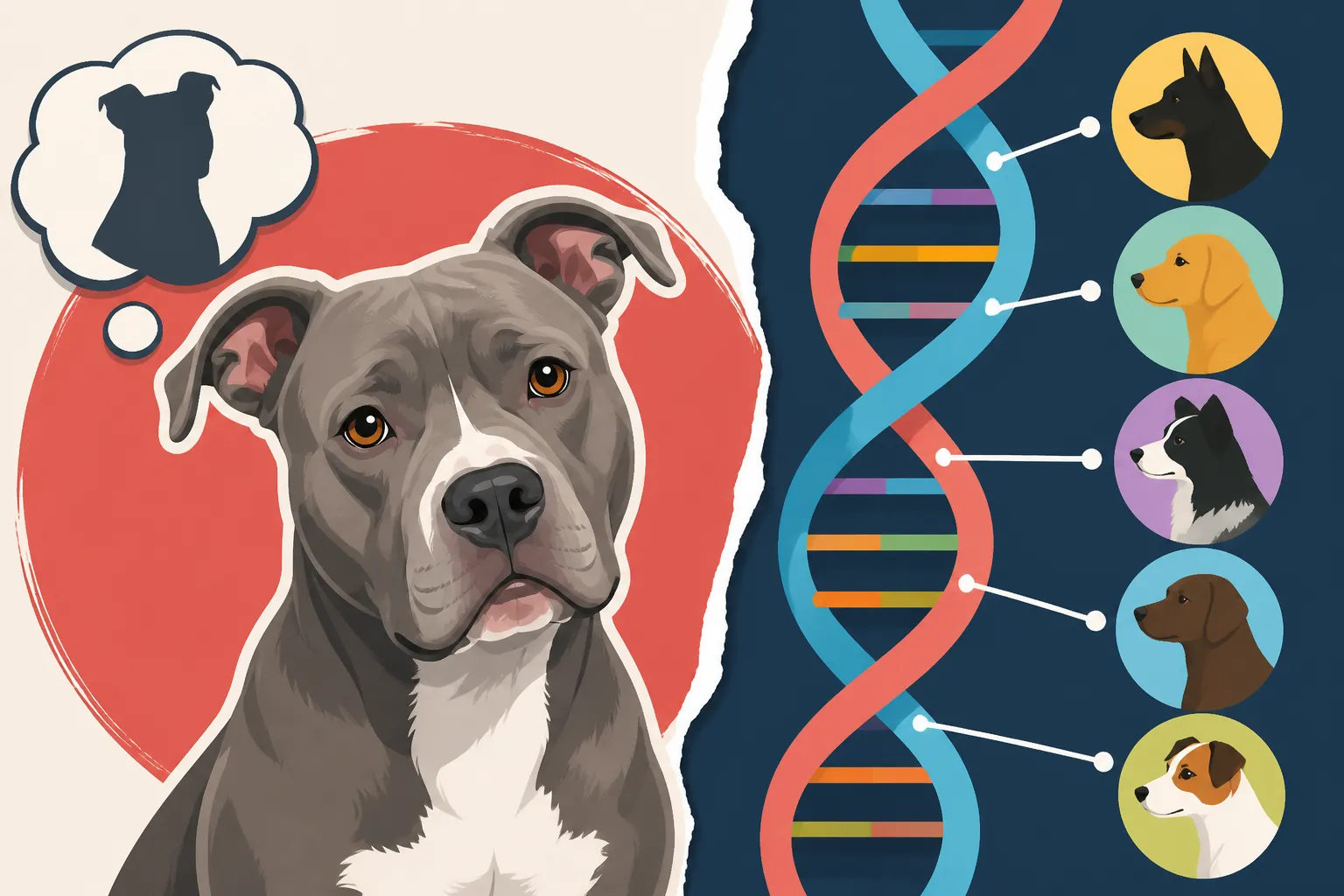
Why a Pit Bull Label Rarely Matches the DNA
It's a frustrating, all-too-common scenario: you welcome a wonderful, loving dog into your home, often from a shelter where they were labeled a "Pit Bull" or "Pit Bull mix." You adore them, but then you decide to get a DNA test, and the results come back. Suddenly, your "Pit Bull" is a complex cocktail of Boxer, Labrador, perhaps a dash of German Shepherd, and maybe even some surprising terrier breeds, with little to no actual American Pit Bull Terrier or American Staffordshire Terrier DNA. This guide is dedicated to exploring why this visual "Pit Bull" label so rarely matches a dog's actual genetic makeup and what that significant discrepancy truly means for owners, dogs, and our understanding of canine identity.
The Shifting Sands of the "Pit Bull" Definition
The very first hurdle in understanding why a "Pit Bull" label often doesn't match DNA is recognizing that "Pit Bull" isn't a single, universally recognized breed. It's more of a catch-all term, a broad descriptor that has evolved over time to encompass a variety of dogs with similar physical characteristics, often with tragic consequences for the dogs themselves. This fluid definition is the root of much confusion, creating a situation where visual cues often override genetic reality.
"Pit Bull" as a Category, Not a Single Breed
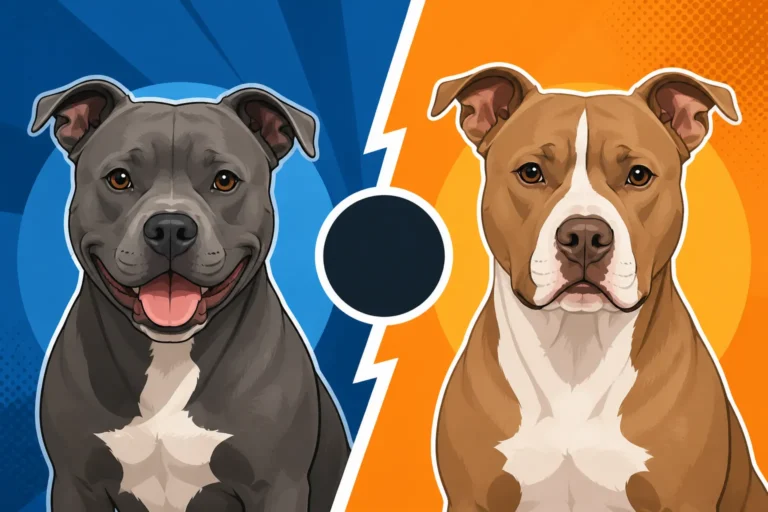
When people say "Pit Bull," they are usually referring to one of a few specific breeds or their crosses, primarily the American Pit Bull Terrier (APBT), the American Staffordshire Terrier (AmStaff), and sometimes the Staffordshire Bull Terrier (SBT). The American Pit Bull Terrier is recognized by the United Kennel Club (UKC), while the American Staffordshire Terrier is recognized by the American Kennel Club (AKC). The Staffordshire Bull Terrier is a distinct, smaller breed from England, also recognized by the AKC. Each of these breeds has its own unique history, breed standard, and genetic lineage, yet they are all routinely lumped together under the "Pit Bull" umbrella simply because they share certain physical traits.
Imagine trying to visually distinguish between a Border Collie and an Australian Shepherd without knowing their specific breed standards, or between different types of retrievers. It’s challenging even for those familiar with breeds. Now, consider dogs that aren't purebred but merely share a blocky head or a muscular build. The nuance is lost, and the label sticks. This categorical misunderstanding creates a significant gap between what a dog is called and what its DNA actually says. Why Pit Bull Is a Type and Not a Breed delves deeper into this fascinating, yet often problematic, distinction.
Blurring Lines: Other "Bully Breeds" and Visual Similarities
To complicate matters further, many other "bully breed" types and muscular mixed-breed dogs are frequently misidentified as Pit Bulls. This includes breeds like the American Bulldog, Boxer mixes, various Mastiff crosses, and even the increasingly popular American Bully. These dogs often share a strong, athletic build, a broad head, and a short coat – all traits that, in the public eye, scream "Pit Bull."
A dog walker might point to a sturdy American Bulldog and confidently declare it a Pit Bull, even though its genetic makeup might be entirely different. Or perhaps a Boxer-Labrador mix, with its strong jaw and muscular frame, gets tagged with the same label. The visual similarities are undeniable, but they are often superficial when it comes to genetic ancestry. This broad visual interpretation means that a dog doesn't even need any "Pit Bull" breeds in its recent lineage to be saddled with the label. It just needs to look the part.
The Glaring Inaccuracy of Visual Breed Identification
It might seem intuitive that we can tell a dog's breed just by looking at it, but study after study, and countless DNA tests, have proven this assumption to be deeply flawed. Our eyes, even those of experienced dog professionals, are simply not reliable breed detectors, especially when it comes to breeds with overlapping characteristics or mixed ancestries.
The Human Element: Bias and Assumption
One of the biggest factors in visual misidentification is human bias and the power of assumption. We all carry preconceived notions about what certain breeds look like and how they behave. When we see a dog with a sturdy build and a wide mouth, our brains often automatically jump to "Pit Bull," especially if there's any societal stigma attached to that image. This isn't necessarily malicious; it's often an unconscious cognitive shortcut.
Consider a stray dog brought into a shelter. If it has a muscular frame and a short coat, even a seasoned shelter worker might log it as a "Pit Bull mix" based on its phenotype (its physical appearance). This initial label then follows the dog, shaping how potential adopters view it, how it's handled, and even what behavioral expectations are placed upon it. A powerful example of this is how frequently a dog rubbing its face on the carpet might be dismissed as an allergy, when in reality, it could be a sign of deeper discomfort that’s misattributed to a generic "Pit Bull" trait. This is discussed in A Pit Bull Rubbing Its Face on the Carpet. It’s easy to project traits onto a dog based on a label rather than observing its individual behavior. Owners purchasing items like durable toys or specific dietary supplements from online retailers like Chewy might initially search based on this assumed "Pit Bull" label, only to find the products aren't quite right for their dog's actual genetic needs later on.
Data Doesn't Lie: Studies on Visual ID Failures
The scientific evidence is overwhelmingly clear: visual breed identification is remarkably inaccurate. Numerous studies, often involving veterinarians, shelter staff, and even breed experts, have consistently shown that people are terrible at guessing a dog's breed, particularly when it comes to mixes. In some cases, accuracy rates hover around 25-50%, meaning people are wrong more often than they are right.
These studies typically involve taking photos of dogs whose DNA ancestry is known and then asking various professionals to identify their breeds. The results are almost always a scattered mess, with little consensus and frequent misidentifications. A dog that is genetically proven to be a mix of Great Dane and Lab might be visually identified as a "Pit Bull" simply because of its strong jawline or build. This isn't a reflection of the identifier's expertise, but rather the inherent difficulty of discerning genetic makeup through physical appearance alone. This reality is a huge factor in How Shelters Decide a Dog Is a Pit Bull and often leads to an over-representation of "Pit Bulls" in shelter populations simply due to mislabeling.
Unpacking the Genetic Truth with DNA Testing
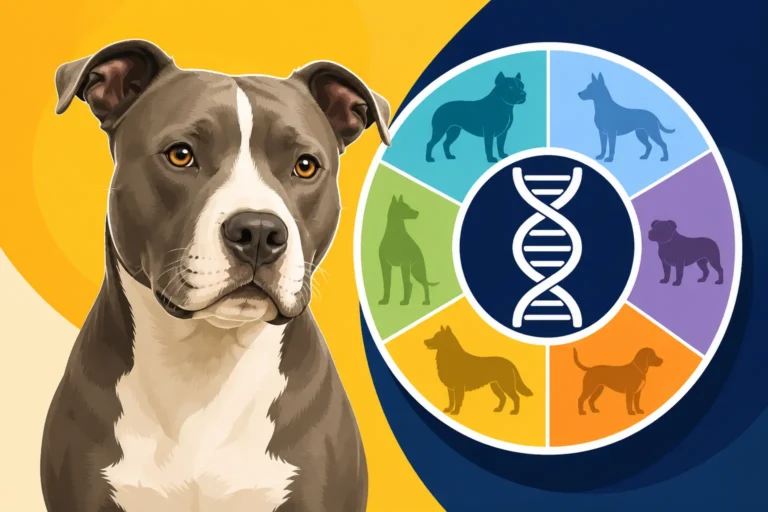
When you finally decide to send off that cheek swab, the results can be genuinely eye-opening. DNA testing provides a genetic blueprint, a detailed breakdown of a dog's ancestral background that visual inspection can never hope to achieve. What often emerges is a far more diverse and nuanced picture than anyone could have guessed.
Unexpected Ancestries: The Multi-Breed Reveal
One of the most common revelations from a dog DNA test is just how many different breeds contribute to a single dog's genetic makeup. Many dogs labeled as "Pit Bulls" are, in fact, incredibly diverse mixes, sometimes with five, six, or even more distinct breeds in their recent family tree. It's not uncommon to see a dog visually identified as a Pit Bull come back as a mix of breeds like American Staffordshire Terrier (yes, sometimes there's a small percentage!), Boxer, Bulldog, Labrador Retriever, German Shepherd Dog, Mastiff, or even breeds like Australian Cattle Dog or Siberian Husky.
These results paint a picture of a melting pot of canine genetics, reflecting generations of mixed breeding. For example, your perceived "Pit Bull" might have a dominant appearance from a Boxer lineage, but its DNA reveals significant portions of a completely different breed like a Great Pyrenees or a Chow Chow, which manifest in subtle traits or even unseen predispositions. This multi-breed revelation not only debunks the simple "Pit Bull" label but also provides valuable insights into potential health considerations or behavioral tendencies that align with the actual breeds in their heritage. What a DNA Panel Says About a Pit Bull explores these genetic insights in much greater detail. Knowing these specific breed components can help an owner tailor their dog's diet, activity, and even select appropriate toys from a store like Chewy, moving beyond generic "bully breed" assumptions.
Appearance vs. Genetics: A Complex Relationship
The relationship between a dog's appearance (phenotype) and its genetic makeup (genotype) is far more complex than many assume. Certain physical traits, like coat color or ear set, are often controlled by a few dominant genes. This means a dog can look very much like one particular breed due to inheriting just a handful of dominant physical traits, even if that breed constitutes a very small percentage of its overall DNA.
For instance, a dog might inherit the broad head shape and short, powerful build often associated with "Pit Bulls," even if its DNA is only 10% American Staffordshire Terrier and 90% other breeds. Conversely, a dog with a significant percentage of a "Pit Bull" breed in its DNA might not display those stereotypical physical traits at all, instead resembling a more "generic" mixed breed. It's like how two siblings can have the same parents but look completely different – genetics are tricky! This is why relying solely on how a dog "looks" to determine its breed is fundamentally unreliable and why the "Pit Bull" label so often fails to align with genetic reality.
Real-World Consequences of a Misapplied Label
While it might seem like just a name, the disparity between a visual "Pit Bull" label and actual DNA has profound, often negative, consequences for dogs and their human companions. From finding a place to live to determining adoption chances, this mislabeling creates significant hurdles that are unfair and unwarranted.
Housing, Insurance, and Legal Roadblocks
Perhaps the most immediate and impactful consequence of the "Pit Bull" label is the pervasive discrimination in housing and insurance. Many landlords, homeowners' insurance companies, and even entire municipalities operate under breed-specific legislation (BSL) or breed restrictions. These policies often ban or place severe restrictions on dogs identified as Pit Bulls or Pit Bull mixes. The problem? This identification is almost always based purely on visual assessment, not genetic truth.
Imagine trying to find a new apartment only to be turned away repeatedly because your beloved dog, visually labeled a "Pit Bull," is on the prohibited breed list. Or receiving a letter from your insurance company threatening to drop your coverage or significantly raise your premiums because of your "dangerous" dog. This isn't hyperbole; it's a daily reality for countless owners. Getting Home Insurance With a Pit Bull and Finding a Rental That Takes a Pit Bull both detail the extensive challenges owners face. Even if a dog's DNA test shows it's 80% Golden Retriever and 20% unknown mixed breed, if it looks like a Pit Bull to a landlord or insurance adjuster, the label—and its associated penalties—will stick. This discrimination forces many loving families to make impossible choices, sometimes leading to dogs being surrendered to shelters through no fault of their own.
Impact on Shelter Dogs and Adoption Chances
The "Pit Bull" label dramatically impacts dogs in shelters. Because of the stigma and breed restrictions, dogs labeled as Pit Bulls often face longer stays in shelters, higher euthanasia rates, and reduced chances of adoption compared to other breeds. A dog that is a genetic mix of several beloved breeds, but happens to have a blocky head, can languish in a kennel simply because of a visual tag.
Many progressive shelters have recognized this problem and have started adopting breed-neutral labeling practices, describing dogs by their size, personality, and known behaviors rather than an arbitrary breed label. When shelters stop labeling dogs as "Pit Bulls," adoption rates often improve, demonstrating that the label itself is a significant barrier. How Long a Labelled Pit Bull Waits for Adoption sheds light on the heartbreaking reality these dogs face. If potential adopters could see beyond the visual label and focus on the individual dog's temperament and needs, many more "Pit Bull"-type dogs would find homes. Even online pet supply stores like Chewy sometimes categorize products by "bully breed," inadvertently reinforcing the collective identity rather than the individual dog's specific requirements.
Misguided Expectations for Health and Behavior
Finally, a misapplied "Pit Bull" label can lead to misguided expectations regarding a dog's health and behavior. Owners might wrongly assume their dog is prone to certain breed-specific health issues associated with true American Pit Bull Terriers or American Staffordshire Terriers, such as Pit Bull Skin Allergies and the Atopy Pattern or Pit Bull Hip Dysplasia Showing at One to Two Years, when in reality, their dog's dominant genetic makeup might predispose them to entirely different conditions.
Conversely, they might overlook potential health concerns specific to the actual breeds within their dog's DNA because they're focused on the "Pit Bull" stereotype. The same applies to behavior. A dog labeled a "Pit Bull" might be assumed to be inherently "dog-selective" or prone to certain strong-willed behaviors, when its actual genetic mix might point to a far more placid or social disposition. This isn't to say that Pit Bull type dogs don't have certain characteristics, but rather that individual dogs, regardless of label, should be assessed on their own merit. Understanding your dog's true genetic background through DNA testing provides a more accurate foundation for tailored care, training, and realistic expectations, allowing you to choose appropriate food, exercise, and training tools, perhaps ordering them conveniently from Chewy.
Here's a quick look at how widely visual ID can miss the mark:
| Visual ID Trait | Common Assumption (Often "Pit Bull") | What DNA Often Reveals |
|---|---|---|
| Blocky Head / Strong Jaw | Pit Bull | Boxer, American Bulldog, Mastiff, Lab Mix, even Akita |
| Muscular Build | Pit Bull | Boxer, Bulldog, Staffie, German Shepherd, Rhodesian Ridgeback, Coonhound |
| Short, Smooth Coat | Pit Bull | Lab, Boxer, Greyhound, Vizsla, many mixed breeds |
| High Energy / Drive | Pit Bull | Australian Shepherd, Border Collie, Sighthound, Sporting Dog Mix |
| Broad Chest / Tapered Waist | Pit Bull | Greyhounds, Boxers, even some Dobermans |
| Loyal, Affectionate Nature | Pit Bull (often surprising to some) | Most breeds, especially those bred for companionship and work |
The journey of understanding your dog's true heritage is a powerful one, often revealing a tapestry of breeds far richer and more complex than a simple visual label suggests. By embracing DNA insights, we can move beyond stereotypes and provide more accurate, compassionate care for all dogs, regardless of how they might appear at first glance.
Disclaimer
This article is for general informational purposes only and does not constitute professional advice. Laws, prices and regulations vary by location and change over time. Consult a qualified professional for guidance on your specific situation.