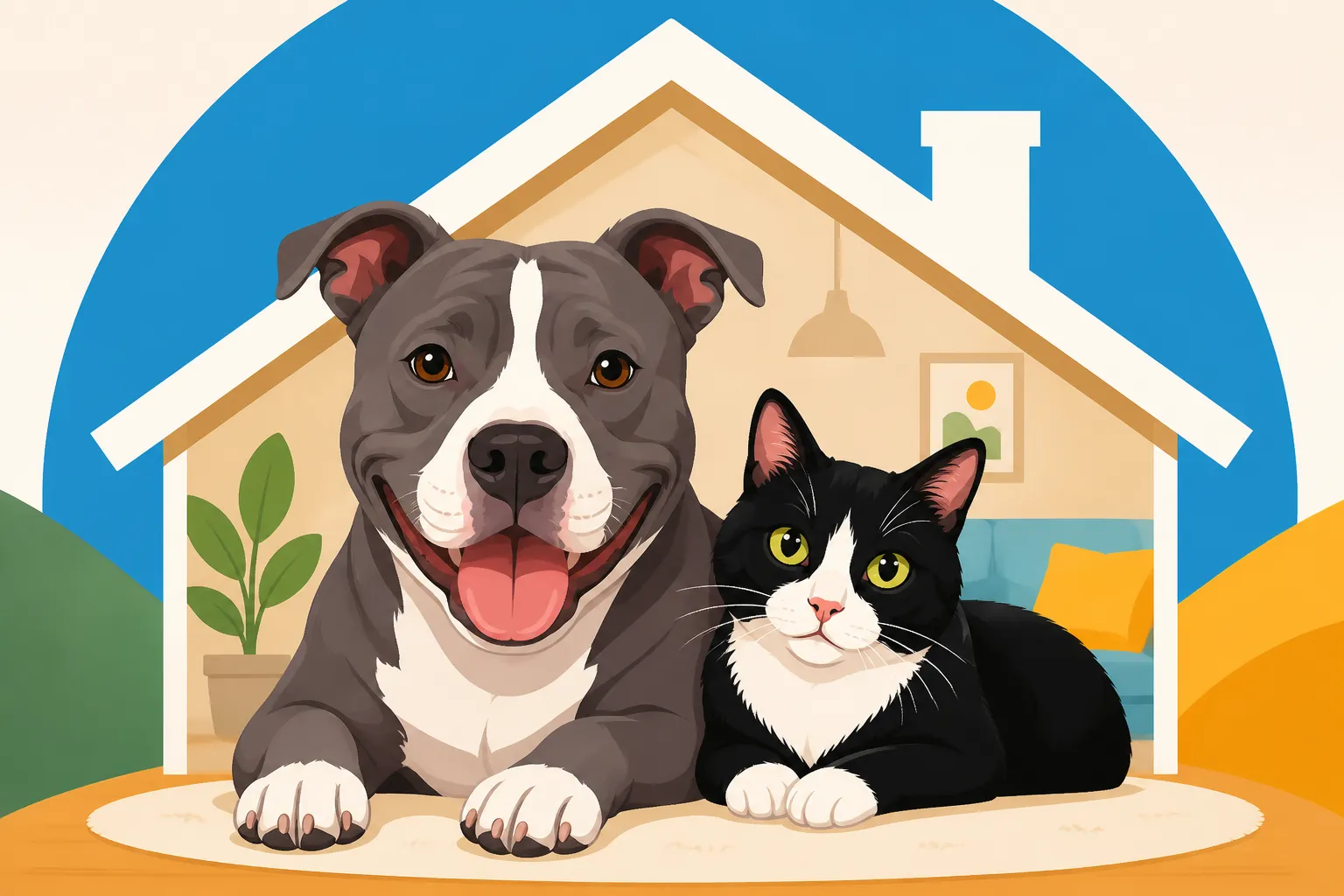
A Pit Bull and a Cat Under One Roof
Bringing a Pit Bull into a home where a cat already reigns supreme, or vice-versa, can feel like navigating a minefield. Many loving owners desperately want their furry family members to coexist peacefully, but the reality of strong dog instincts and sensitive cat temperaments often creates stress, fear, and even danger. This guide aims to provide realistic, empathetic advice on how to foster a safe and (hopefully) harmonious environment for your Pit Bull and your feline companion, acknowledging the unique challenges you face.
Understanding the Pit Bull's Nature and the Challenge
When you have a Pit Bull, you’re dealing with a dog bred for specific physical and mental traits. These aren't necessarily negative, but they require a deep understanding and careful management, especially when small, fast-moving creatures like cats are involved. It's not about whether your Pit Bull wants to be mean; it's about what their inherent drives compel them to do.
The Reality of Prey Drive
Let's talk about prey drive. This isn't aggression, per se, but an instinct to chase, capture, and sometimes kill smaller animals. It's a natural behavior that exists to varying degrees in all dogs, but certain breeds, like Pit Bulls, can have a particularly strong manifestation of it due to their historical lineage. These dogs were developed from bull and terrier crosses, originally for tasks that required intense focus and the drive to engage with animals. That intense focus and drive, while admirable in other contexts, can make a cat's sudden dash across the room an irresistible trigger.
It's heartbreaking to realize that your beloved dog might view your cherished cat as prey, but ignoring this instinct is dangerous. A Pit Bull's jaw strength and speed mean that even a "playful" chase can turn deadly in a second. We’re not talking about a Pit Bull being inherently "bad" or malicious; we're talking about instinct. Think of it like a cat's instinct to hunt mice – it's just how they're wired. This is why even a Pit Bull who has lived peacefully with a cat for years can have an incident if the cat makes a sudden move that triggers that deep-seated instinct. For a deeper dive into this specific aspect, consider reading Pit Bull Prey Drive Toward Cats.
Dog Selectivity and Energy Levels
Beyond raw prey drive, many Pit Bulls exhibit what's known as "dog selectivity." This means they might get along wonderfully with some dogs, but not others, or may prefer to be the only dog in the home. While this often applies to other canines, the underlying intensity and strong engagement style can spill over into interactions with other species, including cats. Even if your Pit Bull isn't actively predatory, their sheer size, strength, and exuberant play style can be terrifying or even accidentally harmful to a smaller, more delicate cat. A boisterous zoomie around the house, a playful pounce, or a simple misstep could result in injury for your feline friend, even if no malice is intended.
Their high energy levels also contribute to the challenge. A bored or under-exercised Pit Bull is more likely to seek "entertainment," and a moving cat can unfortunately become the most convenient (and exciting) target. It's a heavy responsibility to manage this, but it’s crucial for the safety and peace of mind of everyone in the household.
The Myth of the "Nanny Dog" and Safety
It's a persistent, comforting myth that Pit Bulls were once known as "nanny dogs" due to their supposed exceptional gentleness with children and other small creatures. While historical photos show Pit Bulls with children, this narrative lacks factual basis in historical records of the breed's development or temperament. In reality, no dog, regardless of breed, should ever be left unsupervised with a child or a smaller, more vulnerable animal like a cat. Relying on the "nanny dog" myth to justify unsupervised interactions is incredibly risky and goes against all responsible pet ownership advice. You can explore this topic further by reading Why the Pit Bull Nanny Dog Story Is a Myth.
Pit Bulls are powerful animals with strong instincts. Assuming they will automatically be gentle guardians with a cat is a dangerous assumption. Your primary responsibility as an owner is to manage the environment and their interactions to prevent any possibility of harm. This means constant vigilance and a proactive approach to safety, rather than wishful thinking.
Setting Up for Success: Management and Environment
Integrating a Pit Bull and a cat successfully is less about wishing they'll get along and more about meticulously managing their environment and interactions. This isn't a temporary measure; it's a long-term commitment to safety and harmony.
Creating Separate Spaces and Safe Zones
The cornerstone of a successful multi-species household is the creation of clearly defined, safe spaces for both animals. Your cat needs areas where your Pit Bull simply cannot reach them, places where they can eat, sleep, and observe without fear. This means investing in cat trees, shelves, or even strategically placed furniture that allows your cat vertical escape routes. Baby gates are your best friend here. Use them to block off entire rooms or sections of the house where your cat can retreat or where your Pit Bull can be contained when you can't actively supervise. Feed your cat on a counter, in a separate room behind a closed door, or in a cat tree. Never free-feed, as this can lead to resource guarding issues with your Pit Bull.
Your Pit Bull also needs their own dedicated, safe space, typically a sturdy crate. A crate isn't just for potty training; it's a sanctuary for your dog and a crucial management tool in a mixed household. They can relax there when you're busy, when the cat needs a break, or when you need to leave the house. Ensure the crate is robust enough for your strong Pit Bull, and consider browsing options from retailers like Chewy for heavy-duty models. Proper crate training can make a huge difference in managing their energy and ensuring calm periods.
Controlled Introductions and Supervision
Initial introductions must be slow, gradual, and always, always supervised. Start with scent swapping: allow them to smell blankets or toys from each other's spaces. Then, move to visual introductions, but with a physical barrier like a baby gate in between. Your Pit Bull should be on a leash, calm, and rewarded for ignoring the cat or for calm behavior. Keep these sessions extremely short and positive. Look for relaxed body language from both animals – a loose tail wag from your Pit Bull, a curious sniff from your cat, rather than stiff postures, staring, or hissing/growling.
Over time, if these barrier introductions go well, you can move to supervised, leashed interactions in the same room. Your Pit Bull should remain on a leash, and you should be ready to intervene at any moment. Never allow chasing or rough play. Reward calm coexistence. Even if they appear to be getting along, never leave your Pit Bull and cat unsupervised, especially in the early stages and whenever you leave the house. This rule is non-negotiable for the cat's safety. For effective leash management, exploring options like anti-pull harnesses from Chewy might be beneficial for maintaining control during these delicate introductions.
Enrichment and Exercise for Your Pit Bull
A tired Pit Bull is a good Pit Bull. Providing ample physical exercise and mental stimulation for your Pit Bull is paramount when living with a cat. A dog with pent-up energy is much more likely to fixate on and harass a cat. Daily walks, runs, flirt pole sessions (safely away from the cat, of course!), and structured play in a secure yard can help burn off that physical energy.
Mental stimulation is just as important. Engage your Pit Bull with puzzle toys, scent work games, and regular training sessions. These activities tire their minds and give them appropriate outlets for their intelligence and drive, redirecting their focus away from the cat. A Pit Bull that has just worked their brain on a puzzle feeder or a training session is less likely to be keyed up by a cat sauntering by. You can find a fantastic selection of puzzle toys and enrichment items at places like Chewy. Learning some Indoor Trick Work for a Bored Pit Bull can also be incredibly helpful, especially on days when outdoor exercise isn't possible.
Training and Behavioral Modification
Training isn't just about obedience; it's about building communication and impulse control, which is essential when a Pit Bull shares a home with a cat. This kind of training is an ongoing process, not a one-and-done solution.
Building Impulse Control and "Leave It"
One of the most critical commands to teach your Pit Bull in a multi-species household is "leave it." This command needs to be ironclad, meaning your dog will disengage from anything you ask them to, no matter how tempting. Practice "leave it" in various environments, starting with low-distraction items and gradually increasing the challenge. Use high-value treats to reward immediate disengagement. If your Pit Bull can reliably "leave" a dropped piece of chicken, they stand a much better chance of disengaging from a cat.
"Stay" and "settle" are equally important. Teach your Pit Bull to calmly remain in a designated spot (like their mat or bed) even with distractions. This builds self-control and provides a "reset" button when things get too exciting. Remember, consistency is key, and every successful "leave it" or "stay" around the cat reinforces the desired behavior. High-value treats, such as dried liver or small pieces of cheese, are essential for keeping their focus, and you can often find great options at stores like Chewy. For tips on effective rewards, check out High-Value Treats That Hold a Pit Bull's Focus.
Positive Reinforcement and Desensitization
Positive reinforcement is the only way to go when teaching your Pit Bull how to behave around a cat. Every time your Pit Bull calmly observes the cat, looks away, or remains settled in their designated spot while the cat is present, mark that moment with a verbal cue ("yes!") and reward them generously with a treat. You want your Pit Bull to associate the cat's presence with good things happening for them. Never use punishment, as this can create negative associations, fear, or even aggression towards the cat.
Desensitization involves gradually exposing your Pit Bull to the cat in a controlled, non-threatening way. Start from a distance where your Pit Bull notices the cat but remains calm, then reward. Slowly decrease the distance over many sessions, always rewarding calm behavior. If your Pit Bull becomes too fixated or excited, you've gone too fast – increase the distance again. This slow and steady approach is vital. It's about changing their emotional response from "chase!" to "oh, there's the cat, good things happen now." More on this approach can be found in Positive Reinforcement Training With a Pit Bull.
When to Seek Professional Help
Let's be realistic: integrating a Pit Bull and a cat can be incredibly challenging, and sometimes, you need more than online advice. If you're struggling to make progress, if your Pit Bull exhibits intense prey drive that you can't manage, or if there's been even one incident where the cat was harmed or severely frightened, it's time to call in a professional. Look for a certified professional dog trainer or a veterinary behaviorist who has experience with Pit Bull types and multi-species households. They can assess your specific situation, read your dog's body language, and provide tailored strategies.
A good trainer won't promise miracles but will offer practical, safe solutions and help you set realistic expectations. They can also teach you how to recognize subtle signs of stress or impending trouble in your Pit Bull's body language, which is crucial for preventing incidents. Don't feel ashamed to ask for help; it's a sign of responsible pet ownership to prioritize the safety and well-being of all your animals. Before hiring, make sure to read Vetting a Trainer Before Booking a Pit Bull to choose the right professional.
Long-Term Coexistence and Realistic Expectations
Living with a Pit Bull and a cat is an ongoing journey that requires dedication. It’s important to maintain safety protocols and to have realistic expectations about the kind of relationship your animals will have.
Ongoing Management and Vigilance
Even after successful introductions and months of peaceful coexistence, the need for management and vigilance never truly goes away. Prey drive is an instinct, and it can resurface, especially during moments of high arousal or if previous safety protocols are relaxed. This means continuing to use baby gates, ensuring cats have escape routes, supervising interactions, and never leaving them alone together unsupervised, especially when you leave the house. This might feel restrictive, but it's the safest way to prevent tragic accidents.
Continually monitor their interactions. Are they just tolerating each other, or are they truly comfortable? Always be on the lookout for any signs of discomfort or stress from either animal. Rotate toys to prevent resource guarding, feed them separately, and ensure the cat's litter box is in an area inaccessible to the dog. This continuous management creates a structured environment where both animals feel secure, reducing overall household stress.
Understanding Your Pit Bull's Cues
Learning to read your Pit Bull's body language is one of the most powerful tools you have. Before an incident happens, dogs often give subtle cues that indicate increasing arousal, stress, or fixation. Look for signs like a stiff body, hard stare, dilated pupils, ears perked and forward, a low tail wag that's stiff rather than loose, or even a sudden quiet intensity. These are signals that your Pit Bull's prey drive or arousal level might be increasing, and it's time to calmly intervene and redirect their attention or separate the animals.
Conversely, also learn to recognize signs of calm and relaxation: a soft gaze, relaxed body, loose mouth, ears held naturally, and a slow, loose tail wag. Reward these moments. By becoming fluent in your Pit Bull's language, you can anticipate potential issues and prevent them from escalating, protecting your cat and reinforcing positive behaviors. For more detailed information on canine body language, refer to Reading a Pit Bull Before a Scuffle Starts.
Accepting Limitations and Prioritizing Safety
It's a tough pill to swallow, but sometimes, despite all your best efforts, a Pit Bull and a cat simply cannot safely coexist in the same household. This isn't a failure on your part, nor is it a judgment on your dog or cat. It's a recognition of inherent instincts and individual temperaments that, when combined, create an unsafe situation. Prioritizing the safety and well-being of both animals means accepting this reality.
If constant management is causing significant stress for you or your pets, if either animal lives in a state of chronic fear, or if any aggressive incidents occur despite your best efforts, it may be necessary to consider rehoming one of the animals. This is a painful decision, but it's the most responsible choice an owner can make. Remember, your Pit Bull is a dog, and cats are cats; they have different needs and instincts. Forcing them into an unnatural, stressful, or dangerous living arrangement benefits no one. The goal is a peaceful and safe home for everyone, even if that means a difficult choice for you.
| Aspect of Coexistence | Best-Case Scenario | Realistic Goal | Worst-Case Scenario |
|---|---|---|---|
| Interaction Style | Gentle nudges, mutual curiosity, shared resting spots | Peaceful indifference, occasional calm observation | Chasing, fixation, aggression, injury |
| Supervision | Always supervised, but less active intervention needed | Constant, active supervision always necessary | Never safe together, even with supervision |
| Training Effectiveness | Excellent impulse control, reliable "leave it" | Moderate impulse control, requires consistent cues | Minimal response to commands, high fixation |
| Cat's Comfort Level | Confident, relaxed, seeks dog's presence | Tolerant, has safe zones, avoids dog actively | Terrified, hides constantly, stressed |
| Owner's Stress Level | Low, enjoys watching them interact | Moderate, managing still requires effort | High, constant worry, anxiety over interactions |
| Household Setup | Separate feeding, cat-only spaces available | Strict separation for food, sleep, and alone time | Requires complete separation at all times |
Disclaimer
This article is for general informational purposes only and does not constitute professional advice. Laws, prices and regulations vary by location and change over time. Consult a qualified professional for guidance on your specific situation.