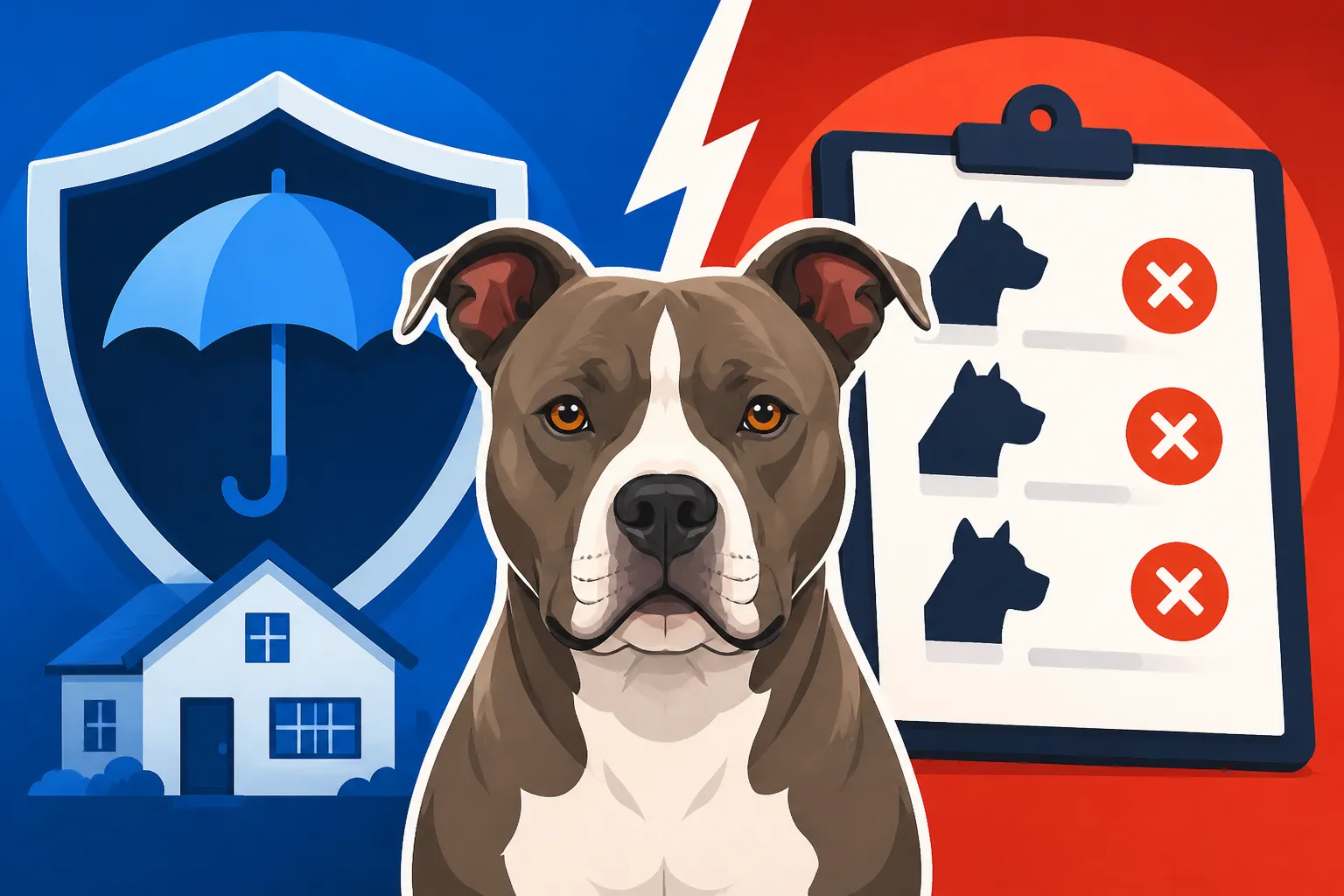
Why Insurer Pit Bull Lists Differ From Registries
It's incredibly frustrating, isn't it? You know your dog, you love your dog, and to you, they're just Fido or Bella – a beloved family member. Yet, when you try to secure something as basic as homeowners or renters insurance, you're hit with a "Pit Bull" label that suddenly makes everything complicated, despite your dog perhaps having official breed papers or being a clear mixed breed. This guide is all about untangling that knot, explaining why insurance companies' definitions of "Pit Bull" often stray so far from established breed registries, and what that means for you.
The Discrepancy: Registries Versus Risk Assessment
When it comes to dogs, there are generally two major ways they get "categorized" in the public eye: by formal breed registries and by groups focused on statistics, liability, and risk – like insurance companies. These two approaches, while both aiming to classify dogs, have vastly different objectives and methodologies, leading to a frustrating disconnect for owners of Pit Bull-type dogs.
What Breed Registries Actually Do
Breed registries, such as the United Kennel Club (UKC) or the American Kennel Club (AKC), are primarily concerned with maintaining breed standards, tracking pedigrees, and preserving the distinct characteristics of recognized breeds. For them, a "Pit Bull" isn't a single, officially recognized breed. Instead, what most people colloquially call "Pit Bull" actually encompasses several distinct breeds.
The UKC, for instance, recognizes the American Pit Bull Terrier, which is a specific breed with a documented lineage and a detailed standard outlining its physical traits and temperament. Similarly, the AKC recognizes the American Staffordshire Terrier (AmStaff) and the Staffordshire Bull Terrier, both of which are also part of the broader "Pit Bull type" family but have their own separate breed standards and histories. The Three Breeds People Call Pit Bulls delves into this further. These organizations require documentation of parentage, often DNA verification, and adherence to specific physical and temperamental ideals to register a dog as a particular breed. Their focus is on breed purity and selective breeding for specific traits over generations. They are not in the business of assessing general risk; they are preserving specific canine legacies. This means if you have an AmStaff with AKC papers, it's definitively an American Staffordshire Terrier in their eyes, not just a generic "Pit Bull."
The Insurer's Risk Assessment Approach
Insurance companies, on the other hand, operate in a completely different world. Their bottom line is risk management and financial liability. When they create lists of "restricted" or "banned" breeds, they aren't looking at pedigree papers or fancy titles. They're looking at historical data related to claims, specifically dog bite incidents and associated costs. Their goal is to quantify and mitigate potential financial losses, and they do this by assessing perceived risk.
For an insurer, a "Pit Bull" isn't about a specific breed standard but rather a type of dog that is statistically associated with a higher frequency or severity of claims. This means they cast a much wider net. They're often looking at visual cues, local ordinances, and broad public perception rather than strict genetic definitions. This can be incredibly frustrating for owners who know their dog is well-behaved and extensively trained. You might have a perfectly calm and sweet dog, but if it looks like what an insurer considers a "Pit Bull," you could be facing higher premiums or even outright denial. Many insurers simply group all dogs with a blocky head and muscular build into this single, problematic category.
How "Pit Bull Type" Becomes a Catch-All Term for Insurers
The term "Pit Bull type" is where much of the confusion and discrimination truly takes root. For registries, it's about distinct breeds; for insurers, it's a broad brushstroke that impacts your ability to secure housing and affordable coverage.
Visual Identification and Perceived Traits
The biggest reason for the discrepancy lies in how insurance companies (and often landlords or municipalities) "identify" a Pit Bull. They don't send out geneticists to perform DNA tests or request proof of pedigree from the UKC. Instead, it's almost always a visual assessment. If a dog has a certain look – a broad head, a muscular build, a short coat, a specific ear set (whether natural or cropped) – it's often summarily labeled "Pit Bull type." This visual shorthand is convenient for insurers but profoundly unfair and inaccurate for owners.
Think about it: many mixed-breed dogs can easily fit this visual description, even if their genetic makeup is primarily something else entirely. A Labrador mix, a Boxer mix, or even certain bulldog types might have enough "Pit Bull characteristics" to trigger a ban. This means your beloved rescue, who might be a blend of half a dozen breeds, could be unfairly categorized. This isn't about your dog's actual behavior or training; it's purely about its appearance and how that appearance aligns with a generalized risk profile in an underwriter's manual. It's a perception-driven categorization, rather than a fact-driven one based on genetics or temperament testing like the Pit Bull Temperament and the ATTS Results.
Data, Incidents, and Actuarial Tables
The actuarial tables that insurance companies rely on are built on data. This data, especially regarding dog bites and associated claims, often doesn't differentiate between an American Pit Bull Terrier, an American Staffordshire Terrier, or a visually similar mixed breed. Instead, incident reports and news articles frequently use the blanket term "Pit Bull" to describe any dog that looks like one. This broad reporting, unfortunately, feeds into the insurers' broad definitions.
When an insurer sees a higher rate of claims associated with "Pit Bulls" in their data, they implement policies to manage that perceived risk. This isn't necessarily a malicious act on their part; it's a business decision based on the financial liabilities they face. However, it completely bypasses the nuanced understanding of canine breeds and individual dog temperaments that responsible owners and reputable trainers possess. The data they use often lacks the precision needed to distinguish between different Pit Bull-type breeds or even between well-trained, socialized dogs and those that haven't had the benefit of proper care. It becomes a self-perpetuating cycle: the media reports "Pit Bull bite," insurers add "Pit Bull" to their list, leading to more restrictions for all dogs fitting the visual description.
Here's a simplified comparison of how registries and insurers view "Pit Bulls":
| Feature | Breed Registries (e.g., UKC, AKC) | Insurance Companies |
|---|---|---|
| Primary Goal | Preserve breed standards, track pedigree, define specific breeds. | Assess and mitigate financial risk from liability claims. |
| "Pit Bull" Term | Not a single breed. Refers to specific breeds like APBT, AmStaff, Staffie. | A broad, umbrella term for dogs with certain physical characteristics. |
| Identification | Based on documented lineage, DNA verification, breed standard adherence. | Primarily visual assessment, often by untrained observers or photo review. |
| Focus | Genetics, conformation, temperament within a specific breed standard. | Perceived risk, statistical incident data, public perception of "dangerous" dogs. |
| Impact on Owner | Provides proof of breed, allows participation in breed-specific events. | Influences insurance eligibility, premiums, housing options. |
| Evidence Used | Pedigree papers, DNA tests, conformation judging. | Claims data, general appearance, broad breed-specific legislation (BSL). |
Navigating the Discrepancy as a Pit Bull Owner
So, what's a loving Pit Bull owner to do when faced with this confusing and often discriminatory landscape? It requires proactive planning and consistent advocacy for your dog.
Proactive Steps for Homeowners and Renters
The key is to be prepared and informed before you need insurance or housing. Don't wait until you're denied. Start by researching insurance providers thoroughly. Some companies are more breed-neutral than others, or they might offer policies that don't specifically list breeds but instead focus on individual dog assessments or require additional liability coverage. Getting Home Insurance With a Pit Bull and Renters Insurance That Accepts a Pit Bull offer more specific advice here.
When you're looking for a new place to live, especially if you're renting, be upfront about your dog. Understand that many landlords and HOAs have breed restrictions often tied to their own insurance policies. Some might make exceptions if you can provide strong evidence of your dog's temperament and training. It's crucial to ask directly about their specific breed policies. If you're struggling, consider looking into specific apartment complexes that are known to be pet-friendly and do not have breed restrictions. Remember, this isn't just about finding a dog-friendly place; it's about finding a Pit Bull-friendly place.
Consider an umbrella liability policy. This is an additional layer of liability insurance that goes beyond the limits of your homeowners or renters policy. While it might not get you past a breed ban, it can offer significant protection if an incident were to occur. Always read the fine print of any policy to understand exactly what is covered and what is excluded. Sometimes, even if an insurer doesn't explicitly ban Pit Bulls, they might have clauses that exclude coverage for certain types of incidents, or they might charge a higher premium.
Documentation and Advocacy
One of the most powerful tools you have as a Pit Bull owner is documentation. Start building a comprehensive portfolio for your dog:
- Training Records: Keep certificates from puppy classes, obedience training, or specialized courses. A dog with a Canine Good Citizen (CGC) title can sometimes help your case, as it demonstrates a proven level of training and good manners. Whether a CGC Title Helps a Pit Bull Policy dives into this specific benefit. Even if it doesn't sway your insurer, it's invaluable proof of your dog's behavior.
- Veterinary Records: Regular vet check-ups show responsible ownership. Healthy dogs are generally happier and less prone to stress-related behavioral issues.
- DNA Test Results: While not a guaranteed solution, a DNA test that shows your dog is not predominantly a breed an insurer classifies as "Pit Bull" can sometimes be helpful. However, be aware that many insurers still go by visual identification. Whether a DNA Test Gets a Pit Bull Insured explores the effectiveness of this. Don't be surprised if an insurer says, "We go by what the dog looks like," regardless of its genetic makeup.
- References: Letters from your veterinarian, trainer, or even neighbors can speak to your dog's good temperament and your responsible ownership.
When you're submitting an application or talking to an insurer, present this information calmly and professionally. Highlight your dog's positive attributes, their training, and your commitment to responsible ownership. You are, in essence, advocating for your dog's individual character against a generalized stereotype. Don't forget, having the right supplies for your dog's training and everyday needs, easily found on sites like Chewy, is also part of being a responsible owner.
The Role of Legislation and Advocacy
The good news is that public opinion and legislation are slowly shifting. Many states and cities are pushing back against breed-specific legislation (BSL) and breed-specific insurance discrimination. For example, some states have passed laws preventing insurers from denying or charging higher rates based solely on breed. States Where Insurers Cannot Ask About a Pit Bull is a great resource to check if your area has such protections.
Organizations dedicated to Pit Bull advocacy work tirelessly to educate the public and lawmakers about these dogs, emphasizing that responsible ownership, not breed, dictates a dog's behavior. Supporting these groups, staying informed about local ordinances, and even writing to your elected officials can contribute to long-term change. While you're working within the current system, remember that collective action can eventually lead to a more equitable future for all dogs, regardless of how an insurer chooses to label them. Even places like Chewy are becoming more inclusive in their marketing, showcasing a wider variety of dog breeds and types, which helps normalize Pit Bull types in a positive light.
Ultimately, owning a Pit Bull-type dog often means being an ambassador for the entire group. By diligently training your dog, ensuring their health and well-being (which often includes getting quality food and toys, perhaps from Chewy), and proactively managing their public perception, you're doing your part to dismantle outdated and unfair stereotypes.
Disclaimer
This article is for general informational purposes only and does not constitute professional advice. Laws, prices and regulations vary by location and change over time. Consult a qualified professional for guidance on your specific situation.