Indoor Trick Work for a Bored Pit Bull
Living with a high-energy Pit Bull can be incredibly rewarding, but let's be honest, there are days when outdoor adventures just aren't an option. Whether it's pouring rain, scorching summer heat, a blizzard, or even if your dog is recovering from an injury, a bored Pit Bull stuck indoors can quickly become a destructive Pit Bull. This guide is all about channeling that incredible Pit Bull energy and intelligence into fun, engaging indoor trick work, transforming those challenging days into opportunities for bonding and mental enrichment.
Why Indoor Trick Work is a Lifesaver for Pit Bulls
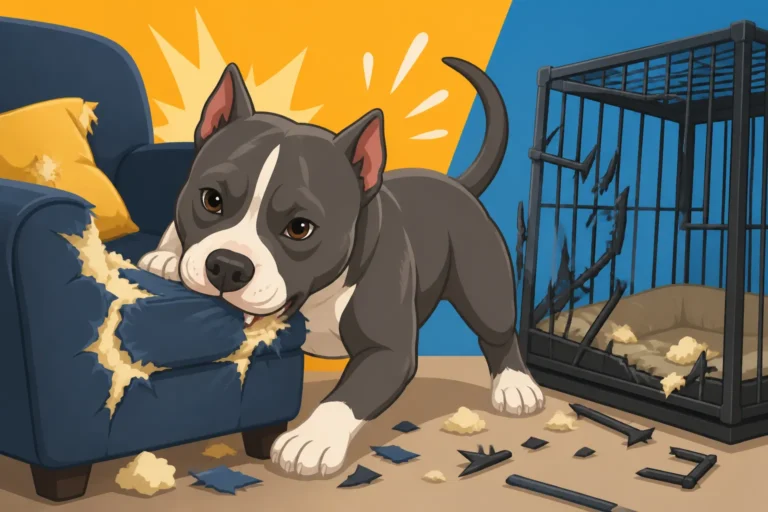
Many Pit Bull owners know the struggle: a dog with endless reserves of energy and a brain that needs to be used. When that mental and physical energy isn't properly expended, it often manifests in ways we'd rather avoid, like chewing furniture, incessant barking, or pacing endlessly. Indoor trick training offers a fantastic solution, engaging your dog's mind and body in a controlled environment.
The Mental Stimulation Advantage
Pit Bulls are smart dogs, far more so than their tough exterior often suggests. They thrive on having a "job" to do, and if we don't give them one, they'll invent their own, which might involve renovating your couch cushions. When they're bored, their intelligence can work against you, leading to destructive behaviors that stem from pure under-stimulation. Think about it: a Pit Bull is bred for athleticism and often for problem-solving in various contexts, even if not explicitly for herding or complex tasks. That drive needs an outlet.
Trick training taps into this deeply. Learning a new behavior, even something as simple as "spin," requires focus, coordination, and understanding a cue. It burns mental energy in a way that just running around the yard doesn't always achieve. On a day when going for a long walk is impossible, a solid 15-minute trick session can leave your Pit Bull just as tired, if not more so, than a casual stroll around the block. It’s like sending them to doggy brain camp, right in your living room. This mental workout can significantly reduce instances of A Pit Bull That Destroys Furniture When Alone or endless whining.
Building Your Bond and Communication
Training, especially positive reinforcement-based trick training, isn't just about teaching commands; it's about building a deeper connection with your Pit Bull. When you engage in these sessions, you're communicating with your dog in a structured, positive way. You're teaching them to understand what you want, and they're learning that engaging with you is rewarding and fun. This mutual understanding strengthens your bond exponentially.
Every successful trick learned, every high-value treat given, and every happy "good dog!" reinforces to your Pit Bull that you are a source of good things and clear direction. This trust and clear communication can carry over into other areas of their life, improving their overall behavior and responsiveness. It’s a wonderful way to demonstrate leadership in a kind and constructive manner, showing your Pit Bull that you're worth listening to. For more on this, consider resources like Positive Reinforcement Training With a Pit Bull. This shared activity creates positive memories and helps your Pit Bull see you as their most exciting playmate and teacher.
Getting Started: Essential Gear and Mindset
Before you dive headfirst into teaching your Pit Bull to play dead or wave hello, a little preparation goes a long way. Having the right tools and adopting the right mindset will set you and your furry student up for success.
Choosing the Right Treats and Tools
When it comes to training a Pit Bull, motivation is key. They're usually very food-motivated, so picking the right treats is crucial. Forget the dry, crumbly stuff for tricks; you need high-value, super-tasty rewards that will make your Pit Bull's eyes light up. Think small pieces of cooked chicken, cheese, hot dogs, or commercially available soft, chewy training treats. The goal is for the treat to be consumed quickly so you can keep the training session flowing. For ideas on what really gets their attention, check out High-Value Treats That Hold a Pit Bull's Focus.
A clicker is another invaluable tool. It’s a small device that makes a distinct, consistent sound. When you click it at the exact moment your Pit Bull performs the desired behavior, it marks that moment precisely. This precision helps your dog understand exactly what they did right. Pair the click with a high-value treat every single time initially, and your Pit Bull will quickly associate the click with good things. You can find excellent clickers and a wide variety of high-value treats on platforms like Amazon. Don't forget durable puzzle feeders, which can extend the mental work even when you're not actively training. For ideas on tough options, read Puzzle Feeders a Pit Bull Cannot Destroy.
Setting Up for Success: Short, Positive Sessions
The biggest mistake new trick trainers make is trying to do too much, too fast. For a Pit Bull, especially when learning something new, short, frequent sessions are far more effective than one long, drawn-out one. Aim for 5-10 minute sessions, a few times a day. Your Pit Bull's attention span, especially for complex tasks, isn't infinite, and you want to quit while they're still eager for more. This also helps in Keeping Pit Bull Training Sessions Productive.
Always end on a high note. If your Pit Bull is struggling with a particular trick, go back to something they know and succeed at, then end the session with praise and a jackpot of treats. This keeps the experience positive and prevents frustration for both of you. Create a calm, distraction-free environment for training. Turn off the TV, put away your phone, and make sure other pets or family members aren't interrupting. If you're looking for structured guidance or an online course to help you set up these successful sessions, resources like BAXTER & Bella offer comprehensive training programs that can walk you through the process, emphasizing positive reinforcement and building good habits from the start. Remember, consistency is key!
Beginner-Friendly Tricks to Tackle First
Starting with simple tricks builds confidence for both you and your Pit Bull. These foundational behaviors will teach your dog how to learn from you and provide a great stepping stone for more complex tasks.
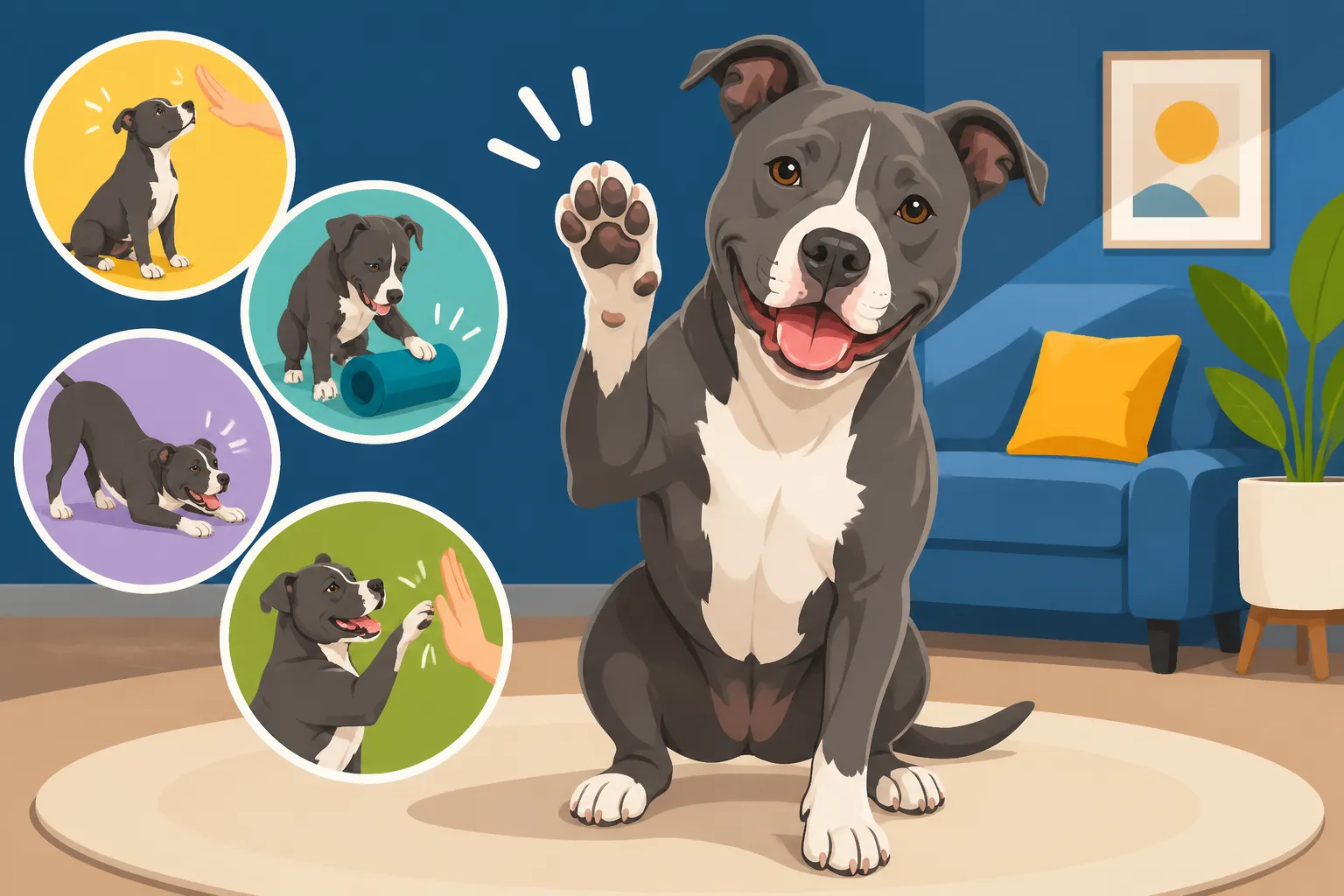
Foundation Tricks: "Touch," "Spin," and "Bow"
Let's break down some fantastic starting points:
-
"Touch" (Nose Target): This is one of the easiest and most versatile tricks.
- How to teach it: Hold a treat in your hand, close your fist around it, and present your knuckles to your Pit Bull's nose. The moment their nose touches your hand, click and treat. Repeat this several times. Once they're reliably touching your hand, open your hand and put the treat behind it, so they still touch your open palm. Then, slowly start adding the verbal cue "Touch!" as their nose moves towards your hand. Practice with your hand in different positions.
- Benefits: "Touch" is incredible for building focus and can be used to redirect your Pit Bull, move them from one place to another, or even get them to close doors. It's a great exercise for Building a Pit Bull's Impulse Control by having them focus on a specific target.
-
"Spin" (Turning in a Circle): A fun, energetic trick that's fairly straightforward.
- How to teach it: Hold a treat near your Pit Bull's nose and slowly lure them in a full circle. As they complete the circle, click and treat. Repeat this a few times until they follow the lure reliably. Then, start adding the verbal cue "Spin!" or "Turn!" as you make the circular motion with your hand, gradually phasing out the physical lure.
- Benefits: This trick is a great way to release a little bit of pent-up energy in a small space and provides excellent mental engagement. It’s also just plain cute!
-
"Bow" (Play Bow): This mimics their natural play invitation and is a gentle stretch.
- How to teach it: Hold a treat near your Pit Bull's nose and slowly move it towards the floor, past their front paws, and slightly back between them. The goal is for them to lower their front end into a bow while keeping their rear end up. The moment they hit the "bow" position, click and treat. Most dogs will try to lie down, so lift the treat slightly if their rear starts to drop. Once they get the hang of it, add the verbal cue "Bow!"
- Benefits: Besides being adorable, "bow" is a good trick for physical flexibility and core engagement. It's a low-impact way to get them moving indoors.
Integrating Commands for Practical Fun
Once your Pit Bull has a handle on those basics, you can start combining them or introducing slightly more involved tricks that also have practical applications.
-
"Sit Pretty" (Beg): This trick is a crowd-pleaser and strengthens core muscles.
- How to teach it: Start with your Pit Bull in a sit. Hold a treat above their head and slightly back, encouraging them to raise their front paws off the ground to reach it. The instant both paws lift, click and treat. It takes balance and core strength, so start with just a quick lift. Gradually ask for them to hold the position for longer. Add the verbal cue "Sit Pretty" or "Beg."
- Benefits: It’s great for strengthening core muscles and improving balance, which is beneficial for a muscular Pit Bull.
-
Indoor "Fetch" Variations: Even without a big yard, you can play fetch.
- How to teach it: Use a soft toy or a rolled-up sock. Start with short tosses across the room. Reward generously when they bring the toy back. You can also hide treats or toys and tell your Pit Bull to "Find it!" This engages their incredible sense of smell and makes them think.
- Benefits: It burns energy, reinforces recall, and can be easily adapted to any indoor space. This works well with various Chew Toys That Hold Up to a Pit Bull which can double as fetch toys.
-
"Go to Mat/Place": While often taught as a foundational behavior, it can also be treated as a trick, especially when taught with flair.
- How to teach it: Place a mat or dog bed on the floor. Lure your Pit Bull onto it with a treat. When all four paws are on the mat, click and treat. Repeat this, gradually adding the verbal cue "Place" or "Mat." You can then add duration, rewarding for staying on the mat for longer periods.
- Benefits: This is incredibly useful for teaching calm behavior and giving your Pit Bull a designated "off switch" during chaotic times, like when guests arrive. It's a great way to manage excitement indoors.
Intermediate Challenges and Advanced Fun
Once your Pit Bull has mastered the basics, you can move on to chaining tricks together or teaching more complex behaviors. This keeps things interesting and continues to challenge their impressive intellect.
Expanding the Repertoire: "Weave," "Figure Eight," and "Hold"
For Pit Bulls who pick up tricks quickly, these intermediate challenges can provide an even deeper mental workout.
-
"Weave" (Through Legs): This looks impressive and requires coordination.
- How to teach it: Start by standing with your feet apart. Lure your Pit Bull through your legs with a treat. As they come out the other side, click and treat. Repeat, then start alternating legs. As they get comfortable, you can start walking forward, luring them in a continuous figure-eight pattern through your legs. Add the verbal cue "Weave!"
- Benefits: This trick is fantastic for body awareness, coordination, and building momentum in a confined space. It teaches them to follow your movements closely.
-
"Figure Eight": Similar to weave but perhaps without the forward motion initially.
- How to teach it: Stand still with your feet apart. Lure your Pit Bull around one leg, through your legs, and around the other leg, forming a figure eight. Click and treat as they complete the pattern. Gradually reduce the lure, using your hand movements as a signal.
- Benefits: Enhances body control and focus on your cues, making them agile even indoors.
-
"Hold" (Object in Mouth): This can be a useful trick for retrieving items or carrying things.
- How to teach it: Start by having your Pit Bull hold a lightweight, safe object (like a soft toy or a wooden dowel) in their mouth for just a second. The instant they grasp it, click and treat. If they drop it, don't fuss, just try again. Slowly increase the duration they hold it, rewarding generously for success. Add the verbal cue "Hold!"
- Benefits: "Hold" can be a foundation for more advanced retrieval tasks, helping to build their confidence in carrying items gently. It also teaches them patience and control of their powerful jaws.
Creating a "Trick Routine" for Mental Exercise
Once your Pit Bull knows several tricks, the ultimate challenge and a fantastic way to keep them engaged is to put those tricks together into a sequence or a "routine." This requires your Pit Bull to remember multiple cues in order and perform them one after the other.
Start with a simple two- or three-trick sequence, like "Sit, then Spin, then Bow." Practice each step individually, then chain them together, rewarding after the final trick is completed. As they get better, you can extend the routine. This level of engagement provides intense mental stimulation, as your Pit Bull has to think ahead and recall multiple commands. It's truly impressive to watch a Pit Bull perform a short, fluid routine, and it's a huge confidence booster for them.
This kind of sustained mental effort is a powerful antidote to boredom, especially on those days when outdoor exercise is limited. You can even make it a fun game for the family, with different members giving cues or rewarding. It's a wonderful way to connect and celebrate your Pit Bull's intelligence and eagerness to learn. Remember that even though you're working on tricks, ensuring your Pit Bull gets sufficient physical exercise when possible is also important. This indoor mental work complements The Daily Exercise a Pit Bull Actually Needs.
| Trick | Difficulty | Mental Engagement | Physical Benefit | Common Use/Benefit |
|---|---|---|---|---|
| Touch | Easy | High | Low | Redirects, builds focus, helps move dog |
| Spin | Easy | Medium | Medium (body rotation) | Burns energy, fun |
| Bow | Easy | Medium | Low (stretch, core) | Flexibility, cute |
| Sit Pretty | Medium | High | Medium (core strength, balance) | Builds core, impressive |
| Indoor Fetch | Easy | Medium | High (running, retrieving) | Burns energy, reinforces recall |
| Go to Mat/Place | Easy | High | Low | Teaches calm, designated relaxation spot |
| Weave | Medium | High | High (coordination, agility) | Body awareness, agility training |
| Hold | Medium | High | Low (jaw control) | Gentle grip, foundation for retrieval |
| Trick Routine | Hard | Very High | Medium | Ultimate mental challenge, impressive demonstration |
No matter the weather or the limitations of your living space, a bored Pit Bull doesn't have to be a destructive one. By investing time in indoor trick work, you're not just teaching your dog fun behaviors; you're providing vital mental stimulation, strengthening your bond, and fostering a well-behaved, happy companion. So grab some tasty treats, clicker in hand, and get ready to unlock your Pit Bull's inner genius! You might be surprised at how much they love to learn and show off their skills, right there in your own home. For more related ideas, check out Scent Work as Indoor Pit Bull Exercise.
Disclaimer
This article is for general informational purposes only and does not constitute professional advice. Laws, prices and regulations vary by location and change over time. Consult a qualified professional for guidance on your specific situation.