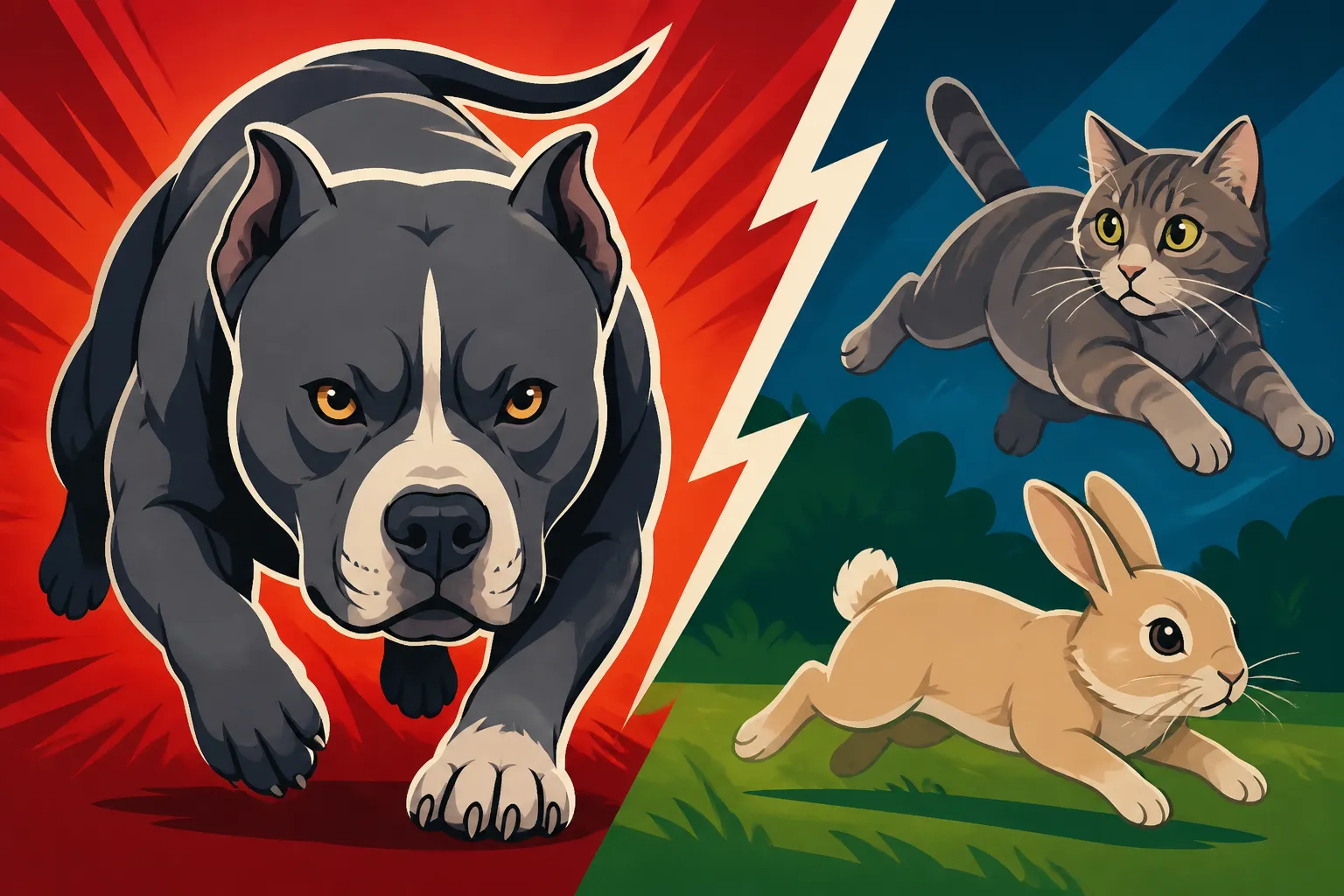
Pit Bull Prey Drive Around Cats and Small Animals
One of the most concerning challenges many Pit Bull owners, or those considering bringing one into their home, face is managing their dog's natural prey drive, especially when smaller, more vulnerable pets like cats, rabbits, or even chickens are part of the family. This instinct can be incredibly strong, leading to genuine anxiety about the safety of other animals in the household. This comprehensive guide will delve into what prey drive truly is, how it manifests in Pit Bulls, and provide practical, empathetic strategies for safely integrating and coexisting with smaller animals, offering actionable steps to minimize risk and build a harmonious multi-species home.
Understanding Prey Drive in Pit Bulls
The term "prey drive" often carries a negative connotation, conjuring images of aggression or malice. However, it's crucial to understand that prey drive is a completely natural, instinctual behavior rooted in a dog's evolutionary history as a predator. It's not about being "mean" or "bad"; it's about an innate sequence of behaviors triggered by certain stimuli, designed to find, chase, and capture prey. For many Pit Bulls, whose lineage is steeped in the "bull and terrier" type, this drive can be particularly pronounced.
The Instinctual Basis: Why It's Natural, Not Aggression
Prey drive is essentially the instinct to hunt, a hardwired survival mechanism that has been selectively bred for in many dog breeds, albeit for different purposes. In its purest form, it involves a chain of behaviors: orienting, eye-stalking, chasing, grabbing, and a kill-bite, followed by dissecting and consuming. When we see a Pit Bull fixating on a squirrel or a cat, they aren't necessarily acting out of aggression towards that animal in the way they might react to another dog during a conflict. Instead, they are responding to movement, sound, and scent with an urge to pursue. This distinction is vital because it shifts our approach from correcting "aggression" to managing an instinct.
This instinct means that while a dog may be perfectly gentle with a human baby, the sudden dart of a cat across a room can switch on this ancient programming. It's why a dog that lives peacefully with one cat might suddenly become reactive to an outdoor cat glimpsed through a window. The trigger is often the rapid, erratic movement characteristic of small prey animals. Understanding this helps us recognize that simply punishing the behavior won't extinguish the drive; instead, we need strategies to manage and redirect it.
Pit Bull Ancestry and Drive: Link to Bull-and-Terrier Heritage
The various breeds commonly referred to as "Pit Bulls"—American Pit Bull Terriers, American Staffordshire Terriers, and Staffordshire Bull Terriers—all share a common lineage. They were originally developed from bulldogs and terriers, bred for a combination of strength, tenacity, and gameness. While the historical purposes for which these traits were utilized are grim, the result is a dog with immense physical capability and often a very high prey drive. The terrier component brought keen senses, quick reflexes, and an inclination to dig out and pursue small animals, while the bulldog side contributed strength and a powerful bite.
This genetic inheritance means that many Pit Bulls possess a formidable blend of traits that make them highly effective at pursuing and catching small, fast-moving objects. Their muscular build, powerful jaws, and inherent drive to "finish what they start" can make interactions with small animals incredibly dangerous if not managed properly. While selective breeding has aimed to temper these traits for companionship, the underlying instincts remain powerful in many individuals. The Bull and Terrier Origin of the Pit Bull explores this history in more detail.
Individual Variation: Not All Pit Bulls Are the Same
It's crucial to remember that while the potential for strong prey drive exists in the Pit Bull type, every dog is an individual. Just as humans have varying personalities and aptitudes, so do dogs. Some Pit Bulls may show very little interest in chasing small animals, while others are intensely driven. Factors like early socialization, individual genetics, and life experiences all play a significant role. A Pit Bull raised from puppyhood with cats might learn to inhibit its prey drive around them, seeing them as part of the "pack" rather than prey, though the underlying instinct may still be present with unfamiliar small animals.
Never assume that because one Pit Bull you know is fine with cats, all Pit Bulls will be. Conversely, don't assume that because the breed can have a high prey drive, your specific dog will be a danger. Observing your individual dog's reactions, body language, and history is paramount. It’s about being realistic and proactive, preparing for the possibility rather than assuming the best or worst without evidence. This means careful introductions and constant vigilance, especially in the early stages of integrating into a multi-species home.
Recognizing the Signs of Prey Drive
Spotting the subtle (and sometimes not-so-subtle) signs of prey drive in your Pit Bull is critical for prevention and management. Understanding these cues allows you to intervene before a situation escalates, keeping everyone safe. It's often a progression, and learning to read your dog's body language is your first line of defense.
The Sequence of Predation: Stalk, Chase, Capture, Bite
Prey drive typically follows a sequence, and a dog can get stuck or fixated at any point in it. It often begins with orienting, where the dog's head snaps towards a sound or movement. This quickly moves to eye-stalking, where the dog lowers its body, fixates intently, and may move slowly and deliberately towards the target. Then comes the exhilarating chase, where adrenaline kicks in, and the dog pursues the moving object. If successful, this can lead to capture, kill-bite, and potentially dissecting or consuming.
Not all dogs will go through the entire sequence, especially pet dogs that are well-fed and have learned some impulse control. However, even if your dog only ever gets to the chase phase, it can still be terrifying and dangerous for a small animal. For instance, a game of chase with a cat might seem harmless until the Pit Bull corners the cat, and the cat's desperate defense triggers a more intense, potentially harmful reaction from the dog. Understanding where your dog typically stops in this chain can inform your management strategies.
Body Language Cues: What to Look For
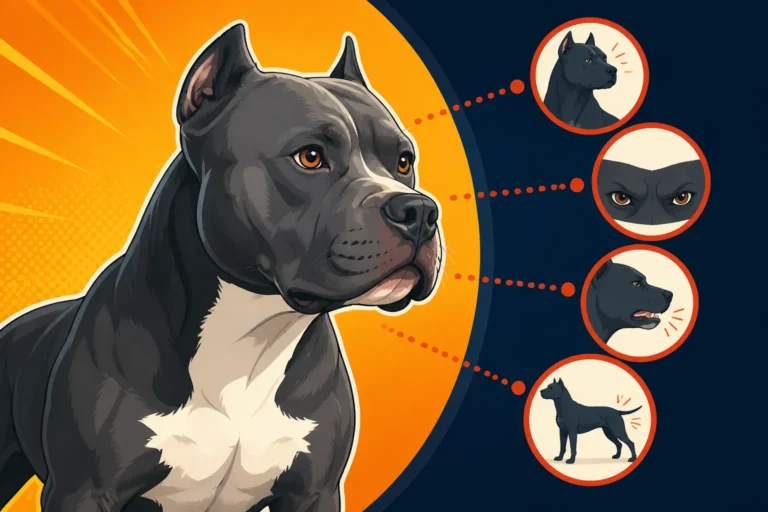
Dogs communicate largely through body language, and paying attention to these signals is key. When prey drive is engaged, you might see:
- Fixed Stare/Intense Focus: The dog's eyes will be locked onto the small animal, often unblinking. Their pupils might be dilated.
- Stiff Body: The dog's body will become rigid, taut, and motionless, often in a low, predatory crouch. This isn't relaxed posture; it's coiled tension.
- Lowered Head and Tail: The head may be lowered, and the tail might be stiff and still, possibly held low or tucked slightly, but not wagging in a friendly way.
- Creeping Movement: Slow, deliberate, almost slinking movements towards the target, reminiscent of a cat stalking.
- Pricked Ears: Ears might be forward and alert, focusing on any sound the potential prey makes.
- Mouth Closed, Lips Tense: The mouth is often tightly closed, and the facial muscles can appear tense, signaling extreme focus rather than a relaxed state.
If you see these signs, it's time to intervene immediately and redirect your Pit Bull's attention. Ignoring them is asking for trouble, and no amount of hoping will make the instinct disappear.
Different Triggers: Movement, Sound, Scent
Prey drive isn't just about seeing a small animal. It can be triggered by a variety of sensory inputs.
- Movement: This is the most common trigger. The sudden dart of a cat, a squirrel scrambling up a tree, or even a child running can activate the chase instinct. Fast, erratic movements are particularly potent.
- Sound: The squeak of a toy, the rustle of leaves, or the chirping of a bird can grab a Pit Bull's attention and spark the drive. Sometimes, just the jingle of a cat's collar can be enough.
- Scent: Dogs have an incredible sense of smell. The scent trail of a rabbit or even the lingering smell of a rodent in a garage can excite a Pit Bull and put them in a heightened state of awareness, looking for the source.
Understanding these different triggers helps you create safer environments. For example, if your Pit Bull is sound-sensitive, you might need to manage noisier toys or provide enrichment that doesn't involve squeaking. If scent is a major trigger, careful cleaning of areas where small pets roam might be necessary. This holistic awareness is key to effective management.
Managing Prey Drive in a Multi-Pet Household
Living with a Pit Bull and smaller animals requires a thoughtful, proactive approach. It’s about creating an environment where everyone feels safe and where risks are minimized. This is especially true if you already have small pets and are introducing a Pit Bull, or vice-versa.
Prevention Is Key: Physical Barriers, Supervision
The golden rule for managing prey drive in a multi-pet home is prevention. This means never relying solely on your dog's "good behavior" or hoping for the best. Instead, build a robust system of physical barriers and constant, active supervision. Baby gates, crates, and even closed doors are your best friends. Designate "cat-only" or "small animal-only" zones in your home where your Pit Bull is never allowed access, providing a true sanctuary for your smaller pets. You can find sturdy, reliable baby gates that are tall enough for a determined Pit Bull on sites like Amazon.
Supervision isn't just being in the same room; it means actively watching your Pit Bull for any signs of heightened interest or prey drive. If you can't actively supervise (e.g., you're cooking, answering the door, or leaving the house), then the Pit Bull should be in a crate, a separate room, or on a leash with you. This vigilance is non-negotiable, particularly in the initial stages and whenever new stimuli are introduced.
Separate Spaces and Routines: Giving Everyone Their Own Safe Zone
Establishing separate, secure spaces for all animals is paramount. Your cat or small animal needs areas they can retreat to that are entirely inaccessible to your Pit Bull. This could be a room with a cat door that the dog cannot fit through, high shelves, or cat trees that offer an elevated escape route. For caged small animals like rabbits or guinea pigs, their enclosures must be robust, escape-proof, and placed in a room where the Pit Bull cannot gain unsupervised entry.
Develop routines that keep interactions controlled. For instance, feeding times should be separate, ideally in different rooms. Walks, playtimes, and even cuddle sessions should be scheduled to minimize overlapping free-roaming time. This structure reduces competition, prevents accidental encounters, and teaches everyone that certain times and places are reserved for certain activities or individuals. This helps reduce stress for all involved and reinforces the idea that the small animals are not free-game.
Controlled Interactions: When and How to Allow Them
While prevention and separation are primary, the goal for many owners is eventual, controlled interaction. This must be a slow, gradual process, often starting with parallel play or supervised observation from a distance. Begin with your Pit Bull on a secure leash and harness (a strong front-clip harness is great for managing a powerful dog) and the cat or small animal in a secure carrier or behind a sturdy gate. Allow them to simply be in the same room, observing each other, while rewarding your Pit Bull for calm, neutral behavior.
Use high-value treats to create positive associations. If your Pit Bull looks at the cat calmly, mark and reward. If they look away from the cat, mark and reward even more. The idea is to teach your Pit Bull that the presence of the small animal means good things happen (treats, praise) when they remain calm and disengaged. Never force an interaction or allow uncontrolled free-roaming until you are absolutely confident in your Pit Bull's impulse control and consistent calm demeanor. This can take months, or even years, and some dogs may never reach a point where unsupervised interaction is safe. A Pit Bull Sharing a House With a Cat discusses these strategies in depth.
Introducing a Pit Bull to Cats or Small Animals
Introducing a Pit Bull to existing cats or small animals, or vice-versa, requires careful planning and immense patience. Rushing the process can set back progress and even endanger lives.
Slow and Gradual Approach: No Rushing
The key to successful introductions is to go slowly. This often means weeks or even months of carefully managed exposure, not days. Start with scent swapping: allow the cat to rub on a blanket, then put that blanket in your Pit Bull's bed. Do the reverse. This helps them get used to each other's presence without direct interaction. Then, move to sight without contact, such as having the Pit Bull on leash in one room while the cat is safely behind a baby gate in another, allowing them to see each other from a distance.
Every step should be brief and positive. If either animal shows signs of stress or fear, or if your Pit Bull shows intense fixation, retreat to the previous, safer step. Never escalate the interaction if things aren't going well. Patience truly is a virtue here, and consistency will build trust and understanding over time. Think of it as building a bridge; you need to lay each plank carefully.
Controlled Exposure and Positive Association: Making Good Memories
Once scent and sight introductions are calm, you can move to controlled, supervised exposure. Your Pit Bull should always be on a leash, preferably with a trusted handler, during these initial face-to-face encounters. The smaller animal should have an easy escape route (like a high perch or an open door to a safe room). Keep sessions very short – just a few minutes – and immediately end on a positive note, even if it means interrupting a perfectly calm moment.
During these sessions, reward your Pit Bull heavily for calm behavior. If they look at the cat and then look back at you, treat! If they lie down calmly, treat! You want them to associate the presence of the small animal with positive outcomes and the expectation of good things from you. This is also where excellent basic obedience, like a solid "leave it" or "stay," becomes invaluable. Online training programs, such as those offered by BAXTER & Bella, often have modules focused on impulse control and controlled greetings that can be incredibly helpful for these situations.
Supervision and Intervention: Always Be Present
Until you are absolutely certain that your Pit Bull has fully integrated and reliably ignores smaller animals, never leave them unsupervised together. This means no quick trips to the bathroom, no running to grab mail, and certainly no leaving them alone while you're at work. One single lapse in judgment can have tragic consequences, which is a devastating reality for owners of high-prey-drive dogs.
If your Pit Bull shows any signs of increasing prey drive (stiffening, intense focus, creeping), calmly but immediately interrupt and redirect their attention. This might mean a gentle leash correction, a sharp verbal "No," or simply clapping your hands to break their focus. Then, move them to a separate area or distract them with a puzzle toy. The goal is to prevent the full prey sequence from initiating, reinforcing that such behavior is unacceptable in the house.
Safety Measures and Environmental Management
Beyond introductions, ongoing safety and management are paramount in a multi-species home with a Pit Bull. This involves securing your living space and always being prepared for potential issues.
Physical Barriers: Gates, Crates, Safe Rooms
We've touched on this, but it bears repeating: physical barriers are your most effective tool. Invest in heavy-duty baby gates or pet gates that can withstand a determined push from a Pit Bull. Look for gates that are tall, sturdy, and securely installed. Crates are also indispensable tools for management, especially when you can't provide active supervision. Your Pit Bull should be comfortable and happy in their crate, viewing it as a safe den, not a punishment. Crate Training a Pit Bull That Breaks Out can offer guidance on getting this right.
Beyond gates and crates, create dedicated "safe rooms" for your smaller pets. These are rooms where the Pit Bull is never allowed to enter, giving your cats or small animals a true sanctuary to eat, sleep, and relax without stress. Ensure these rooms have high perches or hiding spots if needed. This layered approach provides multiple levels of protection and peace of mind.
Leash Management Indoors: Even in Supposedly Safe Environments
For some Pit Bulls with very high prey drive, or during the early stages of integration, indoor leash management might be necessary. This means your Pit Bull wears a lightweight leash and harness even when inside the house, especially when other small animals are out and about. This gives you an immediate way to interrupt and redirect if their prey drive kicks in. It's not about punishment, but about safe, consistent control.
A hands-free leash or a leash clipped to your belt can be helpful so you can still go about your daily tasks while maintaining control. This is particularly useful during meal prep or other busy times when your full attention might be divided. Remember, the goal is to prevent incidents, not just react to them.
Secure Outdoor Spaces: Fencing, Tethering
Prey drive isn't limited to inside the house. If you have chickens, ducks, or even just wild squirrels and rabbits in your yard, your Pit Bull's outdoor time needs to be just as managed. A secure, tall fence is non-negotiable for a Pit Bull. They are powerful and can be surprisingly agile climbers or diggers. Check your fence regularly for weak spots. Fencing Costs for a Strong Pit Bull highlights the importance of this investment.
If your Pit Bull shows intense prey drive towards wildlife, they should never be left unsupervised in the yard, even with a fence. For areas with other small animals (like a chicken coop), a double fence system or secure tethering (always supervised) might be necessary to ensure safety. The aim is to remove the opportunity for the prey drive sequence to begin outdoors as well as indoors.
Training and Behavior Modification
While prey drive is instinctual, it can be managed and modified through consistent, positive reinforcement training. The goal isn't to eliminate the drive entirely but to teach your Pit Bull impulse control and to redirect their natural urges into acceptable channels.
Focus and Impulse Control: "Leave It," "Stay"
Developing rock-solid obedience commands like "leave it," "stay," and "come" is fundamental. "Leave it" is particularly vital, teaching your Pit Bull to disengage from an object of interest, whether it's a dropped treat or a moving cat. Practice this command diligently in various environments, gradually increasing distractions. Start in a quiet room with low-value items, then progress to higher-value items and eventually, to controlled exposure with the small animal from a distance.
"Stay" is also powerful, allowing you to hold your Pit Bull in place while a small animal moves past, rewarding them for maintaining their position and calm demeanor. Consistency and high-value rewards are key. Building a Pit Bull's Impulse Control offers excellent strategies for this type of training. Remember, a Pit Bull is a strong, focused dog, and mastering these commands requires dedication from the owner.
High-Value Rewards and Redirection: What Works for High-Drive Dogs
When dealing with a strong instinct like prey drive, your rewards need to be exceptionally high-value to compete with the intrinsic reward of the chase. This means cooked chicken, cheese, hot dogs, or specialized training treats your Pit Bull goes absolutely wild for. Generic kibble might not cut it when faced with the excitement of a darting cat. High-Value Treats That Hold a Pit Bull's Focus provides ideas for effective rewards.
Redirection involves channeling your Pit Bull's energy and focus into appropriate activities. If they start to fixate on a cat, immediately redirect them with a favorite toy (like a tough tug toy or a puzzle feeder), a quick training session, or a game of fetch in a separate area. Puzzle toys from Amazon, for example, can be a fantastic way to keep their minds engaged and prevent boredom, which can sometimes lead to problem behaviors. The idea is to teach them that when the urge to chase arises, they should look to you for a fun, acceptable alternative.
Professional Help: When to Call in the Experts
If you're struggling to manage your Pit Bull's prey drive, or if you're feeling overwhelmed or unsafe, don't hesitate to seek professional help. A certified professional dog trainer or a veterinary behaviorist experienced with high-drive breeds can provide invaluable guidance, assess your specific situation, and develop a tailored management and training plan. They can help you accurately read your dog's body language, implement safe introduction protocols, and fine-tune your training techniques.
Sometimes, the stakes are simply too high to try and figure it out alone. An experienced professional can offer an objective perspective and tools you might not have considered, such as specific exercises to increase impulse control or even the careful use of muzzle training for safety during introductions or in public. Muzzle Training Every Pit Bull Should Have is a valuable resource if you decide to explore this option. Investing in expert help is an investment in the safety and harmony of your entire household.
Coexisting with Small Animals: A Long-Term Commitment
Managing a Pit Bull's prey drive around cats and small animals isn't a one-time fix; it's a lifelong commitment. It requires vigilance, consistency, and a deep understanding of your dog's natural instincts.
Building Trust and Routine
Over time, as your Pit Bull consistently experiences positive outcomes when calm around smaller pets, and as they learn that chasing is not an option, trust can slowly build. This trust is between you and your dog, and also between the animals themselves. Establishing predictable routines helps immensely. Dogs thrive on routine, and knowing when to expect separate meals, play, or quiet time can reduce anxiety for all pets.
For example, a routine might involve a morning walk for the Pit Bull while the cat has free run of the house, followed by separate meals. Then, a supervised "coexistence" period where the Pit Bull is on a tether or a 'place' command, rewarding calm behavior, before the cat retreats to its safe room and the Pit Bull gets a chew toy. This structure reduces the element of surprise, which can be a major trigger for prey drive.
Understanding Setbacks and Re-evaluation
Even with the best training and management, setbacks can occur. A sudden loud noise, a visitor leaving a door ajar, or an unexpected change in routine could trigger a lapse. It's important not to get discouraged or blame your dog. Instead, view setbacks as opportunities to re-evaluate your strategies and reinforce your boundaries. Go back to basics: increase separation, review training commands, and double down on supervision.
If a setback is significant or becomes a recurring issue, it's a clear sign that you need to either increase your management efforts or seek professional guidance again. It means your current strategy isn't quite robust enough for your specific dog or situation. This journey with a high-drive dog is often one of continuous learning and adaptation.
Prioritizing Safety Above All Else
Ultimately, the safety and well-being of all animals in your household must be the top priority. This sometimes means accepting that full, unsupervised integration may never be possible for some Pit Bulls and small animals, and that’s okay. Living in a "crate and rotate" system, where animals are always separated when unsupervised, is a perfectly valid and responsible way to manage a multi-species home. It prevents tragic accidents and ensures everyone can live a stress-free life.
The decision to live with a Pit Bull and small animals is a significant one that carries great responsibility. By understanding prey drive, implementing robust safety measures, committing to ongoing training, and seeking professional help when needed, you can create a home where all your beloved pets can thrive, even if it means strict management for their entire lives.
Comparing Management Strategies
To help visualize some of the key strategies discussed, here’s a quick overview:
| Strategy Category | Description | Best For | Key Benefit | Potential Drawback |
|---|---|---|---|---|
| Physical Barriers | Using gates, crates, secure rooms to prevent direct contact. | All stages, especially initial introductions & unsupervised times. | Guarantees physical separation, prevents incidents. | Requires home modification, ongoing setup/takedown of gates. |
| Active Supervision | Directly observing Pit Bull's behavior when small animals are present. | Early integration, controlled interactions, preventing escalation. | Allows immediate intervention, teaches dog acceptable behavior. | Demands constant attention, not feasible 24/7. |
| Separate Routines | Scheduling distinct times for Pit Bull and small animals to be out/fed/exercised. | Multi-pet homes with limited space or high-drive dogs. | Reduces competition & stress, minimizes unexpected encounters. | Can be complex to manage, limits spontaneous interaction. |
| Impulse Control Training | Commands like "leave it," "stay," "come," practiced with increasing distractions. | Dogs showing early signs of prey drive, improving reliability. | Teaches dog to disengage from tempting stimuli, strengthens handler bond. | Requires consistent, dedicated training; results take time. |
| Redirection & Enrichment | Channeling energy into appropriate toys (tug, puzzle toys) or training games. | Managing boredom, preventing fixation, positive outlets for energy. | Prevents problem behaviors, provides mental and physical stimulation. | Requires owner participation, needs high-value, durable toys. |
| Professional Guidance | Consulting certified trainers or veterinary behaviorists for tailored advice and plans. | Complex cases, persistent issues, safety concerns, new owners. | Expert assessment, customized strategies, ensures safety. | Cost of services, finding a qualified professional. |
This article is for general informational purposes only and does not constitute professional advice. Laws, prices and regulations vary by location and change over time. Consult a qualified professional for guidance on your specific situation.