Building a Pit Bull’s Impulse Control
One of the most frustrating things for any Pit Bull owner is feeling like your strong, enthusiastic companion is constantly on the verge of pulling you down the street, jumping on guests, or diving headfirst into every stimulating situation. This guide will walk you through practical, empathetic strategies to teach your Pit Bull better self-control, helping them navigate a world that often demands a higher standard from them.
The Core of Impulse Control for Pit Bulls
Impulse control, at its heart, is the ability for your dog to pause, think, and choose a more appropriate behavior instead of reacting instantly to a stimulus. For a Pit Bull, this isn't just about good manners; it's a crucial life skill. Their natural strength, energy, and sometimes unfair public perception mean that a Pit Bull that lacks impulse control can quickly find themselves, and you, in challenging situations. It's about teaching them that good things come to those who wait, those who offer a sit instead of a jump, and those who look to you for guidance rather than making their own quick decisions.
Why Impulse Control is Especially Important for Pit Bulls
Let's be real: owning a Pit Bull comes with its own set of unique expectations from the public. While every dog benefits from good manners, a Pit Bull often gets less benefit of the doubt. A Golden Retriever jumping up might get a chuckle; a Pit Bull doing the same might elicit fear. This isn't fair, but it's our reality as Pit Bull owners. Teaching strong impulse control helps your dog navigate these social waters with grace. It empowers them to be calm and collected, demonstrating that they are well-managed and thoughtful companions. Imagine walking your Pit Bull through a busy park, a child drops a sandwich, or another dog barks aggressively. Without impulse control, your dog might lunge, pull, or react. With it, they learn to check in with you, to wait for your cue, and to maintain a polite demeanor. This proactive approach to training can literally change how your dog is perceived and how stress-free your outings become.
Common Scenarios Where Impulse Control Matters
Think about your daily life with your Pit Bull. Where do things often go sideways due to a lack of self-control?
- The Doorbell Dash: Does your Pit Bull launch themselves at the front door, barking and jumping the moment the bell rings? This is a classic impulse control issue.
- Leash Reactivity: Seeing another dog, a squirrel, or a person on a walk and immediately lunging or barking is a huge one. Pit Bull Leash Manners and Physical Strength are paramount here.
- Counter Surfing/Food Stealing: The moment your back is turned, does your dog snatch food off the counter or a table? That's an inability to resist temptation.
- Greeting Guests: Jumping up on visitors, even in excitement, can be intimidating, especially with a strong, muscular Pit Bull.
- Over-Arousal in Play: Getting too worked up during playtime, leading to rough mouthing or difficulty disengaging.
- Waiting for Food: The moment the bowl hits the floor, do they dive in, or do they wait patiently for your release cue?
These everyday moments are perfect opportunities to build and reinforce impulse control, turning potential chaos into calm, predictable interactions.
Laying the Foundation: Essential Impulse Control Exercises
Building impulse control isn't about harsh corrections; it's about positive reinforcement, consistency, and making the desired behavior more rewarding than the impulsive one. Think of it as teaching your dog to "think before they act" in a fun, engaging way.
"Wait" and "Leave It": The Cornerstones
These two commands are absolute game-changers for impulse control. They teach your Pit Bull to defer gratification and ignore distractions.
Teaching "Wait"
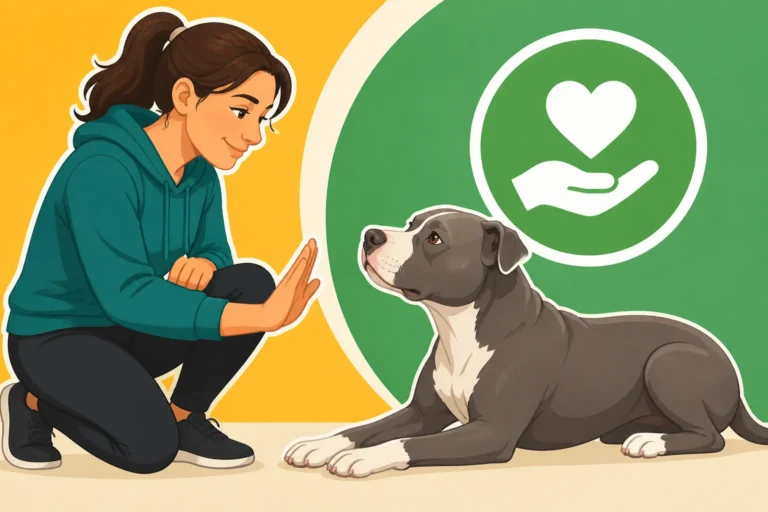
"Wait" is about pausing before an exciting event, like getting a food bowl, going out the door, or exiting the car.
- Start with the food bowl: Hold your Pit Bull's food bowl. Ask them to "Sit." Once they do, lower the bowl slightly, but if they move towards it, immediately lift it back up.
- Introduce the cue: When they remain seated, say "Wait." Place the bowl on the floor. If they go for it without your release cue, gently pick it up again.
- Release and reward: The moment they pause, even for a second, say your release word ("Okay!" or "Free!") and let them eat. Gradually increase the duration of the "Wait" and the distance you place the bowl. This teaches them that waiting for your cue is what gets them the reward.
- Extend to doors and cars: Once mastered with food, apply "Wait" to doors. Before opening the front door for a walk, ask for a "Sit" and "Wait." Open the door a crack. If they surge forward, close it gently. Repeat until they wait patiently for your release cue to go through. This is crucial for safety and public manners.
Teaching "Leave It"
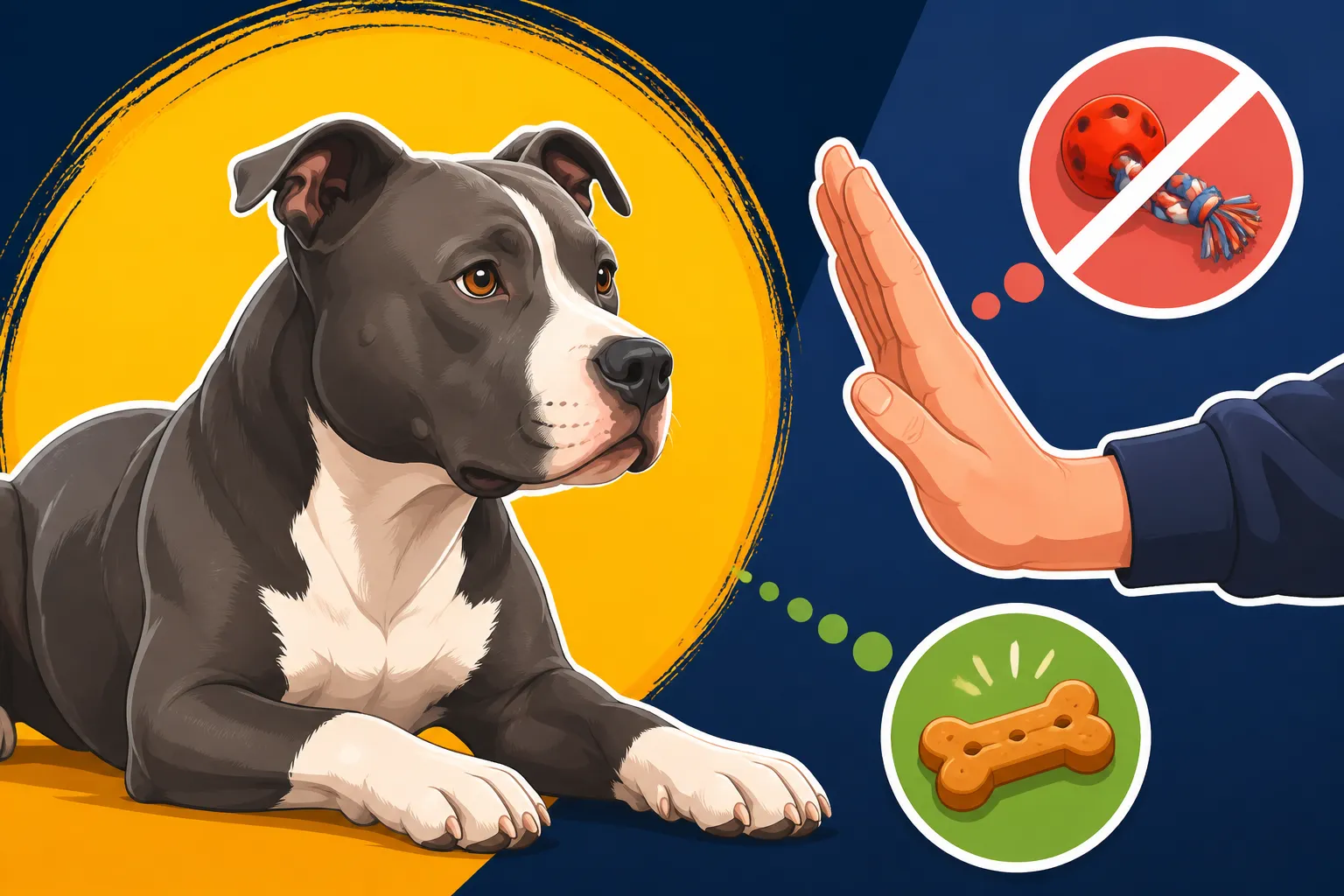
"Leave It" teaches your Pit Bull to ignore something tempting, whether it's a dropped treat, a discarded wrapper on the sidewalk, or another dog.
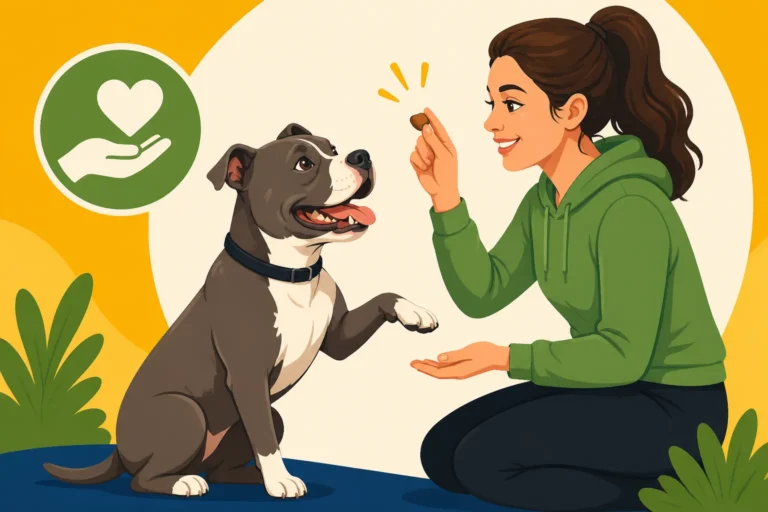
- Low-value treat: Start with a treat in your closed hand. Say "Leave It." Your dog will likely try to sniff, lick, or paw at your hand. Ignore this.
- Reward the disengagement: The instant they back away, even slightly, or look away from your hand, open your hand and reward them with a different, higher-value treat from your other hand. This is important: they learn that ignoring the first treat leads to an even better treat from you.
- Increase difficulty: Once they understand, place a low-value treat on the floor, cover it with your hand, and say "Leave It." When they look away, reward from your other hand. Gradually remove your hand, then increase distance and duration.
- Real-world application: Practice "Leave It" on walks with interesting smells, discarded food, or even other dogs they might be tempted to pull towards. High-value treats, like small pieces of cooked chicken or cheese, are often the best bet to capture a Pit Bull's focus. You can find some excellent, high-value training treats on Amazon.
"Stay": Building Duration and Distance
"Stay" is the ultimate test of impulse control, asking your Pit Bull to remain in position despite distractions.
- Start small: Ask for a "Sit" or "Down." Say "Stay." Take one tiny step back, then immediately step back to your dog and reward them generously.
- Gradual increase: Slowly increase your steps, then the duration of the stay (a second, two seconds, five seconds), and finally add mild distractions (a toy rolling, a person walking by).
- Consistency is key: If your Pit Bull breaks the "Stay," calmly lead them back to their original spot and start again, reducing the difficulty if necessary. Never punish for breaking a stay; simply guide them back and make it easier. The goal is success, not failure.
- Beyond the home: Practice "Stay" in various environments, from your quiet backyard to a bustling park. This builds their ability to maintain self-control in increasingly stimulating situations.
These foundation exercises, when taught with patience and positive reinforcement, will create a solid base for a well-behaved Pit Bull. Consistency is paramount, and short, frequent training sessions are often more effective than long, infrequent ones. Many online training platforms, such as BAXTER & Bella, offer structured courses that guide you through these commands step-by-step, which can be invaluable for owners looking for a consistent approach.
Integrating Impulse Control into Daily Life
Training isn't just about structured sessions; it's about weaving good habits into the fabric of your Pit Bull's everyday existence. Every interaction is an opportunity to reinforce impulse control.
Structured Routines and Clear Expectations
Dogs thrive on routine and predictability. Establishing clear rules and consistently enforcing them helps your Pit Bull understand what's expected.
- Doorway Manners: Always have your Pit Bull sit and wait before going through any door, whether it's the front door, the crate door, or the car door. This reinforces Teaching a Pit Bull to Sit Before Every Door and builds valuable self-control.
- Mealtime Rituals: Make mealtime an exercise in patience. Have them sit, wait for your "okay" cue, and then approach the bowl. This isn't just about food; it's about practicing self-restraint around a highly motivating resource.
- Calm Greetings: When someone comes to the door, don't let your Pit Bull jump. Keep them on a leash initially if needed, ask for a "sit," and only allow greetings when all four paws are on the floor. If they jump, the person turns their back. If they sit, they get praise and gentle attention. This teaches them that calm behavior earns rewards. A Pit Bull That Greets Too Enthusiastically needs these clear boundaries.
- Playtime Rules: While Pit Bulls love a good romp, establish rules for play. Teach "settle" or "all done" to signal the end of play, and have them learn to disengage when asked. This prevents over-arousal and ensures they can switch off their "play drive" when necessary.
Managing the Environment and Triggers
Sometimes, the best impulse control strategy is to manage the environment so your Pit Bull isn't constantly put in a position to fail.
- Leash Management: When walking your Pit Bull, use a sturdy harness or a head halter if needed to maintain control and prevent pulling. This gives you a better chance to intervene before an impulse takes over, allowing you to give a "leave it" or redirect their attention. Harness Fit Across a Broad Pit Bull Chest is important for comfort and effectiveness.
- Crate Training: A crate can be a valuable tool for impulse control, offering a safe, quiet space where your Pit Bull can decompress and practice being calm. It can also prevent destructive chewing or counter surfing when you can't actively supervise them.
- Secure Fencing: If your Pit Bull has a strong prey drive, a secure yard prevents them from impulsively chasing squirrels or other small animals, keeping both your dog and the wildlife safe.
- Puzzle Toys and Enrichment: For dogs that struggle with impulsivity, mental stimulation can be just as important as physical exercise. Puzzle feeders and durable chew toys (many of which are available on Amazon) provide an outlet for their energy and engage their brains, making them less likely to seek out impulsive, less desirable behaviors.
Consistency, Patience, and Realistic Expectations
Building impulse control is a journey, not a destination. Your Pit Bull isn't going to become a zen master overnight.
- Be Patient: There will be setbacks. Your Pit Bull will sometimes forget their manners, especially in new or highly stimulating environments. Don't get discouraged. Calmly guide them back to the desired behavior.
- Be Consistent: Everyone in the household needs to be on the same page. If one person lets the dog jump on them and another corrects it, your Pit Bull will be confused.
- Celebrate Small Wins: Did your Pit Bull wait for two seconds at the door today? That's a huge step! Reward and praise those small successes enthusiastically.
- Understand Their Drive: Pit Bulls are powerful, driven dogs. Their enthusiasm is part of their charm. Our job is to channel that energy into appropriate behaviors, not to suppress their spirit. Impulse control allows them to be their wonderful selves, but with polite manners.
By consistently applying these strategies, you'll not only build your Pit Bull's impulse control but also strengthen your bond, as they learn to trust your guidance in all situations.
Troubleshooting Common Impulse Control Challenges
Even with the best intentions and consistent training, you might run into specific challenges. It's totally normal for Pit Bulls to test boundaries or regress in certain situations. Understanding why these issues arise and how to address them can make a big difference.
Dealing with Leash Reactivity and Over-Arousal
Leash reactivity, where your Pit Bull barks, lunges, or pulls intensely at other dogs, people, or even inanimate objects while on a leash, is a classic impulse control problem rooted in over-arousal or fear.
- Identify the Trigger Threshold: Pay close attention to what sets your dog off and at what distance. Your goal is to work below that threshold, meaning at a distance where your Pit Bull notices the trigger but doesn't react.
- Desensitization and Counter-Conditioning: At that safe distance, when your Pit Bull sees the trigger, immediately reward them with high-value treats and praise. The goal is to change their emotional response from "OMG, react!" to "Oh, trigger! That means good things happen!" This is called counter-conditioning.
- Engage and Disengage Game: This game helps your Pit Bull learn to look at a trigger and then disengage by looking back at you. When your dog sees a trigger, mark it ("Yes!" or click) and reward them heavily for looking at you. Repeat until they automatically look back at you after seeing the trigger.
- Practice in Controlled Environments: Start in quiet areas and gradually introduce more distractions. It's okay to turn around and walk away from a trigger if your dog is getting over-threshold. Success is key. For more in-depth guidance, Walking a Pit Bull Past Reactive Dogs covers essential techniques.
Addressing Jumping and Excessive Excitement
An excited Pit Bull can be a wrecking ball of affection. Jumping on people, whether strangers or loved ones, is a common impulse control issue.
- No Attention for Jumping: This is the golden rule. If your Pit Bull jumps, immediately turn your back, cross your arms, and completely ignore them. No eye contact, no talking, no pushing them off.
- Reward Four Paws on the Floor: The instant all four paws are on the ground, even for a split second, turn back around and offer calm praise and a reward. If they jump again, repeat the ignore-turn-away cycle.
- Teach an Alternative Behavior: Proactively ask for a "Sit" or "Down" when someone approaches. Reward heavily for holding that position. Guests should be instructed to only greet the dog when they are sitting calmly.
- Manage Entryways: If visitors trigger excessive jumping, consider having your Pit Bull on a leash when guests arrive, or keeping them behind a baby gate until they settle. This allows you to manage the situation more effectively and prevent rehearsal of the unwanted behavior.
When to Seek Professional Guidance
Sometimes, despite your best efforts, certain behaviors or situations feel overwhelming. That's when it's time to call in the pros.
- Persistent Aggression: If your Pit Bull is showing signs of aggression (growling, snapping, biting) towards people or other dogs, especially if it's escalating, seek professional help immediately. A certified professional dog trainer or veterinary behaviorist can assess the root cause and develop a tailored modification plan.
- Severe Anxiety/Fear: Extreme fear responses, separation anxiety, or other anxiety-related behaviors that impact your Pit Bull's quality of life are best addressed with expert guidance.
- Safety Concerns: If you ever feel unsafe or out of control of your Pit Bull, it's a clear sign you need assistance. Your dog's safety and the safety of others are paramount.
- Lack of Progress: If you've been consistently applying training techniques for several weeks or months and aren't seeing any improvement, a professional can offer fresh eyes, new strategies, or identify underlying issues you might have missed. Finding a Trainer Experienced With Pit Bulls is crucial; look for someone who uses positive reinforcement and has a deep understanding of Pit Bull behavior and strength.
Remember, asking for help isn't a failure; it's a sign of a responsible and committed owner who wants the best for their Pit Bull.
Here's a quick summary of impulse control exercises and their benefits:
| Exercise | What it Teaches Your Pit Bull | Key Benefit for Owners | Common Scenarios for Practice |
|---|---|---|---|
| Wait | Patience before engaging with a reward | Prevents door dashing, bolting from crate | Before food bowl, at doors, exiting car |
| Leave It | Ignoring tempting items/distractions | Prevents scavenging, pulling toward triggers | Dropped food, trash on walks, other dogs |
| Stay | Holding a position despite distractions | Builds focus, allows for distance management | Guest greetings, photo ops, settling in public |
| Recall | Coming when called, even from distractions | Safety off-leash, emergency situations | Park, backyard, around mild distractions |
| Sit/Down | Calm alternative to jumping/over-excitement | Polite greetings, easy management in public | Meeting people, asking for attention |
By committing to these impulse control exercises and consistently integrating them into your Pit Bull's daily life, you'll be well on your way to a calmer, more mannerly, and ultimately happier companion who truly earns that benefit of the doubt.
Disclaimer
This article is for general informational purposes only and does not constitute professional advice. Laws, prices and regulations vary by location and change over time. Consult a qualified professional for guidance on your specific situation.