A Pit Bull That Panics When the Door Shuts
It's absolutely heartbreaking, isn't it, when you just want to step out for a few minutes, close that door, and your beloved Pit Bull immediately starts to panic? The guilt, the worry about them hurting themselves or disturbing the neighbors, and the sheer frustration of feeling trapped can be overwhelming. This guide is here to walk you through understanding why your Pit Bull might be experiencing such intense separation anxiety and, more importantly, how you can help them feel safe and secure when you're not by their side.
Understanding Why Your Pit Bull Panics When You Leave
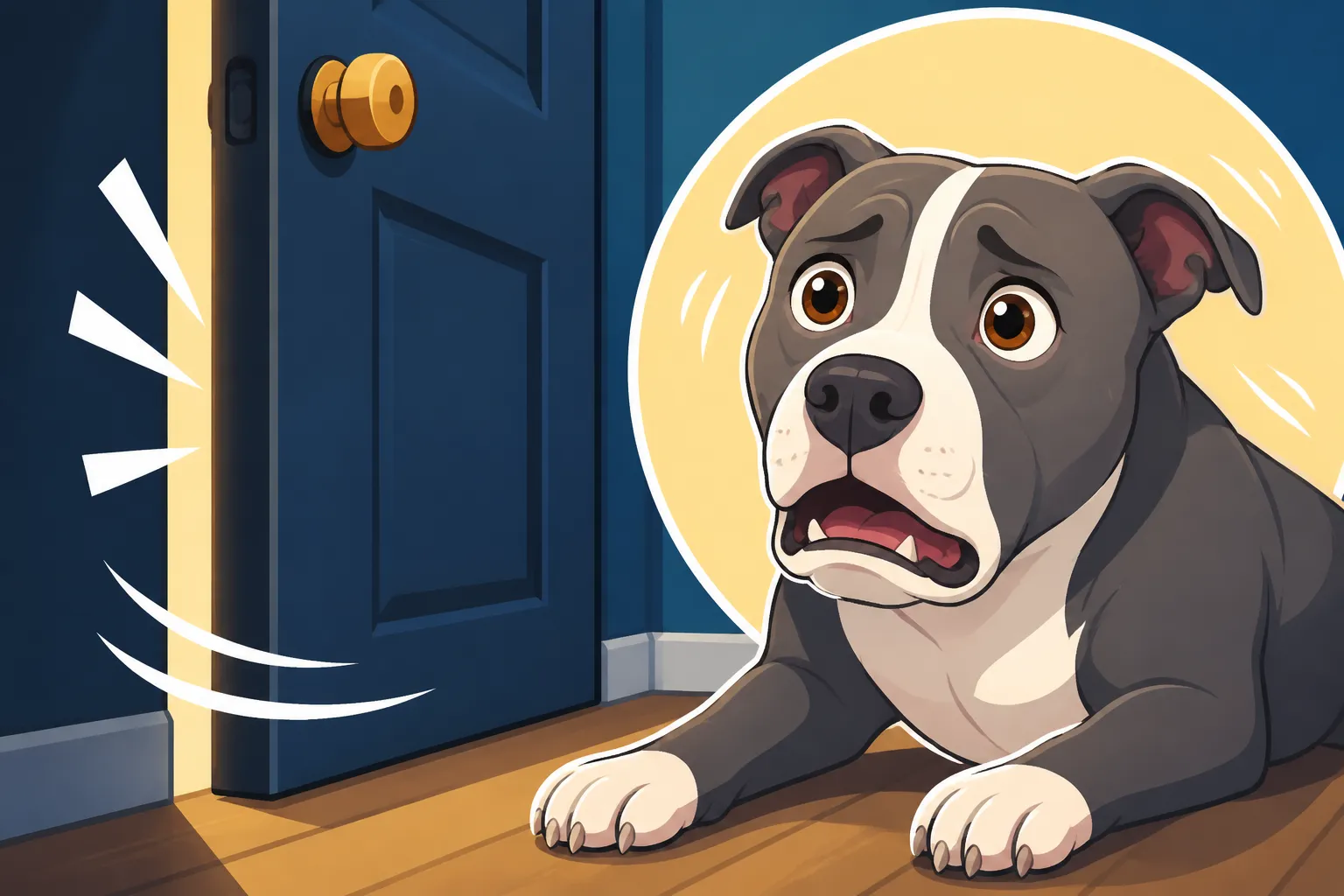
When your Pit Bull starts to panic the moment the door clicks shut, it’s not simply misbehavior or a lack of training. This is a genuine distress response, often rooted in what's known as separation anxiety. It’s a complex emotional issue that can manifest in various ways, and understanding its underlying causes is the first step toward helping your dog.
The Roots of Separation Distress
Separation distress isn't about your dog being "mad" at you for leaving or trying to get revenge. Instead, it stems from a deep-seated fear of being alone. Imagine being a highly social creature, hardwired to be part of a pack, and suddenly finding yourself completely isolated. For some Pit Bulls, this feeling can trigger an intense anxiety response. It might develop from sudden changes in routine, such as an owner starting a new job, a move to a new home, or even a traumatic experience while left alone. Some rescue dogs, especially those who’ve experienced abandonment, can be particularly prone to this, carrying that fear of being left behind into their new, loving homes. It’s a survival instinct gone awry in the context of our modern lives.
It's also worth remembering that Pit Bulls, while often portrayed as tough, are incredibly sensitive and form deep bonds with their people. They thrive on companionship and routine, and a sudden disruption or perceived abandonment can hit them hard. This isn't a sign of a "weak" dog; it's a testament to their strong attachment. Sometimes, even subtle changes we might not notice, like a different scent on our clothes or a slightly altered daily schedule, can be enough to trigger their anxiety if they're already predisposed.
Signs Beyond Just Barking
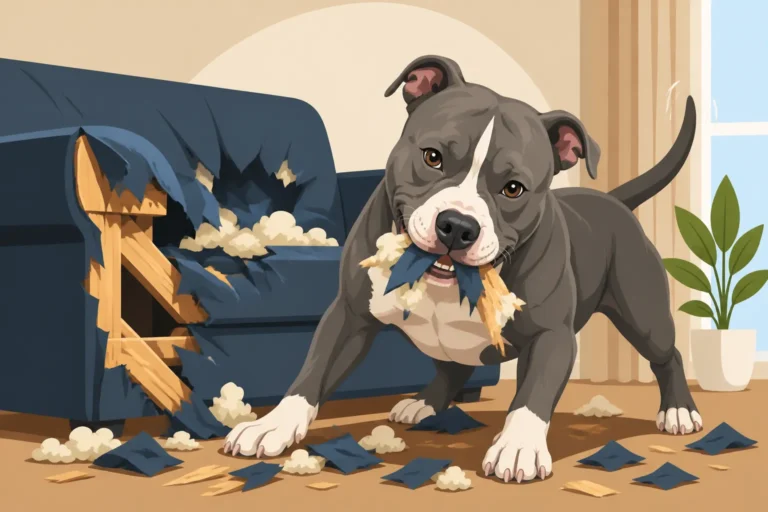
While incessant barking or howling is a common giveaway that your Pit Bull is distressed when you leave, it's far from the only sign. Many owners miss other, more subtle cues, or dismiss them as general "naughtiness." Destructive chewing, particularly around entry and exit points like doors and windows, is a classic symptom. They might also scratch frantically at doors or window frames, attempting to follow you or escape the confinement. Some dogs will also begin to soil the house, even if they are perfectly house-trained, which is an involuntary stress response rather than a deliberate act.
Other signs can include pacing, drooling excessively, panting even when not hot, or trying to block you from leaving. Some dogs become almost frantic as you prepare to depart, whimpering or shaking. When you return, they might greet you with an exaggerated level of excitement, as if you've been gone for weeks, even if it was just minutes. Paying close attention to all of these behaviors, both before you leave and upon your return, can provide critical clues about the severity and nature of their separation distress. For a deeper dive into destructive behaviors, you might find Pit Bull Chewing and Destructive Behavior helpful.
Distinguishing From Puppy Antics
It’s easy to confuse true separation anxiety with normal puppy behaviors or general boredom, but there are key differences. A bored puppy might chew on your couch because it lacks appropriate outlets for its energy and teething needs. It might even have an accident inside if it can't hold its bladder long enough. These behaviors are usually not accompanied by the intense vocalizations, frantic attempts to escape, or obsessive destruction around exit points that characterize separation anxiety. A puppy might be unhappy you're gone, but it’s not experiencing the same level of panic.
True separation anxiety involves a consistent pattern of intense distress only when you are absent. If your Pit Bull chews up your slippers when you're home but ignoring them, that's likely boredom or lack of boundaries, not separation anxiety. If they're destructive or vocal whether you're there or not, it points to other behavioral issues. The crucial differentiator is that these panic behaviors are directly tied to your physical absence. Understanding this distinction is vital, as the training approaches for boredom or typical puppy challenges are very different from those required for true anxiety.
Setting Up for Success: Environment and Management
Before diving into intensive training, it's crucial to establish an environment and routine that supports your Pit Bull's emotional well-being. Think of it as laying a solid foundation for their confidence. Without these management strategies in place, training efforts can feel like swimming upstream.
Creating a Safe Space
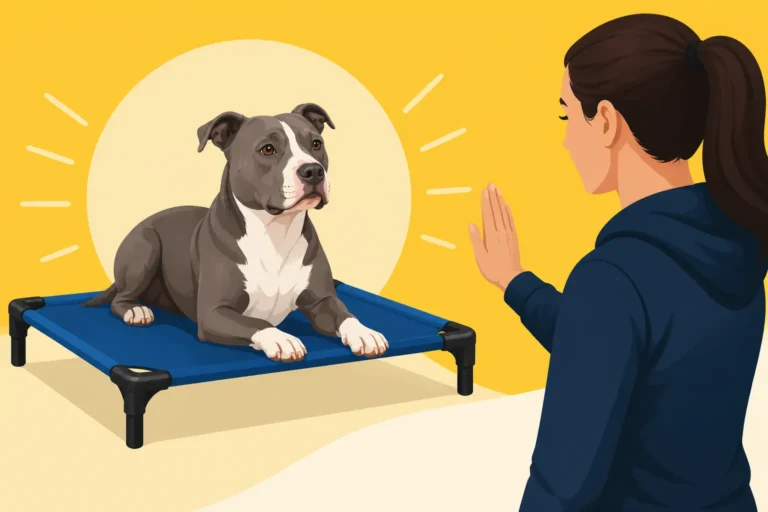
A safe, comfortable space is paramount for a dog prone to anxiety. For many Pit Bulls, a crate can become a den-like sanctuary rather than a prison, but only if introduced properly and positively. It should be just large enough for them to stand, turn around, and lie down comfortably. Cover it with a blanket to create a cozy, cave-like feel, and always include soft bedding. Ensure there are durable, high-value chew toys or puzzle feeders inside to occupy them. Never use the crate as punishment; it should always be associated with positive experiences. For dogs that truly cannot tolerate a crate, a small, dog-proofed room (like a laundry room or kitchen) with all tempting items removed can serve a similar purpose.
The key is that this space becomes a predictable, comforting place where they can retreat and feel secure. It should be a place where they want to be, not where they have to be. Feed them meals in their crate, give them special treats only in their crate, and let them nap there undisturbed. You might find our guide on Getting a Pit Bull to Choose Its Crate offers more detailed advice on making the crate a positive space. This consistent positive association will help them view it as their safe haven when you eventually need to leave them alone.
Pre-Departure Routines That Help
Our actions before leaving often inadvertently ramp up our dogs' anxiety. The jingle of keys, picking up your purse, putting on shoes – these become highly predictive cues that you're about to disappear. To combat this, start desensitizing your Pit Bull to these triggers. Randomly perform parts of your departure routine throughout the day, without actually leaving. Pick up your keys, walk to the door, and then sit back down on the couch. Put on your shoes, walk around, and take them off. The goal is to strip these actions of their predictive power.
When you do leave, make your departures as low-key as possible. Avoid lengthy, emotional goodbyes, which only heighten their anxiety. A calm, brief "Be right back" and a simple exit are best. Similarly, when you return, don't make a big fuss immediately. Wait until your Pit Bull has calmed down before offering greetings. This teaches them that your coming and going is not a big, dramatic event, but a normal, uneventful part of life. Consistency is king here – every time you leave, no matter how short the duration, follow the same calm routine.
The Role of Physical and Mental Exercise
A tired dog is often a calm dog. Pit Bulls are powerful, intelligent, and energetic dogs, and a lack of sufficient physical and mental exercise can absolutely contribute to anxiety and destructive behaviors. Before you plan to leave your Pit Bull alone, ensure they've had a substantial outlet for their energy. This could mean a long, brisk walk, a good session of fetch, or even some dedicated playtime in the yard. For highly active Pit Bulls, consider a flirt pole session or a vigorous game of tug. Our article on Pit Bull Exercise for a Powerful Athletic Dog provides some great ideas for suitable activities.
But physical exercise alone isn't always enough. Mental stimulation is just as vital. Engage their minds with puzzle toys, scent work games, or short training sessions. A few minutes of brain work can be as tiring as a long walk. A stuffed Kong toy (you can find great options on Amazon) or a snuffle mat with their breakfast can provide a rewarding challenge just as you prepare to leave, diverting their attention and burning mental energy. This combination of physical exertion and mental engagement helps them to be more relaxed and less prone to panic when left alone.
Step-by-Step Desensitization Training
Addressing separation anxiety effectively requires a systematic, gradual approach called desensitization and counter-conditioning. This isn't about punishing your Pit Bull; it's about slowly changing their emotional response to being alone, making them feel safer and more comfortable in your absence.
Gradual Departures and Returns
The core of desensitization is to gradually expose your Pit Bull to being alone for increasingly longer periods, always staying below their panic threshold. Start incredibly small: simply walk to the door, open it, and immediately close it again. Don't even step out. Repeat this many times until your dog remains completely calm. Then, step out for literally one second, then immediately back in. Build up from there: five seconds, ten seconds, thirty seconds, a minute. It’s crucial that you never push them to the point of distress. If they show any signs of anxiety (whimpering, pacing, scratching), you've gone too far, and you need to dial back the duration for the next session.
These "mock departures" are best done multiple times a day, for short, positive sessions. Always return before your Pit Bull starts to panic. If you come back to an anxious dog, you've inadvertently reinforced the idea that they need to panic for you to return. The goal is for them to experience your departure and return as a non-event. Remember to keep your actual departures and returns calm and quiet, as discussed before. This painstaking process requires immense patience, but it's the most effective way to reprogram their emotional response. For more insight into helping your dog cope, consider checking out A Pit Bull That Screams When You Leave.
Using Cues and Predictable Sequences
Incorporating specific cues and predictable sequences can help your Pit Bull understand what's happening and that you will return. For instance, before each mock departure, you could give them a special, long-lasting chew or puzzle toy that they only get when you leave. This creates a positive association with your departure, linking it to something highly rewarding. A robust chew toy from Amazon, for example, can be a great distraction. You can also use a verbal cue like "Be right back" in a calm, neutral tone right before you exit, reinforcing that this is a temporary absence.
Consistency is key here. Always use the same cue, always provide the special toy, and always follow the same calm departure and return routine. This predictability helps reduce uncertainty, which is a major component of anxiety. They learn to anticipate the sequence of events and associate your leaving with a treat or a fun activity, rather than with dread. Over time, these positive associations will gradually chip away at their panic response.
Increasing Duration and Distance
Once your Pit Bull is consistently calm during very short, in-home departures (e.g., you can step out for a minute or two without issue), you can slowly start to increase the duration and distance. This is where a reliable pet camera or baby monitor can be invaluable, allowing you to observe your Pit Bull's behavior remotely and ensure you return before they reach their anxiety threshold. You can also use this to ensure they're engaging with the enrichment toys you've left.
Gradually extend the time you're away, always in small increments. If they are fine for 5 minutes, try 7 minutes, then 10, then 15, and so on. Remember, some days might be harder than others, and it’s perfectly okay to take a step back if needed. Don't be discouraged by setbacks; they are a normal part of the process. The ultimate goal is for your Pit Bull to remain calm and relaxed for longer and longer periods, eventually learning that your departures are always temporary and safe. It's a marathon, not a sprint, and celebrates every small victory. You can learn more about how long your dog can cope by reading Hours a Pit Bull Copes With on Its Own.
Tools and Aids to Support Your Pit Bull
While training is the cornerstone of addressing separation anxiety, there are various tools and aids that can complement your efforts and provide additional comfort to your Pit Bull during this challenging process. These resources can help manage symptoms and create a more soothing environment.
Calming Aids and Supplements
For some Pit Bulls, calming aids can take the edge off their anxiety, making them more receptive to training. These are not sedatives in the traditional sense, but rather products designed to promote relaxation. Options include pheromone diffusers (like Adaptil, which mimics a mother dog's calming pheromones) that can be plugged into an outlet near their safe space. There are also calming chews and supplements containing ingredients like L-Theanine, L-Tryptophan, or Zylkene (a milk protein derivative) that aim to reduce stress naturally. Brands available on Amazon often include these types of ingredients.
It's important to discuss any supplements with your veterinarian before introducing them, especially if your Pit Bull is on other medications. What works for one dog might not work for another, so it can sometimes be a process of trial and error to find the most effective aid. These aids are most beneficial when used in conjunction with a solid training plan, acting as a supportive element rather than a standalone solution. They create a foundation of calm that allows the training to be more successful.
Durable Enrichment Toys
Pit Bulls have powerful jaws, and "chew-proof" toys often meet their match quickly. When dealing with separation anxiety, investing in truly durable enrichment toys is critical. The goal is to provide a long-lasting, mentally stimulating distraction that can withstand their chewing power. Kong Extreme toys are a classic for a reason; filled with frozen peanut butter, wet dog food, or specially formulated pastes, they can keep a Pit Bull occupied for a significant amount of time. Other options include tough rubber chew toys designed for power chewers or puzzle feeders that dispense treats slowly, requiring problem-solving skills.
When selecting toys, prioritize safety and durability. Avoid toys with small parts that can be broken off and swallowed. Rotate toys to keep them novel and exciting. Always introduce new toys when you are present to ensure they are safe and your dog understands how to use them. Leaving a familiar, high-value chew, particularly a pre-stuffed one, right before you leave can be a powerful counter-conditioning tool. For more ideas, explore Chew Toys That Hold Up to a Pit Bull or Puzzle Feeders a Pit Bull Cannot Destroy.
Technology for Monitoring and Interaction
Modern technology offers some fantastic tools for monitoring your Pit Bull's behavior when you're not home, which is invaluable for separation anxiety training. Pet cameras with two-way audio allow you to see and hear your dog, and even speak to them or dispense treats remotely. This allows you to gauge their anxiety levels in real-time, helping you decide when to return during those crucial desensitization steps. You can also use the two-way audio to offer gentle reassurance if they start to show mild signs of distress, though this should be used cautiously so as not to reinforce attention-seeking behaviors.
Many popular pet camera brands are readily available on Amazon, offering features like night vision, motion detection alerts, and video recording. Some even integrate with smart home systems. These devices provide peace of mind and crucial data, helping you to refine your training approach. Watching recordings can also help you identify specific triggers or patterns in their anxiety you might otherwise miss.
Here's a quick look at some common aids:
| Aid Type | Purpose | Example Product/Action | Benefits | Considerations |
|---|---|---|---|---|
| Pheromone Diffuser | Releases calming pheromones into the environment | Adaptil Diffuser | Creates a calming atmosphere, reduces stress | May not work for all dogs; takes time to be effective |
| Calming Chews/Supplements | Contains ingredients to promote relaxation | L-Theanine, L-Tryptophan, Zylkene | Can reduce overall anxiety, improve focus | Consult vet first; effectiveness varies by dog |
| Durable Chew Toys | Provides a long-lasting, safe outlet for chewing | Kong Extreme, Nylabone power chews | Redirects destructive chewing, provides mental stimulation | Must be chosen for durability; supervised at first |
| Puzzle Feeders | Dispenses food/treats slowly, requiring mental effort | LickiMat, snuffle mats, treat balls | Engages mind, provides distraction, slows eating | Requires supervision initially; can be messy |
| Pet Camera | Monitors dog's behavior remotely, two-way audio | Furbo, Petcube, Wyze Cam | Allows real-time observation, remote interaction | Requires Wi-Fi; may increase owner anxiety if over-used |
| ThunderShirt/Anxiety Wrap | Applies gentle, constant pressure | ThunderShirt | Mimics swaddling, can have a calming effect | Not a substitute for training; best for mild anxiety |
When to Seek Professional Help
While consistency and patience with at-home training are incredibly powerful, there are times when separation anxiety is so severe that it warrants professional intervention. Recognizing these red flags and knowing where to turn can make all the difference for your Pit Bull.
Identifying Red Flags for Professional Intervention
It’s one thing for your Pit Bull to whine for a few minutes after you leave; it’s another for them to injure themselves trying to escape, or to cause extensive damage to your home every single time. If your dog is exhibiting self-destructive behaviors such as bloody paws from scratching, broken teeth from chewing on hard surfaces, or signs of extreme panic like uncontrolled urination/defecation every time you're gone, it's a clear signal that the anxiety is beyond what typical at-home management can handle. Also, if your attempts at gradual desensitization training are consistently failing, or even making the problem worse, it’s time to call in the cavalry.
Severe separation anxiety can be incredibly dangerous for your dog and immensely stressful for you. It can lead to a significant decline in their quality of life, constant physical distress, and even permanent injury. Don’t feel guilty if you reach this point; it means you’ve recognized that your dog needs a higher level of support than you can provide alone, and that's a responsible and loving decision. Our article The Hardest Call a Pit Bull Owner Makes touches on recognizing when a dog's quality of life is severely impacted.
Finding a Qualified Trainer or Behaviorist
Not all dog trainers are equipped to handle severe separation anxiety. This is a specialized field, and you need to seek out professionals with specific experience and certifications in behavior modification for anxiety. Look for a Certified Professional Dog Trainer (CPDT-KA), a Certified Separation Anxiety Trainer (CSAT), or a Veterinary Behaviorist (Dip. ACVB). These professionals have the knowledge and tools to create a tailored behavior modification plan that goes beyond general obedience. They can accurately assess your Pit Bull's specific triggers and responses, often utilizing video analysis of their behavior while you're away.
When interviewing potential professionals, ask about their experience with separation anxiety, their methodology (they should use positive reinforcement only), and whether they offer remote training options, which are often ideal for separation anxiety cases as the trainer can "be there" during your departures. Online platforms like BAXTER & Bella also offer guided courses and community support that, while not a replacement for one-on-one professional help for severe cases, can provide excellent resources and structure for milder anxieties or as a supplementary tool.
Discussing Medication with Your Vet
For severe cases of separation anxiety, medication can be a crucial component of the treatment plan, alongside behavior modification. Just as humans with anxiety sometimes benefit from medication to help them manage their symptoms, dogs can too. Anti-anxiety medications, prescribed by a veterinarian, can help to lower your Pit Bull's overall anxiety levels, making them more receptive to training and less prone to panic. It's not a "cure," but a tool to help create a window of opportunity for the behavioral changes to take root.
Your vet might consider various options, from daily medications to situational ones given only before departures. They will discuss potential side effects and monitor your Pit Bull closely. Remember, medication is typically most effective when combined with a consistent behavior modification program developed by a qualified professional. It helps to calm the emotional storm enough so that your dog can actually learn new coping mechanisms. Don’t hesitate to bring up your concerns with your vet; they are there to help you explore all avenues to improve your Pit Bull's well-being.
Disclaimer
This article is for general informational purposes only and does not constitute professional advice. Laws, prices and regulations vary by location and change over time. Consult a qualified professional for guidance on your specific situation.