What Dog Selectivity Means in a Pit Bull
It can be incredibly confusing and disheartening when your beloved Pit Bull, who might have been perfectly fine with other dogs as a puppy, starts showing signs of intolerance or reactivity as they mature. You might be walking a tightrope on every outing, worried about unpredictable greetings or sudden tension. This guide will delve into what "dog selectivity" means in a Pit Bull, helping you understand this common trait and navigate its implications with confidence and empathy.
Understanding Dog Selectivity – It's Not What You Think
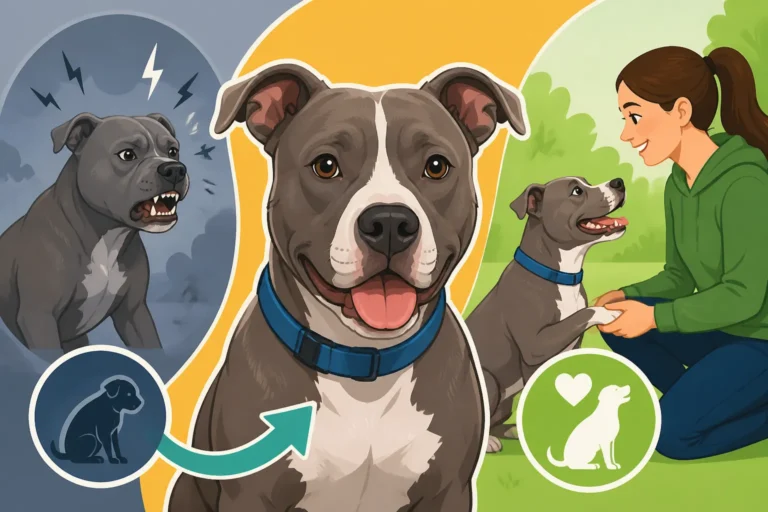
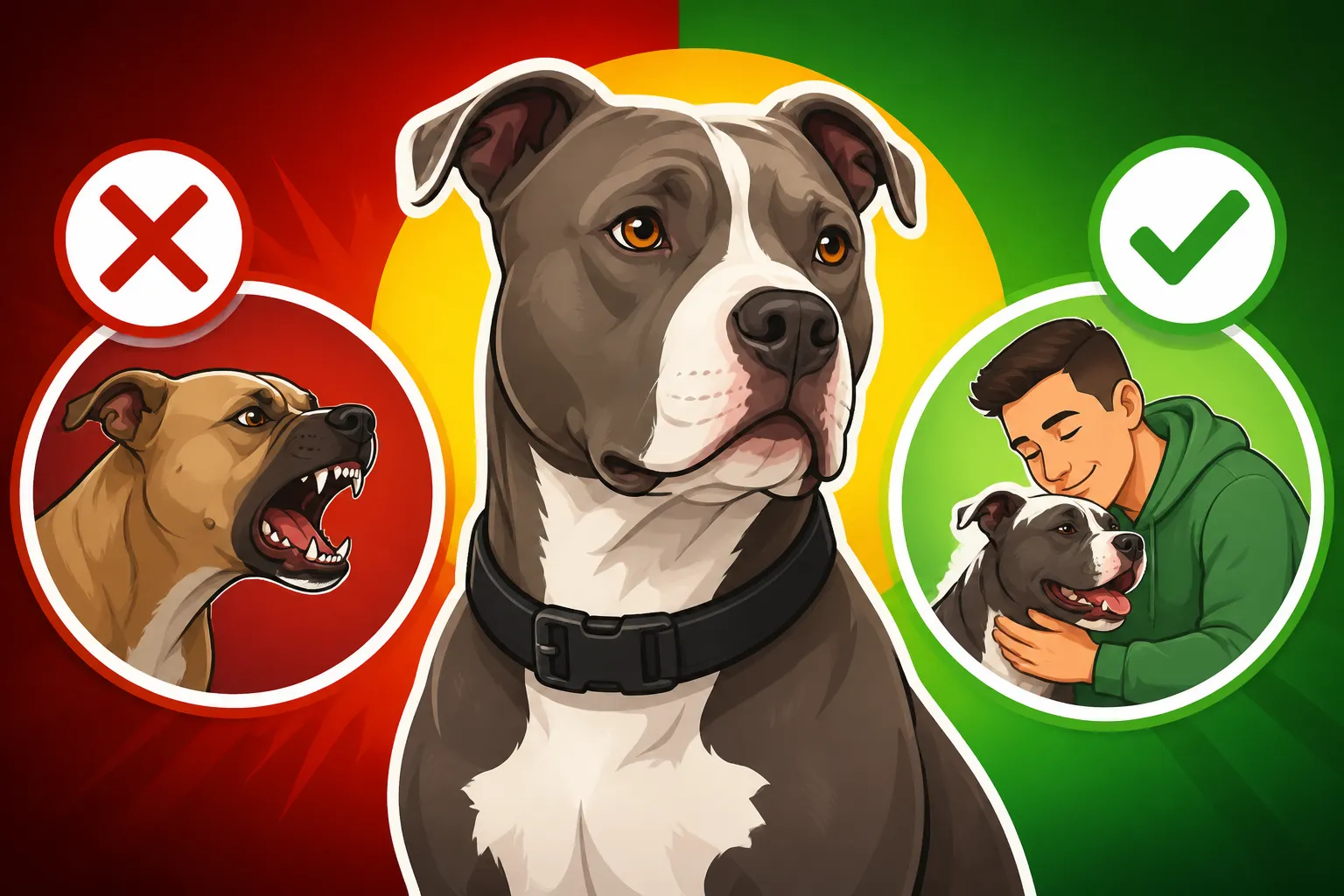
When we talk about dog selectivity in Pit Bulls, it's crucial to first differentiate it from generalized dog aggression. Many owners hear "dog selectivity" and immediately jump to conclusions, envisioning a dog that's constantly looking for a fight. But that's usually not the case at all. Instead, it’s a nuanced behavioral pattern where a dog displays a marked preference for which dogs they interact with, or sometimes, a complete disinterest in interacting with any other dogs at all.
This isn't about a dog being inherently "bad" or aggressive in a malicious sense. It's often about comfort levels, communication styles, and simply not wanting to engage with every dog they encounter. Think of it like a person who prefers to hang out with a small, trusted circle of friends rather than attend a huge party where they don't know many people. They aren't antisocial, they're just selective.
Defining Dog Selectivity vs. Dog Aggression
Let's break down the difference, because this is where a lot of misunderstanding arises. True dog aggression often stems from fear, territoriality, resource guarding, or pain. It can manifest as unprovoked lunging, snarling, or biting, driven by a deep-seated negative emotional response. A dog with generalized aggression might react negatively to nearly all other dogs, regardless of their size, sex, or demeanor.
Dog selectivity, on the other hand, is less about fear or malice and more about a strong preference or an inability to tolerate certain social cues. A dog-selective Pit Bull might happily co-exist with a well-matched housemate, particularly if they've grown up together or are of the opposite sex and possess calm dispositions. Yet, they might react intensely to a bouncy, rude puppy in the park, or a dominant-looking dog on a leash. They are saying, in their doggy way, "I don't like that dog, or that type of interaction, and I want it to stop." This isn't necessarily a desire to harm, but rather a strong inclination to avoid or end an uncomfortable social situation. It’s a boundary-setting behavior, albeit one that can be intense and require careful management.
Understanding Why Pit Bull Dog Selectivity Is Not Aggression is a critical first step for any owner trying to navigate these behaviors. It removes the stigma and allows for a more compassionate, practical approach to management.
The Breed History Connection
To truly grasp why dog selectivity can be so common in Pit Bulls, we need to take a brief, honest look at their origins. Pit Bulls descend from bull-and-terrier crosses, historically bred for tasks that required immense strength, tenacity, and gameness. While these dogs were often cherished family companions, a certain degree of dog-on-dog intolerance was a functional trait in their lineage. This is not to say that every Pit Bull will be dog-selective, or that it’s an inherently desirable trait for a companion animal today. Far from it. Responsible breeders have worked to select for stable temperaments, and advocacy groups strive to change perceptions.
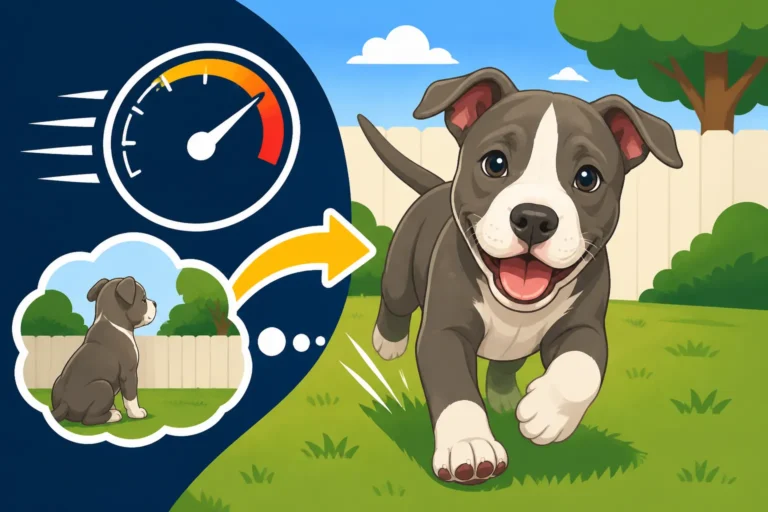
However, a genetic predisposition can still exist within the type. It means that even with excellent socialization as a puppy, a Pit Bull might mature and, around the age of one to three years old, start to show less tolerance for other dogs. This isn't a failure in your training or socialization; it's often a manifestation of genetics asserting themselves as the dog reaches social maturity. It’s a spectrum, and each individual Pit Bull will fall somewhere along it, from completely indifferent to other dogs, to highly selective about their companions. It's important to remember that this historical context helps us understand the "why," not to excuse or promote undesirable behaviors, but to equip owners with knowledge for proactive management.
Signs and Onset of Dog Selectivity in Pit Bulls
One of the most frustrating aspects of dog selectivity for owners is that it often isn't obvious from puppyhood. Many Pit Bulls are perfectly jovial and playful with other dogs when they are young, leading owners to believe they have a truly dog-friendly companion. Then, seemingly out of nowhere, things start to shift. Recognizing the early, subtle cues and understanding the typical timeline for this behavior to emerge is key to effective management.
Subtle Cues and Escalation
Dog selectivity often begins with subtle signals that are easy to miss or misinterpret, especially if you’re not highly attuned to canine body language. Your Pit Bull might start by stiffening slightly when another dog approaches, giving a hard stare, or showing what's known as "whale eye" – where the whites of their eyes are visible. They might avoid direct interaction, try to walk behind you, or simply turn their head away from an approaching dog. These are all signs of discomfort.
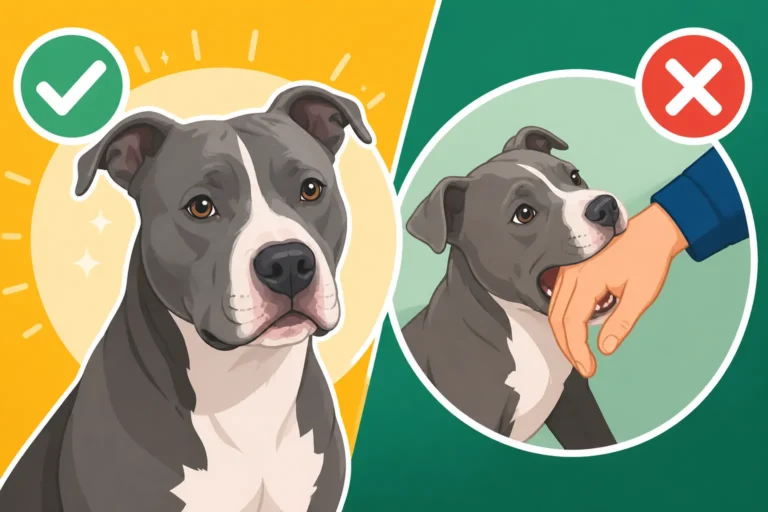
If these subtle signals are ignored by either the approaching dog or the handler, the behavior can escalate. What might start as a stiff body can quickly turn into a low growl, a snarl, a lunge, or even a snap. It often happens so fast that owners feel blindsided, thinking their dog "suddenly" reacted. In reality, the dog likely gave many small warnings that weren't picked up on.
For example, your Pit Bull might tolerate a calm, older Labrador perfectly well, but completely lose their composure around a boisterous young Border Collie who keeps trying to herd them. They might be fine with small, submissive dogs but show intense reactions to large, intact males. The selectivity means their tolerance varies greatly depending on the individual dog and the specific context of the interaction. Learning to read these signals, and understanding Reading a Pit Bull Before a Scuffle Starts, is paramount.
Consider the following table to help you identify the differences:
| Behavior Trait | Dog Selectivity (Common in Pit Bulls) | Generalized Dog Aggression (Less Common, More Concerning) |
|---|---|---|
| Trigger | Specific dogs (rude, dominant, high-energy), specific situations | Most/all dogs, often unprovoked, may generalize to people/objects |
| Motivation | Preference, discomfort, desire to avoid/end interaction, boundary setting | Fear, territoriality, resource guarding, pain, prey drive, unresolved trauma |
| Onset | Often emerges in adolescence (1-3 years old) | Can be present earlier, or develop due to trauma/poor socialization |
| Body Language | Stiffening, hard stare, whale eye, growl, air snap, attempt to disengage | Crouching, snarling, direct bites, hackles raised, focused attack |
| Social Preference | May co-exist happily with certain dogs (e.g., housemates), tolerates few | Often struggles to co-exist with any dogs, isolated |
| Management Goal | Prevent unwanted interactions, teach polite disengagement | Behavior modification, desensitization, counter-conditioning, safety protocols |
When Does It Typically Emerge?
One of the most surprising and challenging aspects for Pit Bull owners is that dog selectivity often doesn't appear in puppyhood. Many a proud owner has a story of their Pit Bull puppy frolicking joyfully with every dog they meet, leading them to believe they have the most dog-friendly companion on earth. Then, somewhere between 12 months and 3 years of age, as the dog reaches social maturity, those friendly interactions start to diminish. This period of adolescence and young adulthood is often when The Age Pit Bull Dog Selectivity Usually Appears.
It can feel like a betrayal, or a sudden change in personality, but it's often a natural developmental stage for some Pit Bulls. Their bodies are mature, their confidence is higher, and their innate preferences, or lack of tolerance for certain canine behaviors, begin to surface. Intact males and females can sometimes show stronger tendencies towards selectivity, although spaying or neutering doesn't guarantee it won't emerge. However, careful consideration of When to Neuter a Pit Bull Without Costing Joints can be part of a holistic approach to your dog's development and long-term health. The key takeaway here is not to be complacent with early positive experiences; continued structured socialization and vigilance are always necessary, and prepare yourself for the possibility that your Pit Bull's social landscape might shift as they grow.
Managing a Dog-Selective Pit Bull in Daily Life
Discovering your Pit Bull is dog-selective isn't a life sentence to isolation, but it does mean a commitment to proactive management and understanding. Your goal isn't necessarily to force them to be "dog friendly" with every dog they meet, but rather to ensure their safety and the safety of other dogs, while still providing them with a rich and fulfilling life.
Prioritizing Safety and Management
The golden rule for dog-selective Pit Bulls is prevention over intervention. This means actively managing their environment to prevent undesirable interactions. Dog parks, crowded walking trails, or off-leash areas where unknown dogs might approach are generally not safe or appropriate places for a dog-selective Pit Bull. It’s not fair to your dog, who will constantly be stressed, or to other dogs and their owners.
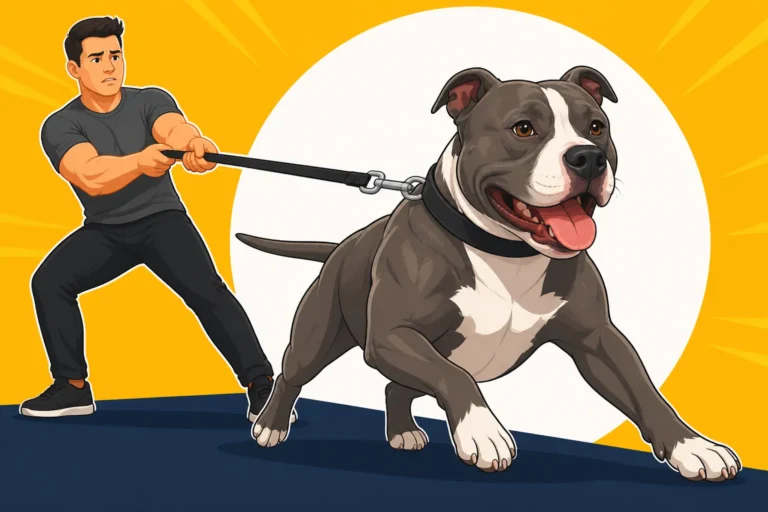
Instead, focus on controlled, structured walks. Invest in high-quality, secure equipment. A well-fitting harness that discourages pulling, like many durable options found on Amazon, can be incredibly helpful when you're managing a strong, muscular dog. Combining this with a sturdy leash will give you the control you need. If your Pit Bull is prone to pulling when excited, reading about Pit Bull Leash Pulling at Fifty Pounds and exploring various Harnesses and Head Halters for a Pit Bull can provide valuable insights into equipment choices.
For households with multiple dogs where one or more are dog-selective, the "crate and rotate" method might become a necessary part of your daily routine. This involves creating separate spaces and rotating access to common areas so that all dogs get individual attention and exercise without forced cohabitation. This strategy is further detailed in Crate and Rotate as a Pit Bull Management Plan. This isn't a punishment; it's a management system designed to reduce stress and prevent incidents. Your dog can still have a wonderful life with plenty of exercise and enrichment, just ensure it’s focused on individual activities, parallel walks with known, compatible dogs, or sniffaris in quiet areas rather than chaotic group interactions.
Training and Professional Guidance
While management is crucial, training is equally important for building your Pit Bull's confidence and your ability to direct them away from potential issues. Solid obedience commands like "look at me," "leave it," "stay," and a rock-solid recall are indispensable. These commands allow you to redirect your dog's attention, create distance from other dogs, and maintain control in challenging situations. Teaching your Pit Bull Recall Training a Pit Bull From Scratch can be a literal lifesaver, ensuring they return to you immediately if an unexpected off-leash dog approaches.
It's highly recommended to work with a professional dog trainer who has experience specifically with bully breeds and dog selectivity. Look for trainers who use positive reinforcement and force-free methods. They can help you understand your dog's body language better, teach you effective management strategies, and guide you through behavior modification exercises tailored to your dog's specific needs. Exploring resources like Finding a Trainer Experienced With Pit Bulls can help you locate the right professional. Online platforms, like those offered by BAXTER & Bella, can also provide valuable foundational training and behavior support, offering flexible learning options from the comfort of your home.
One of the most important tools in your safety kit for a dog-selective Pit Bull is muzzle training. This might sound intimidating or even feel like admitting defeat, but it's actually one of the most responsible and humane things you can do. A properly fitted basket muzzle allows your dog to pant, drink, and even take treats, all while providing a safety net against accidental bites if an interaction goes awry. It's a tool for prevention, not punishment, and can significantly reduce your anxiety when out and about. Learning about Muzzle Training Every Pit Bull Should Have can help you approach this process positively.
Creating a Harmonious Home Environment
If you have a dog-selective Pit Bull living with other dogs, creating a harmonious and stress-free home environment requires diligence. Structured introductions and careful supervision are paramount. Simply putting two dogs together and hoping for the best is a recipe for disaster. Gradual, controlled introductions, often starting with parallel walks and moving to supervised interactions in neutral spaces, are key. Our guide on Introducing a Pit Bull to an Existing Dog Slowly offers detailed steps for this process.
Preventing resource guarding is another vital aspect. This means feeding dogs separately, ideally in their crates or different rooms. Pick up high-value toys when you can't supervise, and ensure there are enough beds and resting spots for all dogs to have their own space. Understanding and addressing Pit Bull Food Bowl Guarding can prevent many common household tensions. Providing ample mental enrichment, such as puzzle toys or scent work, can also help reduce overall stress and redirect energy in a positive way.
Ultimately, accepting your Pit Bull for who they are, including their dog selectivity, is the most loving approach. It means tailoring their lifestyle to ensure their comfort and safety, and being their advocate in a world that might not always understand them. For some dog-selective Pit Bulls, the happiest life is as an "only dog," where they don't have the pressure of constantly navigating canine social dynamics. This allows them to fully bond with their human family and thrive without unnecessary stress.
Disclaimer
This article is for general informational purposes only and does not constitute professional advice. Laws, prices and regulations vary by location and change over time. Consult a qualified professional for guidance on your specific situation.