Adjusting Pit Bull Food After the Neuter
Post-neuter Pit Bull metabolism drops, requiring reduced daily food portions to prevent gradual weight gain and protect joint health.
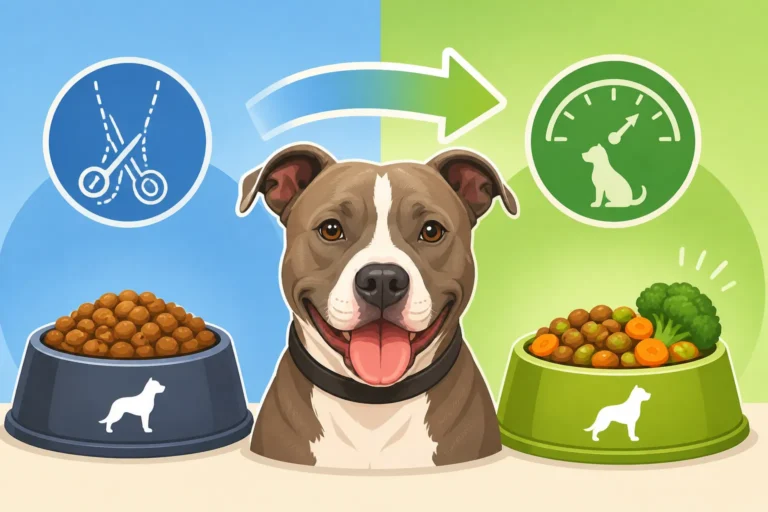
Post-neuter Pit Bull metabolism drops, requiring reduced daily food portions to prevent gradual weight gain and protect joint health.
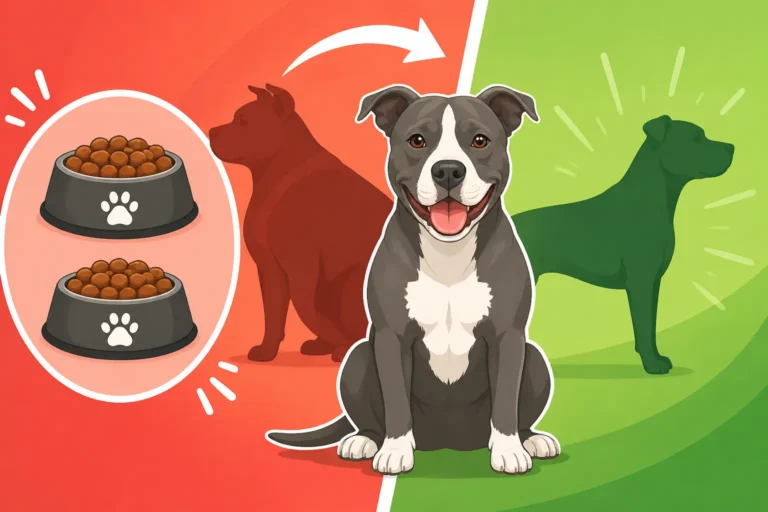
Pit Bull weight loss is achieved by maintaining two daily meals and weighing food portions with a digital kitchen scale.
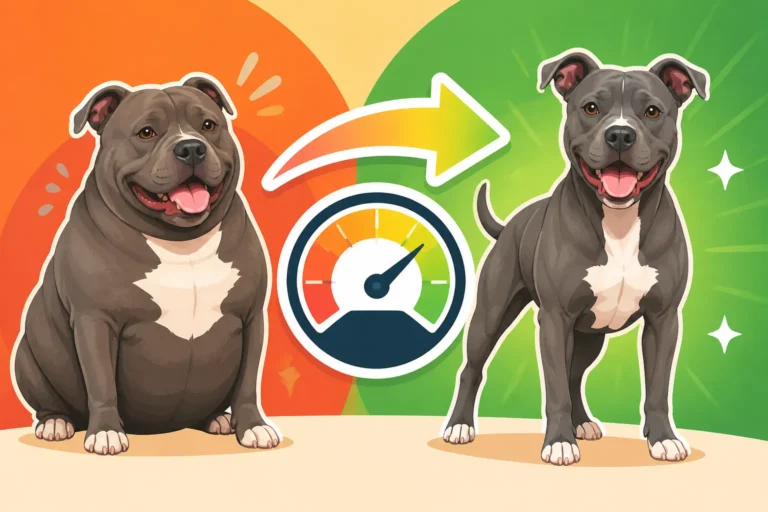
Pit Bull body condition checks explain visual cues, rib tests, and the abdominal tuck to assess safe weight loss.
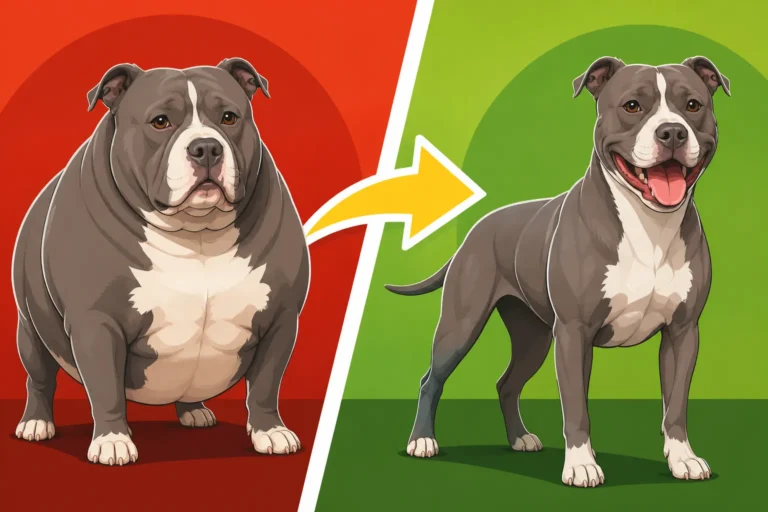
Assessing a Pit Bull weight accurately and creating a realistic, sustainable plan to restore a lean, healthy physique by watching ribs and food.
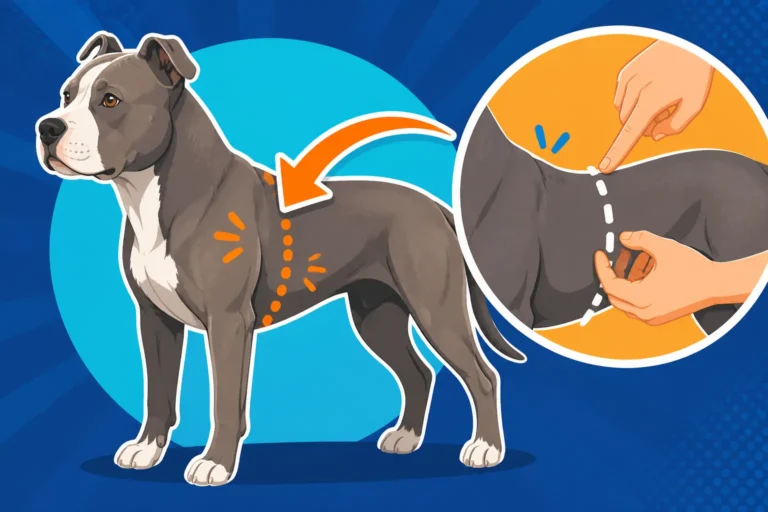
Pit Bull waist assessment helps owners check dog weight behind broad shoulders by using visual cues and hands-on palpation.
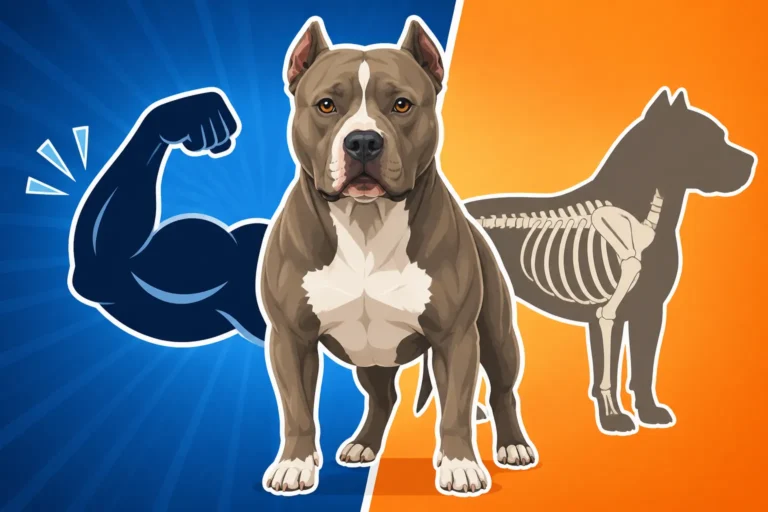
Dense muscle masks excess fat on Pit Bull dogs, making it difficult to assess healthy weight and body condition.
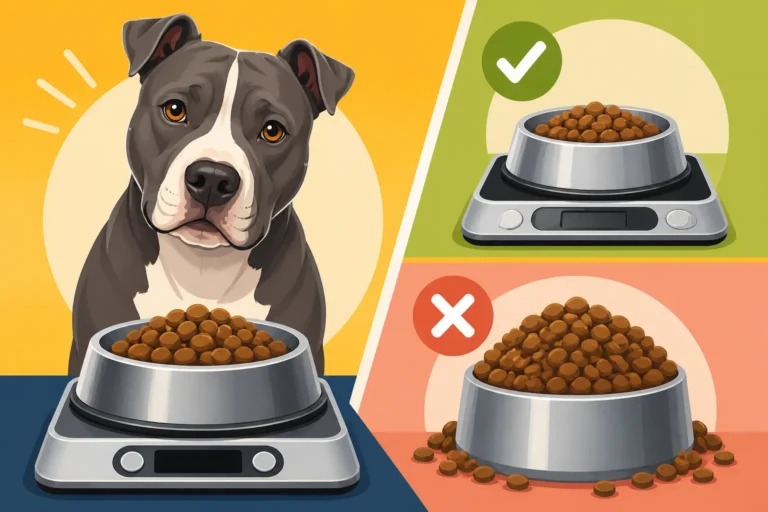
Accurately weighing a Pit Bull food ration prevents accidental overfeeding and weight gain that strains their muscular frame and joints.
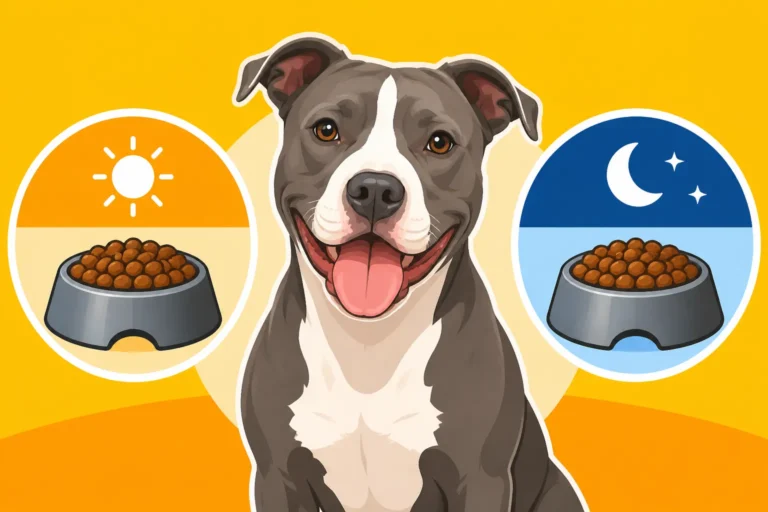
Portioned breakfast and dinner help a muscular dog stay lean, since overfeeding hides extra weight under muscle and feast-or-famine feeding upsets digestion.
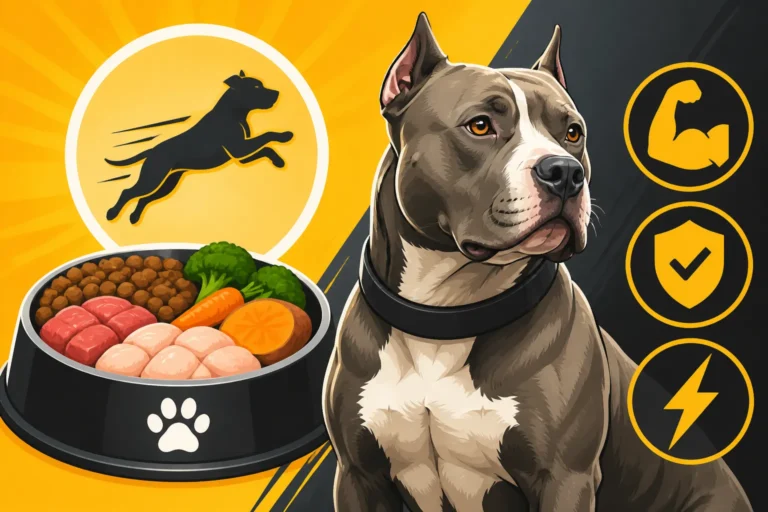
Active Pit Bulls in daily training require specific calorie amounts and macronutrient distribution to sustain performance and repair muscle.
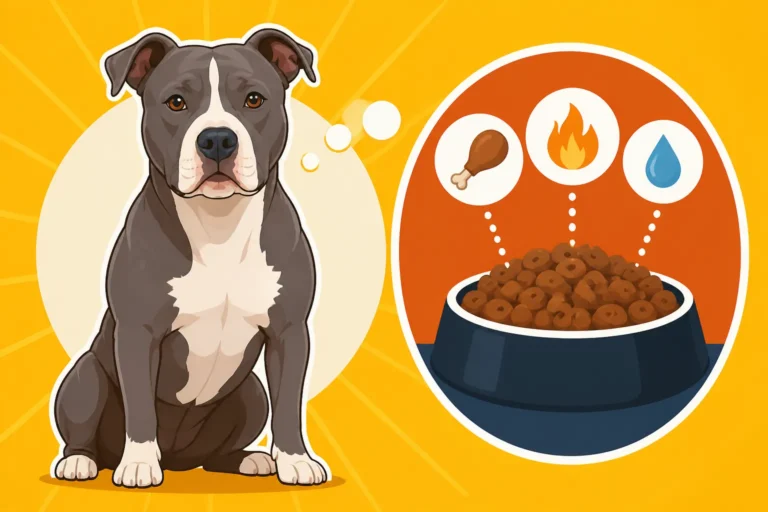
Fifty-pound Pit Bull daily calorie requirements, Resting Energy Requirement formulas, and activity level multipliers explained for owners.