Trimming a Heavy Pit Bull Back to Lean
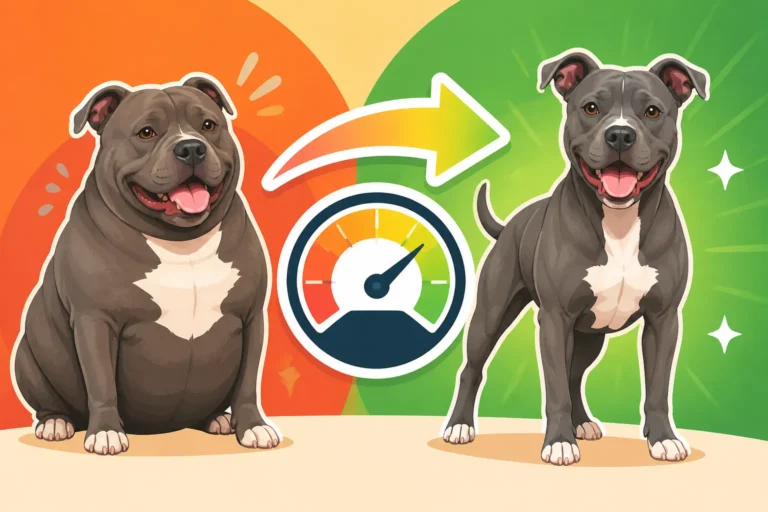
It’s a common scenario: you look at your beloved Pit Bull, and while they still look strong and sturdy, you might notice they've lost some of that athletic definition you love. Those powerful shoulders and deep chest can make it incredibly difficult to tell if your Pit Bull is carrying a few extra pounds, even when deep down, you suspect they might be. This guide is all about helping you understand how to accurately assess your Pit Bull's weight and, more importantly, create a realistic, sustainable plan to trim them back down to a lean, healthy physique, ensuring they can enjoy a long, active life by your side.
Understanding Why a Pit Bull Gains Weight
It’s easy to feel a pang of guilt when you realize your Pit Bull might be a little heavier than they should be, but trust me, you’re not alone. Many Pit Bull owners face this challenge because of how these dogs are built and some very common habits. Understanding why they gain weight is the first step toward getting them back on track without judgment.
The Challenge of Spotting Weight Gain Under Muscle
Pit Bulls are naturally muscular dogs. Their broad chests, powerful hindquarters, and often dense bone structure can make even an overweight Pit Bull look "solid" or "stocky" rather than obviously fat. This is where the difficulty lies. You see them every day, and that gradual accumulation of extra pounds can easily be mistaken for continued muscle development or simply their natural bulk. It’s not like they suddenly wake up with a spare tire. Instead, that subtle waist tuck starts to fill in, their ribs become a little harder to feel, and their movement might get a tiny bit less springy. We love them as they are, so it's incredibly hard to be objective.
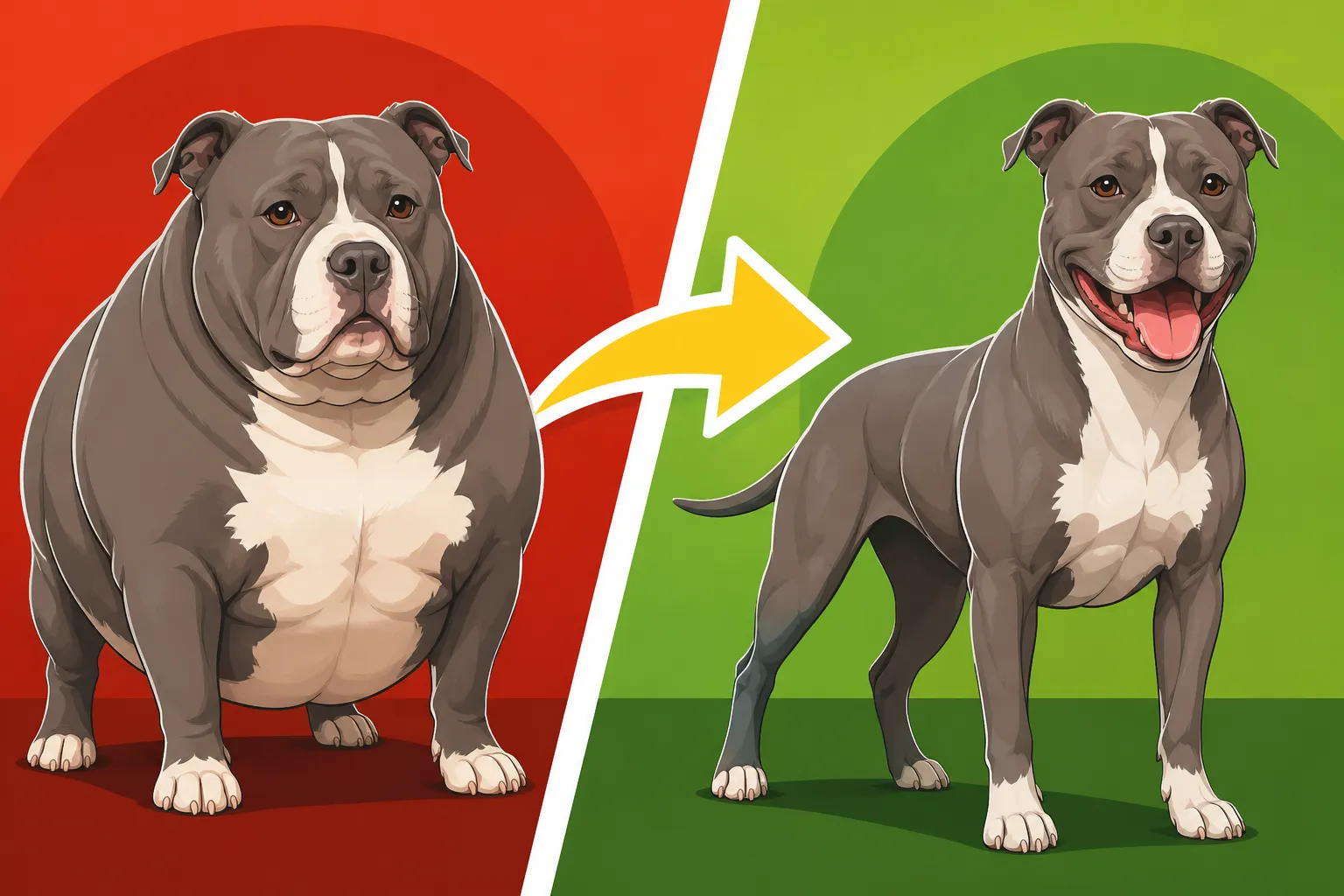
Imagine looking at a powerlifter versus a marathon runner. Both are strong, but their body compositions are vastly different. Your Pit Bull should ideally lean more towards the marathon runner's lean, defined athleticism, even with their natural muscle, rather than the heavily bulked-up look. If you run your hands over their sides and don't immediately feel those ribs under a thin layer of skin and muscle, or if that distinct 'tuck-up' at their flank when viewed from the side has started to disappear, then it's time to take notice. It's not about shaming, but about seeing past the love and truly assessing their physical state for their long-term health.
Common Pitfalls in Feeding Habits
Let's be honest, those big, expressive Pit Bull eyes are masters of persuasion, especially around meal times or when you’re snacking. A huge culprit in weight gain for any dog, but especially a Pit Bull, is simply overfeeding. This isn't usually intentional; it often comes from a place of love and wanting to provide. An extra scoop of kibble here, a few too many high-value training treats there, a bite of your dinner, or a constant "topping off" of the food bowl can quickly add up to hundreds of excess calories each day.
Many commercial dog foods, while convenient, are quite calorie-dense. If you're not carefully measuring your Pit Bull's meals, it's astonishing how much difference even a quarter-cup more than necessary can make over weeks and months. We tend to scoop rather than weigh, and those scoops are rarely consistent. High-fat treats or rich human foods, even in small amounts, can also push a dog past their caloric needs surprisingly fast. It’s easy to forget that a single piece of cheese or a bite of burger for a dog is equivalent to a human eating a significant portion of cake or a whole extra meal. Every little bit truly counts, especially for a dog whose metabolism might already be slightly slower than average.
Lifestyle and Metabolic Factors
Beyond just what goes into their bowl, a Pit Bull’s lifestyle and natural physiology play a huge role in their weight. First off, if your Pit Bull isn’t getting enough exercise, those calories have nowhere to go but to settle as fat. Pit Bulls are active, powerful dogs, and while they love a good cuddle on the couch, they need consistent, vigorous physical activity to maintain muscle mass and burn calories. Even a daily walk might not be enough if it's a slow potter around the block rather than a brisk, engaging session.
Then there are metabolic changes. As Pit Bulls age, just like us, their metabolism naturally slows down. A diet that kept them lean at two years old might lead to weight gain at seven or eight, even if their activity level hasn't drastically changed. Similarly, spaying or neutering can reduce a dog's metabolic rate, meaning they need fewer calories to maintain their weight. It's a common observation among owners that a dog might start packing on pounds within a few months of their spay or neuter surgery. This doesn’t mean you shouldn’t spay or neuter, but it does mean you need to be extra vigilant with their diet afterward. It's definitely something to consider, and you might find our article on Adjusting Pit Bull Food After the Neuter helpful. Sometimes, despite your best efforts, your Pit Bull might seem to be gaining weight even on the same amount of food, which is a sign to dig a little deeper, as discussed in Pit Bull Gaining Weight on the Same Food.
Assessing Your Pit Bull's Current Body Condition
Before you can start any weight management plan, you need an honest, objective assessment of where your Pit Bull stands right now. This isn't about guesswork; it's about a systematic approach to understanding their body condition.
The Rib and Waist Check
This is your most immediate and accessible tool for assessing your Pit Bull's weight. It involves both looking and feeling. First, run your hands along your Pit Bull's sides, over their rib cage. You should be able to feel their ribs quite easily, almost like the knuckles on your hand, without having to press hard. If you have to push to locate them, or if you can't feel them at all, that's a red flag. The ribs shouldn't be visible on a Pit Bull unless they are extremely lean or very active, but they should certainly be palpable with light pressure.
Next, look at your Pit Bull from above and from the side. From above, they should have a distinct "waist" – an hourglass shape where their body narrows behind the rib cage and before their hips. From the side, you should see an abdominal "tuck-up," meaning their belly line should gently slope upwards from their chest to their hind legs, rather than hanging low or being straight across. If they look more like a sausage from above, or if their belly line is parallel to the ground, they are likely carrying too much weight. Getting a good grasp on this tactile and visual check is critical, and we have a whole piece on Finding a Pit Bull's Waist Behind the Shoulders that goes into more detail. Don't be shy about getting hands-on; it's the best way to really know what's going on under all that wonderful muscle.
Using a Body Condition Score (BCS) Chart
To make this assessment a bit more standardized, veterinarians use something called a Body Condition Score (BCS) chart. This is typically a 1-9 scale, where 1 is emaciated, 9 is morbidly obese, and 4-5 is considered ideal. An ideal score means your Pit Bull has easily palpable ribs, a visible waist from above, and a clear abdominal tuck-up. They'll have good muscle definition, and their backbone might be felt with slight pressure.
If your Pit Bull scores a 6, their ribs are palpable but with difficulty, the waist is discernible but not prominent, and the abdominal tuck is minimal. A score of 7 means ribs are hard to feel, there's no obvious waist, and their abdominal tuck is absent. Beyond that, the signs become more pronounced, with obvious fat deposits and no visible tuck or waist. Using a BCS chart, often found online or at your vet's office, can help you objectively categorize your Pit Bull's current state and give you a target to aim for. It really takes the guesswork out of it and provides a common language to discuss your dog's health with professionals. For a deeper dive into this, check out Reading Pit Bull Body Condition Under Muscle.
| Body Condition Score | Appearance (Visual) | Feel (Palpable) | Action |
|---|---|---|---|
| 1-2 (Underweight) | Ribs, spine, pelvic bones prominent. No body fat. | Ribs, spine, pelvic bones very prominent; no fat cover; severe muscle loss. | Increase food intake; vet check for underlying issues. |
| 3 (Thin) | Ribs easily visible. Waist and abdominal tuck obvious. | Ribs easily palpable; minimal fat cover; waist and tuck apparent. | Slightly increase food if too lean; maintain if active. |
| 4-5 (Ideal) | Ribs easily felt, not visible. Clear waist, abdominal tuck. | Ribs palpable without pressing; thin fat cover; distinct waist and abdominal tuck. | Maintain current diet and exercise. |
| 6 (Overweight) | Ribs palpable with difficulty. Waist somewhat discernible. | Ribs palpable with some pressure; moderate fat cover; minimal abdominal tuck. | Start gentle calorie reduction; increase exercise. |
| 7-9 (Obese) | Ribs not palpable. No waist or tuck. Obvious fat deposits. | Ribs very difficult/impossible to feel; heavy fat cover; no waist/tuck. | Significant diet and exercise changes; vet supervision. |
Consulting Your Veterinarian
Even with your own careful assessment, nothing beats a professional veterinary opinion. Your vet can provide an expert BCS, confirm whether your Pit Bull is indeed overweight, and most importantly, rule out any underlying medical conditions that could be contributing to weight gain or making weight loss difficult. Conditions like hypothyroidism, for example, can lead to unexplained weight gain and lethargy. If your Pit Bull is gaining weight despite what seems like reasonable food intake, it’s always best to get a thyroid panel run, as detailed in Hypothyroidism and a Thinning Pit Bull Coat.
Your vet can also help you calculate a precise target weight and a realistic daily calorie goal for your Pit Bull, taking into account their age, current weight, ideal weight, activity level, and any health concerns. They can offer advice on specific food types or even prescribe a therapeutic weight-loss diet if necessary. Think of them as your primary coach in this journey. Their guidance is invaluable and ensures you're approaching weight management safely and effectively for your unique dog.
Crafting a Plan for Healthy Weight Loss
Once you know where you stand, it's time to put a clear, actionable plan into motion. Remember, this isn't about crash dieting; it's about sustainable, healthy changes.
Calorie Control and Food Choices
This is the cornerstone of any weight loss plan. You simply have to reduce the number of calories your Pit Bull consumes. The first step, ideally with your vet's help, is to determine a target daily calorie intake. This will typically be lower than their current intake and will be based on their ideal weight, not their current heavier weight. Once you have that number, you need to stick to it religiously.
This often means switching to a high-quality "light" or "weight management" dog food. These formulas are designed to be lower in calories but still provide all the essential nutrients your Pit Bull needs, often with added fiber to help them feel full. If switching food isn't an option or if your dog has sensitivities, you might just need to reduce the quantity of their current food. But here's the kicker: you absolutely must measure their food precisely. Ditch the scoop and invest in a digital kitchen scale. Weighing their kibble ensures you’re giving the exact amount every single time. A few extra grams a day adds up! When looking for suitable food, online retailers like Chewy offer a wide variety of weight management kibble, fresh food, and even prescription diets if recommended by your vet. For some, fresh food options, like those from Ollie, can also be tailored to calorie goals, though it's important to understand their specific caloric density.
Remember, slow and steady wins the race. Aim for a gradual weight loss, typically 1-2% of their body weight per week, to ensure it's healthy and sustainable. Losing weight too quickly can be detrimental to their health. Our guide on The Safe Rate for a Pit Bull to Slim Down offers more insights into this, and for consistency, we always recommend Two Measured Meals a Day for a Pit Bull.
Smart Snacking and Treats
Those extra treats and table scraps are often silent contributors to weight gain. The first, and often hardest, step is to completely eliminate human food handouts. No matter how much they beg, resist. For many Pit Bulls, the difference in calorie intake from just cutting out table scraps can be significant.
When it comes to training or just showing affection, you can still give treats, but be smart about it. Choose low-calorie options like small pieces of carrot, green beans, apple slices (without seeds), or even bits of cooked lean chicken breast. If you use commercial treats, break them into tiny pieces. A pea-sized piece of a high-value treat is often just as effective for training as a whole one, especially for a motivated Pit Bull. Remember to factor all treats into their daily calorie count. If you give a handful of training treats, you need to reduce their meal portion accordingly. It’s a bit like budgeting – every calorie spent on treats means fewer calories for their main meal. Finding Treats Small Enough for Repeated Pit Bull Training is key to making this work without adding unnecessary calories.
Increasing Appropriate Exercise
Diet is 80% of weight loss, but exercise is crucial for burning calories, building and maintaining lean muscle mass, and boosting metabolism. For an overweight Pit Bull, you need to start slowly and gradually increase the intensity and duration of their activity to prevent injury. Don’t go from zero to marathon runner overnight!
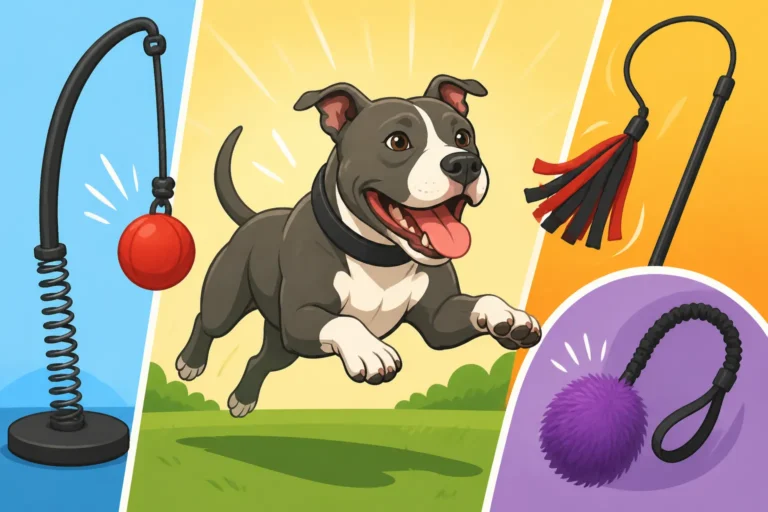
Begin with more frequent, longer, but still moderate-paced walks. Instead of one 30-minute stroll, try two 20-minute brisk walks. As their stamina improves and they start shedding pounds, you can introduce more vigorous activities. Think about incorporating short bursts of fetch in a secure yard, engaging them with a flirt pole (mindful of joint impact, especially if they are still heavy), or even swimming if they enjoy it. Mental stimulation through exercise is also fantastic. Activities like Indoor Trick Work for a Bored Pit Bull or structured play sessions can burn energy and engage their powerful minds. It's about finding activities they enjoy and building up their fitness safely. We have more information on Building a Pit Bull's Stamina Safely and even how to manage Pit Bull Exercise After a Skin Flare if that's a concern for your dog. Ultimately, your goal should be to meet or exceed The Daily Exercise a Pit Bull Actually Needs, tailoring it to their current fitness level. Retailers like Amazon can be great for finding durable toys, long lines, or even doggy backpacks to add a little extra challenge to their walks once they are fitter.
Maintaining a Lean Physique Long-Term
Getting your Pit Bull to a healthy weight is a fantastic achievement, but maintaining it is where the real ongoing commitment lies. This isn't a temporary diet; it's a permanent lifestyle change.
Consistent Monitoring and Adjustments
Weight management is a dynamic process, not a static one. You need to consistently monitor your Pit Bull's body condition and be prepared to make adjustments. Perform a rib and waist check at least once a month, ideally weekly. If you notice them starting to fill out again, even slightly, don't wait. Immediately dial back their food intake a tiny bit or increase their exercise. It's much easier to address a gain of a pound or two than to tackle five or ten.
Also, be aware that your Pit Bull's calorie needs might change throughout their life. As they get older, their metabolism will naturally slow further, and their activity levels might decrease. What kept them lean at six might make them gain weight at ten. Staying proactive and making small, regular tweaks to their diet and exercise routine is key to long-term success. Think of it as an ongoing conversation with your dog's body, where you're always listening and responding.
Engaging Mental Stimulation
A well-exercised body is important, but a well-exercised mind is equally crucial for a happy, balanced Pit Bull, especially when you might be limiting food. Mental stimulation can help reduce boredom, which sometimes manifests as excessive begging or destructive behaviors. Puzzle feeders are excellent for this, making meal times last longer and requiring your dog to "work" for their food. Chewy and Amazon both have a fantastic selection of durable puzzle toys that can stand up to a Pit Bull's enthusiasm.
Beyond puzzles, engage in regular training sessions, even just 5-10 minutes a day. Practicing basic obedience, learning new tricks, or even introducing scent work can be incredibly enriching. Scent Work as Indoor Pit Bull Exercise is a fantastic way to burn mental energy and engage their natural instincts, providing a healthy outlet that doesn't involve extra calories or high-impact exercise. A mentally stimulated Pit Bull is often a more content Pit Bull, less likely to feel deprived by their reduced food intake.
The Role of Regular Vet Check-ups
Your veterinarian remains a vital partner in maintaining your Pit Bull's lean physique. Regular annual or semi-annual check-ups (especially for older Pit Bulls) are crucial. These visits aren't just for vaccinations; they're an opportunity for your vet to assess your dog's overall health, including their weight and body condition. They can catch any subtle shifts you might have missed or identify early signs of conditions that could impact their weight or metabolism.
Don't hesitate to discuss your Pit Bull's diet and exercise regimen with your vet at every visit. They can offer insights, refine your calorie targets, and provide guidance on any changes you might need to make as your dog ages or their lifestyle evolves. A consistent partnership with your vet ensures that your Pit Bull's journey to a lean, healthy life is supported by expert knowledge every step of the way.
Disclaimer
This article is for general informational purposes only and does not constitute professional advice. Laws, prices and regulations vary by location and change over time. Consult a qualified professional for guidance on your specific situation.