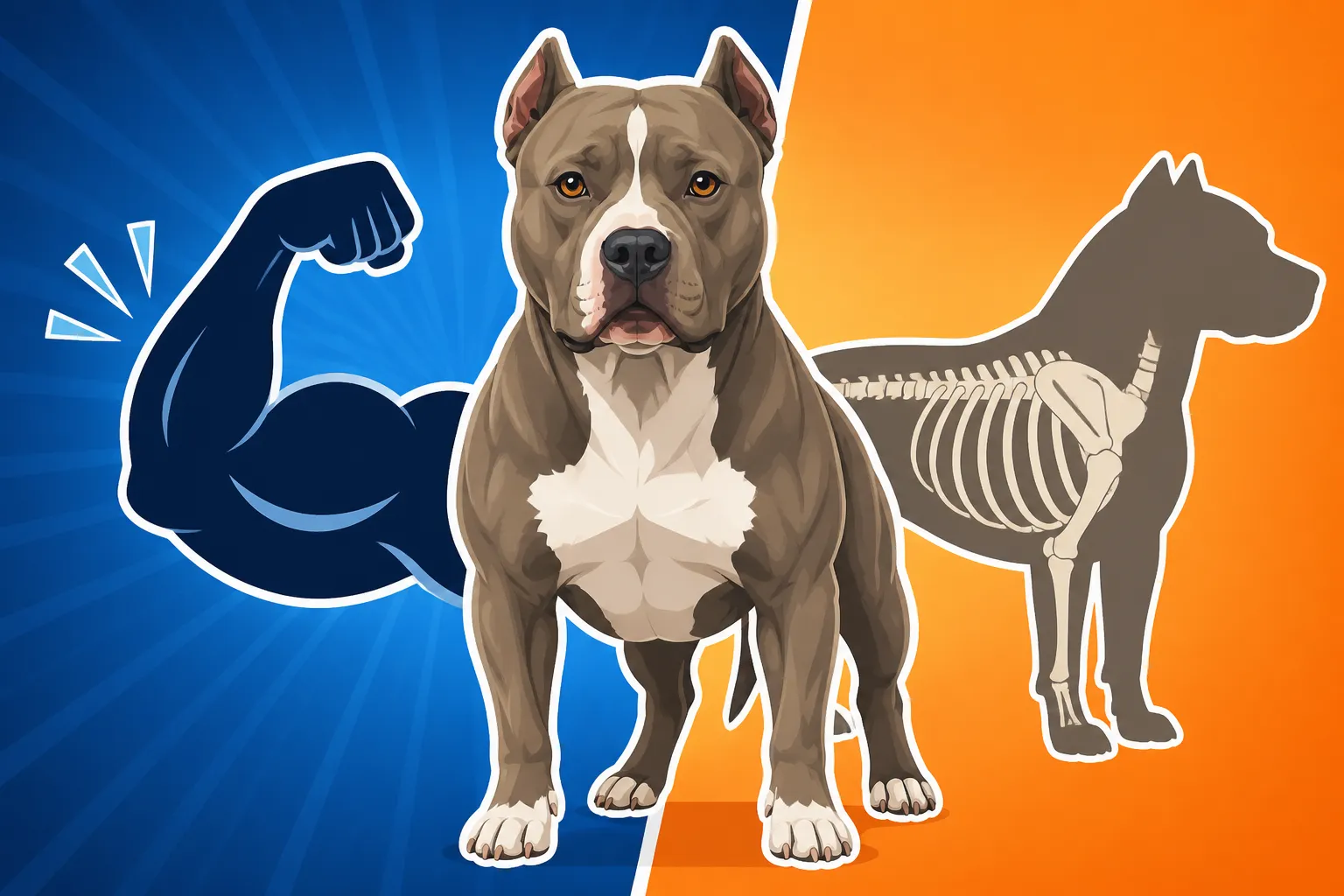
Why Muscle Makes Pit Bull Weight Hard to Judge
It can be incredibly tricky to tell if your muscular Pit Bull is at a healthy weight. Many owners look at their dog and think, "Wow, they're so solid and athletic!" but that dense muscle can actually mask excess fat, making it hard to see if your beloved companion is carrying a few too many pounds. This guide is here to help you cut through the confusion and learn how to accurately assess your Pit Bull's body condition, ensuring they stay lean, healthy, and happy for years to come.
The Unique Pit Bull Physique: Muscle vs. Fat
Pit Bulls are renowned for their powerful, athletic builds. They're often described as stocky, muscular, and compact, and it’s true that their genetics predispose them to a higher muscle mass compared to many other breeds. This fantastic musculature is part of what makes them such impressive and capable dogs, whether they're excelling in dog sports or simply romping in the yard. However, this very characteristic can be a double-edged sword when it comes to assessing their weight.
The Illusion of Lean Muscle
Imagine looking at a really strong human athlete. They might weigh more than someone of the same height who isn't as muscular, but they're clearly not overweight by any stretch of the imagination. The same principle applies to Pit Bulls. Their muscle density means that a "healthy" weight for a Pit Bull might be higher than for a similarly sized, less muscular breed. This can lead owners to underestimate the amount of fat their dog is carrying because the overall impression is one of strength and solidity, rather than softness or plumpness. You see that impressive chest and those strong legs, and your brain just naturally thinks "fit!"
It’s easy to get accustomed to your dog's appearance, especially if they've been with you since puppyhood. You might not notice the gradual accumulation of a few extra pounds over months or even years because the changes are so subtle. A Pit Bull carrying extra weight doesn't always look obviously "fat" in the way a long-haired, rounder breed might. Instead, the muscle might simply become less defined, or the waist might disappear imperceptibly. The challenge lies in recognizing these subtle shifts beneath that powerful exterior.
Why Pit Bulls Carry Their Weight Differently
Pit Bulls tend to carry their weight in a way that can obscure the typical visual cues of obesity. Unlike some breeds where excess fat might hang visibly, Pit Bulls often develop a thicker "barrel" shape, where the rib cage and abdomen fill out more broadly. Their naturally deep chests and broad shoulders mean they don't always have a sharply tucked waist, even when they are in peak condition. This anatomical feature, combined with their dense musculature, makes it harder to spot the early signs of weight gain. You might still be able to feel ribs, but they won't be as prominent as you'd expect on a truly lean dog.
Furthermore, a Pit Bull's coat, though short, can still mask a bit of extra padding. While not as concealing as a fluffy double coat, it can still smooth over the contours that would normally indicate a healthy tuck at the waist or definition over the hips. This is why a hands-on assessment is so crucial – relying purely on what you see can be misleading. Pit Bull Weight and Muscle on a Working Frame goes into more detail about how to balance this visual judgment with tangible assessment.
Common Mistakes in Visual Assessment
It's completely normal for even the most dedicated Pit Bull owners to misjudge their dog's weight. The visual cues we've learned from other dog breeds or even human health often don't translate perfectly to the Pit Bull physique. This can lead to a cycle where a slightly overweight dog is perceived as "just big-boned" or "really solid," rather than needing a little less on the dinner plate.
Overlooking the Subtle Signs of Excess Weight
One of the biggest mistakes is assuming that if you can still feel ribs, your dog is fine. While feeling ribs is a good starting point, the ease with which you feel them is the critical factor. On a truly lean Pit Bull, you should be able to feel individual ribs without much pressure, almost like feeling the knuckles on your hand. If you have to press firmly to feel them, or if there's a definite layer of cushioning over them, your Pit Bull is likely carrying too much fat, even if they still look quite muscular. This goes for the spine and hip bones too; they shouldn't protrude sharply, but they should be easily palpable without a thick layer of fat.
Another subtle sign that often gets missed is the disappearance of a discernible waistline when looking down at your dog from above. A healthy Pit Bull should have a slight hourglass shape, with a definite tuck behind the ribs. As they gain weight, this waistline widens and eventually disappears, making them look more like a "brick" or a "sausage" from a bird's-eye view. The belly might also start to sag slightly, rather than maintaining that athletic upward curve from the rib cage to the hindquarters. You might think, "Oh, they just had a big meal," but if it's a consistent feature, it's a red flag. For more on what to look for, check out Telling Muscle From Fat on a Pit Bull.
The "Big Dog" Mentality and Its Pitfalls
We often associate Pit Bulls with strength and robustness, and this can lead to a "big dog" mentality where we allow them to be heavier than is truly healthy. There's a common misconception that a heavier Pit Bull is a stronger or healthier one, or that they simply have a naturally larger frame that necessitates higher body weight. While they are indeed powerful dogs, optimal health and performance come from being lean and agile, not simply heavy. Carrying excess weight puts unnecessary strain on their joints, heart, and other organs, shortening their lifespan and increasing the risk of various health issues like Pit Bull Obesity and Joint Strain.
This mentality can also trickle down into how we feed them. Owners might mistakenly believe their active Pit Bull needs larger portions or constant access to treats to maintain their energy. While activity levels do play a role, the sheer power and muscle mass of a Pit Bull mean their energy requirements might be miscalculated, leading to overfeeding. Always remember that a lean body is better for a dog's long-term health and mobility, regardless of their impressive musculature. A proactive approach to managing their weight from a young age is essential, which you can learn more about in How Weight Multiplies the Load on Pit Bull Joints.
Practical Tools for Accurate Body Condition Scoring
Since visual assessment alone can be deceptive for a Pit Bull, it's vital to incorporate hands-on methods and objective scoring systems. These tools provide a much more accurate picture of your dog's true body composition, allowing you to make informed decisions about their diet and exercise.
The Importance of Hands-On Assessment
The best way to assess your Pit Bull's weight is to get your hands on them. This means feeling along their sides, back, and hips to check for fat deposits and muscle definition. Run your hands over their ribs:
- Ideal: You should be able to feel the ribs easily, almost like the knuckles on your hand, without seeing them prominently (unless they are taking a deep breath). There should be a minimal layer of fat.
- Overweight: You'll need to press a bit more firmly to feel the ribs, and there will be a noticeable layer of cushioning.
- Obese: It will be difficult or impossible to feel the ribs under a thick layer of fat.
Next, feel along their spine. In an ideal weight Pit Bull, you should be able to feel the individual bumps of the vertebrae, again, without them protruding sharply. If the spine feels like a smooth, padded ridge, that's a sign of excess fat. Finally, check the base of the tail. There shouldn't be large, squishy fat deposits around it. This hands-on method helps bypass the visual trickery of their muscular build. It's a quick check you can do every week while you're giving them a good scratch or after a bath, and it really helps you stay attuned to any subtle changes.
Understanding Body Condition Score BCS Charts
Body Condition Score (BCS) charts are an invaluable tool for objective assessment. These charts typically use a 1-to-5 or 1-to-9 scale, with 3/5 or 4-5/9 being the ideal range. They provide visual examples and descriptions of what a dog at each score should look and feel like. For a Pit Bull, aiming for the leaner end of the ideal spectrum is often best due to their dense muscle mass.
Here’s a simplified breakdown often used in a 5-point scale:
| BCS Score | Visual Description (Pit Bull Specific) | Palpation (Feel) Description | Action Required |
|---|---|---|---|
| 1 (Emaciated) | Ribs, spine, pelvic bones easily visible from a distance. Severe waist tuck. | No fat, prominent bones. | URGENT: Consult vet for weight gain. |
| 2 (Underweight) | Ribs, spine, pelvic bones easily visible. Accentuated waist tuck. | Ribs easily felt with minimal fat. | Increase food intake, consult vet. |
| 3 (Ideal) | Ribs not visible but easily palpable. Clear waist tuck. Abdominal tuck. | Ribs easily felt without pressure, minimal fat covering. Defined waist. | Maintain current diet and exercise. |
| 4 (Overweight) | Ribs difficult to feel under fat. Waist indistinct or absent. Abdominal tuck lost. | Noticeable fat covering ribs, spine. Waist fills out. | Reduce calories, increase exercise. |
| 5 (Obese) | Large fat deposits over ribs, spine, tail base. No waist. Distended abdomen. | Heavy fat covering, ribs very difficult/impossible to feel. No waist. | URGENT: Strict diet/exercise, vet help. |
Regularly using a BCS chart, perhaps one you find online (many vet sites or even pet food companies like Purina or Hills provide them), can help you calibrate your perception. It takes some practice, but once you get the hang of it, you'll be much more confident in your assessment. Remember, what looks "normal" for your Pit Bull might actually be slightly overweight if you rely solely on your eyes. Reading Pit Bull Body Condition Under Muscle offers further insights into this scoring system.
Regular Weigh-Ins and Their Context
While visual and hands-on assessments are crucial, regular weigh-ins provide objective data. Most vet clinics have scales you can pop into and use for free, or you can invest in a good quality pet scale for home use. The key is to track their weight consistently, perhaps once a month, and graph it. This allows you to spot trends – a slow, steady gain over several months is easier to identify when you have numbers to back it up.
However, a number on the scale alone isn't enough context. A Pit Bull's "ideal" weight can vary significantly based on their height, bone structure, and individual muscle mass. A 50-pound Pit Bull with a very lean, athletic build might be perfectly healthy, while a 50-pound Pit Bull of the same height, but with less muscle and more fat, would be overweight. This is why pairing weigh-ins with BCS is so powerful. Aim for a specific weight range that corresponds with their ideal BCS score. If your Pit Bull consistently maintains a BCS of 3/5 or 4-5/9 at a certain weight, that’s their healthy weight. If the scale starts creeping up, and their BCS goes to 4/5 or higher, it's time to adjust their diet or exercise. You can explore How Many Calories a Fifty Pound Pit Bull Needs for guidance on daily intake.
The Role of Diet and Exercise in Maintaining Ideal Weight
Once you've accurately assessed your Pit Bull's body condition, the next step is to ensure their diet and exercise regimen supports their optimal weight. This isn't just about weight loss; it's about maintaining a healthy, lean physique throughout their life, which is critical for their overall well-being and longevity.
Tailoring Diet for a Muscular Build
A Pit Bull's diet needs to be carefully managed to fuel their muscular build without leading to excess fat. This often means focusing on high-quality protein, moderate fat, and appropriate carbohydrates. Calorie counting, while tedious, can be incredibly effective. Don't just scoop; measure your dog's food precisely. Many owners underestimate how many calories are in a cup of kibble, and those extra few bits add up over time. If your Pit Bull is already overweight, you'll need to slightly restrict calories while ensuring they still get all essential nutrients. You might find a limited ingredient diet helpful if they also have sensitivities, which can often be found on platforms like Chewy or Amazon.
Consider a diet specifically formulated for active, muscular breeds, or even exploring fresh food options. Brands like Ollie offer pre-portioned, human-grade meals that can make calorie control easier and often provide a denser nutrient profile. Just remember to check their specific calorie content and adjust for your dog's activity level. Treats also count! Those little training rewards or evening snacks can quickly push a Pit Bull over their daily calorie limit. Opt for low-calorie training treats or even small pieces of vegetables like carrots or green beans as healthy alternatives. The Calorie Target for a Lean Pit Bull can help you set appropriate goals.
Exercise for Optimal Body Composition
Pit Bulls are naturally active and powerful dogs, and they thrive on consistent, appropriate exercise. This isn't just about preventing obesity; it's about maintaining that lean muscle mass and supporting joint health. Daily walks are a good start, but a Pit Bull often needs more than a stroll around the block. Think about incorporating activities that engage their strength and stamina, such as brisk jogging, hiking, or structured playtime with a flirt pole (safely, and with attention to joint impact).
Remember that exercise needs can change with age, weather, or health conditions. A younger, more energetic Pit Bull will require more intense and longer sessions than an older dog who might be showing early signs of arthritis. During hot weather, adjust exercise times to cooler parts of the day to prevent overheating. And if your Pit Bull is currently overweight, gradually increase their exercise to avoid injury. Consult your vet to create a safe and effective exercise plan tailored to your dog's individual needs. A well-conditioned Pit Bull, with a strong, lean body, is less prone to injury and more resilient overall. You can find more exercise ideas in The Daily Exercise a Pit Bull Actually Needs and Taking an Adult Pit Bull Running. Also, remember that Adjusting Pit Bull Food After the Neuter can be critical, as metabolism often slows down after spaying or neutering.
Maintaining a healthy weight for your Pit Bull is an ongoing commitment, but it’s one of the most impactful ways you can contribute to their long, happy life. By understanding their unique physique and utilizing proper assessment tools, you'll be well-equipped to keep them in prime condition.
Disclaimer
This article is for general informational purposes only and does not constitute professional advice. Laws, prices and regulations vary by location and change over time. Consult a qualified professional for guidance on your specific situation.