How Many Calories a Fifty Pound Pit Bull Needs
It can be incredibly frustrating to look at your strong, energetic 50-pound Pit Bull and wonder if you're truly feeding them enough—or maybe even too much. Their muscular build can sometimes hide subtle changes in weight, making it a real challenge to know if their current diet is meeting their unique needs. This guide will walk you through how to accurately assess and calculate the calorie requirements for your fifty-pound Pit Bull, helping you make informed decisions to keep them in peak condition.
Understanding Your 50-Pound Pit Bull's Baseline Calorie Needs
When we talk about a 50-pound Pit Bull, we're often picturing a well-muscled, adult dog that falls comfortably within the typical weight range for many American Pit Bull Terriers or American Staffordshire Terriers. This isn't a tiny dog, but it's not a giant breed either, and their calorie needs reflect that mid-range size combined with their inherent athleticism. The baseline for any dog's calorie needs is usually determined by something called their Resting Energy Requirement (RER) or Basal Metabolic Rate (BMR), which is the energy needed to simply exist—to breathe, digest, and maintain body temperature, even when completely at rest.
However, your Pit Bull isn't resting all day, are they? They're up, they're moving, they're playing, they're thinking (mostly about treats, let's be honest!). So, we adjust the RER with a multiplier to get their daily caloric intake, or Daily Energy Requirement (DER). For an average, healthy, adult dog that's spayed or neutered and maintaining its weight, this multiplier is often around 1.6 to 1.8 times the RER. If your 50-pound Pit Bull is unspayed or unneutered, or very active, that multiplier might jump to 2.0 or even 5.0 for a working dog.
Let's put this into perspective. A rough starting point for a dog's RER is typically calculated as (Body Weight in kg)^0.75 x 70. For a 50-pound Pit Bull, that's about 22.7 kg.
(22.7 kg)^0.75 ≈ 10.6
10.6 x 70 ≈ 742 calories for their RER.
Now, multiply that by our average healthy adult factor of, say, 1.6:
742 calories x 1.6 = 1187 calories per day.
This is a starting point. It's a number to help you gauge whether the food label's recommendation is in the right ballpark, but it's rarely a perfect fit because every dog is an individual. Don't worry if these numbers feel a bit abstract; the key is understanding that a 50-pound Pit Bull, especially one that's active, needs a good amount of fuel to power those impressive muscles and maintain their energy. This initial calculation helps you establish a foundation before you start making more granular adjustments based on their lifestyle. It’s a good moment to think about The Calorie Target for a Lean Pit Bull.
Factors That Influence a Pit Bull's Calorie Requirements
It would be wonderfully simple if every 50-pound Pit Bull needed the exact same number of calories, but that's just not how it works in the real world. So many variables come into play, and understanding them is crucial for tailoring your dog's diet.
Activity Level and Lifestyle
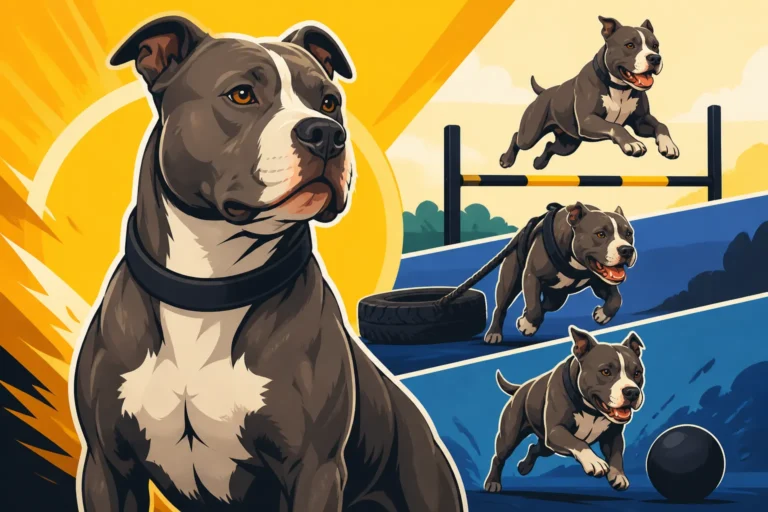
This is perhaps the biggest differentiator. Is your 50-pound Pit Bull a couch potato who enjoys a leisurely stroll around the block twice a day, or are they a high-energy dog that trains for dog sports, goes on long hikes, or has intense play sessions in the yard every day? A dog that's consistently on the go, building muscle, or engaging in strenuous activity will burn significantly more calories. Think about a Pit Bull that's regularly involved in flirt pole games, tug-of-war, or even just long, brisk walks—their body is constantly expending energy. Conversely, a less active dog will need fewer calories to prevent unwanted weight gain. You want to be careful not to feed a high-performance diet to a low-activity dog, as that's a quick route to packing on the pounds.
Age and Life Stage
A young, growing Pit Bull puppy will have different, often higher, caloric needs per pound of body weight compared to a mature adult. They're literally building their entire body, and that takes a tremendous amount of energy. However, once they reach full maturity, usually around 12-18 months for Pit Bull types, their growth rate slows, and their calorie requirements will stabilize. On the other end of the spectrum, a senior Pit Bull, say over the age of seven or eight, may start to slow down. Their metabolism can decrease, and their activity levels might naturally wane. An older dog will often need fewer calories to maintain their weight, but they might also benefit from specific senior diets that focus on joint health and easier digestion. It’s important to adjust their intake accordingly, as many senior Pit Bulls can become prone to Pit Bull Obesity and Joint Strain.
Reproductive Status and Health Conditions
A Pit Bull that is intact (not spayed or neutered) typically has a slightly higher metabolic rate than one who has been altered. This is because their bodies are maintaining reproductive hormones. If you have a female Pit Bull who is pregnant or lactating, her calorie needs will skyrocket—sometimes two to three times her normal intake, depending on the stage of pregnancy or the size of her litter. This is an extreme but important example of how reproductive status impacts diet.
Beyond that, underlying health conditions can drastically alter calorie requirements. A Pit Bull dealing with Hypothyroidism and a Thinning Pit Bull Coat, for example, might have a slower metabolism and gain weight easily even on a normal diet. Conversely, a dog recovering from surgery, battling an infection, or dealing with chronic allergies might require more calories to support healing and immune function. Even something as common as chronic Pit Bull Ear Infections and What Drives Them can contribute to systemic stress, though its direct caloric impact might be small. If your Pit Bull starts gaining weight on the same amount of food, it might be A Pit Bull Gaining Weight on the Same Food, and it's always worth a conversation with your vet.
Practical Steps for Calculating and Adjusting Your Pit Bull's Diet
Calculating and adjusting your Pit Bull's diet isn't a one-and-done deal; it's an ongoing process of observation and fine-tuning. Here’s how you can approach it systematically to ensure your 50-pound companion is always getting exactly what they need.
Consult Your Veterinarian
Before making any significant dietary changes, always, always, have a chat with your vet. They can provide personalized advice based on your Pit Bull's specific health history, age, and any existing conditions. Your vet can also help you determine an ideal body condition score for your dog, which is more accurate than just relying on weight alone. They might even recommend specific therapeutic diets if your Pit Bull has health issues like kidney disease or severe allergies. This professional guidance is invaluable and ensures you're on the right track from the start.
Read Food Labels and Calculate Caloric Density
Every reputable dog food brand will list the caloric content on its packaging, usually in "kcal per cup" or "kcal per kg." This is crucial information, as it tells you how many calories are in a given volume or weight of food. Dry kibble can vary wildly in caloric density; some "light" formulas might have fewer calories, while performance-oriented foods can be much denser. Wet food generally has fewer calories per gram due to its high water content. Raw or home-cooked diets require even more careful calculation, often with the help of a veterinary nutritionist, to ensure they are nutritionally complete and calorically appropriate.
Let's say your 50-pound Pit Bull needs approximately 1200 calories a day. If your chosen kibble contains 400 kcal per cup, then your dog would need 3 cups of that food per day. If it's a denser food at 500 kcal per cup, they'd only need 2.4 cups. This is where precise measurement comes in.
Measure Food Accurately
Guessing is the enemy of accurate feeding. I've seen so many well-meaning owners scoop food with a coffee mug or a generic plastic cup, thinking they're being consistent. But cup sizes vary, and a "cup" of kibble can mean anything depending on how packed it is. Invest in a proper kitchen scale to weigh your dog's food. This is especially important for Why a Pit Bull Ration Should Be Weighed. Most kibble bags list the caloric content by weight (e.g., 3750 kcal/kg), which makes weighing incredibly precise. If you're using cups, use a standard measuring cup, specifically one designed for dry ingredients, and level it off. For brands like Ollie that deliver fresh, pre-portioned meals, this step is often simplified as they tailor servings to your dog's profile. You can find scales and precise measuring cups easily on platforms like Amazon or Chewy.
Monitor Body Condition Score (BCS)
This is more important than the number on the scale. The Body Condition Score (BCS) helps you assess your Pit Bull's fat reserves and muscle mass. You want to be able to easily feel, but not necessarily see, their ribs. They should have a visible waist when viewed from above and a tuck-up (where the belly recedes) when viewed from the side. If their ribs are sticking out, they might be too thin. If you have to press hard to feel the ribs, they're likely carrying too much weight, even if they look "muscular." Reading Pit Bull Body Condition Under Muscle can be tricky, but regular checks will make you an expert on your own dog.
Here's a simplified table for BCS:
| Score | Appearance | Ribs | Waist/Tuck-Up |
|---|---|---|---|
| 1 | Emaciated: Ribs, spine, pelvic bones visible from distance | Prominent | Severe abdominal tuck |
| 2 | Very Thin: Ribs easily visible | Easily seen | Marked abdominal tuck |
| 3 | Thin: Ribs easily palpable, minimal fat | Easily felt | Obvious abdominal tuck |
| 4-5 | Ideal: Ribs palpable, no excess fat | Palpable | Well-proportioned, slight tuck |
| 6 | Overweight: Ribs difficult to feel, fat over lumbar area | Hard to feel | Absent waist |
| 7 | Obese: Ribs very difficult to feel, heavy fat deposits | Very hard to feel | No waist, distended abdomen |
| 8-9 | Severely Obese: Massive fat deposits | Cannot feel | Markedly distended abdomen |
Aim for a 4 or 5. If your Pit Bull is consistently a 6 or higher, it's time to Trimming a Heavy Pit Bull Back to Lean and discuss calorie reduction with your vet.
Make Gradual Adjustments
If you need to adjust your Pit Bull's calorie intake, do so gradually. Drastic changes can upset their digestive system. Reduce or increase their food by about 10-15% over a week or two, then monitor their weight and BCS. Give it a few weeks to see the effect before making another adjustment. Patience is key. Remember, the goal is not just weight, but overall health and body condition. This is especially true if you are aiming for Feeding a Pit Bull to Keep Muscle Without Fat.
The Importance of Quality Food and Monitoring Weight
Beyond just the raw calorie count, the quality of the food you provide and your consistent monitoring are paramount to your 50-pound Pit Bull's long-term health. A calorie is not just a calorie if it's coming from an unbalanced, low-quality source.
Choosing the Right Food Type
For a muscular, active Pit Bull, a diet rich in high-quality protein is usually beneficial. Look for foods where a named meat source (e.g., "chicken meal," "lamb") is among the first few ingredients. While grain-free diets have been popular, recent research suggests they might not be suitable for all dogs and could be linked to certain heart conditions in some breeds. Discuss this with your vet. Many excellent dog foods exist, from traditional kibble to fresh-cooked options. Brands available on Chewy or from services like Ollie often provide detailed nutritional information and ingredient sourcing. Don't be swayed by marketing terms alone; scrutinize the ingredient list.
If your Pit Bull is prone to allergies, a limited ingredient diet might be beneficial, often found with novel protein sources like venison or duck. These diets can help identify and avoid triggers, leading to better skin and coat health. An Eight Week Food Trial on an Itchy Pit Bull can be a valuable process under vet guidance.
Consistent Monitoring and Record Keeping
Keep a small logbook or use an app to track your Pit Bull's weight (if you can get them on a scale), their daily food intake, and any changes in their activity level or behavior. Note down when you've made adjustments to their food. This kind of diligent record-keeping can be incredibly helpful when discussing their progress with your veterinarian. A slight fluctuation in weight is normal, but a consistent upward or downward trend over several weeks signals that it's time for a dietary tweak.
For instance, if your Pit Bull has recently been spayed or neutered, their metabolism might shift. Adjusting Pit Bull Food After the Neuter is a common scenario, and having a record of their pre- and post-op food intake and weight can help you make appropriate reductions to prevent weight gain. Similarly, if you have an older Pit Bull, you might notice them slowing down, potentially leaving food in the bowl. This could be a sign you need to consider An Old Pit Bull That Leaves Its Bowl and adjust their diet to something more palatable or calorically appropriate for their age.
Ultimately, feeding your 50-pound Pit Bull the right amount of calories is about finding that sweet spot where they maintain a healthy weight, possess boundless energy for their favorite activities, and their coat shines with vitality. It takes a bit of work and attention, but your strong, happy Pit Bull is absolutely worth it.
Disclaimer
This article is for general informational purposes only and does not constitute professional advice. Laws, prices and regulations vary by location and change over time. Consult a qualified professional for guidance on your specific situation.