Spotting Heat Trouble in a Working Pit Bull
Heat trouble in working Pit Bulls is identified by spotting early behavioral shifts, excessive panting, and respiratory distress.
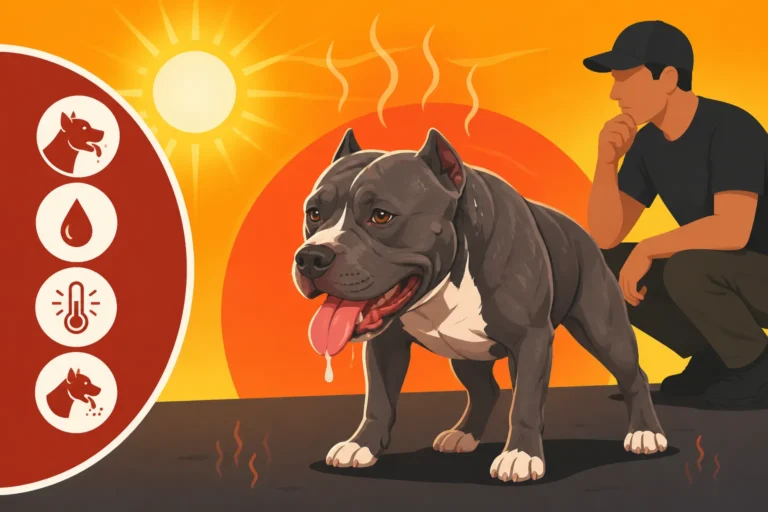
Heat trouble in working Pit Bulls is identified by spotting early behavioral shifts, excessive panting, and respiratory distress.
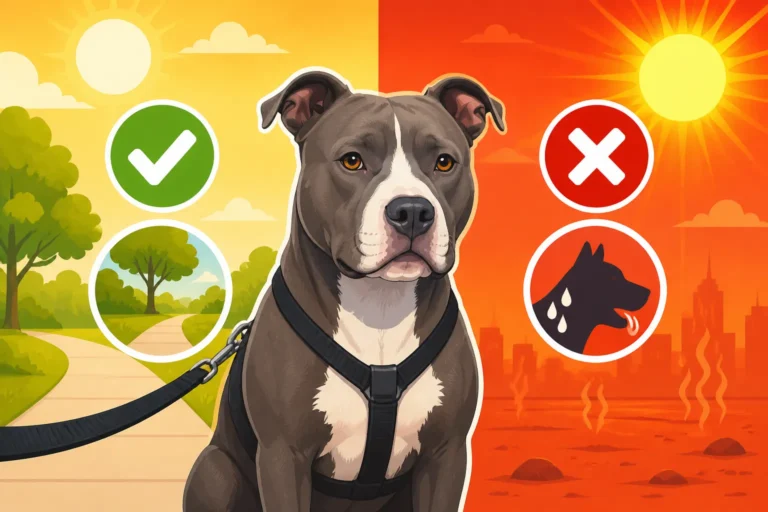
Walking a Pit Bull above eighty degrees risks severe paw pad burns and fatal heatstroke from asphalt reaching up to 150 degrees.
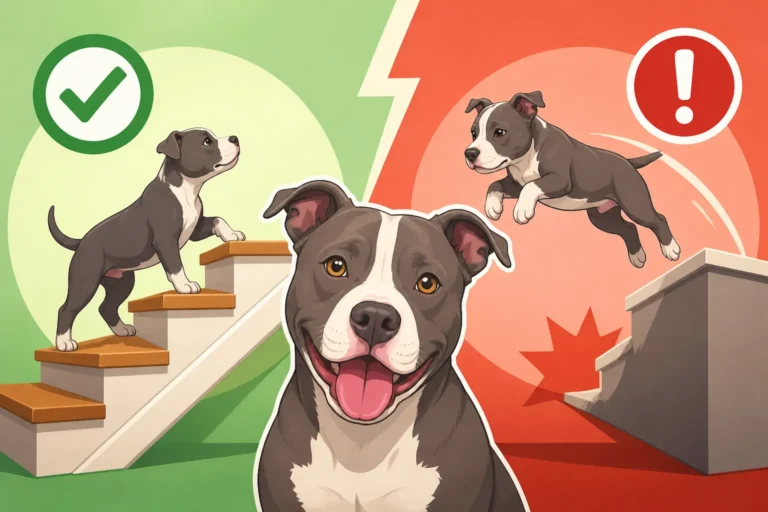
Pit Bull growth plate safety guidelines explain when stairs and jumping are safe for young joints between eight and eighteen months.
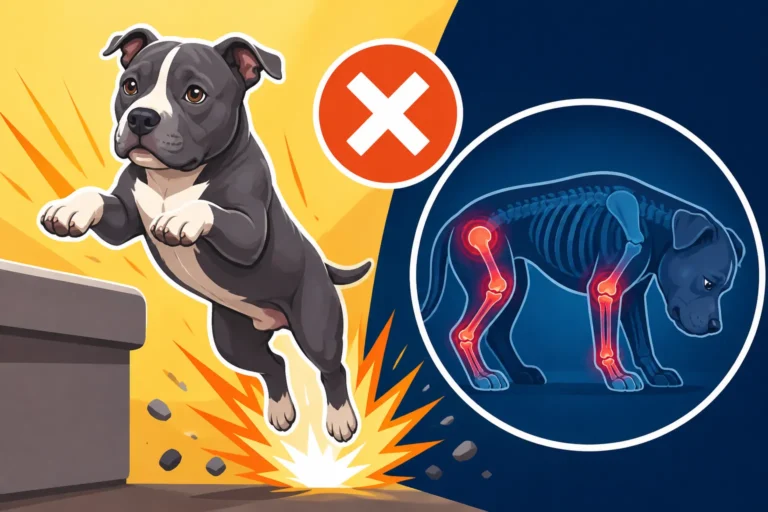
Hard jumping damages soft growth plates in young Pit Bulls until eighteen months, risking permanent joint deformities and arthritis.
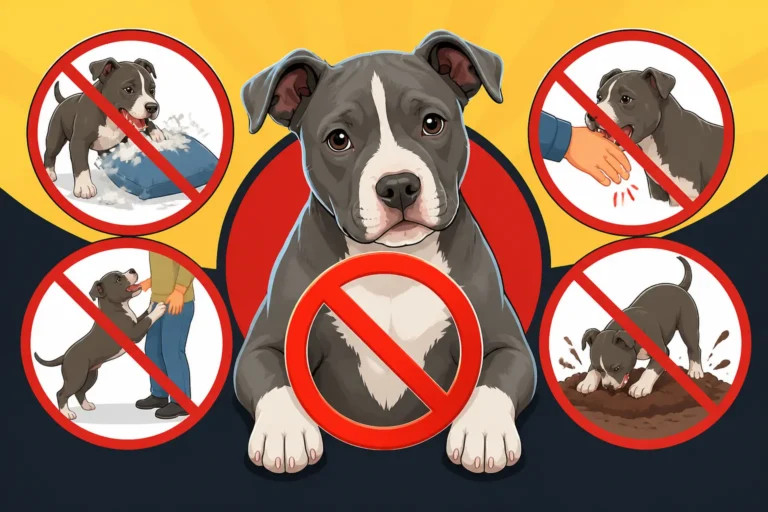
Pit Bull puppy joint protection rules explain how avoiding high impact jumping and hard landings prevents skeletal damage.

Pit Bull swimming challenges and life jacket selection help owners keep heavy muscular dogs safe in deep water.

Pit Bull swimming habits depend on genetics and dense muscle mass, which affect buoyancy, fatigue risks, and comfort in water.
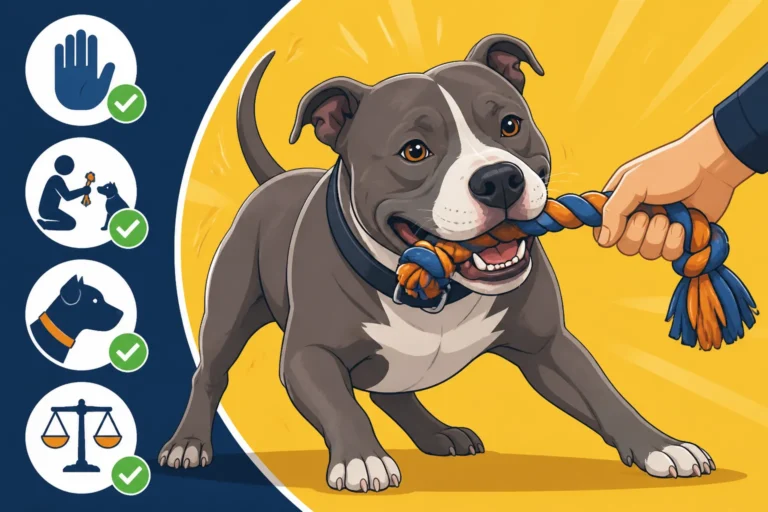
Tug taps a dog’s natural prey drive, so clear rules prevent over-arousal, reduce accidental nips and teach impulse control in a strong, tenacious breed.
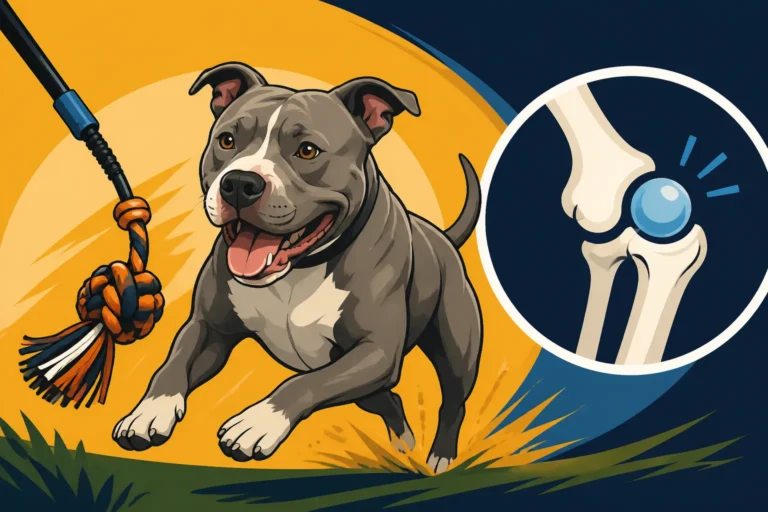
Flirt pole exercise for Pit Bulls explains joint stress risks, cranial cruciate ligament injuries, and methods for protecting canine knees.
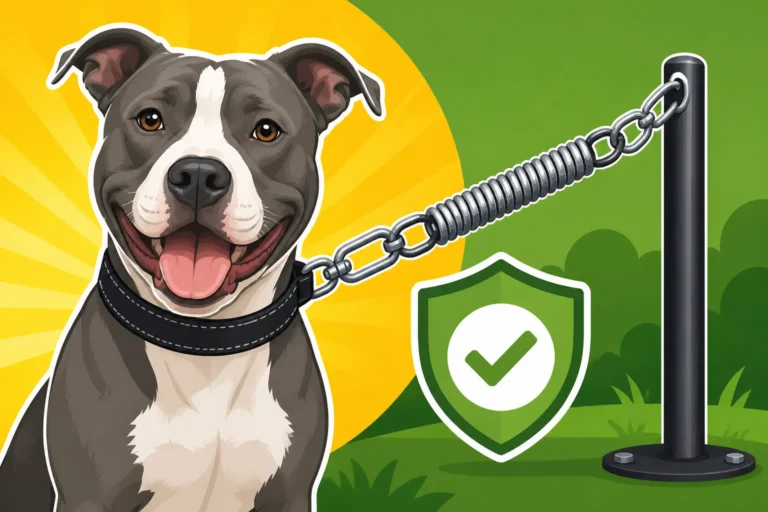
Springpole setup for a Pit Bull provides resistive pulling exercise that builds endurance in jaw, neck, and shoulder muscles safely.