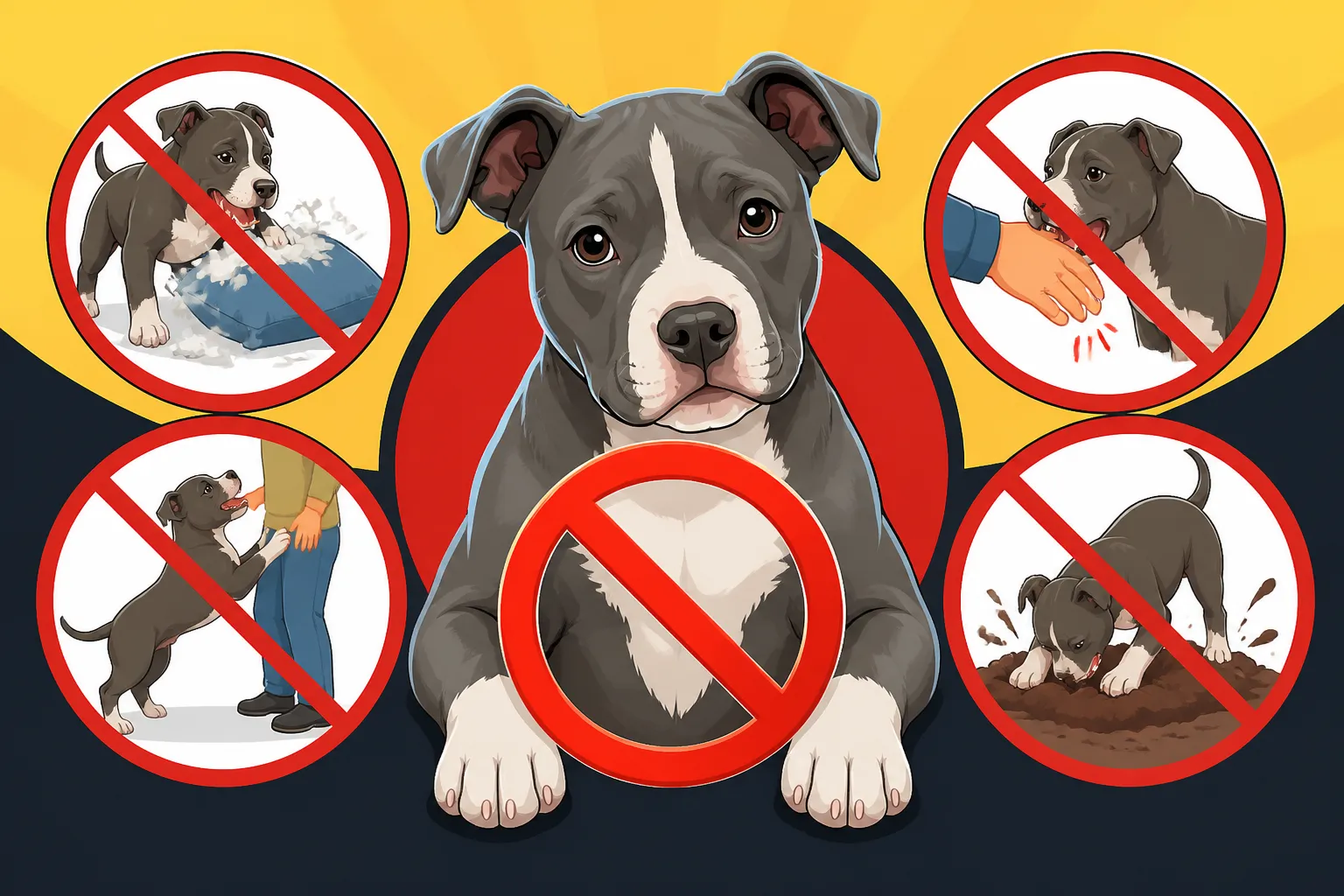
What a Pit Bull Under a Year Should Not Do
It's incredibly exciting to bring home a Pit Bull puppy, isn't it? You see all that boundless energy, that eagerness to please, and you just want to get out there and explore the world with them. But so often, in our enthusiasm, we inadvertently push our young pups too hard, too fast, or expose them to situations that aren't quite right for their developing bodies and minds. This guide is all about helping you understand the crucial "don'ts" for your Pit Bull puppy under one year old, ensuring they grow into a healthy, well-adjusted adult without unnecessary risks.
High-Impact Activities and Joint Health
One of the biggest pitfalls for enthusiastic Pit Bull owners is over-exercising a growing puppy. Their bodies are still developing, and those powerful muscles and strong wills can mask underlying joint vulnerability. What might seem like harmless fun can actually set the stage for serious orthopedic problems down the line. We want to protect those precious joints!
Avoiding Excessive Jumping and Hard Landings
You know how Pit Bulls love to launch themselves into the air? Whether it's to catch a toy, greet you, or just revel in their own exuberance, jumping is a common behavior. However, repeated, high-impact jumping on hard surfaces can be detrimental to their growing joints. Imagine the shock absorbing through soft cartilage plates and developing bone structure. It's like asking a child to lift weights meant for an adult; their body just isn't ready.
Think about a common scenario: you're playing fetch with a bouncy eight-month-old Pit Bull in the backyard. Every time they leap to catch the ball mid-air and then land with a thud on concrete or even hard-packed dirt, that impact echoes through their knees, hips, and shoulders. Their growth plates, which are areas of cartilage in young dogs where new bone is formed, are still open and quite fragile. A hard landing can cause microtraumas or even more significant damage to these plates, leading to abnormal bone growth or even conditions like osteochondritis dissecans (OCD) in the shoulder or elbow. It's not about stopping all jumping, but being mindful of frequency, height, and landing surface. Keep jumping to a minimum, especially on hard surfaces. Try to encourage games that keep all four paws on the ground more often, or choose soft grass for any retrieves that might involve a little air time. This proactive care can significantly reduce the risk of Pit Bull Joint and Ligament Injuries later on.
Limiting Repetitive, High-Force Exercise
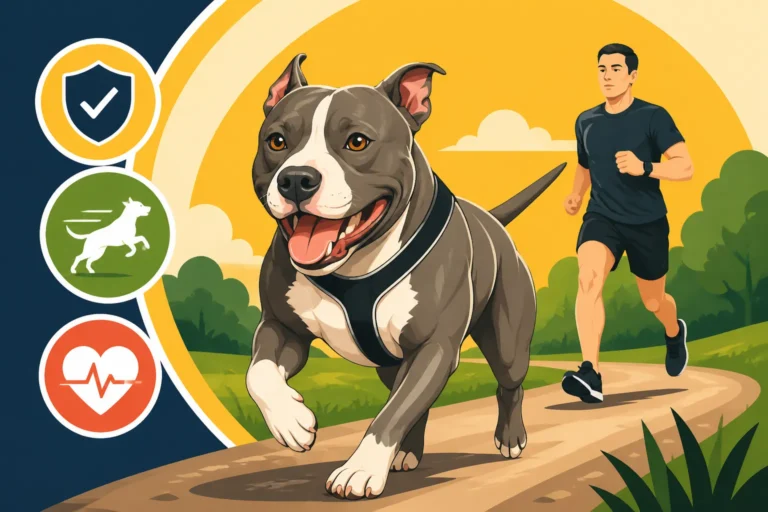
Pit Bulls are naturally athletic and possess incredible stamina, which is a double-edged sword when they're young. It's tempting to take your six-month-old on long runs or bike rides, thinking you're doing them good, but their skeletal system isn't mature enough for that kind of sustained, high-force activity. Their bones and ligaments are still strengthening, and repetitive stress can lead to inflammation and damage.
For example, a ten-month-old Pit Bull pulling you along on a leash for miles, or engaging in intense, prolonged tug-of-war sessions where they brace and pull with all their might, is putting immense strain on their developing body. While tug can be a fantastic enrichment tool, it needs to be managed carefully with a young dog, focusing on controlled sessions and not excessive resistance. Marathon running on pavement, intense agility drills that involve tight turns and jumps, or even lengthy, unstructured play sessions with other boisterous adult dogs can be too much. Instead, opt for shorter, more frequent play sessions that allow for bursts of energy followed by rest. Think about varied terrains too – a mix of grass, soft trails, and gentle slopes, rather than constant, jarring pavement. Your goal is to build fitness gradually, not push them to their physical limits before they're fully grown. How Hard a Growing Pit Bull Should Work is a question every owner should carefully consider.
Mindful Stair Climbing and Roughhousing
Stairs can be a real challenge for puppies, especially for a muscular, broad-chested breed like a Pit Bull. Their growing bodies aren't designed for the repetitive up-and-down motion that puts stress on their elbows, hips, and spine. While occasional use isn't typically an issue, living in a multi-story home where they navigate stairs many times a day can be problematic.
Imagine your four-month-old Pit Bull puppy barreling down a flight of stairs, stumbling and catching themselves. This kind of impact and twisting motion can be particularly hard on their developing structure. Even going up, the pushing motion can strain their hindquarters. It's often recommended to carry smaller puppies up and down stairs, or block access where possible, especially during their most rapid growth phases. As they get a bit older, say around six to ten months, teach them to go up and down slowly and deliberately on a leash, rather than allowing them to rocket through it. Similarly, while playful roughhousing with you or other dogs is natural, uncontrolled, intense wrestling can also lead to accidental twists, strains, or falls that impact joints. Always supervise play, stepping in if it gets too intense or if your puppy is showing signs of discomfort or fatigue. This is especially true if you have a larger, older dog who might not understand the limits of a younger, still-developing pup. Stairs and Jumping in a Growing Pit Bull provides more detailed guidance on protecting your puppy's joints.
Over-Socialization and Dog-Park Pitfalls
"Socialize, socialize, socialize!" is excellent advice for a puppy, but it's often misunderstood, leading owners to overwhelm their young Pit Bulls with too many, or the wrong kind, of interactions. Proper socialization is about quality, not just quantity, and ensuring positive, safe experiences that build confidence, not fear or reactivity.
Overwhelming Puppy Interactions
It's natural to want your Pit Bull puppy to be friendly with everyone and everything. You might be tempted to take them to every public place possible, let every stranger pet them, and throw them into every doggy playgroup. However, an overdose of uncontrolled or negative interactions can actually backfire, leading to anxiety, fear, or even reactivity later on. A puppy needs to feel safe and secure during these exposures, not overwhelmed.
Think of a bustling downtown street or a crowded pet store: a three-month-old Pit Bull puppy, barely out of its critical socialization window, might be bombarded with loud noises, strange smells, and countless hands reaching out. While some pups might take it in stride, for others, this can be incredibly stressful, creating a negative association with new experiences. Instead of a free-for-all, focus on controlled, positive exposures. Let them observe new sights and sounds from a safe distance, rewarding calm behavior with high-value treats. Allow them to approach people and dogs on their own terms, respecting their space if they seem hesitant. The goal is to build positive associations, not just expose them to as many things as possible. A huge part of The Weeks That Shape a Pit Bull Puppy is about curating these early experiences carefully.
The Risks of Unsupervised Dog Parks
Dog parks can be a minefield for young Pit Bulls. While the idea of off-leash play sounds appealing, the reality is often a mixed bag of unknown dogs, varying play styles, and owners who may not be supervising their pets. For a developing Pit Bull, who is still learning appropriate social cues and bite inhibition, this environment can be detrimental.
Imagine your energetic seven-month-old Pit Bull entering a dog park and immediately being mobbed by a group of older, bigger dogs with rougher play styles, or perhaps encountering an unsocialized dog that snaps or corrects them harshly. These negative experiences can easily lead to fear, defensiveness, or even the development of undesirable behaviors. Furthermore, young Pit Bulls can be very physical in their play, and without proper guidance, they might accidentally play too hard with smaller or more timid dogs, leading to conflicts. It's often far better to arrange play dates with known, well-socialized adult dogs who have a calm temperament and can teach your puppy appropriate manners. If you do go to a dog park, choose off-peak hours when it's less crowded, and leave immediately if the dynamics feel off. Your young pup needs to learn how to interact safely and appropriately, and a chaotic dog park rarely provides that structured learning environment. For more on positive interactions, check out Socializing a Pit Bull Puppy Thoroughly.
Learning Appropriate Play Styles
Pit Bulls have a distinctive play style that can be quite robust and physical. They often enjoy wrestling, body-slamming, and using their mouths in play. While this is natural for them, it's crucial for puppies to learn what's appropriate and what's too much, especially with different types of dogs and people. This is where you, as their owner, come in to teach them boundaries.
A young Pit Bull might not realize their strength and could easily overwhelm a smaller dog or even a timid human during play. For instance, a four-month-old Pit Bull puppy might nip a bit too hard during play with a human hand, or jump up enthusiastically, knocking over a child. This isn't malice; it's simply a lack of understanding boundaries and bite inhibition. You need to consistently redirect mouthy play onto appropriate chew toys and teach them to keep all four paws on the floor when greeting. When playing with other dogs, observe their interactions closely. If your puppy is constantly pinning another dog, ignoring warning signals, or playing too roughly, it's time to intervene and give them a break. Teaching them that "play stops when you get too rough" is a vital lesson. This helps them develop a "soft mouth" and understand social cues, which is critical for future positive interactions. For guidance on appropriate mouth manners, see Pit Bull Bite Inhibition and Mouthing.
Intense Training and Early Specialization
While Pit Bulls are incredibly intelligent and eager to please, pushing them into overly intense or specialized training too early can do more harm than good. Their attention spans are still developing, and their bodies are not yet ready for the repetitive strain or cognitive demands of advanced disciplines. Patience and age-appropriateness are key.
Pressure to Perform Complex Tasks
Puppies, regardless of breed, learn best through short, fun, positive reinforcement-based sessions. Asking a five-month-old Pit Bull to perform intricate obedience routines, solve complex puzzle feeders for extended periods, or hold a 'stay' for minutes on end can be frustrating for both of you. Their brains are still developing, and expecting adult-level focus is unrealistic.
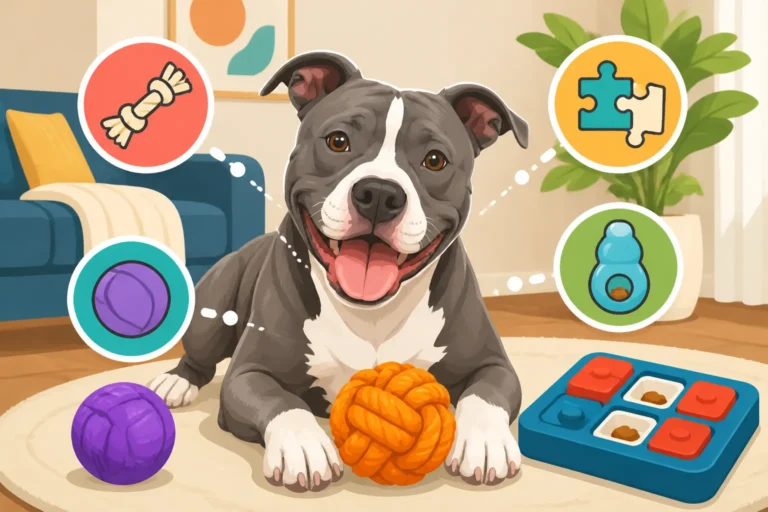
Consider trying to teach a young child calculus before they've mastered basic addition. It's similar for a puppy. While they can certainly learn basic commands like sit, stay (for short durations), come, and down, and enjoy simple scent games, demanding too much too soon can lead to burnout or a negative association with training. Training should be a joyful bonding experience, not a chore. Keep sessions brief – five to ten minutes, multiple times a day is far more effective than one long, grueling session. Celebrate small successes and end on a positive note, even if it's just for something simple they know well. This builds a strong foundation for future learning. Remember, consistency over intensity is the mantra for puppy training. For some great ideas on keeping them engaged, look into Puzzle Feeders a Pit Bull Cannot Destroy.
Early Weight Pulling or Agility Training
Given their powerful build, some owners might be tempted to introduce their Pit Bull puppies to demanding sports like weight pulling or high-level agility early on. While these can be fantastic outlets for adult Pit Bulls, they are absolutely not appropriate for a dog under a year old. The stress these activities put on developing joints and muscles is immense and can lead to irreversible damage.
Imagine an eight-month-old Pit Bull strapping into a harness to pull a significant weight. The sheer force exerted, the sudden starts, and the deep bracing can cause serious damage to still-forming hip and elbow joints, as well as strain ligaments and tendons that aren't fully mature. Similarly, asking a young pup to jump over high hurdles, weave quickly through poles, or navigate steep A-frames in agility puts incredible pressure on their skeletal system. Growth plates don't typically close until 12-18 months of age, sometimes even later for larger individuals within the Pit Bull type. Engaging in these high-impact, high-stress activities before full skeletal maturity is a recipe for orthopedic disaster, potentially leading to conditions like Pit Bull Hip Dysplasia Showing at One to Two Years or Cruciate Ligament Tears in a Muscular Pit Bull. Save these incredible sports for when your Pit Bull is at least 18 months to two years old, and always consult with a veterinarian or experienced canine sport professional before starting.
Forcing Prolonged Focus and Obedience
While a well-behaved Pit Bull is a joy, demanding constant, unwavering obedience from a puppy can hinder their natural development and curiosity. Puppyhood is a time for exploration, discovery, and learning about the world around them. While basic manners are essential, expecting your young Pit Bull to be a perfect robot often leads to frustration for both of you.
For example, a seven-month-old Pit Bull out on a walk might be overwhelmed by new smells, sights, and sounds. Constantly correcting them for pulling slightly or sniffing a lamppost for too long can suppress their natural instincts to explore. It's important to differentiate between teaching polite leash manners and stifling their innate drive to experience the world. Similarly, expecting them to maintain a perfect heel for an entire walk before they've mastered short bursts of focus in calm environments is asking too much. Allow for "sniffari" walks where they can explore their environment, and intersperse these with short, fun training bursts. Use a comfortable harness, perhaps from a brand like Amazon or Chewy, that distributes pressure evenly across their chest rather than their throat, making walks more pleasant for everyone. The goal is a balanced dog who is confident and engaged, not one who is constantly trying to avoid correction.
Inappropriate Chews and Dental Risks
Pit Bull puppies love to chew—it's how they explore their world, relieve teething discomfort, and entertain themselves. But not all chews are created equal, and giving a young Pit Bull the wrong type of chew can lead to serious dental injuries, choking hazards, or even digestive issues. We want happy, healthy teeth, not emergency vet visits.
Hard Chews That Damage Developing Teeth
It's tempting to grab the hardest, most durable chew you can find, thinking it will stand up to your Pit Bull's powerful jaws. However, for a puppy, especially one still losing its baby teeth or whose adult teeth are just settling in, extremely hard chews can cause fractures, chips, or even avulsions (teeth pulled out). Their teeth and jaw structure are still developing and aren't as robust as an adult's.
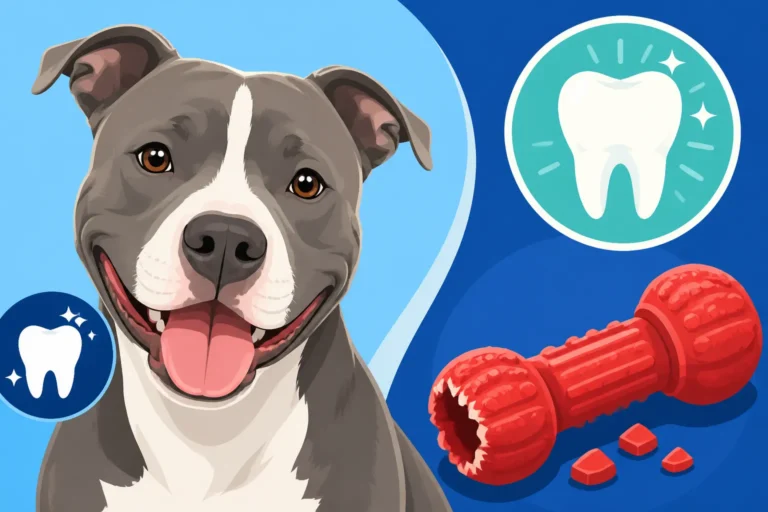
Think about dense deer antlers, real bones (cooked or raw), ice cubes, or even some very rigid nylon chews. While an adult Pit Bull might handle some of these with caution, a six-month-old puppy chewing aggressively on an antler can easily splinter it, leading to sharp edges that cut gums, or crack a fragile molar. A fractured tooth is incredibly painful and often requires a costly dental procedure, potentially involving extraction. Instead, opt for chews that have a bit of "give." You should be able to make a slight indentation with your thumbnail, or it should bend slightly. Look for durable rubber toys from reputable brands, or softer dental chews designed for puppies. For ideas on safe options, check out Chews That Do Not Crack Pit Bull Teeth.
Rawhides and Choking Hazards
Rawhides have been a popular chew for generations, but they come with significant risks, especially for enthusiastic chewers like Pit Bulls, and particularly for puppies. Rawhides are essentially dried animal hides that can soften and become gummy when chewed. The problem arises when a large piece breaks off, or the entire chew softens into a malleable blob that can be swallowed whole.
Imagine your four-month-old Pit Bull puppy gnawing on a rawhide. As it gets smaller and softer, they might try to swallow a piece that's too large, leading to a choking emergency. Even if they don't choke, large swallowed pieces of rawhide can cause digestive upset, blockages, or severe constipation, all of which mean an emergency trip to the vet. For a breed known for its strong jaws and determined chewing, rawhides pose an elevated risk. It's generally best to avoid rawhides altogether for puppies and even adult Pit Bulls. There are many safer alternatives available that satisfy their chewing instinct without the associated dangers.
Leaving Unsuitable Objects Within Reach
Puppies are naturally curious and explore the world with their mouths. This means that anything left within their reach—from household items to children's toys—can become an irresistible, and potentially dangerous, chew. A young Pit Bull's chewing drive is particularly strong, so puppy-proofing your home is paramount.
Consider common household items: electrical cords, shoes, remote controls, small plastic toys, even socks. A five-month-old Pit Bull puppy might innocently grab a television remote and, in a few powerful bites, ingest plastic and batteries, leading to severe internal damage or poisoning. Children's small action figures or building blocks can be swallowed whole, causing intestinal blockages. Even seemingly innocuous items like socks or underwear can cause life-threatening obstructions if ingested. It’s not just about protecting your belongings; it's about protecting your puppy. Implement a strict "nothing on the floor" rule in areas your puppy has access to. Invest in secure storage solutions. When you're not actively supervising, your puppy should be in a safe, puppy-proofed area like a sturdy crate or a penned-off section of the house. You can find excellent, chew-proof crates and gates on sites like Chewy or Amazon to help manage their environment safely. Providing a variety of safe, appropriate chew toys, rotated regularly, can help satisfy their chewing needs and redirect them from forbidden items. You can even consider subscription services like Ollie for high-quality, safe food and treats, which can sometimes come with appropriate chew suggestions.
| Activity Type | Why to Limit/Avoid for Pups Under 1 Year | Recommended Alternatives/Approach |
|---|---|---|
| High-Impact Jumping | Strains fragile growth plates and developing joints. | Low-to-ground games, soft surfaces, limited vertical play. |
| Long, Repetitive Runs | Causes repetitive stress injuries to immature ligaments and bones. | Shorter, frequent walks, varied terrains, mental enrichment. |
| Excessive Stair Use | Puts strain on hips, elbows, and spine. | Carry pups, teach slow navigation, use gates to limit access. |
| Unsupervised Dog Parks | Risk of negative interactions, overwhelming social cues, rough play. | Structured playdates with known, calm dogs; quiet walks. |
| Intense Tug-of-War | Can over-stress neck and jaw, promote overly aggressive play. | Controlled tug with clear rules, focus on "drop it" command. |
| Early Weight Pull/Agility | Severe risk of joint and growth plate damage. | Obedience, scent work, short walks, wait until 18-24 months. |
| Very Hard Chews | Can fracture developing teeth, cause pain and costly dental work. | Chews with some "give," durable rubber toys, soft dental chews. |
| Rawhides | Choking hazard, risk of digestive blockages. | Avoid entirely; opt for digestible, safe alternatives. |
| Unsuitable Household Items | Ingestion can cause choking, blockages, poisoning. | Strict puppy-proofing, secure crating/penning when unsupervised. |
By being mindful of these "don'ts," you're not limiting your Pit Bull puppy's fun; you're actively protecting their long-term health, building a stronger bond through positive experiences, and setting them up for a lifetime of happy, healthy adventures.
Disclaimer
This article is for general informational purposes only and does not constitute professional advice. Laws, prices and regulations vary by location and change over time. Consult a qualified professional for guidance on your specific situation.