Stairs and Jumping in a Growing Pit Bull
As a Pit Bull owner, there's a constant tightrope walk between wanting your robust, energetic pup to be active and healthy, and worrying about every jump or stair climb potentially harming those growing bones. It’s a genuine concern, seeing your energetic little land shark bound around, and wondering if you're doing right by their developing joints. This guide is all about navigating those early, crucial months and years, helping you understand when stairs and jumping are safe, and when it’s best to err on the side of caution to protect your growing Pit Bull's long-term mobility.
Understanding Your Pit Bull's Developing Body
When you bring home a Pit Bull puppy, you're looking at a bundle of potential – powerful muscles, an eager spirit, and a whole lot of growing still to do. It’s easy to forget, watching them zoom and bounce, that their skeletal system isn't yet the solid, resilient structure it will eventually become. Those tiny bones are still very much a work in progress, and how they grow now can impact their health for years to come.
The Critical Role of Growth Plates
Think of growth plates as the crucial, temporary 'soft spots' at the ends of your puppy's long bones, near the joints. These aren't solid bone yet; they're made of cartilage and are where new bone tissue is produced, allowing the bones to lengthen as your pup grows. Because they're cartilage, they're much softer and more vulnerable to injury than mature bone.
For a Pit Bull, this vulnerability is amplified by their breed characteristics. They are naturally strong, often quite stocky even as puppies, and incredibly enthusiastic. This means they can generate a lot of force through their limbs, even inadvertently, which can put immense stress on these delicate growth plates. If a growth plate is injured, it can lead to irregular growth, limb deformities, or even premature closure, causing one leg to be shorter than the other. Typically, most growth plates in Pit Bulls will start to close between 8 and 12 months of age, but some might not fully fuse until 18 months or even a bit later for larger individuals. It's during this entire period that caution is paramount.
Impact of High-Impact Activities on Young Joints
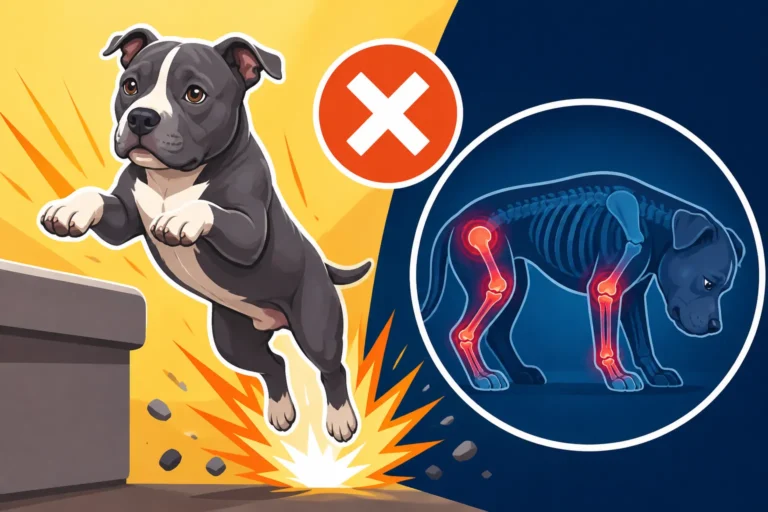
Repeated high-impact activities, like frequently jumping off furniture or scrambling up and down flights of stairs, can cause microtrauma to these vulnerable growth plates. It's not usually one big fall that causes the issue, but rather the cumulative effect of small, repeated stresses. Imagine a constant hammering on something that’s meant to grow smoothly; it can disrupt the process.
This kind of stress, especially during the peak growth phases, can set the stage for long-term joint problems. We often worry about conditions like Pit Bull Hip Dysplasia Showing at One to Two Years, and while genetics play a huge role, environmental factors during growth absolutely contribute. Over-exercising or allowing too much strenuous activity, particularly jumping and stair climbing, can exacerbate any underlying predispositions. It places abnormal forces on joints that are still forming, potentially leading to inflammation, cartilage damage, and an increased risk of developing arthritis much earlier in life.
Navigating Stairs with a Growing Pit Bull
Stairs are one of those everyday challenges that can throw a new Pit Bull owner for a loop. They’re everywhere – in our homes, at the vet's office, leading up to the park. For an adult Pit Bull, they’re usually no big deal, but for a clumsy, rapidly growing puppy, they can be a serious hazard.
Early Management and Prevention
When your Pit Bull puppy is very young, say under three or four months, the best approach is often total avoidance of stairs. Their coordination isn't fully developed, their little legs are out of proportion to their bodies, and those growth plates are at their most vulnerable. Carrying your puppy up and down stairs is the safest option. It might feel like a chore, especially if you have several flights, but it’s a small investment in their future joint health.
If carrying isn't feasible for every single ascent and descent, or if you have multiple floors, strategic use of baby gates is a lifesaver. Place them at the top and bottom of staircases to create no-go zones. This isn't just about preventing falls; it's about preventing the repetitive stress of running up and down. Imagine a young child, still wobbly on their feet, being asked to navigate a staircase multiple times a day. It’s similar for a puppy. For Pit Bulls, who tend to be robust and determined, a sturdy metal baby gate is usually required – those tension-fit flimsy ones often won't cut it against a determined pup. You can find excellent options on sites like Chewy or Amazon that are specifically designed for larger, stronger dogs.
Teaching Safe Stair Habits for Adolescents
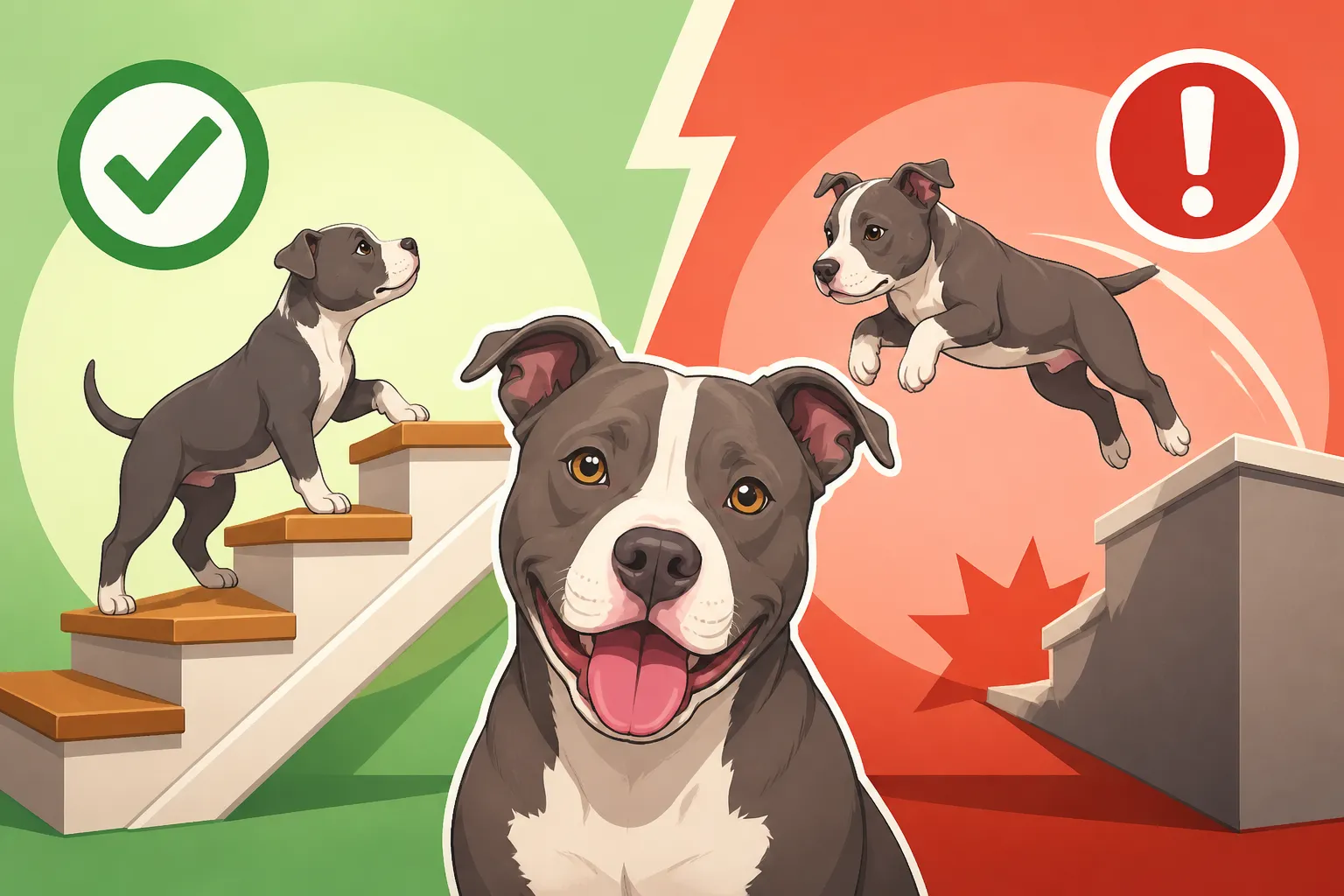
Once your Pit Bull reaches that awkward adolescent phase (roughly 6-12 months, though it varies by individual dog), their growth plates are still active, but their coordination is improving. This is a good time to gradually introduce them to stairs, but with a strong emphasis on controlled movements. The goal is to teach them to walk up and down calmly, one step at a time, rather than barreling through.
Start by practicing on a short set of stairs, perhaps just two or three steps, with them on a leash. Lure them up one step with a high-value treat, reward, then move to the next. Do the same for going down, taking it slowly. The key is to teach them to descend with all four paws on the ground, rather than leaping from a few steps up, which puts tremendous strain on their front joints. Reward calm, deliberate steps. Avoid letting them race up or down, especially in multi-dog households where competition might encourage risky behavior.
Consistency is crucial here. Every time you encounter stairs, reinforce the calm, slow ascent and descent. This training not only protects their joints but also builds their impulse control, which is valuable for a strong breed like a Pit Bull in many other aspects of life.
Jumping and Its Risks for Young Pit Bulls
Jumping is another common activity that needs careful management during a Pit Bull's growth period. Whether it's leaping off the sofa, out of the car, or even intense play sessions involving high jumps, these actions can pose significant risks to their developing skeleton.
Why Restrict Jumping in Puppies
For Pit Bull puppies, and indeed most large and powerfully built breeds, jumping should be severely restricted. Imagine the impact of a 20-pound puppy landing from a jump off a 2-foot-high couch. That’s a considerable force absorbed by soft growth plates and immature joints. The biggest culprits are often:
- Jumping off furniture: Couches, beds, chairs – if your pup has access, they'll often leap off without a second thought. Provide dog-friendly ramps or steps if they must be on furniture with you, but ideally, keep them off until they're skeletally mature.
- Jumping out of cars or trucks: This is a huge one. The height and hard landing can be extremely damaging. Always lift your puppy in and out of vehicles, or use a sturdy ramp designed for dogs.
- Overly enthusiastic play with other dogs: While appropriate play is essential for socialization, avoid rough-and-tumble games that involve a lot of uncontrolled leaping, twisting, and hard landings, especially with much larger or smaller dogs that could inadvertently injure your pup.
- Repetitive jumping activities: Frisbee or intense fetch where they're constantly leaping for a toy should be avoided until at least 18 months, and ideally closer to two years, when growth plates are fully closed. These activities put immense strain on the spine, hips, and knees. Such injuries can lead to conditions like Cruciate Ligament Tears in a Muscular Pit Bull later in life.
Preventing these types of jumps is about creating a safe environment. Use ramps for furniture access, lift them into cars, and supervise play. If you're struggling to control their energy, puzzle toys and scent games can provide mental stimulation without the physical impact.
Introducing Safe Jumping Activities Later On
Once your Pit Bull has reached full skeletal maturity, typically between 18 months and two years old, their growth plates will have fused, and their bones will be much stronger. At this point, you can gradually introduce controlled jumping activities, but always with common sense and moderation.
Start with low-impact jumps and build up slowly. For example, if you're interested in dog sports, begin with very low agility hurdles and gradually increase the height as their fitness and technique improve. Focus on proper form, ensuring they clear obstacles cleanly rather than crashing through them. A good trainer experienced in dog sports can guide you on safe progression.
Remember, even in a fully grown Pit Bull, moderation is key. Intense, repetitive high-impact jumping can still lead to wear and tear over time. Always include a proper warm-up before any strenuous activity and a cool-down afterward. Think of it like an athlete – they don’t just jump off the couch and run a marathon. Their body needs preparation. For a muscular Pit Bull, their strength can sometimes mask underlying joint stress, so vigilance is important.
Holistic Support for Joint Health During Growth
Beyond simply managing stairs and jumping, a comprehensive approach to joint health during your Pit Bull's growth phase involves attention to their overall lifestyle. It's about nurturing their body from all angles to give them the best possible start.
The Importance of Controlled Exercise
It’s a common misconception that a high-energy puppy needs unlimited, strenuous exercise. For a growing Pit Bull, this couldn’t be further from the truth. While exercise is vital for muscle development, mental stimulation, and burning off puppy energy, it needs to be controlled and appropriate for their age.
Instead of long, forced runs or marathon fetch sessions, focus on shorter, more frequent bursts of activity. Multiple short walks (15-20 minutes) throughout the day are far better than one long, exhausting hike. Allow for plenty of free play in a safe, enclosed yard where they can set their own pace, exploring and sniffing, rather than being pushed past their limits. Structured training sessions also provide excellent mental and physical exercise without excessive joint impact. Remember, the goal is to develop strong muscles to support the joints, not to stress the joints themselves. Overdoing it can also lead to issues like Pit Bull Joint and Ligament Injuries or fatigue that makes them more prone to falls. You can read more about How Hard a Growing Pit Bull Should Work to fine-tune your approach.
Nutritional Support and Weight Management
What you feed your growing Pit Bull and how much they weigh are perhaps two of the most critical factors in joint health. A high-quality large-breed puppy food is essential, as these formulas are specifically designed with appropriate calcium and phosphorus ratios to support slow, steady bone growth, preventing the rapid growth spurts that can exacerbate joint problems. Avoid generic puppy foods that might be too high in calories or offer an imbalanced mineral profile for a large, rapidly growing breed.
Overfeeding is a huge no-no. It's so tempting to give in to those puppy dog eyes, but carrying extra weight, even a little, puts significant added stress on developing joints. Pit Bulls are prone to being muscular, so it can sometimes be hard to spot excess weight. Aim for your Pit Bull to have a lean physique, where you can easily feel their ribs but not see them, and they have a visible waist tuck behind their ribs. Consult your vet to ensure you're feeding the right amount for their age and activity level. Brands like Ollie offer fresh food options tailored to your dog's specific needs, which can be a great way to control portions and ensure high-quality nutrition. You can also explore supplements that support joint health, such as those containing glucosamine, chondroitin, and omega-3 fatty acids, often found on Chewy or Amazon. However, always discuss any supplement regimen with your veterinarian before starting, especially for a growing puppy. Maintaining a healthy weight is also a key factor in avoiding Pit Bull Obesity and Joint Strain later in life.
Environmental Considerations for Joint Protection
Beyond exercise and nutrition, think about your Pit Bull's everyday environment.
- Slippery Floors: Hardwood, tile, or laminate floors can be challenging for puppies. Their legs splay, they slip, and this can strain developing joints and ligaments. Use rugs, runners, or carpet paths in high-traffic areas to provide better traction.
- Proper Bedding: A supportive, orthopedic bed, even for a puppy, can make a difference. It cushions their joints during rest, rather than forcing them to lie on hard surfaces. Look for durable, chew-resistant beds on Chewy or Amazon that can withstand a Pit Bull's strength.
- Temperature Control: While not directly about jumping, ensuring your Pit Bull is comfortable in extreme weather helps prevent muscle stiffness or overexertion, which can indirectly affect joint health.
By proactively managing these aspects of your Pit Bull's early life, you're laying the foundation for a healthy, mobile future.
Here's a quick summary of recommendations for different age ranges:
| Age Range (Approximate) | Stair Management | Jumping Management | Exercise Recommendations |
|---|---|---|---|
| 8 weeks – 4 months | Carry puppy up/down stairs; use baby gates. | Strictly no jumping off furniture/cars; supervised gentle play. | Short, frequent walks (10-15 min, 3-4x/day); free play in yard. |
| 4 months – 12 months | Continue carrying where possible; introduce controlled stair training (slow, leashed). | Limit jumping off furniture; use ramps for cars; avoid high-impact play. | Moderate walks (20-30 min, 2-3x/day); structured training; self-directed play. |
| 12 months – 18 months | Encourage slow, controlled stair use; discourage racing. | Avoid repetitive, high-impact jumps; continue using car ramps; gradually introduce low agility. | Longer walks (30-45 min); light jogging (if appropriate); controlled agility. |
| 18 months + (Skeletally Mature) | Normal stair use. | Can participate in controlled jumping activities like agility; continue monitoring for impact. | Regular exercise, tailored to fitness level; can include more strenuous activities. |
Remember, these are general guidelines. Every Pit Bull is an individual, and consulting with your veterinarian for personalized advice based on your dog's specific growth rate and health is always the best course of action. Patience and proactive care during these formative years will pay dividends in a long, happy, and mobile life for your beloved Pit Bull.
Disclaimer
This article is for general informational purposes only and does not constitute professional advice. Laws, prices and regulations vary by location and change over time. Consult a qualified professional for guidance on your specific situation.