Whether Pit Bulls Enjoy Swimming
Many Pit Bull owners excitedly imagine their strong, athletic companions joyfully splashing in lakes or pools, only to find their dog eyeing the water with suspicion, or even outright refusing to get more than their paws wet. It can be a little frustrating when you’re eager for them to enjoy a cooling dip on a hot day, and they just aren't interested! This comprehensive guide will explore the common question of whether Pit Bulls typically enjoy swimming, delve into the physical factors that influence their comfort in water, and provide practical, empathetic advice on how to safely introduce your loyal friend to aquatic activities—or help them find alternative ways to beat the heat if swimming simply isn't their passion.
The Truth About Pit Bulls and Water: It's Not a Universal Love Affair
When it comes to dogs and swimming, there’s a common misconception that all dogs are natural-born swimmers. While some breeds, like Labradors or Golden Retrievers, practically come with built-in flippers and a boundless enthusiasm for the water, Pit Bulls often fall into a different category. It’s entirely possible your powerful, agile Pit Bull will be a total water baby, but it’s just as likely they'll be a hesitant paddler, or even a staunch land-lover. This isn't a reflection of their spirit or athleticism; it’s simply down to genetics and individual personality.
Think about it: Pit Bulls weren't originally bred for water retrieval, like those classic waterfowl hunting breeds. Their historical roles often involved gripping and holding, whether it was livestock or, sadly, in less savory pursuits. This background didn't select for traits that make swimming easy or enjoyable. Instead, they developed dense muscle, powerful jaws, and a sturdy, compact build. While these traits are fantastic for land-based activities like tug-of-war, agility, or just general rough-and-tumble play, they aren't always ideal for buoyancy and efficient movement in water. Many Pit Bulls have a lower body fat percentage and more muscle mass than other breeds, which can make them sink rather than float effortlessly. Their relatively shorter legs and larger heads can also make keeping their head above water more of a chore. So, if your Pit Bull isn't leaping into the lake with glee, don't feel like you've done anything wrong or that your dog is "broken." It’s often just how they’re built.
Every Pit Bull, like every person, has their own unique quirks and preferences. Some will surprise you by absolutely loving the water, fearlessly plunging in and paddling with all their might. Others might tolerate a shallow splash in a kiddie pool but draw the line at deep water. Then there are those who will act as if the water is made of acid, avoiding puddles and doing their best impression of a cat whenever a hose comes out. It’s important not to project our own desires for them to enjoy swimming onto them. Respecting their boundaries and recognizing their individual personality is key to a happy relationship, whether they're a water dog or a dry-land adventurer. The goal is always to build confidence and positive associations, not to create stress or fear around a natural element.
Physical Realities and Safety Considerations for Swimming Pit Bulls
While their powerful build is impressive, it does present some unique challenges when it comes to swimming. Their dense musculature, broad chests, and often larger heads mean they have to work harder to stay afloat compared to leaner, more buoyant breeds. This isn't to say they can't swim, but rather that it can be a much more exhausting endeavor for them. Imagine trying to swim with a weighted vest on – that’s a bit like what some Pit Bulls experience.
This physical reality means that safety is paramount. The risk of exhaustion is significantly higher for a Pit Bull in the water. They might be paddling furiously, but their energy reserves can deplete quickly, especially if they’re not used to swimming. Open water, like lakes or rivers with currents, or even a large, deep swimming pool, can quickly become dangerous. A tired Pit Bull can panic and struggle, leading to a drowning risk. The Daily Exercise a Pit Bull Actually Needs can certainly include swimming, but it needs to be approached with caution and built up gradually to avoid overexertion. Furthermore, consider the water temperature. Pit Bulls have short coats that offer minimal insulation. In colder water, they can get hypothermia much faster than a double-coated breed. Even on a hot day, a sudden dip into very cold water can shock their system. For tips on how they handle heat generally, check out Heat Tolerance in a Short-Coated Pit Bull and Working a Pit Bull Through a Hot Summer.
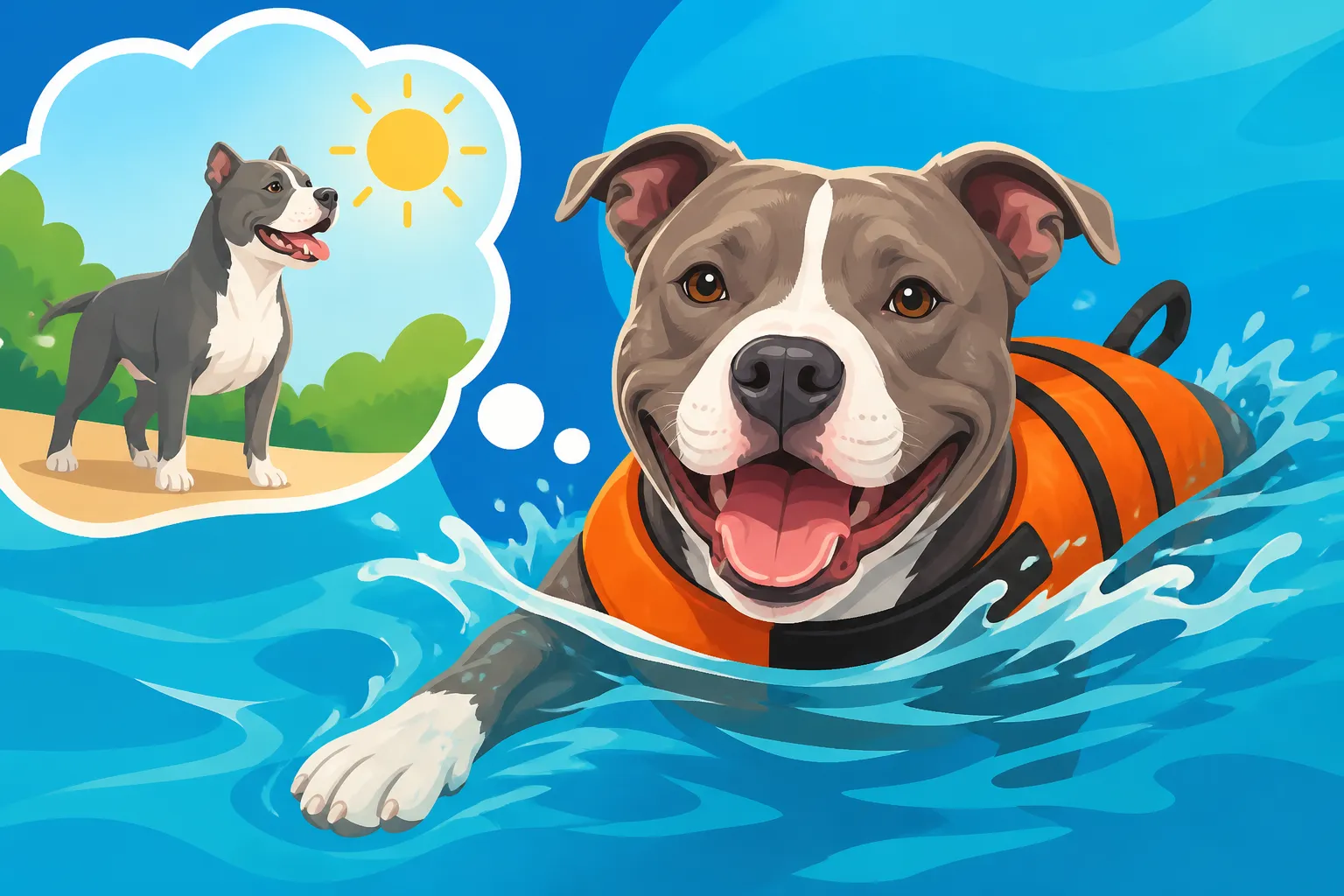
This is where a good quality dog life jacket becomes not just an option, but often a necessity for Pit Bulls who spend time in or near deep water. A well-fitting life jacket provides crucial buoyancy, allowing your Pit Bull to expend less energy staying afloat and more energy paddling or simply enjoying the water. Look for features like a strong handle on the back, which is invaluable for helping guide your dog in the water or lifting them out if they get tired or need assistance. Adjustable straps are also important to ensure a snug, secure fit around their broad chest without chafing. Brands like Ruffwear, Outward Hound, or even generic options found on Amazon or Chewy often have models designed with strong, athletic dogs in mind. Investing in a life jacket can transform a hesitant swimmer into a confident one, giving them the extra lift and peace of mind they need. Always remember, a life jacket is not a substitute for constant supervision. Never leave your Pit Bull unattended near water, even if they're wearing a floatation device. You can learn more about specific features and why they matter in Pit Bull Life Jackets and Water Safety.
Introducing Your Pit Bull to Water Safely and Positively
If you're hoping your Pit Bull might eventually enjoy the water, the key is a slow, positive, and pressure-free introduction. Forcing a dog into the water, or tossing them in, can create a lifelong fear and distrust that’s very hard to overcome. Instead, think of it as an invitation to a fun new experience.
Start small and shallow. A plastic kiddie pool in the backyard is an excellent first step. Fill it with just a few inches of water, enough to cover their paws. Toss in some high-value, floating toys or treats. You can even sit next to the pool yourself and casually splash your hands around. The idea is to make the water a source of positive associations. Many Pit Bulls find the shallow water of a kiddie pool a fantastic way to cool off on a hot day, even if they never progress to deep swimming. They can stand in it, splash, and enjoy the cooling sensation without feeling overwhelmed or unsafe. For training purposes, high-value treats are crucial to keep their focus and reward brave steps; consider reading High-Value Treats That Hold a Pit Bull's Focus for ideas.
When moving to larger bodies of water, choose a calm, shallow entry point, like a gradual sandy beach at a quiet lake or a pool with steps. Avoid crowded areas, strong currents, or places with steep drop-offs. Let your Pit Bull explore at their own pace. Walk into the water yourself, if you’re comfortable, and encourage them to follow using their favorite toy or treat. Keep your voice light and encouraging. If they only wade up to their belly, that’s a huge win! Celebrate it. You can slowly increase the depth over multiple sessions, always letting them dictate the pace. Remember, the goal isn't necessarily for them to become an Olympic swimmer, but to feel comfortable and safe around water. This positive conditioning can prevent future stress and help them enjoy water as a cooling activity rather than a scary one.
Another thing to consider is that some Pit Bulls just aren't built for prolonged strenuous activity in the water. If they do take to swimming, ensure you're building up their stamina safely and giving them adequate breaks. Just like any new exercise, it's important not to overdo it, especially if they are not used to it. Read Building a Pit Bull's Stamina Safely for general advice on fitness. And don't forget the importance of Pit Bull Recovery Days Between Hard Sessions to prevent injury or overexertion. After any water play, especially in natural bodies of water, make sure to rinse your Pit Bull thoroughly with clean water to remove any chlorine, salt, or lake gunk that could irritate their skin. Pay special attention to their ears, as moisture can lead to infections. Cleaning a Pit Bull Ear Properly is a skill every Pit Bull owner should have to prevent these common ailments.
Essential Gear and Alternatives for Water-Loving (or Not) Pit Bulls
Even if your Pit Bull shows great enthusiasm for water, having the right gear is crucial for safety and enjoyment. As mentioned, a well-fitting dog life jacket is at the top of the list. Think of it as mandatory equipment, not optional, especially for initial introductions or any deep-water activity. You can find excellent options from pet retailers like Chewy and Amazon, or even specialty outdoor stores. Look for bright colors for visibility and a secure fit around the chest and belly.
Beyond the life jacket, consider these items:
- Floating Toys: These are fantastic for encouraging interaction with the water. Choose durable toys that are easy for your dog to spot and retrieve. Kong makes some great floating options, and many rope toys can be fun for a quick game of fetch in shallow water.
- Shallow Pools: A hard plastic kiddie pool is truly a game-changer for many Pit Bulls. It offers a controlled, safe environment for splashing and cooling without the commitment or danger of deep water. They're inexpensive and easy to clean.
- Fresh Water and Bowl: After any activity, especially in warm weather or after swimming, your Pit Bull will need plenty of fresh drinking water. Keep a portable bowl and a bottle of water handy.
- Towels: Lots of them! A quick towel-dry can help prevent skin issues, particularly in breeds prone to allergies or skin irritation. Pay attention to skin folds and between toes. For more on managing skin issues, refer to Pit Bull Skin Fold and Belly Irritation.
What if your Pit Bull simply does not enjoy swimming, even with all the positive reinforcement in the world? That's perfectly fine! There are many other fantastic ways to help them stay cool and get exercise without ever setting paw in a lake.
- Sprinklers or Misting Systems: Many Pit Bulls absolutely adore playing in the spray of a garden sprinkler or running through a gentle mist. It’s a low-pressure way to cool down and can be great fun.
- Cooling Mats or Vests: These products can offer significant relief on hot days. Cooling mats activate with pressure or simply dissipate heat, providing a cool spot for your dog to lie down. Cooling vests, soaked in water, can keep their core temperature down during walks.
- Frozen Treats: Homemade pupsicles made from plain yogurt, peanut butter, or broth can be a delicious and cooling treat. Brands like Ollie offer fresh, healthy meal options that can also be partially frozen in molds for a refreshing snack.
- Indoor Enrichment: On days when it's too hot for outdoor activities or water play, focus on Indoor Enrichment for a Pit Bull to keep them mentally stimulated and happy.
- Paddling in Streams or Creeks: Sometimes, the gentle flow and shallow depth of a small stream is less intimidating than a large, still body of water.
- Paw Protection: If your Pit Bull is walking on hot pavement to get to a water source, or on rough terrain around a lake, remember their paw pads. Pit Bull Paw Pad Injuries on Hard Ground can be a real concern, so check their paws regularly and consider paw balm or booties if needed.
Ultimately, whether your Pit Bull enjoys swimming is a matter of individual preference, influenced by their unique physical attributes. Your role as their owner is to understand these factors, prioritize their safety, and introduce them to water activities in a way that is positive, patient, and respectful of their comfort level. If they become a water lover, fantastic! If not, there are plenty of other ways to keep your strong, loyal companion cool, happy, and healthy.
Disclaimer
This article is for general informational purposes only and does not constitute professional advice. Laws, prices and regulations vary by location and change over time. Consult a qualified professional for guidance on your specific situation.