Indoor Enrichment for a Pit Bull
Many Pit Bull owners struggle to provide enough mental stimulation for their incredibly smart and active companions, especially when outdoor exercise is limited by weather, injury, or simply not being enough to tire them out. A Pit Bull that isn't mentally challenged can quickly become bored, leading to undesirable behaviors like destructive chewing or excessive barking. This guide is here to help you discover a wealth of indoor enrichment activities, teaching you how to tap into your Pit Bull's natural drives and keep their intelligent minds engaged and happy, no matter the conditions outside.
Understanding Your Pit Bull's Need for Mental Stimulation
It’s a common misconception that a long walk or a vigorous play session in the yard is all a Pit Bull needs to be truly content. While physical exercise is absolutely crucial for their powerful bodies, it often overlooks a vital component of their well-being: mental stimulation. Pit Bulls are intelligent, problem-solving dogs with a deep desire to work and engage their brains. Neglecting this aspect can lead to a dog that's physically tired but still mentally restless and prone to finding their own forms of entertainment, which often doesn't align with your furniture or peace of mind.
Think about it: in the wild, dogs would spend a significant portion of their day hunting, scavenging, and navigating their environment. Our modern domestic lives, while safe and comfortable, strip away many of these natural challenges. For a breed like the Pit Bull, with a history rooted in working alongside humans and engaging in activities that required tenacity and focus, this lack of mental "work" can be particularly frustrating. They crave purpose, and if we don't provide it constructively, they'll create it for themselves, often through behaviors we label as "naughty" but are simply a natural outlet for pent-up mental energy.
Beyond Physical Exercise: The Mental Workout
Imagine you've just run a marathon. Your body is exhausted, but if your mind is still buzzing with unaddressed tasks or worries, you're not truly rested. The same applies to your Pit Bull. A dog that has run five miles but spent the whole time on a perfectly predictable leash walk, following the same route day after day, hasn't really engaged their brain. Their senses haven't been challenged, they haven't had to problem-solve, and their natural curiosity hasn't been satisfied.
Mental exercise can be just as tiring, if not more so, than physical activity for a Pit Bull. Activities that require focus, decision-making, and problem-solving tap into different energy reserves. A 15-minute scent work session, where your dog uses their nose intensely to find hidden treats, can leave them as happily exhausted as a 30-minute fetch session. This kind of engagement stimulates their cognitive functions, builds confidence, and reinforces positive behaviors, leading to a calmer, more balanced dog overall. It’s about quality of engagement, not just quantity of movement.
The Boredom Trap: Why Pit Bulls Need Engagement
A bored Pit Bull is often a destructive Pit Bull. When their minds aren't given appropriate outlets, they’ll invent their own. This might manifest as chewing on furniture legs, digging at carpets, excessive barking at every tiny sound, or persistently nudging you for attention in ways that can become annoying. These behaviors aren't malicious; they are often simply a dog trying to relieve boredom and anxiety, or to satisfy an unmet natural instinct like chewing or searching.
This is especially true for Pit Bulls, whose strong jaws and determined nature mean they can cause significant damage very quickly if left to their own devices without adequate mental stimulation. Providing structured indoor enrichment helps redirect these powerful natural drives into acceptable channels. It prevents boredom-induced behaviors before they start, saving your home, your sanity, and strengthening the bond you share by meeting your Pit Bull’s innate needs in a constructive and engaging way. Investing time in enrichment now can save you a lot of headache and potential repair costs down the line. Pit Bull Chewing and Destructive Behavior is a common frustration that can often be traced back to a lack of proper outlets.
Puzzle Feeders and Interactive Toys: Engaging the Mind and Jaw
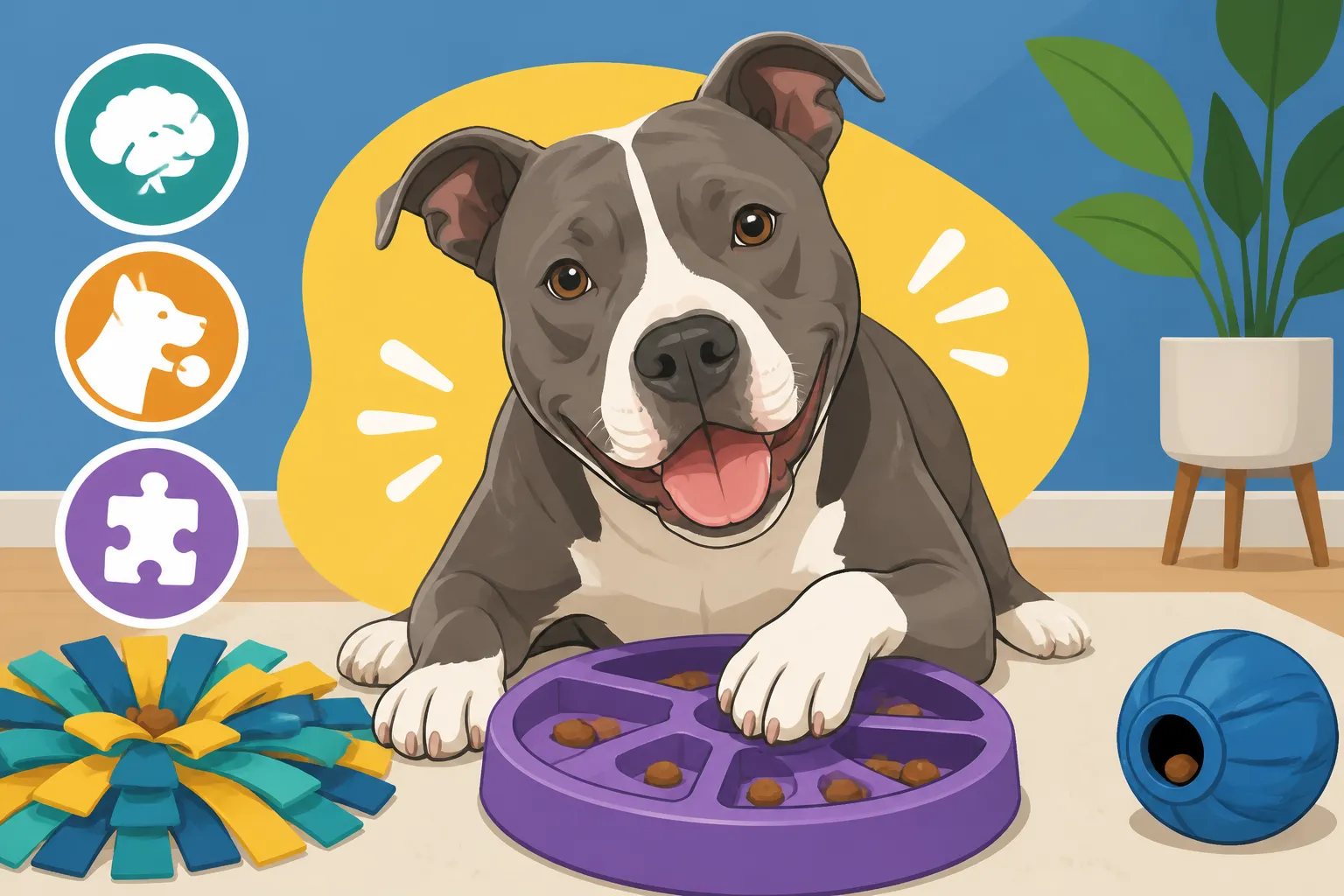
One of the most effective and simplest ways to incorporate indoor enrichment is through puzzle feeders and interactive toys. These tools transform mealtime or treat time from a few seconds of gulping into a mental challenge that can last for minutes, or even longer. For a Pit Bull, whose strong jaws and intelligence can make short work of many toys, choosing the right durable and challenging options is key.
These devices encourage your Pit Bull to think, strategize, and work for their food or treats, mirroring the natural scavenging behaviors they would exhibit in the wild. This not only slows down their eating, which can be beneficial for digestion and preventing bloat, but also provides a satisfying mental "hunt." The satisfaction of figuring out how to get that last kibble out of a tricky dispenser is a huge confidence booster and a great way to burn off mental energy.
Choosing the Right Puzzle Feeder for a Pit Bull
When selecting a puzzle feeder for your Pit Bull, durability and difficulty are paramount. Many standard puzzle toys are designed for less powerful chewers and can quickly be destroyed, turning an enrichment activity into another expensive casualty. Look for options made from tough, non-toxic rubber or hard plastic that can withstand a Pit Bull's determined chewing. Brands like Kong, Nina Ottosson (for their more robust designs), or even simple slow-feeder bowls that feature ridges and mazes are excellent starting points. You can often find a great selection of these on sites like Chewy or Amazon.
Start with easier puzzles to build confidence, gradually introducing more complex designs. A classic Kong, stuffed with peanut butter or wet food and frozen, can keep a Pit Bull happily occupied for a significant amount of time. For dry kibble, consider a feeder that requires rolling, pushing, or manipulating levers. Remember, the goal is to challenge their mind, not frustrate them to the point of giving up or destroying the toy. You might find some excellent options when searching for Puzzle Feeders a Pit Bull Cannot Destroy.
Interactive Toys for Jaw Strength and Longevity
Beyond puzzle feeders, a variety of interactive toys can provide mental and physical engagement. These aren't just chew toys; they require some level of interaction or problem-solving. For example, some toys have compartments that you can hide treats in, requiring your Pit Bull to figure out how to open or access them. Others are designed to bounce unpredictably, encouraging chase and pounce behavior without needing a huge outdoor space.
Durability is, again, non-negotiable for a Pit Bull. Look for toys specifically marketed for "power chewers" or made from robust materials like solid rubber or nylon. Even then, no toy is truly indestructible, so always supervise your Pit Bull, especially with new toys, to ensure they don't ingest pieces. Rotating toys regularly keeps them fresh and exciting, preventing your dog from becoming bored with the same old objects. This also prevents them from getting too focused on a single item, which can sometimes lead to resource guarding if not managed properly. Keep an eye out for Chew Toys That Hold Up to a Pit Bull to ensure your investment lasts.
Scent Work and Nose Games: Tapping into Natural Instincts
Dogs live in a world of scent that we can barely imagine. Their noses are incredibly powerful tools, capable of detecting and discriminating between a myriad of odors. For a Pit Bull, whose ancestors were often used for hunting and tracking, tapping into this innate ability through scent work is a phenomenal way to provide enriching mental stimulation. It’s low impact, can be done in any indoor space, and is incredibly tiring for their brains.
Scent work is essentially teaching your dog to find hidden objects or treats using their nose. It's like a treasure hunt for dogs, and they absolutely love it because it fulfills a primal instinct. The concentration required to sniff out a hidden item is immense, and it builds confidence, reduces stress, and strengthens the bond between you and your dog. You don't need fancy equipment to start; just some treats and a willingness to play.
Simple Nose Work Games to Start With
You can begin with simple "find it" games. Start by letting your Pit Bull watch you place a high-value treat on the floor a few feet away, then give them a release cue like "find it!" and let them eat it. Repeat this a few times. Once they understand the game, make it slightly harder. Have them sit or stay in one room, show them the treat, and then go into an adjacent room and hide it in an easy-to-find spot – under a cushion, behind a chair leg, or under a towel. Then release them with "find it!"
As your Pit Bull gets better, gradually increase the difficulty:
- Hide treats in more challenging spots, like inside a cardboard box or under a crumpled blanket.
- Increase the number of hiding spots, but only put treats in some of them, so they have to truly discriminate.
- Extend the area of the search to multiple rooms.
- Use a variety of high-value treats from brands like Ollie, which can make the game even more enticing.
Remember to keep it fun and positive, celebrating every successful find. The joy they get from using their nose is evident, and it’s a wonderful way to engage them mentally without requiring a lot of physical space. For more ideas, check out Scent Work as Indoor Pit Bull Exercise.
Advanced Scent Challenges for Experienced Pups
Once your Pit Bull has mastered the basics, you can elevate your scent work games to more advanced levels. This might involve using specialized scent kits (often available on Amazon or Chewy) that contain specific odors, like birch or anise, mimicking professional detection work. You can teach your dog to identify and alert you to these specific scents, moving beyond just finding hidden food.
Another advanced technique is creating "scent trails." You can drag a high-value treat across the floor or furniture, leaving a scent trail for your Pit Bull to follow. This is particularly engaging as it mimics tracking. You can also incorporate elevation by hiding treats on shelves, behind curtains, or on top of sturdy pieces of furniture, requiring your dog to sniff in three dimensions. For very advanced dogs, you might even consider enrolling in an online nose work class to refine their skills and challenge them further. The possibilities are truly endless, and you'll be amazed at how focused and diligent your Pit Bull becomes when given a "job" for their nose.
Training and Trick Work: Building Skills and Strengthening Bonds
Training isn't just about obedience; it's a fantastic form of mental enrichment. For a Pit Bull, who often thrives on having a "job" and pleasing their human, consistent training sessions and learning new tricks can be incredibly rewarding. It provides structure, challenges their intellect, and deepens the bond between you. Plus, it can be done anywhere, anytime, with just a few minutes and some tasty treats.
Beyond the practical benefits of having a well-behaved dog, the process of learning itself is enriching. It forces your Pit Bull to concentrate, process information, and engage their cognitive abilities. Even short, frequent training sessions throughout the day can make a big difference in preventing boredom and keeping their minds active. It's a low-impact way to burn mental energy, which is especially valuable on days when vigorous outdoor exercise isn't possible.
Basic Obedience as Enrichment
Even the most fundamental obedience commands can be turned into engaging indoor enrichment. Instead of just asking for a "sit" or "stay" in a static way, incorporate duration, distance, and distractions. For example, practice a "stay" while you move around the room, or ask for a "down" from across the room. These variations make basic commands much more challenging and mentally stimulating.
You can also use commands to create a "structured play" environment. Ask for a "sit" before throwing a soft toy, or a "wait" before releasing them to get a treat you've placed on the floor. This builds impulse control, which is incredibly important for a powerful breed like a Pit Bull. Building a Pit Bull's Impulse Control is a valuable skill that starts with these small, consistent training moments. Keep training sessions short, positive, and end on a high note, always rewarding success generously with High-Value Treats That Hold a Pit Bull's Focus.
Learning New Tricks: From Simple to Complex
Once your Pit Bull has a solid grasp of basic obedience, dive into trick training! This is where the fun really begins, and Pit Bulls often love showing off their intelligence. Simple tricks like "shake a paw," "high five," "spin," or "bow" are easy to teach and provide a great mental workout. You can find countless tutorials online, or even pick up a trick training book.
As they master these, you can move onto more complex sequences or "chains" of tricks. For instance, combining "spin" with "bow" and then "shake." Challenge your Pit Bull by teaching them to "put away" their toys in a box, or to fetch specific named objects. These activities require significant cognitive effort and communication from both ends of the leash. The sense of accomplishment your Pit Bull feels, along with your enthusiastic praise, will make them eager for the next lesson. You'll be amazed at how quickly they pick things up, and it's a fantastic way to bond and show off their true potential. For inspiration, check out Indoor Trick Work for a Bored Pit Bull.
Chew Management and Appropriate Outlets
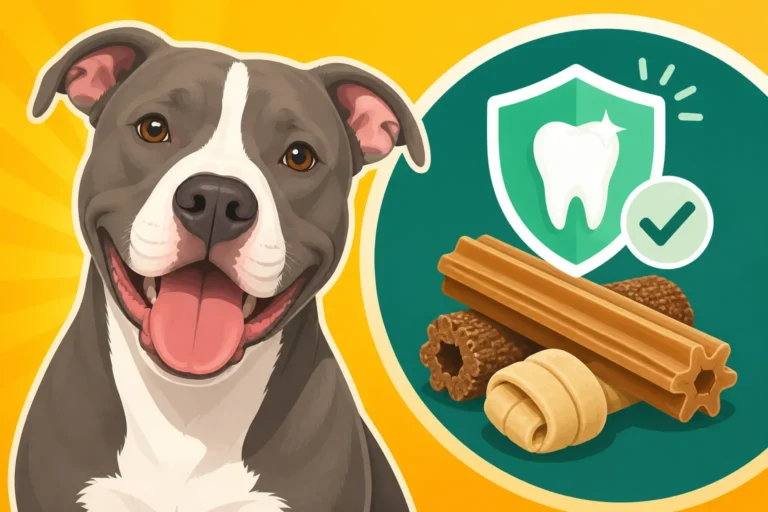
Pit Bulls are renowned for their powerful jaws and love of chewing. This isn't just a bad habit; it's a natural, instinctual behavior that helps clean teeth, relieves stress, and provides mental satisfaction. Without appropriate outlets, this powerful drive can quickly turn destructive, with your Pit Bull targeting furniture, shoes, or anything else they can get their formidable teeth on. Effective chew management is therefore a cornerstone of indoor enrichment.
The key is to provide a variety of safe, durable, and engaging chew items that can withstand your Pit Bull's chewing power. This satisfies their innate need to chew in a constructive way, preventing them from seeking out less desirable targets. It also provides a great solo activity, allowing your Pit Bull to self-entertain and decompress, which is vital for a balanced dog.
Selecting Durable and Safe Chews
Choosing the right chews for a Pit Bull can feel like a quest for the holy grail. Many products on the market simply won't stand up to their determined jaws. Look for chews specifically designed for "aggressive chewers" or "power chewers." Brands like Benebone, Nylabone (their extra-durable lines), and certain types of natural chews (like bully sticks, provided they are sourced safely and supervised) are often good choices. Always prioritize safety: avoid chews that can splinter easily, are too hard for their teeth (potentially causing fractures), or are small enough to be swallowed whole and become a choking hazard.
When it comes to edible chews, be mindful of calorie content and choose options that are digestible and won't upset their stomach. You can find many options on Chewy or Amazon, but always read reviews and check the product's suitability for strong chewers. Remember, no chew is truly indestructible, so supervision is always recommended, especially when introducing a new chew or if your Pit Bull tends to break things down quickly. It’s also important to consider if your Pit Bull has Pit Bull Dental Disease and Hard Chewing and consult your vet on appropriate chew types.
Rotating Chews for Continued Interest
Even the best chew toy can become boring if it's always available. To keep your Pit Bull engaged and excited about their chew outlets, implement a rotation system. Keep a selection of 3-5 different types of chews, and only offer 1-2 at a time. After a few days, put those away and bring out a different set. This simple strategy makes each chew feel new and interesting again, preventing your Pit Bull from becoming desensitized and losing interest.
Consider incorporating different textures and shapes into your rotation to provide varied sensory experiences. For example, one day it might be a hard nylon chew, the next a textured rubber toy stuffed with treats, and another day a natural bully stick (under supervision). This variety keeps their minds stimulated and their chewing instincts satisfied. Ensuring your Pit Bull always has access to appropriate chews is a proactive step in preventing destructive behavior and maintaining a happy, mentally engaged dog.
Creating a Calming and Stimulating Indoor Environment
Beyond specific activities and toys, the overall indoor environment you create plays a significant role in your Pit Bull's mental well-being. A chaotic, under-stimulated, or overly restrictive environment can contribute to stress and boredom. Conversely, a thoughtfully designed space can offer both mental stimulation and opportunities for calm, independent relaxation. It’s about more than just a bed and a food bowl; it’s about creating a true sanctuary that caters to their specific needs.
This means considering everything from their designated resting spots to the ambient sounds and sights within their living area. For a breed like the Pit Bull, who can be deeply sensitive despite their tough exterior, a predictable and enriching home environment is crucial for their emotional stability and overall happiness.
Dedicated Spaces and Safe Zones
Every Pit Bull benefits from having their own dedicated safe space or "den" within the home. This could be a sturdy crate, an enclosed bed area, or a quiet corner with a comfortable dog bed. This space should be a place where they can retreat, feel secure, and relax without interruption. Ensure it's not used for punishment, so your Pit Bull associates it only with positive, calming experiences. Providing a consistent "place" command can help reinforce the idea that this spot is their personal chill-out zone.
Beyond their primary safe zone, consider how the rest of your home is set up. Are there areas where your Pit Bull can observe the world (e.g., a window perch for watching birds, if they're not overly reactive), or areas where they can engage in independent play without supervision leading to trouble? For instance, a fenced-off area with durable toys could be a great "playpen" for when you need to focus on other tasks. Thoughtful arrangement of their space minimizes stress and maximizes opportunities for appropriate engagement or rest. The Crate a Pit Bull Cannot Break Out Of is a great resource for creating a secure den.
Background Noise and Sensory Input
The sounds and sights your Pit Bull experiences throughout the day contribute to their mental state. A quiet house can sometimes be unsettling, while constant loud noises can be stressful. Consider using background noise to create a more consistent and calming auditory environment. This could be classical music, dog-specific calming music (there are many playlists available on streaming services), or even a white noise machine. These can help mask sudden outdoor sounds that might trigger barking or anxiety, especially if your Pit Bull tends to be reactive to external stimuli.
Visual stimulation can also be enriching, within limits. If your Pit Bull enjoys watching things without becoming overstimulated, a safe window view (perhaps with a bolstered bed) can be a great source of natural enrichment. However, if window gazing leads to excessive barking at passersby or other dogs, it's better to limit this access and find other forms of visual stimulation, such as playing dog-specific TV shows or nature documentaries (some dogs find these surprisingly engaging). The goal is to provide sensory input that is enriching and calming, not overstimulating or anxiety-inducing.
Indoor Enrichment Tool Comparison
Here's a quick look at some popular indoor enrichment tools and their benefits:
| Enrichment Type | Primary Benefit | Durability for Pit Bulls | Engagement Level | Cost Range | Best For |
|---|---|---|---|---|---|
| Stuffable Rubber Toys | Chewing, problem-solving | High | Medium-High | Low-Medium | Occupying for extended periods, reducing stress |
| Interactive Treat Balls | Self-play, controlled eating | Medium-High | Medium | Low-Medium | Slowing down meals, light mental challenge |
| Snuffle Mats/Balls | Scent work, natural foraging | Medium | High | Low-Medium | Engaging nose, calming, low physical impact |
| Puzzle Boards/Games | Complex problem-solving | Medium-High | High | Medium-High | Advanced mental challenge, confidence building |
| Durable Chew Toys | Satisfying chewing instinct | High | Low-Medium | Low-Medium | Stress relief, dental health, preventing destruction |
| Flirt Poles (Indoor) | Prey drive, quick bursts of play | Medium | High | Low-Medium | High-energy release in limited space |
Disclaimer
This article is for general informational purposes only and does not constitute professional advice. Laws, prices and regulations vary by location and change over time. Consult a qualified professional for guidance on your specific situation.