Antlers and Bones a Pit Bull Should Avoid
When you have a Pit Bull, you know the power behind those jaws. They love to chew, and honestly, it's a completely natural and healthy outlet for them. But that incredible chewing ability, while endearing when they're happily dismantling a sturdy toy, also means that certain types of chews often recommended for dogs can actually be quite dangerous. This guide is here to walk you through exactly which antlers and bones pose a real risk to your beloved Pit Bull's teeth and digestive system, so you can make informed choices and keep them safe and sound.
Understanding Your Pit Bull's Chewing Power
It's no secret that Pit Bulls are formidable chewers. Owners often come home to shredded 'indestructible' toys and wonder if their dog has a personal vendetta against their belongings. But it’s not malicious; it's simply a testament to their innate strength and drive. Understanding this power is the first step in providing appropriate and safe chewing outlets.
The Anatomy of a Pit Bull's Jaw
Let's get a little scientific for a moment, because it truly explains why certain chews are problematic. A Pit Bull’s skull structure, combined with powerful jaw muscles, creates an incredibly strong bite force. Their molars, especially, are designed for crushing and grinding. Think about it: these dogs were historically bred for tasks requiring immense grip and strength. That hasn't vanished from their genetics. When they latch onto something, they don't just nibble; they apply significant pressure. This powerful action, while great for tearing apart a piece of meat, can be disastrous when applied to something too hard. Bones and antlers often have little to no 'give,' meaning when your Pit Bull applies that immense pressure, something has to give – and all too often, it's a tooth. This can lead to painful slab fractures where a piece of the tooth shears off, exposing the sensitive pulp inside. Pit Bull Dental Disease and Hard Chewing can become a major concern if you're not careful with their chew choices.
Why Pit Bulls Love to Chew
Chewing is much more than just a pastime for dogs, and Pit Bulls are no exception. For puppies, it’s a way to explore their world and relieve discomfort from teething. For adult Pit Bulls, it's a fundamental instinctual behavior. Chewing helps clean teeth, stimulates saliva production, and can be a fantastic way to relieve stress or boredom. Imagine a rainy day when you can't get out for that usual long walk, or your Pit Bull just finished a rigorous training session and needs to unwind. A good chew can be a perfect outlet. The frustration for many Pit Bull owners comes when they try to find a chew that actually lasts without posing a danger. We want to satisfy that urge, but safely! It's a constant battle to find toys that truly survive Pit Bull jaw strength without causing harm.
Antlers: The Hidden Dangers
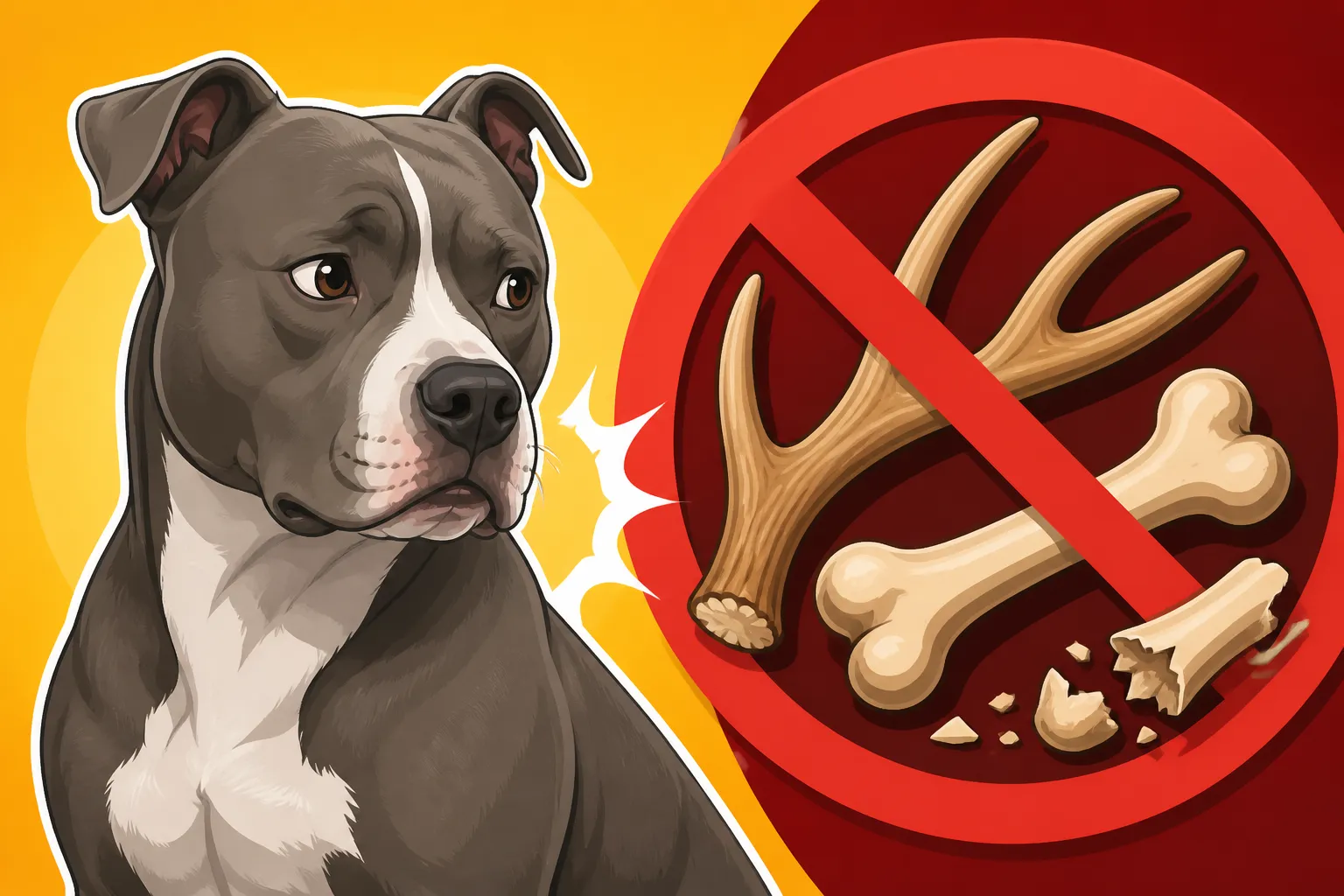
Antlers have gained popularity in recent years as a "natural" and "long-lasting" chew option. Many well-meaning owners reach for them, believing they are a healthier alternative to processed chews. However, for a power chewer like a Pit Bull, antlers come with some significant, often overlooked, risks.
Why Antlers Are Often Recommended and Misunderstood
The appeal of antlers is undeniable at first glance. They are a natural product, often advertised as chemical-free, sustainable, and incredibly durable. Brands frequently highlight their longevity, suggesting they'll keep your dog occupied for weeks or even months. This sounds like a dream come true for a Pit Bull owner tired of buying new toys every other day. They're dense, they don't smell much, and they don't leave a sticky mess on the carpet. On paper, it seems like the perfect solution for an avid chewer. However, their very hardness is their downfall when it comes to strong-jawed breeds like Pit Bulls.
The Risks of Antlers for Pit Bulls
Despite their natural appeal, antlers are problematic due to their extreme hardness. They simply don't have enough 'give' to be safe for a Pit Bull's powerful bite.
- Tooth Fractures: This is the most common and devastating injury. When your Pit Bull crunches down on a rock-hard antler, the force can easily fracture a tooth. These aren't just minor chips; we're talking about painful slab fractures that expose the nerve and often require expensive veterinary dental surgery, sometimes even extraction. Imagine the pain your dog would be in, unable to tell you. This is a very real concern, and many vets regularly see these injuries.
- Choking Hazards: As an antler is chewed, small, sharp shards can break off. While your Pit Bull might ingest some without issue, a larger piece could become a choking hazard, especially if they try to swallow it too quickly. The internal structure of antlers can also splinter in ways that are hard to predict.
- Internal Damage and Blockages: If larger pieces are swallowed, they can lead to internal damage like esophageal irritation, or worse, gastrointestinal blockages. Antlers are not digestible in the way a softer chew might be, and sharp fragments can potentially perforate the stomach or intestinal lining, leading to a life-threatening emergency.
- Types of Antlers Matter, But Not Enough: You might see various types of antlers, like elk, deer, split, or whole. While split antlers might seem safer because the marrow is exposed, potentially making it 'softer' or more appealing, the outer cortical bone is still incredibly dense. Whole antlers pose the same, if not greater, risk due to their uniform hardness. For a Pit Bull, the difference in species or cut often doesn't reduce the fundamental risk of tooth damage.
Bones: A Mixed Bag of Trouble
Ah, bones. The classic image of a dog with a bone is ingrained in our culture. But just like antlers, not all bones are created equal, and many are simply not suitable for your Pit Bull. There's a lot of confusion around bones, especially the difference between raw and cooked, and what constitutes a "safe" chew.
Raw Weight-Bearing Bones: A Common Misstep
Raw bones, particularly large, dense, weight-bearing bones from cows or other large animals (think femurs, marrow bones, or knuckle bones), are often seen as the ultimate chew. They're natural, they can be long-lasting, and many dogs absolutely adore them. However, for a Pit Bull, these can be just as problematic as antlers. Their density means they lack the flexibility needed to prevent tooth fractures. That intense crushing power your Pit Bull possesses can still easily break a molar on one of these hard bones.
While raw bones might offer some dental benefits by scraping tartar, the risk of a broken tooth often outweighs these benefits. If you do consider raw bones, which many raw feeders advocate for, it's crucial to understand that they should be meaty bones that can be fully consumed and digested, not hard recreational bones. And even then, strict supervision is key. Furthermore, raw bones carry bacterial risks like Salmonella or E. coli, which can affect both your dog and your family if proper hygiene isn't maintained. You need to be mindful of Pit Bull Dental Cleaning Schedule and how these choices fit in.
Cooked Bones: An Absolute No-Go
If there's one thing every Pit Bull owner, and indeed every dog owner, should commit to memory, it's this: never, ever feed cooked bones to your dog. This includes bones from your dinner table – chicken bones, pork chop bones, steak bones, turkey bones, you name it. The cooking process, whether boiling, roasting, grilling, or frying, changes the structure of the bone, making it brittle and prone to splintering.
Imagine the frustration of giving your dog a leftover bone, thinking you're treating them, only to end up in an emergency vet visit. Cooked bones are incredibly dangerous for several reasons:
- Splintering: They shatter into sharp, jagged pieces that can cause severe internal injuries. These splinters can lacerate the mouth, throat, esophagus, stomach, or intestines.
- Choking: Small, sharp pieces can easily get lodged in the throat, leading to choking.
- Blockages: Larger fragments can cause obstructions in the digestive tract, which is a life-threatening situation often requiring emergency surgery.
- Constipation: Bone fragments can compact in the colon, leading to severe constipation and pain.
It's tempting to share your meal, but resist the urge when it comes to cooked bones. The risks are simply too high.
Recreational Bones vs. Nutritional Bones
This distinction is crucial when discussing bones.
- Recreational Bones: These are the hard, weight-bearing bones discussed above (femurs, knuckle bones). Their purpose is to provide extended chewing pleasure. However, for Pit Bulls, these are precisely the ones that carry the highest risk of tooth fractures. If your Pit Bull is truly just gnawing on a recreational bone, and not trying to break it down, it might seem okay, but the moment they apply significant force, the risk becomes immense. For many Pit Bulls, the urge to break something overrides any gentle gnawing.
- Nutritional Bones: These are typically raw, meaty bones (RMBs) that are soft enough to be fully consumed and digested. Think chicken necks, wings, or small rib bones. These can be part of a balanced raw diet, providing calcium and other nutrients, and offering some dental benefits. However, they still require careful selection based on size and the dog's chewing style. A Pit Bull could potentially swallow smaller pieces too quickly, so supervision is still absolutely vital. This is a complex topic, and if you're considering feeding raw bones for nutritional purposes, it's best to consult with a veterinarian knowledgeable in canine nutrition or a certified canine nutritionist to ensure you're doing it safely and appropriately.
Safer Alternatives for the Avid Chewer
So, what can you give your powerful Pit Bull to chew on? The good news is, there are plenty of excellent, safe alternatives that will satisfy their chewing instincts without risking their dental health or digestive system. The key is to look for durability combined with appropriate 'give.'
Durable Rubber and Nylon Chews
These types of chews are often the unsung heroes for Pit Bull owners. They are designed to withstand significant chewing power while still offering enough flexibility to prevent tooth damage.
- Rubber Chews: Brands like Kong make incredibly tough rubber toys that are perfect for Pit Bulls. You can stuff them with wet food, peanut butter, or even plain yogurt and freeze them for an extended chewing session. The rubber is durable but has enough bounce and flexibility to prevent tooth fractures. Look for the "extreme" or "heavy duty" versions, which are specifically formulated for power chewers. These toys are available on platforms like Chewy and Amazon, making them easy to find.
- Nylon Chews: High-quality nylon chews from brands like Nylabone (again, look for the "power chewer" or "DuraChew" lines) are another excellent option. They are designed to fray into small, bristle-like pieces rather than break off in large chunks. These bristles help clean teeth. While they are very hard, they typically have more 'give' or a more abrasive texture than natural bone, making them less likely to cause sudden fractures. Always choose a size appropriate for your Pit Bull to prevent choking, and replace them once they become small enough to be swallowed. These are fantastic for satisfying that urge to work the jaw. Chew Toys That Hold Up to a Pit Bull are invaluable.
Edible Chews with Give
For those times when your Pit Bull wants something that slowly disappears, there are safer edible options that provide mental and physical satisfaction without the dangers of hard bones or antlers.
- Bully Sticks: These are a fantastic option. Made from beef pizzle, they are fully digestible and generally soften as your dog chews them. They come in various thicknesses and lengths, so you can choose one appropriate for your Pit Bull's chewing style and duration needs. Always supervise your dog, especially as the bully stick gets smaller, to prevent choking on the last nub. You can find high-quality bully sticks on Chewy or even as part of subscription boxes from companies like Ollie that focus on natural, quality products.
- Dental Chews: Many dental chews on the market are designed to be both palatable and to provide some dental benefits by scraping tartar off teeth. Look for brands that are veterinarian-approved and have a texture that allows for chewing without being rock-hard. Again, choose the right size and supervise, especially if your Pit Bull tends to gulp things down. These are often great for a quick, satisfying chew.
- Limited Ingredient/Natural Chews: There are many other types of processed, edible chews made from various proteins (e.g., yak cheese chews, collagen chews, specific jerky treats). Always read the ingredients list carefully. Avoid anything with excessive additives or ingredients you can't pronounce. For an itchy Pit Bull, checking the ingredients for Food Allergies Behind Pit Bull Itching is a smart move. Choose items that soften with chewing and are fully digestible.
Frozen Treats and Puzzle Toys
Sometimes, the best "chew" isn't a chew at all, but a long-lasting, mentally stimulating activity.
- Frozen Stuffed Toys: As mentioned with rubber chews, freezing a stuffed Kong or other durable puzzle toy can provide hours of entertainment. Fill it with a mix of kibble, peanut butter (xylitol-free!), yogurt, pureed pumpkin, or broth. The frozen contents take much longer to get out, engaging your Pit Bull's mind and mouth in a safe way. This also works well to redirect Pit Bull Puppy Biting That Draws Blood towards an appropriate object.
- Ice Blocks with Treats: For a super simple and budget-friendly option, freeze some low-sodium broth with a few treats inside a plastic container. Once frozen, pop out the ice block and let your Pit Bull slowly lick and melt their way to the reward. This is especially great on a hot day. Just make sure it's big enough not to be a choking hazard.
- Puzzle Feeders: While not strictly "chews," puzzle feeders and slow feeders can engage your Pit Bull's chewing and problem-solving instincts without any hard materials. These toys make mealtime last longer and provide mental enrichment. You can find durable options designed for power chewers on Amazon or Chewy. Puzzle Feeders a Pit Bull Cannot Destroy are out there if you look for them.
Here's a quick comparison of common chew types:
| Chew Type | Pros | Cons | Pit Bull Recommendation |
|---|---|---|---|
| Antlers | Natural, long-lasting | Extremely hard, high risk of tooth fracture, choking/internal injury | Avoid |
| Raw Weight-Bearing Bones | Natural, satisfying for some | Extremely hard, high risk of tooth fracture, bacterial risk | Generally Avoid |
| Cooked Bones | Readily available | Brittle, splinter easily, high risk of choking/internal injury, indigestible | Absolutely Avoid |
| Durable Rubber Chews | Flexible, durable, stuffing options, safe for teeth | Not fully consumable, can be expensive to replace if lost | Excellent Choice |
| High-Quality Nylon Chews | Very durable, long-lasting, dental benefits | Hard, but designed to abrade safely; monitor for size | Good Choice |
| Bully Sticks | Fully digestible, satisfying | Can be consumed quickly, supervision needed for small pieces | Excellent Choice |
| Dental Chews | Designed for dental health, palatable | Varies in hardness, some consumed quickly, check ingredients | Good Choice (Supervised) |
| Frozen Stuffed Toys | Mentally stimulating, long-lasting, safe | Requires preparation, not a traditional "chew" | Excellent Choice |
Choosing the right chews for your Pit Bull is a small but mighty act of care that protects their health and fulfills their natural desires. It's a journey of trial and error for sure, but with this knowledge, you're well-equipped to make the best decisions for your strong-jawed companion.
Disclaimer
This article is for general informational purposes only and does not constitute professional advice. Laws, prices and regulations vary by location and change over time. Consult a qualified professional for guidance on your specific situation.