How a City Decides a Dog Is a Pit Bull
It’s a frustrating reality for countless dog owners: you love your companion, know their unique personality, and then suddenly, a city official or landlord looks at your beloved canine and slaps a label on them – "Pit Bull." This isn't just a label; it can carry serious implications for your home insurance, housing options, and even your dog's future. Understanding how a city actually decides if your dog falls under this often-misunderstood category is crucial for navigating these challenging situations.
The Challenge of Defining "Pit Bull"
The term "Pit Bull" itself is a huge part of the problem. It's not a single, universally recognized breed like a Golden Retriever or a Poodle. Instead, it's a broad, catch-all term that often refers to a type of dog, encompassing several distinct breeds and countless mixed breeds that share certain physical characteristics. This fundamental misunderstanding at the public and even governmental level creates a significant hurdle for owners and enforcement alike.
Why the Term "Pit Bull" is So Ambiguous
Imagine trying to define "sports car" without naming a specific make or model – you'd probably describe certain features like sleek lines, a powerful engine, and two seats. That's essentially what happens with "Pit Bull." The most commonly recognized breeds that fall under this umbrella include the American Pit Bull Terrier (APBT), the American Staffordshire Terrier (AmStaff), and the Staffordshire Bull Terrier. Each of these has its own breed standard, history, and characteristics, yet they are often lumped together. The issue is further complicated by the fact that many dogs identified as "Pit Bulls" by shelters or authorities are actually mixed breeds with complex genetic backgrounds, often containing less than 50% of any single "bully" breed. This is why many experts argue that it's impossible to tell by looking at a dog whether it's a "Pit Bull" or not. If you're curious about the lineage, diving into Why Pit Bull Is a Type and Not a Breed can really shed some light on this confusing classification.
The Impact of Visual Identification
Because there's no single breed standard for "Pit Bull," visual identification becomes incredibly subjective and, frankly, prone to error. An animal control officer, a landlord, or even a police officer might look at your dog and make a judgment based on features like a blocky head, muscular build, short coat, or wide jaw. They're often relying on popular perception rather than scientific accuracy. This is particularly frustrating because many breeds, and even mixed breeds like Boxers, Lab mixes, or even certain bulldog types, can share these general characteristics. For example, a dog with a broad chest and a short snout might be visually flagged, even if its DNA reveals no "Pit Bull" ancestry whatsoever. This visual bias is a huge reason why so many dogs are misidentified, and it disproportionately affects rescue dogs whose exact lineage is unknown. This is also why understanding How Shelters Decide a Dog Is a Pit Bull is so important, as their initial labels often follow dogs to their new homes.
Municipal Approaches to Breed Identification
When a city has breed-specific legislation (BSL) in place, or even just general ordinances that require breed identification, they need a method to enforce it. These methods vary widely and, unfortunately, are often far from perfect, leading to stress and unfair outcomes for countless dog owners.
Visual Assessments by Animal Control or Designated Officials
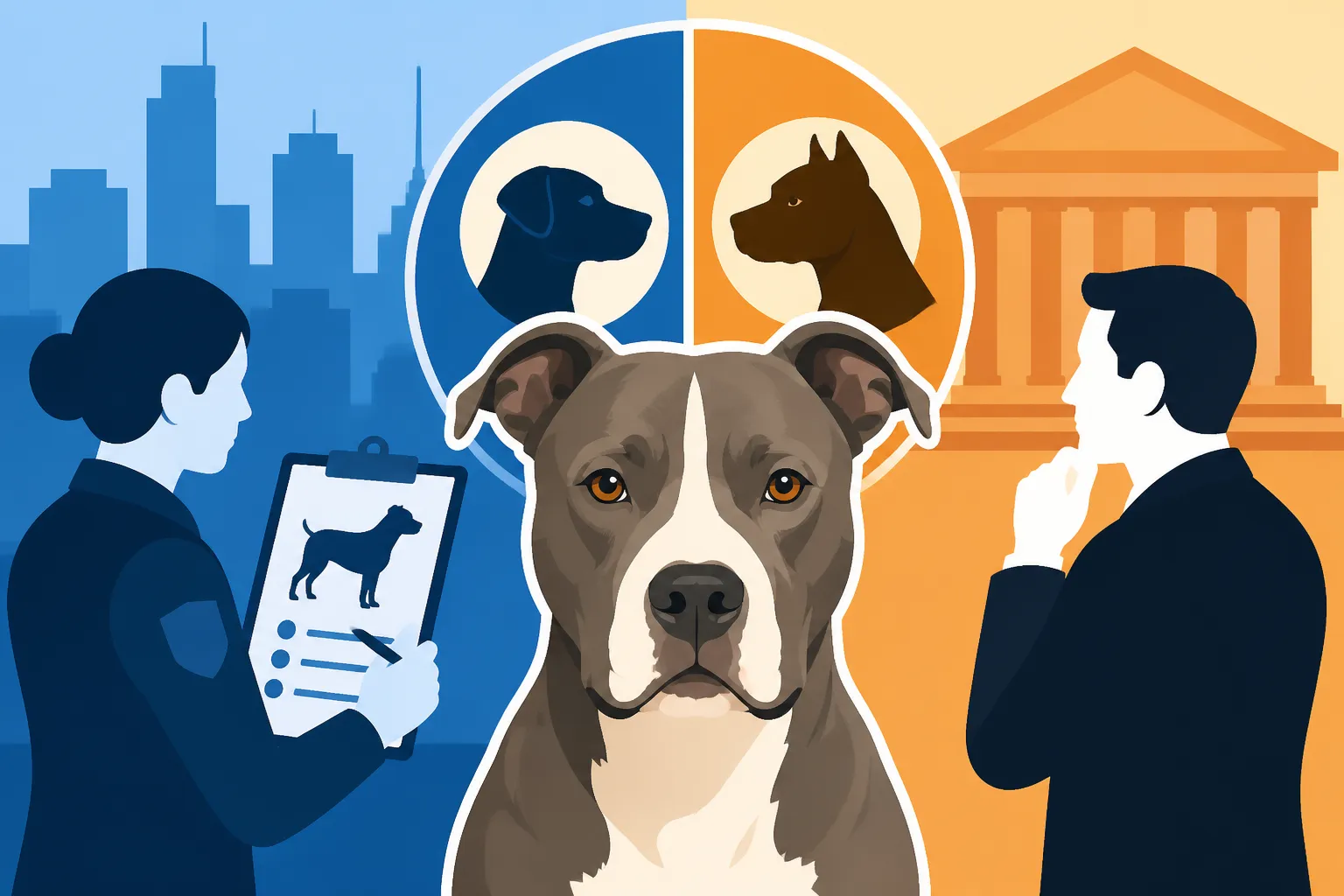
In many cities with BSL, animal control officers or specifically designated municipal staff are tasked with making the breed determination. This usually involves a visual assessment. They might compare your dog's physical characteristics against a list of traits commonly associated with "Pit Bulls" – things like head shape, ear set (especially if cropped, though this is purely cosmetic), muzzle length, body type, and coat. For instance, in cities that have enacted or historically had BSL, such as Miami-Dade County in Florida (which only recently saw its ban lifted), or the way Denver operated before its 2020 repeal, these visual assessments were the primary means of identification. The problem, as we've already touched on, is that this method is inherently unreliable. Without a clear, genetic definition, one person's "Pit Bull" is another person's "mixed breed." This subjective nature often leads to wrongful designations and appeals processes that can be lengthy, costly, and emotionally draining for owners. The officer might genuinely believe they are identifying a "Pit Bull," but without objective criteria, it's just an educated (or often uneducated) guess based on appearance.
Leveraging DNA Testing and Breed Registries
As science advances, DNA testing has become a tool some owners use to challenge breed identification, and occasionally, cities might consider it, though it's not a universal solution. A DNA test can provide a genetic breakdown of your dog's ancestry, often identifying specific breeds present in their genetic makeup. This can be a double-edged sword: if your dog is identified as primarily a breed not on the restricted list, it can be a powerful piece of evidence. However, if it shows a small percentage of an American Pit Bull Terrier or American Staffordshire Terrier, some municipalities might still consider it a "Pit Bull" type, regardless of the predominant breeds.
Breed registries, such as the United Kennel Club (UKC) for American Pit Bull Terriers or the American Kennel Club (AKC) for American Staffordshire Terriers, provide official documentation for purebred dogs. If your dog comes with UKC or AKC papers, proving their purebred status in a non-restricted breed, this can be very helpful. However, the majority of dogs labeled "Pit Bulls" are not purebred with papers. Furthermore, many cities’ BSL definitions are so broad that even a registered American Staffordshire Terrier could be swept under the "Pit Bull" label. It’s a complex issue, and the question of Whether a DNA Test Settles the Pit Bull Question is often met with a resounding "it depends" depending on the local jurisdiction.
The Role of Owner Testimony and Veterinary Records
Beyond visual checks and DNA, cities might also consider owner testimony and veterinary records. Your word as an owner, especially if you've had the dog since puppyhood and know their background, should carry weight. You might have adoption papers from a rescue organization that lists the dog as a "Lab mix" or "terrier mix." Veterinary records can also be helpful, particularly if your vet has consistently noted a different breed or breed mix on your dog's chart. However, the weight given to these sources varies wildly. Some cities might accept clear adoption paperwork as sufficient, while others might override it with an animal control officer's visual assessment. It really highlights the disparity in how different municipalities approach this issue.
Navigating a Breed Determination in Your City
Discovering that your dog has been labeled a "Pit Bull" by a city or local authority can be incredibly disheartening and frightening. It's a situation no loving dog owner wants to face, especially when it jeopardizes your ability to keep your cherished companion. But it's not always a lost cause, and there are steps you can take.
What to Do If Your Dog is Labeled a "Pit Bull"
The very first thing you need to do is understand your local ordinances inside and out. Every city, county, or even homeowners' association might have slightly different definitions and rules regarding "Pit Bulls." Get a copy of the specific legislation or policy that applies to you. This will tell you what criteria they used (or should have used) for their determination and what your rights are for appeal.
Next, gather all the evidence you can. This includes:
- Photos: Clear, well-lit photos of your dog from different angles, showing their full body and head.
- Veterinary Records: Any records from your vet that list your dog's breed or mix. If your vet has consistently identified your dog as something other than a "Pit Bull," this is important. A good vet can also provide a written statement about your dog's temperament and breed characteristics.
- Adoption Papers: If you adopted your dog from a shelter or rescue, their original paperwork stating the breed.
- DNA Test Results: Consider getting a reputable DNA test if you haven't already. While not always a magic bullet, it can be powerful evidence. When considering this route, remember that Whether a DNA Test Settles the Pit Bull Question largely depends on local laws and how willing authorities are to accept genetic evidence over visual.
- Training Certifications: Proof of training, especially certifications like the Canine Good Citizen (CGC), can speak volumes about your dog's temperament and your responsible ownership. Knowing Canine Good Citizen and Why It Matters for a Pit Bull can really bolster your case.
- Testimony: Statements from neighbors, friends, or even your dog walker about your dog's behavior and temperament.
Once you have your evidence, look into the appeals process. Most jurisdictions will have one, but there might be strict timelines. This is often where a breed-specific advocacy group or a lawyer experienced in animal law can be invaluable. They can help you navigate the legal jargon, present your case effectively, and understand the nuances of the local laws. Don't be afraid to seek expert help; fighting these battles alone can be incredibly overwhelming. Remember, successfully appealing a determination, as discussed in Appealing a Pit Bull Breed Determination, often requires persistence and good documentation.
Practical Strategies for Owners in Restricted Areas
Even if you successfully navigate a breed determination, or if you live in an area with existing BSL that you can't challenge, proactive measures are key to ensuring a stable and happy life for your Pit Bull type dog.
One of the most powerful things you can do is invest in comprehensive training. A well-trained dog is often its own best advocate. Enroll in obedience classes, aim for Canine Good Citizen certification, and continue with advanced training. This not only makes your dog a better-behaved companion but also provides tangible proof of responsible ownership. Finding a trainer experienced with Pit Bulls is paramount, as their understanding of the breed type's strength and intelligence can make a huge difference.
Beyond training, proper management in public is non-negotiable. Always keep your dog on a leash, use a secure harness (Chewy offers a great selection of durable harnesses for strong dogs), and be mindful of other dogs and people. Consider muzzle training, not because your dog is aggressive, but as a practical tool for vet visits or in situations where a muzzle might be legally required or help diffuse public perception. It’s an unfortunate truth that Pit Bulls are often judged by a stricter standard, a reality explored in Why a Pit Bull Gets Less Benefit of the Doubt.
Housing and insurance are two major areas where breed identification can hit hard. Many landlords and insurance companies have blanket bans or restrictions on "Pit Bull" type dogs. Before moving, always check with potential landlords or HOAs about their pet policies, and get it in writing. When it comes to insurance, research carriers like State Farm or Amica, which are often cited as being more lenient regarding breed restrictions, or specialized pet liability insurance. Pet insurance, such as Healthy Paws, can be an excellent investment for general health, but it's important to understand if any breed exclusions might affect coverage for certain incidents if your dog is officially labeled. Understanding Whether a CGC Title Helps a Pit Bull Policy can also be beneficial in these situations, as some insurers do give credit for certified training.
Lastly, be an ambassador for your dog. Your behavior and your dog's behavior reflect on the entire "Pit Bull" type community. Educate others politely when misconceptions arise, always prioritize safety, and showcase the loving, loyal nature of your companion. Even simple choices, like providing high-quality, fresh food from services like Ollie, can contribute to your dog's overall well-being and temperament, indirectly supporting your commitment to their health and behavior.
Comparison of Breed Identification Methods
Navigating breed identification can feel like a labyrinth, with various methods offering different levels of objectivity and acceptance. Here’s a quick overview to help you understand the landscape.
| Identification Method | Pros | Cons | Acceptance by Authorities |
|---|---|---|---|
| Visual Assessment | Immediate, no cost to owner (initially) | Highly subjective, prone to error, influenced by bias/perception, not scientifically accurate | Common, especially in cities with BSL; often the default first step |
| DNA Testing | Provides objective genetic breakdown, scientifically accurate ancestry | Can be expensive, results may be complex (e.g., small % of restricted breed), not always accepted | Growing, but varies wildly; some cities accept, others don't, some have specific requirements |
| Official Breed Papers | Definitive proof of purebred status (e.g., UKC, AKC) | Only applies to purebred dogs, most "Pit Bulls" are mixes, some BSL still covers registered breeds | Generally good for specific breeds, but BSL definitions can override them |
| Veterinary Records/Testimony | Low cost, provides history of care, vet's professional opinion | Relies on vet's initial assessment, less weight if contradicted by visual ID, can be overruled | Variable; helpful as supplementary evidence, rarely conclusive on its own |
| Adoption Papers | Provides initial shelter identification, easy to obtain | Shelters often visually ID, may be inaccurate, can be challenged by municipal visual assessment | Variable; useful for initial proof, but often superseded by official determination |
Disclaimer
This article is for general informational purposes only and does not constitute professional advice. Laws, prices and regulations vary by location and change over time. Consult a qualified professional for guidance on your specific situation.