Canine Good Citizen and Why It Matters for a Pit Bull
It's an unfortunate reality that Pit Bulls, despite their often loving and loyal natures, frequently face unfair scrutiny and deeply ingrained stereotypes. This judgment can make simple public outings feel like a constant battle, where every one of your dog's behaviors is under a microscope. This guide is here to show you how achieving the Canine Good Citizen (CGC) certification can be a powerful tool, not just for building a stronger bond with your Pit Bull, but for becoming an undeniable advocate for the breed in your community.
Understanding the Canine Good Citizen CGC Program
When you hear "Canine Good Citizen," you might picture a highly trained show dog, but that's really not what it's about. The CGC program is fundamentally about demonstrating that your dog is a well-mannered member of society, a good neighbor, if you will. It's designed to promote responsible dog ownership and to ensure that dogs have basic good manners in public settings. For a Pit Bull owner, this isn't just a nice-to-have; it's a vital pathway to positive recognition and dispelling harmful myths.
What is the Canine Good Citizen Test?
The Canine Good Citizen program was created by the American Kennel Club (AKC) to recognize dogs who have good manners at home and in the community. Think of it as a citizenship test for canines, focusing on practical, everyday behaviors. It's not about complex tricks or competitive obedience; it's about showing that your dog can be calm and controllable in various situations, responding reliably to your cues. The core idea is that a well-behaved dog is a welcome dog, and a dog who is welcomed often leads a richer, more integrated life with their family. For breeds that often face uphill battles in terms of public perception, like our beloved Pit Bulls, this foundation of good manners is absolutely invaluable. It's a statement, a testament to the dedication you've put into their training, and a clear signal that your dog is not a threat but a valued companion.
The test itself consists of ten specific skills, each designed to simulate common interactions and scenarios your dog might encounter in daily life. These include everything from accepting a friendly stranger and walking politely on a leash through a crowd, to coming when called and remaining calm when separated from you for a short time. Each component addresses a practical aspect of living harmoniously with your dog, both inside and outside the home. The beauty of the CGC is that it provides a clear, achievable framework for training goals, allowing owners to systematically work on essential behaviors rather than feeling overwhelmed by vague expectations of "goodness." It breaks down what it means to be a truly well-mannered dog into understandable, trainable steps.
The AKC and Other Certifying Bodies
While the AKC is the most widely recognized and prominent certifying body for the Canine Good Citizen program, its influence extends far beyond just that organization. The CGC designation itself has become a gold standard for basic dog manners across the United States and even internationally. This means that even if your Pit Bull isn't an AKC-registered purebred, they are still absolutely eligible to earn this title. The program is inclusive, focusing entirely on a dog's behavior, not their pedigree or specific breed ancestry. This is crucial for Pit Bull owners, as many dogs identified as Pit Bulls are mixed breeds or belong to types not universally recognized by kennel clubs. The CGC offers a level playing field, where all dogs can demonstrate their worth through their actions.
Beyond the AKC, many independent trainers, dog clubs, and even some rescue organizations use the CGC curriculum as a benchmark for their own training programs or adoption criteria. This widespread acceptance means that the skills your Pit Bull learns for the CGC test aren't just for a certificate; they're genuinely practical skills that will be understood and appreciated by a broad spectrum of people who interact with dogs. Furthermore, having a CGC title can sometimes be a stepping stone or even a prerequisite for other activities, such as therapy dog work, certain competitive dog sports, or even gaining access to specific rental properties or homeowner's insurance policies that might otherwise have breed restrictions. It acts as a universal language for "my dog is well-behaved," which can open doors that might otherwise be closed to a Pit Bull solely due to their appearance or perceived breed.
Why CGC Matters Specifically for Pit Bulls
Owning a Pit Bull often means carrying an extra burden of responsibility, an unspoken expectation that your dog must be held to a higher standard than others. This isn't fair, but it's the reality many of us face. The Canine Good Citizen certification becomes an incredibly powerful tool in this environment, not just for practical reasons, but for personal and community advocacy. It’s about more than just training; it’s about perception, safety, and demonstrating the true potential of our dogs.
Countering Negative Stereotypes
Let's be honest: Pit Bull owners deal with a lot. The stares, the whispered comments, the automatic assumptions about aggression – it's exhausting and deeply frustrating. Many of us have experienced the immediate tension in a room or on a sidewalk when our dog walks by, even if they're perfectly behaved. This pervasive negativity means that every Pit Bull owner is, whether they like it or not, an ambassador for the breed. And that's exactly where the CGC comes in as a game-changer.
When your Pit Bull earns their Canine Good Citizen title, it's not just a piece of paper; it's tangible, verifiable proof of their excellent manners and your responsible ownership. It provides an undeniable counter-narrative to the harmful stereotypes. Imagine walking your Pit Bull, who confidently performs a "sit-stay" while children walk past, or calmly accepts a stranger's polite greeting. These are the moments that truly change hearts and minds, one interaction at a time. The CGC test is designed to showcase exactly these kinds of calm, reliable behaviors. It demonstrates that your Pit Bull isn't just "good for a Pit Bull," but genuinely a well-trained, polite dog, full stop. This external validation can chip away at the misconceptions that have plagued the breed for so long. It’s about moving beyond simply defending your dog and actively showcasing their positive attributes.
Building a Foundation for Responsible Ownership
The emotional toll of owning a stereotyped breed can sometimes lead to a reactive approach to training – focusing on what not to do, rather than building a strong foundation of positive behaviors. The CGC program flips that script. It encourages a proactive, comprehensive approach to training that benefits both you and your Pit Bull tremendously. It provides a clear roadmap for what it means to be a truly responsible dog owner, especially when you have a powerful, athletic breed that needs clear guidance. Training a Pit Bull to a Higher Standard Than Other Dogs is often a necessity, and CGC provides that standard.
Going through the CGC training process forces you to hone your communication skills with your Pit Bull, building trust and understanding. You'll work on everything from polite greetings to reliable recalls, developing a dog who is not only well-behaved but also confident and happy in different environments. This isn't just about passing a test; it's about building a solid, reliable relationship where your Pit Bull looks to you for direction and responds consistently. For a strong, energetic dog, this level of control and communication is absolutely essential for their safety and the safety of others. It means you can confidently navigate crowded parks, outdoor cafes, or even just a walk around the block, knowing your dog has the skills to handle distractions and your commands will be respected. This deepens your bond and dramatically reduces stress for both of you, making life together far more enjoyable and fulfilling.
The Ten Steps of the CGC Test in Detail
The Canine Good Citizen test is structured around ten practical skills that any well-mannered dog should possess. For Pit Bulls, mastering these skills not only earns a title but provides concrete evidence of their training and temperament. Let's break down each item and why it’s particularly important for our dogs.
Test Item 1: Accepting a Friendly Stranger
This first item involves an evaluator approaching you and your dog, extending a hand to shake yours, and exchanging a few pleasant words. Your Pit Bull should remain calm, not show aggression or shyness, and ideally, not jump on the stranger. They can show friendly interest, but must be under control.
For Pit Bulls, who can often be perceived as intimidating before any interaction even begins, this test item is foundational. It's about demonstrating that your dog isn't reactive or aggressive towards unfamiliar people. Many Pit Bulls are naturally affectionate and social, but years of negative portrayal mean the public often expects the worst. A Pit Bull that can calmly accept a friendly greeting, without lunging, barking, or retreating in fear, immediately disarms these preconceptions. This skill is vital for everyday life – think about guests coming to your home, a delivery person at the door, or simply passing someone on a walking trail. A calm, controlled greeting ensures positive interactions and showcases your dog as a secure, well-adjusted individual.
Test Item 2: Sitting Politely for Petting
Following the initial greeting, the friendly stranger will gently pet your Pit Bull. Your dog needs to sit or stand politely and allow the petting, remaining calm and cooperative. They should not jump up or shy away.
This skill builds on the first, moving from a simple greeting to direct physical interaction. For a Pit Bull, it highlights their ability to be friendly and tolerant of human touch, even from someone they don't know. It’s important to practice this with various people – different heights, voices, and approaches – so your dog generalizes the experience. This politeness is crucial for positive public relations. When a Pit Bull allows a stranger to pet them gently, it breaks down barriers and encourages more positive interactions. It proves they are approachable and not a danger, directly countering narratives that portray them as unpredictable or aggressive. This is also important for vet visits, where a dog needs to accept handling from medical staff.
Test Item 3: Appearance and Grooming
In this part of the test, the evaluator will briefly inspect your Pit Bull, checking their ears, paws, and body, and lightly brush them. Your dog should stand or sit calmly and allow this handling without resistance, growling, or snapping.
This isn't about looking perfect, but about demonstrating your Pit Bull's comfort with being handled. Pit Bulls are robust dogs, but they still need regular grooming, nail trims, and veterinary check-ups. Pit Bull Dental Disease and Hard Chewing can mean they need their mouths examined. Being able to tolerate these necessary routines calmly makes life easier and safer for everyone involved. It shows confidence and trust in both you and the person handling them. For many Pit Bulls, past experiences might have made them wary of handling, so working on this skill can be a significant step in building their confidence and ensuring they can receive necessary care without stress. It also proves that your dog is used to being touched and isn't sensitive or reactive to unfamiliar hands.
Test Item 4: Out for a Walk (Walking on a Loose Leash)
Here, you and your Pit Bull will walk a short course, including turns and a stop, with your dog on a loose leash. Your dog should not pull, strain, or forge ahead.
This is a critically important skill for any dog, but especially for a strong, muscular breed like a Pit Bull. Pit Bull Leash Manners and Physical Strength can make walks a challenge if not properly addressed. A dog that pulls constantly isn't just annoying; it can be dangerous, especially if you encounter unexpected distractions or uneven terrain. This test item assesses your control and your dog's ability to walk calmly beside you. Mastering a loose-leash walk demonstrates respect for others in public spaces and shows that you are a responsible owner who can manage your dog's strength. It creates a much more pleasant experience for both of you and helps combat the perception that Pit Bulls are wild or uncontrollable. Many owners find success using comfortable, well-fitting harnesses or head halters, easily found on Amazon, to help manage their powerful Pit Bulls during this training.
Test Item 5: Walking Through a Crowd
For this item, you and your Pit Bull will walk through a small group of people (at least three) who are moving about naturally. Your dog should remain focused on you, stay on a loose leash, and not show undue shyness, exuberance, or aggression toward the people.
This scenario is something you'll encounter constantly in daily life – busy sidewalks, farmers' markets, parks. For a Pit Bull, navigating a crowd calmly is a huge step in proving their social aptitude and reliability. It demonstrates that they can handle the sensory input of multiple moving people without becoming overwhelmed, reactive, or overly excited. This skill highlights the dog's ability to maintain composure amidst distractions, which is crucial for public acceptance. A Pit Bull that can move politely through a crowd without incident is a powerful testament to their good training and stable temperament, making them welcome in more places.
Test Item 6: Sit and Down on Command/Staying in Place
Your Pit Bull needs to respond reliably to "sit" and "down" commands on the first cue. Then, they must remain in a "sit" or "down" position while you walk away about 20 feet and return.
This is all about impulse control and reliability, skills that are invaluable for any dog, and particularly for a Pit Bull who might be prone to chasing squirrels or reacting to other dogs. A solid "stay" command is a safety net; it allows you to control your dog in potentially distracting or hazardous situations, giving you time to assess and intervene if needed. Whether it’s waiting patiently at the door, staying on their mat while you eat dinner, or pausing before greeting someone, these commands establish you as the leader and your Pit Bull as a respectful companion. The ability to hold a stay, even with the owner at a distance, speaks volumes about a dog's focus and training, and is a key indicator of a well-mannered canine citizen.
Test Item 7: Coming When Called (Recall)
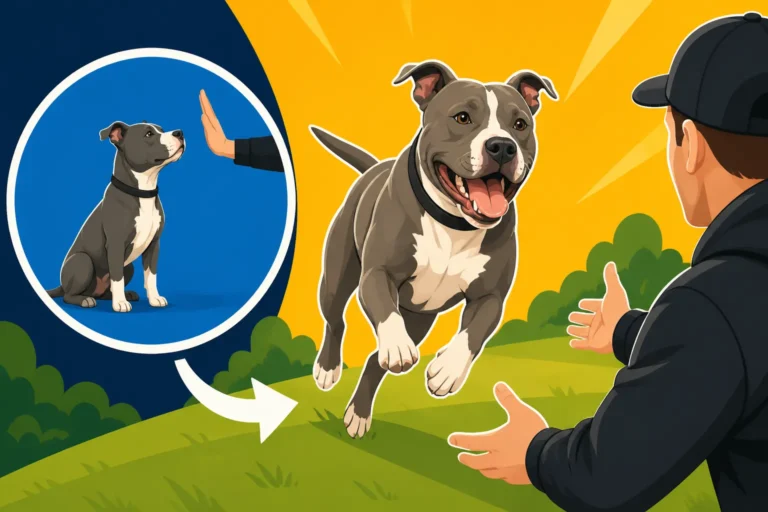
You will walk with your Pit Bull on a 10-foot line, then stop, give a "stay" command, and walk away about 10 feet. When called, your dog should enthusiastically and promptly return to you.
A reliable recall is arguably one of the most critical safety commands a dog can learn. For a Pit Bull, whose strength and speed are considerable, a strong "come" command is absolutely non-negotiable for their safety and for managing interactions in public spaces. Recall Training a Pit Bull From Scratch should be a priority for all owners. This test item ensures that even with a bit of distance and distraction, your Pit Bull will prioritize returning to you. It's the ultimate demonstration of your dog's responsiveness and your ability to maintain control, which builds immense confidence in both of you. It is the command that could literally save their life, preventing them from running into traffic or approaching an unfriendly dog.
Test Item 8: Reaction to Another Dog
In this test, you and your Pit Bull will walk past another dog and handler team, about 20 feet apart, going in opposite directions. Both dogs should ignore each other and remain on a loose leash, without straining, barking, or lunging.
This is a significant hurdle for many dogs, and for Pit Bulls, it's often an area of intense scrutiny. Demonstrating that your Pit Bull can calmly pass another dog without reaction is essential for public acceptance and responsible ownership. While many Pit Bulls can be dog-selective, or prefer not to interact with unfamiliar dogs, this test doesn't require them to play with the other dog – just to ignore them politely. Pit Bull Dog Selectivity and Multi-Dog Homes explores this more. This skill reassures other dog owners and the general public that your Pit Bull is under control and not a threat, even in the presence of other canines. It shows that you have worked on managing their responses and that they can be a polite presence in multi-dog environments.
Test Item 9: Reaction to Distraction
The evaluator will create two common urban distractions – typically a loud noise (like a dropped metal bowl) and a visual distraction (like a person jogging past). Your Pit Bull should show only casual interest or a momentary startle, then recover quickly and remain under control, without panic, aggression, or excessive fear.
Life is full of unexpected noises and movements. For a Pit Bull, being able to handle sudden distractions calmly is a testament to their stable temperament and your effective training. This skill is about building resilience and confidence, teaching your dog that startling events are just that – startling – and not necessarily threatening. A Pit Bull that can maintain composure when a skateboarder zooms by or a car backfires demonstrates that they are well-socialized and desensitized to common environmental stimuli, making them a safer and more enjoyable companion in any setting. A Pit Bull That Panics When the Door Shuts is an example of a related issue this training helps to prevent.
Test Item 10: Supervised Separation
For the final test item, you will leave your Pit Bull with the evaluator for three minutes. Your dog should remain calm and quiet, not showing excessive distress, barking, whining, or destructive behavior.
This test focuses on your Pit Bull's confidence and comfort when briefly separated from you. It's a measure of their emotional stability and lack of excessive separation anxiety. For many owners, knowing their dog can be left alone, even for short periods, without undue stress is a huge relief. This skill proves that your Pit Bull is secure and doesn't rely solely on your constant presence to feel safe. It’s an indicator that they are well-adjusted and can handle being without you when necessary, whether it’s for a quick errand or a brief time in a boarding facility. This builds confidence in everyone, showing your dog is emotionally robust.
Here's a quick summary table of the CGC test items:
| Test Item | Purpose & Key Skill Demonstrated | Why It Matters for a Pit Bull | Key Training Tip |
|---|---|---|---|
| 1. Accepting a Friendly Stranger | Polite, calm greeting of unfamiliar people | Counters aggression stereotypes; proves approachability. | Practice with various friendly people in different settings, rewarding calm interactions. |
| 2. Sitting Politely for Petting | Tolerates gentle handling from strangers | Shows friendliness & comfort with human touch; important for vet/groomer visits. | Gradually introduce petting from friends, increasing duration and rewarding stillness. |
| 3. Appearance and Grooming | Calm acceptance of grooming/inspection | Ensures necessary vet care & hygiene can be performed without stress. | Regular positive handling of ears, paws, and mouth; pair with high-value treats. |
| 4. Out for a Walk (Loose Leash) | Walks without pulling or lunging | Essential for managing a strong dog; enhances public safety & enjoyment of walks. | Consistent reward for walking beside you; use turns and stops to redirect focus. |
| 5. Walking Through a Crowd | Navigates busy areas calmly & focused on owner | Demonstrates composure amidst distractions; shows social aptitude. | Practice in mildly busy areas, gradually increasing foot traffic; reward sustained focus on you. |
| 6. Sit & Down on Command/Stay | Impulse control & reliability of basic commands | Critical safety commands; establishes clear communication & owner leadership. | Build duration & distance incrementally; practice in varied environments with increasing distractions. |
| 7. Coming When Called (Recall) | Prompt, enthusiastic return to owner | Life-saving command; paramount for safety & control in open spaces. | Start in low-distraction environments; use high-value rewards; make coming back a fun game. |
| 8. Reaction to Another Dog | Calmly ignores passing dogs | Counters reactivity stereotypes; vital for polite public interactions with other canines. | Practice with a neutral, calm "helper dog" at a distance, decreasing space as tolerance grows. |
| 9. Reaction to Distraction | Recovers quickly from sudden sights/sounds | Builds resilience & confidence; shows stable temperament in unpredictable situations. | Gradually expose to mild noises/movements, rewarding calm curiosity or quick recovery. |
| 10. Supervised Separation | Remains calm when owner is briefly out of sight | Demonstrates emotional stability & confidence alone; helps prevent separation anxiety. | Practice short separations, gradually increasing time; ensure dog is comfortable in their designated "stay" spot. |
Preparing Your Pit Bull for the CGC Test
Getting your Pit Bull ready for the Canine Good Citizen test is a journey, not a sprint. It involves consistent effort, positive reinforcement, and understanding that every dog learns at their own pace. The preparation process itself is incredibly rewarding, deepening your bond and setting your Pit Bull up for a lifetime of good manners.
Starting Early with Foundation Training
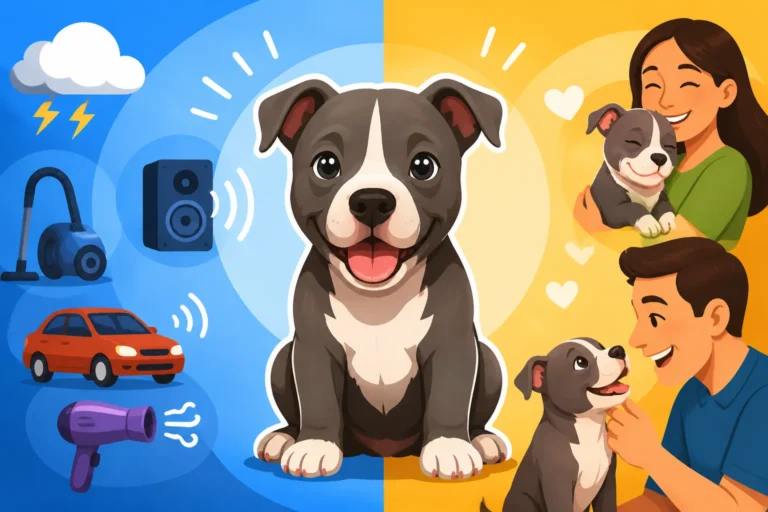
The best time to start thinking about the CGC is as early as possible – ideally during puppyhood. Puppy socialization is absolutely critical for any dog, but especially for Pit Bulls. Exposing your Pit Bull puppy to a wide variety of sights, sounds, people, and appropriate dog interactions in a positive and controlled manner lays the groundwork for a confident, well-adjusted adult. A well-socialized puppy is far less likely to be fearful or reactive later in life, making CGC training much smoother. Socializing a Pit Bull Puppy Thoroughly should be a priority.
Beyond socialization, basic obedience commands like "sit," "stay," "come," and "down" are the building blocks of the CGC test. Incorporate these into your daily routine from day one. Use positive reinforcement methods – treats, praise, and toys – to make learning fun and rewarding. Avoid harsh corrections, which can erode trust and create fear, particularly in sensitive dogs. A strong foundation built on mutual respect and clear communication will make the more nuanced behaviors required for the CGC test much easier to teach. Many online programs, like those offered by BAXTER & Bella, provide structured puppy training courses that walk you through these essential first steps, which can be a fantastic resource for new owners looking for guidance right from the start. These programs often break down complex behaviors into simple, manageable lessons that you can do at home.
Practice, Practice, Practice: Real-World Scenarios
One of the biggest mistakes people make when training for any certification is only practicing in a single, controlled environment. The CGC test evaluates real-world behavior, which means your Pit Bull needs to perform reliably amidst real-world distractions. This means taking your training beyond your living room or backyard.
Practice your commands and the specific CGC test items in as many different locations as possible. Visit local parks (during less busy times initially), quiet outdoor shopping areas where dogs are allowed, pet-friendly hardware stores, or even a friend’s house. Expose your Pit Bull to different surfaces, sounds, and people. If your dog is struggling with a particular distraction, practice at a greater distance from it, gradually moving closer as they show improvement. For instance, if passing other dogs is tough, start by practicing "loose leash walking" and "focus" across the street from a dog park, then slowly work your way closer as your Pit Bull learns to ignore the activity. Using high-value treats and praise for successful navigation of these scenarios is key. Equip yourself with practical tools like a durable treat pouch and a comfortable training leash, which you can easily find on Amazon, to make these outings smoother and more productive. Remember, consistency is more important than perfection at first; every positive repetition builds confidence.
Finding a Qualified Trainer or Class
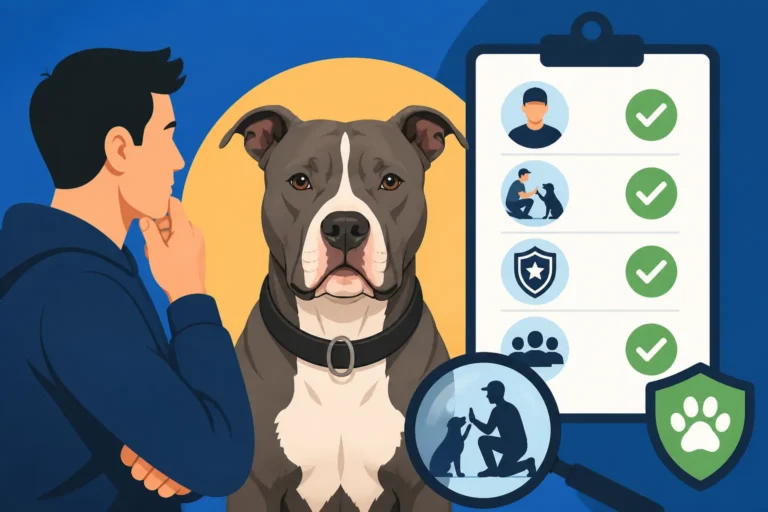
While you can certainly work on CGC skills at home, enrolling in a dedicated CGC class or working with a professional trainer can be incredibly beneficial. A good trainer will provide invaluable guidance, offer troubleshooting tips, and help you identify areas where you and your Pit Bull might need extra work. Look for trainers who use positive reinforcement methods and have experience working with strong, active breeds like Pit Bulls. Finding a Trainer Experienced With Pit Bulls is crucial for success.
Group classes, in particular, offer a built-in "distraction environment" that is perfect for practicing many of the CGC items, especially "walking through a crowd" and "reaction to another dog." Being in a room with other dogs and handlers, all working on similar skills, provides a realistic simulation of public situations. The trainer can also observe your dog's body language and offer insights you might miss. When vetting trainers, don't hesitate to ask about their experience with various breeds, their training philosophy, and if you can observe a class before committing. A good trainer will be happy to answer your questions and ensure you feel comfortable with their approach. Their expertise can help tailor strategies to your Pit Bull's individual personality and learning style, making the process more efficient and enjoyable.
The Test Day Experience and What to Expect
Test day can feel a bit nerve-wracking, both for you and your Pit Bull. But knowing what to expect can significantly ease any anxiety and help you both perform your best. Remember, the evaluator wants to see your dog succeed, and the environment is designed to be fair and encouraging.
What to Bring and How to Prepare Mentally
To ensure a smooth test day, preparation starts before you even leave home. First, make sure your Pit Bull is comfortable and has had a chance to relieve themselves just before the test; a full bladder or uncomfortable bowels are major distractions. A bit of exercise beforehand – a good walk or a quick game of fetch – can help burn off excess energy, but avoid over-tiring them. You want them calm and focused, not exhausted.
When you arrive, have all your essentials ready. You’ll need a buckle or slip collar (no choke chains, prong collars, or electronic collars are allowed for the test itself, though you might use them for training), and a standard 6-foot leash. Make sure your Pit Bull is wearing identification. Bring plenty of high-value treats that your dog absolutely loves – soft, easy-to-chew treats are usually best. Also, don't forget water for your dog and a bowl. Mentally, it's important for you to stay calm and confident. Dogs are incredibly attuned to our emotions, so if you're stressed, your Pit Bull will pick up on it. Take deep breaths, remember all the hard work you've both put in, and trust your training. The evaluator is there to assess, not to judge you, so relax and enjoy demonstrating your Pit Bull's excellent manners.
The Role of the Evaluator and Test Environment
The Canine Good Citizen evaluator is a certified professional whose role is to objectively assess your Pit Bull's performance on each of the ten test items. They are looking for clear demonstrations of good manners and responsiveness, not perfection. They understand that dogs aren't robots and that a momentary lapse in focus or a little enthusiasm is natural. Their goal is to see if your dog can generally perform the tasks required.
The test environment is usually set up to provide typical distractions found in everyday life, but it's generally a controlled setting. This might be an indoor training facility, a quiet park, or a designated area at a dog event. The evaluator will explain each task clearly before you perform it. You are generally allowed to praise your dog, encourage them verbally, and use treats during the test, as long as these aids are not excessive or used to lure the dog into performing the command. The key is to demonstrate that your Pit Bull understands and responds to your cues, even with a friendly stranger and mild distractions present. They want to see that your Pit Bull is a safe, polite, and confident member of your community.
Handling Setbacks and Re-Testing
It's absolutely okay if your Pit Bull doesn't pass every single item on the first try. This isn't a pass/fail high-stakes exam; it's a measure of where your dog is in their training journey. Many dogs and owners need a second or even third attempt to successfully earn their CGC title. If your Pit Bull doesn't pass, the evaluator will typically provide feedback on the specific areas where you need more practice. This isn't a judgment; it's constructive advice.
View any setback as an opportunity to refine your training and strengthen your bond. Focus on those specific areas that need improvement, perhaps revisiting certain exercises with your trainer or practicing more in varied environments. For example, if your Pit Bull struggled with A Pit Bull That Greets Too Enthusiastically, you might spend more time working on polite greetings with a "four paws on the floor" rule. The important thing is not to get discouraged. Every training session, whether it leads to a pass or a learning opportunity, builds your Pit Bull's skills and confidence. Once you feel your Pit Bull is ready, you can simply schedule another test with the same or a different evaluator. The journey itself is often more valuable than the certificate, though earning that title for your Pit Bull is certainly a proud moment!
Beyond the CGC: Advanced Titles and Community Impact
Earning the Canine Good Citizen title for your Pit Bull is a fantastic achievement, but it doesn't have to be the end of your training journey. The CGC is a springboard to more advanced certifications and opens doors to incredible opportunities for your Pit Bull to positively impact your community, further challenging stereotypes.
Advanced AKC Titles: CGC Advanced, Urban CGC, and Community Canine
Once your Pit Bull has mastered the basic CGC, you might find yourself wanting to do more! The AKC offers several advanced levels that build upon the foundation of the Canine Good Citizen. These titles demonstrate an even higher level of training and public manners.
- AKC Community Canine (CGC Advanced or CGCA): This test takes place in a real-world public setting, like a park or shopping center, not a training hall. It evaluates your Pit Bull's skills in more challenging, distracting environments. For example, your dog might need to "stay" while you walk out of sight or perform a longer "down-stay" with distractions. This truly tests their reliability in everyday community settings and takes the basic CGC to the next level of real-world applicability.
- AKC Urban CGC (CGCU): This title focuses on manners specifically for urban environments. It includes items like safely navigating busy sidewalks, remaining calm in an elevator, walking through a door (demonstrating control in high-traffic areas), and being able to wait while you interact with a public vendor. For Pit Bulls living in cities or frequently visiting urban areas, this certification is incredibly valuable, proving their ability to handle the hustle and bustle with grace.
- Trick Dog Titles: While not directly related to good manners, earning Trick Dog titles can also be a wonderful way to showcase your Pit Bull's intelligence and trainability. These fun titles (Novice, Intermediate, Advanced, Performer) demonstrate their willingness to learn and engage with you, further breaking down stereotypes about their temperament.
Pursuing these advanced titles not only strengthens your Pit Bull's skills but also further solidifies their role as a respected and well-behaved member of society. They continually prove that Pit Bulls are capable of excelling in a variety of roles and environments, making them fantastic ambassadors for their breed.
Therapy Dog Work and Public Access
Perhaps one of the most profound ways a Pit Bull can impact public perception is through therapy dog work. The Canine Good Citizen title is often a prerequisite for therapy dog certification, opening the door for your Pit Bull to visit hospitals, nursing homes, schools, and libraries. Therapy and Service Work With a Pit Bull is an incredible way for a Pit Bull to serve. Imagine the smile on an elderly patient's face when your gentle Pit Bull rests their head in their lap, or the joy a child experiences reading to a calm, non-judgmental dog. These interactions are incredibly powerful.
Therapy dogs provide comfort, reduce stress, and promote healing, and seeing a Pit Bull in this role directly challenges the harsh stereotypes. It showcases their inherent kindness, gentleness, and empathy. While therapy dogs don't have the same public access rights as service dogs, their presence in controlled settings makes a huge difference. For a Pit Bull to succeed in therapy work, they need an exceptional temperament – calm, friendly, patient, and tolerant of various sights, sounds, and handling. The rigorous training and evaluation for CGC and subsequent therapy dog certifications ensure that only the most suitable dogs participate, magnifying the positive impact these amazing animals can have.
Advocacy Through Example
Ultimately, a well-trained Pit Bull is the strongest advocate for the breed. Every time your CGC-certified Pit Bull walks politely on a leash, greets a stranger calmly, or ignores a barking dog, they are actively changing minds and perceptions. Each positive interaction is a small victory against prejudice.
By investing in your Pit Bull's training, you're not just creating a well-behaved companion for yourself; you're contributing to a larger movement to reframe the narrative around Pit Bulls. You become a visible example of responsible ownership and a testament to the wonderful qualities these dogs possess. Continue to engage in training, participate in community events (where appropriate and safe), and always be ready to politely educate people about your dog. Share your Pit Bull's achievements, talk about their personality, and let their good behavior speak volumes. The more well-mannered Pit Bulls are seen confidently and calmly integrating into our communities, the sooner the unjust stereotypes will begin to fade, creating a better world for all Pit Bulls.
Disclaimer
This article is for general informational purposes only and does not constitute professional advice. Laws, prices and regulations vary by location and change over time. Consult a qualified professional for guidance on your specific situation.