The 1936 Studbook Opening That Split the Type
Understanding the lineage and evolution of what we now commonly refer to as "Pit Bulls" can feel like sifting through a dusty old family album with missing captions. It's truly baffling how a group of dogs so beloved can have such a convoluted history, especially when trying to pinpoint exact origins and distinctions. This guide aims to untangle one of the most significant moments in that history: the 1936 studbook opening, which created a pivotal split in what we understand as the Pit Bull type, shedding light on why identifying these dogs accurately remains a challenge even today.
The Canine Landscape Before the Great Divide
Before we dive into the specific events of 1936, it's important to understand the world these dogs inhabited. For generations, the ancestors of today's Pit Bulls were primarily working dogs, valued for their strength, gameness, and loyalty. They were developed from crosses between various bulldogs and terriers, initially for blood sports like bull-baiting and bear-baiting in England, and later, after these barbaric practices were outlawed in 1835, for ratting and dog-fighting. When these "Bull and Terrier" type dogs made their way to America, they continued to be used for a variety of tasks, including farm work, hunting, and companionship, often simply referred to by their function or their appearance.
Early Bull and Terrier Ancestry
The core of the Pit Bull lineage lies in those early Bull and Terrier crosses. Imagine the robust, tenacious bulldog, bred for its power and grip, combined with the agile, spirited terrier, known for its quickness and drive. This combination created a dog that was incredibly versatile, hardy, and determined—traits that made them invaluable to early American settlers and working-class families. These dogs were not bred to a rigid, standardized appearance as much as they were for their working ability and temperament. They were simply "dogs of the people," prized for their utility and companionship, rather than for specific show ring aesthetics.
There wasn't a universal kennel club standard for these dogs in the late 19th or early 20th century in the same way we think of purebred dogs today. Instead, various groups and individuals had their own ideas of what made a good fighting dog, a good farm dog, or a good family companion within this broad type. Their names often reflected their purpose or origin, leading to terms like "bull terrier," "Yankee terrier," or simply "pit dog." This informal naming and breeding created a diverse pool of dogs that, while sharing common ancestry and characteristics, lacked a unified registry or official breed designation.
The Rise of Dog Registries and Breed Recognition
As dog ownership evolved in America, so did the desire for formal recognition and standardization. The late 19th and early 20th centuries saw the emergence of various kennel clubs, each seeking to define and register "purebred" dogs. The American Kennel Club (AKC), founded in 1884, quickly became the most prominent registry, focusing on conformation shows and the establishment of strict breed standards. However, the existing Bull and Terrier type dogs, with their history in less savory activities, faced an uphill battle for acceptance.
Many of these dogs, despite their admirable qualities, carried the stigma of their fighting past. While the AKC was busy registering breeds like the English Setter and the Collie, the tenacious, powerful "pit dog" was largely overlooked or actively shunned. This created a void, leading to the formation of other organizations more aligned with the working-class owners of these dogs. It's a key part of the story leading up to 1936, as it sets the stage for why two separate paths eventually emerged for essentially the same type of dog.
The Great Divide: AKC's Decision and UKC's Stand
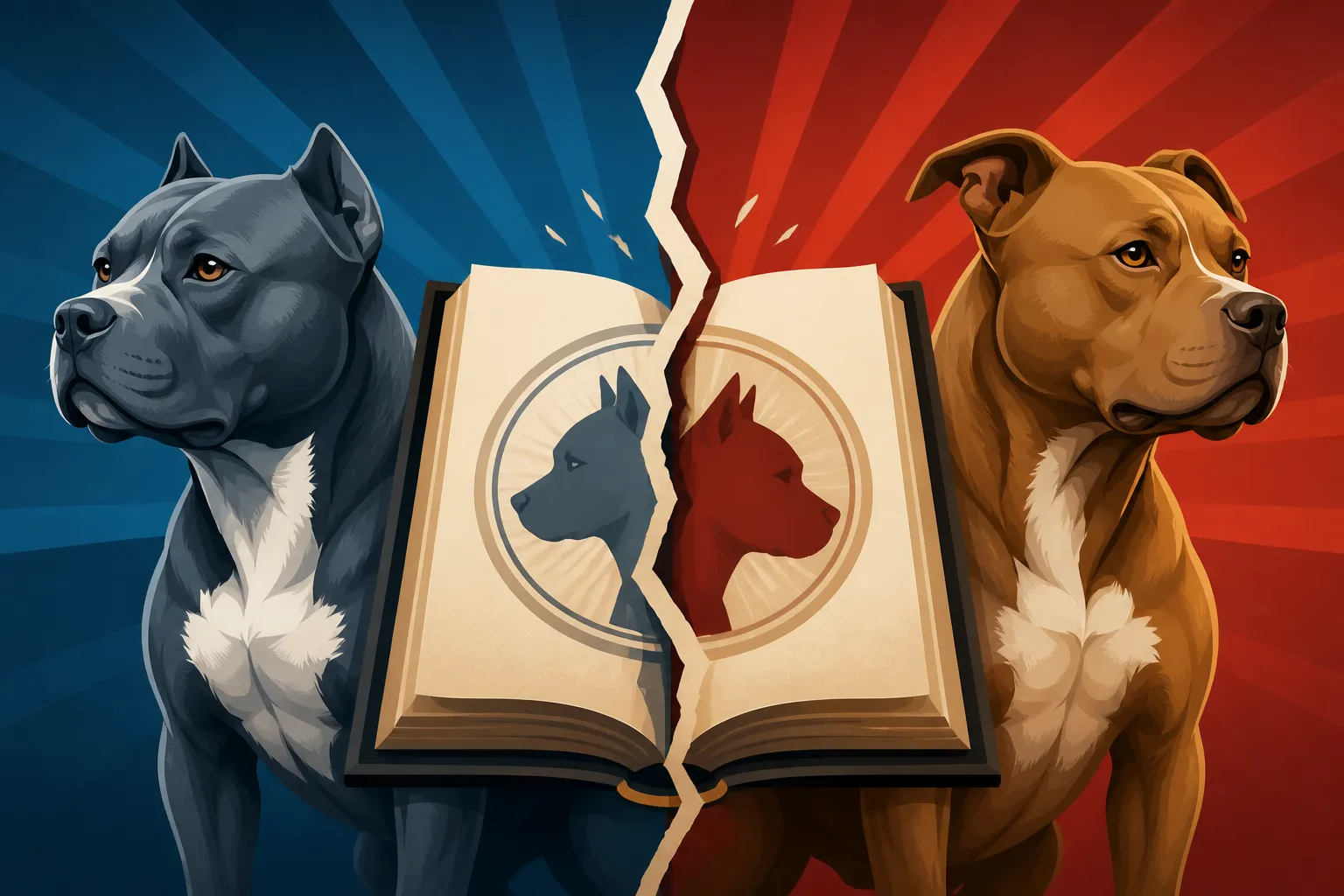
The year 1936 wasn't just another year; it was a watershed moment that solidified the split between what many consider to be two distinct, yet intimately related, "Pit Bull" types. This divide wasn't about the dogs themselves changing overnight, but rather about how different kennel clubs chose to categorize and promote them.
The United Kennel Club and the American Pit Bull Terrier
Long before the AKC made its move, the United Kennel Club (UKC), founded in 1898, had already embraced these powerful Bull and Terrier dogs. The UKC was established with a focus on working dogs, and they proudly recognized the American Pit Bull Terrier (APBT) as one of their foundational breeds. Their standard emphasized athleticism, gameness, and utility, reflecting the heritage of these dogs as all-around working animals. For UKC enthusiasts, the APBT was the epitome of canine courage, strength, and unwavering loyalty.
The UKC understood that many owners cherished these dogs not just for their appearance but for their inherent drive and capabilities. They championed the breed through performance events like weight pull and obedience trials, showcasing their incredible physicality and trainability. The American Pit Bull Terrier and the UKC has always been about honoring the complete dog, recognizing both its formidable physical attributes and its strong, often misunderstood, personality. They valued the historical roots of the breed, including its selective breeding for dog-to-dog gameness, even as they worked to shift the focus towards responsible ownership and ethical competition.
The American Kennel Club's Introduction of the Staffordshire Terrier
The American Kennel Club, ever the arbiter of purebred status, eventually recognized the qualities of the Bull and Terrier type. However, they approached it with a clear intention to distance the newly recognized breed from the "pit dog" connotation. In 1936, the AKC opened its studbook to what it called the Staffordshire Terrier, a dog clearly derived from the same ancestral stock as the UKC's American Pit Bull Terrier. This was a deliberate move to create a distinct identity for these dogs within the AKC framework.
The AKC's ideal Staffordshire Terrier was envisioned as a companion and show dog, with an emphasis on a stable temperament suitable for family life and the show ring. While sharing many physical similarities with the APBT, the AKC standard tended to lean towards a slightly heavier build and a less "gamey" presentation, aiming for a dog that would appeal to a broader public. This strategic rebranding and separate registration essentially created two parallel paths for dogs of the same fundamental type. This initial recognition as the Staffordshire Terrier would later evolve, but its 1936 inception was the crucial first step in the AKC's engagement with this powerful lineage.
What the 1936 Studbook Opening Actually Meant
The opening of the AKC studbook in 1936, and the subsequent recognition of the Staffordshire Terrier, wasn't just a bureaucratic formality. It had profound practical implications that rippled through the breeding world, influencing genetics, public perception, and even how individuals chose to identify their dogs.
Dual Registration and Breeding Choices
For a period after 1936, some dogs could theoretically be dual-registered with both the UKC as American Pit Bull Terriers and the AKC as Staffordshire Terriers. This overlap created a complex situation for breeders. If you had a dog with excellent conformation and a steady temperament, you might choose to register it with the AKC to participate in their prestigious conformation shows. If your dog excelled in working trials or had a strong lineage known for performance, the UKC remained the primary choice. This meant that, for a time, the genetic lines were still very much intertwined.
However, as time went on, breeders began to specialize. Those focused on the AKC show ring started selecting for traits that would win there – specific head shapes, body proportions, and temperaments that matched the AKC's evolving standard. Simultaneously, UKC breeders continued to prioritize the working capabilities and original characteristics of the APBT. This natural divergence, driven by differing club priorities and standards, began to subtly shape the physical and sometimes even temperamental distinctions between the two "types." The concept of How AmStaffs and APBTs Split in the 1930s truly began with these differing breeding goals.
Setting the Stage for the AmStaff vs. APBT Distinction
The 1936 decision effectively laid the groundwork for the future distinction between the American Pit Bull Terrier (APBT) and the American Staffordshire Terrier (AmStaff). The AKC's initial recognition of the "Staffordshire Terrier" created a distinct branch from the broader Pit Bull family tree. Over the decades, as the AKC's standard refined and breeders honed their lines for specific traits, this branch grew further apart.
The key takeaway is that originally, they were essentially the same dog, just given different names and registered under different organizational philosophies. The AKC's renaming in 1972 to "American Staffordshire Terrier" (to avoid confusion with the smaller Staffordshire Bull Terrier from England) solidified this split, ensuring that the AKC line would be distinct in name as well as purpose. This historical moment is crucial for understanding why we now have distinct breed standards for dogs that, to the untrained eye, often look incredibly similar.
The Divergence of Traits and Standards
Over the decades following 1936, the two main lines of these bull and terrier dogs — the UKC's American Pit Bull Terrier and the AKC's American Staffordshire Terrier — began to evolve along slightly different trajectories. While they share a common ancestor and many fundamental characteristics, the focus of their respective registries led to subtle, yet significant, divergences in their accepted standards and the breeding practices that shaped them.
Refining the American Pit Bull Terrier Standard
The UKC, having recognized the American Pit Bull Terrier earlier, continued to refine its standard with an emphasis on the breed's historical working capabilities. Their standard describes a dog that is powerful, agile, and courageous, with a well-muscled, athletic build. While appearance is important, the UKC strongly values the dog's temperament, drive, and health, all contributing to its ability to perform. The APBT is often described as having a slightly more athletic, streamlined build compared to the AmStaff, reflecting its heritage as a versatile working dog.
Breeders committed to the UKC standard often focus on maintaining the characteristic "gameness" – not in the sense of aggression, but as an unwavering determination and spirit to complete a task, whether that's in weight pulling, agility, or simply being a resilient companion. They seek to preserve the original qualities that made these dogs so prized for their strength and loyalty. If you're looking for gear or supplements for a highly active APBT, you might find specific strength-and-conditioning focused products on sites like Chewy that cater to their robust build and energy levels. This continuous focus on performance and function meant that while the AKC branch was shaping a show dog, the UKC branch was preserving the working essence.
Shaping the American Staffordshire Terrier Standard
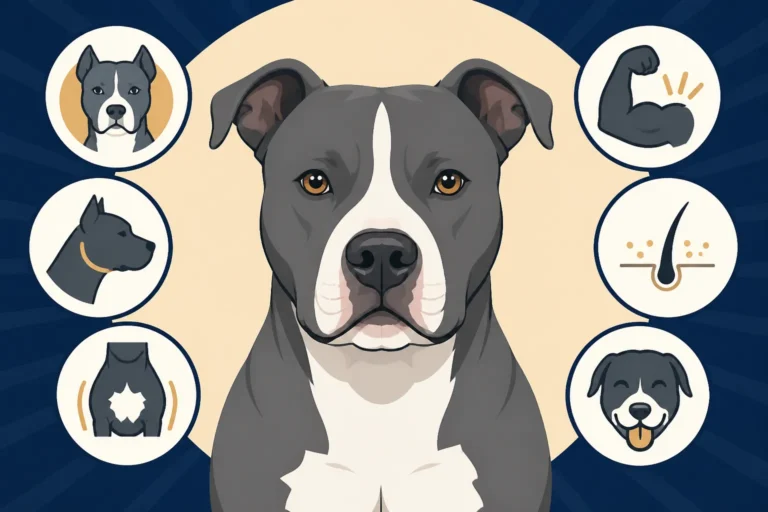
The AKC's vision for the Staffordshire Terrier, later renamed the American Staffordshire Terrier, leaned more towards a uniform, impressive show dog. The AmStaff as the AKC Recognizes It standard emphasizes a powerful, muscular, and stocky build, with a specific head shape and expression designed for the conformation ring. AmStaffs are generally described as slightly heavier in bone and broader in head than many APBTs, though there's certainly overlap. The emphasis is on a confident, well-balanced temperament, making them excellent family companions and show competitors.
Breeders of AmStaffs focus intensely on adherence to this specific standard, selecting for traits that align with the ideal AKC conformation. This doesn't mean AmStaffs aren't athletic or driven; many excel in various dog sports. However, the primary breeding goal within the AKC framework is to produce dogs that fit the written standard for appearance and a stable temperament suitable for public life and competitive exhibition. This long-term, focused breeding for a particular aesthetic and temperament has cemented the AmStaff as a distinct, recognized breed within the AKC, even if its roots are undeniably intertwined with the APBT.
The Lasting Legacy of the Split
The 1936 studbook opening and the subsequent divergence between the American Pit Bull Terrier and the American Staffordshire Terrier have left an indelible mark on how we perceive and categorize these dogs today. It created a situation where two closely related populations of dogs, sharing a common history, became distinct breeds in the eyes of different major registries.
Impact on Breed Identification and Public Perception
One of the most immediate and challenging legacies of this split is the confusion it created around breed identification. To the average person, and often even to animal professionals, an American Pit Bull Terrier and an American Staffordshire Terrier can look remarkably similar. Both are powerful, muscular, short-coated dogs with similar head shapes and expressions. This visual ambiguity is precisely why How Accurate a Visual Pit Bull Call Is is often fraught with errors. When shelters or public agencies label a dog as a "Pit Bull," they are often applying a visual descriptor rather than a precise breed identification.
This ambiguity feeds into the broader public perception challenges faced by all dogs falling under the "Pit Bull type" umbrella. Because the official breed definitions are complex and rooted in historical decisions of kennel clubs, the public often lumps them all together. This makes it difficult to advocate for specific breeds or to counter negative stereotypes effectively, as the very definition of "Pit Bull" remains a moving target in common discourse.
The Evolution of the "Pit Bull Type" Concept
The 1936 split, more than anything, underscored why the term "Pit Bull" is best understood as a type of dog, rather than a single, universally recognized breed. It encompasses the American Pit Bull Terrier, the American Staffordshire Terrier, and even the Staffordshire Bull Terrier (a smaller English cousin not directly involved in the 1936 split but sharing similar ancestry), along with countless mixes that share physical characteristics. Why Pit Bull Is a Type and Not a Breed is a concept born directly from these historical divergences and the continued lack of a single, unifying breed standard across all major registries.
Understanding this historical context helps us grasp why DNA testing is often sought after by owners of visually identified Pit Bulls. Many want to know Whether a DNA Test Settles the Pit Bull Question, hoping to get a definitive answer about their dog's heritage. While DNA tests can identify specific breeds in a dog's genetic makeup, they often reveal a mix of these related breeds, further illustrating the deep intertwining of their lineages and the artificial nature of some of the historical splits.
Navigating the "Pit Bull" Label in Modern Times
Living with or advocating for a Pit Bull type dog in the modern era means grappling with a legacy shaped by historical decisions like the 1936 studbook opening. The complexities born from that time continue to influence everything from housing restrictions to insurance policies and even everyday interactions in public spaces.
Understanding Breed-Specific Legislation and Insurance
The historical confusion and the resulting "Pit Bull" label have had real-world consequences, most notably in the form of breed-specific legislation (BSL) and insurance restrictions. Many municipalities, states, and even entire countries have enacted laws targeting "Pit Bulls," often based on visual identification rather than verifiable breed genetics. This creates immense challenges for owners, who might find themselves unable to secure housing, obtain adequate insurance, or even travel freely with their beloved companion.
The irony is that these laws often fail to distinguish between an AKC-registered American Staffordshire Terrier, a UKC-registered American Pit Bull Terrier, or a mixed-breed dog that simply looks like a Pit Bull. The nuanced historical distinctions are completely lost in the broader, often fear-driven, application of the "Pit Bull" label. This makes understanding the precise lineage of your dog, even through resources like those found on Chewy, incredibly important for navigating these external challenges. It's not just about curiosity; it's about practical survival for you and your dog.
The Importance of Responsible Ownership and Advocacy
Given the historical backdrop and ongoing challenges, responsible ownership of a Pit Bull type dog carries an extra layer of responsibility. This means committing to thorough training, proper socialization, and being a diligent ambassador for your dog. A well-trained and well-behaved Pit Bull type dog is the best argument against negative stereotypes, showing the true potential of these magnificent animals. Organizations dedicated to Pit Bull advocacy work tirelessly to educate the public, challenge BSL, and promote accurate information, often referencing the very historical points we've discussed to explain the complexity of the "breed."
This also means being prepared to educate others. When someone asks about your dog's breed, explaining the history of What the Word Pit Bull Actually Covers and how various registries like the AKC and UKC have played a role can be incredibly enlightening. It shifts the conversation from simplistic assumptions to a deeper understanding of canine history and genetic diversity.
The Ongoing Search for Clarity and Acceptance
The journey from the early Bull and Terrier crosses to the modern American Pit Bull Terrier and American Staffordshire Terrier is a testament to human influence on canine development. The 1936 studbook opening was a critical juncture, formalizing a split that continues to shape our understanding of these dogs. As owners and advocates, our role is to continue pushing for clarity, dispelling myths, and celebrating the loyal, intelligent, and affectionate individuals that comprise the diverse "Pit Bull type." By understanding their history, we can better advocate for their future.
| Trait / Category | UKC American Pit Bull Terrier (APBT) | AKC American Staffordshire Terrier (AmStaff) |
|---|---|---|
| Primary Registry | United Kennel Club (UKC) | American Kennel Club (AKC) |
| Year of Recognition | 1898 (APBT) | 1936 (as Staffordshire Terrier) |
| Emphasis in Standard | Athleticism, working ability, gameness, overall utility | Conformation (show ring), stable temperament, specific aesthetics |
| General Build | Often described as more athletic, streamlined, powerful without being bulky | Often described as more stocky, heavier-boned, broader head |
| Temperament Focus | Determined, courageous, high drive, tenacious, family loyal | Confident, good-natured, stable, companionable, excellent family dog |
| Original Purpose (Post-1835) | Working dog, farm dog, companion, performance events, fighting (historical) | Companion, show dog, family pet |
| Overlap with UKC APBT | Historically, significant overlap; some dual registration initially | Historically, developed from the same stock as the APBT |
| Modern Identification | Often part of the broader "Pit Bull type" label | Distinct AKC breed, but still often visually mistaken for "Pit Bull type" |
Disclaimer
This article is for general informational purposes only and does not constitute professional advice. Laws, prices and regulations vary by location and change over time. Consult a qualified professional for guidance on your specific situation.