Why No Registry Recognizes a Breed Called Pit Bull
It's incredibly confusing, isn't it? You hear "Pit Bull" everywhere, see countless dogs labeled as such, but then you try to look it up on an official breed registry like the American Kennel Club, and you come up empty-handed. This common frustration leaves many dog lovers wondering why a dog so prevalent seems to exist outside of formal recognition. This guide will dive deep into the fascinating, and sometimes frustrating, world of "Pit Bull" identification, clarifying why it's a type rather than a single recognized breed and what that means for owners and enthusiasts alike.
Understanding the "Pit Bull" Term as a Type
The biggest hurdle in understanding why "Pit Bull" isn't a recognized breed name by most major kennel clubs is realizing that "Pit Bull" isn't a breed at all. Instead, it's a blanket term, a catch-all category that people use to describe a variety of dogs with similar physical characteristics and a shared history. Think of it like calling all hounds "hound dogs" – it's accurate in a general sense, but it doesn't specify if you're talking about a Basset Hound, a Beagle, or a Bloodhound.
The Historical Evolution of the "Pit Bull" Label
To truly grasp this concept, we need a quick trip back in time. The ancestors of today's "Pit Bull" type dogs were originally developed in the British Isles from crosses between bulldogs and terriers. These dogs were bred for specific traits: the tenacity and strength of the bulldog, combined with the agility and gameness of the terrier. They were working dogs, used in activities that are thankfully now outlawed, such as bull-baiting and ratting. When these dogs made their way to America, their characteristics continued to be refined, leading to different lines and types based on what specific roles they filled, whether as farm dogs, companions, or for continued participation in illicit sports. This varied history means that from its very inception, the "Pit Bull" was never a single, uniform breed but rather a developing type. You can read more about The Bull and Terrier Origin of the Pit Bull to understand this history better.
Common Physical Traits Associated With the Type
So, if it's not a single breed, what makes a dog a "Pit Bull" in most people's eyes? Generally, these dogs share a distinctive muscular build, a broad head, strong jaws, and a short, smooth coat. Their appearance often conveys an impression of strength, athleticism, and a certain squareness to their overall silhouette. However, even within this general description, there's a lot of variation. Some dogs within the "Pit Bull" type might be stockier, while others are more lean and leggy. Coat colors and patterns are incredibly diverse, ranging from solid blacks and brindle to merle (though merle is usually considered non-standard for the traditional breeds). The visual identification is often so strong that shelters and the general public will readily label a dog as a "Pit Bull" based purely on these physical characteristics, even without knowing its genetic background. This can lead to a lot of confusion, especially when trying to pinpoint an exact breed.
The American Kennel Club and its Recognized Breeds
When we talk about official breed recognition, the American Kennel Club (AKC) is often the first organization that comes to mind in the United States. The AKC is known for its rigorous standards, maintaining a studbook of purebred dogs and promoting responsible breeding and dog sports. However, you won't find "Pit Bull" on their list of recognized breeds.
The American Staffordshire Terrier's AKC Journey
The closest the AKC comes to recognizing a "Pit Bull" is the American Staffordshire Terrier (AmStaff). The AmStaff actually shares a common ancestor with the American Pit Bull Terrier, and for a period, they were essentially considered the same dog. In the 1930s, the AKC, aiming to bring these dogs into the world of legitimate dog showing, began registering them. At that time, they were registered as Staffordshire Terriers. However, as breeders within the AKC began to emphasize specific physical traits — a slightly heavier bone structure and a more substantial head — to differentiate them from their United Kennel Club (UKC) counterparts, a split began to form. In 1972, the breed name was officially changed to American Staffordshire Terrier to acknowledge its American development and distinguish it from the smaller Staffordshire Bull Terrier from England. Today, the AmStaff has a clearly defined breed standard within the AKC, detailing everything from its ideal size and temperament to coat color and bite. It's truly a testament to how specific and particular breed recognition can be. You can delve into The AmStaff as the AKC Recognizes It for more details.
What the AKC Standard Values
The AKC's breed standards are highly detailed blueprints for what each recognized breed should ideally look like and act like. For the American Staffordshire Terrier, the standard emphasizes qualities like courage, intelligence, a muscular yet agile build, and a devoted, affectionate temperament with its family. Breeders striving for AKC recognition focus on adhering to these standards, aiming for uniformity in appearance and predictable temperament. They are looking for a dog that can excel in conformation shows, obedience, agility, and other AKC events. This focus on specific, quantifiable traits is a significant part of why the broader "Pit Bull" type, with its wide variations, doesn't fit into the AKC's system. They are looking for a singular, defined "breed," not a collection of similar dogs. This distinction is vital for understanding why so many dogs that look like "Pit Bulls" aren't recognized by the AKC.
The United Kennel Club and its Pit Bull Recognition
While the AKC doesn't recognize a breed called "Pit Bull," another prominent registry, the United Kennel Club (UKC), actually does. This is where much of the confusion begins for many people, as it creates a situation where one major organization acknowledges the name, while another does not.
The American Pit Bull Terrier in the UKC
The United Kennel Club was established with a focus on working dogs, and as such, it embraced the American Pit Bull Terrier (APBT) much earlier than the AKC. The UKC officially recognized the American Pit Bull Terrier in 1898. For the UKC, the APBT represented the quintessential American working dog, valued for its gameness, courage, and athletic ability. The UKC breed standard for the APBT is comprehensive, describing an agile, strong, and confident dog with a powerful build. Unlike the AKC's AmStaff, which leaned towards a slightly heavier dog, the UKC's APBT standard typically describes a dog that is more moderate in build, emphasizing functional athleticism over extreme substance. It’s important to remember that even within the UKC, strict adherence to the breed standard is expected for registered dogs. The American Pit Bull Terrier as the UKC Defines It offers a deeper look at this.
UKC's Emphasis on Working Heritage
The UKC's philosophy has always been rooted in recognizing and promoting working dog breeds, and the APBT fits perfectly into this tradition. The UKC offers titles in a wide array of performance events, from weight pull and agility to obedience and protection sports. For UKC breeders, producing dogs that not only conform to the physical standard but also possess the drive, intelligence, and stable temperament for these activities is paramount. This historical context and ongoing emphasis on performance and working ability are key reasons why the UKC has maintained the APBT as a distinct breed, while the AKC chose a different path with the AmStaff. The UKC sees the APBT as a valuable, active companion, capable of excelling in many different endeavors, and its recognition reflects that appreciation for its versatile working heritage.
The Staffordshire Bull Terrier: A Distinct English Breed
Beyond the American Pit Bull Terrier and the American Staffordshire Terrier, there’s another incredibly popular and much-loved breed that often gets lumped into the broad "Pit Bull" category: the Staffordshire Bull Terrier. This breed hails from England and has a distinct history and set of characteristics that set it apart.
Origins and Appearance of the Staffie
The Staffordshire Bull Terrier, affectionately known as the "Staffie," originated in Staffordshire, England, in the early 19th century. Like its American cousins, it was bred from crosses between bulldogs and terriers, primarily for dog fighting. However, after the outlawing of blood sports in 1835, responsible breeders worked to transform the Staffie into a companion dog, focusing on developing a stable temperament. The breed was officially recognized by The Kennel Club (UK) in 1935 and by the AKC in 1974. Physically, Staffies are notably smaller and more compact than either the APBT or the AmStaff. They are immensely muscular for their size, with a broad head, pronounced cheek muscles, and a powerful jaw, but their overall height and weight are significantly less. While they share the short, smooth coat and general "bull-and-terrier" look, their smaller stature is a key distinguishing feature. The Staffordshire Bull Terrier From England provides more context.
Temperament and Common Misconceptions
Despite their formidable appearance and historical background, Staffordshire Bull Terriers are renowned for their gentle, affectionate, and good-natured temperament, particularly with people. They are often called "nanny dogs" in the UK for their purported patience and protectiveness with children, although it is always crucial to supervise any dog and child interactions. They are known for being exceptionally people-oriented, craving human companionship and often displaying a clownish, playful side. This loving disposition is a hallmark of the breed, a testament to the dedicated breeding efforts that reshaped their purpose. However, because they share a similar "look" to other "Pit Bull" types, they often fall victim to the same breed-specific legislation and negative perceptions, despite their distinct breeding and generally excellent temperaments with humans. This makes their official recognition by major kennel clubs even more important, as it provides a clear standard and history for those who might otherwise dismiss them based on appearance alone.
Other "Bullies" and the Expanding Type
The landscape of "Pit Bull" type dogs has continued to evolve, with new variations and even distinct breeds emerging from the same ancestral lines. One of the most prominent of these is the American Bully, which adds another layer of complexity to the general "Pit Bull" term.
The American Bully Phenomenon
The American Bully is a relatively new breed, developed in the 1990s as a companion dog. It was selectively bred from American Pit Bull Terriers and American Staffordshire Terriers, with infusions from other bulldog-type breeds, to achieve a distinctive, heavy-boned, broad-chested, and very muscular physique. The goal was to create a dog with a gentler, more laid-back temperament than its working ancestors, emphasizing extreme loyalty and a family-friendly disposition. American Bullies come in several size varieties, from "Pocket" to "XL," each with specific characteristics but all sharing the overarching "bully" look. While many people might casually refer to an American Bully as a "Pit Bull" due to its similar appearance, it is considered a separate and distinct breed by its own registries, such as the American Bully Kennel Club (ABKC). To understand more, you can check out Whether an American Bully Is a Pit Bull. This divergence highlights how the "Pit Bull" type continues to diversify, with breeders focusing on different desired traits, whether it's working ability, specific aesthetics, or a particular temperament.
The Problem of Visual Identification and DNA Testing
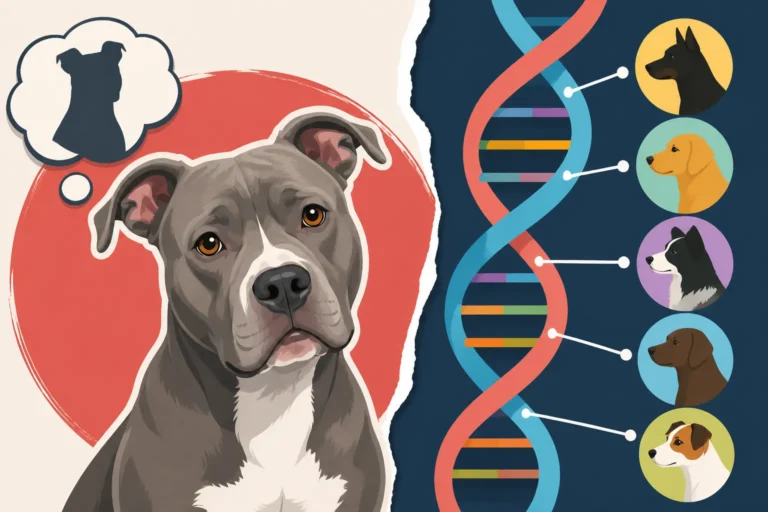
With so many distinct breeds and types sharing similar ancestries and appearances, reliable identification can be a real challenge. For most people, and even for many shelter workers, a dog's "Pit Bull" label is based purely on visual cues. They look at the head shape, muscle mass, and coat and make a judgment. However, studies have repeatedly shown that visual identification of "Pit Bull" type dogs is highly inaccurate. A dog might be labeled a "Pit Bull" but, when DNA tested, shows little to no genetic markers for American Pit Bull Terriers or American Staffordshire Terriers. Conversely, dogs that don't look like "Pit Bulls" might have significant amounts of those breeds in their genetic makeup. This discrepancy creates a significant problem, particularly in areas with breed-specific legislation (BSL), where a dog's fate can be determined by a subjective visual assessment rather than scientific evidence. It’s a compelling argument for DNA testing to clarify parentage, especially for dogs entering a new home or facing restrictions. On sites like Chewy, you can even find at-home DNA kits that can shed light on your dog's true heritage, helping to demystify its genetic makeup beyond its outward appearance. Why a Pit Bull Label Rarely Matches the DNA goes into this in more detail.
Why This Distinction Matters for Owners
The fact that "Pit Bull" is a type rather than a universally recognized breed isn't just an interesting semantic point for dog enthusiasts; it has profound real-world implications for owners and the dogs themselves. From housing restrictions to insurance woes, the lack of a single, consistent definition creates a challenging environment.
Navigating Breed Specific Legislation
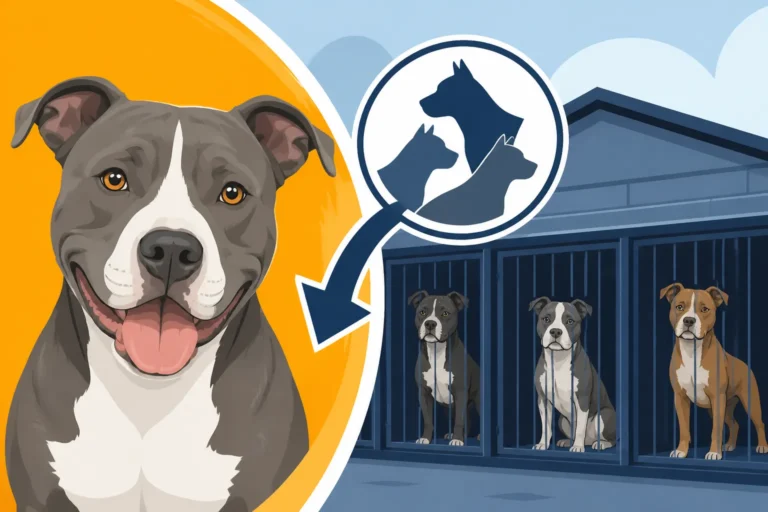
Perhaps the most significant impact of the "Pit Bull" label being a general type is its role in breed-specific legislation (BSL). Many cities, counties, and even entire countries have enacted laws that restrict or ban ownership of "Pit Bull" type dogs. The problem is, these laws rarely define "Pit Bull" with any precision. Is it an American Pit Bull Terrier? An American Staffordshire Terrier? Any dog that looks like one? This ambiguity means that a dog's life can be jeopardized based on a subjective visual assessment, regardless of its actual breed makeup or individual temperament. An owner might move to a new town, only to find their beloved companion suddenly declared illegal due to its appearance. This is a constant source of stress and heartbreak for many "Pit Bull" owners, forcing them to navigate complex legal landscapes simply because of their dog's physical traits. Understanding Where Pit Bull Legislation Still Applies is crucial for anyone considering one of these dogs.
Insurance and Housing Challenges
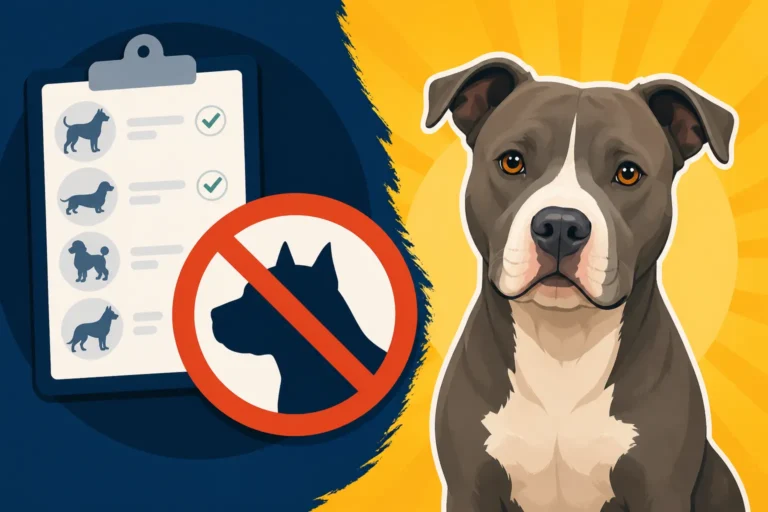
Beyond BSL, the "Pit Bull" label creates immense challenges in securing housing and adequate insurance. Many homeowners and renters insurance companies maintain "dangerous dog lists" that explicitly name "Pit Bulls" or "Pit Bull type dogs." This can lead to higher premiums, denial of coverage, or even outright cancellation of policies. Similarly, landlords, apartment complexes, and homeowners associations (HOAs) frequently have breed restrictions that prohibit "Pit Bulls," making it incredibly difficult for owners to find a place to live. Even if your dog is a well-behaved, registered American Staffordshire Terrier, the visual label of "Pit Bull" can trigger these restrictions. Owners often have to go to great lengths, sometimes obtaining certifications like the Canine Good Citizen (CGC) title or even DNA test results, to try and prove their dog isn't a "Pit Bull" in the eyes of these entities, or at least that it's a responsible, well-trained individual. These battles can be exhausting and costly, highlighting the systemic challenges posed by the broad and often ill-defined "Pit Bull" term. Finding Renters Insurance That Accepts a Pit Bull can be a major hurdle.
Public Perception and Responsibility
Finally, the lack of a clear, single breed definition contributes significantly to the negative public perception surrounding "Pit Bulls." When incidents involving "Pit Bull type dogs" occur, they are often reported broadly, reinforcing stereotypes rather than focusing on individual dog behavior or responsible ownership. This makes it challenging for conscientious owners to counter the pervasive myths and biases. As an owner of a "Pit Bull" type dog, you often feel like you're under a microscope. It places an extra burden of responsibility on you to ensure your dog is impeccably trained, well-socialized, and a true ambassador for its type. Finding quality training resources, perhaps through online pet supply retailers like Chewy that offer educational materials, becomes even more important. It means understanding Training a Pit Bull to a Higher Standard Than Other Dogs is not just good practice, but often a necessity for these dogs and their families.
How to Navigate the "Pit Bull" Identification Maze
Given all this complexity, what's a potential or current "Pit Bull" owner to do? Navigating this maze requires a combination of diligence, education, and proactive measures. It's about being prepared for scrutiny and being your dog's best advocate.
Understanding Your Dog's Specific Breed Identity
If you have a "Pit Bull" type dog, one of the most empowering steps you can take is to try and understand its specific breed identity. If your dog comes from a reputable breeder, they should provide registration papers from the UKC for an American Pit Bull Terrier or the AKC for an American Staffordshire Terrier. These papers are definitive proof of your dog's lineage and breed. If you adopted your dog from a shelter or rescue, its background might be less clear. In these cases, a DNA test can be incredibly insightful. While not universally accepted by all landlords or insurers, knowing your dog's genetic makeup can help you understand its potential inherited traits, health predispositions, and can sometimes serve as documentation against a broad "Pit Bull" label. Even if your dog is a mix of several "bull-and-terrier" types, understanding those components can help you frame conversations about your dog's true identity more accurately, rather than simply accepting a generic label.
Advocating for Your Dog and the Type
Being an owner of a "Pit Bull" type dog often means being an advocate. This means proactively educating yourself and others about the nuances of the "Pit Bull" designation. When discussing your dog, specify its breed if known (e.g., "She's an American Staffordshire Terrier, not just a 'Pit Bull'"). If it's a mix, explain its known components. Champion responsible ownership by ensuring your dog has excellent manners, is socialized appropriately, and is always under your control in public. Participate in training classes, earn obedience titles like the CGC, and make sure your dog is a model citizen. Carry documentation of your dog's training and health records. For essential supplies that support responsible ownership, from durable leashes and harnesses to enrichment toys, sites like Chewy offer a vast selection, ensuring you have what you need to keep your "Pit Bull" type dog happy, healthy, and well-managed.
Supporting Breed-Neutral Legislation
Finally, supporting breed-neutral legislation is critical for long-term change. This means advocating for laws that focus on individual dog behavior and responsible ownership, rather than banning or restricting breeds based on appearance. Many organizations are working to repeal BSL and promote comprehensive animal control ordinances that address dangerous dog behaviors regardless of breed. By educating yourself on these issues and supporting groups that champion fair and effective dog laws, you can contribute to a future where dogs are judged by their actions, not by their appearance or a generalized, misunderstood label. It's a long road, but one that is vital for the future of all dogs often labeled as "Pit Bulls."
Here's a quick comparison of the main breeds commonly referred to as "Pit Bulls" and their official recognition:
| Breed Name | Primary Registry | Common Nickname | Key Distinguishing Feature | Average Size (Weight) | General Temperament (with people) |
|---|---|---|---|---|---|
| American Pit Bull Terrier (APBT) | UKC | Pit Bull | Athletic, functional build, agile | 30-60 lbs (moderate) | Confident, good-natured, loyal |
| American Staffordshire Terrier | AKC | AmStaff | Heavier bone, broader head, substantial | 50-70 lbs (more substantial) | Courageous, devoted, intelligent |
| Staffordshire Bull Terrier | AKC, The Kennel Club (UK) | Staffie | Smaller, compact, very muscular for size | 24-38 lbs (small-medium) | Affectionate, gentle, good with children* |
| American Bully | ABKC (and others) | Bully | Very heavy-boned, broad, muscular, varied sizes | 60-120+ lbs (very substantial) | Loyal, calm, companion-focused |
*Note: While Staffies are known for being good with children, no dog should ever be left unsupervised with children, regardless of breed.
Disclaimer
This article is for general informational purposes only and does not constitute professional advice. Laws, prices and regulations vary by location and change over time. Consult a qualified professional for guidance on your specific situation.