Sergeant Stubby and Wartime Pit Bulls
It’s easy to get caught up in modern perceptions and misunderstandings about Pit Bull-type dogs, often overshadowing the incredible history and loyalty these animals have shown. Many people today still grapple with stereotypes, but looking back at figures like Sergeant Stubby offers a powerful counter-narrative, showing us the unwavering courage and intelligence of a dog that served his country with distinction and changed countless lives. This guide will explore the remarkable story of Sergeant Stubby and other wartime Pit Bulls, diving into their invaluable contributions during times of conflict and how their heroism shaped public opinion.
The Unexpected Hero: Sergeant Stubby's Journey to the Front
Sergeant Stubby's story is one for the ages, a testament to how an ordinary stray can become an extraordinary hero. He wasn't born into military lineage or trained at an elite academy; his journey began quite humbly, found wandering the streets and eventually adopted by a soldier who saw something special in him.
More Than Just a Stray
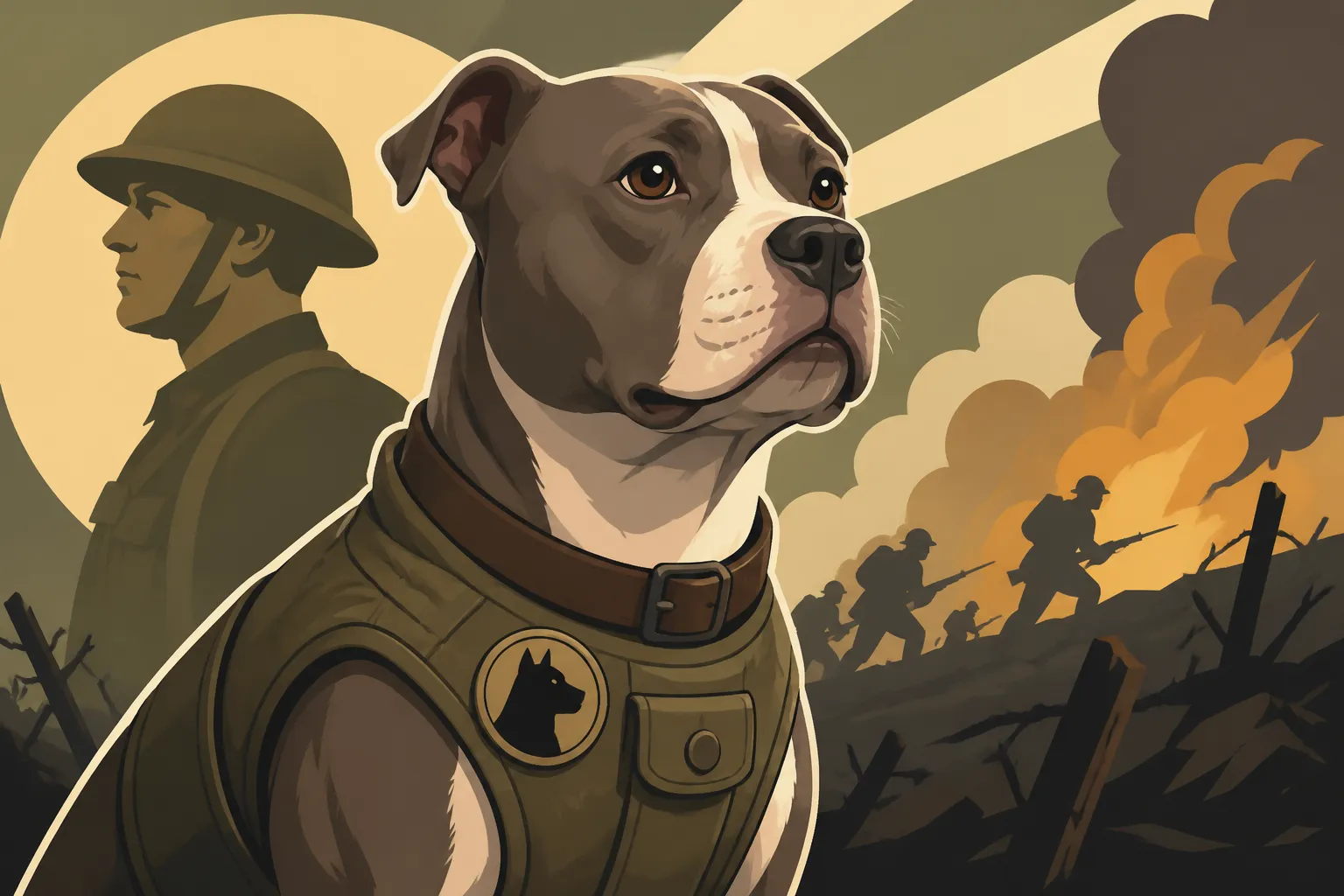
Before he was a celebrated war dog, Stubby was simply a stray, a brindle-colored mixed-breed dog with a stocky build, short coat, and distinct bull-type head. He appeared on the Yale University campus in New Haven, Connecticut, in 1917, where soldiers of the 102nd Infantry, 26th (Yankee) Division, were training for deployment to France during World War I. He was scruffy, hungry, and looking for companionship, much like any street dog, but he had an uncanny knack for making friends. He quickly endeared himself to the soldiers, particularly Private J. Robert Conroy, who would become his lifelong companion. This was no ordinary dog, and his presence immediately lifted the spirits of the men facing the daunting prospect of war. He demonstrated an early ability to learn tricks, showing intelligence and a strong desire to please, traits that would later serve him well in the chaos of the front lines.
A "Pit Bull" Before the Label
It's important to understand that the term "Pit Bull" as a distinct breed classification wasn't as precise in Stubby's era as it might be today. He was a bull terrier mix, embodying many of the physical characteristics we now associate with Pit Bull-type dogs: muscular build, powerful jaws, and an undeniable tenacity. These dogs, born from bull-and-terrier crosses, were valued for their strength, agility, and loyalty. Stubby was identified by his contemporaries as a "Pit Bull" not because of a formal registry, but because he fit the popular image of the type of dog known for its courage and robust nature. His appearance and temperament were characteristic of the dogs that eventually became the foundation for breeds like the American Pit Bull Terrier and the Staffordshire Bull Terrier. Why Pit Bull Is a Type and Not a Breed delves deeper into this historical context, explaining how these terms evolved. His very presence defied the later negative stereotypes that would plague these dogs, proving their inherent value and good nature when given the chance.
The Soldier Who Found Him
Private J. Robert Conroy's connection with Stubby was immediate and profound. As Conroy trained on campus, Stubby would often join the drills, marching with the soldiers and even learning rudimentary salutes. When it came time for the 102nd Infantry to ship out to France, Conroy smuggled Stubby aboard the troop transport. He kept Stubby hidden in a coal bin until they were well underway. Once discovered by Conroy’s commanding officer, Stubby reportedly saluted him, charming the officer enough to secure his place as the unofficial mascot of the regiment. This act of quiet defiance and deep affection speaks volumes about the bond formed between soldier and dog, a bond that would only strengthen in the crucible of war. Conroy’s unwavering commitment to Stubby, from sneaking him onto the ship to bringing him into the trenches, highlights the therapeutic and morale-boosting role these animals played for soldiers far from home.
Service and Sacrifice: How Stubby Became a War Dog Legend
Once in the trenches of France, Stubby didn't just boost morale; he actively contributed to the war effort, displaying an almost uncanny aptitude for sensing danger and assisting his human comrades.
Life in the Trenches
Life on the Western Front was brutal, characterized by constant danger, deafening noise, and unsanitary conditions. For a dog, it was an overwhelming environment, yet Stubby adapted with remarkable resilience. He learned to distinguish between the sounds of Allied and enemy artillery fire, seeking shelter when the latter approached. The constant bombardment, the unfamiliar smells, and the ever-present threat of gas attacks would have been terrifying for any creature, but Stubby integrated himself into the routine of the soldiers, becoming an indispensable part of their daily lives. He was more than a mascot; he was a sentinel, a friend, and a symbol of home. The shared hardship forged an unbreakable bond between Stubby and the men of the 102nd.
Skills Beyond Expectation
Stubby's contributions went far beyond mere companionship. He developed an extraordinary ability to warn his unit of incoming artillery shells by barking and running for cover, giving the men precious extra seconds to seek shelter. More critically, he learned to detect the faint smell of mustard gas, barking and nipping at soldiers to alert them to the silent, deadly threat. Many stories attribute lives saved directly to Stubby's alerts. His most celebrated skill, however, was his ability to locate wounded soldiers on the battlefield. After hearing calls for help, he would wander No Man's Land, barking until medics arrived, or staying with the injured until help came. This empathetic and intelligent behavior speaks volumes about his character and the inherent problem-solving abilities of these types of dogs. For owners today, ensuring their Pit Bull has access to good quality, durable toys and a balanced diet from places like Chewy can help channel their intelligence and energy in positive ways.
Heroic Deeds and Recognition
Stubby’s heroism didn't go unnoticed. He captured a German spy by biting and holding him until American soldiers arrived, earning him a promotion to Sergeant – the first dog to ever be promoted in the U.S. Army. He participated in 17 battles and was wounded in a gas attack. He received several medals for his service, including a Purple Heart and a medal from the Humane Education Society. After the war, Stubby became a national celebrity, meeting three presidents and leading parades. His story was shared widely, showcasing the bravery and loyalty that Pit Bull-type dogs possess. His decorated service stood as a powerful counterpoint to any negative perceptions, demonstrating that courage and good temperament are not defined by breed alone.
Here's a look at some of Stubby's remarkable achievements:
| Achievement Category | Specific Deed | Impact on Unit | Recognition |
|---|---|---|---|
| Alerting | Warned of incoming artillery shells | Saved lives by providing extra time for cover | Unofficial recognition by comrades |
| Gas Detection | Detected faint smell of mustard gas | Prevented casualties from gas attacks | Credited with saving multiple lives |
| Locating Wounded | Found injured soldiers in No Man's Land | Guided medics to those needing aid | Praised by medical personnel |
| Enemy Capture | Located and held a German spy | Prevented intelligence gathering | Promoted to Sergeant, multiple medals |
| Morale Boosting | Provided companionship and comfort | Boosted spirits in harsh conditions | Cherished by all soldiers in his regiment |
Pit Bulls Beyond Stubby in Warfare
While Sergeant Stubby is undoubtedly the most famous, he was not the only Pit Bull-type dog, or dog in general, to serve bravely in military conflicts. Dogs have a long and storied history of assisting humans in war.
Working Dogs in the World Wars
Dogs played crucial roles for various armies during both World War I and World War II. They served as messengers, carrying vital dispatches across dangerous terrain. They pulled carts laden with supplies and even wounded soldiers. Their keen senses made them invaluable as sentries, detecting enemy movement or the approach of chemical attacks long before humans could. Breeds known for their intelligence, trainability, and resilience, including many bull-and-terrier types, were frequently selected for these demanding tasks. Their presence in the trenches, pulling sleds with medical supplies, or guarding supply dumps, was a common sight, proving their adaptability and utility in extreme circumstances. Working a Pit Bull Through a Hot Summer and Pit Bull Cold Weather Care on a Short Coat discuss how these dogs are built to handle various environments.
The Traits That Made Them Suitable
The specific traits of Pit Bull-type dogs – their intelligence, unwavering loyalty, physical strength, and inherent desire to work – made them particularly well-suited for wartime service. Their robust build allowed them to endure harsh conditions, while their intelligence made them quick learners, capable of understanding complex commands under pressure. Their strong bond with humans translated into fierce protectiveness and a willingness to face danger for their handlers. These are the same traits that make them exceptional family companions today, often excelling in dog sports and obedience. Providing a Pit Bull with appropriate enrichment, like challenging puzzle toys or robust chew items from a reputable retailer like Chewy, acknowledges their need for mental and physical engagement, much like they had on the battlefield.
Modern Military Dogs
Even in modern warfare, with advanced technology, dogs continue to serve with distinction. While the specific breeds chosen might vary, many modern military and police dogs still share the same core characteristics valued in earlier bull-type dogs: strength, courage, and an incredible sense of smell. German Shepherds, Belgian Malinois, and other working breeds are frequently employed for detection (bombs, drugs), patrol, and search and rescue. These dogs undergo rigorous training programs, much like human soldiers, learning to navigate complex environments and execute critical tasks. Their precision and loyalty remain unmatched, demonstrating that the bond between humans and dogs in service is a timeless partnership.
A Lasting Legacy: What Stubby Means for Pit Bulls Today
Sergeant Stubby's story is more than just a historical anecdote; it's a powerful narrative that continues to resonate, challenging preconceptions and highlighting the enduring qualities of Pit Bull-type dogs.
Stubby's Post-War Fame
After his honorable discharge, Sergeant Stubby's fame only grew. He became a lifetime member of the American Legion, participated in numerous parades, and visited hospitals, bringing comfort to wounded veterans. He even accompanied J. Robert Conroy to Georgetown University Law Center, becoming the university's unofficial mascot and even "shaking paws" with football players during halftime shows. Stubby’s image became synonymous with heroism and American grit, appearing in newspapers across the country. He lived a full life, dying in 1926, and his remains were later preserved and displayed at the Smithsonian National Museum of American History. This level of recognition was unprecedented for a dog, especially one of his humble origins. His post-war life further solidified the positive image of the Pit Bull type in the American consciousness, a stark contrast to some of the challenges these dogs face today.
Shaping the Pit Bull Image
Stubby's valor in World War I played a significant role in shaping the public perception of Pit Bull-type dogs during the early 20th century. In an era when these dogs were commonly seen as symbols of courage and loyalty—often featured in advertising as "America's dog"—Stubby's story cemented this image. He was a hero, a patriot, and a gentle companion. This positive portrayal stood in sharp contrast to the later sensationalism and fear that would come to define the breed in some circles. His story serves as a reminder that the reputation of a dog often has more to do with human actions, training, and societal narratives than with inherent breed traits. Pit Bulls in Culture and Public Perception explores how these narratives have evolved over time, both positively and negatively.
Historical Context and Present-Day Understanding
Understanding Sergeant Stubby's story provides valuable historical context for anyone interested in Pit Bull-type dogs. It shows that these dogs, when given the opportunity and proper guidance, are capable of immense loyalty, intelligence, and even heroism. It challenges the notion that these dogs are inherently dangerous or unpredictable. Instead, it underscores their deep capacity for bonding and their potential as dedicated working partners or cherished family members. For anyone considering adopting a Pit Bull today, learning about Stubby can inspire them to look beyond breed labels and appreciate the individual dog. Providing responsible care, whether it’s sturdy toys from Chewy or consistent positive reinforcement training, helps these dogs thrive and continue to challenge outdated stereotypes. Sergeant Stubby's legacy reminds us that true character knows no breed.
Disclaimer
This article is for general informational purposes only and does not constitute professional advice. Laws, prices and regulations vary by location and change over time. Consult a qualified professional for guidance on your specific situation.