The Crate a Fifty Pound Pit Bull Needs
Finding the perfect crate for a powerful, muscular fifty-pound Pit Bull can feel like searching for a unicorn. Many owners experience the frustration of flimsy wire crates bent out of shape, plastic carriers chewed through, or fabric soft crates utterly shredded within minutes. It’s not just about containing them; it's about providing a safe, secure den that can withstand their strength and intelligence, ensuring both their safety and your peace of mind. This guide will walk you through exactly what to look for, from materials to sizing, to choose a crate that truly meets the unique needs of your robust companion.
Understanding the Unique Crate Needs of a Fifty-Pound Pit Bull
Let’s be honest, a fifty-pound Pit Bull isn't your average dog when it comes to crates. Their combination of physical strength, powerful jaws, and often a keen problem-solving mind means that what works for a Labrador might not cut it for your Pit. Understanding these unique traits is the first step toward finding a crate that lasts and keeps them genuinely safe.
The Pit Bull's Strength and Chew Drive
Pit Bulls are renowned for their incredible strength and athleticism. A fifty-pound Pit Bull can exert significant force, easily bending thin wire bars or pushing through flimsy plastic panels if they are determined to escape. This isn't necessarily a sign of aggression or defiance; often, it’s a manifestation of anxiety, boredom, or simply a strong desire to be with their people. When this powerful drive meets a poorly constructed crate, the result can be a bent, broken, or completely destroyed enclosure.
Beyond sheer strength, Pit Bulls often have an intense chew drive, especially during their younger years or when bored. A standard wire crate might seem fine until your dog discovers they can chew on the bars, potentially damaging their teeth or even getting a jaw stuck. Fabric crates, while cozy, stand almost no chance against a motivated Pit Bull's jaws. Many owners have come home to find a confetti of fabric and foam where a soft crate once stood. This is why addressing "Pit Bull Chewing and Destructive Behavior" is so crucial, as the right crate can help manage this instinct.
Why Standard Crates Often Fall Short
The market is flooded with crates designed for "most" dogs, but "most" often doesn't include the robust physicality of a Pit Bull. The common, inexpensive wire crates you find at big box stores often feature thin gauge wire, weak welds, and flimsy latch mechanisms. A bored or anxious Pit Bull can quickly learn to exploit these weaknesses, pushing against the door, rattling the sides, or simply bending the bars until they create an escape route. Imagine arriving home to a scene of chaos, not because your dog is malicious, but because their crate simply wasn't up to the task.
Plastic travel crates, while sturdier than fabric, also have their limitations. The plastic can be chewed, especially around the door and ventilation holes. A persistent chewer can widen these openings, eventually breaking through or ingesting plastic pieces, which then leads to health concerns and potentially a costly emergency vet visit. For a fifty-pound Pit Bull, these standard options are often a false economy; you’ll end up buying multiple replacements and still not have a truly secure solution.
Prioritizing Safety and Security
When selecting a crate for your Pit Bull, safety and security must be paramount. An insecure crate doesn't just mean your dog escapes; it means they could injure themselves in the process. Broken teeth, cuts from sharp metal, or even internal injuries from ingesting plastic pieces are real risks with inadequate crates. Beyond physical harm, repeated successful escapes can reinforce the idea that the crate is not a secure place, making future crate training more challenging.
A truly secure crate provides peace of mind. You can leave your home knowing your dog is safely confined, unable to get into mischief, chew on inappropriate items, or injure themselves. It also protects your home from potential destruction. For a breed that sometimes faces public perception challenges, having a dog that is reliably contained when necessary contributes to responsible ownership and helps prevent incidents. The goal is to create a safe, positive, and escape-proof den, not a prison.
Choosing the Right Crate Material for Durability
Given the unique strength and determination of a fifty-pound Pit Bull, the material of the crate is arguably the most critical factor. Forget the flimsy options; we need something built to last, something that can stand up to a dog that means business.
Heavy-Duty Steel Crates: The Gold Standard
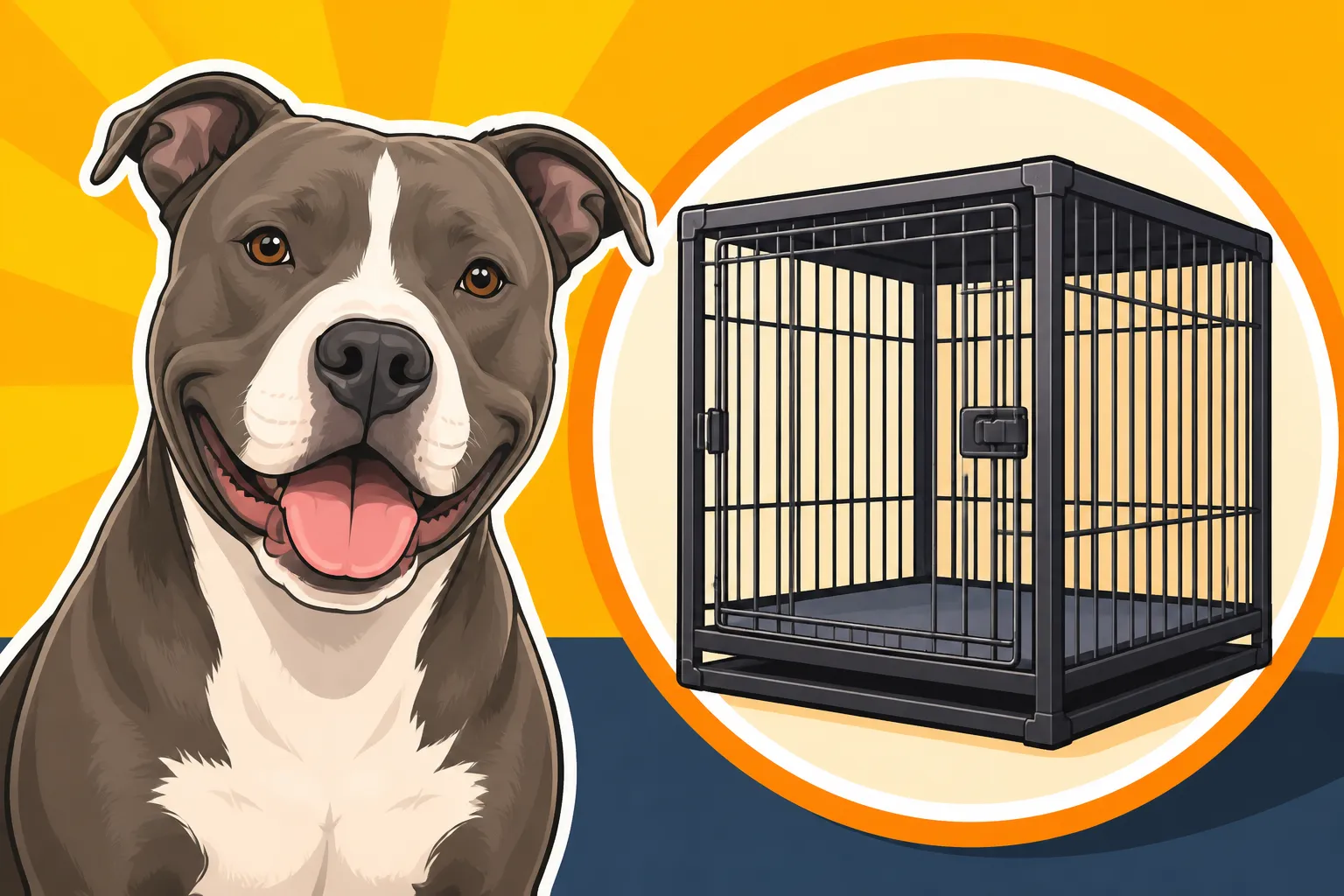
For most Pit Bull owners, heavy-duty steel crates are the absolute gold standard. These aren't your average thin-gauge wire crates. We're talking about industrial-strength steel, often with a thicker wire gauge, reinforced welds, and robust, often multi-point, locking mechanisms that deter even the most persistent escape artist. Brands like Impact Dog Crates or the more widely available ProSelect Empire Dog Cage (found on Chewy and other retailers) are excellent examples of this category.
These crates are designed to withstand significant force. The bars are much thicker, making them incredibly difficult to bend or chew through. The latches are usually designed with multiple locking points, often with sliding bolt systems that can't be jimmied open easily. While the initial investment is higher, consider it an investment in your sanity and your dog’s safety. You're buying a crate that will likely last a lifetime, preventing countless destroyed cheaper crates and potential vet bills. It’s the ultimate solution for "The Crate a Pit Bull Cannot Break Out Of."
Reinforced Plastic Crates: A Travel Option
While not as inherently indestructible as heavy-duty steel, reinforced plastic crates can serve a specific purpose, primarily for travel or if your Pit Bull isn't an extreme escape artist. Look for crates made from very thick, impact-resistant plastic, often marketed as "airline approved." These typically have stronger plastic molds and more secure bolt-together construction compared to standard plastic carriers.
The main advantage here is portability and weight, making them easier to load into a car or carry short distances. However, even reinforced plastic has its limits against a determined chewer. If your Pit Bull has a history of chewing through plastic, even the toughest plastic crate might eventually succumb. Always supervise initial use and ensure the ventilation holes or door edges aren't becoming chew targets. For everyday home use, especially if separation anxiety or a strong chew drive is present, a heavy-duty steel crate remains superior.
What About Wire and Fabric Crates?
Let’s be blunt: for a fifty-pound Pit Bull with any inclination to escape or chew, traditional wire and fabric crates are generally a no-go.
- Standard Wire Crates: These are typically made with thin, flexible wire that a strong Pit Bull can bend, warp, or even break through. The latches are often simple and easily manipulated. Many owners have sad stories of coming home to a wire crate that looks like a crumpled accordion. They pose a significant risk of injury as bent wires can create sharp points or trap paws and jaws.
- Fabric Crates: While appealing for their lightweight nature and comfort, fabric crates offer virtually no security against a Pit Bull's jaws. They are designed for calm, non-chewing dogs and usually won't last more than a few minutes if a Pit Bull decides to "redecorate." These are only suitable for Pit Bulls who are already completely comfortable and trustworthy in a crate and use it purely as a bed, typically older dogs or those who have had extensive positive crate training. Even then, an unexpected loud noise or anxiety spike could lead to destruction. If your Pit Bull is prone to "Crate Training a Pit Bull That Breaks Out," these simply won't work.
Sizing Your Pit Bull's Crate for Comfort and Functionality
Getting the right size crate for your fifty-pound Pit Bull is just as important as the material. A crate that's too small is uncomfortable and can lead to anxiety, making them more likely to try and escape. A crate that's too large, on the other hand, defeats the purpose of house-training and can make the dog feel less secure.
The "Stand, Turn, Lie Down" Rule
The golden rule for crate sizing is simple: your Pit Bull should be able to stand up without hitting their head, turn around comfortably, and lie down in a natural position with their legs stretched out. This isn't about giving them acres of space, but just enough to be comfortable and move minimally.
To measure your Pit Bull:
- Length: Measure your dog from the tip of their nose to the base of their tail. Add 2-4 inches to this measurement.
- Height: Measure your dog from the top of their head to the floor while they are standing. If they have erect ears, include the top of the ear. Add 2-4 inches to this measurement.
Compare these measurements to the internal dimensions of the crate. A fifty-pound Pit Bull will typically need a crate that is around 36 inches long, but this can vary significantly based on their build (some are stockier, some are lankier). If your dog is on the cusp of two sizes, always opt for the larger, especially with a breed that values comfort and space.
Considering Growth for a Young Pit Bull
If you're crating a Pit Bull puppy who is destined to reach fifty pounds, you have a couple of options. You can buy a smaller crate for puppyhood and upgrade later, or you can purchase the adult-sized crate from the start and use a divider. A divider allows you to adjust the living space as your puppy grows, preventing them from using one end of the crate as a potty area, which can hinder house-training efforts.
Using a divider is often the most economical and practical approach. As your Pit Bull grows, you simply move the divider back, gradually increasing their space until they fill the entire crate. This ensures they always have just enough room to stand, turn, and lie down, reinforcing the idea that the crate is a clean, comfortable den. Remember, an adult "The Age a Pit Bull Finishes Growing" can still be a bit awkward and might appreciate the extra space earlier than you think.
Placement and Environment in Your Home
Even the best-sized, most durable crate won't be effective if it's placed in a poor location. The crate should be in a quiet, low-traffic area where your Pit Bull still feels like part of the family, but isn't constantly disturbed. Think of it as their private bedroom. A corner of the living room, a spare room, or even your bedroom can be good choices. Avoid placing it in direct sunlight, near noisy appliances, or in areas with extreme temperature fluctuations.
Once placed, make it inviting. Soft bedding, a favorite chew toy (like those durable options from Chewy), and perhaps a blanket over part of the crate can create a cozy, den-like atmosphere. You can also use puzzle toys filled with delicious treats from brands like Ollie to create positive associations. The goal is for your Pit Bull to view their crate not as a punishment, but as their safe haven, a place they willingly go to relax and feel secure. This positive association is key for effective crate training.
Essential Features for a Pit Bull-Proof Crate
Beyond the basic material and size, there are specific features that elevate a crate from "adequate" to "Pit Bull-proof." These are the details that prevent escapes, ensure longevity, and make the overall experience better for both you and your strong, intelligent dog.
Secure Latches and Reinforcements
This is where many standard crates fail spectacularly. A determined fifty-pound Pit Bull can quickly learn to manipulate flimsy, single-point latches, using their nose, paws, or even their teeth. Look for crates with:
- Multi-Point Locking Systems: The best heavy-duty crates will have multiple points where the door secures to the frame, often two or three strong bolt latches. This distributes the pressure and makes it much harder for a dog to pry open a single point.
- Welded Bar Construction: Avoid crates with weak spot welds or those where bars are merely crimped together. Fully welded frames offer superior strength and prevent bars from separating under stress.
- Thick Gauge Wire/Steel: As mentioned, thicker material is harder to bend or chew. Ensure the gauge is appropriate for a strong dog.
- Door Reinforcements: Some crates feature reinforced door frames or additional bars across the door to prevent it from bowing inwards or outwards.
An example of a truly secure latch might involve a heavy-duty slide bolt that passes through multiple receivers, sometimes even requiring two hands or a bit of coordination to open. This level of security is vital, especially if your Pit Bull suffers from separation anxiety or is an experienced escape artist.
Easy Cleaning and Maintenance
No matter how well-behaved your Pit Bull is, accidents happen, particularly during puppyhood or if they get an upset stomach. A crate that's difficult to clean quickly becomes unsananiary and unpleasant. Look for features that simplify maintenance:
- Removable Bottom Tray: Most crates come with a plastic or metal pan at the bottom. Ensure this tray is easily removable for cleaning without having to disassemble the entire crate. Heavy-duty crates sometimes have a slide-out pan that can be hosed off.
- Non-Porous Surfaces: Steel and plastic are generally easy to wipe down. Avoid any crate with exposed wood or highly porous materials that can absorb odors and liquids.
- Minimal Crevices: The fewer nooks and crannies, the fewer places for dirt, hair, or "accidents" to accumulate and hide. Simpler designs are often easier to keep sparkling clean.
- Durable Finish: A powder-coated or galvanized finish on steel crates not only prevents rust but also makes them easier to wipe down.
Regular cleaning is essential, not just for hygiene but for your dog's comfort. A clean crate is a more appealing den, reducing the chances of your Pit Bull attempting to escape a soiled environment.
Portability and Setup for Various Situations
While heavy-duty crates are not typically "portable" in the same way a fabric crate is, some features can make them more manageable for occasional moves or different uses.
- Foldable Designs: Some heavy-duty wire or steel crates are designed to fold flat for storage or transport. While still heavy, this feature makes them easier to manage if you need to move house or store the crate periodically.
- Casters/Wheels: Larger, heavier crates often come with optional casters or wheels, making it much easier to move them around the house for cleaning or repositioning. Ensure these wheels can lock securely once the crate is in place.
- Multiple Doors: A crate with two doors (one on the end, one on the side) offers more flexibility for placement in different rooms or vehicles. This can be especially useful when considering "Pit Bull Car Barriers and Crash-Tested Crates" for safety on the road.
Remember, even the best crate is only effective if your dog is properly crate trained. Consistency, positive reinforcement (using those high-value treats from Ollie!), and never using the crate as punishment are paramount. A well-chosen, well-maintained crate can be an invaluable tool in raising a well-adjusted Pit Bull, providing a safe haven throughout their lives, whether they're a rambunctious puppy or a mellow senior.
| Crate Type | Pros for a 50lb Pit Bull | Cons for a 50lb Pit Bull | Best Use Case |
|---|---|---|---|
| Heavy-Duty Steel | Extremely durable, escape-proof, long-lasting | Heavy, expensive, less aesthetically pleasing | Primary home crate, extreme chewers/escape artists |
| Reinforced Plastic | Lighter than steel, good for travel, airline-approved | Can still be chewed through by determined dogs, less air circulation | Travel, temporary containment for non-chewers |
| Standard Wire | Inexpensive, foldable, good air circulation | Easily bent/destroyed by strong Pit Bulls, injury risk, poor security | Generally NOT recommended for 50lb Pit Bulls |
| Fabric/Soft Crates | Lightweight, comfortable, highly portable | No security, easily shredded, zero chew protection, not suitable for training | Calmer, non-chewing dogs, purely for comfort (e.g., bed) |
Disclaimer
This article is for general informational purposes only and does not constitute professional advice. Laws, prices and regulations vary by location and change over time. Consult a qualified professional for guidance on your specific situation.