Traveling and Moving With a Pit Bull
The thought of traveling or moving with your beloved Pit Bull can stir up a whole cauldron of anxieties, can't it? It’s not just about packing your bags; it’s about navigating a maze of breed restrictions, societal biases, and the sheer logistical puzzle of ensuring your powerful, loving companion is safe, comfortable, and welcome. This guide is here to untangle that knot of worries, offering a comprehensive, realistic roadmap to make traveling and relocating with your Pit Bull as smooth and stress-free as possible.
Navigating Breed-Specific Travel Restrictions
One of the biggest hurdles Pit Bull owners face when planning a trip or a move is the persistent issue of breed-specific legislation (BSL) and private company policies that often unfairly target Pit Bull type dogs. This isn't just an inconvenience; it can completely derail your plans and leave you feeling utterly helpless.
Airline Policies for Pit Bull Type Dogs
When it comes to air travel, the rules can feel like a minefield designed specifically to exclude certain breeds. Many airlines have outright bans on Pit Bull type dogs, or they impose extremely strict limitations, especially for cargo travel. The frustration of trying to get a clear answer, only to be met with vague policies or an immediate denial, is something countless Pit Bull owners have experienced. You might find that even if your dog is impeccably behaved and well-socialized, the label alone is enough to prevent them from flying. Some airlines, like Delta, for instance, have a blanket ban on "snub-nosed" or "strong-jawed" breeds in cargo, which often includes Pit Bulls. Others might require a special crate, a specific health certificate, or only allow them under certain temperature conditions, which can fluctuate wildly with flight delays.
The core issue often stems from how airlines identify a "Pit Bull." Since "Pit Bull" isn't a single breed but a type, the interpretation can be subjective, leaving you at the mercy of individual airline staff. This can lead to heartbreaking situations where you've done everything right, only to be turned away at the last minute. This isn't just about getting from point A to point B; it's about the emotional toll of feeling your dog is unwelcome and potentially unsafe during transit. Your best bet is always to contact the airline directly, in writing, months in advance, to get their specific, current policies on "restricted breeds" and how they define them. Even then, be prepared for potential challenges upon check-in.
State and Local Breed-Specific Legislation
Driving across state lines or moving to a new city brings its own set of challenges, thanks to lingering breed-specific legislation (BSL). It's a shocking reality that in 2024, cities and counties across the United States still have laws that restrict or ban Pit Bull type dogs. Imagine planning a cross-country move, only to discover that your destination city, or even a city you plan to drive through for a potty break, has a ban in place. This isn't just about fines; it can mean impoundment of your dog, or even being forced to leave your beloved companion behind.
Places like Miami-Dade County in Florida, for a long time, had strict BSL, though thankfully, Florida ended its statewide bans in 2024. However, numerous individual cities and counties still maintain these restrictions. For example, some jurisdictions might require special permits, muzzling in public, or specific insurance coverage for Pit Bull owners. Before any trip, whether it's a short vacation or a full relocation, you need to be a detective. Research every city and county you plan to pass through and your final destination. Websites that track BSL, local government sites, and breed-specific advocacy groups can be invaluable resources. The responsibility falls entirely on you, the owner, to know and abide by these laws, which adds a significant layer of stress to any travel. Understanding Where Pit Bull Legislation Still Applies is paramount before you even start packing.
International Travel Considerations
If you're thinking of taking your Pit Bull beyond national borders, be prepared for an even more rigorous and often more restrictive process. International travel adds layers of complexity, from lengthy quarantine periods to strict import regulations and outright bans in many countries. The European Union, for example, has varying rules by country, with some like the UK having stringent restrictions or bans on certain "fighting dog types," which can include Pit Bulls. Australia and New Zealand also have very strict import regulations, often including significant quarantine periods and breed prohibitions.
The paperwork alone can be overwhelming: microchip requirements, rabies vaccination proof, blood tests, import permits, and vet health certificates, all with specific timelines and deadlines. Missing a single step or misinterpreting a regulation can result in your dog being denied entry, sent back, or even, in extreme cases, euthanized. This isn't a trip you can plan on a whim. International pet relocation services often specialize in navigating these intricate rules, and while expensive, they can be a lifesaver for ensuring all requirements are met. It’s a huge undertaking that requires meticulous planning, often starting six months to a year in advance, and a deep understanding of the specific country's laws, including how they define "dangerous" or "prohibited" breeds.
Finding Accommodations That Welcome Pit Bulls
Finding a comfortable place to stay or live with a Pit Bull can feel like an Olympic sport, full of rejection and frustration. Many hotels, rental agencies, and homeowners associations (HOAs) have blanket breed restrictions that disproportionately affect Pit Bull owners, even when your dog is a perfect houseguest.
Hotel and Rental Restrictions
Picture this: you've driven for hours, your Pit Bull is patiently waiting in the car, and you walk up to the hotel check-in desk, confident you booked a "pet-friendly" room, only to be told, "Sorry, we don't allow Pit Bulls." The deflated feeling is immense. This scenario is unfortunately far too common. Many hotel chains, independently owned motels, and especially vacation rental platforms like Airbnb and VRBO, have either explicit "no Pit Bull" policies or weight limits that effectively exclude them. Sometimes, the "pet-friendly" label simply means "small dog friendly," leaving you stranded.
The constant need to double-check, call directly, and even beg for an exception can be exhausting. Many owners have resorted to listing their Pit Bull as a "mixed breed" on online forms, hoping to avoid immediate refusal, only to face potential issues upon arrival. It's a terrible position to be in, feeling like you have to hide your dog. Dedicated pet-friendly hotel search engines can help, but even then, it’s crucial to call the specific location and confirm their breed policy for yourself. Be upfront, describe your dog's temperament, and offer to provide references. It’s not just about finding a room, but finding one where you and your Pit Bull can truly relax. If you're struggling to find somewhere, you might want to read our guide on Hotels That Restrict Pit Bulls for more specific advice.
Securing Pet-Friendly Housing When Moving
Relocating to a new area with a Pit Bull can amplify the housing challenge tenfold. Landlords, apartment complexes, and Homeowners Associations frequently implement breed restrictions that make finding a suitable long-term rental incredibly difficult. You might find your dream apartment, only for the lease agreement to explicitly name "Pit Bulls" or "aggressive breeds" as prohibited. Even in areas without BSL, private property owners retain the right to set their own rules, and the stigma around Pit Bulls often leads to automatic exclusion. This means losing out on properties, paying higher "pet rent" or non-refundable deposits, or having to settle for housing that isn't ideal, simply because it's the only place that will accept your dog.
The emotional toll of this can be significant. It feels like you're being judged based on your dog's appearance rather than their actual behavior. To combat this, Pit Bull owners often have to go above and beyond. Consider creating a "pet resume" for your dog, including photos, a letter of recommendation from your current landlord or vet, proof of training (like a Canine Good Citizen certificate), and a clear outline of their temperament and daily routine. Offering to meet the landlord with your dog, or even purchasing specific liability insurance, can sometimes sway a hesitant owner. It's a proactive approach to demonstrate that your Pit Bull is a well-behaved, responsible member of your family. If you're navigating this, our advice on Getting a Landlord to Accept a Pit Bull could be incredibly useful.
Essential Preparation for a Smooth Journey
A successful trip or move with your Pit Bull isn't just about luck; it's about meticulous preparation. Skipping steps here can lead to last-minute disasters and unnecessary stress for both you and your canine companion.
Health and Vet Records Update
Before any significant travel or move, a comprehensive vet check-up is non-negotiable. Many airlines and border controls require a recent health certificate issued by a licensed veterinarian, sometimes within a very narrow timeframe (e.g., 10 days before travel). This certificate verifies your dog is healthy enough to travel and free of contagious diseases. Beyond official requirements, ensuring your Pit Bull is in peak health minimizes the risk of illness or injury while on the road or adjusting to a new environment. Imagine being halfway through a long drive and realizing your dog is due for a critical vaccination or that an underlying health issue flares up in an unfamiliar setting.
Make sure all vaccinations, especially rabies, are current and documented. If your Pit Bull is on any regular medications, like those for Pit Bull Skin Allergies and the Atopy Pattern or Pit Bull Heart and Thyroid Conditions, ensure you have an ample supply, plus copies of prescriptions and vet notes. It's also wise to have your vet compile a full health history, including their microchip number, emergency contacts, and any known allergies or sensitivities. A physical copy of all records should travel with you, alongside digital backups. This foresight can be a lifesaver, allowing you to quickly access vital information or seek care from a new veterinarian without delay. For covering unexpected vet costs, especially when traveling, companies like Healthy Paws pet insurance can provide peace of mind, though always check for breed exclusions. A robust What a Pit Bull Health History Should Cover goes a long way.
Crating and Safety Gear
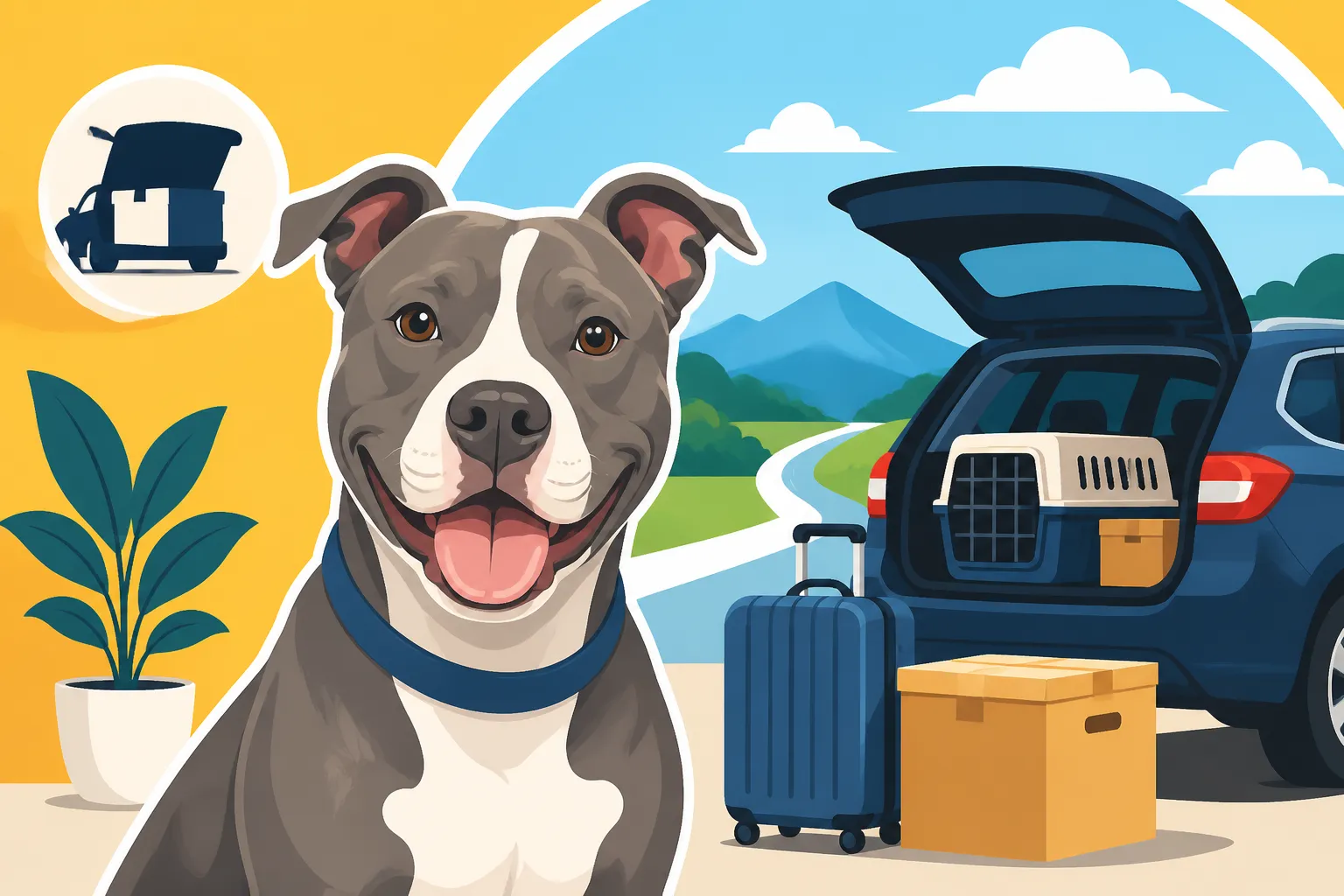
Traveling safely with a Pit Bull requires appropriate, durable equipment. For car travel, a crash-tested travel crate or a secure, heavy-duty safety harness is crucial. A standard wire crate might be fine at home, but in a vehicle, it offers little protection in a collision and can even become a hazard itself. Pit Bulls are strong, and their powerful jaws can make short work of flimsy crates, leading to escape or injury. Investing in a crash-tested crate, secured to your vehicle, protects your dog and other passengers. Brands like Ruffland Kennels or Gunner Kennels are often recommended for their strength and safety features, though they are an investment.
If a crate isn't feasible for car travel, a high-quality, crash-tested harness that attaches to a seatbelt is another option. However, never use a leash or tie-out in a moving vehicle, as this can cause severe injury. For air travel, if your Pit Bull is permitted in cargo, the crate must meet strict IATA (International Air Transport Association) guidelines. This typically means a hard-sided kennel of specific dimensions, with proper ventilation, "Live Animal" labels, and food/water bowls securely attached. Acclimating your Pit Bull to their travel crate well in advance, through positive reinforcement and comfortable bedding, can significantly reduce stress during the journey. You should know about The Crate a Pit Bull Cannot Break Out Of and consider Pit Bull Car Barriers and Crash-Tested Crates for added safety.
Packing the Pit Bull's Essentials
When packing for your Pit Bull, think beyond just food and water. Create a dedicated "dog bag" that contains everything your Pit Bull needs to maintain their routine and comfort. This includes their regular food – and plenty of it. A sudden diet change on the road can lead to an upset stomach, which is the last thing you want while traveling. If you rely on specialized diets, like those for allergies, consider ordering ahead from services like Chewy to a new address or making sure you have extra bags. For fresh food options, services like Ollie can be great because they often ship customized meal plans directly, which can simplify maintaining a consistent diet even when on the go or relocating.
Don't forget all necessary medications, their favorite comfort items (a familiar blanket or toy), bowls, waste bags, a first-aid kit, and copies of those crucial vet records. Pack extra leashes and collars, just in case one breaks or gets lost. For dogs prone to chewing, bring along durable, appropriate chews like Kongs or Nylabones to keep them occupied and reduce stress. If your Pit Bull has a tendency to chew through things when anxious or bored, make sure these items are robust. Our guide on Chews That Do Not Crack Pit Bull Teeth offers great advice for selecting appropriate options. Having everything organized and easily accessible prevents those frantic "where's the leash?" moments when you're already stressed.
Managing Stress and Ensuring Comfort During Travel
Travel, even for humans, can be a major stressor. For a Pit Bull, whose world thrives on routine and predictability, the upheaval of travel or a move can be particularly challenging. Thoughtful planning can significantly ease their anxiety.
Acclimating Your Pit Bull to Travel
Sudden, long trips can be incredibly unsettling for any dog, especially a strong and sensitive Pit Bull. The key to successful travel acclimation is gradual exposure and positive association. Start small. Before a big move, take your Pit Bull on frequent, short car rides to fun places like the dog park or a favorite hiking trail. This helps them associate the car with positive experiences, rather than just vet visits or boring errands. Gradually increase the duration of these rides. If your dog will be traveling in a crate, make that crate a comfortable, safe den at home long before the trip. Feed meals in it, offer treats, and let them nap inside with the door open.
Some Pit Bulls suffer from motion sickness. Talk to your vet about anti-nausea medications or calming supplements if this is an issue. During car trips, make sure to take regular breaks for potty, water, and a quick stretch. Keep the car calm, perhaps with some soothing music. The goal is to make travel feel like a normal, even pleasant, part of their routine. This preparation helps to build their confidence and resilience for the bigger journey ahead. For some dogs, the sheer novelty of being in a new space can be overwhelming, so ensuring they have a familiar "safe zone" from the outset is crucial, especially if they are like Leaving a New Pit Bull Alone for the First Time.
Maintaining Routine and Comfort
One of the most effective ways to reduce your Pit Bull's stress during travel or a move is to maintain as much of their regular routine as possible. Dogs thrive on predictability, and sticking to familiar feeding times, walk schedules, and bedtime routines provides a sense of normalcy in an otherwise chaotic situation. When stopping during a road trip, try to find safe, grassy areas for walks and give them ample time to sniff around and decompress, rather than just a quick potty break.
Bring along their favorite bedding, toys, and blankets. The familiar scent of home can be incredibly comforting in a new, strange environment. If your Pit Bull has a special chew toy they adore, make sure it’s easily accessible. Even small efforts, like playing their usual calming music or having their favorite treats on hand, can make a huge difference. During longer stays, ensure they get adequate exercise, as pent-up energy can exacerbate anxiety. For those days when you're stuck indoors due to weather or logistics, engaging in Indoor Trick Work for a Bored Pit Bull or scent games can provide much-needed mental stimulation.
Dealing with Public Perception and Handling
Let's be real: owning a Pit Bull means navigating public perception, and this is amplified when you're in unfamiliar territory. Despite being loving and well-behaved, your Pit Bull might attract wary glances, fearful reactions, or even outright negative comments. This can be incredibly frustrating and disheartening for responsible owners. The best approach is to be confident, calm, and proactive in managing interactions. Always keep your Pit Bull on a leash, close to you, and consider using a clearly visible "working dog" vest if they are a service or therapy animal, or even a simple "Friendly Dog" patch if it helps.
Muzzle training, even for a dog that has never shown aggression, is a responsible and recommended practice for every Pit Bull owner. A well-conditioned basket muzzle can be invaluable for vet visits, emergencies, or simply walking through crowded areas where you want to provide extra reassurance to the public (and yourself). It shows you are a responsible owner who prioritizes safety. Moreover, it prevents situations where your dog might accidentally nip during stress or excitement, which can have severe consequences for a Pit Bull. Knowing Muzzle Training Every Pit Bull Should Have can offer peace of mind. Remember, you are your dog's best advocate. Maintain a polite but firm demeanor, and demonstrate through your dog's impeccable manners that they are a credit to their type. You can learn more about Handling a Pit Bull in Public Without Incident to prepare for these encounters.
After Arrival: Settling In and Adjusting
The journey doesn't end when you arrive. The transition to a new home or location can be a period of significant adjustment for your Pit Bull. Patience and consistency are key.
Settling into a New Home Environment
Moving to a new house is a big deal for a Pit Bull. Their entire world of familiar sights, sounds, and smells is suddenly gone, replaced by something entirely unknown. The first thing you should do upon arrival is establish a "safe space" for your Pit Bull. This might be their familiar crate, a quiet corner with their bed, or a designated room where they can decompress away from the chaos of unpacking. Fill it with their favorite toys and blankets. Try to keep their routine as consistent as possible from day one – same feeding times, same walk times, same potty schedule.
Give your Pit Bull plenty of time to explore the new home at their own pace, always supervised. Don't force interactions or push them too quickly into new situations. Walk the new neighborhood on leash frequently, allowing them to sniff and learn their new territory. House training regressions can sometimes occur due to stress or confusion, so be extra vigilant with potty breaks and reward good behavior. It's a marathon, not a sprint. Your Pit Bull needs time to feel secure and understand that this new place is their new home.
Finding Local Pit Bull Resources
Once you've settled into your new location, finding a network of local resources is incredibly important for continued care and support. Start by finding a new veterinarian who is not only competent but also comfortable working with Pit Bull type dogs. Not all vets are created equal in this regard, and finding one who understands the nuances of the breed's health and potential biases can make a huge difference. Ask local rescue groups or other Pit Bull owners in the area for recommendations. We have a detailed guide on Finding a Vet Comfortable With Pit Bulls that might help you in your search.
Beyond medical care, look for local dog parks, dog-friendly establishments, and reputable trainers who use positive reinforcement methods. If your Pit Bull needs ongoing training or socialization, finding a trainer experienced with the breed is essential. Connect with local Pit Bull advocacy or rescue groups. These communities can be an invaluable source of information, support, and friendship, offering advice on everything from dog-friendly spots to navigating any local nuances related to Pit Bulls. Building this local support system will ensure your Pit Bull thrives in their new environment.
Airline Pet Travel Policies (General Examples)
Please note: Policies are subject to change without notice. Always contact the specific airline directly for the most current information.
| Airline | In-Cabin Pets Allowed (Size/Weight) | Cargo Pets Allowed | Breed Restrictions (Cargo) | Health Certificate Required |
|---|---|---|---|---|
| Delta Air Lines | Small dogs, under seat | Limited, certain aircraft | Restricted (snub-nosed breeds, Pit Bull types) | Yes |
| United Airlines | Small dogs, under seat | Limited, certain aircraft | Restricted (snub-nosed breeds, Pit Bull types) | Yes |
| American Airlines | Small dogs, under seat | Suspended or limited (check current policy) | Restricted (snub-nosed breeds, Pit Bull types) | Yes |
| Southwest Airlines | Small dogs only, in-cabin | No cargo service | N/A (in-cabin only) | Yes |
| Alaska Airlines | Small dogs, under seat | Yes, limited | Restricted (snub-nosed breeds, Pit Bull types) | Yes |
Disclaimer
The information provided in this guide is for general informational purposes only and should not be considered professional veterinary, legal, or travel advice. Breed-specific legislation, airline policies, and housing rules are subject to change and vary widely by location. Always consult with relevant authorities, legal professionals, veterinarians, and travel experts before making travel or relocation decisions concerning your Pit Bull.