Handling a Pit Bull in Public Without Incident
One of the most disheartening realities for Pit Bull owners is the constant, unfair scrutiny our dogs face in public. You know the feeling: that subtle pull on the leash when another person spots your companion, the way they might cross the street, or the whispered comments you sometimes overhear. It's a heavy burden, knowing that every single interaction your beloved dog has in public is judged through a lens of misunderstanding and historical bias. This isn't just about your dog's good manners; it's about being an unwavering ambassador for the entire type. This comprehensive guide is here to walk you through how to confidently and responsibly handle your Pit Bull in public settings, ensuring that both you and your dog can navigate the world with grace, safety, and a calm demeanor that speaks volumes.
Understanding the Public Perception and Why It Matters
Let's be real for a moment. Owning a Pit Bull type dog comes with a unique set of challenges, particularly when you step out the front door. It’s not fair, but it’s the truth we live with. People often react to the label more than the actual dog standing in front of them, and that knee-jerk reaction can make simple walks feel like a high-stakes performance. You're not just taking your dog out; you're often perceived as presenting a representative of a controversial group, and that means your dog's public behavior needs to be not just good, but exemplary.
The Weight of the "Pit Bull" Label
The term "Pit Bull" itself is a loaded one, a catch-all that often refers to a variety of breeds like the American Pit Bull Terrier, Staffordshire Bull Terrier, and American Staffordshire Terrier, along with countless mixes. Unfortunately, this term has been demonized by media sensationalism and breed-specific legislation, creating a public image that is often far removed from the loving, goofy, and loyal dogs we know and cherish. This isn't just abstract; it has real-world consequences. A loose Labrador might be seen as playful, but a loose Pit Bull might be perceived as dangerous. An accidental jump from a Golden Retriever could be dismissed as exuberance, while the same from a Pit Bull could spark fear and even complaints.
This perception means that as Pit Bull owners, we carry an extra responsibility. We have to work harder to prove our dogs are well-behaved, friendly, and safe. It's a constant, uphill battle against preconceived notions. It means being proactive, thoughtful, and absolutely committed to ensuring our dogs are impeccable in public. It also means recognizing that even a minor lapse in manners, which might be forgiven in another breed, could be blown completely out of proportion and contribute to the negative stereotype. This is why we need to Train a Pit Bull to a Higher Standard Than Other Dogs. We're not just training our individual dog; we're also influencing how the world sees all dogs like ours.
The Importance of a Stellar First Impression
Every single interaction your Pit Bull has in public, no matter how brief, contributes to the ongoing narrative about these dogs. When your Pit Bull walks calmly by a group of children without reacting, that's a positive data point for everyone watching. When they sit patiently while you chat with a neighbor, that's another. These small, everyday moments are crucial. They chip away at the negative stereotypes and build a foundation of positive experiences for those who might have only heard frightening stories. Think of yourselves as ambassadors. You're not just trying to avoid an incident; you're actively trying to create goodwill and change hearts and minds.
This means being mindful of your dog's appearance, too. A well-groomed Pit Bull with clean ears and a healthy coat projects an image of care and responsibility. Ensuring they have appropriate, well-fitting equipment (like a sturdy harness or head halter, which we'll discuss later) also shows you're in control and serious about safety. Imagine walking into a café with your dog. If your Pit Bull is pulling, barking, or lunging, the impression is immediate and negative. If, however, they enter calmly, settle quietly under the table, and ignore the bustling activity, people notice. They might even comment on how well-behaved your dog is, and that's exactly the kind of public relations work we're aiming for. It's not about being perfect, but about consistently striving for excellence in every outing.
Foundational Training for Public Success
You can't expect your Pit Bull to navigate the complexities of the outside world without a solid foundation of training. These dogs are powerful, intelligent, and often very driven, which means their basic manners need to be rock-solid. Without them, every walk becomes a struggle, and every unexpected encounter a potential disaster. We're talking about more than just knowing "sit"; we're talking about deep-seated reliability that holds up under pressure.
Mastering Leash Manners and Impulse Control
One of the most common frustrations for Pit Bull owners is the sheer physical strength these dogs possess. A 50-70 pound Pit Bull, even a medium-sized one, can easily pull an unprepared adult off their feet if they decide to chase a squirrel or greet another dog with too much enthusiasm. This isn't just annoying; it's a safety hazard for both you and your dog, and it reinforces negative stereotypes about their "uncontrollable" nature. Therefore, mastering loose-leash walking is non-negotiable. It means teaching your dog that pulling gets them nowhere, and a relaxed leash is the way forward. This takes consistent work, starting in quiet environments and gradually introducing distractions.
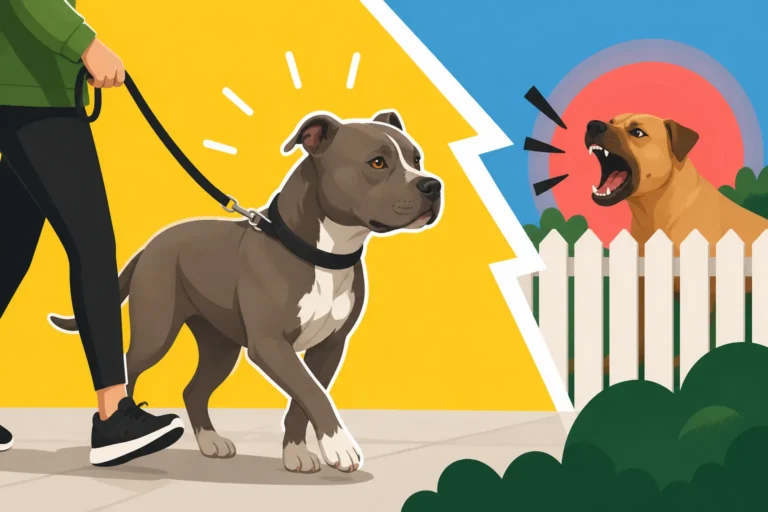
Impulse control goes hand-in-hand with leash manners. It's about teaching your Pit Bull to pause, think, and look to you for direction before reacting to stimuli. This could be anything from a passing jogger, a child on a scooter, or another dog barking from behind a fence. Practice "leave it" and "wait" commands religiously. For example, when approaching a busy park, ask your dog to "wait" at the entrance, make eye contact, and then calmly proceed. If they spot a bird, use "leave it" and reward them for disengaging. This isn't easy, especially for a breed with a strong prey drive or natural curiosity, but it's essential. Remember, Pit Bull Leash Manners and Physical Strength are key, and a comfortable, well-fitted harness from a brand like Ruffwear or even options found on Amazon can make a huge difference in managing their power without causing discomfort.
Reliable Recall and Emergency Stops
While we advocate for keeping Pit Bulls leashed in public spaces where it's required or prudent, a reliable recall (coming when called) is still a vital skill. Accidents happen: a leash could break, a gate could be left open, or you might accidentally drop the lead. In those moments, a strong recall could literally save your dog's life and prevent a serious incident. Start practicing recall in a securely fenced area with minimal distractions. Use a high-value reward – something truly irresistible like cooked chicken or cheese – and make coming to you the most wonderful thing in the world. Gradually increase distractions and the distance, always setting your dog up for success.
An emergency stop, often taught as a "down-stay" from a distance, is another critical tool. Imagine your Pit Bull somehow gets off-leash and starts heading towards a busy street or another dog that's not friendly. Yelling "come!" might not work if they're too focused. An emergency stop means they immediately drop to the ground and stay there, no matter what. This can give you precious seconds to get to them safely. This skill requires consistent, positive reinforcement training, building from short distances and low distractions to more challenging scenarios. Organizations like BAXTER & Bella offer comprehensive online puppy programs that cover these foundational skills, which can be invaluable for new owners looking for structured guidance. The goal is that your dog trusts your commands implicitly, even when their instincts tell them to do otherwise. The Word That Stops a Pit Bull Mid-Stride can be a game-changer.
Strategic Socialization, Not Just Exposure
Socialization is one of those words that everyone throws around, but what does it really mean for a Pit Bull? It's not just about letting your puppy romp with every dog they meet at the park. For a Pit Bull, it's a carefully curated, lifelong process of positive exposure that builds confidence and appropriate responses to the world around them. It’s about quality, not just quantity.
Intentional Puppy Socialization
The first few months of a Pit Bull puppy's life are absolutely critical for shaping their future behavior. This "socialization window" (roughly 3-16 weeks) is when they are most open to new experiences. During this time, you need to expose your puppy to a wide variety of sights, sounds, textures, people, and appropriate dog interactions – all in a positive, controlled manner. This means:
- People of all types: Children, adults, people in hats, with glasses, on crutches, in wheelchairs. Gentle, positive interactions are key.
- Different environments: Busy streets (from a distance), quiet parks, pet-friendly stores (if allowed and safe), car rides.
- Sounds: Loud trucks, sirens, construction noises, vacuums, thunderstorms (played softly on a speaker). Pair these sounds with treats.
- Surfaces: Grass, pavement, gravel, hardwood, carpet.
- Other dogs: Crucially, well-mannered, vaccinated adult dogs who can teach appropriate play and social cues. Avoid chaotic dog parks during this sensitive period.
- Handling: Gently touch their ears, paws, mouth, and tail. This builds tolerance for vet visits and grooming.
The goal isn't for your puppy to love everyone and everything, but to learn to be neutral, calm, and confident in the presence of new stimuli. If your puppy shows fear or becomes overwhelmed, it's okay to back off and try again later, or at a greater distance. Never force an interaction. A well-socialized Pit Bull puppy grows into an adult who is resilient and less likely to react fearfully or aggressively to novel situations. This is how you lay the groundwork for Socializing a Pit Bull Puppy Thoroughly.
Continuing Socialization for Adult Pit Bulls
Socialization isn't a one-and-done deal; it's a lifelong commitment. Even a well-socialized puppy needs ongoing positive experiences to maintain their composure and adapt to new situations as an adult. For adult Pit Bulls, this often means continuing to expose them to new, positive experiences, but with a keen awareness of their individual temperament. Some Pit Bulls remain dog-social throughout their lives, enjoying polite interactions with other canines. Others may develop what's often referred to as "dog selectivity" or "dog tolerance," meaning they are perfectly fine ignoring other dogs or coexisting peacefully, but they don't necessarily seek out or enjoy rough-and-tumble play with strange dogs. Pit Bull Dog Selectivity Explained is a crucial concept to grasp. It's not aggression; it's a preference for certain social dynamics or simply a lack of desire to engage with unfamiliar canines.
The key is to respect your dog's boundaries and set them up for success. If your adult Pit Bull prefers to ignore other dogs on walks, manage those interactions by creating space and rewarding their focus on you. Continue to visit different parks, trails, or even quiet outdoor shopping areas, simply observing the world without requiring direct interaction. Enroll in advanced obedience classes or specialty sports like scent work, which offer mental stimulation and build confidence without intense dog-on-dog interactions. Consistent, positive exposure to various everyday scenarios will keep your Pit Bull adaptable and confident, reducing the likelihood of reactive behavior in public.
Tools and Equipment for Safe Public Handling
Having the right tools is just as important as the right training. When you're dealing with a strong, athletic dog like a Pit Bull, your equipment needs to be reliable, effective, and safe for both of you. This isn't about control through force; it's about providing clear communication and preventing incidents.
Choosing the Right Harness or Head Halter
Forget the idea that a flat collar is sufficient for a Pit Bull, especially if they're prone to pulling. A Pit Bull's powerful neck and chest mean they can easily strain their throat or slip out of a loose collar. For public safety and your dog's comfort, investing in a high-quality harness or a head halter is a game-changer.
- Front-Clip Harnesses: These harnesses have a leash attachment point on the dog's chest. When your dog pulls, it gently redirects them to the side, discouraging pulling without causing discomfort to their throat. Brands like Blue-9 Balance Harness or Freedom No-Pull Harness are popular for their effectiveness and adjustability. Look for harnesses with durable buckles and sturdy webbing, ensuring a snug but comfortable fit that doesn't chafe. You can find many excellent options on Amazon.
- Head Halters (Halti, Gentle Leader): These resemble a horse's halter and give you control over your dog's head, which in turn controls their body. They are incredibly effective for strong pullers or dogs that need more guidance. It's crucial to introduce a head halter slowly and positively, pairing it with treats, as some dogs initially resist it. The goal is for your dog to comfortably wear it, not to fight against it.
When choosing, ensure the equipment fits correctly – it shouldn't restrict shoulder movement or rub under the armpits. Always supervise your dog when they're wearing new equipment, especially a head halter, until you're sure they're comfortable and cannot remove it. Remember, Harnesses and Head Halters for a Pit Bull are tools to aid training, not substitutes for it.
The Case for Muzzle Training
This is often a tough topic for Pit Bull owners because of the stigma attached to muzzles. However, responsible owners understand that muzzle training is one of the most proactive and loving things you can do for your Pit Bull. A muzzle is a safety device, not a punishment or a sign of an aggressive dog. It’s like a seatbelt: you hope you never need it, but you're glad it's there.
Muzzle training provides invaluable benefits:
- Veterinary Visits: Many dogs become anxious at the vet. A muzzle ensures staff can safely examine and treat your dog without risk of a stress-induced bite.
- Emergencies: If your dog is injured, they might lash out due to pain. A muzzle allows for safe transport and first aid.
- Grooming: For dogs sensitive to certain grooming procedures, a muzzle can make the process safer and less stressful for everyone.
- Public Perception (surprisingly): While some initially react negatively, seeing a well-behaved Pit Bull confidently wearing a basket muzzle (which allows panting and drinking) can actually demonstrate a highly responsible owner. It shows you prioritize safety above all else.
- Unforeseen Circumstances: Walking through an area with unknown dogs, or if your dog has a history of scavenging, a muzzle can prevent accidental ingestion or altercations.
Start muzzle training early and make it a positive experience, using high-value treats and praise. The goal is for your dog to associate the muzzle with good things. A well-fitting basket muzzle is essential, as it allows your dog to pant (critical for cooling) and drink water. Brands like Baskerville or Biothane muzzles are popular choices available on platforms like Amazon. Normalizing Muzzle Training Every Pit Bull Should Have is an important step towards breaking down stigma and prioritizing safety.
Navigating Common Public Scenarios
Even with solid training and the right equipment, public outings present unique challenges. Learning how to anticipate and manage specific situations is key to maintaining a calm demeanor and ensuring incident-free excursions.
Polite Greetings with Strangers and Children
Pit Bulls, by and large, are people-oriented dogs. They often love attention and can be quite enthusiastic in their greetings. While this is a wonderful trait, an overly exuberant jump or a strong lean into a stranger can be misconstrued, especially given the existing bias against the breed. Teaching your Pit Bull to greet politely is paramount.
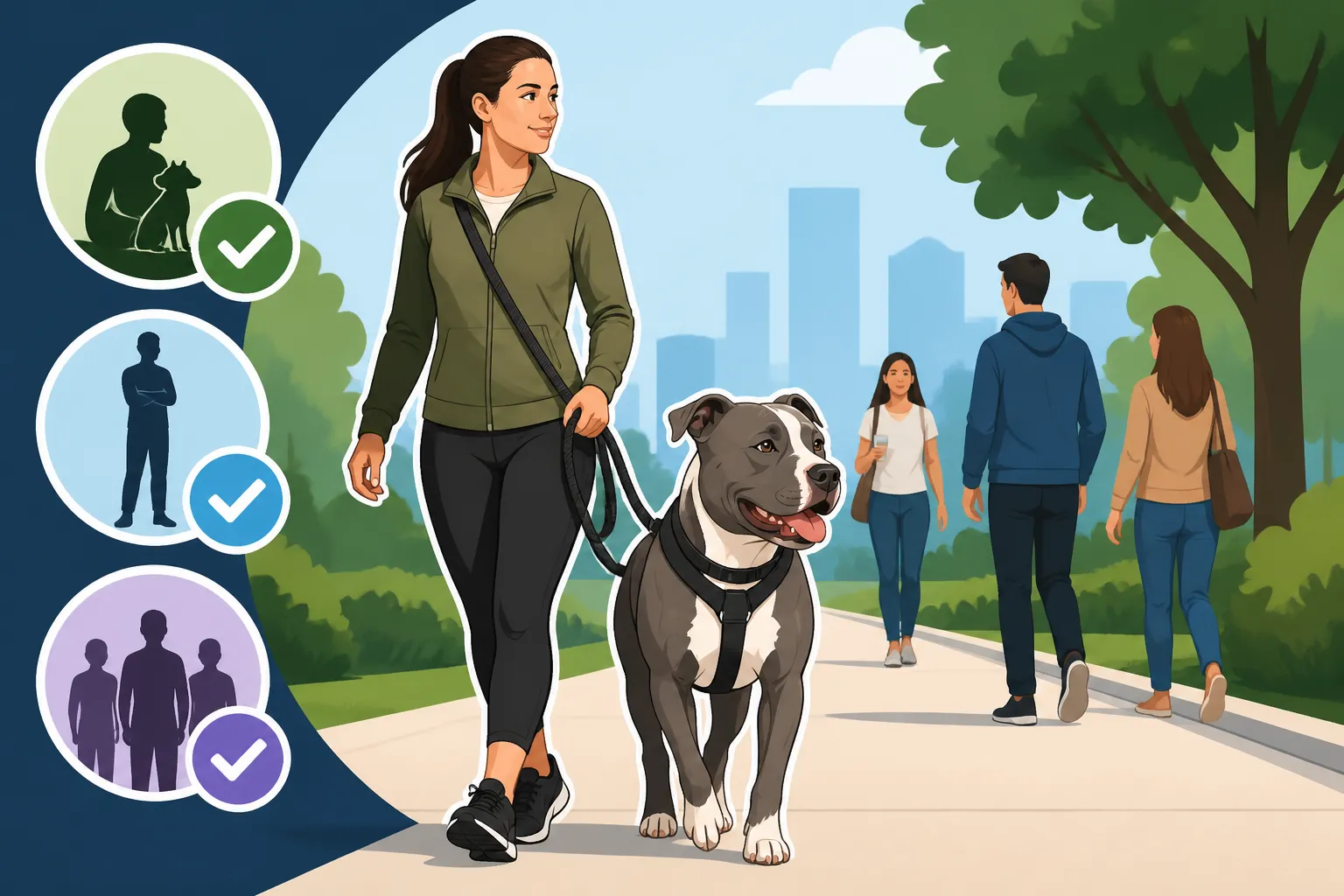
The gold standard for greetings is a "four paws on the floor" policy. When someone approaches, ask your dog to "sit" and "stay." If they offer to pet your dog, remind them to keep interactions calm and gentle. Reward your Pit Bull lavishly for remaining seated and calm during the greeting. If your dog is too excitable, you might need to manage greetings from a distance, or politely decline interactions until their impulse control is stronger. This also extends to children. While many Pit Bulls are wonderful with kids, never assume or leave any dog unsupervised with children, regardless of breed. When children are present, keep your Pit Bull on a shorter leash, and have them perform a "sit" or "down" command as kids pass by. Reward heavily for calm observation. Teaching your Pit Bull to Teach a Pit Bull to Greet Calmly is about setting boundaries and managing expectations for everyone involved.
Walking Past Other Dogs Without Incident
This is often one of the trickiest parts of public life for many Pit Bull owners. Some Pit Bulls can be dog-selective, meaning they might not appreciate every dog they encounter, or they have a preferred play style that isn't universal. The key here is proactive management and advocating for your dog's space.
- Scan Ahead: Always be aware of your surroundings. See another dog approaching? Start strategizing. Can you cross the street? Can you duck behind a parked car or a bush for a moment?
- Create Distance: The easiest way to prevent a reaction is to increase the distance between your Pit Bull and the trigger (the other dog). A wide, curving arc away from the approaching dog can work wonders.
- Redirect and Reward: As you pass another dog, engage your Pit Bull in a "look at me" command. Get their focus on you and reward them with a high-value treat before they even have a chance to react to the other dog. The goal is to make looking at you more rewarding than fixating on the other dog.
- Know Your Dog's Signals: Learn your Pit Bull's subtle cues for discomfort or arousal – a stiff body, fixed stare, raised hackles, whale eye. These are signs to increase distance immediately.
It’s perfectly okay to decline interactions with other dogs if your Pit Bull isn't comfortable or if the other dog's body language seems off. Your priority is preventing incidents and maintaining your dog's sense of security. Never feel obligated to let your dog "say hello" to every dog they meet. Understanding Walking a Pit Bull Past Reactive Dogs is a continuous learning process.
Handling Unexpected Encounters
Despite all your best efforts, sometimes things just happen. A child might rush up without asking, an off-leash dog might charge, or someone might make an ill-advised comment. Staying calm and confident is your most powerful tool in these moments.
- The Rushing Child: If a child approaches too quickly, step in front of your Pit Bull and extend your hand. Politely but firmly say, "Please ask before you pet, and always let them approach you gently." This protects both your dog and the child. Have your dog sit or step back.
- The Off-Leash Dog: This is arguably one of the most anxiety-inducing scenarios. If an off-leash dog approaches, first and foremost, get your dog's leash short and under control. If you have time and feel safe, try to get between your dog and the approaching dog. Loudly and firmly command the approaching dog's owner to "Call your dog!" or "Get your dog!" If the dog continues to approach, use a strong verbal correction, or deploy a deterrent like citronella spray (if you carry one) as a last resort. Do not let your Pit Bull engage, even if they are friendly. An incident, even if not started by your dog, will always be blamed on the Pit Bull. This is where Why a Pit Bull Should Not Be Off Leash in Public is reinforced.
- Negative Comments: Unfortunately, you might encounter people who make rude comments or express fear. Take a deep breath. You don't owe them an explanation or an argument. A calm, confident response (or simply ignoring them) is usually best. Sometimes a simple, "My dog is well-trained and friendly," delivered with a smile, is enough. Remember, your goal is to be an ambassador, and engaging in a shouting match doesn't help that cause.
| Scenario | Pit Bull Owner's Proactive Steps | Reaction to Incident | Essential Equipment |
|---|---|---|---|
| Passing Other Dogs | Scan ahead, maintain distance, use "look at me" command, reward calm focus. | If approach is unavoidable: shorten leash, create space, firm "leave it", move quickly. | Front-clip harness, high-value treats, sturdy leash. |
| Meeting Strangers/Children | "Sit" and "stay" before greeting, manage enthusiasm, politely educate others on proper interaction. | If rushed: step in front, advocate for space, firm verbal cues to dog, politely intervene with person. | Comfortable leash and harness, small training treats. |
| Unexpected Off-Leash Dog | Keep your dog close, teach emergency recall/stop, be ready to create a barrier. | Shorten leash, step in front, loud "NO!" or "CALL YOUR DOG!", back away, prepare deterrent if needed. | Durable leash, fitted harness, possibly a citronella spray. |
| Loud Noises/Sudden Scares | Desensitize early, associate sounds with positive reinforcement, build confidence. | Reassure calmly, remove from situation if overwhelmed, reward recovery, avoid coddling fear. | Secure harness/leash, favorite comfort toy. |
| Overly Enthusiastic Play | Teach appropriate play rules, interrupt before over-arousal, manage energy levels. | Interrupt with "break" or "settle," leash if needed, redirect to a calm activity. | Tug toys, durable chews, long line for controlled play. |
Cultivating a Responsible Pit Bull Owner Mindset
Beyond the training techniques and equipment, a significant part of handling a Pit Bull in public without incident comes down to your mindset as an owner. It’s about being perpetually prepared, educated, and unapologetically responsible.
Being Your Dog's Advocate
You are your Pit Bull's voice and their most important protector. This means being assertive when necessary, setting clear boundaries for your dog, and educating others with grace. It can feel exhausting to constantly be "on" during walks, but it's a critical part of owning this type of dog.
- Educate Gently: When someone expresses fear or curiosity, use it as an opportunity to share a positive fact about Pit Bulls or your own dog's temperament. "Actually, he's incredibly gentle and loves people! We've been working hard on his obedience."
- Set Boundaries: Don't be afraid to say "no" if someone wants to pet your dog when you know it's not a good time, or if another dog is approaching too quickly. "Please give us some space, we're in training." Your dog relies on you to manage these interactions.
- Lead by Example: Your calm, confident demeanor sends a clear message. If you're anxious or stressed, your Pit Bull will pick up on it, making them more likely to react negatively. Breathe, stay grounded, and project confidence.
- Know Your Local Laws: Be aware of any breed-specific legislation or leash laws in your area. Ignorance is no excuse, and compliance demonstrates responsible ownership.
This advocacy is especially important when considering the prevailing myths. What ATTS Pass Rates Show About Pit Bull Temperament can be a great piece of information to share, explaining how Pit Bulls often score highly in temperament tests, demonstrating their inherent stability.
The Power of the Canine Good Citizen (CGC) Program
If you're looking for a tangible way to demonstrate your Pit Bull's excellent manners and your commitment to responsible ownership, look no further than the AKC Canine Good Citizen (CGC) program. The CGC is a certification program that tests dogs on ten basic manners skills, all of which are essential for well-behaved dogs in public.
Passing the CGC test proves that your Pit Bull can:
- Accept a friendly stranger.
- Sit politely for petting.
- Welcome a brief appearance by another dog.
- Walk on a loose leash.
- Walk through a crowd.
- Perform a "sit" and "down" on command, and stay in place.
- Come when called.
- React calmly to distractions (like a dropped object or a sudden noise).
- Behave well when separated from their owner for a short time.
- Be accustomed to grooming (being brushed).
Achieving a CGC title is more than just a certificate; it's a powerful statement. It can positively influence how landlords, insurance companies, and even the general public view your Pit Bull. Many people are simply unaware of how well-trained these dogs can be, and a CGC certificate offers concrete proof. It can even open doors to therapy dog work or other canine activities, further showcasing the positive attributes of Pit Bull type dogs. Truly, Canine Good Citizen and Why It Matters for a Pit Bull cannot be overstated. Consider pursuing this with your dog – it’s a wonderful journey that strengthens your bond and boosts public confidence.
Long-Term Commitment to Public Excellence
Being a responsible Pit Bull owner isn't a temporary phase; it's a lifelong commitment. The world changes, your dog ages, and new challenges will inevitably arise. Maintaining public excellence requires ongoing effort, adaptability, and a willingness to seek support when needed.
Ongoing Training and Maintenance
Think of your Pit Bull's training like a muscle: if you don't use it, you lose it. Even the most well-trained dog needs consistent reinforcement and occasional refreshers. Don't assume that once a command is learned, it's learned forever. Life happens, and dogs can get rusty, especially if they aren't regularly challenged or reminded of their manners.
Continue to practice basic obedience commands in various environments – not just your living room. Take your Pit Bull to different parks (always leashed and in appropriate areas), new neighborhoods, or pet-friendly stores (if permitted). This helps generalize their skills so they understand commands apply everywhere, not just at home. As your Pit Bull ages, their physical capabilities or tolerance for certain situations might change. An older dog with arthritis, for example, might be less tolerant of boisterous puppy greetings. Be observant, adjust your outings, and modify your expectations accordingly. Perhaps it means shorter, quieter walks, or investing in joint supplements to keep them comfortable. The commitment to their well-being and public manners remains paramount throughout their entire life.
Finding Support and Community
You are not alone in this journey. Connecting with other responsible Pit Bull owners can provide an invaluable network of support, advice, and camaraderie. These are the people who truly understand the unique challenges and joys of owning these amazing dogs.
- Local Dog Clubs: Look for local obedience clubs or dog training groups that embrace all breeds. They can offer advanced classes, opportunities for structured socialization, and a chance to meet like-minded owners.
- Online Forums and Social Media Groups: Many online communities are dedicated to responsible Pit Bull ownership. These can be great places to ask questions, share successes, and get recommendations for trainers or resources.
- Experienced Trainers: Don't hesitate to seek out a professional dog trainer, especially one experienced with powerful breeds and positive reinforcement methods. A good trainer can help troubleshoot specific public behavior issues, refine your techniques, and even provide guidance on advanced skills. They can be an incredible resource for Finding a Trainer Experienced With Pit Bulls. A trainer might suggest specific gear found on Amazon, or recommend online programs like those from BAXTER & Bella for continued learning.
Remember, the goal is not perfection, but continuous improvement and unwavering commitment to your Pit Bull's safety and public image. By consistently applying these strategies, you and your Pit Bull can enjoy a fulfilling life together, changing hearts and minds one calm, well-mannered walk at a time.
Disclaimer
This article is for general informational purposes only and does not constitute professional advice. Laws, prices and regulations vary by location and change over time. Consult a qualified professional for guidance on your specific situation.