Aortic Stenosis in a Pit Bull Puppy
Finding out your beloved Pit Bull puppy, full of life and boundless energy, has a serious heart condition can feel like a punch to the gut. It's a shocking, unfair reality that many dedicated owners face, and it often comes completely out of the blue. This guide is here to walk you through everything you need to know about Aortic Stenosis in Pit Bull puppies, from understanding what it actually is to navigating diagnosis, treatment, and how you can best support your furry family member through this challenging journey.
Understanding Aortic Stenosis in Pit Bull Puppies
Aortic Stenosis (AS) is a scary-sounding medical term, but once you break it down, it makes more sense. It’s a congenital heart defect, meaning your puppy was born with it, and it affects the main artery leaving the heart.
What is Aortic Stenosis?
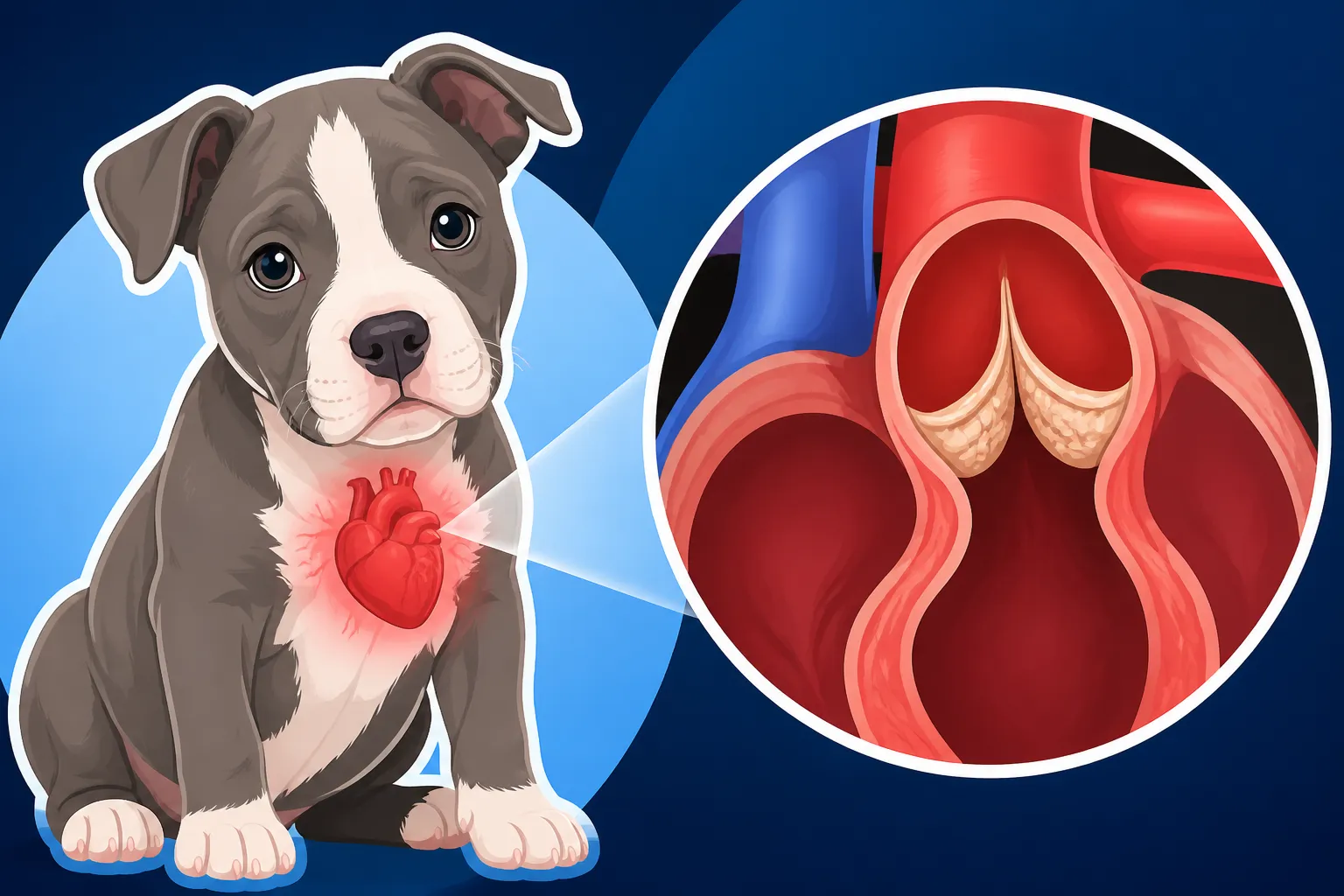
At its core, aortic stenosis is a narrowing in or just below the aortic valve, which is the gateway between the heart's left ventricle and the aorta, the body's largest artery. Think of your heart as a powerful pump, and the aorta as the main highway for oxygen-rich blood heading to the rest of the body. If that gateway (the valve) or the area just beneath it (subvalvular stenosis, which is common in Pit Bulls) is narrowed, the heart has to work much, much harder to push blood through. This extra effort can cause the heart muscle to thicken and eventually wear out, leading to serious complications.
This condition is particularly prevalent in certain breeds, and unfortunately, the various types commonly referred to as "Pit Bulls"—including American Pit Bull Terriers and American Staffordshire Terriers—are among them. While no one wants to hear their breed is predisposed to something, knowing this can help you be vigilant and proactive with your vet visits. It’s not your fault, and it’s not your puppy’s fault; it’s simply a genetic hand dealt to them.
How it Develops and Manifests
Because aortic stenosis is congenital, it's present from birth. The severity, however, can vary wildly. Some puppies might have a very mild narrowing that barely impacts their daily life, while others can have a severe obstruction that significantly limits blood flow and puts immense strain on their young hearts. In the early stages, especially when they're very young puppies, there might be absolutely no outward signs that anything is wrong. Your puppy might seem perfectly normal, full of mischief and zoomies. This is what makes the diagnosis so heartbreakingly unexpected for many owners.
As the puppy grows and its activity levels increase, the heart's demands also grow. The subtle signs can start to appear: perhaps they're not as energetic as their littermates, or they tire more quickly during play. In more severe cases, you might notice fainting spells, weakness, or even difficulty breathing. But for many, the first and most common indicator is often a heart murmur detected during a routine veterinary check-up. This unexpected finding during a puppy's first vet visit is usually the catalyst for further investigation, sending owners down a path they never anticipated. It's a testament to the importance of those initial check-ups, even if your puppy seems perfectly healthy.
Diagnosing Aortic Stenosis in Young Pit Bulls
When a vet mentions a "heart murmur" during a routine check-up, it’s natural for your heart to sink. It sounds alarming, but it’s the crucial first step in uncovering conditions like aortic stenosis.
The Initial Vet Visit and Heart Murmurs
Every Pit Bull puppy, just like any other puppy, should have a thorough veterinary examination soon after coming home. It’s during these routine visits, often for initial vaccinations or deworming, that a veterinarian might pick up on an abnormal sound in your puppy's chest. This sound is what we call a heart murmur. It’s not a disease itself, but rather an indicator of turbulent blood flow within the heart. Imagine a river flowing smoothly, then encountering some rocks – the water becomes choppy and noisy. A murmur is the audible equivalent of that choppy flow within your dog's heart.
Murmurs are graded on a scale from I to VI, with I being very subtle and VI being very loud and easily heard. A grade I or II murmur in a young puppy might sometimes be what's called a "physiologic" or "innocent" murmur, which can resolve on its own as the puppy grows. However, any murmur, especially one of a higher grade or one that persists, warrants further investigation. It's the veterinarian's way of saying, "Something might be going on here, and we need to look closer." This initial finding is often the very first clue that your lively little Pit Bull puppy might have something like Aortic Stenosis in a Pit Bull Puppy. Don't panic if your vet mentions a murmur; it's a call to action, not a definitive diagnosis.
Advanced Diagnostic Procedures
Once a heart murmur is detected, your primary vet will likely recommend a referral to a veterinary cardiologist for advanced diagnostics. This is where the true picture of your puppy's heart health will emerge.
The gold standard for diagnosing aortic stenosis is an echocardiogram, which is essentially an ultrasound of the heart. This non-invasive procedure allows the cardiologist to visualize the heart's structure in real-time. They can see the aortic valve, the area just beneath it, measure the degree of narrowing, and assess how fast blood is flowing through the obstruction. They can also check the size and function of the heart chambers, look for any thickening of the heart muscle, and determine the severity of the condition. This detailed view is critical for both diagnosis and prognosis. During this, the cardiologist might also run an electrocardiogram (ECG) to assess the heart's electrical activity and rhythm, or take chest X-rays to check for overall heart size and look for any fluid accumulation in the lungs, which can be a sign of congestive heart failure.
Getting these advanced diagnostics done quickly and accurately is incredibly important. The sooner you have a clear diagnosis, the sooner you and your veterinary team can develop a tailored management plan to give your Pit Bull puppy the best possible quality of life. Understanding what's happening internally is the first step toward effective care. Many pet owners find relief in knowing exactly what they are dealing with, even if the news is difficult. Organizations like Healthy Paws often cover a significant portion of these diagnostic costs, which can be a huge relief given how specialized and expensive cardiology evaluations can be.
Management and Treatment Options
Discovering your Pit Bull puppy has Aortic Stenosis can be overwhelming, and you'll naturally want to know what can be done. It's important to understand that while there's no magic cure, there are effective strategies to manage the condition.
Medical Management for Aortic Stenosis
For most Pit Bull puppies diagnosed with aortic stenosis, the primary approach involves medical management. The goal isn't to cure the narrowing, but to reduce the heart's workload, alleviate symptoms, and prevent further complications like heart muscle thickening or sudden cardiac events. Your veterinary cardiologist will be your best guide here, as they'll tailor a plan specifically for your puppy's condition and severity.
Often, medications like beta-blockers (e.g., atenolol) are prescribed. These drugs work by slowing the heart rate and reducing the force of the heart's contractions, thereby decreasing the oxygen demand on the struggling heart muscle. It's like asking the heart to run a marathon at a gentle jog instead of an all-out sprint. If your puppy develops signs of congestive heart failure, such as fluid in the lungs, diuretics might be added to help remove excess fluid from the body. Regular monitoring, including follow-up echocardiograms, will be crucial to assess how well the medications are working and to adjust dosages as needed. It's a dynamic process, and open communication with your vet is key. Beyond medication, some cardiologists might recommend a specialized diet formulated to support heart health, often lower in sodium, though this is less common in early stages for AS compared to other heart conditions. Maintaining a healthy weight, which is always important, becomes even more critical for a Pit Bull with a heart condition, as excess weight puts additional strain on the cardiovascular system. You can learn more about managing broader heart health challenges in this guide on Heart Disease in a Pit Bull.
Interventional and Surgical Possibilities
While medical management is the cornerstone for most cases of aortic stenosis, some specific situations might call for more advanced interventions. One such procedure is balloon valvuloplasty. This is an interventional cardiology procedure where a catheter with a tiny balloon is threaded into the narrowed area of the aorta. The balloon is then inflated, hopefully stretching the narrowed passage and improving blood flow.
However, it's crucial to understand the limitations of balloon valvuloplasty, especially in the context of Pit Bulls. The type of aortic stenosis commonly seen in Pit Bulls is subvalvular, meaning the narrowing is below the valve, not in the valve itself. This anatomical difference makes balloon valvuloplasty less consistently effective for Pit Bulls compared to other breeds where the narrowing might be directly at the valve. The success rate can vary, and there's always a risk of complications during the procedure. It's a decision that must be made carefully in consultation with your veterinary cardiologist, weighing the potential benefits against the risks and costs.
Open-heart surgery to remove the subvalvular ring is another theoretical option, but it is exceedingly rare in veterinary medicine due to its extreme complexity, high cost, and significant risks. For the vast majority of Pit Bull owners, this is not a practical or recommended path. Therefore, the focus remains overwhelmingly on excellent medical management and lifestyle adjustments to ensure the best possible quality of life for your puppy. Financial planning for these possibilities can be daunting, but exploring options like Healthy Paws pet insurance, especially if enrolled early, can provide significant support for unexpected veterinary bills.
Living with a Pit Bull Puppy with Aortic Stenosis
Getting a diagnosis of Aortic Stenosis is a lot to process, but it doesn't mean your Pit Bull puppy can't still live a happy, fulfilling life. It just means you'll need to be a bit more mindful and proactive in their care.
Prognosis and Lifestyle Adjustments
The prognosis for a Pit Bull puppy with aortic stenosis is highly variable, largely depending on the severity of the narrowing. For puppies with mild AS, the outlook can be quite good. Many can live a relatively normal lifespan with careful monitoring and possibly no medication at all. They might just need regular check-ups, maybe once a year or every six months, to ensure the condition isn't progressing. It's a testament to the resilience of these dogs and the power of early detection.
However, for those with moderate to severe aortic stenosis, the prognosis is more guarded. These puppies face a higher risk of complications, including heart failure and, sadly, sudden cardiac death. This is why careful management and strict adherence to veterinary recommendations are so vital. Lifestyle adjustments become a non-negotiable part of daily life. Strenuous exercise, intense play sessions, and anything that significantly elevates heart rate and blood pressure must be avoided. Think controlled walks, gentle playtime, and mental enrichment activities rather than high-impact sports. It's not about turning your active Pit Bull into a couch potato overnight, but about finding a balance that supports their heart without overtaxing it.
Managing stress is also important, as stress can increase heart rate. Creating a calm, predictable environment can make a big difference. This journey can be emotionally challenging for owners, witnessing their vibrant puppy contend with a hidden condition. Remember to lean on your veterinary team and any support groups you can find. It’s okay to feel overwhelmed; you’re doing your best for your beloved companion. Understanding key general health indicators, such as those discussed in What Takes Years Off a Pit Bull, can help you stay attuned to your dog’s overall well-being.
Preventative Measures and Breeder Responsibility
While aortic stenosis is a congenital condition, there are certainly steps that can be taken to reduce its prevalence and ensure owners are informed. If you're considering getting a Pit Bull puppy, understanding a breeder's practices is paramount. Responsible breeders of at-risk breeds should be actively screening their breeding stock for inherited heart conditions. This typically involves regular cardiac examinations by a board-certified veterinary cardiologist, including echocardiograms, before breeding. You should always ask to see the health clearances for both parents, especially concerning their hearts. If a breeder can't provide these or seems unaware of the condition, it's a red flag. This due diligence aligns with the comprehensive advice found in What Testing a Pit Bull Breeder Should Have Done.
If a Pit Bull is diagnosed with aortic stenosis, regardless of severity, they should absolutely not be used for breeding. This helps prevent the passing on of this serious genetic predisposition to future generations. For current owners, ensuring your Pit Bull receives regular veterinary check-ups is the best preventative measure against late diagnosis of any developing conditions. Early detection of a heart murmur or any other sign, as detailed in A Heart Murmur Heard at a Pit Bull Checkup, gives you and your vet the best chance to manage the condition effectively.
Finally, managing the financial burden of chronic health conditions like AS is a real concern for many. This is where pet insurance can be a lifesaver. Companies like Healthy Paws offer policies that can help cover a significant portion of diagnostic tests, medications, and ongoing veterinary care. Enrolling your puppy when they're young and healthy, before any pre-existing conditions are diagnosed, is key to maximizing coverage. It's a proactive step that can provide immense peace of mind. For a deeper dive into the financial aspects of care, you might want to look into Pit Bull Pet Insurance and Breed Exclusions.
Understanding Aortic Stenosis Severity and Management
Here’s a simplified breakdown of the general approaches to managing Aortic Stenosis based on its severity:
| Severity Level | Heart Murmur Grade | Common Symptoms | Recommended Management | Prognosis (with proper care) |
|---|---|---|---|---|
| Mild | Grade I – II | Often None | Regular monitoring (annual/biannual vet check-ups, sometimes echocardiograms), lifestyle adjustments (avoid extreme exertion). | Generally good, often a normal lifespan. |
| Moderate | Grade III – IV | Reduced stamina, occasional lethargy, minor fainting. | Regular monitoring (more frequent echocardiograms), medications (e.g., beta-blockers), careful lifestyle adjustments. | Fair to guarded, increased risk of complications; lifespan may be shortened. |
| Severe | Grade V – VI | Fainting, weakness, exercise intolerance, difficulty breathing, congestive heart failure. | Intensive monitoring, multiple medications, strict activity restriction, possibly interventional procedures (rarely surgical). | Guarded to poor, significant risk of sudden death or heart failure; greatly shortened lifespan. |
Disclaimer
This article is intended for informational purposes only and does not constitute medical advice. Always consult with a qualified veterinarian or veterinary cardiologist for any health concerns or before making any decisions about your Pit Bull's medical care.