Recognizing Bloat in a Deep-Chested Pit Bull
It’s a terrifying scenario no Pit Bull owner ever wants to face: your normally robust, energetic dog suddenly seems uneasy, bloated, and in severe pain. Gastric Dilatation-Volvulus, more commonly known as bloat, is a rapid and life-threatening condition that deep-chested breeds like our beloved Pit Bulls are unfortunately prone to. This guide is here to walk you through understanding what bloat is, recognizing its critical signs, and knowing exactly what to do when every second counts.
Understanding What Bloat Is and Why It's a Threat
The sheer panic that grips you when you suspect something is seriously wrong with your dog is unlike any other. With bloat, that fear is amplified because the condition progresses so quickly and is so devastating. It's not just a "belly ache"; it's a true veterinary emergency.
The Mechanics of Gastric Dilatation-Volvulus GDV
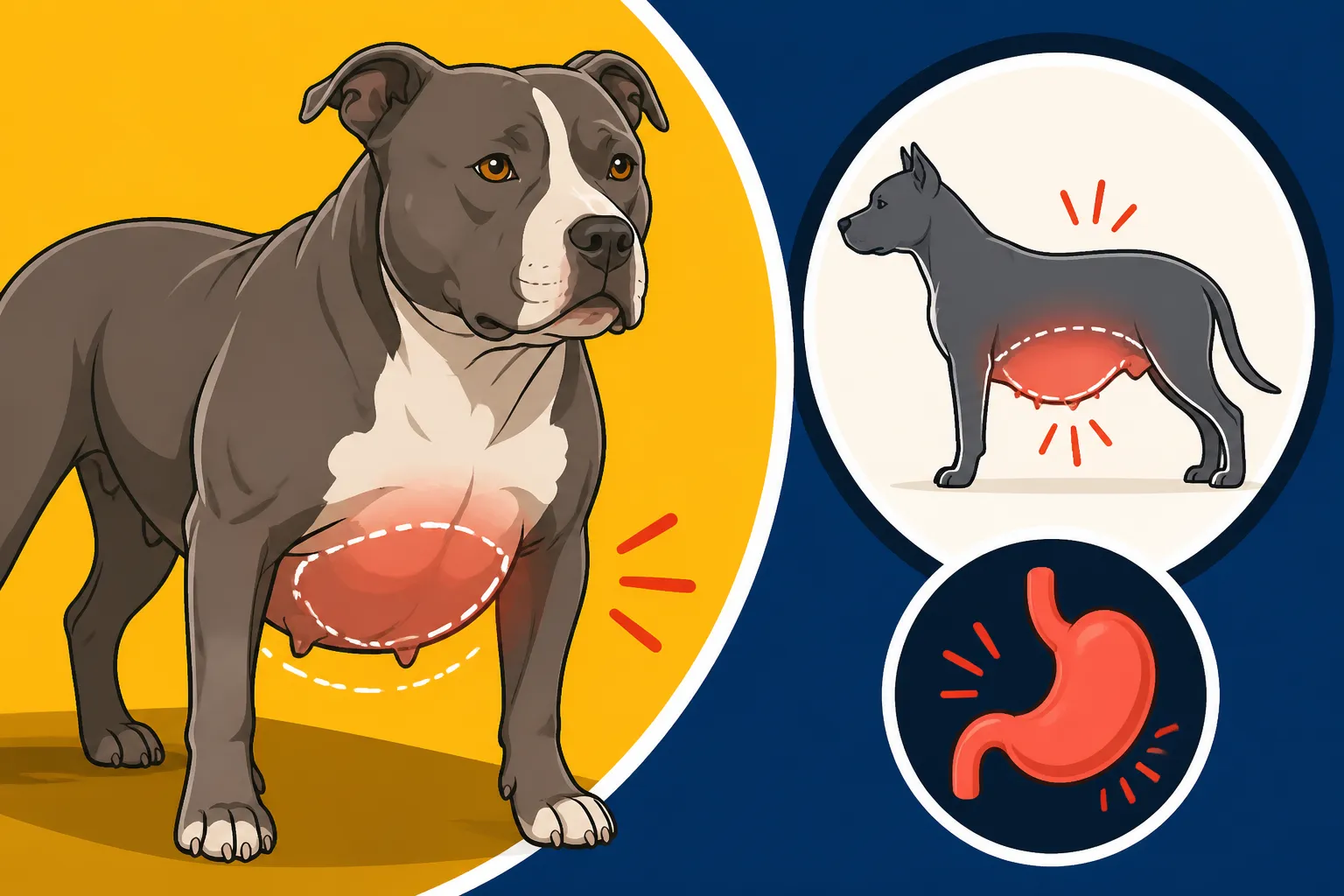
At its core, bloat begins when your dog's stomach fills with gas, air, or fluid (gastric dilatation). Think of it like a balloon inflating rapidly inside their abdomen. This alone is incredibly uncomfortable and painful, pressing on other organs and restricting blood flow. But the truly life-threatening part comes next: volvulus. This is when the distended stomach twists on its axis, essentially sealing off both the entrance and exit. Once twisted, the blood supply to the stomach is cut off, causing tissue death. This twisting also impacts the spleen and major blood vessels, leading to shock and a cascade of critical systemic issues.
For deep-chested breeds like many Pit Bull types, their conformation, with a chest that is notably deeper than it is wide, creates more space for the stomach to swing and twist when distended. This anatomical feature, which gives them their powerful, athletic appearance, is unfortunately a significant risk factor. Many owners don't realize that even a seemingly healthy, active dog can be struck down by this condition without much warning. It's a stark reminder of why understanding how to recognize bloat in a deep-chested Pit Bull is so vital.
High-Risk Factors for Pit Bulls
While the deep chest is a primary concern, it’s not the only factor that puts our Pit Bulls at higher risk. Several elements, often combined, increase the likelihood of bloat occurring. Fast eating is a huge one; dogs that gulp their food tend to swallow a lot of air along with it, contributing to gastric distention. Stress and anxiety can also play a role, altering gut motility and digestion. Some research even suggests that genetics might predispose certain lines to bloat, making it important to know your dog's family history if possible.
Other contributing factors include eating one large meal a day instead of two smaller ones, vigorous exercise immediately before or after eating, and even consuming dry kibble that is moistened with water or has small particle sizes. Age can also be a factor, with middle-aged to older dogs (typically 4-7 years old) showing increased susceptibility, although it can occur at any age. We know our Pit Bulls are often energetic and enthusiastic eaters, which means we, as owners, need to be extra vigilant about managing these environmental and behavioral risks. Understanding what to look for and implementing preventative strategies is key to keeping them safe.
The Subtle and Obvious Signs of Bloat in Your Pit Bull
Recognizing bloat can be tricky because the initial symptoms can be vague and easily mistaken for general discomfort. However, knowing what to watch for can shave precious minutes off your response time, and with bloat, time truly is life.
Early Warning Signs Not to Ignore
The earliest signs of bloat are often behavioral and can be subtle. Your Pit Bull might become restless, pacing around, unable to settle down, or seem unusually anxious. They might appear uncomfortable, constantly shifting positions, looking at their abdomen, or stretching in odd ways. One of the most classic early signs is unproductive retching or gagging – your dog will try to vomit but bring nothing up, or just a little bit of foamy saliva. This is a crucial indicator. You might also notice excessive drooling, labored breathing, or a general look of distress in their eyes. Sometimes, they might just seem unusually quiet or withdrawn, perhaps even A Pit Bull That Refuses Food for a Day. These subtle shifts in behavior can be the first clues that something serious is brewing, so trust your gut if your dog just "isn't acting right." Don't wait for all the dramatic symptoms to appear before seeking help.
Advanced and Critical Symptoms
As bloat progresses, the symptoms become much more obvious and alarming. The most recognizable sign is a visibly distended abdomen – your Pit Bull's belly will appear swollen, tight, and hard to the touch, especially on the left side (though it can be generalized). If you gently tap on it, it might sound hollow, like a drum. The pain will intensify, causing your dog to groan or cry out when touched. They may stand with an arched back or refuse to lie down.
Their breathing will become increasingly shallow and rapid, their heart rate might accelerate, and their gums could turn pale or even blueish as they go into shock. Weakness, stumbling, or even collapse are signs that the condition is extremely advanced and critical. This is a point of no return without immediate intervention. You might even notice them Pit Bull Paw Licking and Chewing excessively as a sign of extreme anxiety and discomfort, although this can be a symptom of many things, when combined with other signs, it points to a serious problem. If you see any of these advanced signs, it's not a drill – it’s an emergency that demands immediate veterinary attention.
Here’s a quick guide to distinguishing early versus advanced bloat symptoms:
| Symptom Category | Early / Subtle Signs | Advanced / Critical Signs |
|---|---|---|
| Behavior | Restlessness, pacing, anxiety, uneasiness | Collapse, extreme weakness, unresponsive |
| Vomiting | Unproductive retching/gagging, foamy saliva | Continued unproductive retching, severe pain |
| Abdomen | Mild distention, subtle discomfort | Severely distended, hard, drum-like abdomen |
| Breathing | Labored, shallow | Rapid, panting, visible effort |
| Gums/Tongue | Normal or slightly paler | Pale, white, or blueish |
| Pain | Looking at side, stretching, whining | Crying out, refusing touch, hunched posture |
| Energy | Agitated but still moving | Lethargy, unable to stand |
Immediate Actions and Emergency Care for Suspected Bloat
When bloat strikes, minutes matter. Knowing precisely what to do can mean the difference between life and death for your Pit Bull. There's no time for hesitation or "waiting to see."
What to Do the Moment You Suspect Bloat
If you even suspect bloat, do not wait. This is one of those Emergency Signs That Cannot Wait in a Pit Bull. Immediately call your veterinarian or the nearest emergency animal hospital. Tell them you suspect Gastric Dilatation-Volvulus (GDV) and that you are on your way. This gives them a heads-up to prepare for your arrival, potentially saving critical time. Don't try to "fix" it at home with antacids or by making your dog vomit – these actions are likely ineffective and can even be harmful.
While on the phone, the veterinary staff might give you specific instructions, but generally, the most important thing is swift transport. Have someone else drive if possible so you can monitor your dog. Keep your Pit Bull as calm and still as possible during the journey. If you have to wait for help, try to keep them warm and minimize movement. Remember, the key here is rapid action and communication with veterinary professionals. The faster they can assess and intervene, the better the prognosis.
Veterinary Diagnosis and Treatment Options
Once you arrive at the clinic, the veterinary team will move quickly. They’ll perform an immediate physical examination, looking for the classic signs like abdominal distention, rapid heart rate, and signs of shock. An X-ray is the definitive diagnostic tool, showing the characteristic "double bubble" appearance of a twisted stomach.
Treatment for GDV is almost always surgical. First, the veterinary team will work to stabilize your dog, addressing shock with IV fluids, pain medication, and sometimes even decompressing the stomach by carefully inserting a tube or needle to release gas. Once stabilized, your Pit Bull will undergo emergency surgery to manually untwist the stomach (derotation) and assess for any damaged tissue. Often, a procedure called gastropexy is performed at the same time. This involves stitching the stomach to the abdominal wall to prevent it from twisting again in the future. It’s a crucial step to prevent recurrence, which can be as high as 75% without it. Discussing Whether a Gastropexy Is Worth It for a Pit Bull with your vet, even preventatively, can be a valuable conversation for high-risk dogs.
The Importance of Preparedness and Prevention
Given the sudden onset and severity of bloat, being prepared is your best defense. This includes having an emergency fund or pet insurance. Companies like Healthy Paws offer comprehensive coverage that can be a lifesaver when facing unexpected, high-cost emergencies like bloat surgery. Knowing you have financial support can ease an immense burden during an already stressful time.
Beyond financial readiness, preventative measures are crucial. Slow feeders or puzzle bowls can help prevent your Pit Bull from gobbling their food and swallowing air. Feeding two smaller meals a day instead of one large one is generally recommended. Avoid vigorous exercise for at least an hour before and after meals. Some owners even elevate food bowls, although research on its effectiveness is mixed. Regularly checking in with your vet about your Pit Bull’s overall health, including their Pit Bull Weight and Muscle on a Working Frame, can help ensure they're in optimal condition.
Knowing the location and contact information for your nearest 24/7 emergency veterinary hospital is non-negotiable. Have it saved in your phone and perhaps even posted on your fridge. Understanding that What Emergency Bloat Surgery Costs a Pit Bull Owner can be substantial—often thousands of dollars—highlights why proactive planning, both for treatment and prevention, is so incredibly important for the well-being of your deep-chested companion.
Distinguishing Bloat from Other Abdominal Issues
It’s easy to panic when your dog has any kind of stomach upset. While bloat is an absolute emergency, not all abdominal discomfort is GDV. Knowing the difference, or at least understanding when to seek immediate help, is vital.
Other Causes of Abdominal Discomfort
Dogs, especially Pit Bulls with their adventurous natures, can get into all sorts of things that lead to an upset stomach. Indigestion, dietary indiscretion (eating something they shouldn't), constipation, or even simple gas can cause abdominal pain, bloating, or vomiting. With these issues, symptoms usually come on more gradually, and while your dog might be uncomfortable, they typically don't show the rapid deterioration and extreme pain characteristic of bloat. For example, a dog with simple indigestion might vomit once or twice and then seem to recover, whereas a dog with bloat will continue to retch unproductively and worsen quickly.
Parasites, certain infections, or inflammatory bowel disease can also cause chronic or intermittent abdominal issues, but these tend to have a longer history of symptoms rather than the sudden, acute crisis of GDV. Even something as common as mild food sensitivities can manifest as belly discomfort. While these conditions are certainly serious and require veterinary attention, they rarely demand the immediate, life-or-death intervention that bloat does.
When to Seek Veterinary Advice for Non-Bloat Symptoms
It's always better to be safe than sorry when it comes to your dog's health, particularly when dealing with abdominal issues. If your Pit Bull is experiencing persistent vomiting, diarrhea, loss of appetite for more than 24 hours (even if it's just A Pit Bull That Refuses Food for a Day), severe lethargy, or any signs of pain that don't quickly resolve, it's time to call your vet. While it might not be bloat, these symptoms can indicate other serious conditions that require professional diagnosis and treatment.
A key differentiator is the speed of onset and the severity. If your dog seems only mildly uncomfortable but is otherwise alert and responsive, you might monitor them closely for a few hours. However, if the discomfort is severe, rapidly worsening, or accompanied by any of the critical signs of bloat (unproductive retching, hard swollen belly, pale gums, weakness), then you must treat it as an emergency. When in doubt, a quick call to your vet can provide peace of mind and guide your next steps, potentially preventing a minor issue from becoming a major one, or catching a life-threatening problem early. Knowing your dog and acting on any unusual signs is the cornerstone of responsible pet ownership.
Disclaimer
The information provided in this article is for general educational purposes only and is not a substitute for professional veterinary advice. If you suspect your Pit Bull is experiencing bloat or any other medical emergency, please contact your veterinarian or an emergency animal hospital immediately. Always consult with a qualified veterinary professional for diagnosis and treatment of any medical condition or before making any decisions about your pet's health.