Walking a Pit Bull Past Reactive Dogs
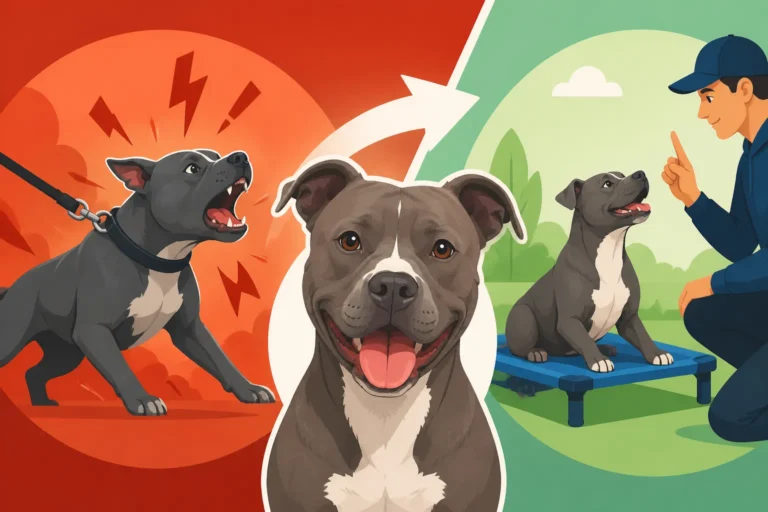
Walking your Pit Bull can sometimes feel like navigating a minefield, especially when you encounter another dog that's barking, lunging, or generally having a meltdown on the other side of the street. It's a frustrating, often embarrassing, and sometimes downright scary situation that many Pit Bull owners face, and it's compounded by the unfair scrutiny our dogs often endure. This guide is here to walk you through strategies, equipment, and a mindset shift to help you and your powerful, loving companion confidently manage those challenging moments with reactive dogs.
Understanding Why This Walk is Different for a Pit Bull
Let's be real, walking a Pit Bull means you're often under a microscope. When another dog starts acting out, all eyes can unfairly turn to your dog, regardless of who initiated the commotion. This added pressure can make an already difficult situation feel overwhelming, and it’s important to acknowledge that this isn't just "you" being sensitive; it's a real and pervasive challenge.
The Double Standard Pit Bulls Face
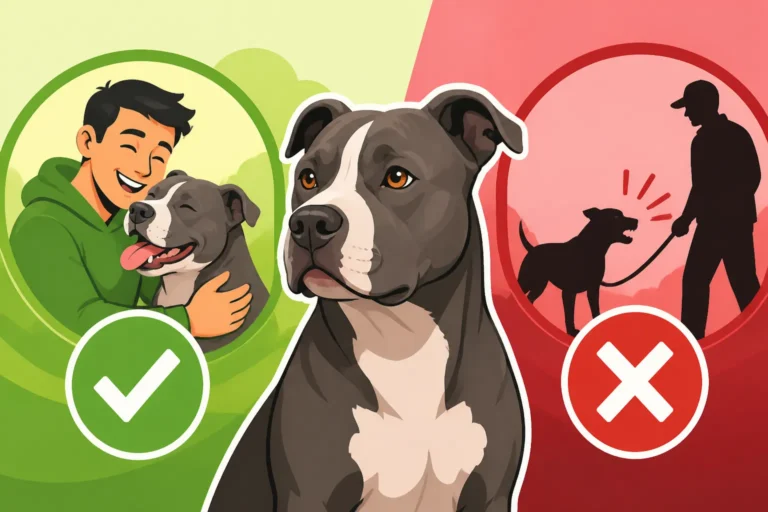
It’s an unfortunate truth that Pit Bulls often get less benefit of the doubt than other breeds. When a Golden Retriever barks at another dog, it’s often seen as "playful" or "over-excited." When a Pit Bull does the exact same thing, or even just exists calmly while another dog reacts, it can be immediately interpreted as aggression or a sign of trouble. This societal bias means that as a Pit Bull owner, you often have to train your dog to an even higher standard of public manners and be exceptionally vigilant to prevent misunderstandings. Your goal isn't just to manage your dog's behavior; it's also about managing public perception, which is an exhausting extra layer to dog ownership. This is a topic explored more deeply in Why a Pit Bull Gets Less Benefit of the Doubt.
Identifying What Triggers Your Pit Bull
Before you can effectively manage walks, you need to understand what makes your Pit Bull tick. Is it every dog, or just certain types – small, fluffy ones, or large, boisterous ones? Is it the distance at which they see another dog? The speed at which another dog approaches? Is it dogs that are already reacting, or even just calm, passing dogs? Pinpointing these triggers is the first step in creating a proactive management plan. Maybe your Pit Bull is usually a rockstar until a certain type of dog barks suddenly, causing them to jump and strain at the leash, which then escalates the other dog’s reaction. Understanding these nuances helps you anticipate and intervene before your dog hits their emotional threshold.
Recognizing Reactive Dog Behavior Not Just Yours
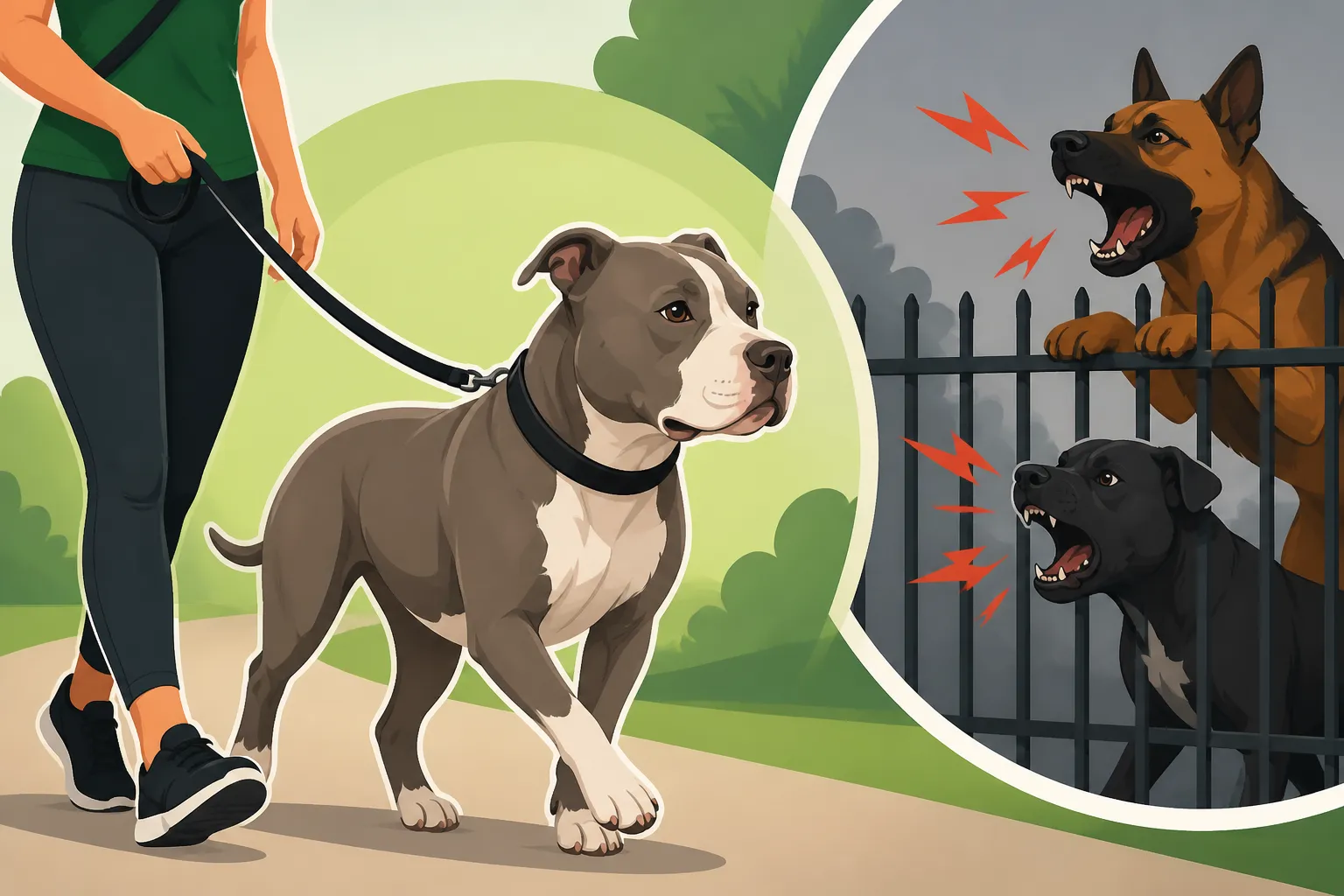
When we talk about "reactive dogs," it's not always your Pit Bull we're referring to. Often, the challenge on a walk comes from another dog lunging, barking, or pulling towards your dog. It's vital to learn how to identify the early signs of reactivity in other dogs – their body language, their owner's tension on the leash, the way their ears are flattened or their hackles raised. Spotting these cues from a distance gives you precious seconds to react and create space, rather than being caught off guard. Knowing what "red flags" to look for in other dogs helps you protect your Pit Bull from unwanted interactions and helps you avoid getting drawn into a situation that could be misinterpreted by onlookers. A dog suddenly stiffening, staring, or even just pulling hard on their leash is a sign you need to widen the gap.
Essential Preparation Before Stepping Out the Door
Successfully walking past reactive dogs isn’t just about what you do in the moment; it starts long before you even open the front door. It’s about building a solid foundation of trust and skills with your Pit Bull, and equipping yourself with the right mindset and tools.
Mastering Leash Handling and Body Language
Your leash handling skills are paramount when you have a strong, powerful dog like a Pit Bull. You need to be able to confidently guide them, gently redirect them, and hold them securely if necessary, all without adding tension or anxiety to the leash yourself. Practice holding the leash with a firm but relaxed grip, ensuring there’s enough slack for your dog to walk comfortably but not so much that you lose control. Learn to use your body language to communicate with your dog – a slight turn of your shoulder, a gentle tug, or a change in your pace can convey your intentions.
Your own calm demeanor translates directly to your dog. If you’re anxious and gripping the leash tightly, your Pit Bull will sense that tension and become more alert, perhaps even anticipating a problem. Before you even head out, run through some basic obedience cues like "sit," "stay," and "look at me" in a calm environment. This reinforces your bond and reminds your Pit Bull that you are a reliable leader. For more on this, check out Pit Bull Leash Manners and Physical Strength.
Equipping for Control and Comfort
The right equipment makes a world of difference. For a powerful dog like a Pit Bull, a sturdy, well-fitting harness that clips in the front can be incredibly helpful for discouraging pulling without causing discomfort. Many owners find front-clip harnesses from brands available on Amazon, for example, provide better leverage and control than traditional back-clip harnesses, which can sometimes encourage pulling. A strong, non-retractable leash (preferably 6 feet long) is essential; retractable leashes offer little control in an emergency and can snap.
Some Pit Bull owners, especially those living in areas with breed-specific prejudices or those with a truly reactive dog, opt for muzzle training. A well-fitted basket muzzle allows your dog to pant, drink, and take treats, while offering an extra layer of safety and peace of mind for you and the public. This can actually reduce anxiety for both handler and dog, as it removes the fear of an accidental bite, allowing for calmer interactions. If you're considering this, please read Muzzle Training Every Pit Bull Should Have.
Mental and Physical Warm-ups for Both of You
Before a walk, consider a short, engaging warm-up routine. This could be a quick game of fetch in the backyard, a brief training session with treats, or some indoor puzzle toys. The goal is to burn off a little excess energy and get your Pit Bull mentally engaged with you before you encounter the unpredictability of the outside world. A dog that has already exercised some mental and physical energy is less likely to be "over-the-top" reactive on the leash.
For you, the warm-up might involve a moment of deep breathing or a quick mental rehearsal of your strategies. Visualize a successful walk, imagine yourself calmly redirecting your dog, and mentally prepare for potential challenges. This helps you approach the walk with a positive, proactive mindset, rather than dread. Just as your Pit Bull picks up on your physical tension, they also sense your mental state. A calm, confident leader fosters a calm, confident dog.
Strategies for Navigating Encounters with Reactive Dogs
Even with the best preparation, you’re bound to encounter other dogs. The key is to have a toolbox of strategies ready to deploy, allowing you to react proactively rather than simply being dragged along.
Early Detection and Redirection Techniques
The moment you spot another dog in the distance is your window of opportunity. Don't wait until your Pit Bull is already staring and stiffening. As soon as you see a potential trigger, start engaging your dog immediately. Use a cheerful voice, present a high-value treat, and ask for a simple command like "watch me" or "heel." The goal is to get your Pit Bull's attention before they even notice the other dog. If they're focused on you, they're less likely to react.
This might involve a slight change in direction, a quick about-turn, or simply increasing the pace and making a game out of "power walking" past the distraction. Practice these techniques in low-distraction environments first, so they become second nature. Remember, consistency is crucial. Every successful redirection builds your Pit Bull's confidence in your leadership and reinforces that focusing on you leads to good things. For ideas on powerful rewards, look into High-Value Treats That Hold a Pit Bull's Focus.
Creating Space and Crossing the Street
Distance is your best friend when dealing with reactive dogs. If you see a dog approaching and it looks like it might be reactive (or even if you just want to be cautious), don't hesitate to create more space. This could mean stepping off the sidewalk into the grass, taking a wide arc around the other dog, or even crossing the street entirely. Don't feel embarrassed or like you're "giving in." You are being a responsible owner, prioritizing your dog's comfort and preventing a stressful encounter for all parties.
A clear, confident "Excuse us!" to the other owner, coupled with your deliberate movement, often communicates your intent and prevents awkwardness. It's much better to politely cross the street than to force a too-close encounter that leaves both dogs (and owners) stressed. Sometimes, if the other dog is really having a moment, an abrupt turn and walking in the opposite direction for a short distance can give you the necessary time and space for both dogs to calm down before trying to pass again. Teaching a Pit Bull to Walk Past a Barking Dog offers more targeted advice on this.
Using High-Value Rewards to Maintain Focus
When you're navigating a potential trigger, those everyday kibble pieces often won't cut it. You need something truly irresistible to your Pit Bull – cheese, cooked chicken, hot dogs, or a special soft treat. These high-value rewards become your secret weapon. When you ask your Pit Bull to "watch me" or "heel" as another dog passes, immediately follow up with one of these super-tasty treats. The goal is to create a positive association: "Other dog appears = amazing treats from my human."
This isn't bribing; it's classical conditioning. You're changing your dog's emotional response from anxiety/excitement to anticipation of a reward. The timing of the reward is critical – it should happen as the other dog is visible, but before your Pit Bull reacts negatively. If your dog reacts, you've waited too long, and the treat won't have the same impact. Building this pattern means your Pit Bull starts to look to you for guidance and treats, rather than fixating on the other dog. Remember that consistency and Positive Reinforcement Training With a Pit Bull are key to making this effective.
What to Do When a Reactive Dog Surprise Happens
Let’s face it, even the most prepared owner can be caught off guard. A dog might suddenly burst out of a gate, or turn a corner unexpectedly, leaving you with little time to react. These surprise encounters are where your emergency skills kick in.
Remaining Calm and Composed Under Pressure
This is easier said than done, I know! When another dog starts lunging and barking, your heart rate probably jumps, and you might feel a rush of adrenaline. However, it's absolutely crucial to try and remain as calm and composed as possible. Yelling, jerking the leash, or expressing your own fear or frustration will only escalate the situation and transfer your anxiety to your Pit Bull. Your dog looks to you for guidance, and if you're panicking, they'll believe there's a real threat.
Take a deep breath. Slow your movements. Keep a firm but steady grip on the leash. Your voice should be calm and reassuring, even if it's just a quiet "It's okay, let's go." Focus on the immediate action you need to take – whether that's turning around, creating distance, or simply holding your ground. Remember, you're the leader, and your calm energy can diffuse a lot of tension.
Emergency Maneuvers and Safely Disengaging
Sometimes, the best offense is a good defense. If you find yourself too close to a highly reactive dog, your priority is to safely disengage. This might involve:
- The "U-Turn": A sharp, sudden turn in the opposite direction. Pair it with a cheerful "Let's go!" and a high-value treat to make it positive.
- The "Block": Position your body between your Pit Bull and the other dog. This acts as a physical barrier and sends a clear signal to both dogs that the interaction is over.
- The "Jellyfish": If your dog is really struggling, sometimes letting the leash go completely slack for a second (if safe to do so, like in a low-traffic area) can momentarily confuse them and break their focus, allowing you to regain control. This is a very advanced technique and should only be attempted if you know your dog won't bolt.
- Targeted Redirection: Instead of just pulling, actively guide your dog to look at you, then immediately reward with a treat. Your goal is to interrupt the fixation and create a new, positive focus.
Always remember that your Pit Bull's safety and your peace of mind are paramount. Don't worry about what others might think if you need to make a quick exit.
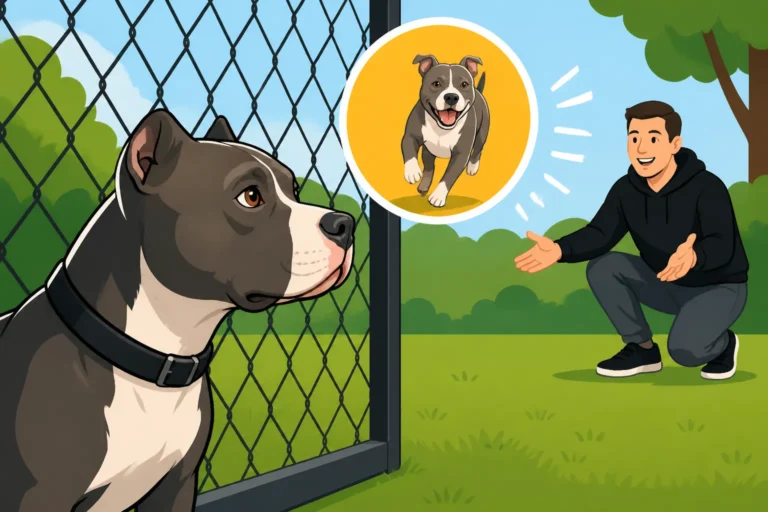
The Importance of a Strong Recall, Even on Leash
While this discussion is primarily about leashed walks, a strong recall is an invaluable backup skill. Even on a leash, practicing your recall in various environments can strengthen your Pit Bull's responsiveness to your voice. Imagine you're off-leash in a contained area, or even on a long line, and you need your dog to disengage from a distraction and come back to you instantly. That same responsiveness, even if it's just turning their head to look at you for a split second on a tight leash, is crucial.
A well-practiced "come" or "here" command can be used to quickly interrupt a stare-down or a tense moment, redirecting your Pit Bull's attention back to you. Use it consistently, and make coming to you the most rewarding thing they can do. If you're struggling with this, consider training classes or online programs like BAXTER & Bella, which offer comprehensive guidance on foundational obedience and recall, laying the groundwork for better leash manners in challenging situations. Building a Pit Bull's Impulse Control is also a relevant read here.
Building Long-Term Resilience and Confidence
Managing individual encounters is one thing, but the ultimate goal is to build your Pit Bull's overall confidence and reduce their reactivity over time. This takes patience, consistency, and sometimes, outside help.
Systematic Desensitization and Counter-Conditioning
These are the pillars of long-term behavior modification.
- Desensitization means gradually exposing your Pit Bull to their triggers at a level where they remain calm and under their threshold. This could mean starting by walking across the street from a park where dogs are playing, then slowly, over weeks or months, getting closer as your dog shows they can remain relaxed.
- Counter-Conditioning pairs that exposure with something positive, like those high-value treats. The idea is to change your Pit Bull's emotional response from negative (fear, frustration, excitement) to positive (happy anticipation of treats).
This isn't a quick fix. It's about taking tiny steps, celebrating small victories, and never pushing your dog over their threshold. If your Pit Bull starts to react, you've gone too far, too fast, and you need to increase the distance or reduce the intensity of the trigger. It’s a process of observing Reading Pit Bull Body Language Before a Greeting and adjusting continually.
Enlisting Professional Help for Advanced Cases
Sometimes, despite your best efforts, you might feel stuck or overwhelmed. That’s perfectly normal! Dealing with a reactive dog is tough, and a qualified professional can be a game-changer. Look for certified professional dog trainers (CPDT-KA) or veterinary behaviorists who specialize in positive reinforcement and force-free methods. Be wary of anyone promising quick fixes or advocating aversive tools like shock collars, as these can often suppress behavior without addressing the underlying emotional issue, potentially making things worse for a sensitive dog like a Pit Bull.
A good trainer will observe you and your dog, help you identify specific triggers, and develop a customized training plan. They can teach you advanced leash handling, timing of rewards, and how to effectively implement desensitization and counter-conditioning. They can also provide support and reassurance when you feel frustrated. For guidance on finding the right fit, see Vetting a Trainer Before Booking a Pit Bull.
Advocating for Your Dog and Setting Boundaries
You are your Pit Bull’s strongest advocate. This means confidently setting boundaries with other people and their dogs. It's okay to say "My dog is in training, please keep your distance," or "We're not ready for greetings right now." Don't let well-meaning but ill-informed strangers (or even other dog owners) push you into uncomfortable situations.
This also applies to choosing your walking routes and times. If you know certain areas are always packed with off-leash dogs, or if evening walks bring out more reactive pups, adjust your schedule or route. Prioritize your Pit Bull's success and well-being. This might mean sacrificing some ideal walking spots for quieter ones, or walking at less popular times. Your dog relies on you to manage their environment, and sometimes, advocating means simply avoiding trouble before it starts.
Choosing the Right Tools and Resources
Having the right gear and knowledge can make a substantial difference in your success when walking your Pit Bull, especially when trying to navigate past reactive dogs. Don't underestimate the power of tools and accessible information.
Effective Leashes, Collars, and Harnesses
As mentioned earlier, your choice of equipment is foundational.
- Leashes: A sturdy, 6-foot nylon or leather leash is often recommended. Avoid retractable leashes entirely; they teach dogs to pull and offer no control in an emergency. A good, strong leash is like an extension of your arm, giving you direct, clear communication with your Pit Bull. On platforms like Amazon, you can find a huge variety of durable leashes built for strong pullers.
- Harnesses: For a Pit Bull with a broad chest and powerful build, a front-clip harness is frequently the best option for everyday walks. When the leash clips to the front, it redirects your dog's momentum back towards you if they pull, making it physically harder for them to forge ahead. This reduces pulling without causing discomfort to their throat or neck. Explore options like the Easy Walk harness or similar designs specifically designed for strong breeds. If your Pit Bull is prone to slipping out of harnesses, investigate escape-proof designs or even consider a martingale collar as a secondary safety measure, alongside a well-fitted harness. More details on appropriate gear can be found in Harnesses Built for a Pulling Pit Bull.
- Head Halters: For some Pit Bulls, a head halter can be an excellent management tool. It works by guiding the dog's head, and where the head goes, the body often follows. This gives you a lot of control with minimal physical effort, which can be a huge benefit for smaller handlers or those with very strong Pit Bulls. Just like a muzzle, head halters require careful positive conditioning to ensure your dog accepts them happily.
Training Aids and Online Support
Beyond physical equipment, there's a wealth of training aids and resources available to help you build your Pit Bull's confidence and skills.
- Clickers: A clicker is a precise marker for good behavior. When you're trying to counter-condition your Pit Bull to other dogs, clicking the moment they look at you instead of the reactive dog, and then treating, can accelerate learning significantly.
- Treat Pouches: Wearing a treat pouch keeps those high-value rewards easily accessible and prevents fumbling. This ensures your timing is spot-on, which is critical for effective positive reinforcement.
- Online Courses and Communities: Many online platforms offer comprehensive training courses that you can do from the comfort of your home. Programs like those offered by BAXTER & Bella often break down complex behaviors into simple, manageable steps, providing video demonstrations and support. These are fantastic for building foundational skills like focus, loose-leash walking, and impulse control, which are all vital when navigating a world with reactive dogs. Additionally, online forums and social media groups dedicated to Pit Bull owners or reactive dog support can provide a community where you can share experiences, ask questions, and get encouragement from others facing similar challenges.
Table of Common Walking Equipment for Pit Bulls
| Equipment Type | Pros | Cons | Best Use Case |
|---|---|---|---|
| Front-Clip Harness | Reduces pulling, good control, comfortable, humane. | Can sometimes tangle legs if not fitted well, dog might still pull. | Everyday walks, general control, training for loose-leash walking. |
| Head Halter | Excellent head control, easy redirection, minimal strength needed. | Requires careful conditioning, some dogs dislike it initially. | Dogs with strong pulling, need precise control around triggers. |
| Flat Collar | Basic, easy to put on. | Offers little control for pulling, can cause neck strain. | Dogs with excellent leash manners, IDs and tags. |
| Martingale Collar | Prevents slipping out for dogs with narrow heads, humane when fitted correctly. | Can still allow pulling, not ideal for strong, sustained pulling. | Dogs prone to backing out of collars, secondary safety with a harness. |
| 6-Foot Leash | Standard, good balance of freedom and control, durable. | Can be cumbersome if not managed properly. | All walks, training, consistent communication. |
| Treat Pouch | Keeps treats readily available, aids timing of rewards. | Can be an extra piece of gear to remember. | Positive reinforcement training, walks with distractions. |
Disclaimer
This article is for general informational purposes only and does not constitute professional advice. Laws, prices and regulations vary by location and change over time. Consult a qualified professional for guidance on your specific situation.