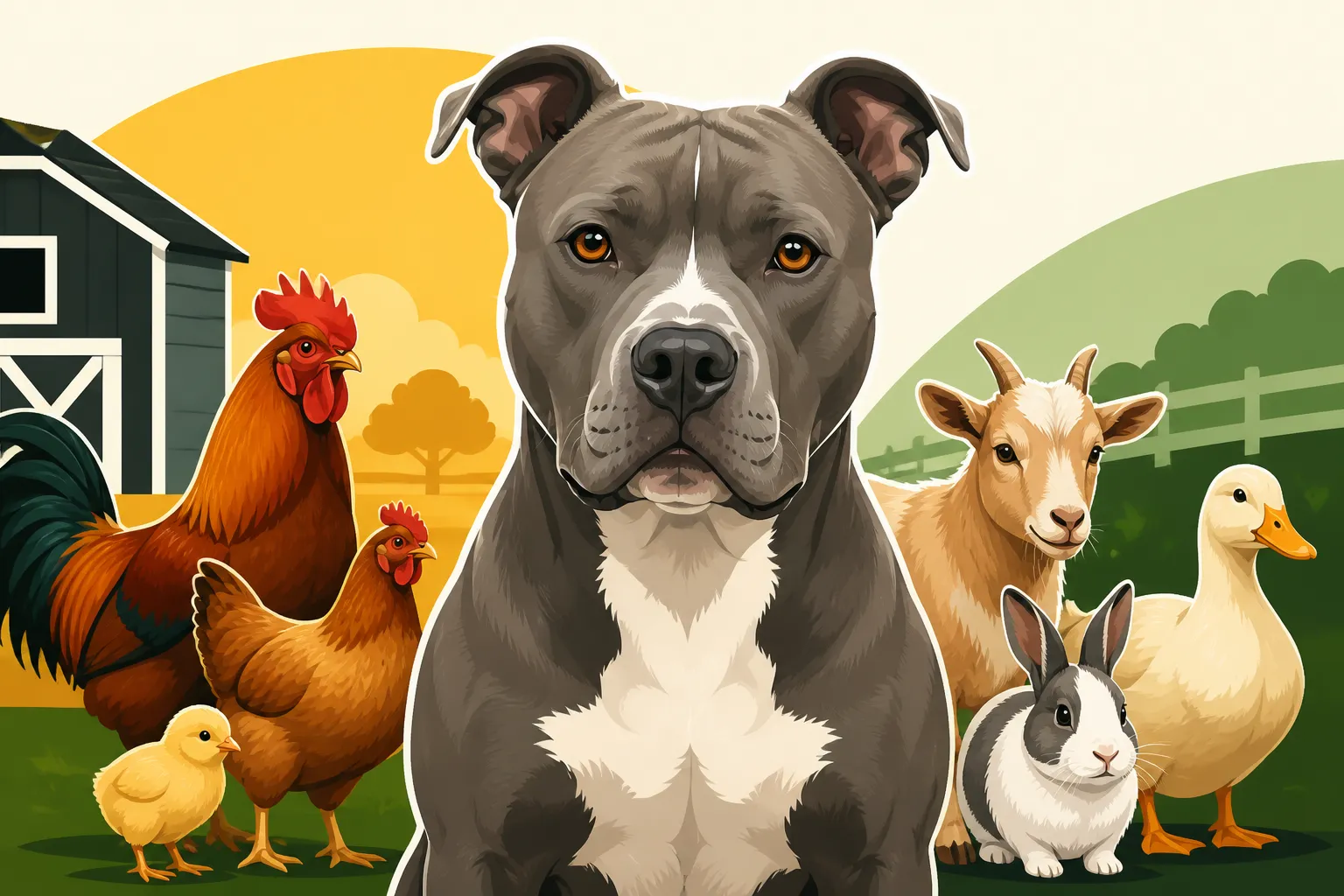
A Pit Bull Around Poultry and Small Stock
The powerful drive that makes a Pit Bull so tenacious and focused in positive endeavors can also manifest as an incredibly strong prey drive, posing a significant challenge if you live near or keep poultry, rabbits, or other small livestock. This instinct can lead to immense stress and heartbreak for owners who genuinely want their Pit Bull to coexist peacefully with smaller animals. This comprehensive guide will delve into understanding this deeply ingrained behavior, assessing the individual risks your Pit Bull might present, and providing concrete, actionable strategies for management and training to help create a safer environment for both your beloved dog and your vulnerable farm animals or pets.
Understanding Pit Bull Prey Drive and Instincts
When we talk about "prey drive" in a Pit Bull, we're really touching on a complex set of behaviors rooted deeply in their ancestry. It's not just about aggression; it's about a sequence of instinctual actions that can be triggered by the sight or movement of a smaller animal. For many Pit Bull owners, this can feel like a constant battle against nature, and it’s important to understand where these behaviors come from before you can even begin to manage them.
The Roots of Prey Drive
Pit Bulls, and dogs of similar bull and terrier ancestry, were historically developed from dogs used in bull and bear baiting, and later, for ratting and dog fighting. These activities required immense drive, strength, and an unshakeable grip. While modern Pit Bulls are cherished family companions and very few are involved in such grim activities, those ancient instincts for chase, capture, and holding a small, fast-moving animal still reside within their genetic makeup. It's a fundamental part of what makes them who they are, often expressed as an intense focus and unwavering determination when something catches their attention.
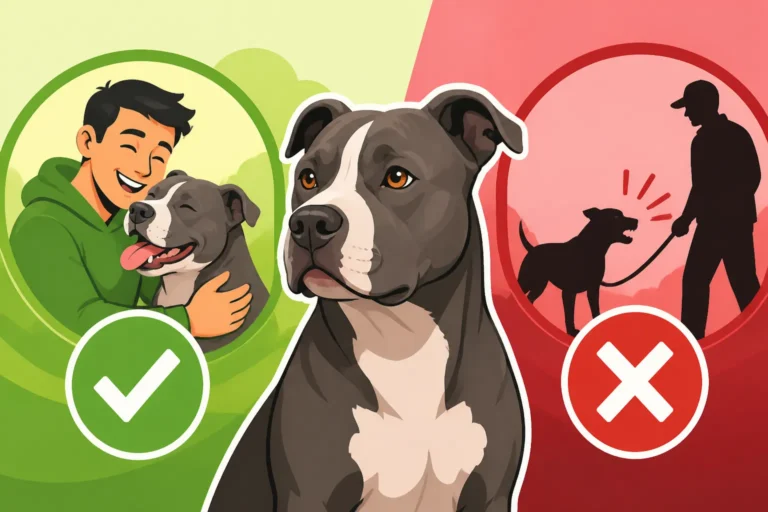
It's crucial to distinguish between true predatory behavior and simple playfulness. A Pit Bull might chase a squirrel in the yard, but that's often a game. However, when that chase turns into stalking, a stiff body posture, an unyielding focus, and the intent to capture and potentially kill, that's prey drive in action. The presence of actual small, vulnerable animals like chickens, ducks, or even rabbits can escalate this instinct from a playful pursuit to a serious threat. Understanding this distinction is the first step in addressing the challenge, as it informs how you approach both management and training. Pit Bull Prey Drive Toward Cats further explores this dynamic.
Recognizing the Signs
Learning to read your Pit Bull's body language is paramount when they are around potential prey. The subtle cues they give can tell you a lot about whether they are merely curious or entering into a full-blown predatory state. Early recognition of these signs can literally be the difference between a peaceful moment and a tragic incident. It's a skill that develops with careful observation and understanding your specific dog.
Look for a sudden shift in their demeanor: an intense, unblinking stare, often accompanied by a lowered head and stiff body. Their tail might be held high and still, or it might wag with a very tight, controlled movement rather than a loose, happy wag. You might notice their muscles tensing, their breath holding, and their ears perking up, tuned entirely into the small animal. Some dogs will even begin to "stalk," moving slowly and deliberately, or freezing in place, before launching into a rapid chase. This isn't usually an aggressive growl or bark, but a silent, laser-like focus on the target.
Any of these signals, especially when combined, should immediately put you on high alert. It indicates that your Pit Bull's instinctual prey drive has been activated. If you notice these signs, it's not the time for a casual correction; it's time for immediate, decisive management. This might mean redirecting their attention with a high-value treat, physically removing them from the situation, or tightening your grip on their leash. The goal is to interrupt the predatory sequence before it can fully escalate, which requires constant vigilance on your part.
Assessing Your Pit Bull's Risk Level
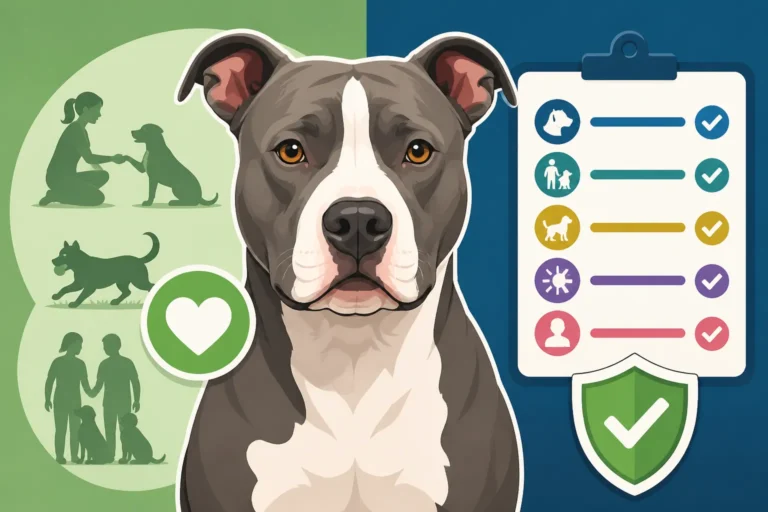
Every Pit Bull is an individual, and their prey drive, while often strong across the type, can vary significantly in intensity and how easily it's triggered. Before you even think about introducing them to poultry or small stock, or if you're suddenly finding yourself in a situation where they're coexisting, taking a realistic look at your specific dog and environment is absolutely critical. This honest assessment will guide all your subsequent management and training efforts.
Individual Variation
It's a common misconception that all Pit Bulls will act the same way around smaller animals. While the potential for strong prey drive is there, the reality is far more nuanced. You might have a Pit Bull who ignores squirrels entirely, or one who has a soft mouth and simply wants to "herd" smaller creatures without harm. Conversely, you might have a dog with an exceptionally high drive, for whom the sight of a flapping chicken is an irresistible trigger. Factors like age, early socialization, previous experiences (positive or negative), and even their specific genetic lineage can play a role. A dog that grew up around cats and learned gentle interactions might have a different baseline than one that has only ever chased wild rabbits.
Consider their history. Was your Pit Bull a rescue with an unknown past? Were they exposed to small animals safely as a puppy? Some owners might look into Whether a DNA Test Settles the Pit Bull Question to understand their dog's breed makeup, which can sometimes hint at certain predispositions, though it’s never a guarantee. A Pit Bull puppy who learned good Pit Bull Bite Inhibition and Mouthing from their littermates might have a slightly better foundation, but it's still no substitute for careful management around vulnerable creatures. Your dog's general temperament – are they easily excitable or more calm and thoughtful? – also feeds into this assessment. There's no one-size-fits-all answer here, which is why individual evaluation is so vital.
Evaluating the Environment
Beyond your dog's individual traits, the physical environment where your Pit Bull and small stock will coexist plays an enormous role in determining risk. A flimsy chicken coop with a loose latch in a yard with a low fence presents a vastly different risk profile than a Fort Knox-like setup with multiple layers of security. It's not just about your dog's intent; it's about opportunity and access. Even the most well-meaning Pit Bull can react purely on instinct if a prime opportunity presents itself, and that's when accidents happen.
Walk your property with a critical eye, specifically looking for vulnerabilities. Are there gaps in your fencing that a determined Pit Bull could squeeze through? Is your poultry run predator-proof, not just from coyotes but from your own dog? Think about both above-ground and below-ground security, as some Pit Bulls are avid diggers. Consider whether there are areas where your Pit Bull could be unsupervised even for a moment, and how quickly a situation could escalate. For instance, a quick dash out an open door where chickens are free-ranging can lead to immediate trouble. Taking proactive steps to fortify your existing enclosures or creating completely separate, secure zones is a crucial part of risk mitigation. Fencing Costs for a Strong Pit Bull can give you an idea of the investment needed for truly secure containment.
Management Strategies for Safe Coexistence
When it comes to Pit Bulls and small stock, management is your first and most important line of defense. Training is vital, but instincts are powerful, and mistakes can happen. Robust management creates physical and behavioral barriers that minimize risk and provide a safety net while you work on more advanced training. This isn't about being mean to your dog; it's about being a responsible owner and ensuring the safety of all animals under your care.
Physical Barriers and Containment
The simplest and most effective way to prevent incidents is to physically separate your Pit Bull from your poultry or small stock. This means never allowing them unsupervised access to the same space. Think in terms of layers of security, like an onion. Start with your poultry housing itself. Coops, hutches, and runs must be incredibly secure, not just against wild predators but against a strong, determined dog. This means sturdy wire mesh (not chicken wire, which is too flimsy for a Pit Bull), firmly attached to strong frames, with secure latches and no gaps. Burying the mesh or adding a "skirt" around the base can deter digging attempts.
Beyond the immediate housing, consider your yard and home. A strong, tall fence is non-negotiable if your Pit Bull will have any outdoor access where small stock might also be present. Many Pit Bulls are excellent jumpers and diggers, so fence height and depth below ground are crucial. For some, even an electric fence might be considered as an additional layer of psychological barrier, though it should never be the sole method of containment. Inside the home, secure crates are invaluable. If your Pit Bull needs to be contained while you tend to the chickens, a heavy-duty crate that they cannot destroy is a wise investment. You can find many robust options on Amazon. For specific advice, look into The Crate a Pit Bull Cannot Break Out Of.
Leash and Muzzle Use
Even with the best physical barriers, there will be times when your Pit Bull is in closer proximity to small stock, such as during feeding times, cleaning the coop, or when you are simply walking them near the animal enclosures. In these scenarios, a secure leash and, often, a muzzle, are indispensable tools for safety. A strong, non-retractable leash and a well-fitting harness (designed for a pulling Pit Bull's strength) give you direct control over your dog's movements.
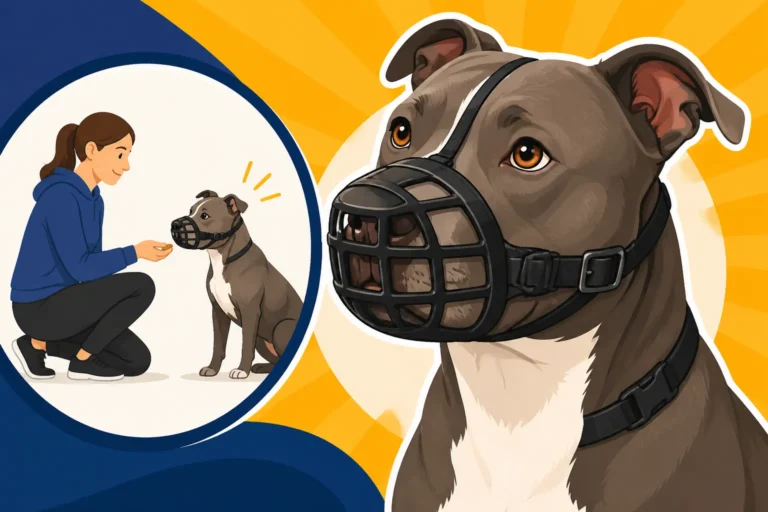
Muzzle training is not a punishment or an admission that your dog is "bad"; it's a responsible safety precaution that every Pit Bull owner should implement, especially if there's any risk of prey drive issues. A comfortable, well-fitted basket muzzle allows your dog to pant, drink, and even take treats, but prevents them from biting. Introducing a muzzle positively and gradually will make your dog comfortable wearing it, turning it into a neutral or even pleasant experience. This means that when you need it most, like during a controlled exposure session or an emergency, it won't add extra stress to your dog. Why Every Pit Bull Should Be Muzzle Trained and Choosing a Basket Muzzle for a Pit Bull provide excellent resources on this vital skill.
Supervised Interaction and Controlled Exposure
Once you have robust physical management in place, you can begin to think about carefully supervised interactions. The key word here is "supervised" – meaning you are 100% focused on your dog and the small animals, ready to intervene instantly. Never leave a Pit Bull and small stock unattended, even for a second, no matter how well-behaved your dog seems. This level of vigilance is constant and unwavering.
When you do arrange interactions, make them brief, highly controlled, and always with your dog leashed and, ideally, muzzled. Start with your Pit Bull at a distance where they can see the small stock but are not overly excited. Gradually decrease the distance over many sessions, always rewarding calm behavior. The goal is not necessarily to have them be best friends, but for your Pit Bull to eventually learn to be indifferent to the presence of the small animals. If at any point your Pit Bull shows signs of heightened prey drive – intense staring, stiff body, lunging – immediately increase the distance or end the session on a calm note by redirecting them away. This process requires immense patience and consistency. Long lines, which you can find on Amazon, can be useful for providing a bit more space while maintaining a measure of control during these sessions.
Training for Impulse Control and Desensitization
While management provides immediate safety, training is what helps reshape your Pit Bull's internal response to small stock over time. It’s a long-term commitment that focuses on building impulse control, strengthening obedience cues, and subtly changing their emotional reaction to the presence of potential prey. This isn't about eliminating prey drive entirely – that's often impossible – but about giving your dog the tools to control their instincts and giving you the ability to reliably intervene.
Foundation Training
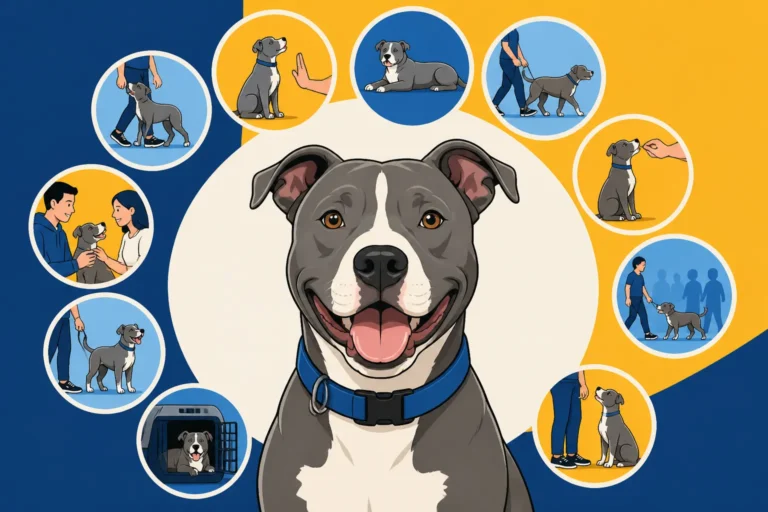
Before you even think about working with live poultry or small stock, your Pit Bull needs an iron-clad foundation in basic obedience. These aren't just parlor tricks; they are critical safety cues that allow you to communicate effectively with your dog in high-distraction environments. "Come" (recall), "leave it," and "stay" are the absolute non-negotiables. Your Pit Bull must respond to these cues instantly and reliably, even when highly stimulated.
Practice these commands diligently in increasingly distracting environments, far away from any small animals. A perfect "come" in your living room isn't enough; it needs to be perfect at the park, or when another dog runs by. "Leave it" is particularly important, as it teaches your dog to disengage from something compelling. Many owners find online resources and trainers, such as the BAXTER & Bella program, extremely helpful for building this solid obedience foundation from the ground up, providing structured lessons and support. For specific guidance, check out Recall Training a Pit Bull From Scratch and Building a Pit Bull's Impulse Control.
Desensitization and Counter-Conditioning
Once your Pit Bull has a solid foundation in obedience, you can begin the process of desensitization and counter-conditioning. This is about gradually changing your dog's emotional response to the sight of small stock from one of excitement and predatory interest to one of neutrality or even pleasure (because good things happen when they see the animals). This is a slow, methodical process that requires immense patience.
Start by having your Pit Bull on a leash and muzzle, at a distance from the small stock where they are aware of the animals but not overly fixated or reacting. The moment they glance at the animals and then look back at you, or remain calm, immediately reward them with a super high-value treat and praise. The goal is to create a positive association: "small animals appear = amazing treats from my human." Over many, many sessions, you will gradually decrease the distance, always ensuring your dog remains under their reactive threshold. If they become too fixated, you've moved too quickly; increase the distance again. This is a marathon, not a sprint. Teaching a Pit Bull to Ignore Other Dogs offers principles that can be adapted for ignoring other types of animals.
High-Value Reinforcement
To successfully counter-condition a strong prey drive, you need reinforcement that can compete with the intense intrinsic reward your Pit Bull gets from engaging their predatory instincts. Standard kibble or everyday treats likely won't cut it. You need "high-value" reinforcement – something your dog absolutely adores and rarely gets. This could be small pieces of cooked chicken, cheese, hot dogs, liverwurst, or a favorite squeaky toy that only comes out during these training sessions.
The higher the value of the reward, the more quickly your Pit Bull will form positive associations and be motivated to offer desired behaviors (like ignoring the small stock). Present these treats immediately after your dog displays the calm, disengaged behavior you want. The timing is crucial; the reward needs to be directly linked to the desired action. Be prepared to use a lot of these special treats during your training sessions. Finding out High-Value Treats That Hold a Pit Bull's Focus will make your training efforts much more effective.
Here's a quick comparison of common containment options:
| Containment Method | Description | Pros | Cons | Best Use Case |
|---|---|---|---|---|
| Secure Coop/Hutch | Reinforced structures for small stock. | Direct protection for small animals; often movable. | Requires ongoing maintenance; can be breached by determined dogs. | Housing for poultry, rabbits, etc., within a larger fenced area. |
| Dedicated Fenced Run | A separate, securely fenced enclosure for small stock. | Creates a clear boundary; offers more space for small animals. | Requires significant space and investment; still needs dog-proof materials. | Outdoor access for small stock, kept separate from dog's main area. |
| Yard Perimeter Fence | Main fence around your entire property. | Contains your Pit Bull; can protect property from outside threats. | Must be tall and secure enough for a Pit Bull; can be expensive. | Primary boundary for dog's general outdoor access. |
| Heavy-Duty Crate | Reinforced metal or plastic enclosure for your Pit Bull. | Excellent for supervised separation or when you can't be 100% focused. | Not for long-term confinement; must be comfortable for the dog. | Temporary containment during chores, guest visits, or initial training. |
| Leash & Muzzle | Direct control and bite prevention. | Immediate safety measure during close proximity or training. | Requires constant handler attention; not a substitute for barriers. | Essential for supervised interactions and initial desensitization. |
Emergency Protocols
Even with the best management and training, unforeseen situations can arise. An accidental gate left open, a sudden fright causing a chicken to fly over a fence, or an unexpected visitor distracting you at a critical moment. Having clear emergency protocols in place for when your Pit Bull's prey drive takes over is crucial. Knowing what to do in the heat of the moment can prevent serious injury or death to small stock and keep everyone safe.
Immediate Intervention
If your Pit Bull breaches a barrier or manages to get to your small stock, immediate intervention is non-negotiable. Yelling, screaming, or running towards them can sometimes escalate the situation, making the dog more frantic. Instead, try to interrupt the behavior with a loud, sharp noise like a whistle, an air horn, or clapping your hands vigorously. This might momentarily startle them and break their focus. At the same time, approach calmly but purposefully, ready to take physical control.
If your dog has a grip on an animal, avoid trying to pry their jaws open with your bare hands, as this can lead to accidental bites to you and further injury to the animal. Instead, try to grab your dog by their harness or collar and pull them away firmly. A break stick (used by some experienced handlers, but requires training) or a quick splash of water to the face might sometimes encourage them to release, but these are last-resort measures. The priority is to separate the dog from the animal as quickly and safely as possible, ensuring your own safety in the process.
Post-Incident Steps
After separating your Pit Bull from the small stock, immediately secure your dog in a safe, contained area, like their crate or a secure room, before assessing the damage. This prevents further escalation and gives you a moment to collect yourself. Check on the injured animal (or animals) immediately and provide any necessary first aid, then contact your veterinarian. Even if the injury seems minor, internal damage might be present. Be prepared for vet visits and potential costs.
Crucially, review what went wrong. How did your Pit Bull get access? Was a gate left open? Was the enclosure compromised? Did you lose focus? This incident is a stark reminder that management systems need to be foolproof. It's not about blaming your dog; it's about identifying weaknesses in your protocols and fortifying them. This might mean adding an extra lock, repairing a section of fence, or re-evaluating your supervision during certain times. Every incident, however unfortunate, should be a learning experience to prevent future occurrences. Consider reviewing What to Do If a Pit Bull Is Involved in an Incident for further guidance.
Disclaimer
This article is for general informational purposes only and does not constitute professional advice. Laws, prices and regulations vary by location and change over time. Consult a qualified professional for guidance on your specific situation.