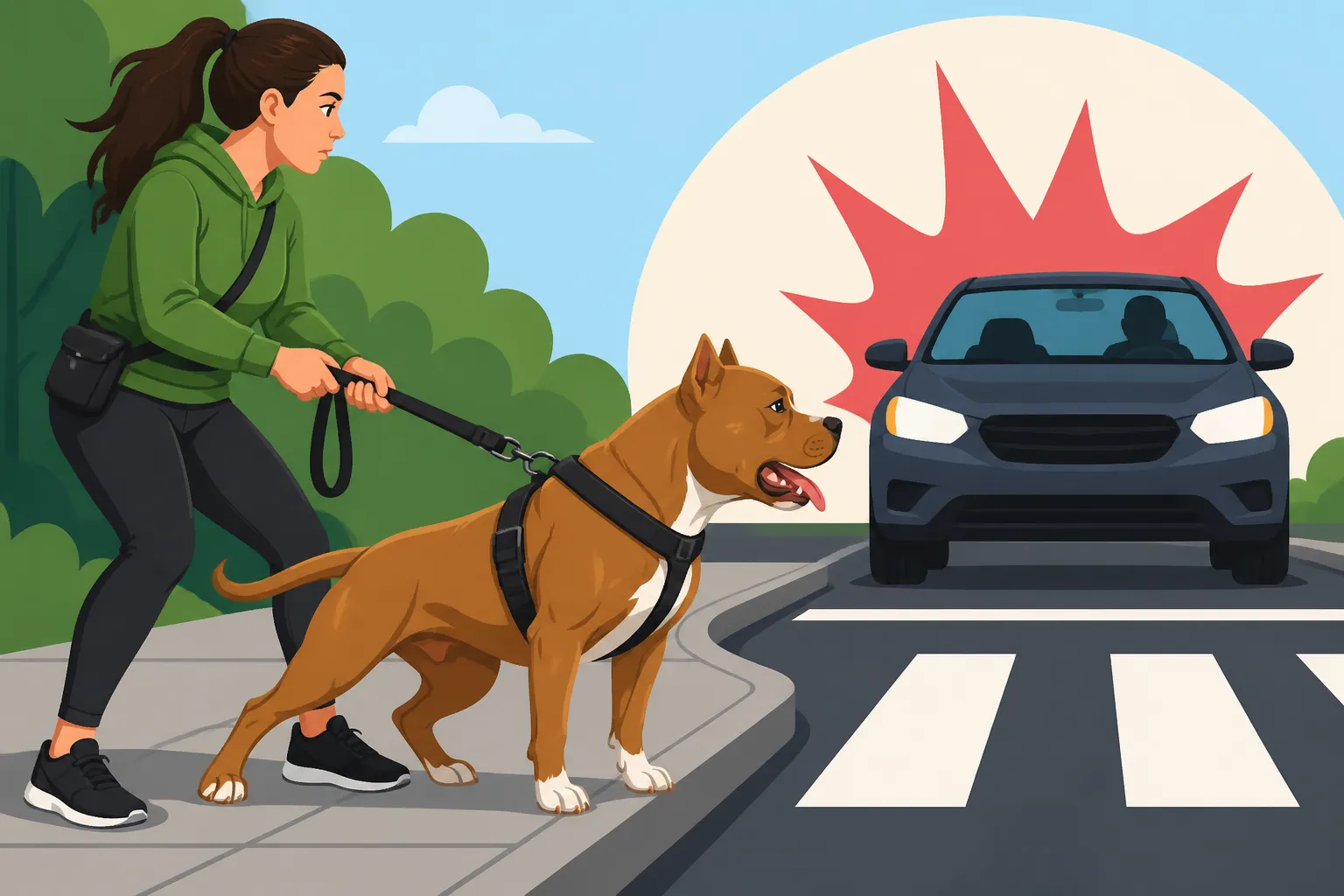
Crossing the Street With a Reactive Pit Bull
Walking a Pit Bull can be such a joy, but it also comes with its unique set of challenges, especially when your otherwise loving companion becomes a barking, lunging whirlwind at the sight of another dog or person across the street. That feeling of dread when you see a trigger approaching, the quick intake of breath, the tense grip on the leash – it's something many Pit Bull owners know all too well. This guide is here to help you navigate those tricky street crossings, offering practical, empathetic strategies to make walks less stressful for both you and your reactive Pit Bull.
Understanding Pit Bull Reactivity on Walks
Before we dive into solutions, let's really get to grips with what reactivity means, especially in a breed like the Pit Bull. It's often misunderstood, leading to unfair judgments, and it's certainly not a reflection of your dog's inherent character or your capabilities as an owner.
What Reactivity Truly Means
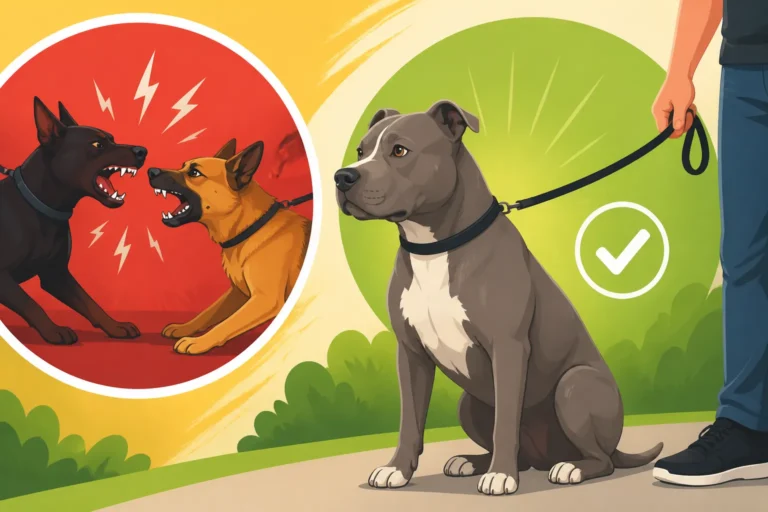
When your Pit Bull reacts dramatically to something—barking, lunging, pulling hard—it's not usually an act of aggression in the way most people think. Instead, it's an overreaction, an emotional outburst stemming from fear, frustration, excitement, or even pain. Think of it as a dog's way of saying, "I don't know how to handle this!" or "Go away!" or "OMG, a squirrel!" all rolled into one noisy, physical display. For many Pit Bulls, who can be incredibly sensitive despite their tough exterior, the world can feel overwhelming, and their big feelings come out in big ways. It's their fight-or-flight response kicking in when they're simply too close to a trigger and feel unable to cope.
This isn't about your dog being "bad" or "dominant." It's about a dog experiencing stress and communicating it in the most effective way they know how, even if that way is disruptive and embarrassing for us on the other end of the leash. Understanding this fundamental truth is the first step towards a more patient and effective training approach.
Common Triggers for Pit Bulls
Pit Bulls, like all dogs, can be triggered by a wide array of things, but some common culprits tend to stand out. Other dogs are often at the top of the list, especially if your Pit Bull has a history of Pit Bull Dog Selectivity Explained or a less-than-positive past interaction. Fast-moving objects like bicycles, skateboards, or even joggers can set some Pit Bulls off, their prey drive kicking in. Sometimes it's certain types of people – men with hats, children, or anyone making sudden movements. Even sounds, like a distant siren or a car door slamming, can be enough to startle a sensitive Pit Bull and put them on high alert.
The key here is to become a detective. Keep a mental note, or even a small journal, of what specifically triggers your Pit Bull. Is it every dog, or just intact males? Is it people staring at them, or just people rushing past? The more precise you can be about their triggers, the more effectively you can manage and train them.
Reading the Signs of an Impending Reaction
Learning to read your Pit Bull's body language before they erupt is crucial for proactive management. It gives you precious seconds to intervene and prevent the full-blown reaction. Look for subtle cues: a stiffening of the body, a hard stare, ears perked and forward, a slight raise in their hackles (the hair along their spine). Their tail might become stiff, either held high or tucked slightly. You might notice their mouth close tightly, or they might start lip-licking or yawning, which are often signs of stress.
A Pit Bull that suddenly stops sniffing the ground, lifts its head, and locks onto something across the street is giving you a clear warning sign. These are all signals that your dog is moving past their "threshold," the point where they can still think and respond, and heading towards the point where they'll just react. Catching these early signs allows you to redirect their attention, increase distance, or deploy a strategy before the situation escalates.
Essential Preparation Before You Step Out
Before you even open the front door, you can set yourself and your Pit Bull up for a more successful walk. Preparation isn't just about having the right gear; it's about having the right mindset and a clear plan.
Gear Choices for Safety and Control
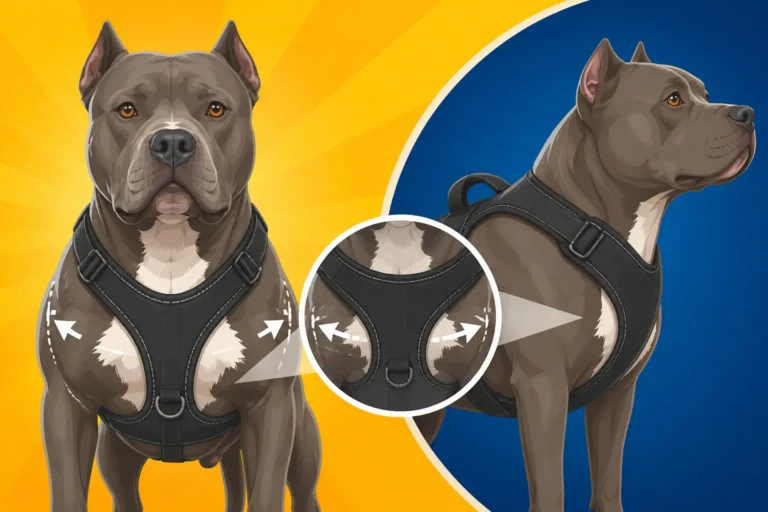
For a powerful, muscular dog like a Pit Bull, having the right equipment is paramount for both safety and effective management. A flat buckle collar might be fine for ID tags, but it offers little control if your dog lunges. Many owners find front-clip harnesses incredibly helpful, as they redirect pulling energy back towards you, making it harder for your dog to drag you down the street. Head halters can offer even more control over the head, giving you better leverage, though some dogs need time to get used to them. Look for robust, well-fitting options. You can find many reputable brands and styles on Amazon, with plenty of reviews to guide your choice. A double-ended leash, which allows you to clip to both a collar and a harness, provides an extra layer of security and control. Harnesses and Head Halters for a Pit Bull can be a game-changer.
Remember, the goal isn't just to restrain your dog, but to make walks manageable enough so that training can actually occur. Gear is a tool, not a fix-all, but it's an essential tool in your reactive dog toolkit.
High-Value Rewards
When you're asking your Pit Bull to ignore something as exciting or scary as another dog, you need to offer something even more exciting. This means high-value treats – not just dry kibble. Think small pieces of cooked chicken, hot dogs, cheese, or specialized soft training treats. These are the "jackpots" that can truly break your dog's focus on a trigger and redirect it to you. Keep them readily accessible in a treat pouch – fumbling for treats can cost you precious moments.
Experiment to find what your Pit Bull considers the absolute best. What sends them into a happy dance? That's what you need. Some online retailers like Amazon offer variety packs, perfect for discovering your dog's top currency. High-Value Treats That Hold a Pit Bull's Focus will make all the difference in counter-conditioning efforts.
Setting Yourself Up for Success
Strategic planning can drastically reduce stressful encounters. If you know your Pit Bull is highly reactive to other dogs, try walking at off-peak hours when fewer dogs are out – early mornings, late evenings, or during typical work hours. Map out your route, identifying potential trouble spots like popular dog walking paths or houses with visible, barking dogs. Whenever possible, choose routes with wider sidewalks, allowing you more space to maneuver if you spot a trigger.
Before you even step out, engage your Pit Bull in some calm, focused exercises indoors. A few minutes of 'sit,' 'down,' and 'stay' can help them get into a thinking frame of mind rather than an over-excited one. This mental warm-up can make them more receptive to your cues once you're outside.
Strategies for Crossing the Street with a Reactive Pit Bull
Okay, you're out there, you're prepared, and then you see it—a trigger, right across the street, heading your way. Now what? These strategies are about managing that moment effectively.
The "See Dog, Treat Dog" Method
This is a cornerstone of reactivity training, often called "Look At That" or counter-conditioning. The premise is simple: every time your Pit Bull sees their trigger, they get a high-value treat. The trick is to do this when your dog is still below their threshold – far enough away that they notice the trigger but don't react. The moment their eyes land on the trigger, say "Yes!" or click, and immediately pop a treat in their mouth. The goal is to change their emotional response from "Oh no, a dog!" to "Yay, a dog means treats!"
The critical part is distance. If your Pit Bull is already barking and lunging, they're too close. You need to find that magical distance where they acknowledge the trigger calmly. This might mean starting across a park, or even across two streets. As they get better, you can gradually decrease the distance. For more detailed steps on this, platforms like BAXTER & Bella often provide excellent online training modules that break down complex behaviors into manageable steps, perfect for reinforcing these positive associations at home and then applying them on walks.
U-Turns and Changing Direction
Sometimes, discretion is the better part of valor. If a trigger appears too suddenly, too close, or your Pit Bull is having an "off" day, the best strategy is simply to get out of there. Practice emergency U-turns at home, making a quick 180-degree turn with a cheerful "Let's go!" and a treat lure. Make it a fun, game-like maneuver, not a punishment. When faced with an unavoidable trigger on a walk, execute your practiced U-turn, heading in the opposite direction or ducking behind a car or bush for cover.
This isn't failing; it's smart management. Every successful avoidance is a walk without a meltdown, reinforcing calm behavior and preventing your Pit Bull from practicing the reactive behavior. It’s also a way to build confidence in both of you. Stopping a Pit Bull That Drags You Down the Street often begins with mastering these quick directional changes.
Blocking and Creating Space
When you can't entirely avoid a trigger, consciously manipulate the environment to create more space and visual breaks. If another dog is approaching on the opposite side of the street, you might cross to the other side of the street, putting two streets' width between you and the trigger. Use parked cars, fences, or even large trash cans as visual barriers. Position yourself between your Pit Bull and the trigger, subtly "blocking" their direct line of sight.
This is where being hyper-aware of your surroundings pays off. Always scan ahead. If you see a trigger far in the distance, you have time to angle your body, guide your dog behind a tree, or even step into someone's driveway for a moment until the trigger passes. The more space and visual breaks you can provide, the less likely your Pit Bull is to feel cornered and react.
Engaging with Focused Exercises
Beyond just treating, engage your Pit Bull in quick, focused exercises to distract and redirect their attention. A rapid-fire "touch" command (where they touch their nose to your hand), a snappy "watch me" (eye contact), or even a few quick "sits" and "downs" can shift their brain from reacting to thinking. Keep these commands upbeat and generously reward for compliance. This is about building a strong connection and making you more interesting than the trigger.
Imagine you're walking, spot a trigger, and before your Pit Bull can fully lock on, you quickly say "Touch!" and present your hand. They quickly touch, get a treat, and their focus returns to you. This creates a pattern of engagement that helps them bypass the reactive instinct.
Long-Term Management and Training
Reactivity isn't usually something that disappears overnight. It's a journey that requires consistency, patience, and a willingness to adapt your training approach.
Consistent Practice and Patience
The biggest mistake owners make is expecting instant results. Reactivity is often deeply ingrained behavior, and changing it takes time, repetition, and unwavering consistency. Every walk is a training opportunity, even if it's just practicing walking calmly in a quiet area. Celebrate the small victories: a trigger passing with only a quick glance, a successful U-turn, or a moment where your Pit Bull chose to look at you instead of barking.
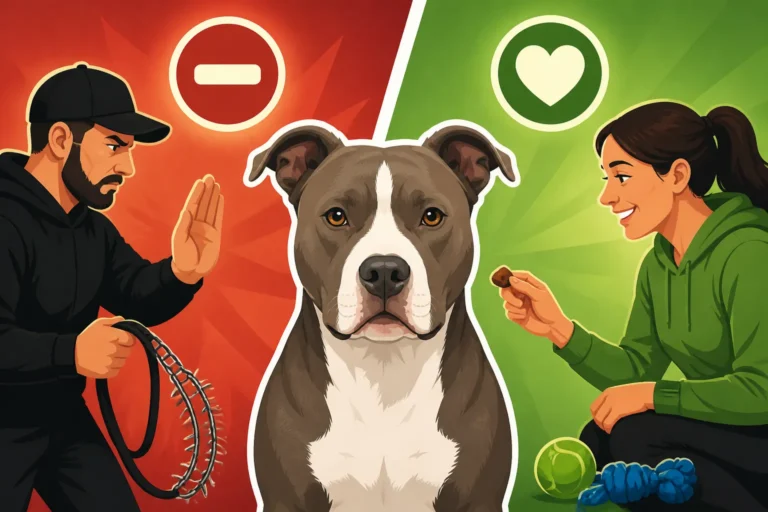
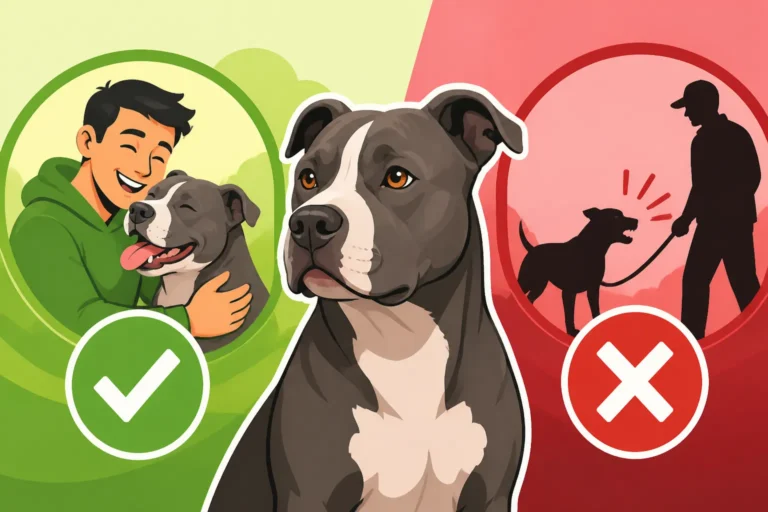
Don't get discouraged by setbacks. There will be days when things go wrong, when your Pit Bull has a full-blown meltdown despite your best efforts. Acknowledge the frustration, learn from the situation, and then let it go. Tomorrow is another day, another walk, another chance to practice and improve. Positive Reinforcement Training With a Pit Bull is key to building trust and confidence.
Advanced Training Techniques
As your Pit Bull progresses, you can introduce more advanced techniques. The "Look At That" game can evolve into teaching your dog to voluntarily look at a trigger and then immediately turn their head to you for a treat, essentially teaching them to check in with you. Desensitization involves gradually exposing your dog to triggers at distances and intensities they can handle, slowly reducing the distance over time. This might involve setting up "practice passes" with a known calm dog at a distance, or simply sitting on a bench in a park and rewarding calm observation of the world passing by.
Enrolling in a reputable force-free training class focused on leash manners or reactivity can provide invaluable guidance and a structured environment for practice. Building a Pit Bull's Impulse Control is a foundational skill that will serve you well in these more advanced scenarios.
When to Seek Professional Help
If you're feeling overwhelmed, if your Pit Bull's reactivity is escalating, or if you're not seeing progress with your current strategies, it's absolutely okay to seek professional help. In fact, it's often the smartest thing to do. Look for a certified professional dog trainer (CPDT-KA) or a certified behavior consultant (CBCC-KA) who uses positive reinforcement methods and has experience with reactive dogs, especially Pit Bulls.
For more severe cases, or if your Pit Bull's reactivity stems from deep-seated fear or anxiety, a veterinary behaviorist might be recommended. These are veterinarians with specialized training in animal behavior, who can assess if medication or other clinical interventions might be beneficial in conjunction with behavior modification. Finding a Trainer Experienced With Pit Bulls is crucial for effective long-term results.
Importance of a Solid Foundation
Ultimately, successfully managing a reactive Pit Bull on walks goes back to a strong foundation of trust, communication, and basic obedience. A Pit Bull that understands and responds reliably to "sit," "stay," and "come" indoors will be better equipped to do so outdoors, even under distraction. Work on focus exercises in low-distraction environments first, gradually adding distractions as your dog builds confidence.
Consistency in your daily routine, mental enrichment activities, and plenty of appropriate physical exercise all contribute to a calmer, more balanced dog who is better able to handle the stresses of the outside world. This holistic approach supports your Pit Bull's overall well-being, making them more resilient to triggers on the street. Consider also Muzzle Training Every Pit Bull Should Have for safety during training and in public. This provides a safety net while you work through the reactivity.
Here's a quick checklist to help you prepare for and manage those reactive moments:
| Action Item | Why It Helps | Check When Done |
|---|---|---|
| Pre-Walk Preparation | ||
| Identify triggers & their distance thresholds | Know what sets your dog off and how much space they need. | |
| Prepare high-value treats | Ensure immediate access to irresistible rewards for counter-conditioning. | |
| Choose appropriate gear | Use a front-clip harness or head halter for control. | |
| Plan route & walk times | Avoid known trigger zones and busy periods. | |
| Mental warm-up exercises | Engage your dog's brain before stepping out. | |
| During the Walk | ||
| Scan environment constantly | Spot triggers early to react proactively. | |
| Maintain distance from triggers | Stay below threshold; cross streets, use barriers. | |
| "See Dog, Treat Dog" | Pair trigger sight with positive reinforcement. | |
| Practice emergency U-turns | Escape overwhelming situations calmly. | |
| Redirect with focused commands | Shift attention from trigger to you (e.g., "watch me," "touch"). | |
| Keep leash loose but secure | Avoid adding tension that escalates arousal. | |
| Long-Term Approach | ||
| Consistency in training | Reactive behavior doesn't change overnight. | |
| Celebrate small wins | Acknowledge progress, no matter how minor. | |
| Seek professional help when needed | Don't hesitate to consult a certified trainer or behaviorist. | |
| Build foundational obedience | A well-trained dog is a more confident dog. |
Remember, managing a reactive Pit Bull is a marathon, not a sprint. Every step you take, every treat you give, and every moment of patience builds towards a more confident, calmer dog and more enjoyable walks for both of you. You're not alone in this, and with consistent effort, you can absolutely improve your Pit Bull's reactivity and The Manners a Pit Bull Needs in Public. It’s about teaching them to Teaching a Pit Bull to Ignore Other Dogs and understand that you are their reliable guide through the world.
Disclaimer
This article is for general informational purposes only and does not constitute professional advice. Laws, prices and regulations vary by location and change over time. Consult a qualified professional for guidance on your specific situation.