Whether a Pit Bull Can Live With Another Dog
One of the most common anxieties for Pit Bull owners, especially those living in or considering a multi-dog household, is whether their beloved companion can truly coexist peacefully with other canines. It's a valid concern, given the breed's history and the pervasive myths that often surround them, making it feel like you're navigating a minefield when you just want a harmonious home. This guide aims to shed light on how to assess, introduce, and manage a Pit Bull in a multi-dog environment, offering realistic expectations and actionable advice for a thriving family.
Understanding Pit Bull Dog Selectivity
The phrase "dog selectivity" often comes up in discussions about Pit Bulls, and it’s something many owners find themselves grappling with. It’s not necessarily a negative trait, but rather a nuanced aspect of their temperament that requires understanding and proactive management. It’s critical to grasp what this truly means before you ever consider bringing another dog into the picture or if you already have multiple dogs and are observing issues.
What "Dog Selectivity" Truly Means
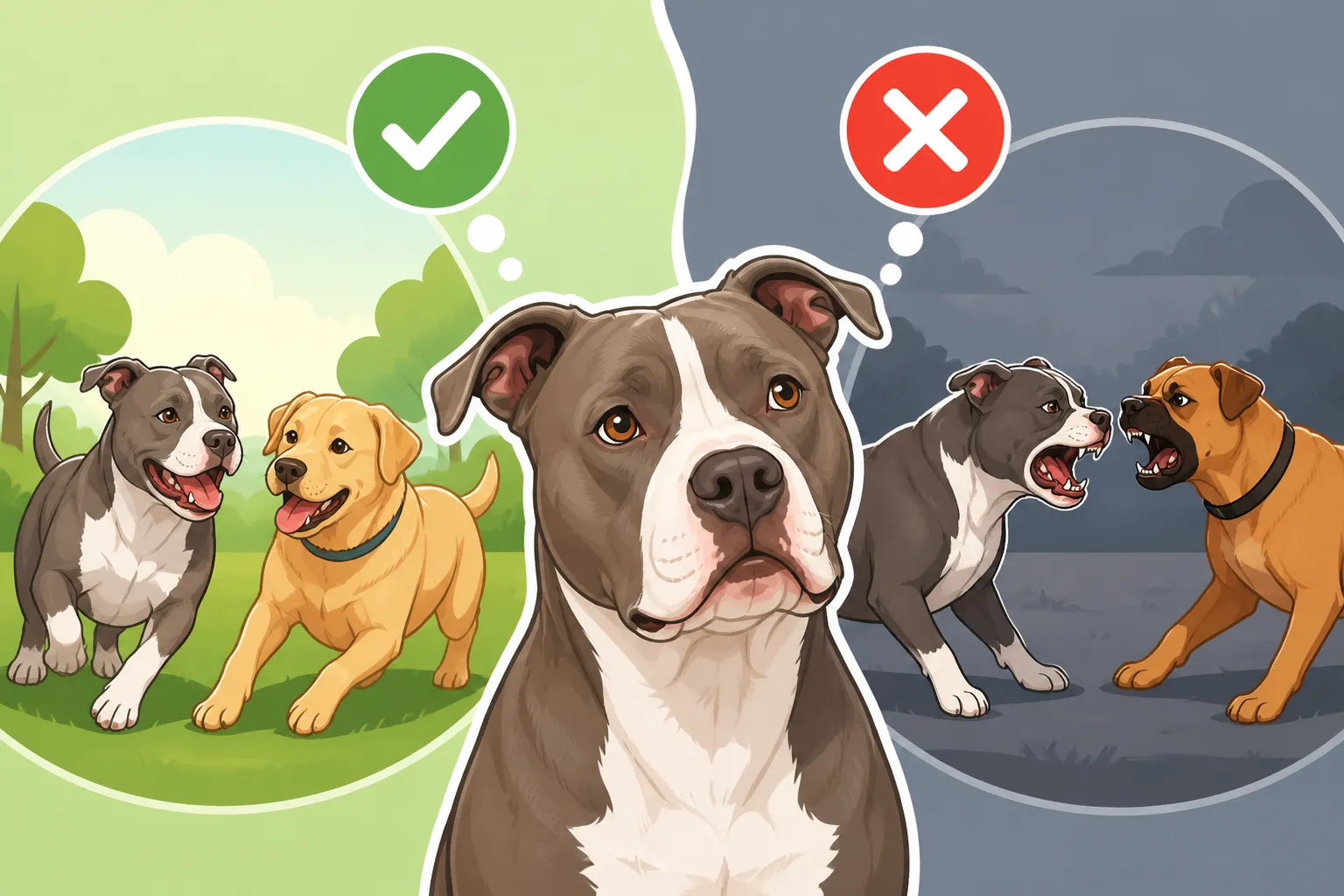
Dog selectivity means your Pit Bull, or any dog for that matter, has preferences about which other dogs they interact with, if any at all. It's not about disliking all other dogs universally, but rather a more refined social circle. Think of it like people – you probably don’t want to be best friends with everyone you meet, and you certainly wouldn’t bring every acquaintance home to live with you. Your Pit Bull might tolerate some dogs in a passing interaction at the park, enjoy playing with a select few, and prefer to completely ignore or avoid others. This isn't the same as aggression, but rather a clear boundary setting.
This preference can manifest in various ways. Some Pit Bulls might be perfectly fine with puppies but draw the line at energetic adult dogs. Others might get along famously with calm, older dogs but find rambunctious youngsters overstimulating. It’s about specific energy levels, play styles, and even the personalities of the other dogs involved. If your Pit Bull seems perfectly content playing with a particular Labrador down the street but bristles at the sight of a certain terrier, that’s a clear sign of selectivity at work.
It's crucial to observe these subtle cues. A dog-selective Pit Bull might offer a soft warning growl, stiffen their body, avert their gaze, or even try to walk away from an interaction they’re not comfortable with. These aren't necessarily precursors to a fight, but rather polite (in dog language) requests for space or a change in the interaction. Understanding Pit Bull Dog Selectivity Explained is the first step in creating a peaceful home, allowing you to respect your dog's boundaries and advocate for them.
Why Pit Bulls Can Be Dog Selective
The propensity for dog selectivity in Pit Bull type dogs often stems from their historical breeding. While they were never bred to be inherently aggressive towards humans, their lineage includes dogs bred for tasks that sometimes involved engaging other animals. This heritage can contribute to a lower threshold for tolerance towards other dogs, especially as they mature. It’s not a universal trait, and many Pit Bulls are wonderfully gregarious, but it’s something responsible owners need to be aware of and plan for.
This selectivity typically isn't something you see in an eight-week-old puppy. It often emerges during the "social maturity" phase, which can be anywhere from 1.5 to 3 years old. A dog who was perfectly fine playing with all dogs as a youngster might suddenly become more discerning or less tolerant as they enter adulthood. This shift can be frustrating and confusing for owners who thought their dog was "good with other dogs" because they never had an issue as a puppy.
Environmental factors, early experiences, and even genetics play a role. A Pit Bull who had negative experiences with other dogs during their critical developmental periods, or one who wasn't adequately socialized, might develop stronger selective tendencies. On the other hand, a Pit Bull from a responsible breeder who focused on stable temperaments, and who received consistent positive socialization, might be more open to coexisting. It’s a complex interplay, not a simple switch.
Differentiating Selectivity from Aggression
It’s vital to distinguish between dog selectivity and outright aggression. Selectivity implies a choice or a preference, whereas aggression is an intent to harm. A dog-selective Pit Bull might avoid other dogs, give warning signals, or simply prefer to play only with certain individuals. An aggressive dog, however, may actively seek out conflict, escalate quickly without clear warning, and show a strong intent to injure. The lines can sometimes feel blurry, making careful observation key.
One major difference lies in the predictability and context. A dog-selective Pit Bull might react negatively only in specific situations, such as when another dog invades their personal space too quickly, or if a particular play style is too intense for them. Aggression, on the other hand, might be less predictable, more intense, and less responsive to redirection. For instance, a selective dog might growl when a new dog approaches their food bowl, but an aggressive dog might launch into an attack.
If you’re unsure, it’s always best to err on the side of caution and consult with a professional. Observing your dog’s body language is paramount. Are they offering appeasement signals, trying to disengage, or are they stiff, staring, and ready to lunge? Understanding these subtle cues can help you determine if you’re dealing with a strong preference that needs management or a deeper behavioral issue that requires intervention. Never ignore these signs, as they are your dog’s way of communicating their discomfort or potential danger.
Factors Influencing Multi-Dog Households with Pit Bulls
Bringing a new dog into a home that already has a Pit Bull, or adding a Pit Bull to a multi-dog home, requires thoughtful consideration of several key factors. It's not just about throwing two dogs together and hoping for the best. Success often hinges on understanding the nuances of each dog's personality and history.
Age and Socialization History
The age of both your Pit Bull and the prospective new dog is a significant factor. Bringing a young puppy into a home with an adult Pit Bull can sometimes work well, as puppies often trigger a different, more tolerant response from older dogs. However, it's not a guarantee, and an adult Pit Bull may still find a persistent puppy annoying or overwhelming. Conversely, introducing two adult dogs, especially if one or both have an unknown or rocky socialization history, can be more challenging.
A dog's socialization history is perhaps one of the most critical elements. A Pit Bull who was extensively and positively socialized during their puppyhood and adolescence – exposed to a wide variety of calm, well-adjusted dogs, people, places, and sounds – is generally more likely to adapt to a multi-dog environment. On the flip side, a Pit Bull with limited or negative early experiences might be more prone to anxiety, fear, or reactivity around other dogs, making introductions exponentially harder. This is why Socializing a Pit Bull Puppy Thoroughly is so crucial.
When considering a rescue Pit Bull, delve deep into their past. What do the shelter staff know about their interactions with other dogs? Were they surrendered from a multi-dog home? While past behavior isn’t a perfect predictor, it offers valuable clues. Likewise, if you’re introducing a new dog to your existing Pit Bull, try to get as much information as possible about the new dog’s history with other canines. This due diligence can save a lot of heartache later on.
Sex and Spay/Neuter Status
The sex of the dogs involved, and whether they are spayed or neutered, plays a surprisingly large role in compatibility. Generally, opposite-sex pairs (a male and a female) tend to have the highest success rates in multi-dog households, especially when both are spayed or neutered. This combination often leads to fewer dominance conflicts and a more balanced dynamic.
Introducing two intact males or two intact females can significantly increase the likelihood of conflict due to hormonal influences and heightened territorial instincts. Intact males may challenge each other more often, while intact females can sometimes engage in more intense, and often harder to break up, fights. Even after spaying or neutering, introducing two same-sex dogs can be more challenging, though often manageable. This is a common concern, and many owners have questions about Same-Sex Pairs and Pit Bull Households.
If you are considering adding a new dog to your home, particularly if you have an intact Pit Bull, it's highly recommended to have both dogs spayed or neutered well in advance of the introduction. This can significantly reduce hormonal drives that contribute to conflict and allows for a more stable base upon which to build a relationship. Always discuss the best timing for spay/neuter with your veterinarian, keeping in mind behavioral implications.
Temperament and Play Styles of Both Dogs
Compatibility truly comes down to individual temperaments and play styles. A high-energy, boisterous Pit Bull might not be a good match for a timid, easily overwhelmed dog, regardless of breed. Similarly, a very dominant Pit Bull might clash with another dog who also tries to assert control. You want to look for dogs whose personalities complement each other rather than clash.
Observe how your current Pit Bull interacts with other dogs they meet. Are they a polite greeter, or do they immediately get "in a dog's face"? Do they have a rough-and-tumble play style that involves a lot of body slamming and chasing, or are they more reserved? Then, consider the temperament of the dog you're thinking of introducing. A dog who enjoys similar play styles, or one who is tolerant of your Pit Bull's style without being intimidated, is often a better fit. For instance, if your Pit Bull loves to wrestle, a dog who prefers gentle chasing might not be the best match, but one who enjoys a good game of tug might be perfect. Understanding Pit Bull Play Style and Rough Games is crucial here.
It's also important to assess the stress levels and resilience of both dogs. Some dogs bounce back quickly from a tense interaction, while others carry the stress for hours or even days. If one dog is particularly sensitive or anxious, they may struggle in a multi-dog home, especially if the Pit Bull is more assertive. The goal is to find a balance where both dogs feel safe, respected, and comfortable in their shared space.
Strategies for Successful Introductions and Coexistence
Introducing a Pit Bull to another dog, whether it's a new family member or a temporary guest, demands patience, careful planning, and a methodical approach. Rushing this process can set the stage for long-term problems, while taking it slow and deliberate greatly increases the chances of a peaceful coexistence.
The Importance of Neutral Ground
The very first interaction between your Pit Bull and the new dog should always take place on neutral territory. This means a location where neither dog has established a sense of ownership or territoriality. A local park, a quiet field, or even a friend's large, enclosed yard can serve this purpose. Avoid your home or backyard for the initial meeting, as your Pit Bull might feel the need to guard their space, which can lead to tension.
Both dogs should be on leashes, handled by separate, confident individuals. Start with a parallel walk at a distance where both dogs are aware of each other but show no signs of stress or reactivity. The goal is for them to simply exist in each other's presence without direct interaction. As they appear comfortable, gradually decrease the distance. Allow them to sniff the ground where the other dog has been, letting them gather information indirectly.
When they eventually meet nose-to-tail, ensure the interaction is brief and calm. Avoid face-to-face greetings initially, as these can be perceived as confrontational by some dogs. Keep praise calm and positive, and don't force interaction if either dog shows discomfort. Multiple short, positive interactions on neutral ground are far more beneficial than one long, stressful one. This slow, methodical approach is key to Introducing a Pit Bull to an Existing Dog Slowly.
Controlled Interactions and Supervision
Once initial neutral territory introductions have gone smoothly, you can move to controlled, supervised interactions in a secure, dog-proof area, such as your backyard. Keep both dogs on long lines initially so you can gently separate them if needed. These interactions should still be relatively brief and focused on positive experiences, like sniffing around or a short play session if both dogs are clearly enjoying themselves.
Avoid leaving the dogs unsupervised, even for a moment, until you are absolutely certain of their compatibility. This often means weeks or even months of careful supervision. When you cannot directly supervise, dogs should be separated – either in separate rooms, crates, or behind baby gates. Durable crates, like those found on Amazon, can be invaluable for creating safe, personal spaces for each dog. This prevents potential resource guarding or squabbles when you're not there to mediate.
During these supervised times, look for body language cues. Are tails wagging loosely, bodies relaxed, or are they stiff, staring, or showing subtle signs of tension like lip licking or yawning? Understand Reading a Pit Bull Before a Scuffle Starts to intervene before issues escalate. Always end interactions on a positive note, before either dog becomes overstimulated or tired. Reward calm, polite behavior with treats and praise, reinforcing that being around the other dog is a good thing.
Managing Resources and Space
Resource guarding – the protective behavior a dog exhibits over valuable items like food, toys, sleeping spots, or even their owner – is a common trigger for conflict in multi-dog households. With Pit Bulls, known for their focus and drive, it's particularly important to manage resources proactively to prevent any potential disputes. This isn't about blaming the dog, but about setting them up for success.
Feed dogs separately, in different rooms or in their crates, to eliminate any competition over food bowls. All high-value treats and toys should only be given when dogs are separated. If one dog has a favorite chew, like a robust bully stick, ensure they can enjoy it alone without fear of another dog approaching. Pay attention to prime napping spots; if two dogs vie for the same sunny patch, you might need to provide multiple appealing beds in different locations.
Creating separate spaces within the home is equally important. Each dog should have their own "safe zone" – a crate, a bed in a quiet corner, or even a designated room – where they can retreat and be undisturbed. This minimizes constant proximity, which can be a source of subtle stress, and allows each dog to decompress. Using baby gates to create physical barriers between areas of the house can also be incredibly effective for managing flow and ensuring personal space when you can't be actively supervising every moment.
Living with Two or More Pit Bulls
Having multiple Pit Bulls can be incredibly rewarding, but it also comes with its own unique set of considerations and challenges. Their intelligence, strength, and potential for dog selectivity mean that careful management is not just recommended, but essential for a harmonious home.
The "Crate and Rotate" Method
For many multi-Pit Bull households, especially those with dogs who have proven to be dog-selective or prone to same-sex aggression, the "crate and rotate" method becomes an invaluable management tool. This strategy ensures the dogs are never left unsupervised together and often involves keeping them physically separated for much of the day, rotating their access to common areas and human interaction. While it sounds intense, it's often the most responsible and safest way to manage coexistence.
Typically, one dog or pair of dogs might have access to the main living area while the others are securely crated or confined to a separate room. Then, after a set period, they are rotated. This means no unsupervised access to each other, no shared resources without strict oversight, and a meticulous schedule for walks, play, and one-on-one time. It requires significant commitment and organization from the owner, but it genuinely prevents conflict and ensures the safety of all animals in the home. It’s not about punishment, but about managing the environment to prevent undesirable behaviors.
While it may seem like a lot of work, "crate and rotate" prevents fights, reduces stress for the dogs (who don't have to constantly be on guard), and allows owners peace of mind. Many successful multi-Pit Bull homes utilize this method, and it truly is an effective Crate and Rotate as a Pit Bull Management Plan. It highlights that successful coexistence doesn't always mean constant interaction, but rather respectful, managed space.
Same-Sex Pairs: What to Watch For
As touched on earlier, same-sex pairs, especially two females or two males, can present more challenges in a Pit Bull household. While it's certainly possible for same-sex Pit Bulls to live together peacefully, it requires heightened awareness and often more stringent management.
Female-on-female aggression, in particular, can be notoriously intense and difficult to mitigate once it begins. It's often less about ritualized dominance displays and more about serious, quiet intent. With males, conflicts can often be more outward and boisterous, though still dangerous. These conflicts tend to emerge as dogs reach social maturity, typically between 18 months and three years of age, even if they were raised together as puppies without issue.
Owners of same-sex Pit Bull pairs need to be especially vigilant for subtle signs of tension: stiff body language, prolonged stares, resource guarding that escalates, or avoidance behaviors from one dog. Any shift in the dynamic should be taken seriously. Even if they’ve lived together for years, changes in routine, stress, or even an external trigger can ignite a dormant conflict. It’s important to understand the risks and be prepared to implement strict management protocols, including permanent separation if necessary.
Understanding Pack Dynamics and Hierarchy
While the idea of a rigid "pack hierarchy" in domestic dogs is often oversimplified, dogs in a multi-dog household do establish some form of social structure. This isn't necessarily about a linear alpha-beta relationship, but more about who defers to whom in different situations. With Pit Bulls, understanding these dynamics can help you identify potential friction points and manage interactions more effectively.
Dogs often sort out who gets access to what resources, who initiates play, and who yields space through subtle communication signals. When this communication is clear and respected by both dogs, peace usually prevails. Problems arise when one dog consistently challenges another, or when signals are misread, leading to confusion or escalation. For example, if one Pit Bull consistently tries to block another from approaching you, it's a clear sign of an underlying dynamic that needs careful attention.
As an owner, your role is not to enforce a rigid hierarchy, but rather to be a fair and consistent leader for all dogs. Provide clear boundaries, ensure equal access to resources (even if that means managing access), and prevent any single dog from monopolizing your attention or resources in a way that creates resentment or conflict. By providing structure and predictable routines, you can help all your Pit Bulls feel secure and reduce the need for them to constantly renegotiate their social positions amongst themselves.
When Professional Help is Needed
Despite all the best intentions and diligent management, sometimes issues between dogs in a multi-dog household can escalate beyond what an owner can safely or effectively handle on their own. Knowing when to call in the cavalry is crucial for the safety and well-being of all involved.
Recognizing Warning Signs and Escalation
It's tempting to brush off minor squabbles as "just dogs being dogs," but with Pit Bulls, it's essential to take even subtle warning signs seriously. Growling, snapping, prolonged stares, stiff body language, or any instance where one dog actively prevents another from accessing a resource or space are red flags. These aren't just one-off incidents; they're communications that tension is building.
Escalation can look different in various households. It might be an increase in the frequency or intensity of resource guarding, from subtle hovering to outright brawls over a dropped crumb. It could manifest as one dog becoming increasingly anxious or withdrawn, constantly trying to avoid the other. Or, it could be actual physical fights that result in injuries, even minor ones. A single bite that breaks the skin, regardless of how small, is a serious incident that demands professional intervention.
If you find yourself constantly mediating, living in fear of the next interaction, or having to physically separate your dogs multiple times a day, the situation has likely escalated beyond simple management. If you witness Breaking Up a Fight Involving a Pit Bull, you'll understand the urgency of getting professional help to prevent future occurrences. Don’t wait until a severe injury occurs; early intervention is always better.
Finding a Qualified Trainer or Behaviorist
When you realize you need help, the next step is finding the right professional. Not all trainers are created equal, and it's especially important to find someone experienced with Pit Bull type dogs and multi-dog household dynamics. Look for a Certified Professional Dog Trainer (CPDT-KA), a Certified Dog Behavior Consultant (CDBC), or a Veterinary Behaviorist (DACVB). These credentials ensure they have a solid foundation in animal learning theory and ethical, force-free methods.
Avoid trainers who rely on punishment-based methods, especially electric collars, prong collars, or physical corrections, as these can exacerbate aggression, suppress warning signals, and damage the bond with your dog. A good professional will focus on understanding the root cause of the behavior, modifying the environment, teaching management strategies, and building positive associations between the dogs. They should involve you heavily in the process, providing clear instructions and ongoing support. Vetting a Trainer Before Booking a Pit Bull is a critical step; don't just pick the first name you see. Ask for references and observe their methods.
Many trainers now offer virtual consultations, which can be a fantastic way to get expert advice from anywhere, often at a more flexible schedule. Platforms like BAXTER & Bella also provide online resources and virtual coaching that can be a great first step or supplement to in-person training, especially for learning foundational skills that apply to multi-dog management.
Long-Term Management and Safety Protocols
Working with a professional isn't a quick fix; it's about developing a long-term management plan tailored to your specific dogs and household. This plan will likely include strict safety protocols, environmental modifications, and ongoing training for both you and your dogs. The goal is to create a predictable and low-stress environment where all dogs can feel safe and secure.
This might mean continuing with strategies like "crate and rotate" indefinitely, even after behavior improves. It could involve permanent separate feeding routines, managing access to specific rooms, or always walking dogs separately. You might also implement specific training exercises to improve impulse control, reinforce polite greetings, or desensitize dogs to triggers. The professional will help you establish a routine that minimizes conflict and maximizes harmony.
Ultimately, the safety of all animals and humans in your home is paramount. Be prepared to make difficult decisions if, despite all efforts, your Pit Bull and another dog simply cannot safely coexist. This might involve rehoming one of the dogs to a single-dog household or a more compatible multi-dog environment. While heartbreaking, it is sometimes the most responsible and compassionate choice for everyone involved. Your professional behaviorist can help you navigate these complex decisions with compassion and guidance.
| Factor | Lower Risk Indicators | Higher Risk Indicators | Management Considerations |
|---|---|---|---|
| Age | Pit Bull is adult, new dog is a young puppy (well-socialized) | Two adult dogs, especially if one or both are poorly socialized | Supervised introductions, separate spaces for rest, ensure puppy isn't overly annoying |
| Sex | Opposite sex (male/female), both spayed/neutered | Same-sex pairs (especially two females or two intact males) | Spay/neuter both dogs, strict supervision, separate if tension arises, consider "crate and rotate" |
| Socialization History | Extensive, positive early socialization for both dogs | Limited or negative past experiences with other dogs | Slow, controlled introductions on neutral ground, professional guidance often needed |
| Temperament | Complementary: one calm, one playful; both tolerant and adaptable | Clashing: two dominant dogs, one timid and one boisterous, high reactivity | Focus on individual temperaments, ensure each dog has safe retreat spaces, manage play |
| Play Style | Similar, or one dog tolerant of other's style (e.g., both enjoy wrestling) | Very different (e.g., one rough, one gentle) | Supervise play closely, interrupt if overstimulated, ensure appropriate playmates |
| Resource Guarding | No history of guarding, comfortable sharing | History of guarding food, toys, space, or people | Separate feeding, high-value items given in isolation, teach "trade" command |
Disclaimer
This article is for general informational purposes only and does not constitute professional advice. Laws, prices and regulations vary by location and change over time. Consult a qualified professional for guidance on your specific situation.