Toys That Survive Pit Bull Jaw Strength
It’s a tale as old as time for many Pit Bull owners: you bring home a new toy, filled with hope, only to find it in tatters within minutes, or at best, a few hours. The sheer power and determination in a Pit Bull's jaws can make finding a truly durable toy feel like an impossible quest, leaving you frustrated and your wallet lighter. This guide is here to shed light on why your strong chewer demolishes toys so quickly and, more importantly, to help you identify and choose toys that genuinely stand a chance against that formidable Pit Bull jaw strength, offering both enrichment and longevity.
Understanding Pit Bull Jaw Strength and Play Style
Before we dive into specific toy recommendations, it’s crucial to understand why Pit Bulls are such intense chewers. It's not just about raw power; it's a combination of their physical build, their breed history, and their natural drives that makes toy destruction an Olympic sport for them. When you understand the "why," you can make more informed choices about the "what."
The Anatomy of a Powerful Chewer
Pit Bulls, whether you're talking about American Pit Bull Terriers, American Staffordshire Terriers, or Staffordshire Bull Terriers, are bred for strength and tenacity. Their powerful neck and jaw muscles are a testament to their heritage. They possess a broad skull and a jaw structure designed for holding and shaking, rather than just delicate nibbling. This physical makeup means they can exert immense pressure when they chew, easily crushing weaker materials. Think about the feeling of your Pit Bull clenching down on a favorite rope toy – that focused grip is far beyond what many other breeds can achieve. This isn't a flaw; it's simply a part of their magnificent design.
Beyond raw strength, their teeth are also robust and well-suited for intense chewing. While some breeds might have more delicate enamel or a tendency for dental issues from hard chewing, a healthy Pit Bull's teeth are built for the job. This is why it's so important to be mindful of Pit Bull Dental Disease and Hard Chewing, as using the wrong kind of chew can lead to serious problems like cracked teeth. Many owners find themselves asking what kind of chews won't inadvertently cause a visit to the emergency vet, and it often comes down to understanding this innate jaw power.
The Pit Bull's Driven Play: More Than Just Chewing
It’s not just chewing; it’s often a deep-seated drive. Many Pit Bulls have a strong prey drive and an instinct to 'work' with their mouths. This isn't aggression; it's a natural inclination that manifests as intense tugging, shaking, and yes, persistent chewing. For some, it's a way to de-stress or self-soothe. For others, it's pure joy and engagement. When they grab a toy, they often don't just chew it; they engage with it fully, trying to "kill" it, shake it apart, or dissect it piece by piece. This intense focus means that even a toy that seems sturdy to you might have its weaknesses exploited systematically by a determined Pit Bull.
This driven play is fantastic for their mental and physical health, but it requires toys that can keep up. A thin rope toy might last minutes before strands are pulled out and swallowed, posing a choking hazard. A plush toy, no matter how "tough" its stitching claims to be, often succumbs to the surgical precision of a Pit Bull looking for the squeaker. It's a testament to their intelligence and persistence, really, even if it feels like they're just trying to challenge your budget.
Why "Indestructible" Toys Often Fail
You've seen the labels: "indestructible," "heavy-duty," "for power chewers." You buy them, hopeful, only to find them dismembered faster than a discount store plushie. Why? Often, these claims are made without a true understanding of a Pit Bull's specific chewing style or the sheer tenacity they bring to the task. What might be "indestructible" for a Labrador might be merely a warm-up for a Pit Bull.
The common failures usually stem from a few key areas:
- Material Weakness: Some materials, while hard, can splinter or break into sharp pieces under strong, repeated pressure. Others might be too soft and easily shredded.
- Design Flaws: A thin wall, a small protruding piece, a seam, or a small hole can become the Achilles' heel of an otherwise strong toy. Your Pit Bull will find it.
- Lack of Engagement: Sometimes, a toy is durable, but it's just plain boring. A Pit Bull, with its high drive, needs a toy that offers more than just something hard to chew. If it doesn't provide mental or physical stimulation, they might just dismantle it out of boredom, turning it into a deconstruction project.
The frustration is real, and many owners feel like they're constantly throwing money away. It's not you, it's often the toy design failing to account for the unique demands of a Pit Bull.
Essential Qualities of Durable Pit Bull Toys
So, what should you look for? Navigating the vast market of dog toys can be overwhelming. The key is to focus on specific attributes that directly counter the Pit Bull's natural abilities and play style. It's about smart shopping, not just buying the biggest or most expensive option.
Material Matters: Rubber, Nylon, and Beyond
The core of a durable toy lies in its material. Not all plastics or rubbers are created equal.
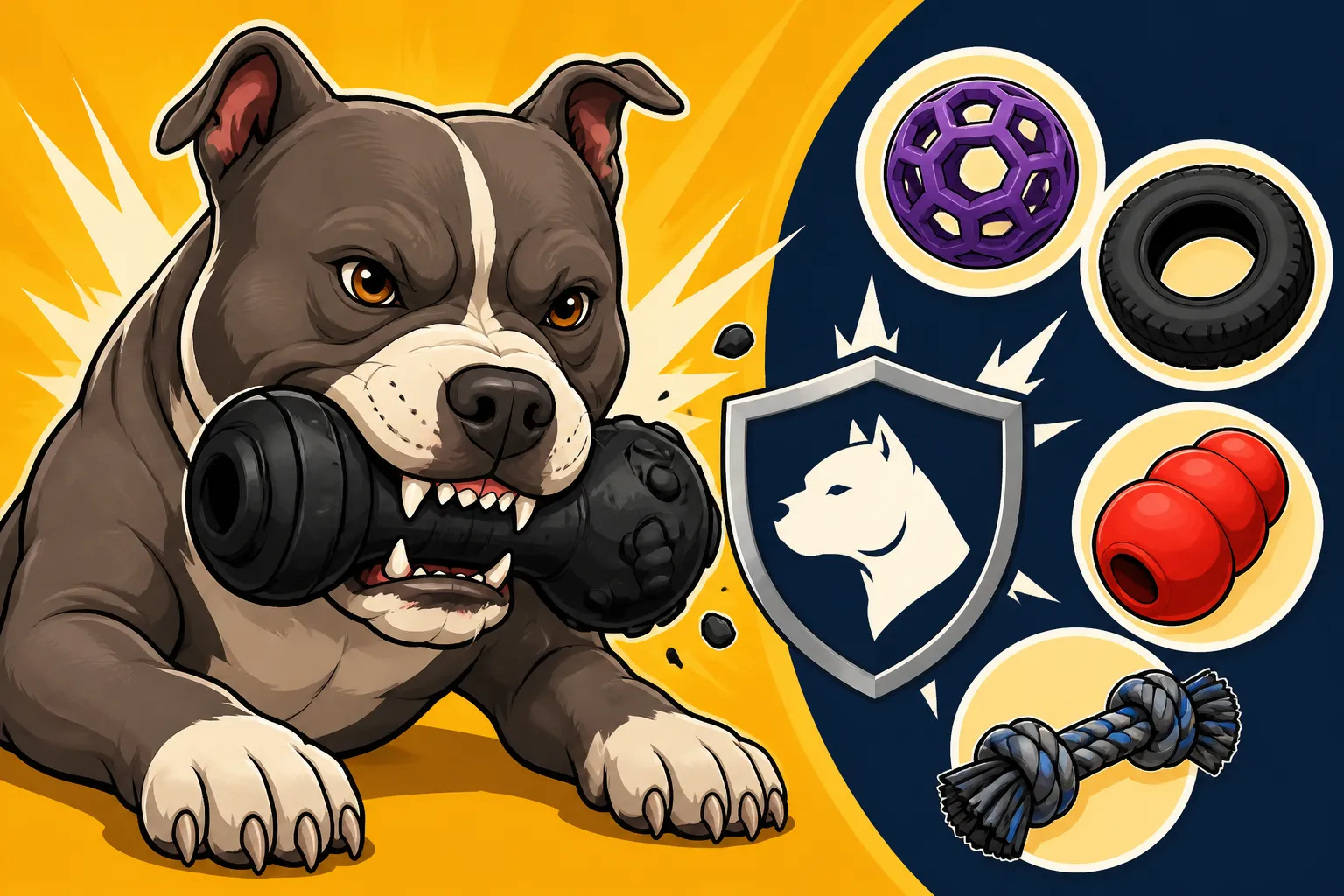
- Heavy-Duty Rubber: This is often the gold standard. Look for dense, solid rubber that has some "give" but feels incredibly tough. Brands like Kong and Goughnuts are famous for their proprietary rubber compounds designed for strong chewers. This isn't your average bouncy ball rubber; it's formulated to withstand intense compression and repeated grinding. The elasticity allows for safe chewing without splintering, and the density makes it very difficult to destroy quickly. When considering chew toys, remember that Chews That Crack a Pit Bull Molar are often those that are too hard or brittle, so a dense but slightly yielding rubber is ideal.
- Solid Nylon: For those who prefer non-rubber options, solid nylon chews can be excellent. These are typically bone-shaped or textured chews that are incredibly hard and durable. They are designed to be gnawed on, and while they might show wear and tear, they don't break off in large chunks. They often have flavors infused to make them more appealing. The key is solid nylon, not hollow, which can be easily crushed.
- Novel Materials: Some newer brands are experimenting with materials like wood composites or proprietary blends that claim enhanced durability. Always research these carefully and check reviews from other strong-chewer owners. Be wary of anything that seems too good to be true, and always monitor your Pit Bull with new toys, especially those made from less common materials.
Design and Construction: Avoiding Weak Points
A toy's material is only half the battle; its design is equally critical. A poorly designed toy, even if made from strong material, will inevitably fail.
- Solid vs. Hollow: For intense chewers, solid toys are almost always superior to hollow ones. Hollow toys can be compressed and then cracked or bitten through more easily. While some hollow rubber toys (like classic Kongs) are designed with a specific thickness and shape to withstand chewing, for absolute durability, solid is usually better.
- Minimal Protrusions: Toys with lots of small nubs, thin edges, or intricate designs are often the first to go. These create weak points that a persistent chewer will exploit. Simple, robust shapes with thick walls or solid construction are generally more resistant. Think spheres, thick bones, or chunky, irregular shapes.
- No Loose Parts or Seams: Any external elements that can be chewed off—like rubber fins, plastic caps, or fabric tags—are immediate targets. Similarly, seams (especially on "tough" fabric toys) are vulnerabilities. A Pit Bull will diligently pick at a seam until it unravels, leading to stuffing or plastic pieces being ingested. This is a common issue with toys that claim to be "tough plush"; they rarely stand a chance against a determined Pit Bull.
Size and Shape for Safety and Engagement
The right size and shape aren't just about durability; they're also about safety and effectiveness.
- Appropriate Size: A toy should be large enough that your Pit Bull cannot swallow it whole or get it entirely behind their molars in a way that risks choking. However, it shouldn't be so large that they can't comfortably carry or manipulate it. A good rule of thumb is that the toy should be too large to fit entirely in their mouth without being awkward.
- Engaging Shapes: While simple shapes are durable, they also need to be interesting. Some of the best Heavy-Duty Rubber Chew Toys have irregular shapes that make them bounce unpredictably or create interesting textures for chewing. Puzzle toys, for instance, often have complex shapes designed to hold treats, increasing mental engagement and making the toy more rewarding, which can sometimes redirect destructive chewing behavior.
- Ergonomics for Chewing: Some toys are designed with ergonomic considerations for a dog's mouth, making them more comfortable and satisfying to chew. This might mean grooves for teeth, or shapes that are easy to hold between paws. A toy that feels good to chew might be chewed on for longer, leading to more satisfaction and less inclination to move on to your furniture.
Top Categories of Toys That Stand a Chance
Now that we know what to look for, let's explore some specific categories of toys that have a proven track record with Pit Bulls. These are the workhorses, the toys that have earned their stripes in countless battles against powerful jaws.
Heavy-Duty Rubber Chew Toys
These are often the first stop for Pit Bull owners, and for good reason. The best ones are made from extremely dense, proprietary rubber compounds that can withstand incredible pressure.
- Classic Stuffed Rubber Toys: The original KONG Classic is a prime example. Its unique shape and dense rubber make it highly durable, especially when stuffed with treats, peanut butter, or kibble. The challenge of getting the food out provides mental stimulation, which can be just as tiring as physical exercise for a smart Pit Bull. This makes it more than just a chew toy; it's a puzzle that rewards effort. Many Pit Bull owners find that these are excellent for keeping their dogs occupied, especially when they need to be left alone for a while. You can even freeze them for a longer-lasting challenge.
- Solid Rubber Chews: Brands like Goughnuts offer solid rubber rings, sticks, and bones that are virtually indestructible. What makes them unique is their inner "safety indicator" – if your dog manages to chew through to the red core, it's time to replace the toy. This provides an invaluable safety feature for aggressive chewers. These toys are designed purely for chewing and gnawing, satisfying that deep urge without breaking down. For Pit Bulls that love to just chew, these are often the go-to.
- Textured Rubber Toys: Some heavy-duty rubber toys feature textures or nubs that not only provide a satisfying mouthfeel but can also help with dental hygiene, acting as a natural scrub against plaque as your Pit Bull chews. These can be particularly good for those looking for ways to combine play with some incidental dental care, reducing the need for more intensive Pit Bull Dental Cleaning Schedule as often.
Solid Nylon Chews and Dental Aids
For dogs who enjoy a harder, more rigid chewing experience, solid nylon chews are an excellent alternative to rubber. They wear down slowly over time, providing a consistent challenge.
- Flavored Nylon Bones: Companies like Nylabone specialize in these. They come in various shapes, sizes, and flavors (like bacon, chicken, or even allergy-friendly options). The key here is to choose the "Souper" or "Power Chew" strength for a Pit Bull, as their regular chews won't stand a chance. These are designed to be slowly abraded by chewing, with tiny, rice-grain-sized pieces safely passing through the digestive system. They offer a strong, satisfying chewing experience without the risk of splintering like real bones, which can be a concern for strong chewers and are one of the types of Raw Bones and a Pit Bull's Jaw Strength owners need to be careful with.
- Dental Chews: While not all dental chews are for power chewers, some nylon-based versions are designed to promote oral health. These might have ridges or bristles that help scrape plaque and tartar from teeth. Always select ones explicitly designed for "extreme chewers" or "large breeds" to ensure they can withstand your Pit Bull's chewing power without being destroyed too quickly. They can be a great supplement to a regular brushing routine.
- Non-Edible Chew Sticks: Some brands offer non-edible chew sticks made from nylon or other durable synthetic materials that mimic natural sticks, providing a safe alternative to real wood, which can splinter and cause injury. These often incorporate textures that make them interesting to gnaw on for extended periods.
| Toy Type | Material | Durability for Pit Bulls | Primary Benefit | Watch Out For |
|---|---|---|---|---|
| Heavy-Duty Rubber Chew | Proprietary Rubber Blends | Excellent (e.g., Kong Extreme) | Satisfies chewing, can be stuffed | Too soft varieties, small pieces |
| Solid Nylon Chew | Reinforced Nylon | Excellent (e.g., Nylabone Power) | Long-lasting, dental benefits | Too thin, non-power chewer versions |
| Interactive Puzzle | Durable Plastic, Rubber | Good (when empty), Excellent (full) | Mental stimulation, slow feeding | Weak points, easily deconstructed |
| Specialty Tug/Fetch | Firehose, Ballistic Nylon | Variable, but good for specific play | Interactive play, high engagement | Poor stitching, thin materials |
Interactive Puzzle Toys for Mental Stimulation
Sometimes, the best way to prevent a toy from being destroyed is to make it mentally engaging rather than just a physical challenge. Puzzle toys force your Pit Bull to think, which can be just as tiring as a good run, and often redirects their destructive energy.
- Treat-Dispensing Balls and Cubes: These toys require your Pit Bull to roll, nudge, or manipulate them to release kibble or small treats. They are often made from thick, hard plastic or durable rubber. The mental effort involved reduces the urge to simply chew through the toy, as the reward comes from solving the puzzle. You might find that Puzzle Feeders a Pit Bull Cannot Destroy are often those made from these robust materials and simpler designs. Brands like Planet Dog or Starmark make excellent versions designed for durability.
- Snuffle Mats: While not a chew toy, a snuffle mat encourages sniffing and searching for food, engaging a Pit Bull's natural instincts. These are typically made of fabric, so they aren't for unattended chew sessions, but they offer fantastic mental enrichment and a "job" for your dog to do. They redirect energy from destructive chewing and can be a great option for indoor activity when you can't get outside as much.
- Advanced Puzzle Toys: For the truly brainy Pit Bull, there are multi-stage puzzle toys that require multiple steps to access treats. These are usually made of durable plastic or wood. While they might not be designed for heavy chewing, they are perfect for supervised mental exercise, burning off mental energy that might otherwise lead to destruction. Just remember to put them away when the puzzle is solved and the chewing urge returns.
Specialty Tug and Fetch Toys
For Pit Bulls who love active, interactive play, specific tug and fetch toys can be incredibly durable, but only if they're designed for serious abuse.
- Heavy-Duty Tug Toys: Forget the flimsy ropes from the grocery store. Look for tug toys made from materials like firehose, ballistic nylon, or thick, braided natural fibers (though even these can be deconstructed over time). The key is robust construction and strong stitching. These are designed for interactive play with you, not for unsupervised chewing. A good tug toy, used with proper Tug Rules That Keep a Pit Bull Civil, can be a fantastic way to bond and provide an outlet for your Pit Bull's natural drive, without them trying to "kill" the toy after the game.
- Rubber Fetch Toys: Hard rubber balls, like those from KONG (e.g., Extreme Ball) or Planet Dog, are excellent for fetch. They are typically solid, bounce well, and are very difficult for a Pit Bull to puncture or destroy during play. Avoid tennis balls, which are easily shredded and can abrade teeth over time. Instead, opt for solid rubber alternatives that can withstand repeated impacts and gnawing.
- Flirt Poles: While not a chew toy itself, a flirt pole is an excellent tool for exercising a high-energy Pit Bull. It's essentially a long pole with a rope and a lure attached, allowing you to mimic prey movement. The lure itself should be durable (e.g., made of sturdy fabric or tough rubber) and replaceable. The dog chases and tries to catch the lure, getting a great workout without direct chewing on the main equipment. This can be a fantastic way to burn off energy safely and effectively.
Beyond the Toy Itself: Maximizing Durability and Safety
Even the toughest toy won't last forever, and no toy is truly "indestructible." As a responsible Pit Bull owner, your role extends beyond just purchasing the right products. It involves proper management, supervision, and understanding your dog's habits to ensure both toy longevity and, more importantly, their safety.
Proper Toy Rotation and Inspection
One of the simplest yet most effective strategies for extending the life of your Pit Bull's toys is regular rotation. Don't leave all the toys out all the time. Instead, have a selection of 3-5 toys available and rotate them every few days or weekly. This keeps the toys "fresh" and interesting, preventing your Pit Bull from becoming bored and systematically destroying a single toy out of habit or lack of novelty. When a toy is new again, it often re-engages their interest.
Equally important is a diligent inspection routine. Before giving any toy to your Pit Bull, and after every play session, take a moment to inspect it thoroughly.
- Check for Cracks and Breaks: Even the toughest rubber can eventually develop small cracks, especially if it's been dropped or subjected to extreme cold. Nylon chews will wear down, and you need to watch for any sharp edges or pieces that might be about to break off.
- Look for Missing Pieces: If a toy is designed with multiple parts (like a puzzle toy or a toy with a treat compartment), ensure all pieces are intact. Small plastic or rubber pieces can be choking hazards or cause intestinal blockages if swallowed.
- Assess Wear and Tear: If a soft toy has a significant tear, or if a hard toy is significantly degraded, it's time to retire it. Don't wait until it's completely destroyed or becomes dangerous. Sometimes, the hardest call is knowing when to say goodbye to a favorite toy, but it's essential for your dog's safety.
Supervised Play and Training
No matter how "tough" a toy claims to be, supervised play is paramount for a Pit Bull. This isn't just about preserving the toy; it's about preventing potential injuries.
- Active Monitoring: When your Pit Bull is playing with a toy, especially a new one, keep an eye on them. Are they trying to bite off pieces? Are they consuming small fragments? Are they getting frustrated in a way that leads to destructive behavior? Your presence allows you to intervene immediately if a toy starts to break down or if your dog is playing unsafely.
- Teach "Leave It" and "Drop It": These commands are invaluable. If you see your Pit Bull about to ingest a dangerous piece of a toy, or if they're chewing too aggressively on something that's not meant for that level of intensity, a reliable "leave it" or "drop it" can prevent a trip to the emergency vet. These commands are critical parts of overall Pit Bull Training and Certification Costs and safety.
- Redirect Chewing: If your Pit Bull starts to show excessive destructive interest in a toy that isn't designed for it, or even turns their attention to inappropriate items (like furniture!), redirect them to an appropriate, durable chew toy. Having a dedicated, highly satisfying chew toy on hand for this purpose is crucial. This proactive approach can prevent many problems, including the development of Pit Bull Chewing and Destructive Behavior.
The Role of Diet and Dental Health
Believe it or not, your Pit Bull's diet and overall dental health can also indirectly influence their toy destruction habits.
- Proper Nutrition: A well-fed Pit Bull, receiving appropriate nutrition for their Pit Bull Weight and Muscle on a Working Frame, is generally healthier and less likely to seek out inappropriate items to chew due to nutritional deficiencies or discomfort. A balanced diet contributes to overall well-being, which includes good dental health.
- Regular Dental Check-ups: Periodontal disease, cracked teeth, or other oral pain can sometimes manifest as altered chewing habits. A dog might chew excessively to try and relieve discomfort, or they might become more destructive out of frustration. Regular veterinary check-ups, including dental exams, can identify underlying issues. While this article focuses on toys, remember that maintaining good oral hygiene is part of the holistic care of your Pit Bull. Some pet insurance providers like Healthy Paws can help with unexpected dental issues or accidents, making regular veterinary care more accessible.
- Appropriate Chew Options: Ensure you're providing suitable edible chews in addition to non-edible toys. Things like specific dental chews (again, rated for power chewers) can help keep teeth clean and satisfy the urge to chew, reducing the pressure on their non-edible toys. Just remember to always supervise edible chews, as even "safe" ones can pose choking hazards if a large piece is swallowed whole. For regular food needs, brands like Chewy or Ollie offer a variety of high-quality diets and durable toy options, giving you a wider selection to meet both nutritional and enrichment needs.
By combining the right toy choices with diligent management and care, you can ensure your powerful Pit Bull remains happy, engaged, and safe, without constantly replacing their favorite playthings.
Disclaimer
This article is for general informational purposes only and does not constitute professional advice. Laws, prices and regulations vary by location and change over time. Consult a qualified professional for guidance on your specific situation.