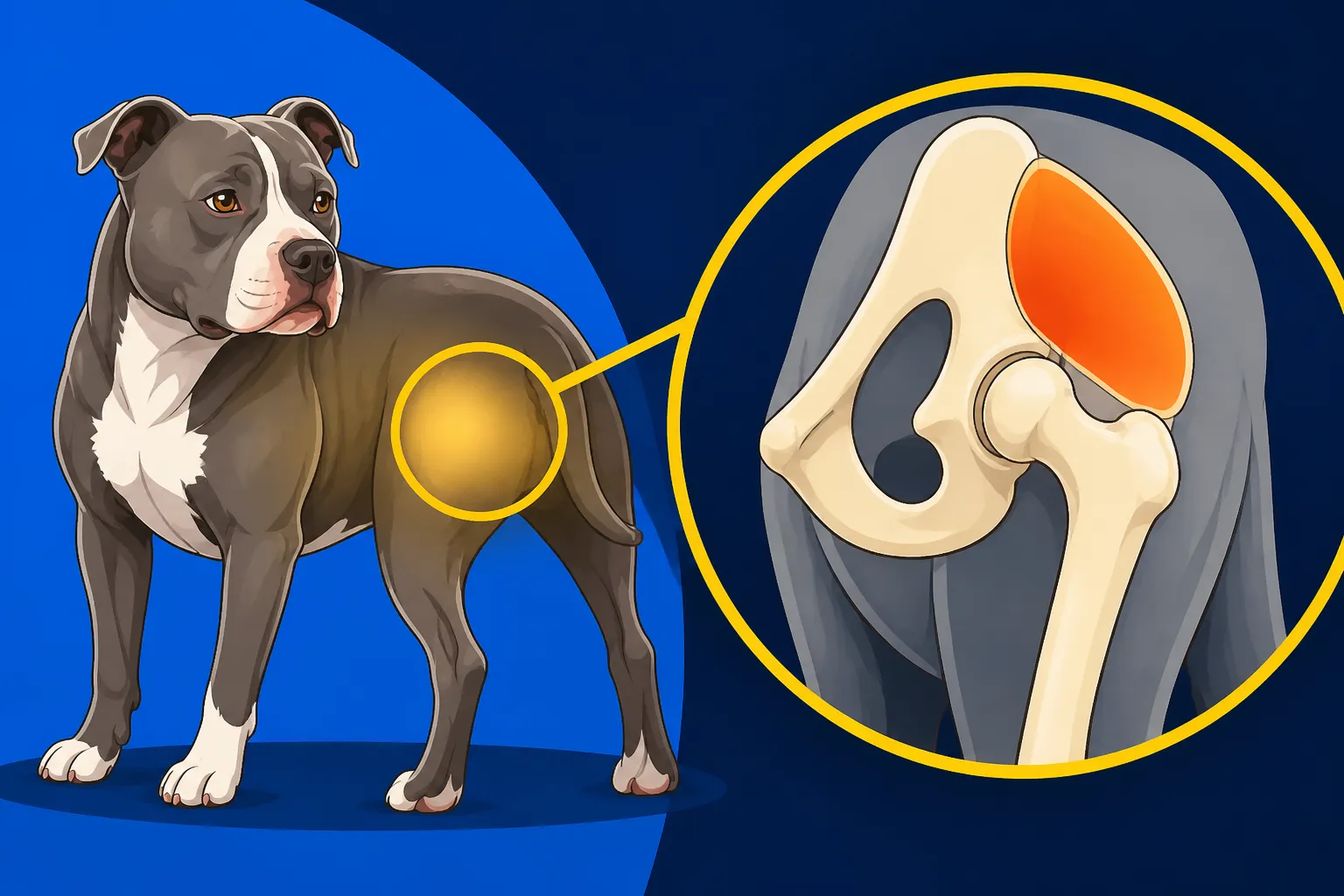
What 70 Percent Leaves on a Pit Bull Hip
Bringing a Pit Bull into your life is a joy, but it also comes with a significant responsibility, especially when it comes to their health. One of the most heartbreaking and financially demanding conditions many Pit Bull owners face is hip dysplasia, often requiring costly surgery. Understanding what a 70% reimbursement from pet insurance truly means for your out-of-pocket expenses for such a major procedure is crucial, and this guide will walk you through the real numbers and planning involved.
Understanding Pit Bull Hip Dysplasia and its Financial Impact
Hip dysplasia is a genetic condition where the ball and socket of the hip joint don't fit together properly, leading to grinding, pain, and eventually debilitating arthritis. For powerful, muscular dogs like Pit Bulls, this condition can be particularly severe, affecting their quality of life and requiring significant intervention. When you receive a diagnosis for your beloved Pit Bull, the emotional toll is immense, quickly followed by the stress of navigating the financial realities of treatment.
It’s not just about the initial diagnosis; it’s a journey. You might notice your Pit Bull showing signs of discomfort or lameness as early as one or two years old, which is often when the condition starts to manifest. The symptoms can be subtle at first—a slight limp after exercise, difficulty rising, or a reluctance to jump. These early signs are critical indicators that you might be heading down a path toward significant veterinary expenses, making it vital to understand the full scope of costs involved.
What a 70% Reimbursement Means for Your Wallet
Many pet insurance policies tout attractive reimbursement percentages, with 70% being a common offering. On the surface, it sounds fantastic—the insurance company covers most of the bill! But the reality of what 70% actually "leaves" you to pay can still be a hefty sum, especially for complex procedures like hip surgery. For example, if your Pit Bull needs a total hip replacement, which can easily cost between $4,000 and $7,000 per hip, a 70% reimbursement means you're still on the hook for 30% of that total.
Let's do the math. If a single hip replacement costs $6,000, 70% reimbursement means the insurer pays $4,200. This leaves you to pay a substantial $1,800 out of pocket. And remember, that's often after your deductible has been met. If both hips are affected, as is common, those numbers double, and suddenly you're looking at a $12,000 bill with a $3,600 personal contribution, not counting your deductible. This is why it’s so important to dig into the details of your policy and not just focus on that percentage. The true cost goes beyond just the surgery itself, encompassing diagnostics, medication, and follow-up care.
The True Cost of Hip Dysplasia Beyond Reimbursement
The actual financial burden of managing hip dysplasia in a Pit Bull extends far beyond the direct surgical costs and your reimbursement percentage. You have to factor in a whole host of other expenses that might not be fully covered or might hit before or after the main event. Initial diagnostic tests, such as X-rays and consultations with orthopedic specialists, can run several hundred to over a thousand dollars. When you're trying to figure out your Pit Bull's hips and how they are scored, these initial investigations are non-negotiable.
Then there's the ongoing care. Post-operative physical therapy, which is crucial for a successful recovery for a muscular dog like a Pit Bull, can involve multiple sessions a week for several months, easily adding thousands to your bill. Long-term pain management, including medications, joint supplements, and possibly alternative therapies, will be a recurring expense for the rest of your dog's life. Even things like specialized bedding or mobility aids for an aging Pit Bull can add up. These ancillary costs, while individually smaller, accumulate rapidly and are often subject to the same reimbursement percentages and deductibles, amplifying your out-of-pocket spending considerably.
Decoding Pet Insurance Reimbursement Models
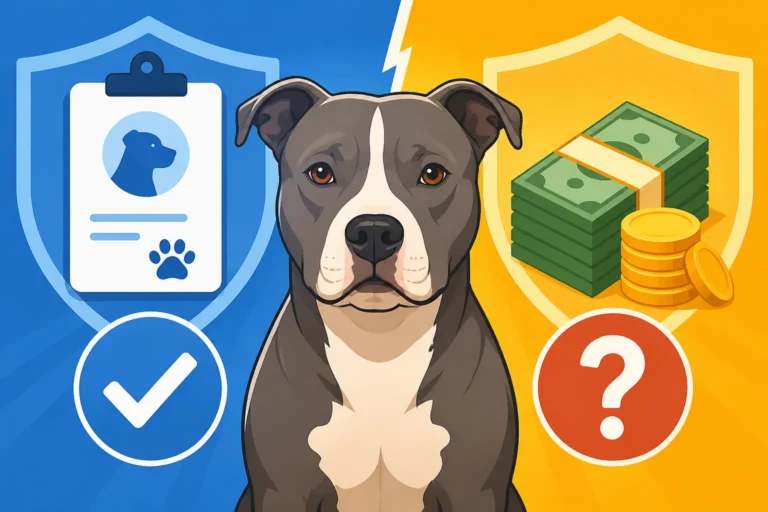
Understanding how pet insurance works is like deciphering a complex puzzle, and it's absolutely vital when you're facing a condition like Pit Bull hip dysplasia. Many owners sign up for a policy, see a high reimbursement percentage, and assume they're fully covered, only to be shocked by the actual bill. The fine print in pet insurance policies includes crucial elements like deductibles, annual limits, and coinsurance, which all play a significant role in determining your final out-of-pocket costs. It’s not just about that 70% or 80% figure; it’s about how that percentage is applied after other factors.
When you're looking at plans, it's worth checking out providers like Healthy Paws, which is known for its unlimited annual payouts, a big plus when you're talking about chronic conditions or multiple major surgeries. However, even with great coverage, you still need to understand the mechanics. Without this knowledge, you could find yourself in a really tough spot financially, trying to cover a large portion of a bill that you thought would be mostly handled by your insurance.
Deductibles and Annual Limits Explained
The deductible is the amount you, the policyholder, must pay out of pocket before your insurance coverage kicks in. Think of it like the first chunk of your vet bill. Common deductibles range from $100 to $1,000 per year. If your Pit Bull has a $500 deductible and needs a $6,000 hip surgery, you'll pay the first $500, and then your reimbursement percentage will be applied to the remaining $5,500. So, if it's a 70% plan, you'd get 70% of $5,500 back, which is $3,850. Your total out-of-pocket for that specific procedure would be your $500 deductible plus the 30% of the remaining $5,500, which is $1,650, for a grand total of $2,150.
Annual limits are another critical factor. Some policies cap the total amount they will reimburse in a year. While many modern plans, especially from reputable providers, offer unlimited annual payouts, some older or more budget-friendly policies might have limits (e.g., $10,000 per year). For a severe condition like hip dysplasia, particularly if it requires surgery on both hips or has extensive follow-up care, reaching an annual limit is a real possibility. If your total vet bills for the year hit $15,000 and your annual limit is $10,000, you'll be responsible for everything beyond that $10,000, regardless of your reimbursement rate. This is particularly relevant if your Pit Bull needs extensive long-term care or has additional medical needs beyond their hips.
Coinsurance and Why It Matters
Coinsurance is simply your share of the cost of a medical service after you've paid your deductible. This is where the "70 percent leaves" concept really comes into play. If your policy has a 70% reimbursement rate, your coinsurance is 30%. This 30% is not a small chunk when dealing with major surgeries. Let's revisit our $6,000 hip surgery example with a $500 deductible. You pay the $500 deductible upfront. The remaining bill is $5,500. Your 30% coinsurance on that is $1,650. So, in total, you've paid $500 (deductible) + $1,650 (coinsurance) = $2,150.
It's important to understand that coinsurance applies to all covered services, not just the big ones. Every vet visit, every diagnostic test, every medication—your 30% applies after the deductible is met. Over the lifetime of a Pit Bull dealing with chronic arthritis or post-surgical recovery, these smaller 30% contributions can add up significantly. It's not a one-time payment; it's an ongoing financial commitment, especially as your dog ages and potentially develops arthritis in a Pit Bull at seven or experiences other age-related issues.
Navigating Breed Exclusions and Waiting Periods
A frustrating reality for Pit Bull owners is the existence of breed exclusions or restrictions in some insurance policies. While less common for major providers today, it's absolutely critical to confirm that your chosen pet insurance does not have any specific exclusions for Pit Bull-type dogs or conditions common to them. Luckily, most major insurers have moved away from blanket breed exclusions, but it's always worth a double-check. More commonly, you'll encounter waiting periods. This is the amount of time you must wait after purchasing a policy before certain coverages become active.
For orthopedic conditions like hip dysplasia, waiting periods are usually longer, often 6 to 12 months. This is designed to prevent people from buying insurance only after their dog has already been diagnosed. If your Pit Bull hip dysplasia is showing at one to two years old, and you only buy insurance then, it might be considered a pre-existing condition if the waiting period hasn't passed or if symptoms were noted before coverage began. Pre-existing conditions are almost universally not covered by pet insurance. This highlights the importance of getting pet insurance early, ideally when your Pit Bull is a puppy, before any symptoms of genetic conditions arise, or before any injuries like a cruciate ligament tears in a muscular Pit Bull occur.
Case Studies and Real-World Scenarios
It's one thing to talk about numbers in a vacuum, but quite another to see them play out in real life. Pit Bull owners often face higher scrutiny and, consequently, higher expectations for their dogs' health and well-being. When a diagnosis of hip dysplasia hits, the financial implications can be staggering. Let's look at some hypothetical, yet very realistic, scenarios that illustrate what a 70% reimbursement truly means for families. These aren't just figures; they represent real people making tough choices for their beloved companions.
For instance, consider the options for Pit Bull hip repair and what it runs. You might have a choice between a less invasive FHO (Femoral Head Ostectomy) or a full Total Hip Replacement (THR). The costs vary dramatically, and so does your out-of-pocket expense, even with 70% coverage.
The "Average" Hip Dysplasia Bill
Let's imagine a scenario where your two-year-old Pit Bull, Rocky, starts showing signs of hip pain. After an initial vet visit and X-rays costing $500, he's diagnosed with moderate hip dysplasia in one hip. The orthopedic specialist recommends a total hip replacement (THR), which is quoted at $5,500. Your insurance policy has a $250 annual deductible and a 70% reimbursement rate.
| Expense Item | Total Cost | Your Deductible | Remaining for Coinsurance | Insurer Pays (70%) | Your Coinsurance (30%) | Your Total Out-of-Pocket |
|---|---|---|---|---|---|---|
| Initial Diagnostics (X-rays, Consult) | $500 | $250 | $250 | $175 | $75 | $325 |
| Hip Replacement Surgery | $5,500 | $0 | $5,500 | $3,850 | $1,650 | $1,650 |
| Scenario Total | $6,000 | $250 | $5,750 | $4,025 | $1,725 | $1,975 |
In this case, Rocky's hip surgery and initial diagnostics total $6,000. With your $250 deductible, you initially pay that. Then, the insurance reimburses 70% of the remaining $5,750 ($4,025). This leaves you paying your $250 deductible + $1,725 (your 30% coinsurance) = $1,975. That's a significant amount, nearly $2,000, even with 70% coverage. This table clearly illustrates that 70% reimbursement doesn't mean you're only paying 30% of the total bill; it means 30% after the deductible.
Unexpected Complications and Their Price Tag
Unfortunately, medical procedures, especially complex orthopedic surgeries like hip replacement, can sometimes come with complications. Imagine Rocky's surgery goes well, but a few weeks into recovery, he develops an infection at the surgical site. This requires additional vet visits, antibiotics, pain management, and possibly even another minor surgical procedure to clean the wound. These unexpected complications can quickly inflate the overall cost.
Let's say the infection costs an additional $1,000 in vet visits, medications, and follow-up care. Since your deductible has already been met from the initial surgery, your insurance will pay 70% of this $1,000, which is $700. You're still responsible for the remaining 30%, which is $300. While $300 might seem manageable on its own, when added to the nearly $2,000 you've already paid for the surgery, the total climbs to over $2,200. These kinds of unforeseen expenses are why financial planning and a thorough understanding of your policy's limits and coverage are absolutely crucial when you have a Pit Bull dealing with a serious health issue. They underscore that while pet insurance is a lifesaver, it's not a magic bullet that makes all costs disappear.
Strategies for Managing Pit Bull Hip Dysplasia Costs
Dealing with hip dysplasia in your Pit Bull is undoubtedly stressful, but there are proactive steps you can take to manage both the condition and its associated costs. From preventative care to smart financial planning, understanding your options can make a significant difference in your dog's quality of life and your peace of mind. It’s about being informed and prepared, rather than reactive, especially with a breed prone to these kinds of orthopedic challenges.
Remember, prevention and early detection are your best friends. Regularly checking in with your vet, especially if you notice any changes in your Pit Bull's gait or activity level, can help you address issues before they become emergencies. This proactive approach not only helps your dog but can also save you money in the long run.
Preventative Care and Early Intervention
Even though hip dysplasia is largely genetic, lifestyle factors can influence its severity and the onset of symptoms. Maintaining your Pit Bull at a healthy weight is paramount. Excess weight puts incredible strain on joints, exacerbating hip dysplasia and accelerating the development of arthritis. Feeding a high-quality diet, potentially one formulated for large breeds or joint health, can also be beneficial. Brands like Chewy often carry a wide range of specialized foods and supplements that can support joint health. Similarly, companies like Ollie provide fresh, human-grade food options that can be tailored to your dog's specific needs, helping to manage weight and inflammation.
Regular, moderate exercise that builds muscle without excessive impact can help support the hip joint. Think swimming, leash walks, and gentle hikes, rather than high-impact jumping or aggressive fetch sessions, especially for a growing Pit Bull. If you notice your Pit Bull slowing down or showing early signs of discomfort, consulting your vet immediately for diagnostic imaging like X-rays can lead to earlier intervention. Catching the condition early might allow for less invasive treatments, physical therapy, or medication that can delay or reduce the need for costly surgeries, providing joint support for a heavily muscled Pit Bull.
Budgeting and Financial Planning
Facing a potential $2,000 to $4,000 out-of-pocket expense (or more, if both hips are affected) even with 70% insurance reimbursement is a wake-up call for many. This is where dedicated budgeting and financial planning come into play. It’s wise to start an emergency fund specifically for your pet’s health. Even a small amount saved monthly can grow into a substantial buffer for unexpected vet bills. Consider setting up a separate savings account that automatically transfers a small sum each payday.
Beyond an emergency fund, explore all your payment options. Many veterinary clinics offer payment plans for large procedures. Additionally, there are veterinary credit cards, such as CareCredit, which offer deferred interest options if paid off within a certain timeframe. Don't shy away from discussing costs with your vet and exploring different treatment pathways. Sometimes, there are viable alternatives that might be less expensive but still provide a good quality of life for your Pit Bull, allowing you to manage costs more effectively. For truly unplanned surgeries, understanding how to apply for vet credit for an unplanned Pit Bull surgery can be a lifesaver.
Considering Alternative Payment Options
When the bills start piling up, it's easy to feel overwhelmed, but remember that you have options beyond immediate out-of-pocket payment or relying solely on insurance. Many veterinary practices understand the financial strain of major surgeries and are willing to work with clients. Don't hesitate to ask about their specific payment plans or if they partner with third-party financing solutions like Scratchpay. These can help break down a large sum into more manageable monthly payments.
Beyond financing, consider local and national charitable organizations. While they often have strict eligibility requirements and limited funds, some groups exist specifically to help pet owners cover emergency or life-saving veterinary care. Online crowdfunding platforms can also be an option, leveraging your social network to gather support. Finally, always discuss with your veterinarian if there are phased approaches to treatment, or if less costly alternatives could still offer a good outcome for your Pit Bull’s comfort and mobility. Sometimes, a combination of medication, physical therapy, and lifestyle adjustments might be pursued before resorting to surgery, especially if your Pit Bull's symptoms are mild.
Disclaimer
This article is intended for informational purposes only and does not constitute veterinary advice. Always consult with a qualified veterinarian for any health concerns or before making any decisions about your Pit Bull's care or treatment plan. Pet insurance policies vary widely, and it is crucial to read your specific policy documents carefully to understand your coverage, deductibles, reimbursement rates, and any exclusions.