Starting Clicker Training on a Pit Bull
If you've ever felt like you're talking to a brick wall when trying to teach your energetic Pit Bull new manners, or if you struggle with consistent communication during training, you're not alone. Many Pit Bull owners find themselves in this frustrating cycle, especially with a breed often misunderstood and held to higher standards. This guide is here to introduce you to clicker training, a powerful, positive, and incredibly effective method that can revolutionize your communication with your Pit Bull, making training clearer, more fun, and ultimately, far more rewarding for both of you.
What Is Clicker Training and Why It Works for Pit Bulls
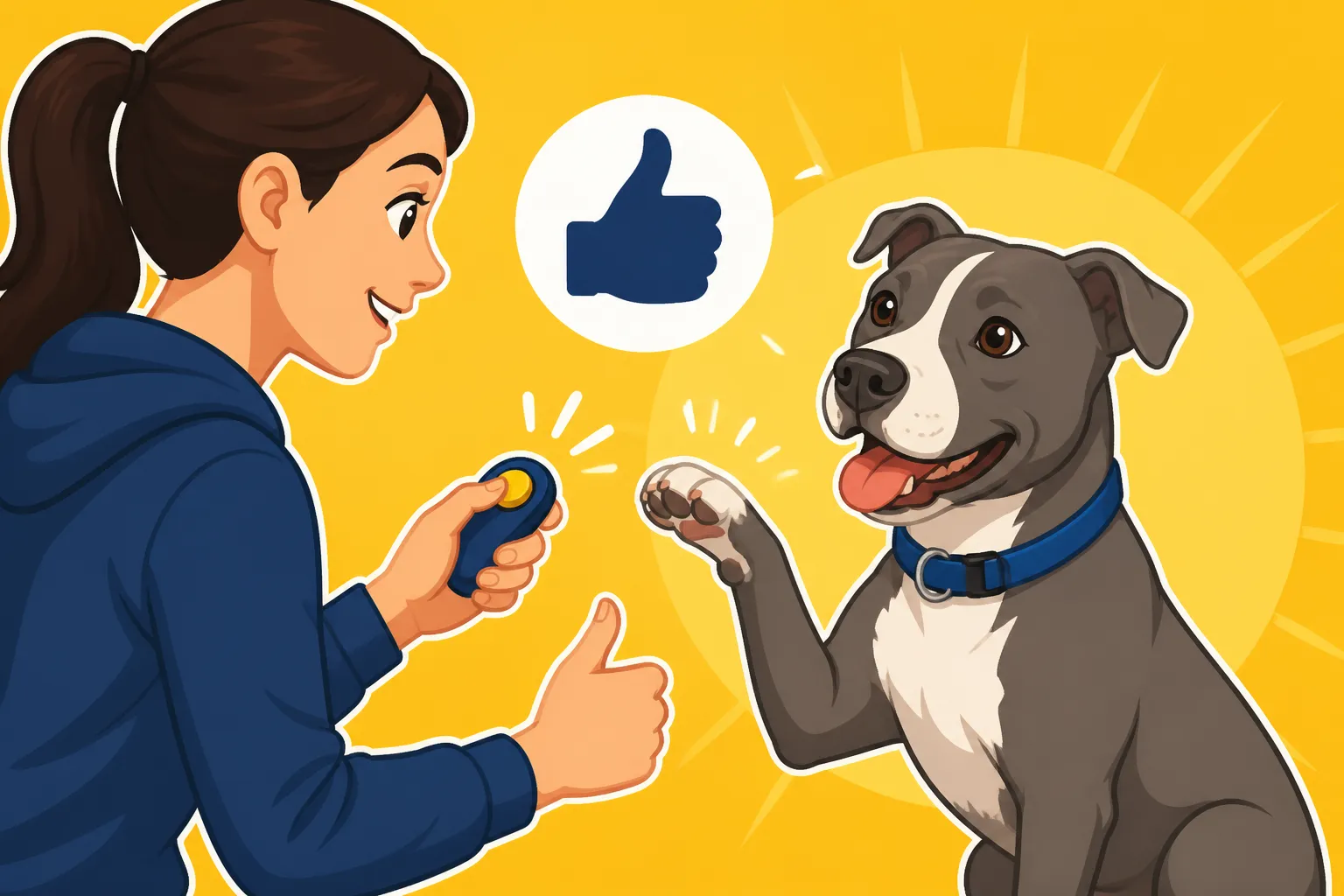
Clicker training is a positive reinforcement method that uses a small mechanical device to make a distinct "click" sound. This sound acts as a marker, precisely indicating to your dog the exact moment they performed a desired behavior. It’s not just about teaching commands; it’s about building a language, a crystal-clear line of communication that helps your Pit Bull understand exactly what you’re asking for. For a breed known for its intelligence, eagerness to please, and sometimes, a tendency to be highly focused on a task, this precision is invaluable.
The beauty of clicker training lies in its simplicity and clarity. Unlike verbal praise or a treat, which might come a second or two too late, the click is instantaneous. It tells your dog, "YES! That exact thing you just did, that's what I wanted!" This removes ambiguity and allows your Pit Bull to make a direct association between their action and the reward that follows. It's a game-changer for dogs who might get confused by inconsistent timing or overly wordy commands.
Pit Bulls, with their innate desire to engage and work alongside their people, thrive on the clear feedback that clicker training provides. They are often highly motivated by food and praise, which are the cornerstone rewards in clicker training, making them fantastic candidates for this method. Plus, it’s a non-confrontational, force-free approach that strengthens your bond, which is crucial for a breed that sometimes faces unfair stereotypes. You’re building trust and cooperation, not enforcing compliance through intimidation.
The Science Behind the Click
At its heart, clicker training is based on operant conditioning, a principle of learning where behavior is modified by its consequences. Specifically, it uses positive reinforcement, meaning we add something desirable (the click followed by a treat) to increase the likelihood of a behavior happening again. The click itself becomes a "conditioned reinforcer" – it’s initially neutral, but through repeated pairing with something your dog loves (like a tasty treat), it gains meaning and becomes a predictor of good things to come.
Think of it like this: the click acts as a photographic snapshot of the exact moment your Pit Bull performs the desired action. Let's say you're teaching "sit." The instant your dog's rear touches the ground, click! A fraction of a second later, a treat appears. Your dog quickly learns that "sit" equals "click" equals "treat." This precision is something our human voices simply can't achieve consistently. Our "good dog!" might come as they're already starting to stand up, confusing the message.
This scientific approach doesn't mean it's robotic or cold; quite the opposite. It makes training a fun puzzle for your Pit Bull, encouraging them to try new things and offering them agency in the learning process. They become active participants, offering behaviors to earn that satisfying click, rather than just passively receiving commands. This empowerment can build confidence, especially in a dog who might be shy or has had previous negative experiences with training methods.
Why Pit Bulls Respond So Well
Pit Bulls are incredibly smart, athletic, and often possess an intense focus when they are engaged. These traits, which can sometimes be channeled into unwanted behaviors if not properly directed, are perfectly suited for the clear, concise communication of clicker training. They love to problem-solve, and the clicker turns training into a problem-solving game where the rules are always fair and understandable. The instant feedback prevents frustration and keeps their motivation high.
Their physical strength and enthusiasm mean that traditional leash corrections can sometimes escalate into a battle of wills, which is counterproductive. Clicker training avoids this entirely by focusing on what you want your Pit Bull to do, rather than punishing what you don't. For instance, if your Pit Bull is prone to jumping when excited, you can click and reward them for all four paws on the floor, rather than constantly pushing them down. This method helps shape positive habits from the ground up.
Furthermore, many Pit Bulls thrive on having a "job" or a purpose. Clicker training provides mental stimulation that can be just as tiring as physical exercise, satisfying their intelligent minds. From basic obedience like Teaching a Pit Bull to Hold a Place to more advanced tricks or even dog sports, the clicker is the perfect tool to teach complex sequences of behaviors. It allows you to break down challenging tasks into tiny, achievable steps, clicking each successful mini-step until the full behavior is learned. This constant positive feedback keeps them engaged and eager for the next challenge.
Essential Gear and Setting Up for Success
Before you even start clicking, you need to gather a few simple tools and prepare your training environment. The good news is that clicker training is not gear-intensive; it relies more on your timing and consistency than on expensive equipment. Investing in the right type of clicker and high-value treats will make a noticeable difference in your Pit Bull's responsiveness and overall enjoyment of the sessions.
Remember that a Pit Bull's strength and focus mean that sometimes standard gear might not hold up or be as effective. Look for durable, well-made items. For instance, when choosing a clicker, some have wrist straps, which are incredibly handy so you don't drop it mid-session, especially if you're holding a leash or treats. And when it comes to treats, think quality over quantity – small, potent rewards are key to keeping your Pit Bull engaged without overfeeding.
The environment you choose for training also plays a huge role. Starting in a low-distraction area is paramount, especially for a breed that can get laser-focused on external stimuli or be easily distracted by novel scents and sounds. Gradually increasing distractions as your Pit Bull progresses will build their confidence and ability to perform in any setting, but rushing this step can lead to frustration for both of you.
Choosing Your Clicker and Treats
The clicker itself is a simple device, but there are a few variations. Most common are box clickers (which make a sharp, distinct sound) and button clickers (which might have a slightly softer sound). Some even come with wristbands, which I personally find incredibly helpful so you don't accidentally drop it during a fast-paced session. You can find a wide variety of reliable clickers on Amazon, often in multi-packs, so you always have one handy. The most important thing is that you find it comfortable to hold and that it consistently makes a clear, consistent sound.
When it comes to treats, this is where you can really capture your Pit Bull’s attention. Forget the dry, crumbly biscuits for now. We’re talking high-value here! Think small pieces of cooked chicken, hot dogs, cheese, or even freeze-dried liver. These are the "jackpots" that will make your Pit Bull truly excited to work for that click. Cut them into pea-sized pieces; you'll be giving a lot of them, especially in the beginning, so we want small, impactful rewards. For advice on motivating your dog, you might find High-Value Treats That Hold a Pit Bull's Focus useful.
Always have your treats ready and easily accessible. A treat pouch clipped to your waist is a lifesaver, allowing you to dispense rewards quickly after the click without fumbling. The faster the treat arrives after the click, the stronger the association your Pit Bull will make. If you’re ever at a loss for good training treats, many dog-specific brands offer soft, high-protein options that work wonderfully and can be purchased in bulk, including through online retailers like Amazon.
Creating the Right Training Environment
For your initial clicker training sessions, especially when introducing the concept, choose a quiet, familiar spot where your Pit Bull feels comfortable and where there are minimal distractions. This could be your living room, a quiet bedroom, or a fenced backyard away from passing cars or other animals. The goal is to set your Pit Bull up for success, ensuring their focus is on you and the task at hand, not on squirrels outside the window or the doorbell.
As your Pit Bull begins to understand the game, you can gradually introduce more distractions. Start small: move to a different room, then perhaps your yard while a family member is quietly in the background, then eventually to a park during off-peak hours. This process, known as generalization, teaches your Pit Bull that a "sit" means "sit" regardless of where you are or what else is happening. Remember, for a strong and sometimes reactive breed like a Pit Bull, introducing distractions too quickly can be overwhelming and lead to setbacks.
Short, frequent training sessions are far more effective than long, drawn-out ones. Aim for 3-5 minute sessions, several times a day. Pit Bulls, like most dogs, have relatively short attention spans, and ending on a high note – before they get bored or tired – ensures they always associate training with positive feelings. A fatigued or distracted Pit Bull won't learn as effectively, and you'll both end up feeling frustrated. Keep it fun, keep it positive, and always end on a success.
| Clicker Training Essential | Why It Matters for Pit Bulls | Where to Find |
|---|---|---|
| High-Quality Clicker | Provides a clear, consistent, and instant marker sound. Helps cut through environmental noise. | Pet stores, Online (e.g., Amazon) |
| High-Value Treats | Maximizes motivation for a food-driven breed. Small, potent pieces prevent overfeeding and maintain interest. | Pet stores, Grocery stores (cooked meats, cheese), Online (e.g., BAXTER & Bella often recommends specific training treats) |
| Treat Pouch | Ensures quick, seamless delivery of rewards right after the click, reinforcing timing. | Pet stores, Online (e.g., Amazon) |
| Quiet Training Space | Minimizes distractions, allowing your Pit Bull to focus solely on the task and build foundational understanding. | Your home, quiet fenced yard |
| Short Sessions (3-5 min) | Maintains high engagement and enthusiasm, prevents boredom, and ends on a positive note. | Your schedule |
Your First Steps: Loading the Clicker and Beyond
Once you have your gear and a calm environment, you're ready to "load" the clicker. This crucial first step establishes the meaning of the click for your Pit Bull: "The click means food is coming!" Without this foundation, the click will just be a random sound. It’s a simple process, but vital for all future training success. Think of it as teaching your dog the rules of the game before you start playing.
After your Pit Bull understands that the click is a promise of a treat, you can start applying it to actual behaviors. We begin with simple, easy-to-capture actions, building success and confidence. Remember that every Pit Bull learns at their own pace, so patience and consistency are your best friends here. You’re building a language, and like any new language, it takes practice.
This initial phase is all about positive association. There should be no pressure, no frustration. If your Pit Bull seems confused or uninterested, it's a sign that you might need to adjust your treat value, reduce distractions, or shorten the session even further. The goal is for your Pit Bull to view the clicker as the most exciting sound in the world because it leads directly to their favorite rewards.
The "Load the Clicker" Exercise
This is the very first thing you’ll do. Sit in your quiet training space with your Pit Bull. Have your clicker in one hand and your small, high-value treats in the other (or in your treat pouch). You’re simply going to click, then immediately give a treat. That’s it! No commands, no requests, just: click, treat. Click, treat. Repeat this about 10-20 times in a session. Your dog doesn’t have to do anything; they just need to hear the click and receive the treat.
The magic happens as your Pit Bull starts to anticipate the treat after the click. You'll likely see their ears perk up, their head turn towards you, or their eyes light up the moment they hear that sound. This is them making the connection: "Aha! That sound means food!" Once you see this spark of recognition, you know the clicker is loaded. You might need to do a few short sessions over a day or two to really cement this association. Don't rush this step; a well-loaded clicker is the foundation of all your future training.
It’s important that the treat delivery is immediate after the click. The click itself signals the precise moment, and the treat follows as the primary reinforcement. If there's a delay, your Pit Bull might not link the click to the reward clearly. This is where having your treats readily accessible in a pouch really pays off. Think of the click as the bell, and the treat as the dinner. Your dog needs to associate the bell with dinner, not just a random sound.
Moving to Basic Behaviors Sit, Down
Once your Pit Bull understands that the click equals a treat, you can start applying it to behaviors. Begin with something easy, like "sit." Hold a high-value treat near your Pit Bull’s nose, then slowly move it up and back over their head. As their nose follows the treat, their rear will naturally lower into a sit. The instant their bottom touches the ground, click! Then, immediately give them the treat. Practice this a few times. Don't say "sit" yet; just let the lure and click do the work.
After a few successful repetitions where your Pit Bull is consistently sitting for the lure and getting clicked and treated, you can start to add the verbal cue. Just as your dog starts to sit, say "Sit," then click as their rear touches, and treat. The verbal cue comes just before the action, so your Pit Bull learns to associate the word with the behavior. For more on foundational skills, consider reviewing What to Teach a Pit Bull Puppy and When.
You can use the same luring technique for "down." Hold a treat near their nose and slowly move it down towards the floor, then straight out in front of them. Their nose will follow, and they'll eventually lie down. The moment their elbows hit the ground, click! and treat. Keep sessions short and fun. If your Pit Bull isn't getting it, go back to an easier step or end the session and try again later. Remember, consistency and positive reinforcement are key for building good manners in a Pit Bull.
Troubleshooting Common Challenges and Next Steps
Even with the best intentions and the clearest methods, training can sometimes hit a snag. Pit Bulls are intelligent and strong-willed, and occasionally their enthusiasm or their natural instincts can present unique challenges during training. It's important not to get discouraged if things don't go perfectly right away. Every dog, just like every person, learns at a different pace and has different motivators.
Understanding why a particular method might not be working is the first step to finding a solution. Is your Pit Bull genuinely confused, or are they simply too distracted by their environment? Are your treats truly high-value enough to hold their attention, or are you competing with more exciting smells and sounds? Sometimes, a small adjustment can make a world of difference in breaking through a training plateau.
Clicker training is a flexible system, designed to adapt to the individual dog. Don't be afraid to experiment with different treats, locations, or even different ways to break down a behavior into smaller, more manageable steps. This journey is about learning together, and encountering a hurdle is just an opportunity to refine your communication and strengthen your bond.
When Your Pit Bull Isn't Getting It
If your Pit Bull seems confused or isn't responding to the clicker, first check your basics. Is your clicker truly loaded? If they're not immediately looking for a treat after the click, go back to the "click, treat" exercise until that association is rock solid. Next, evaluate your treats. Are they truly high-value? Sometimes what we think is a great treat isn't exciting enough for a Pit Bull who might be more motivated by a tiny piece of steak than a standard kibble. Experiment to find their absolute favorite.
Also, consider the timing of your click. Are you clicking the exact moment the desired behavior happens? Even a half-second delay can confuse your Pit Bull. Practice your timing; you can even try clicking an object the moment it hits the floor to get a feel for that precision. And finally, assess your environment. Are there too many distractions? A dog that is constantly scanning for squirrels or listening to outside noises won't be able to focus on you. Reduce distractions as much as possible, especially in the early stages.
Sometimes, the behavior you're trying to teach might be too big a jump for your Pit Bull. Break it down into smaller, even tinier steps. For "down," for example, you might first click and treat for simply looking at the floor, then for lowering their head, then for their chest touching, and finally for a full down. This process, called "shaping," allows your Pit Bull to build confidence with each successful mini-step. For a deeper dive into impulse control, check out Building a Pit Bull's Impulse Control.
Expanding Your Clicker Repertoire
Once your Pit Bull is confidently performing basic behaviors like sit and down with the clicker, the sky's the limit! You can use the same principles to teach almost anything: stay, come (recall), polite greetings, fetching, spins, weaves, and even complex trick chains. The key is to continue breaking down each new behavior into small, achievable steps and clicking each successful approximation. For example, when working on recall, start in a small, enclosed space like your living room, clicking and treating for simply turning towards you when called, then for taking a step, then for coming all the way. You can gain more insight by reading Recall Training a Pit Bull From Scratch.
Don't forget to incorporate proofing into your training. This means practicing behaviors in a variety of locations, with different levels of distractions, and with different people. This helps your Pit Bull understand that "sit" means "sit" everywhere, not just in your kitchen. Start small and gradually increase the difficulty, always setting your dog up for success. For instance, after mastering "sit" at home, try it in your backyard, then a quiet park, then a slightly busier park.
The real goal of clicker training isn't just to teach commands; it's to foster a confident, engaged, and well-behaved companion. Keep your sessions positive, fun, and varied to prevent boredom. Many Pit Bulls enjoy mental challenges, so puzzle toys, scent work, and new tricks taught with the clicker can provide fantastic enrichment. Companies like BAXTER & Bella often have online resources or communities that share ideas for advanced training and enrichment using positive methods, which can be a great next step after mastering the basics.
Disclaimer
This article is for general informational purposes only and does not constitute professional advice. Laws, prices and regulations vary by location and change over time. Consult a qualified professional for guidance on your specific situation.