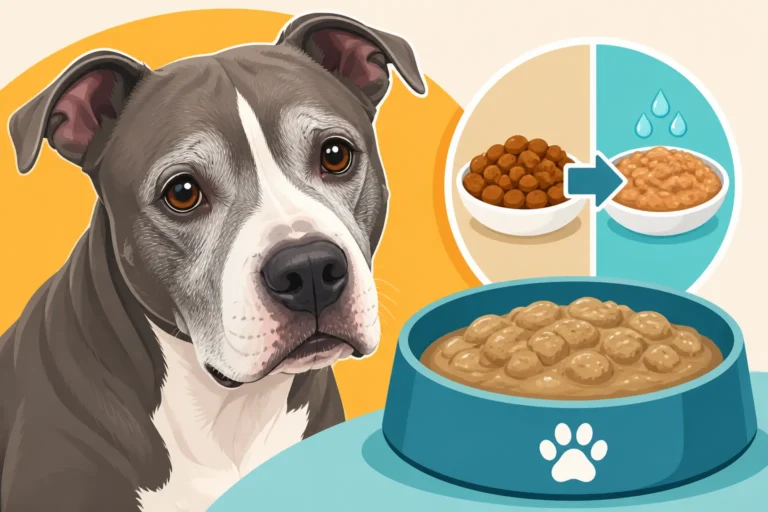
Slow Feeders for a Pit Bull That Bolts Food
It’s incredibly frustrating, and often a little scary, to watch your beloved Pit Bull inhale their dinner in what feels like mere seconds. You put down a carefully measured meal, and before you can even turn around, the bowl is licked clean, and they're looking at you like they haven't eaten in a week. This "scarfing" behavior isn't just bad manners; it can lead to serious health issues, leaving you worried about their digestion and well-being. This guide is here to walk you through why your Pit Bull might be eating so fast, the real risks involved, and how slow feeders can be a game-changer for their health and your peace of mind.
Understanding the 'Scarfer': Why Your Pit Bull Eats So Fast
Many Pit Bull owners experience this phenomenon: their dog eats at warp speed, often gulping down kibble without much chewing. It's a common behavior, but it's important to understand the potential reasons behind it and why it's something we really need to address for their long-term health.
The Instinctual Drive to Gulp
Part of this rapid eating often stems from your Pit Bull's innate canine instincts. In the wild, dogs are opportunistic feeders, and competition for food is a very real thing. Eating quickly meant securing their share before another pack member could snatch it away. While your Pit Bull lives in a loving home with no such competition, these primal instincts can still manifest. A rescue Pit Bull, especially one that may have experienced food scarcity or competition in a previous environment, might be even more prone to this behavior. They learn that food isn't always guaranteed, so when it's there, they need to consume it immediately. Even puppies who grew up in large litters might develop this habit early on, as they had to vie with siblings for access to their mother's milk or later, solid food.
Beyond instinct, simple hunger can also play a role. If their meals are too far apart, or if their calorie intake isn't quite matched to their How Many Calories a Fifty Pound Pit Bull Needs, they might feel an intense hunger that drives them to eat as fast as possible. This is particularly true for highly active Pit Bulls who burn a lot of energy.
The Real Risks of Rapid Eating for Your Pit Bull
While a fast eater might seem endearing in a silly way, the truth is, it poses several significant health risks for your Pit Bull. These aren't just minor inconveniences; some can be life-threatening.
One of the most concerning risks is bloat, or gastric dilatation-volvulus (GDV). Pit Bulls, with their broad chests and deep conformation, are more susceptible to this condition, and eating too fast is a known contributing factor. When a dog eats rapidly, they often swallow a lot of air along with their food. This air, combined with food and fluids, can cause the stomach to expand like a balloon (dilatation). In some cases, the distended stomach then twists upon itself (volvulus), trapping the air and food, and cutting off blood supply. This is an emergency that requires immediate veterinary intervention. I’ve heard countless stories, and some personal experiences, of dogs needing emergency surgery for bloat, and it's truly terrifying. Knowing Recognizing Bloat in a Deep-Chested Pit Bull is crucial for any Pit Bull owner, and preventing it starts with how they eat.
Beyond bloat, rapid eating can also lead to:
- Choking: Gulping down large chunks of food without chewing increases the risk of choking.
- Indigestion and Vomiting: Swallowing too much air and not properly chewing can lead to an upset stomach, gas, regurgitation, or vomiting shortly after eating. This is particularly unpleasant for both you and your dog, and if your Pit Bull already has Feeding a Pit Bull With a Sensitive Stomach, this can exacerbate the issue.
- Nutrient Malabsorption: When food isn't properly chewed and is rushed through the digestive system, your dog's body might not have enough time to absorb all the vital nutrients, making their balanced diet less effective.
- Obesity: Eating quickly can prevent your Pit Bull from feeling full, leading them to consume more food than they actually need, contributing to Pit Bull Obesity and Joint Strain. Their brain doesn't get enough time to register satiety, so they keep eating.
This is why tackling fast eating isn't just about good table manners; it's about protecting your Pit Bull's health.
The Arsenal of Slow Feeders: Types and Their Benefits
Thankfully, there's a whole world of tools designed specifically to combat the "scarfing" behavior: slow feeders! These aren't just fancy bowls; they're ingenious devices created to make mealtime a more deliberate and healthy experience for your Pit Bull.
Maze and Puzzle Bowls
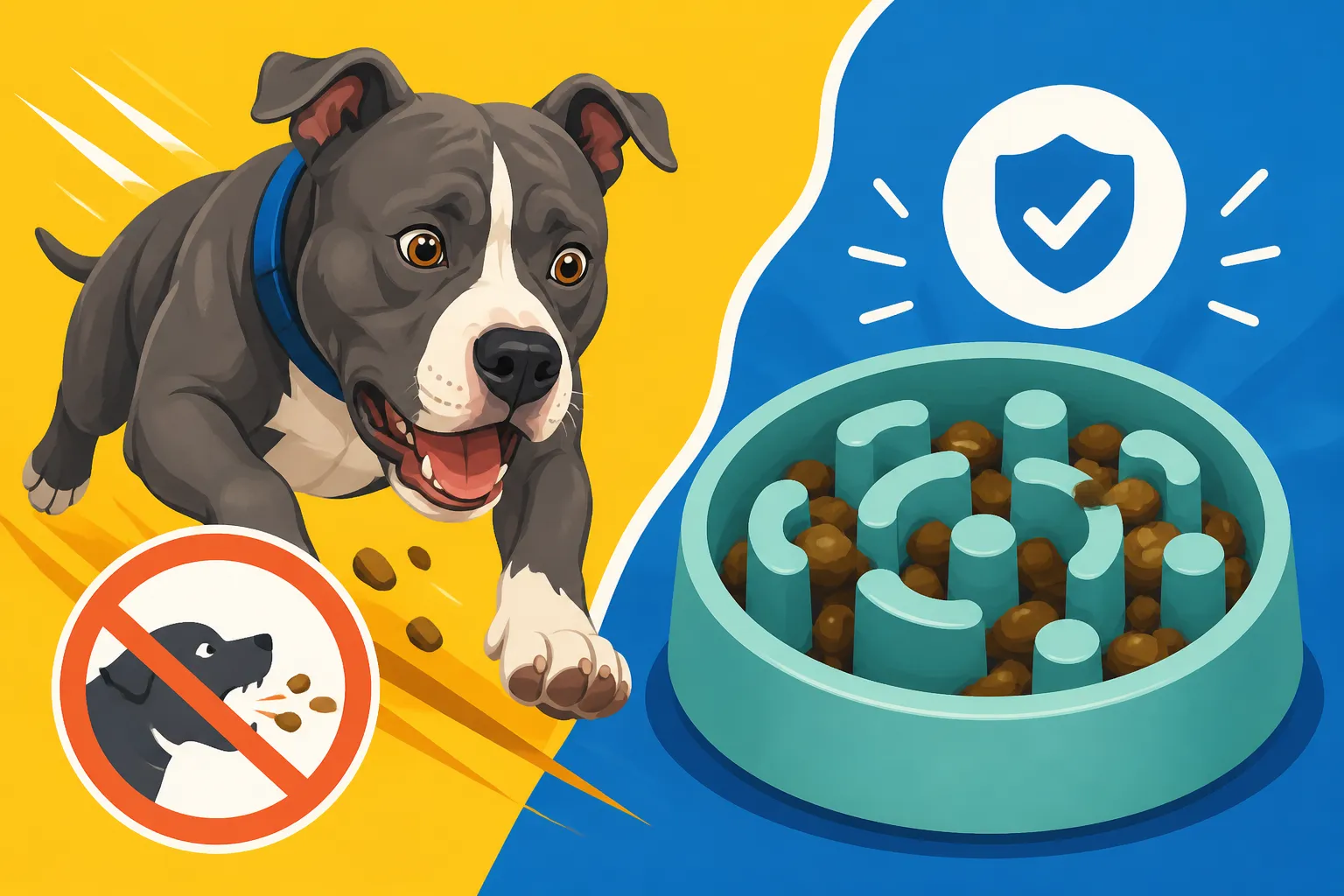
Maze and puzzle bowls are probably the most common type of slow feeder, and for good reason. They feature ridges, bumps, or intricate patterns on the inside that force your Pit Bull to navigate around obstacles to get to their food. Instead of a wide-open space, the food is dispersed into smaller compartments or along winding paths. This means your dog has to slow down, lick, nudge, and work a little to get each bite.
There's a huge variety out there, from simple designs with a few raised sections to complex labyrinths. You can find these on popular pet supply sites like Chewy and Amazon, with options made from sturdy plastics, ceramics, or even stainless steel. The material often dictates durability, an important consideration for a strong-jawed Pit Bull. A good quality puzzle bowl will stand up to daily use and is often dishwasher safe, making cleanup a breeze. The benefit here is not only slowing down eating but also providing a bit of mental stimulation. Your dog has to use their brain to figure out how to get the food, which can be a nice bonus.
Inserts and Lick Mats
Sometimes, you don't need a whole new bowl. Slow feeder inserts are designed to fit into your existing regular dog bowl, converting it into a slow feeder. These often have suction cups on the bottom to keep them in place and feature a similar raised design to maze bowls. This can be a more budget-friendly option if you already have sturdy bowls you love. Just make sure the insert is robust enough for your Pit Bull's enthusiasm and won't be easily dislodged or chewed.
Lick mats, while not traditional "bowls," are another fantastic tool, especially for wet food, raw diets, or even just yummy purees. These are usually silicone mats with textured surfaces – sometimes a maze, sometimes a grid of tiny nubs, or a waffle pattern. You spread a thin layer of soft food (like wet dog food, peanut butter, yogurt, or pureed pumpkin) onto the mat, and your Pit Bull has to spend time licking it all off. This prolongs mealtime significantly and is incredibly calming for many dogs. If your Pit Bull is on a fresh food diet like those from Ollie, lick mats can be a great way to serve their meals. They're also brilliant for distracting a dog during bath time or when you need them to settle down.
Elevated Slow Feeders and Snuffle Mats
For some Pit Bulls, especially those with neck or joint issues, an elevated slow feeder can be beneficial. These feeders raise the bowl off the ground, promoting a more comfortable eating posture. Combining elevation with a slow feeder design means you get the best of both worlds: improved posture and slower eating. Just remember that while elevation can be good for comfort, some studies have linked elevated bowls to an increased risk of bloat, so it's a factor to discuss with your vet, especially if your Pit Bull is already prone to rapid eating and swallowing air.
Snuffle mats are another alternative, especially for kibble or dry treats. These are fabric mats with many strips or folds of fabric sewn on, creating a dense, shaggy texture. You sprinkle kibble into the fabric, and your Pit Bull has to "snuffle" and root around with their nose to find each piece. This is a wonderfully natural behavior for dogs and provides excellent mental enrichment. It also makes eating much slower, as they can only get one or two pieces at a time. The downside is that they can be harder to clean than plastic or silicone bowls, and a determined chewer might try to deconstruct the fabric. However, for a supervised meal, they are a fantastic option for engaging your Pit Bull's foraging instincts.
Here's a quick comparison of some popular slow feeder types:
| Slow Feeder Type | Best For | Durability (Pit Bull) | Cleaning Ease | Mental Stimulation | Price Range |
|---|---|---|---|---|---|
| Maze/Puzzle Bowl | Dry Kibble, Some Wet | High (plastic/ceramic/SS) | Easy to Moderate | Moderate | Moderate |
| Lick Mat | Wet Food, Purees | High (silicone) | Easy | Low to Moderate | Low |
| Bowl Insert | Dry Kibble, Some Wet | Moderate (if good suction) | Easy | Low | Low |
| Snuffle Mat | Dry Kibble, Treats | Low (fabric can be chewed) | Moderate to Hard | High | Low to Moderate |
| Elevated Slow Feeder | Dry Kibble, Some Wet | High (similar to bowls) | Easy to Moderate | Moderate | Moderate to High |
Picking the Perfect Pace-Setter for Your Pit Bull
Choosing the right slow feeder isn't just about picking one that looks pretty; it's about finding one that suits your specific Pit Bull's eating habits, strength, and your lifestyle. A Pit Bull's power and determination mean you need to consider certain factors carefully.
Material and Durability: Built to Last
Pit Bulls are known for their strength and often their powerful jaws. This means durability is paramount when selecting a slow feeder. A flimsy plastic bowl might quickly become a chew toy, defeating the purpose and potentially posing a choking hazard if pieces break off.
Look for:
- Heavy-Duty Plastic: Not all plastics are created equal. Seek out BPA-free, food-grade plastics that are thick and robust. Brands like Outward Hound, often found on Chewy and Amazon, make some very durable plastic slow feeders.
- Ceramic: These are heavy and hard to tip over, which is great for enthusiastic eaters. However, ceramic can chip or break if dropped, so they might not be ideal for outdoor use or if your Pit Bull tends to nudge their bowl around aggressively.
- Stainless Steel: The gold standard for durability and hygiene. Stainless steel slow feeders are incredibly tough, rust-resistant, and easy to clean. They won't absorb odors or harbor bacteria. However, they can be pricier and may not offer the same intricate maze designs as plastic options.
- Silicone: Excellent for lick mats and some bowl inserts. Silicone is flexible, durable, and very easy to clean. It's safe for food and can withstand chewing better than thin plastic, though a dedicated chewer can still damage it.
Consider your Pit Bull's chewing habits. If they're known to destroy toys, investing in a more durable material from the start will save you money and worry. You want a product that acts as a puzzle, not a chew challenge.
Design Complexity and Challenge Level
Slow feeders come in a spectrum of difficulty. Some have simple raised bumps, while others boast elaborate maze patterns. Think about your Pit Bull's intelligence and initial frustration tolerance.
- Beginner Level: Start with a simpler design if your Pit Bull has never used a slow feeder before. Something with gentle curves or just a few raised sections will introduce the concept without making mealtime overly difficult or stressful. You don't want them to give up in frustration.
- Intermediate to Advanced: Once your Pit Bull masters the basics, you can graduate to more intricate designs with deeper channels or more complex patterns. Some slow feeders even have removable components or adjustable difficulty settings, offering progression.
- Wet vs. Dry Food: If your Pit Bull primarily eats dry kibble, most maze bowls will work well. For wet food, raw food, or even specific diets, lick mats are fantastic, as are bowls with wider, shallower channels that allow for easy spreading and licking without getting stuck in deep crevices. Make sure the feeder is easy to clean after wet food!
The goal is to slow them down, not to make mealtime a stressful ordeal. Observe how your Pit Bull interacts with the feeder. If they seem overly frustrated or give up, the design might be too challenging, or they might need a different type altogether. This is also a good opportunity to evaluate if the feeder itself is safe. If your Pit Bull is trying to destroy the feeder to get to the food, it's not the right choice. Consider a Puzzle Feeders a Pit Bull Cannot Destroy designed for heavy chewers.
Hygiene and Maintenance
You'll be using this feeder every day, sometimes twice a day, so ease of cleaning is a huge factor that's often overlooked. Food can get stuck in nooks and crannies, leading to bacterial growth if not cleaned properly.
Look for:
- Dishwasher Safe: Many plastic and stainless steel slow feeders are dishwasher safe, making cleanup effortless. This is a huge time-saver.
- Smooth Surfaces: While mazes are necessary, ensure the channels are smooth and wide enough to allow for thorough scrubbing by hand if needed. Deep, narrow grooves can be a pain to clean.
- Non-Porous Materials: Ceramic and stainless steel are naturally non-porous and resistant to bacteria. Plastic can sometimes be a bit more prone to scratching, which can create tiny hiding spots for bacteria over time.
- Ease of Disassembly: If the slow feeder has multiple parts, check how easy it is to take apart and put back together for cleaning.
Remember, a clean bowl is essential for your Pit Bull's health. Neglecting proper cleaning can lead to gastrointestinal upset or other issues. Don't forget to wash their regular food bowls regularly as well, as part of their general Pit Bull Dental Cleaning Schedule and overall hygiene.
Making the Switch: Introducing and Troubleshooting Your Slow Feeder
Introducing a new feeding method can sometimes be met with skepticism or even frustration from your Pit Bull. But with a little patience and a few tricks, you can make the transition smooth and successful.
The Gentle Introduction
Don't just swap their old bowl for a new slow feeder and expect immediate success. Your Pit Bull is used to a certain routine, and change can be unsettling.
- Start with Familiarity: For the very first few times, you might even consider putting a small amount of food in their old bowl and the rest in the new slow feeder. Or, for a few meals, you could mix a little of their favorite high-value treat in with the kibble in the slow feeder to make it more enticing.
- Easy Wins First: As mentioned earlier, choose a simpler slow feeder design to begin with. You want them to succeed quickly so they associate the new bowl with positive experiences.
- Supervision is Key: Especially in the beginning, supervise your Pit Bull during meal times. This allows you to observe how they're interacting with the feeder. Are they getting frustrated? Are they trying to flip it? This observation will help you adjust.
- Positive Reinforcement: When they successfully eat from the slow feeder, even if it's just a few bites, offer verbal praise ("Good job!") and maybe a gentle stroke. Make it a positive experience.
- Consistency: Use the slow feeder for every meal. Consistency helps your Pit Bull understand that this is the new normal. Establishing a routine, like Two Measured Meals a Day for a Pit Bull, and consistently using the slow feeder, will reinforce the desired behavior.
Remember, the goal is to make mealtime engaging, not punishing. It might take a few days or even a week for your Pit Bull to fully adapt, so be patient.
Common Troubleshooting and Solutions
Even with a gentle introduction, you might run into a few bumps along the road. Here are some common issues and how to tackle them:
- "My Pit Bull is Flipping the Bowl!"
- Solution: This usually means the bowl isn't heavy enough or doesn't have sufficient non-slip features. Look for a heavier ceramic or stainless steel option, or one with robust rubber feet or suction cups. You might also try placing the slow feeder inside a larger, heavier non-slip mat or tray, or even temporarily using it in a corner or against a wall to prevent it from being pushed around too much. For bowl inserts, make sure the suction cups are clean and securely attached to the bowl.
- "My Pit Bull Just Gives Up!"
- Solution: The feeder might be too challenging. Go back to a simpler design or try a lick mat for a few meals to rebuild confidence. Sometimes, a dog gets so frustrated that they just walk away. Ensure the food is easily accessible, especially for the first few uses. Perhaps sprinkle a few pieces right on top of the ridges initially to show them it's still accessible. Make sure your Pit Bull isn't overly tired or distracted; Resting a Pit Bull Between Meal and Exercise can help them focus better on their food.
- "They're Still Eating Too Fast, Just in a Different Way!"
- Solution: Some clever Pit Bulls figure out how to cheat the system, perhaps by pushing all the food to one side. If this happens, you need a more complex design. Consider a feeder with deeper grooves or more varied patterns. Sometimes, trying a completely different type of slow feeder, like switching from a maze bowl to a snuffle mat, can reset their strategy and force them to slow down again.
- "The Feeder is Getting Chewed!"
- Solution: This is a durability issue. Your Pit Bull sees the feeder as an object to be conquered, not just eaten from. Immediately switch to a much more robust material like thick, heavy-duty plastic, ceramic, or stainless steel. Supervise closely and remove the feeder as soon as they finish eating to prevent them from turning it into a chew toy. Look for items specifically marketed as durable or chew-resistant on sites like Chewy.
- "It's Too Hard to Clean!"
- Solution: If cleaning is a chore, you'll be less likely to do it thoroughly, which is bad for hygiene. Consider a different design with wider, smoother channels that are easier to wipe or scrub. Stainless steel and some silicone options are often the easiest to maintain. Always rinse the feeder immediately after use to prevent food from drying and hardening in the crevices.
Introducing a slow feeder is a worthwhile investment in your Pit Bull's health and comfort. By understanding the reasons behind their fast eating, exploring the various types of feeders available, and patiently troubleshooting any issues, you can transform mealtime into a safer, more enjoyable, and even mentally stimulating experience for your beloved companion.
Disclaimer
This article is for general informational purposes only and does not constitute professional advice. Laws, prices and regulations vary by location and change over time. Consult a qualified professional for guidance on your specific situation.