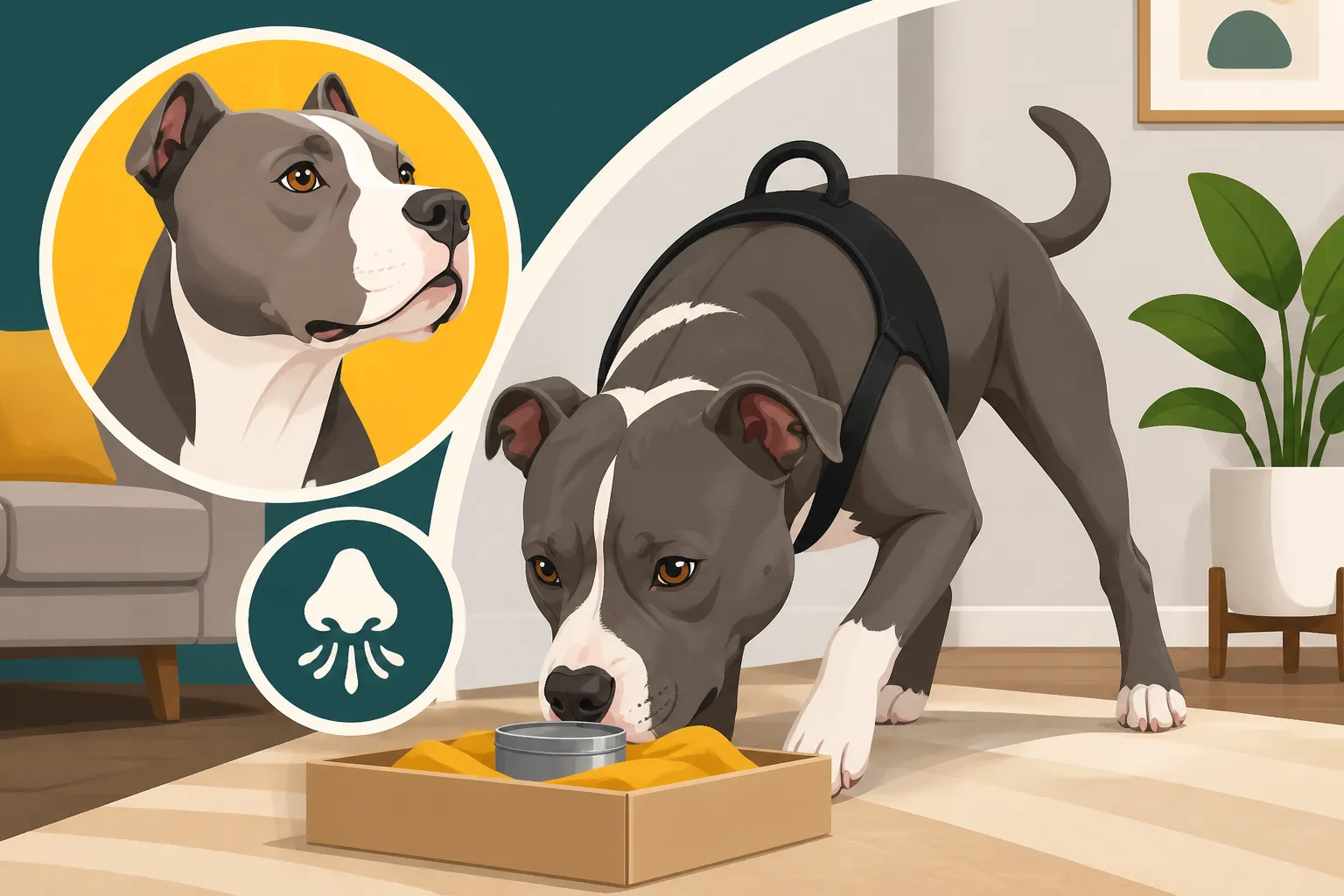
Scent Work as Indoor Pit Bull Exercise
It can be incredibly challenging to keep a powerful, intelligent Pit Bull well-exercised and mentally stimulated, especially when bad weather hits, or your schedule keeps you indoors. You know your dog needs an outlet for that boundless energy, and just letting them nap all day isn't going to cut it, often leading to bored, mischievous pups. This comprehensive guide will walk you through the wonderful world of scent work, explaining how this engaging indoor activity can provide your Pit Bull with the mental workout they truly crave, turning restless energy into contented exhaustion.
Why Scent Work is a Game Changer for Pit Bulls Indoors
So, you're looking at a rainy day, or maybe you're recovering from an injury yourself and can't hit the trails with your Pit Bull like usual. The thought of a bored, bouncing dog can be daunting. This is where scent work shines as an absolute lifesaver. It’s not just about finding hidden treats; it's about engaging your dog's most powerful sense in a way that’s incredibly tiring and fulfilling. Think of it as intellectual puzzle-solving for your furry friend, and let me tell you, that kind of work can tire them out even more than a long run!
Tapping into Natural Instincts: Pit Bulls and Their Noses
Pit Bulls, like all dogs, possess an astonishing sense of smell. While we often focus on their strength and athleticism, their noses are truly remarkable instruments. They can detect scents in concentrations that are unimaginable to us, piecing together a story from invisible odor particles. Scent work taps directly into this innate canine ability, allowing them to use their natural talents in a structured, rewarding way. It's not about teaching them something entirely new; it's about giving them permission and a framework to do what they're instinctively built to do.
Imagine your Pit Bull out in the yard, nose to the ground, meticulously tracking a rabbit’s path from hours ago. That focus, that drive – you can bring that intensity indoors. This kind of focused activity isn't just a physical act; it's a mental exercise that requires problem-solving and sustained concentration. When you introduce scent work, you're not just playing a game; you're giving your Pit Bull a job, a purpose that resonates with their deepest canine instincts. This can be particularly beneficial for dogs who might struggle with traditional obedience training but excel when allowed to "think with their nose."
It's also a fantastic way to bond. You become the facilitator of their success, the one who sets up the exciting challenge. There's a real sense of shared accomplishment when your Pit Bull triumphantly uncovers a hidden treat or toy, looking up at you for praise. This positive reinforcement strengthens your relationship and builds trust, proving to them that you're a source of fun and engaging activities. What the Pit Bull Nanny Dog Story Rests On often overstates their caretaking role, but it hints at their strong bond with people, which scent work can definitely enhance.
Mental Stimulation Over Physical Exertion: A Different Kind of Tired
We all know a physically exhausted Pit Bull is a happy, well-behaved Pit Bull. But have you ever noticed how a dog that's been thinking hard seems even more content? That's the power of mental stimulation. Scent work demands intense focus, concentration, and problem-solving, which can be far more tiring than a simple walk around the block. It engages their brain in a way that running or playing fetch sometimes doesn't.
Think about how you feel after a day of intense intellectual work versus a day of light physical chores. You might be physically fine after the chores, but your brain might still be buzzing. After a mentally demanding day, however, your whole body often feels tired, even if you haven't moved much. It's similar for our dogs. When they're actively sniffing, processing odors, and strategizing how to find the source, their brains are working overtime. This deep mental engagement leads to a profound sense of satisfaction and a truly "tired" dog, often more so than just physical exercise alone.
This is especially valuable for dogs with physical limitations, maybe an older Pit Bull with Arthritis in a Pit Bull at Seven or one recovering from Cruciate Ligament Tears in a Muscular Pit Bull. Scent work allows them to engage fully without putting strain on their joints or muscles. It's inclusive, adaptable, and incredibly effective at burning off mental energy, which in turn reduces the likelihood of them seeking out their own, less desirable, forms of entertainment like chewing on furniture or excessive barking. Pit Bull Chewing and Destructive Behavior can often stem from boredom and lack of appropriate outlets.
Building Confidence and Reducing Destructive Behaviors
For some Pit Bulls, especially those from rescue situations who might be a bit shy or insecure, scent work can be a huge confidence booster. When they successfully find a hidden treat or toy, they experience a clear win, a tangible reward for their effort. This success builds their self-esteem and encourages them to try new things. There’s no pressure, no "right" or "wrong" way to sniff; it's all about exploration and discovery.
A dog that feels confident and has a sense of purpose is less likely to engage in destructive behaviors driven by anxiety or boredom. If your Pit Bull is constantly looking for things to do, and you're not providing appropriate outlets, they'll invent their own games – which often means chewed shoes, dug-up carpets, or counter-surfing. Scent work redirects this natural drive into a constructive and approved activity. Instead of tearing apart your couch cushions, they’re eagerly searching for a hidden treat you've prepared for them. Pit Bull Food Bowl Guarding can be a concern, but in scent work, the reward is often dispersed, making it less about guarding and more about the hunt.
Moreover, scent work provides a predictable and safe outlet for their energy, reducing overall stress levels. When dogs are under-stimulated, their stress hormones can rise, making them more reactive or prone to nuisance behaviors. Giving them a consistent, enjoyable mental challenge helps regulate these stress levels, leading to a calmer, happier dog. It’s an investment in their mental well-being that pays dividends in their overall behavior and your peace of mind. Pit Bull Temperament and What Testing Shows highlights their potential, and scent work helps them live up to it positively.
Getting Started with Scent Work: Your First Steps
Okay, so you're convinced! Scent work sounds like exactly what your Pit Bull needs. But how do you actually begin? It's much simpler than you might think, and you probably have most of what you need already lying around the house. The key is to start easy, make it fun, and build success from the very first session. This isn't about perfection; it's about engagement and enjoyment for both of you.
Essential Supplies for Beginner Scent Games
You don't need fancy equipment to kick off your scent work journey. In fact, keeping it simple in the beginning is often best. Your most important tools are treats and your dog's nose!
- High-Value Treats: These are crucial. They need to be small, smelly, and incredibly appealing to your Pit Bull. Think soft, meaty treats that they absolutely adore. Small pieces of cheese, cooked chicken, hot dogs, or commercially available training treats like those from Chewy or Amazon work wonders. The smellier, the better, as this is what they'll be "hunting" for. You want something they can gobble down quickly without distraction, so avoid anything too crumbly or hard. High-Value Treats That Hold a Pit Bull's Focus is key here.
- Containers/Hiding Spots: Initially, you can use things like empty cardboard boxes, plastic cups, towels, or even just blankets. As you progress, you might want to invest in some dedicated scent work kits, but for now, household items are perfect. The goal is to create easy-to-search areas.
- A Quiet Space: Start in a distraction-free environment, like a small room with minimal clutter. This helps your Pit Bull focus solely on the task at hand and not get sidetracked by toys, other pets, or outside noises.
- Enthusiasm: Your attitude is contagious! If you're excited and positive, your Pit Bull will pick up on that and be more eager to participate. Make it a joyful experience, not a chore.
Remember, the initial investment is minimal, making this an accessible activity for almost anyone. You can find a huge variety of appropriate treats on platforms like Amazon or Chewy, and even consider some fresh, custom-portioned dog food from services like Ollie for extra high-value rewards.
Introducing the "Find It" Game (Level 1)
This is the absolute foundation of scent work and where every beginner should start. It’s simple, builds confidence, and teaches your Pit Bull the concept of searching.
Steps:
- Get Your Pit Bull Excited: Show them the treat and let them smell it. Use an enthusiastic tone and a consistent cue like "Find it!" or "Search!"
- Easy Hide, Easy Win: While your Pit Bull watches (or is briefly held back by a family member), place one high-value treat on the floor, just a foot or two away from them, in plain sight. Seriously, make it that easy.
- Release and Praise: Immediately release them with your "Find it!" cue. As soon as their nose touches the treat, and they eat it, shower them with enthusiastic praise ("Good find!", "Yes!", "Clever dog!") and maybe another small treat.
- Repeat and Increase Difficulty (Slowly!):
- Repeat steps 1-3 a few times, making sure they’re always successful.
- Once they understand the game, start placing the treat slightly out of immediate sight – perhaps just behind a chair leg, under a napkin, or tucked into the corner of a mat.
- Gradually increase the number of treats and the hiding spots. Maybe three treats hidden in the same room, but in slightly different, still-easy spots.
- As they get better, you can start having them wait in another room while you hide the treats, then bring them in to search. This builds anticipation and focuses their search drive.
The crucial part here is to make every search a success. You want to build their belief that "Find it!" always leads to a reward. Never make it so hard that they give up. Keep sessions short and sweet, ending on a high note before they get bored or frustrated. Aim for 5-10 minutes per session, a few times a day if you like. The Daily Exercise a Pit Bull Actually Needs isn't just about physical miles, but mental ones too!
Progressing to More Complex Hides
Once your Pit Bull is a "Find It" pro in one room, it's time to gently ramp up the challenge. This is where you can start getting really creative with your hiding spots.
- Elevate the Hides: Move treats off the floor. Place them on lower shelves, under furniture, on window sills, or even tape them to the underside of a chair. Remember to start low and easy, gradually increasing height. The idea is to make them use their nose to pinpoint the exact location, not just stumble upon it.
- Use Different Containers: Instead of just open floor hides, start using those cardboard boxes or plastic cups you gathered. Place a treat under one of several cups, or inside a box among other empty boxes. You can even crumple up towels or blankets and hide treats within the folds. This adds a layer of complexity and fine-tunes their sniffing skills.
- Expand the Search Area: Once they're proficient in one room, gradually introduce new rooms. Start by hiding treats in one spot in the new room, then two, then more. Eventually, you can hide treats throughout your entire home. Just be mindful of areas that might be dangerous or off-limits, like near cleaning supplies or breakable items.
- Increase Distractions (Carefully): Once your Pit Bull is a seasoned scent detective, you can slowly introduce mild distractions. Maybe have soft music playing, or another family member quietly sitting in the room. This helps them maintain focus in real-world scenarios. But always pull back if they're struggling.
Always remember the principle of "hide it, then lead them to it" in the very early stages of a new type of hide. For example, if you're introducing a new type of container, put the treat right at the opening first, so they understand the new object is part of the game. Gradually tuck it deeper inside. This progression is key to keeping their motivation high and preventing frustration.
Advanced Scent Work: Taking Your Pit Bull's Skills to the Next Level
Once your Pit Bull has mastered finding hidden treats and toys around the house, you might find yourself wanting to dive deeper into the world of canine scent sports. This is where things get really exciting, challenging, and incredibly rewarding for both of you. It moves beyond just finding food and into recognizing specific target odors, much like detection dogs.
Using Specific Odors: Essential Oils and Nosework Kits
This is where formal "Nosework" or "Scent Work" often begins. Instead of just finding a hidden food reward, your Pit Bull learns to locate a specific target odor, and then they get a reward from you. The most common target odors used in canine scent sports are essential oils like Birch, Anise, and Clove, or sometimes Cypress.
- Acquiring a Nosework Kit: You can find beginner nosework kits online (check Amazon or Chewy) that include small vials of essential oils, cotton swabs, and containers called "tins" or "bombs." These kits are designed for safe and effective introduction to target odors. It's crucial to use diluted, pet-safe essential oils specifically meant for canine nosework, not just any essential oil you might have for an aromatherapy diffuser.
- Pairing the Odor with Reward: The first step is to create a positive association with the target odor. Take a cotton swab with a drop of the essential oil and place it in a tin. Put the tin right next to a really high-value treat. Let your Pit Bull find the treat, associating that exciting reward with the new smell. Repeat this many, many times, always ensuring the odor is present when they get their favorite reward.
- Hiding the Odor: Once your dog clearly shows interest in the odor tin (often by sniffing it first before the treat), you can start hiding the odor tin (without a treat directly on it) in easy spots, and reward them with a treat from your hand as soon as they indicate they’ve found the odor. An "indication" might be a sustained sniff, a paw tap, or even sitting and looking at you. The goal is for them to understand that finding this specific smell earns them a reward.
- Progression: Just like with "Find It," you'll gradually increase the difficulty of the hides – going higher, in more complex container setups, and eventually out of sight in different rooms or even outdoors. This shift from searching for food to searching for a specific odor, which then leads to food, is a significant mental leap for your Pit Bull and incredibly satisfying for you to witness.
This takes your Pit Bull's sniffing game to a whole new level, refining their ability to discriminate scents and work for a specific target. Why Pit Bull Is a Type and Not a Breed reminds us of the diverse talents within the 'Pit Bull' umbrella, and advanced scent work truly showcases their incredible aptitude.
Expanding the Search Area: Beyond the Living Room
Once your Pit Bull is confidently finding specific target odors indoors, it’s time to think about expanding their horizons. Scent work doesn’t have to be confined to your home.
- Backyard Searches: Your own backyard is a fantastic next step. Start with easy hides, placing odor tins under plant pots, on lawn furniture, or near fences. The outdoor environment introduces new scents, wind, and temperature changes, which all add complexity to the search. Remember to keep searches manageable in terms of size and distractions.
- Vehicle Searches: This is a common and fun element in scent sports. Hide an odor tin in your parked car – under a seat, in a door pocket, or taped to the underside of the dashboard. This teaches your Pit Bull to search in a confined, often scent-saturated, environment. Always ensure the car is cool and safe for your dog.
- Public Place Practice (Controlled): With caution and careful planning, you can practice in very controlled public spaces, always making sure your dog is on leash and that you’re not disturbing anyone. Think quiet park benches, low walls, or even the exterior of a building (with permission, if needed). This really sharpens their focus amidst real-world distractions. Why a Pit Bull Should Not Be Off Leash in Public is a good reminder to always prioritize safety and control.
Always start with very easy hides in new environments and gradually increase the difficulty. The goal is to build confidence and success in every new scenario, allowing your Pit Bull to generalize their scent work skills.
Joining a Class or Community for Further Development
While you can achieve a lot on your own, joining a formal scent work class or a local nosework club can be incredibly beneficial.
- Expert Guidance: A certified instructor can provide invaluable feedback on your Pit Bull's search technique, your handling skills, and help you troubleshoot any challenges. They'll teach you how to "read" your dog's subtle body language as they work a scent, which is an art in itself.
- Structured Progression: Classes offer a structured curriculum, guiding you through different levels and types of searches (container searches, interior searches, exterior searches, vehicle searches). This ensures a steady and appropriate progression for your dog.
- Community and Support: You’ll meet other dog owners passionate about scent work, creating a supportive community. Sharing experiences, tips, and celebrating successes with like-minded individuals can be very motivating.
- Trial Opportunities: If you and your Pit Bull really fall in love with scent work, classes can prepare you for formal trials and competitions offered by organizations like the National Association of Canine Scent Work (NACSW) or the American Kennel Club (AKC) Scent Work. These trials are fun, challenging, and offer titles to celebrate your Pit Bull's achievements.
Check local dog training facilities or online forums for "nosework" or "scent work" classes in your area. This investment can truly deepen your understanding and enjoyment of this fantastic activity.
Common Pitfalls and Troubleshooting in Scent Work
Even with the best intentions, you might hit a few bumps in the road when introducing scent work to your Pit Bull. Don't get discouraged! It's completely normal for dogs (and their humans) to need a little guidance and patience. Remember, this is about fun and engagement, not perfection.
When Your Pit Bull Isn't "Getting It"
Sometimes, your Pit Bull might seem utterly confused about the game, or perhaps they're just not showing the enthusiasm you expected. Here are a few common scenarios and how to troubleshoot them:
- Lack of Interest in Treats: If your dog isn't motivated by the treats you're using, they won't want to search. This is the most fundamental issue. Go back to basics: find their absolute, cannot-resist, highest-value treat. For some Pit Bulls, it might be plain boiled chicken; for others, a specific commercial soft treat. Make sure the pieces are small enough to eat quickly. You might even consider premium options from services like Ollie, which are often incredibly palatable.
- Too Hard, Too Soon: This is a classic mistake. If your Pit Bull is constantly failing, they'll get frustrated and quit. Go back to super easy hides. Let them watch you place the treat, put it in plain sight, or even drop it right in front of their nose. Rebuild their confidence with a string of easy successes before attempting any harder hides. The "Find It" game should feel like a guaranteed win every single time in the beginning.
- Too Many Distractions: If your dog is sniffing around but constantly looking at the door, another pet, or a family member watching TV, they're not focused on the task. Move to a quieter room, put other pets away, and ensure there are no tempting toys lying around. A small, boring room is often the best starting point.
- Over-Excitement/Frustration Bouncing: Some high-drive Pit Bulls might get so excited they just bounce around, sniffing randomly or pawing at things, rather than methodically searching. In this case, shorten sessions dramatically. Start with just one treat hidden very obviously, let them get it, praise, and then end the game. Teach them that calm, focused sniffing leads to the reward. You can also work on impulse control exercises like Building a Pit Bull's Impulse Control in conjunction with scent work.
Remember, every dog learns at their own pace. Be patient, be consistent, and always end on a positive note.
Keeping it Fun and Preventing Frustration
The absolute golden rule of scent work is to keep it fun! If it stops being fun for your Pit Bull (or for you!), you’re doing something wrong.
- Short Sessions are Best: Especially in the beginning, limit sessions to 5-10 minutes. A mentally tiring activity can lead to mental fatigue quickly. You want your Pit Bull to always be eager for the next session, not dreading it.
- Always End on a Success: Never end a session if your Pit Bull is struggling or hasn't found a treat. If they're having trouble, make the next hide ridiculously easy, let them find it, give huge praise, and then end the game. This leaves them feeling successful and happy.
- Mix It Up: Don't do the exact same search pattern every time. Vary the hiding spots, the types of containers, and even the rooms. This keeps the game fresh and prevents your Pit Bull from memorizing locations rather than truly searching by scent.
- Your Enthusiasm Matters: Dogs feed off our energy. If you’re bored or frustrated, they’ll feel it. Keep your voice light, encouraging, and celebrate every successful find with genuine joy. This positive feedback loop is crucial for their motivation.
- Don't "Help" Too Much: Once you've hidden the treats and given your cue, let your Pit Bull work it out. Resist the urge to point, nudge, or make noises that guide them. You want them to rely on their nose, not your directions. It's tough, but letting them solve the puzzle themselves is part of the reward for them.
Managing High Drive and Over-Excitement
Pit Bulls are often high-drive, eager dogs, which is fantastic for scent work, but it can sometimes lead to over-excitement, especially in the early stages.
- "Wait" or "Stay" Practice: If your Pit Bull rushes to the search area before you've even finished hiding treats, practice a strong "wait" or "stay" cue. Have them wait at a door or in another room while you hide, then release them. This helps build impulse control, which is valuable for Training a Pit Bull to a Higher Standard Than Other Dogs in general.
- Calm Reinforcement: When your Pit Bull finds a treat, reward them with praise, but keep your tone calm and steady if they're getting too frantic. A calm "Good find" might be more effective than an over-the-top squeal if they're already highly aroused.
- Clear Start and End Signals: Use consistent cues like "Find it!" to start and "All done!" or "Finished!" to end a search. This helps your Pit Bull understand the boundaries of the game and transition out of their "work" mindset.
- One Object at a Time: If you’re using containers, start with just one container with the treat inside, and no other empty containers. As they get the hang of it, gradually add empty containers. This prevents them from wildly knocking everything over in a desperate search.
- Build a Habit of Calm Focus: Sometimes, doing quick, easy searches with a very calm demeanor from you can help shape a more focused approach from your Pit Bull. If they’re always successful with minimal effort, they learn that panicking isn’t necessary.
Scent work is a journey, not a destination. Embrace the process, celebrate the small victories, and enjoy watching your incredible Pit Bull use their natural talents to their fullest. It’s an enriching experience that will strengthen your bond and provide endless hours of indoor entertainment and mental satisfaction for your beloved companion.
Here’s a quick comparison of different scent work levels:
| Scent Work Level | Description | Primary Goal | Typical Supplies | Pit Bull Engagement Level |
|---|---|---|---|---|
| Beginner | "Find It" game with visible or slightly hidden treats | Build initial motivation and understanding | High-value treats, simple hides (under towels, cups) | High |
| Intermediate | More complex hides, elevated spots, multiple rooms | Refine searching skills, increase focus | Treats, cardboard boxes, various household items | Very High |
| Advanced | Specific target odors, varied environments (car, yard) | Discrimination of scents, sustained problem-solving | Nosework essential oil kits, tins, varied locations | Extremely High |
Disclaimer
This article is for general informational purposes only and does not constitute professional advice. Laws, prices and regulations vary by location and change over time. Consult a qualified professional for guidance on your specific situation.