Pit Bull Temperament and What Testing Shows
One of the biggest hurdles Pit Bull owners face isn't with their actual dogs, but with the persistent misunderstandings and ingrained biases surrounding their temperament. It’s a frustrating reality when your loving, goofy companion is seen as a threat simply because of their appearance. This guide aims to cut through the noise, offering an in-depth look at Pit Bull temperament, what scientific testing reveals, and how individual personality, rather than broad stereotypes, truly defines these remarkable dogs.
Understanding Pit Bull Temperament: More Than a Label
For too long, the term "Pit Bull" has conjured up images of aggression, unpredictability, and danger in the minds of many. This isn't just unfair to the dogs; it's a profound disservice to the countless responsible owners who know a different truth. The challenge lies in distinguishing between sensationalized media narratives and the actual, complex behavioral profiles of dogs commonly labeled as Pit Bulls. It’s about recognizing that "Pit Bull" itself isn't a single breed with a uniform temperament, but a descriptive term encompassing several distinct breeds and their mixes.
The Weight of Public Perception
Every time you walk your Pit Bull, you might feel the weight of public perception. Perhaps you've experienced people crossing the street, pulling their children closer, or making pointed comments. It's a heavy burden, knowing your dog is being judged before anyone even sees their wagging tail or hears their happy snorts. This perception is often fueled by a long history of misinformation, selective reporting, and an unfortunate association with illegal activities from generations past. The visual identification of a "Pit Bull" is so strong, and so often inaccurate, that it overshadows the reality of the individual dog standing before someone. You could have the sweetest, most well-behaved dog, but if they fit a certain visual profile, many people will unfortunately already have their minds made up.
Moving Beyond Stereotypes
To truly understand Pit Bull temperament, we have to peel back the layers of these stereotypes. It means looking at individual dogs, their upbringing, training, and genetics, rather than painting an entire group with a single brush. Just like any type of dog, Pit Bulls exhibit a wide range of personalities. Some are couch potatoes, content to cuddle all day. Others are high-energy athletes, eager for a job to do. To simply label them all as aggressive or dangerous is akin to saying all humans of a certain ethnicity share the exact same personality traits – it’s illogical and inaccurate. Why Pit Bull Is a Type and Not a Breed dives deeper into why this label itself causes so much confusion, but for now, remember that understanding temperament requires an open mind and a willingness to see past the label. It’s about focusing on the dog in front of you, not the reputation that precedes them.
The American Temperament Test Society ATTS and Pit Bulls
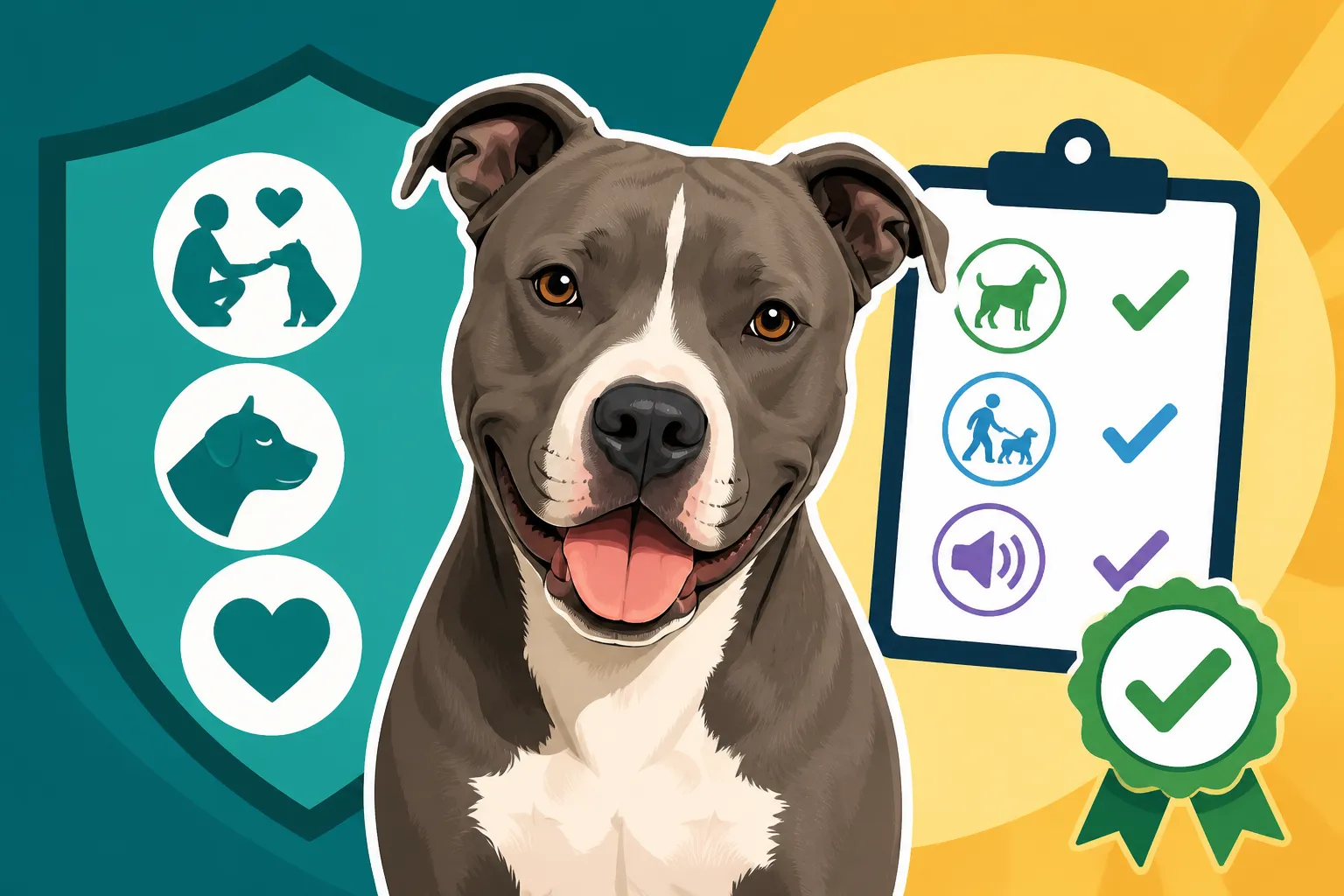
When we talk about objective measures of temperament, one of the most widely respected evaluations is the American Temperament Test Society (ATTS) test. This isn't a "pass/fail" on aggression; it's a standardized evaluation designed to measure a dog's stability, shyness, aggressiveness, and protectiveness toward strangers, as well as their reaction to visual and auditory stimuli. It's an excellent tool to get a more data-driven perspective on how various breeds, and types of dogs, generally react to novel situations and potential threats.
What the ATTS Test Actually Measures
The ATTS test is structured as a 10-minute walk through a controlled environment, where a dog encounters various situations designed to elicit natural responses. These scenarios include meeting a friendly stranger, encountering an assertive stranger, reacting to unusual auditory stimuli (like a sudden noise), and dealing with a threatening situation (a "stranger" wearing a strange costume or acting aggressively). The evaluators are looking for dogs that remain stable, confident, and do not show unprovoked aggression, panic, or extreme shyness. A dog that is overly reactive, either by freezing in fear or lunging aggressively, would not pass. Essentially, it's measuring a dog's self-control, resilience, and general composure when faced with the unexpected, which are all hallmarks of a sound temperament. It helps us understand how a dog processes new information and stimuli, which is a far cry from the simplified "aggressive" label often thrown around. How the ATTS Test Is Run on a Pit Bull details the specifics of these evaluations.
Pit Bull ATTS Pass Rates: A Closer Look
When you look at the raw data from the ATTS, what often surprises people is that many dogs identified as Pit Bulls (specifically American Pit Bull Terriers and American Staffordshire Terriers, which are often grouped) consistently achieve high pass rates, often comparable to or even exceeding those of breeds widely considered "family friendly." This isn't a secret, but it's often overlooked in public discourse. The ATTS data indicates that a significant majority of these dogs exhibit stable temperaments under test conditions.
Let's look at a simplified comparison table of general ATTS pass rates for some popular breeds:
| Breed/Type | Example ATTS Pass Rate (Approx.) |
|---|---|
| American Pit Bull Terrier | 87% |
| American Staffordshire Terrier | 85% |
| Golden Retriever | 85% |
| Labrador Retriever | 92% |
| German Shepherd Dog | 85% |
| Poodle (Standard) | 85% |
Note: These percentages are illustrative and can fluctuate slightly based on the testing year and specific groups tested. Always check the latest ATTS official data for precise figures.
What this table shows is that "Pit Bulls" are far from outliers in terms of temperament stability in a controlled test environment. Their pass rates are often right in line with, or even higher than, many breeds that rarely face breed-specific discrimination. This data directly challenges the narrative that these dogs are inherently unstable or aggressive. It underscores the point that a dog's individual training, socialization, and the responsibility of its owner play a far more significant role than breed label in determining its public behavior. What ATTS Pass Rates Show About Pit Bull Temperament offers a deeper dive into the implications of these results, and for further comparative analysis, The Pit Bull ATTS Pass Rate Against Other Breeds can provide more context.
Beyond Test Scores: Individual Temperament in Pit Bulls
While temperament tests like the ATTS provide valuable statistical insights, it's crucial to remember that they are just one piece of the puzzle. Every dog, regardless of breed or type, is an individual with a unique personality shaped by a complex interplay of genetics, early experiences, and ongoing environmental factors. A test score is a snapshot, not the full story of your dog's daily life or how they will interact with your family and the world.
Genetics and Early Life Experiences
A Pit Bull's temperament starts forming before they even open their eyes. Genetics certainly play a role; responsible breeders meticulously select breeding pairs not just for physical health, but for sound temperaments too. They aim to produce puppies that are confident, curious, and stable. However, genetics are only a blueprint. The critical early weeks of a puppy's life, from birth to about 16 weeks, are profoundly influential. Experiences during this period, often called the "socialization window," can either build a foundation of confidence and resilience or contribute to fear and reactivity. A puppy raised in a loving home, exposed to various sights, sounds, people, and other well-behaved animals in a positive way, is far more likely to develop a robust and friendly temperament than one raised in isolation or fear. This is why understanding What Testing a Pit Bull Breeder Should Have Done is so important when seeking a puppy; it goes beyond physical traits to ensure mental soundness too.
The Impact of Socialization and Training
Following those crucial early weeks, ongoing socialization and consistent training become paramount. For a Pit Bull, this isn't just a suggestion; it's often a necessity due to societal pressures and their inherent physical strength. A well-socialized Pit Bull puppy, exposed to various people, places, and appropriate dog interactions, learns how to navigate the world calmly and confidently. This process shouldn't stop after puppyhood; it's a lifelong commitment. Regular exposure to novel situations, positive reinforcement training, and clear boundaries help shape a dog's behavior and reinforce a desirable temperament. Without these foundational elements, even a genetically sound dog can develop behavioral issues out of fear, lack of understanding, or simply a lack of appropriate outlets for their energy and intelligence. Socializing a Pit Bull Puppy Thoroughly offers extensive advice on how to do this effectively.
Common Temperamental Traits You Might See in a Pit Bull
When you spend time with Pit Bulls and their responsible owners, you quickly learn that many of the common traits are quite endearing, even if they sometimes require a bit of management. These aren't just generalizations, but observations from people who live, work, and train with these dogs every single day.
Affectionate and People-Oriented
One of the most universally cited traits by Pit Bull owners is their incredible affection for people. They are often described as "velcro dogs" because they love to be close to their humans, seeking out cuddles, leaning into legs, and enjoying physical contact. Many Pit Bulls are absolutely goofy and charming, with a zest for life that is infectious. They crave attention and thrive on being part of the family unit. This strong bond with humans means they are generally eager to please, making them highly trainable with positive reinforcement methods. It's this deep connection that makes the stereotypes so painful for owners – because they know their dog as a loving family member, not a statistic. For many, a Pit Bull isn't just a pet, but a four-legged shadow that brightens every corner of their home.
High Energy and Drive
Pit Bulls, in general, are athletic and energetic dogs. They were originally bred for tasks that required strength, endurance, and tenacity, and those traits are still very much present today. This means they often have a high drive – whether it's for toys, food, or engaging in physical activity. Without proper outlets, this energy and drive can manifest in less desirable ways, such as destructive chewing or excessive barking. They excel in dog sports like agility, dock diving, obedience, and weight pull, where their strength and focus can be channeled productively. Providing consistent exercise, mental stimulation through puzzle toys, and training sessions is key to keeping a Pit Bull happy and well-behaved. Chewy, for example, offers a fantastic selection of durable enrichment toys and puzzle feeders that can help channel this drive positively. Remember, a tired Pit Bull is usually a well-behaved Pit Bull!
Dog Selectivity: Understanding the Nuance
Here's a trait that often causes confusion and contributes to negative stereotypes if not properly understood: dog selectivity. While many Pit Bulls can and do live happily with other dogs, especially if raised together or introduced carefully, it's also common for them to be "dog selective." This is not the same as generalized dog aggression. Dog selectivity means a dog might get along beautifully with some dogs, but not others, or might prefer certain play styles. It often means they might not be suitable for off-leash dog parks or unsupervised play with unfamiliar dogs. This trait is a historical echo of their origins, where they were selectively bred for gameness. Pit Bull Dog Selectivity Explained goes into great detail about this.
For owners, it means accepting this potential trait and implementing management strategies. This could include controlled, leashed interactions, careful introductions to new canine companions, or simply choosing to be a single-dog household. It requires diligence and an understanding of your individual dog's preferences and boundaries. It's about being a responsible owner who understands their dog and sets them up for success, rather than putting them in situations where they might feel overwhelmed or react poorly.
Factors That Shape a Pit Bull's Temperament
Temperament isn't static; it's a dynamic thing, constantly influenced by a variety of factors throughout a dog's life. While genetics lay the groundwork, the environment and the choices made by owners play an enormous role in how a Pit Bull's personality develops and is expressed.
Responsible Breeding and Early Socialization
We've touched on this, but it bears repeating: a Pit Bull puppy from a responsible breeder (who prioritizes health and temperament) or a reputable rescue (that screens for temperament) has a significant head start. A good breeder will ensure puppies are raised in a stimulating, clean, and loving environment, receiving early handling and exposure to appropriate sights and sounds. They will also assess the temperaments of the parents to avoid breeding overly shy or aggressive lines. Similarly, rescue organizations that place Pit Bulls often conduct thorough behavioral evaluations to match dogs with appropriate homes, providing valuable insights into a dog's established personality traits.
The early socialization period (roughly 3-16 weeks) is truly foundational. During this time, a puppy needs gentle, positive exposure to as many new things as possible: different people (men, women, children, people in hats, people with glasses), various sounds (traffic, household noises), different surfaces, and calm, vaccinated dogs. This helps them develop confidence and resilience, learning that the world is a generally safe and interesting place, not something to fear. A lack of proper socialization during this critical window can lead to fear-based behaviors or reactivity later in life.
Consistent Training and Management
Once a Pit Bull is in your home, consistent training is non-negotiable. These are strong, intelligent dogs who benefit immensely from clear communication and positive reinforcement. Establishing clear rules, boundaries, and expectations from day one helps them understand their place in the household and what's expected of them. Training isn't just about teaching commands like "sit" or "stay"; it's about building a trusting relationship, fostering good manners, and providing mental enrichment. A well-trained Pit Bull is a pleasure to live with and a great ambassador for the type.
Beyond formal training, effective management is equally important. This means using leashes, crates, and gates responsibly to prevent undesirable behaviors and ensure safety. For example, if your Pit Bull is dog-selective, management might mean avoiding crowded dog parks or using a muzzle in certain public settings as a responsible precaution (and muzzle training is a fantastic skill for any dog to have, regardless of breed!). Training a Pit Bull to a Higher Standard Than Other Dogs is a realistic discussion of why this often feels necessary for Pit Bull owners. Using high-value treats from a place like Chewy during training can keep your Pit Bull engaged and motivated.
The Role of the Owner in Temperament Development
Ultimately, the owner is the single biggest factor in shaping a Pit Bull's temperament. Your energy, consistency, commitment, and understanding directly influence your dog's behavior. A nervous or inconsistent owner can inadvertently create an anxious or confused dog. Conversely, a calm, confident, and consistent owner can help even a challenging dog blossom into a well-adjusted companion. It means being proactive, anticipating potential issues, and providing your Pit Bull with the structure, exercise, and affection they need to thrive. It also means advocating for your dog in a world that often misunderstands them, demonstrating through their excellent behavior what wonderful companions they truly are.
Addressing Concerns: Managing Challenging Pit Bull Behaviors
Let’s be real: no dog is perfect, and Pit Bulls, like all breeds, can present behavioral challenges. The key isn't to deny these possibilities, but to understand them, address them proactively, and manage them responsibly. This is where truly owning a Pit Bull involves a higher level of commitment than perhaps some other breeds.
Proactive Socialization Strategies
The best defense against behavioral issues is a good offense through proactive socialization. This begins in puppyhood but extends throughout a Pit Bull's life. It's not just about letting your puppy meet every dog and person; it's about quality over quantity.
- Controlled Exposures: Introduce your Pit Bull to new people and places in a controlled, positive way. Think short, positive interactions, lots of treats, and making sure the experience is always pleasant.
- Appropriate Dog-Dog Interactions: If your Pit Bull enjoys other dogs, seek out playdates with known, stable canine companions. Avoid chaotic dog parks, especially during peak hours, as these environments can easily escalate and be overwhelming for many dogs, particularly those who are dog selective.
- Handling Practice: Get your Pit Bull used to being handled by different people, having their paws touched, ears cleaned, and mouth examined. This makes vet visits and grooming much less stressful and builds tolerance for various human interactions. Getting a Pit Bull Used to Handling by Strangers explores this further.
Seeking Professional Guidance
If you encounter a behavioral challenge with your Pit Bull – whether it's leash reactivity, resource guarding, or significant anxiety – do not hesitate to seek professional help. Waiting often makes the problem harder to resolve.
- Certified Professional Dog Trainers (CPDT-KA): Look for trainers who use positive reinforcement methods and have experience with strong, driven breeds like Pit Bulls. Avoid anyone who relies on harsh corrections, intimidation, or uses tools like shock collars, as these can damage trust and exacerbate fear-based behaviors. Finding a Trainer Experienced With Pit Bulls is an invaluable resource here.
- Veterinary Behaviorists (DACVB): For more severe or complex behavioral issues, a board-certified veterinary behaviorist is the specialist you need. These are veterinarians with advanced training in animal behavior and often work in conjunction with your regular vet to consider underlying medical causes.
- Early Intervention: Addressing issues when they are small is always easier than trying to fix a deeply ingrained problem. If you notice a change in your Pit Bull's behavior, especially if it seems out of character, a vet visit is always the first step to rule out pain or illness. Sometimes, subtle health issues like Pit Bull Skin Allergies and the Atopy Pattern can cause discomfort leading to behavioral changes.
Creating a Safe and Structured Environment
A Pit Bull thrives on structure and predictability. A consistent routine for feeding, exercise, and training helps them feel secure and understand what's coming next.
- Secure Containment: Because of their strength and drive, a secure yard (with appropriate fencing) and a sturdy crate are often essential. A crate can be a safe haven for your Pit Bull, a place to decompress, and a tool for management when you can't directly supervise. The Crate a Pit Bull Cannot Break Out Of is a practical guide to choosing the right one.
- Mental and Physical Exercise: Daily exercise is crucial, not just for physical health but for mental well-being. This can include long walks, running, hiking, or structured playtime in a secure area. Mental stimulation through training, puzzle toys, and scent work is equally important to prevent boredom and destructive behaviors like Pit Bull Chewing and Destructive Behavior.
- Clear Rules: Ensure everyone in the household is on the same page regarding rules and expectations. Inconsistency can confuse a dog and lead to frustration. A well-managed Pit Bull is a confident Pit Bull, and that confidence translates into a more stable temperament.
The Importance of Evaluation: What a New Owner Needs to Know
Bringing any dog into your home is a big decision, but with a Pit Bull, it often requires an even more thorough evaluation process, both of the dog and of your own lifestyle and capabilities. You're not just getting a dog; you're often getting a breed with a reputation that requires extra effort to manage.
Assessing an Individual Dog
When considering a Pit Bull, whether from a shelter or a reputable breeder, focus on the individual dog's temperament, not just its looks.
- Observation is Key: Spend time observing the dog in different environments and situations if possible. How do they react to new people? To other dogs? To loud noises? Are they curious and confident, or fearful and reactive? Look for signs of a stable temperament: relaxed body language, willingness to engage, and appropriate responses to stimuli.
- Ask for History: If adopting, inquire about the dog's history. Was it raised with children? Other pets? How does it behave on a leash? While a full history isn't always available, any information can be helpful. A shelter's behavioral assessment, if well-conducted, can provide crucial insights. Health Records a Shelter Pit Bull Comes With can also hint at their overall well-being.
- Interaction: Interact with the dog. How does it solicit attention? Does it take treats gently? Does it show any signs of resource guarding? A good rescue or breeder will encourage multiple visits and supervised interactions to ensure a good match. Don't rush the process.
The Value of Shelter and Rescue Assessments
Shelters and breed-specific rescues, especially those specializing in Pit Bulls, often have extensive experience evaluating these dogs. They understand the nuances of Pit Bull behavior and are typically highly motivated to make successful placements.
- Behavioral Evaluations: Many reputable shelters conduct comprehensive behavioral assessments designed to test a dog's reaction to various situations, from handling and food guarding to dog-dog interactions. While these aren't foolproof, they provide a much better understanding of a dog's personality than simply seeing them in a kennel.
- Foster Programs: Dogs in foster homes are often the best bet. Foster parents can provide invaluable insights into a dog's true personality in a home environment, how they interact with children, other pets, and daily routines. They can tell you if the dog is house-trained, what their energy levels are like indoors, and if they have any quirks that need managing.
- Transparency: A good rescue will be transparent about a dog's known issues or quirks. They won't try to hide problems; instead, they'll work with you to ensure you're prepared to handle any challenges that might arise. This honesty is critical for a successful adoption.
Debunking the "Nanny Dog" Myth and Setting Realistic Expectations
Ah, the "Nanny Dog" myth. It's a persistent, well-meaning, but ultimately dangerous piece of folklore that has done Pit Bulls no favors. While it speaks to the affectionate nature of many individual Pit Bulls, it creates an unrealistic and unsafe expectation that can put both children and dogs at risk.
The Origins of the "Nanny Dog" Story
The "Nanny Dog" narrative suggests that Pit Bulls were historically bred or specifically suited to care for and protect children. This idea largely stems from nostalgic imagery from the early 20th century, where Pit Bull type dogs were popular family pets, appearing in advertisements and popular culture (like Petey from The Little Rascals). They were often depicted alongside children, symbolizing loyalty and Americana. However, there is no historical evidence, breeding record, or scientific basis to support the claim that Pit Bulls were ever specifically bred to be "nanny dogs." Their history lies in bull-baiting and later, dog fighting, before becoming general-purpose farm and family dogs. The affectionate bond they often formed with families, including children, was a byproduct of their general sociability and loyalty, not a specific breeding purpose. Where the Pit Bull Nanny Dog Phrase Began explains the true background of this myth.
Why No Dog Should Be a Nanny
Regardless of breed, no dog should ever be considered a "nanny" or left unsupervised with children. Children, especially very young ones, often don't understand canine body language and can inadvertently provoke a dog through innocent actions like pulling ears or tails, startling them, or invading their space when the dog needs quiet time. Even the most tolerant, gentle dog has a breaking point. When a child's safety is at stake, relying on a myth is irresponsible.
- Supervision is Paramount: All interactions between dogs and children should be closely supervised by a responsible adult, even if the dog is known to be gentle and good with kids.
- Teach Respect: Children should be taught how to interact respectfully with dogs – how to approach, pet gently, and recognize signs that a dog wants to be left alone.
- Dog's Retreat: Dogs need a safe space where they can retreat from children (or anyone else) when they need quiet or feel overwhelmed. This could be a crate, a separate room, or a dog bed that is off-limits to children.
- Setting Realistic Expectations: While many Pit Bulls can be wonderful, loving family dogs, they are still powerful animals with strong instincts. Responsible ownership means setting realistic expectations, understanding canine behavior, and actively managing the environment to ensure everyone's safety. This doesn't diminish their loving nature; it honors it by treating them as dogs who need clear boundaries and respectful interaction. Why No Pit Bull Should Be Left With a Child provides further critical information on this topic.
Disclaimer
This article is for general informational purposes only and does not constitute professional advice. Laws, prices and regulations vary by location and change over time. Consult a qualified professional for guidance on your specific situation.