Socializing a Pit Bull Puppy Thoroughly
Bringing a Pit Bull puppy home is an incredibly exciting time, but it also comes with a unique set of responsibilities, especially when it comes to socialization. Many new Pit Bull owners worry about how their strong, energetic puppy will grow up, particularly given the unfair stereotypes these wonderful dogs often face. This guide is here to walk you through the essential steps for thoroughly socializing your Pit Bull puppy, ensuring they become a confident, well-adjusted, and beloved member of your family and community.
Understanding the Foundation of Pit Bull Temperament
Before we dive into the "how-to" of socialization, it's really important to understand the fundamental nature of the dogs we commonly refer to as Pit Bulls. This isn't just about labels; it's about appreciating their history and inherent traits so we can set them up for success from day one. There's a lot of noise out there, both good and bad, and cutting through it with knowledge is your first line of defense in responsible ownership.
The Myth vs. Reality of Pit Bull Genetics
Let's talk about where these dogs come from, because it’s a history often misunderstood and twisted. The dogs we affectionately call Pit Bulls — a type that generally includes the American Pit Bull Terrier, American Staffordshire Terrier, and Staffordshire Bull Terrier — were originally bred from bull-baiting dogs (Bulldogs) and terriers. This combination was intended to produce an athletic, strong, and tenacious animal. When those bloodsports were outlawed, these dogs found new roles in society, often as all-around farm dogs, catch dogs, and, yes, even family companions. Their loyalty, strength, and eagerness to please are traits that have been consistent throughout their history.
The problem arises when this history is oversimplified or used to perpetuate fear. The idea that these dogs are inherently aggressive or dangerous to humans is a myth. Their history often involved fighting other animals, not people. In fact, dogs that showed human aggression were historically culled from breeding lines because they were unsafe to handle in the fighting pits. This doesn't mean they don't have powerful jaws or specific prey drives; it means their genetic predisposition is not to be human-aggressive. It’s crucial to separate the sensationalism from the reality. What we see today in a well-bred, well-socialized Pit Bull is often a deeply affectionate, clownish, and intelligent companion who thrives on human connection. We have a great article that dives deeper into this: Why Pit Bull Is a Type and Not a Breed.
Then there's the "nanny dog" myth, which often swings too far in the opposite direction. While many Pit Bulls are incredibly tolerant and gentle with children, the idea that they are inherently "nanny dogs" and can be left unsupervised with kids is dangerous. No dog, regardless of breed, should ever be left alone with a child. Their power and exuberance, even in play, can accidentally cause injury. This myth, while born from good intentions to counter negative stereotypes, sets unrealistic expectations and can lead to dangerous situations. The reality is they are dogs, with dog instincts, and like all dogs, need proper training, supervision, and boundaries, especially around the very young or vulnerable. Understanding this balanced truth is the first step to successful socialization.
Why Early Socialization is Non-Negotiable for Pit Bulls
Given their physical strength and the public's perception, early and thorough socialization for a Pit Bull puppy isn't just a good idea; it's absolutely non-negotiable. These aren't tiny lapdogs that can easily be picked up and removed from a situation if they get overwhelmed or react poorly. A Pit Bull, even as a puppy, possesses significant physical presence, and by adulthood, that strength demands excellent manners and confidence in all situations. Without early, positive exposure, your Pit Bull puppy can easily become fearful, anxious, or reactive, which can be challenging to manage in a physically powerful dog.
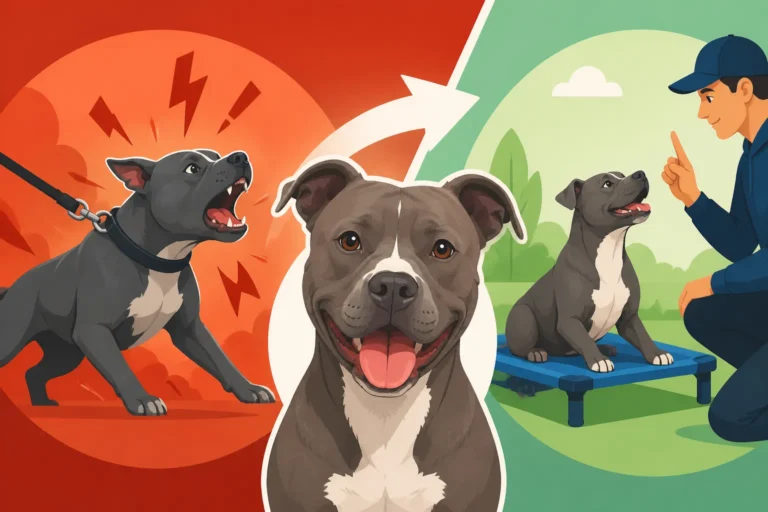
Think about it from your dog's perspective. The world is a huge, loud, often confusing place. If their first experiences with loud trucks, children, people in hats, or other dogs are negative or scary, they learn to be wary. This wariness, for a dog with a strong presence, can manifest as fear-based reactivity – barking, lunging, or freezing in an attempt to make the scary thing go away. Because of existing stereotypes, a reactive Pit Bull often draws immediate, negative attention, regardless of the underlying cause. This can create a vicious cycle where public fear reinforces your dog's anxiety, and vice-versa.
Proper socialization, however, builds resilience. It teaches your puppy that new experiences can be fun, that strangers can be sources of treats and pets, and that other dogs can be appropriate playmates or simply part of the scenery. It fosters confidence, adaptability, and a calm demeanor. This isn't just about preventing problems; it's about actively shaping a happy, well-adjusted dog who can confidently navigate diverse environments, reducing stress for both of you. It's an investment in their future happiness and your peace of mind, making it easier to take them places and integrate them into your daily life without constant worry.
The Critical Windows for Puppy Socialization
When we talk about socialization, it's easy to think of it as a single event or a checklist you complete once. But for a Pit Bull puppy, it's a dynamic, ongoing process, with certain periods being absolutely critical. Understanding these windows helps you maximize the impact of your efforts and be prepared for potential hurdles. These early weeks and months lay the groundwork for your dog's entire life.
The Fear Period and Its Impact on a Pit Bull Puppy
One of the most crucial times in a puppy's development is often referred to as a "fear period." While these can vary a bit between individuals, a prominent one typically occurs between 8 and 11 weeks of age, and another can crop up during adolescence, sometimes around 6-9 months. During a fear period, a seemingly innocuous event or a sudden, loud noise can make an impression that's much stronger and more lasting than usual, potentially causing lasting fear or phobias. Imagine your puppy is like a sponge, soaking up everything, but during this period, scary things stick much more fiercely.
For a Pit Bull puppy, navigating this period requires extra mindfulness. They might suddenly be wary of a new object they previously ignored, or shy away from a person they met happily last week. Your role here is to protect them from genuinely traumatic experiences while still providing positive, gentle exposure. Forcing a puppy to interact with something it's clearly afraid of can backfire badly, reinforcing the fear. Instead, if your puppy seems nervous, create distance from the scary thing and then use positive reinforcement – calm praise, high-value treats, or a favorite toy – to create a positive association. For example, if a large, loud truck drives by and your puppy startles, don't rush them towards it. Instead, allow them to observe from a safe distance, then offer a treat as the truck passes, associating the passing noise with something good.
It's also essential to be mindful of who your puppy interacts with during this time. Only allow interactions with calm, predictable dogs and gentle people. Avoid busy, overwhelming environments like crowded dog parks, even if you think it's good exposure, as a negative encounter could have lasting repercussions. Your goal is to build positive memories and associations, teaching your Pit Bull puppy that the world is generally a safe and interesting place, even when it presents new and unusual stimuli. Gentle reassurance, controlled environments, and an abundance of treats are your best friends during these sensitive weeks. We have a whole guide about managing these early stages: The Weeks That Shape a Pit Bull Puppy.
Beyond the Puppy Stage: Adolescent Socialization
Many people think socialization is "done" once the puppy vaccines are complete and they've met a few people and dogs. Oh, if only it were that simple! For a Pit Bull, just like a human teenager, adolescence can bring a whole new set of challenges and an absolute need for continued, structured socialization. This "teenage" phase often kicks in around 6 months and can last until they're two years old or even a bit older, depending on the individual. During this time, they might start testing boundaries, pushing back on commands they once knew perfectly, and experiencing a resurgence of fear or cautiousness around new things.
This is also the period when some Pit Bulls start exhibiting what's often termed "dog selectivity" – a natural tendency to be less universally friendly with all other dogs, or to prefer certain play styles or companions. It's not necessarily aggression, but a maturation of their social preferences. Without continued, positive exposure, an adolescent Pit Bull can regress, becoming more wary or reactive. You might find that the confident puppy who loved everyone suddenly becomes a little more reserved or even vocal towards strangers or unfamiliar dogs. This isn't a failure of your early socialization; it's a normal developmental phase that requires consistent management and training.
Continued socialization means regularly introducing them to new situations, maintaining their manners around different people and environments, and carefully managing their interactions with other dogs. Enroll in an intermediate obedience class or try a dog sport like agility or rally. These activities provide mental stimulation and structured exposure, which is incredibly valuable. Your consistent guidance and calm demeanor through this phase are vital. Just because they're bigger doesn't mean they don't still need your thoughtful direction and positive experiences. It's about solidifying the good habits you built in puppyhood and adapting them to their maturing personality and physical strength.
Strategies for Diverse Environmental Exposure
Thorough socialization means exposing your Pit Bull puppy to as many different, positive experiences as possible. We’re talking about a rich tapestry of sights, sounds, textures, and interactions. It’s not just about meeting other dogs; it's about building a robust, resilient dog ready for anything the world throws at them. The more positive experiences they have in a controlled manner, the more confident and adaptable they will become.
Introducing Your Pit Bull Puppy to People of All Kinds
One of the most important aspects of socializing your Pit Bull puppy is introducing them to a wide variety of people. This goes beyond just your immediate family. Think about the diversity of humanity: people of different ages, genders, ethnicities, heights, and builds. People wearing hats, glasses, scarves, or using mobility aids like canes or wheelchairs. People with different voices, gaits, and energy levels. Each new type of person can be a novel experience for your puppy, and your goal is to make each one a positive encounter.
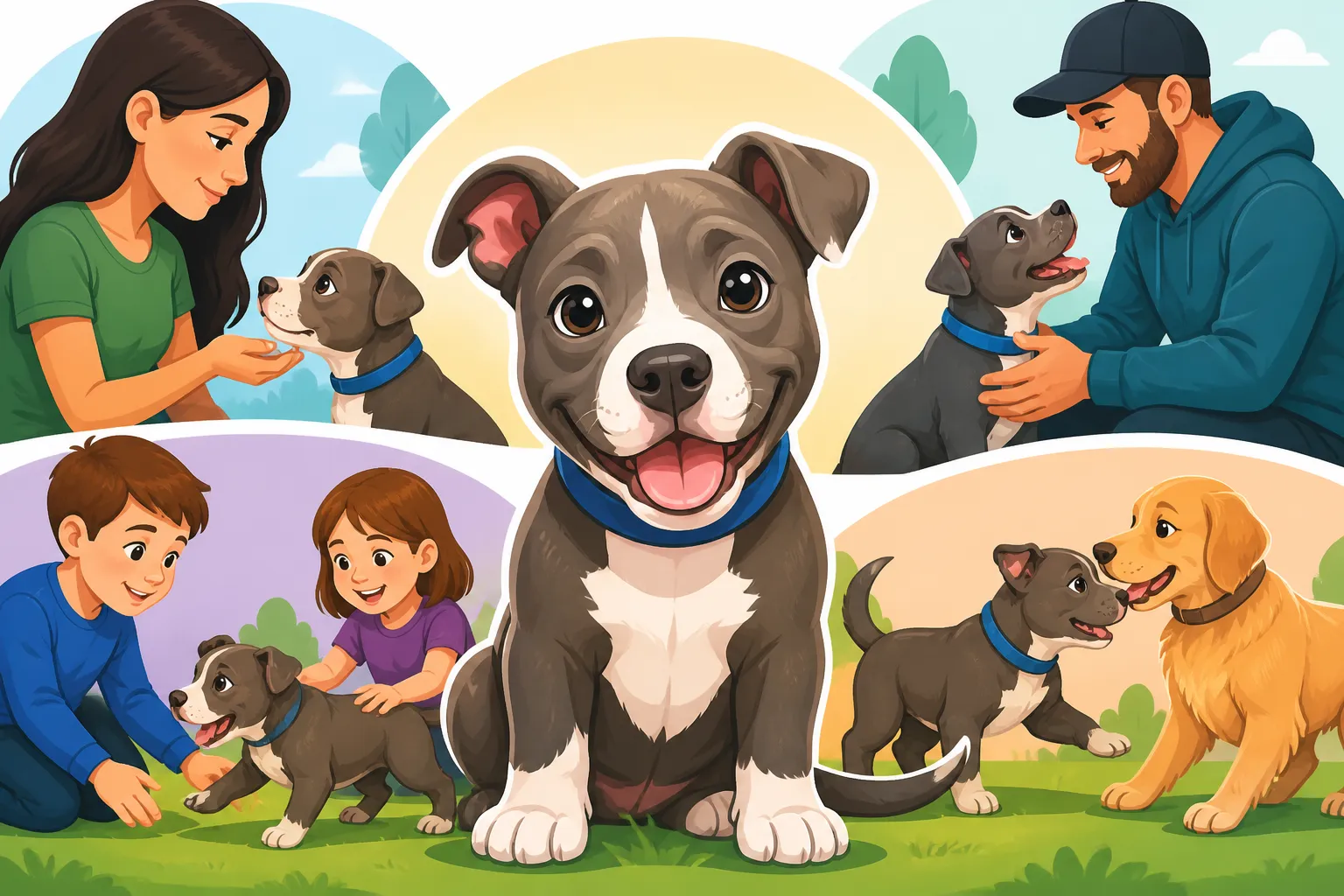
Start with calm, trusted friends and family members who understand how to interact gently and positively with a puppy. Ask them to approach slowly, offer a treat, and give a gentle pet under the chin, rather than reaching over the head. You want your puppy to associate new people with good things – tasty treats, soft voices, and pleasant interactions. As they grow more confident, you can gradually expand to meeting new people on walks or in quieter public spaces. Always keep initial interactions short, positive, and on your terms. If your puppy seems overwhelmed, don't push it; create distance and try again later or with a different person.
It's also crucial to teach your Pit Bull puppy how to greet people politely. Because of their enthusiasm and physical strength, a jumping Pit Bull, even a friendly one, can be intimidating or even accidentally knock someone over. Start early with teaching a "four paws on the floor" greeting. When someone approaches, ask your puppy to sit, and reward them for staying seated while the person offers a treat and a calm pet. The online training programs from BAXTER & Bella offer excellent modules on polite greetings and impulse control, which are incredibly valuable for a strong, enthusiastic breed. This proactive approach helps manage public perception and ensures every human interaction is a positive one for everyone involved. Socializing a Pit Bull Around Strangers has more specific examples on this.
Exposing Your Puppy to New Sights, Sounds, and Surfaces
Beyond people, the world is full of sensory input that your Pit Bull puppy needs to experience in a positive way. Imagine all the things we take for granted: the rumble of a bus, the sound of a vacuum cleaner, kids on skateboards, a baby crying, the feel of gravel versus carpet, or walking over a metal grate. These are all things that can startle a naive puppy if encountered for the first time without proper context. Your mission is to turn these potential frights into non-events or even pleasant occurrences.
Start with small, manageable exposures. For instance, put on different types of music at varying volumes, always pairing it with calm play or treats. Walk your puppy on different surfaces in your home and yard – carpet, tile, concrete, grass, leaves. Take short car rides, making them fun by going to a park or getting a special treat afterward. Gradually, expose them to more complex environments. A quiet park where distant sounds of traffic or children playing can be heard is a good start. As they show comfort, you can move to slightly busier areas. Always observe your puppy's body language. Are they loose and happy, or stiff and trying to get away?
The key here is called "desensitization and counter-conditioning." If your puppy shows a mild apprehension towards something, like an umbrella opening, don't just avoid it. Instead, open the umbrella far away, give your puppy a treat, then slowly bring it closer, giving treats as long as they remain calm. This teaches them that the potentially scary thing predicts something good. You can find many affordable training tools, including long lines, clickers, and treat pouches, on Amazon to help with these exercises. Remember, the goal isn't to force them to love everything, but to teach them that novel stimuli are generally safe and don't require an extreme reaction.
Safe Introductions to Other Animals and Environments
This is arguably one of the most critical and delicate aspects of socializing a Pit Bull puppy, especially given the historical background and potential for dog selectivity in the breed. While we want our puppies to be well-adjusted, it's vital to prioritize safety and positive experiences. Simply throwing a Pit Bull puppy into a free-for-all at a dog park can be detrimental and dangerous, not socialization.
For dog-to-dog introductions, always prioritize quality over quantity. Seek out known, vaccinated, calm, and well-socialized adult dogs who are good "teachers." These older dogs can politely correct a rambunctious puppy without being aggressive. Arrange one-on-one playdates in a neutral, secure yard where you can closely supervise interactions. Watch for appropriate play signals: play bows, taking turns chasing, self-handicapping (an older dog might "lose" to a puppy). If play becomes too rough, or one dog seems overwhelmed, calmly intervene and separate them for a cool-down period. Avoid dog parks entirely for young puppies and even for many adult Pit Bulls, as the uncontrolled environment can lead to negative experiences that undo weeks of positive work.
When it comes to other species, like cats or smaller pets, if your Pit Bull puppy will be living with them, integrate them from day one under strict supervision. Keep initial interactions short, positive, and controlled, always rewarding calm behavior. Use gates and crates to ensure separation when you can't supervise directly. Never leave a Pit Bull, especially a puppy or adolescent, unsupervised with smaller animals, even if they seem to get along. Their natural prey drive, while manageable with training, is an instinctual behavior. Remember, thorough socialization isn't about making your Pit Bull love every single creature on the planet; it's about teaching them appropriate behavior and neutrality in various situations. You want them to be able to coexist calmly, not necessarily to be best friends with every passing dog or cat. Check out Pit Bull Dog Selectivity and Multi-Dog Homes for deeper insights.
Structured Puppy Classes and Training for Confidence
While informal socialization at home and in varied environments is crucial, formal puppy classes and structured training provide an invaluable layer of guidance and controlled exposure. These settings are specifically designed to help your Pit Bull puppy learn appropriate social skills and build a strong foundation of obedience, which is essential for managing their inherent strength and energy.
The Benefits of Formal Puppy Classes for Pit Bulls
Enrolling your Pit Bull puppy in a well-run puppy class is one of the best investments you can make in their future. These classes offer a safe, supervised, and structured environment for crucial early socialization. Unlike chaotic dog parks, puppy classes are typically managed by professional trainers who understand canine body language and can facilitate appropriate play and interactions. They're designed for puppies who are typically between 8 and 16 weeks old and have received their first rounds of vaccinations.
In a puppy class, your Pit Bull will get to interact with a diverse group of other puppies of various breeds and sizes. This helps them learn bite inhibition (how hard is too hard when playing?), appropriate play behavior, and how to navigate social cues from other dogs. Crucially, it also exposes them to different people, noises, and handling by someone other than their primary owner. The trainer can teach you how to read your puppy's body language, intervene effectively when play gets too rambunctious, and ensure that all interactions are positive and confidence-building. This controlled exposure is especially important for Pit Bulls, where appropriate dog-to-dog interactions are key to preventing potential issues later in life.
Beyond the socialization aspect, puppy classes also introduce basic obedience commands like "sit," "stay," "come," and polite leash walking. These foundational skills are not just about showing off; they are tools for management and communication. Having a Pit Bull who responds reliably to cues dramatically increases your control and confidence in public settings. It also builds a stronger bond between you and your puppy as you learn to communicate effectively. Look for trainers who use positive reinforcement methods and have experience with strong, driven breeds. An excellent class will teach both you and your puppy, making you a more effective handler. What to Teach a Pit Bull Puppy and When offers more on this topic.
Building Foundation Behaviors for Social Settings
Beyond structured puppy classes, consistently working on core obedience behaviors at home is paramount for a well-socialized Pit Bull. These aren't just parlor tricks; they are vital skills that enable your dog to navigate the world calmly and politely, especially in public settings where breed perception can be a factor. Think of them as the building blocks for good manners.
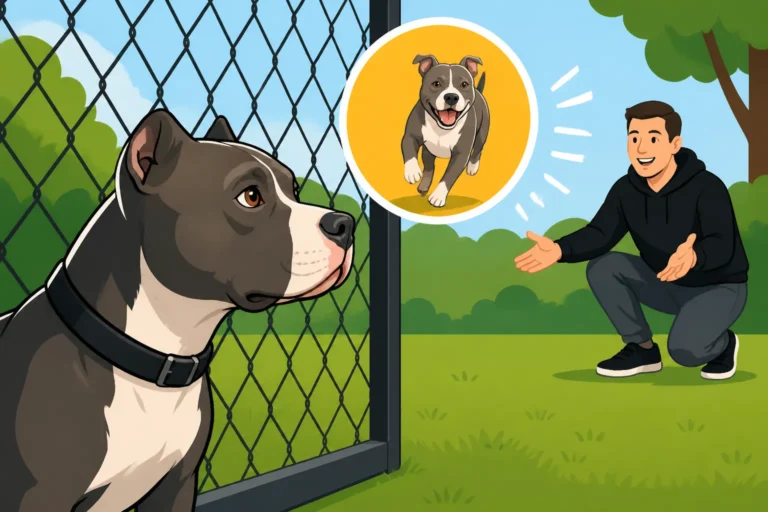
Start with "look at me," "sit," "stay," and a solid "recall" (coming when called). "Look at me" teaches your puppy to focus on you, which is invaluable for redirecting their attention away from distractions like other dogs or tempting smells. A reliable "sit" is perfect for polite greetings, asking them to sit before getting a treat, or when waiting to cross the street. "Stay" helps build impulse control, keeping them settled in distracting environments. And a rock-solid "recall" is your ultimate safety net, allowing you to call your Pit Bull back to you if they wander too far or if an unexpected situation arises.
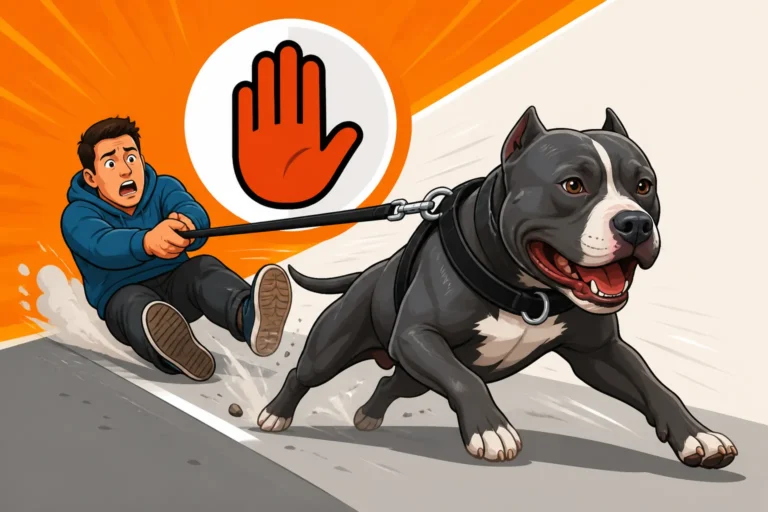
Loose-leash walking is another critical behavior. A fifty-pound Pit Bull who pulls on the leash is not only difficult to manage but can also reinforce negative stereotypes. Start early, rewarding your puppy heavily for walking calmly by your side without tension on the leash. Use high-value treats and a comfortable, well-fitting harness (many excellent options are available on Amazon that distribute pressure evenly across their broad chest). Practice in quiet areas first, gradually introducing more distractions. The more consistent you are with these foundation behaviors, the more confident you'll feel taking your Pit Bull into various social settings, and the more positively others will perceive your well-mannered companion. Strong communication through training is the bedrock of strong socialization.
Managing Dog-to-Dog Interactions Responsibly
This section is particularly important for Pit Bull owners. While early socialization aims to create a dog that is comfortable and confident around other dogs, it's also crucial to understand and responsibly manage their natural predispositions, especially as they mature. The aim is not necessarily for your Pit Bull to be a "dog park dog" but rather a dog that can safely and calmly coexist with other canines when necessary.
Understanding and Navigating Pit Bull Dog Selectivity
One of the most frequently misunderstood aspects of Pit Bull behavior is dog selectivity. This is a tendency, common in many terrier and bull breeds, to be selective about their doggy companions. It is absolutely not the same as dog aggression, though it can sometimes be misinterpreted as such. A dog-selective Pit Bull might do wonderfully with certain dogs (often those they know well, have lived with, or who have a calm play style), but may not tolerate or enjoy the company of every dog they meet. This can often develop or become more pronounced as they reach social maturity, typically between one and three years of age.
Understanding this trait is key to responsible ownership. It means you might need to be more proactive in managing dog-to-dog greetings and play. It doesn't mean your early socialization failed; it simply means your dog is maturing into a distinct personality with preferences. For example, your Pit Bull might love playing with your neighbor's calm Labrador, but completely ignore or even give a hard stare to an unknown, boisterous Golden Retriever puppy at the park. This isn't a flaw; it's a characteristic that demands your careful management.
Navigating dog selectivity means never forcing interactions. If your Pit Bull shows disinterest or mild discomfort with another dog, respect their cues and create distance. Always supervise playdates closely, and choose known, well-mannered dogs who match your Pit Bull's play style. Avoid environments where off-leash, uncontrolled dog interactions are common, such as busy dog parks, as these can quickly escalate into negative experiences for a dog-selective individual. Instead, focus on structured walks parallel to other dogs, where positive associations (like treats) are made without direct interaction. Being a knowledgeable and vigilant advocate for your dog's comfort will prevent many potential issues. You can read more about this in What Dog Selectivity Means in a Pit Bull.
Safe Play and Supervised Greetings
For Pit Bulls, especially as puppies and adolescents, the way they play and greet other dogs needs careful supervision and guidance. Their natural play style can be very physical and robust, often involving body slams, chase, and intense tugging. While this is perfectly normal for them, it can be intimidating or even frightening to other dogs (and their owners) who might prefer a gentler approach. It's crucial for you to be the arbiter of appropriate play.
When arranging playdates, always choose dogs that are a good match in terms of size, energy level, and play style. Introduce them in a neutral, secure area, and keep them on leashes initially for a brief, calm greeting. Once you're confident they're comfortable, you can release them, but stay engaged. Watch for signs of over-arousal: excessive vocalization, stiff body language, relentless chasing without breaks, or one dog clearly trying to disengage while the other persists. If play gets too intense, calmly interrupt it. Call both dogs to you, have them sit, and then release them to play again after a short break. This teaches them to regulate their own excitement and provides opportunities for positive reinforcement for calm behavior.
For greetings on leash, teach your Pit Bull a polite "say hello" or "leave it" cue. Not every dog needs to meet your dog, and not every dog wants to. If a greeting is appropriate, keep it brief and positive. Avoid nose-to-nose greetings on a tight leash, as this can be confrontational. Instead, aim for a loose-leash, curved approach, allowing dogs to sniff each other's rear ends. If you have any doubts about a greeting, it's always safer to create distance and continue your walk. Consider muzzle training your Pit Bull, not because they are aggressive, but as a responsible safety measure. A basket muzzle from Amazon can allow a dog to participate in activities or be introduced to new situations while giving you and others peace of mind, and it helps counter negative stereotypes by showing you are a responsible owner. It’s an incredibly valuable tool for any large, powerful dog. More detail can be found here: Muzzle Training Every Pit Bull Should Have.
Addressing Common Socialization Challenges
Even with the best intentions and diligent efforts, socializing a Pit Bull puppy isn't always a smooth, straight line. You'll likely encounter bumps along the way, and it's how you navigate these challenges that truly defines your success as an owner. Being prepared for common hurdles can save a lot of stress and prevent minor issues from becoming major ones.
Handling Fearful or Reactive Responses
Despite all your positive exposure, your Pit Bull puppy might still exhibit fearful or reactive responses to certain stimuli. This could be anything from barking at a mail carrier to lunging at a skateboarder, or cowering from a plastic bag blowing down the street. It's important to remember that reactivity often stems from fear or over-arousal, not necessarily aggression. For a powerful breed like a Pit Bull, these reactions can be particularly concerning and demand a calm, consistent approach.
First, learn to recognize the subtle signs of stress in your puppy: lip licking, yawning (when not tired), averted gaze, tail tucked, stiff body, trembling, or trying to hide. These are early warnings that your puppy is feeling uncomfortable. If you see these, immediately create distance from the trigger. Don't punish fear; that only teaches your dog to suppress their warning signals or to associate your presence with the scary thing. Instead, become your puppy's safe haven.
Once at a comfortable distance, you can begin counter-conditioning. This means changing your puppy's emotional response to the trigger. For example, if your puppy barks at other dogs, find a distance where they notice the dog but don't react. As soon as another dog appears (even if far away), start feeding your Pit Bull high-value treats (think cooked chicken or cheese). Stop feeding when the dog disappears. This teaches them: "other dog = yummy treats!" This exercise, often called "engage-disengage," slowly changes their association from fear/arousal to positive expectation. If the reactivity is severe or persistent, don't hesitate to seek help from a certified professional dog trainer or a veterinary behaviorist. Their expertise can provide tailored strategies for your specific situation. A Pit Bull That Turns Sharp goes into more details about sudden changes in behavior.
Overcoming Breed Stigma in Public Settings
Let's be real: owning a Pit Bull often means you're walking an uphill battle against public perception. Despite their often sweet and goofy natures, many people still hold negative stereotypes, and you'll inevitably encounter wary glances, people crossing the street, or even outright negative comments. This can be incredibly frustrating and disheartening, but it's a reality every Pit Bull owner must navigate.
Your best defense against breed stigma is a well-trained, well-mannered Pit Bull. Every public outing becomes an opportunity to be an ambassador for the breed. A Pit Bull walking calmly on a loose leash, ignoring distractions, sitting politely when people approach, and greeting calmly if appropriate, does more to change minds than any argument. Focus on your dog's behavior, not on the reactions of others. Maintain a positive attitude, even if you feel judged. Your calm confidence will reflect in your dog.
One practical tip is to carry treats with you and offer them to people who seem willing to interact. "Would you like to give him a treat? He's very gentle." This often breaks the ice and creates a positive experience. Dress your Pit Bull in a bright, friendly harness or collar (avoiding anything that looks aggressive or intimidating). Consider having your Pit Bull earn their Canine Good Citizen (CGC) title. This certification demonstrates that your dog has excellent manners and can behave reliably in public, and it can be a powerful tool to show others that your Pit Bull is a responsible, well-trained member of society. Remember, you're not just socializing your dog; you're also educating the public, one positive interaction at a time. Why a Pit Bull Gets Less Benefit of the Doubt discusses this in depth.
Avoiding Common Socialization Pitfalls
Even with the best intentions, it's easy to fall into certain traps that can hinder your Pit Bull puppy's socialization. Being aware of these common pitfalls can help you steer clear of them and maintain a positive trajectory for your puppy's development.
One major pitfall is overwhelming your puppy. Some owners, eager to ensure their puppy is well-socialized, expose them to too many new things too quickly, or for too long. A barrage of new sights, sounds, and interactions without adequate breaks can lead to stress, anxiety, and even shutdown. Remember, quality over quantity. Short, positive, controlled exposures are far more beneficial than long, chaotic ones. Always observe your puppy for signs of stress and give them opportunities to retreat and decompress.
Another mistake is forcing interactions. If your puppy is hesitant or fearful of a person, dog, or object, do not force them into the situation. Dragging a puppy towards a scary stranger or making them "socialize" with an overly rambunctious dog will only traumatize them and reinforce their fear. Instead, allow them to observe from a comfortable distance, pair the presence of the scary thing with high-value treats, and let them approach on their own terms if they feel safe. Positive association, not forced exposure, is the goal.
Finally, relying solely on dog parks for socialization is a common and often detrimental pitfall, especially for Pit Bulls. While some dogs thrive in dog parks, many do not. Dog parks are often uncontrolled environments with a mix of dog temperaments, sizes, and play styles, as well as owners who may not be supervising effectively. A single bad experience in a dog park can traumatize a puppy or trigger reactivity in an adolescent. Instead, opt for structured playdates with known, compatible dogs, or enroll in supervised puppy playgroups or obedience classes where interactions are managed by a professional. This provides a much safer and more beneficial environment for your Pit Bull's social development.
Continued Socialization Through Adolescence and Adulthood
Socialization isn't a destination; it's a lifelong journey, especially for a Pit Bull. Just because your puppy has grown into a well-mannered adolescent doesn't mean you can stop. Continued positive exposure and skill maintenance are crucial to ensure your Pit Bull remains confident, adaptable, and a joy to be around for their entire life. Think of it like keeping a muscle strong – if you don't use it, you lose it.
Maintaining Social Skills Through Regular Exposure
Even after your Pit Bull has moved past their puppy and adolescent phases, regular, positive exposure to various environments, people, and appropriate dogs is essential for maintaining their social skills. Life isn't static, and neither are your dog's experiences. If they only ever see the same few things, their ability to cope with novelty might diminish over time.
Routine walks are a fantastic way to continue this exposure. Vary your routes: walk through different neighborhoods, visit pet-friendly stores (if your dog is well-behaved and comfortable), or explore new parks and trails. This exposes them to new sights, sounds, and smells. Encourage polite interactions with friendly strangers who ask to pet your dog, always reinforcing calm behavior. Even if your Pit Bull is dog-selective, consider structured "parallel walks" with a known, calm dog, where you walk side-by-side but don't necessarily interact directly. This teaches them to be comfortable in the presence of other dogs without feeling pressured to engage.
Think about incorporating new activities into your routine. Attending an occasional group obedience class, trying out a new dog sport like scent work or barn hunt, or even visiting different family members' homes can provide novel experiences. The goal isn't necessarily constant intense exposure, but rather consistent, low-stress engagement with the wider world. This keeps their minds active, reinforces their comfort with newness, and prevents them from becoming insular or fearful. It's about ensuring their social muscles stay strong and flexible, ready for whatever comes their way.
Canine Good Citizen and Beyond
For a Pit Bull, achieving the Canine Good Citizen (CGC) title is more than just a certificate; it's a testament to their excellent manners and your responsible ownership. The CGC program, administered by the AKC, tests dogs on ten practical skills that demonstrate good behavior in everyday situations, such as accepting a friendly stranger, walking politely through a crowd, and reacting calmly to distractions. For a Pit Bull owner, this title is particularly valuable.
Firstly, it provides a clear, measurable goal for your training journey. Working towards the CGC will refine your Pit Bull's obedience skills, reinforce their impulse control, and strengthen your bond as a team. Secondly, and perhaps more importantly, the CGC title can be a powerful tool for advocacy. It offers tangible proof that your Pit Bull is a well-behaved, stable dog who can handle public situations with grace. In a world where breed stereotypes often precede the individual dog, a CGC title can open doors, sometimes even assisting with Getting Home Insurance With a Pit Bull or Finding a Rental That Takes a Pit Bull. It shows landlords, neighbors, and strangers that your dog has met a recognized standard of good manners.
But why stop there? Beyond the CGC, there are many avenues for continued growth and engagement. You could pursue advanced obedience titles, explore therapy dog work (many Pit Bulls make exceptional therapy dogs due to their affectionate nature), or delve into dog sports like agility, rally, or dock diving. These activities provide continued mental and physical enrichment, further strengthening your Pit Bull's confidence and reinforcing their good behavior in novel environments. Many books and online resources for advanced training techniques and dog sports are readily available on Amazon, providing endless inspiration. This ongoing engagement keeps your Pit Bull happy, healthy, and a wonderful ambassador for their breed, proving that a well-socialized Pit Bull is truly a canine superstar.
| Socialization Milestone | Age Range (Approximate) | Key Experiences | Owner's Role |
|---|---|---|---|
| Early Puppyhood | 8-16 Weeks | Diverse people (ages, looks, voices), varied sounds (traffic, household), different surfaces (grass, pavement), gentle handling (ears, paws). Short, positive interactions with vaccinated, calm adult dogs. | Introduce gently and positively. Focus on quality over quantity. Use high-value treats. Enroll in puppy class. Protect from scary experiences during fear period. |
| Adolescence | 6-24 Months | Continued exposure to new environments. Structured playdates with compatible dogs. Public outings (stores, parks). | Continue formal training (CGC prep). Be mindful of developing dog selectivity. Supervise all dog interactions. Reinforce impulse control. Remain patient through "teenage" regression. |
| Adulthood | 2+ Years | Regular walks in varied locations. Maintenance of obedience skills. New activities (dog sports, advanced classes). | Maintain consistency. Continue positive reinforcement. Monitor for signs of discomfort or changes in temperament. Be an ambassador for the breed. |
Disclaimer
This article is for general informational purposes only and does not constitute professional advice. Laws, prices and regulations vary by location and change over time. Consult a qualified professional for guidance on your specific situation.