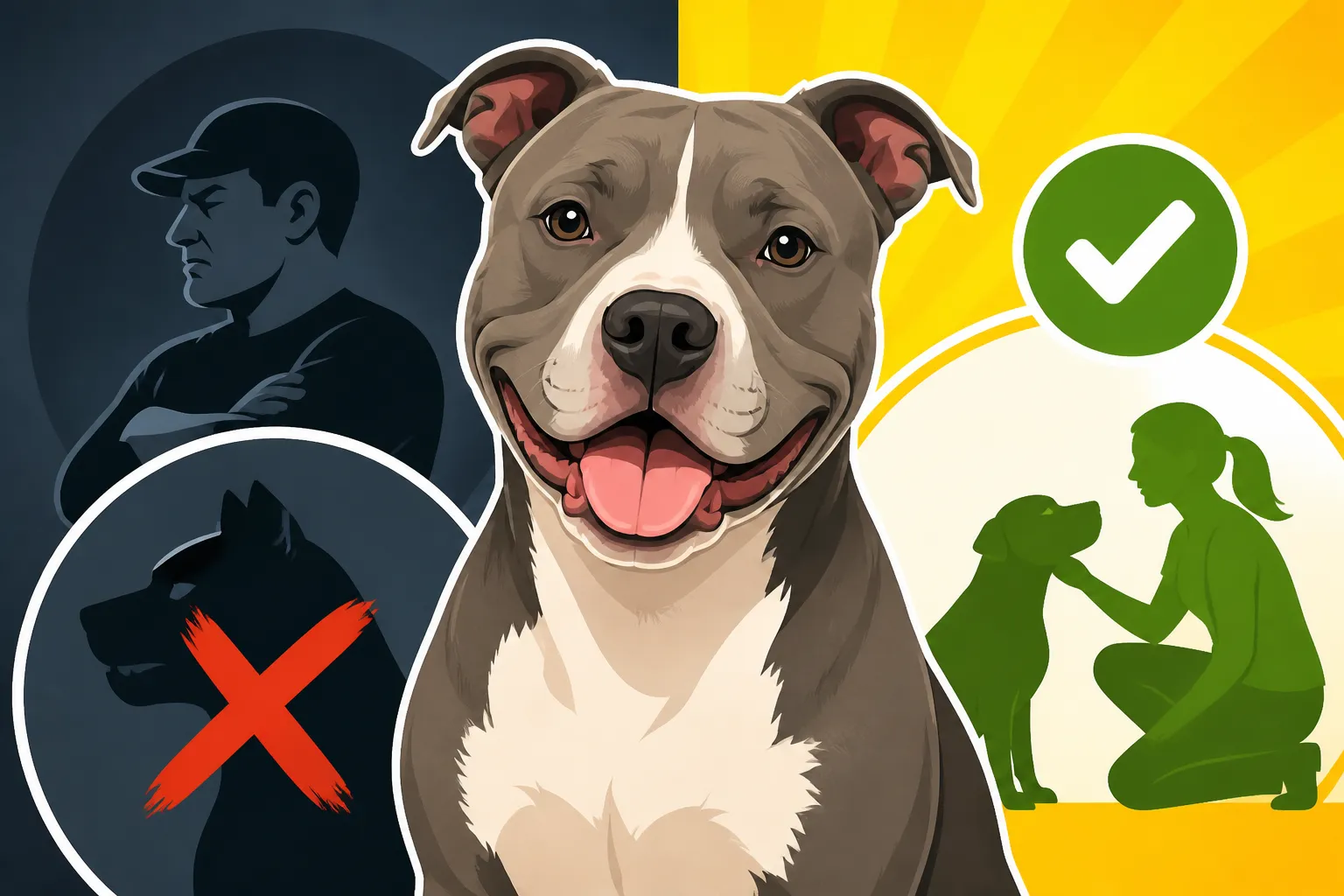
What ATTS Pass Rates Show About Pit Bull Temperament
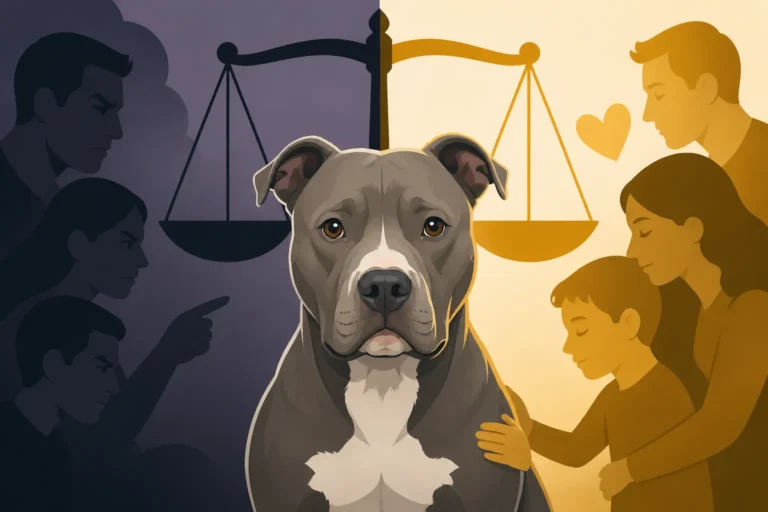
It’s a struggle many of us Pit Bull owners know all too well: the constant need to prove our dogs are not only good, but often exceptional. In a world quick to judge based on outdated stereotypes, finding objective data to back up what we already see in our loving companions can be incredibly validating. This guide dives deep into the American Temperament Test Society (ATTS) pass rates, examining what these numbers truly reveal about the temperament of Pit Bull type dogs and what it means for you as a dedicated owner.
Understanding the American Temperament Test Society (ATTS)
When we talk about a dog's "temperament," it's often a broad, subjective term. But the American Temperament Test Society (ATTS) aims to bring a measure of objectivity to this crucial aspect of canine character. They've been setting the standard for evaluating how dogs react to everyday situations and unusual stimuli for decades, offering a valuable insight into the breed's general stability and soundness. It's not a competition; it's a test of nerve, confidence, and resilience.
What Exactly Is the ATTS Test?
Imagine taking your dog to an unfamiliar place, often a park or an open field, where they encounter a series of carefully designed scenarios. That's essentially what the ATTS test involves. It's a non-aggressive, neutral evaluation designed to assess a dog's stability. Over the course of 10 different stations, a dog is exposed to various visual, auditory, and tactile stimuli, all designed to elicit natural reactions without causing undue stress or fear.
A neutral stranger approaches, sometimes in an unusual gait or carrying an odd object like an umbrella. There are sudden, startling noises, like a can being dropped or a gunshot (blanks, of course). The dog might walk over an unstable surface or be asked to separate from its handler briefly. The entire experience is meant to gauge how the dog copes with the unexpected, how it recovers from startling events, and its general disposition towards strangers. The test evaluates a dog's willingness to overcome obstacles, its friendliness, and its ability to distinguish between a real threat and something harmless, even if it's a bit strange. It's truly about measuring the dog’s inherent character and its ability to handle itself in the everyday world, and frankly, the not-so-everyday world.
The Purpose Behind Temperament Testing
The ATTS isn't trying to find the "best" dog or prove that one breed is inherently superior to another. Its core purpose is much more fundamental: to identify dogs that possess stable, confident, and non-aggressive temperaments. For breeds like the Pit Bull, which often face unfair scrutiny and breed-specific legislation, these objective tests become incredibly important. They offer a data-driven counterpoint to anecdotal evidence or media sensationalism.
For breeders, the ATTS provides a tool for making informed decisions, helping them select for robust, sound temperaments in their breeding programs. For owners, it can be a way to understand their dog better and even give them confidence in their dog's ability to handle various situations. It helps distinguish between a dog that might naturally be a bit shy or easily startled – which is not a failure – and a dog that reacts aggressively or unpredictably out of fear or instability. It's a snapshot of a dog's general mental health, showing how well it integrates into society without undue stress or danger. While it can't predict every single behavioral nuance, it offers a strong indicator of a dog’s foundational emotional resilience.
Decoding Pit Bull ATTS Pass Rates
When it comes to Pit Bull type dogs, the ATTS results often come as a surprise to those unfamiliar with the breed's true nature. The data consistently paints a picture that contradicts the prevailing myths of inherent aggression. These tests provide concrete evidence that, as a group, Pit Bull types demonstrate remarkable stability and confidence.
The Raw Numbers: How Pit Bulls Stack Up
Let's talk numbers, because numbers don't lie. The ATTS routinely publishes results for various breeds, and when you look at the American Pit Bull Terrier (APBT), the American Staffordshire Terrier (AmStaff), and the Staffordshire Bull Terrier (Staffie)—the three breeds most commonly lumped under the "Pit Bull" umbrella—their pass rates are consistently high, often exceeding the average for all breeds tested.
Historically, breeds like the American Pit Bull Terrier have demonstrated pass rates in the high 80s to low 90s percentage range. This often places them on par with, or even above, breeds widely considered "family-friendly" or "gentle," such as Golden Retrievers or Beagles, which might also have pass rates in the 80-90% range. What this tells us is that the vast majority of Pit Bull type dogs, when subjected to these standardized, neutral temperament assessments, display the resilience, confidence, and calm demeanor we all hope for in a canine companion.
Here’s a simplified look at how some common breeds, including our beloved Pit Bulls, tend to stack up in ATTS pass rates:
| Breed Type | Typical ATTS Pass Rate Range | What This Indicates |
|---|---|---|
| American Pit Bull Terrier (APBT) | 87-92% | High confidence, stable reactions to novelty and strangers. |
| American Staffordshire Terrier | 85-90% | Very similar to APBT, strong nerves, good recovery from startle. |
| Staffordshire Bull Terrier | 88-93% | Excellent overall stability, often very friendly with people. |
| Golden Retriever | 85-90% | Generally friendly, good-natured, stable. |
| Labrador Retriever | 88-93% | Confident, adaptable, good environmental stability. |
| German Shepherd Dog | 85-90% | Protective but stable, good under pressure. |
| All Breeds Average | 82-87% | General benchmark for acceptable temperament. |
Note: These ranges are historical averages and can fluctuate year by year. It’s always best to check the latest ATTS publications for the most current data.
This table illustrates that Pit Bull type dogs are not outliers in a negative way; rather, they perform admirably when evaluated objectively. They consistently show that they are capable of handling various stimuli and interactions without undue fear, aggression, or panic. This should be a source of immense pride and reassurance for any Pit Bull owner, knowing that their dog's breed group has such a strong foundation in temperament.
Common Misconceptions About These Statistics
Despite these impressive figures, it's easy for misconceptions to arise. A high pass rate doesn't mean every single Pit Bull type dog is guaranteed to be perfectly behaved, or that they are immune to fear, anxiety, or aggression. Just like any other breed, individual dogs within the Pit Bull type can have varying temperaments due to genetics, early experiences, and training.
One of the biggest misunderstandings is the idea that a high ATTS pass rate somehow validates the "nanny dog" myth. While many Pit Bulls are wonderful with children, no dog, regardless of breed or ATTS score, should ever be left unsupervised with infants or small children. The ATTS test evaluates a dog's general stability with neutral strangers and novel situations, not its specific interactions within a family dynamic or its tolerance for typical child behaviors like grabbing or poking. It's about general soundness, not a specific certification for child supervision.
Another pitfall is using these statistics to completely dismiss the importance of Pit Bull Dog Selectivity and Multi-Dog Homes. While many Pit Bulls are perfectly fine with other dogs, their bull-and-terrier heritage can mean a higher likelihood of dog selectivity or intolerance, particularly with same-sex pairs as they mature. The ATTS test has some elements of dog-dog interaction, but it's not a deep dive into how your dog will fare living long-term with another canine housemate or in an off-leash park. It's a test of reaction, not a prediction of social living. These statistics are powerful tools to combat prejudice, but they must be interpreted carefully and with an understanding of what they actually measure versus what they don't.
What ATTS Results Reveal About Pit Bull Temperament
So, if these tests aren't a guarantee of perfection, what do they actually tell us about the temperament of Pit Bull type dogs? They reveal some truly important, foundational qualities that are often overlooked by public perception. When a breed consistently passes these tests at such a high rate, it speaks volumes about their inherent psychological makeup.
The Core Traits Highlighted by Passing Scores
A Pit Bull type dog passing the ATTS test demonstrates several key temperament traits:
- Confidence: The dog approaches or investigates novel stimuli (the umbrella, the strange-walking person) with curiosity rather than paralyzing fear. This confidence allows them to assess situations calmly.
- Stability: When startled by a sudden noise or movement, the dog recovers quickly. They might startle, which is a natural reaction for any living creature, but they don't lose control, panic, or become aggressive. They bounce back and often seek reassurance from their handler or investigate the source of the startle.
- Resilience: The ability to endure slightly uncomfortable or unexpected situations (like an unstable surface) without a meltdown. They push through mild stressors rather than shutting down or lashing out.
- Non-reactivity to Novel Stimuli: A passing dog doesn't automatically perceive every new thing as a threat. They show discernment, assessing whether a situation is truly dangerous or merely unusual. This is crucial for navigating a world full of unpredictable sights and sounds.
These traits collectively describe a dog that is generally well-adjusted and mentally robust. They suggest a dog that is not prone to unprovoked aggression stemming from fear or instability, and one that is capable of learning and adapting to various environments. For more insight into what specific behaviors the test looks for, you can check out What the ATTS Test Measures in a Pit Bull.
The Nuances of "Temperament" in Working Breeds
It's vital to remember that "temperament" isn't a monolithic concept, especially when discussing breeds with a working heritage like Pit Bulls. While the ATTS test highlights general stability, it doesn't erase other breed-specific traits that have been selectively bred for generations. For instance, Pit Bulls were historically developed for gameness and tenacity in specific dog sports, which meant a certain drive and focus. While these traits don't inherently equate to aggression towards humans, they can manifest as a strong prey drive or dog selectivity.
A Pit Bull with a high ATTS score might still exhibit a strong prey drive towards small animals like squirrels or cats. This is a behavioral trait, not necessarily a temperament flaw in the ATTS sense. Similarly, many Pit Bulls, particularly unneutered males, may develop a degree of dog selectivity as they mature, preferring to live as the only dog or requiring very careful introductions to other canines. This dog selectivity isn't a sign of instability in the ATTS context; rather, it's a historically rooted characteristic that responsible owners must manage through careful training and management. Understanding these nuances is key to responsible Pit Bull ownership and avoiding future frustrations. The Pit Bull's Bull and Terrier Ancestors offers great context for understanding these traits.
Beyond the Test: Real-World Temperament in Pit Bulls
While ATTS scores are a fantastic tool for objective evaluation, your individual Pit Bull's temperament in the real world is a complex tapestry woven from many threads. It’s never just about innate genetics; it’s about the whole package: where they come from, how they're raised, and the environment they live in. As an owner, you have a tremendous influence on shaping these elements, and that's where true responsible ownership shines.
The Influence of Breeding and Genetics
Even with generally high ATTS pass rates for the breed group, genetics play a foundational role in individual temperament. A well-bred Pit Bull from responsible parents who themselves have stable temperaments is more likely to inherit those desirable traits. Responsible breeders prioritize not just physical health, but mental soundness, actively working to produce dogs that are confident, resilient, and well-adjusted. They understand the importance of early neurological stimulation, proper weaning, and exposure to various stimuli in those crucial early weeks.
Conversely, a puppy from a backyard breeder or a "greed breeder" who prioritizes exotic colors or quick sales over health and temperament might be predisposed to fearfulness, anxiety, or reactivity, regardless of the breed's general ATTS statistics. These breeders often skip essential health testing, and more importantly, they often don't have a clue about the temperaments of the parent dogs or their lineage. This makes it incredibly hard for you, as the future owner, to predict what kind of temperament you're truly getting. This is why looking for a reputable breeder who offers transparency and ideally, health clearances, is so paramount. You'll find more information on this when considering What Testing a Pit Bull Breeder Should Have Done.
The Critical Role of Socialization and Training
No matter how good the genetics, adequate socialization and consistent training are absolutely non-negotiable for any dog, especially a Pit Bull. The period during The Weeks That Shape a Pit Bull Puppy is critical. From eight to sixteen weeks, puppies are sponges, absorbing every experience. Positive exposure to a variety of people, places, sounds, and textures during this time is essential for building a confident adult dog.
This isn't just about taking your puppy to a dog park, which can sometimes be overwhelming. It's about carefully managed, positive experiences: meeting different types of people (kids, adults, people with hats, people with canes), walking on various surfaces, hearing common household and outdoor sounds, and seeing other calm, vaccinated dogs from a distance. Structured puppy classes are a fantastic way to ensure appropriate socialization and begin foundational training. Programs like BAXTER & Bella offer comprehensive online resources and guidance for new puppy owners, helping you navigate these crucial early months with expert advice right in your living room, ensuring you're building a confident, well-adjusted companion from day one.
Beyond puppyhood, training should be an ongoing process. Pit Bulls are intelligent and eager to please, making them highly trainable. Positive Reinforcement Training With a Pit Bull methods, using treats and praise, are incredibly effective. Consistent practice of basic commands like sit, stay, come, and loose-leash walking helps build a strong bond and a well-mannered dog. Remember, a well-trained dog is a confident dog, and a confident dog is less likely to react negatively out of uncertainty.
Environmental Factors and Responsible Ownership
Finally, the environment your Pit Bull lives in and your approach to responsible ownership profoundly impact their temperament. A dog that is well-exercised, mentally stimulated, and lives in a predictable, loving home is far more likely to be stable than one left bored, isolated, or stressed.
- Exercise: Pit Bulls are powerful, athletic dogs. They need regular, vigorous exercise to burn off energy and maintain physical and mental health. This isn't just a quick walk around the block; it's engaging play, long hikes, or structured activities. A bored Pit Bull can become a destructive Pit Bull, and pent-up energy can contribute to reactivity.
- Mental Stimulation: Don't forget their brains! Puzzle toys, training sessions, and scent work can be just as tiring as physical exercise. Keeping their minds engaged helps prevent boredom-related behavioral issues. You can find a huge variety of these types of enrichment toys on Amazon, often with reviews from other strong chewers to guide your choice.
- Consistent Leadership: Dogs thrive on clear boundaries and consistent expectations. Establishing yourself as a calm, confident leader through positive training builds trust and security, reducing anxiety and reactivity.
- Stress Management: Identify and mitigate stressors in your dog's life. This could be anything from loud noises, to being left alone too long, or even conflicts with other dogs. Understanding your dog's individual sensitivities and providing a safe, calm haven is crucial for their emotional well-being.
- Proactive Management: Due to societal perceptions and potential breed-specific traits like dog selectivity, responsible Pit Bull owners often need to go above and beyond in managing their dogs in public. This might mean always keeping them on a leash, even in off-leash areas, or being extra vigilant in new situations. This isn't about distrusting your dog, but about setting them up for success and protecting them from prejudice. This is also why getting them to pass something like the Canine Good Citizen and Why It Matters for a Pit Bull can be such a boon.
By diligently addressing these factors, you reinforce the positive temperament traits highlighted by the ATTS and ensure your Pit Bull flourishes into the best possible companion.
The Limitations of Temperament Tests for Owners
While the ATTS provides invaluable data and a standardized method for evaluating certain aspects of a dog's temperament, it's not a crystal ball for every individual dog's behavior. It's essential for owners to understand what these tests can't tell them and why ongoing engagement with their dog remains paramount.
What an ATTS Score Can't Tell You About Your Dog
A high ATTS pass rate for Pit Bulls as a group, or even for an individual dog, tells you a lot about their general stability and ability to handle novel stressors. However, it doesn't give you a complete behavioral profile. Here's what an ATTS score typically won't predict:
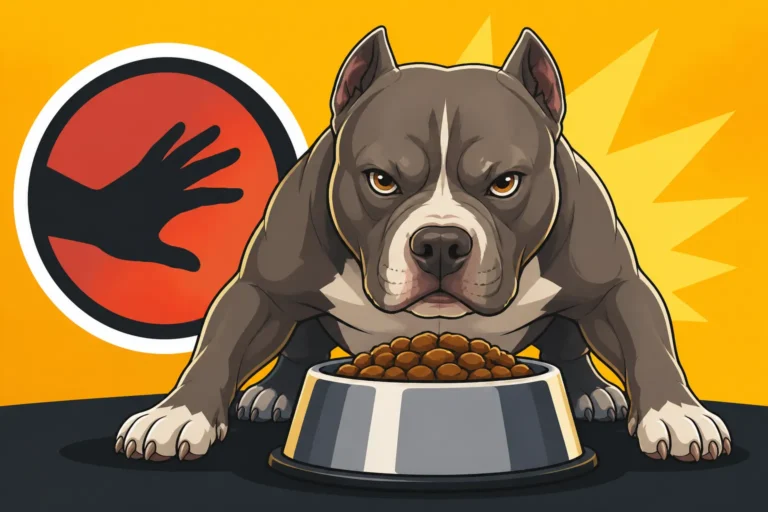
- Individual Behavioral Issues: It won't tell you if your specific Pit Bull has resource guarding issues (e.g., protecting their food bowl or toys), separation anxiety, or specific phobias developed after the test. These are often learned behaviors or responses to very specific triggers not present in the ATTS evaluation.
- Dog-on-Dog Interactions in the Home: As mentioned earlier, while the test includes some passing interactions with other dogs, it doesn't simulate living with another dog day in and day out, particularly if conflicts arise over resources or status. Many Pit Bulls are incredibly social and loving with their canine housemates, but the potential for Pit Bull Dog Selectivity and Multi-Dog Homes is a breed trait that needs careful consideration, and the ATTS test isn't designed to predict this specific dynamic.
- Reactions to Children: While a stable dog is generally safer around children, the ATTS test doesn't evaluate a dog's patience with the unpredictable, often clumsy, and sometimes irritating behaviors of toddlers and young children. No test can substitute for diligent supervision and teaching both dog and child how to interact respectfully.
- High Prey Drive: A dog can be perfectly stable in an ATTS test and still possess a very strong prey drive towards small, fast-moving objects or animals (squirrels, cats, rabbits). This is a natural instinct, not a temperament flaw in the context of the ATTS, but it requires careful management in the real world.
- Responsiveness to Training: While a stable temperament is conducive to training, the test doesn't measure how quickly an individual dog learns or their motivation to work with a handler on complex tasks. That's up to you and your training methods. This is why Why a Test Score Cannot Predict Your Pit Bull is such an important concept for owners to grasp.
Why Ongoing Evaluation and Training Remain Paramount
Because of these limitations, the work of a responsible Pit Bull owner is never truly "done." The ATTS test provides a baseline, a testament to the breed's general soundness, but your dog is an individual living in a dynamic world.
- Continuous Learning: Dogs, like people, are constantly learning and adapting. What they experience today can shape their reactions tomorrow. Consistent training reinforces good habits and keeps their minds sharp. It's about building on that stable foundation provided by genetics and early socialization.
- Addressing Emerging Issues: Behavior isn't static. A young dog may be perfectly fine, but as they mature, new behaviors can emerge, or old ones can change. Regular observation of your dog's body language and reactions to various situations is key. If you notice signs of fear, anxiety, or aggression, addressing them promptly is crucial.
- Professional Guidance: Don't hesitate to seek professional help if you encounter behavioral challenges. A qualified, positive reinforcement trainer or a veterinary behaviorist can provide tailored strategies for your specific dog. When you need help, look for Finding a Trainer Experienced With Pit Bulls who understands the breed's nuances. They can help you interpret your dog's behavior, identify triggers, and implement effective, humane solutions.
- Advocacy and Education: For Pit Bull owners, every interaction your dog has in public is a chance to be an ambassador for the breed. A well-behaved, confident Pit Bull challenges stereotypes one positive encounter at a time. Continuing to advocate for your dog and educate others based on facts, like the ATTS data, is a vital part of responsible ownership.
The ATTS results give us a powerful argument against breed prejudice, showcasing the inherent stability of Pit Bull type dogs. But ultimately, a dog's temperament is a living, breathing thing, shaped every day by how we raise, train, and interact with them. It’s a commitment, but one that is incredibly rewarding.
Disclaimer
This article is for general informational purposes only and does not constitute professional advice. Laws, prices and regulations vary by location and change over time. Consult a qualified professional for guidance on your specific situation.